Stakester’s 14-slide Seed deck is a study in high-energy, consumer-facing storytelling. Eschewing the dry, clinical tone often found in fintech or SaaS, Stakester leans into the 'gamer' persona with aggressive copy and bold visuals. The deck successfully addresses the two biggest hurdles for a skill-based betting platform: legal regulation and user trust. By explicitly stating they are 'officially confirmed as non-gambling' in the UK and 39 US states on slide 11, and highlighting a CTO who co-founded Rockstar Games on slide 10, the founders provide the institutional credibility needed to bala…
Key takeaways
- The deck uses a highly informal, brand-aligned tone to appeal to its target demographic of 18-35 year old gamers (Slide 6).
- Legal compliance is addressed as a competitive advantage, noting the platform is regulated as non-gambling in 39 US states (Slide 11).
- The 'Squad' slide leverages massive industry names, specifically citing a co-founder of Rockstar Games as CTO (Slide 10).
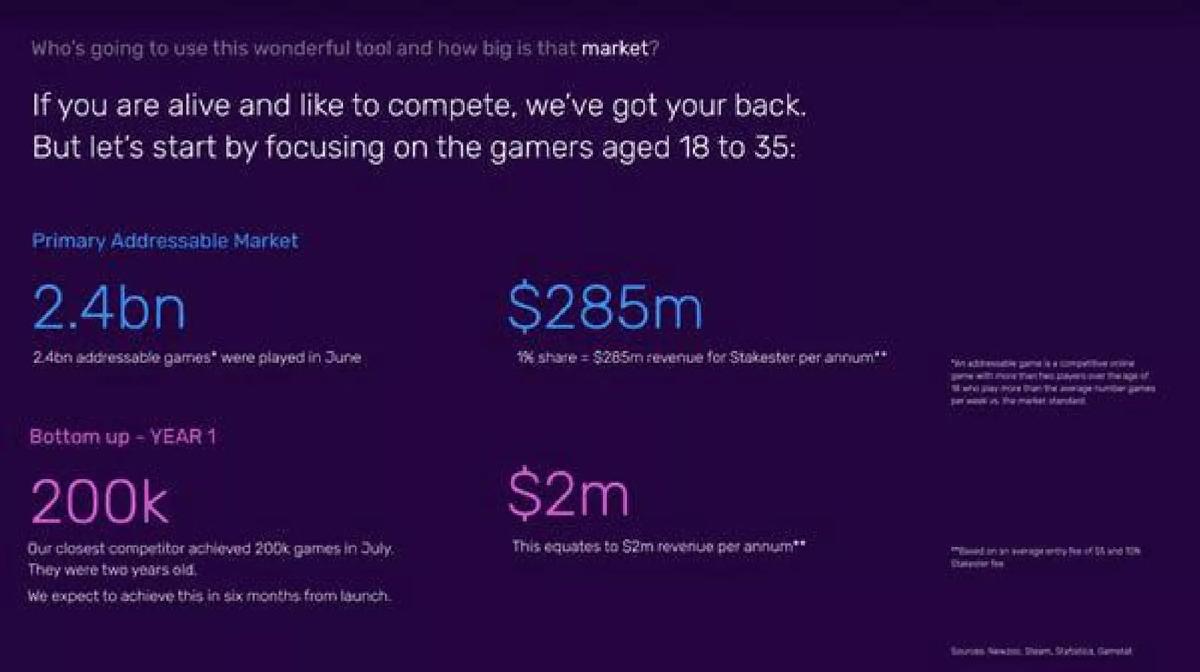
- Market sizing is calculated using a bottom-up approach, comparing expected performance to a two-year-old competitor that achieved 200k games (Slide 6).
- Revenue streams are simplified into two core models: fees per challenge and subscriptions (Slide 7).
- Primary validation comes from a survey of 600 gamers, where 63% stated they would back themselves financially (Slide 8).
- Traction is demonstrated by 3,000 downloads within the first twenty days of an early April launch (Slide 13).
- The deck completely omits a specific funding 'Ask' or a breakdown of how the $2.9M would be allocated.
Introduction: The High-Stakes Pitch
Stakester’s 2019 Seed deck is a departure from the polished, minimalist aesthetic that dominates Silicon Valley. It is loud, colorful, and intentionally provocative. Founded in 2019 and raising $2.9M, the company sought to bridge the gap between casual gaming and professional eSports by allowing everyday players to wager on their own skills. The deck’s primary mission is to prove that this isn't just another offshore betting site, but a legitimate technology platform backed by industry veterans.
The Hook and Philosophy (Slides 1-2)
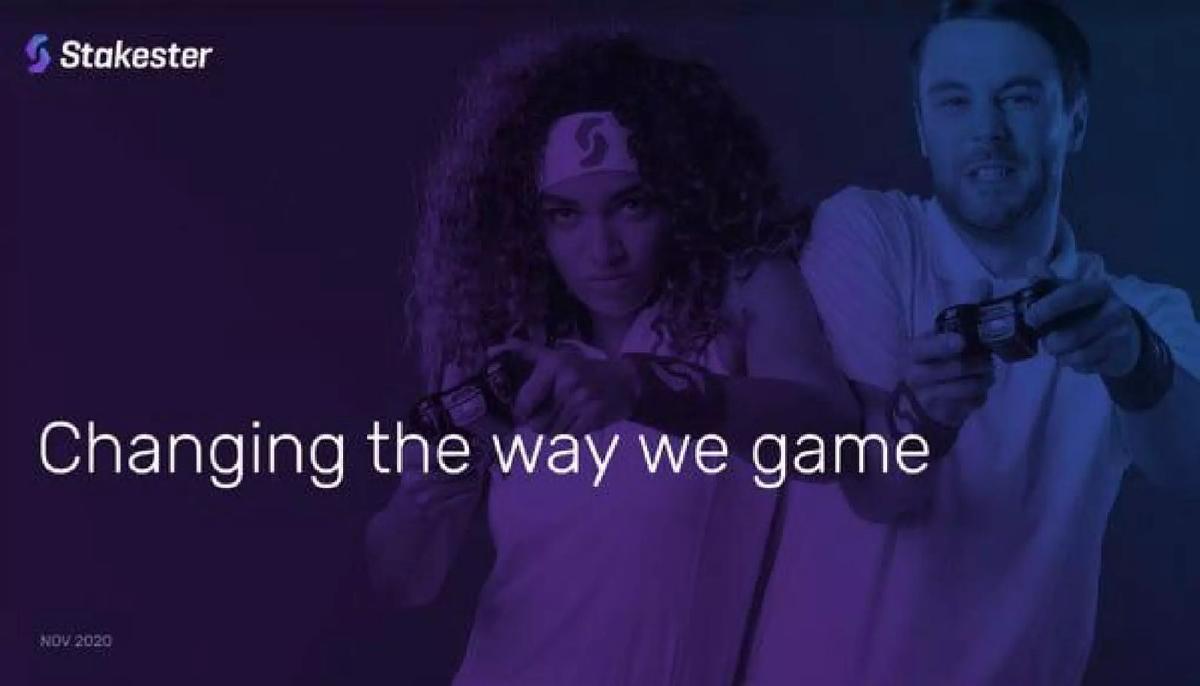
Slide 1 serves as the title card with the tagline "Changing the way we game." It features high-contrast imagery of gamers, setting a dark, energetic tone that persists throughout the presentation. The date is listed as Nov 2020, suggesting this version of the deck may have been used for follow-on interest or a bridge after the initial 2019 formation.
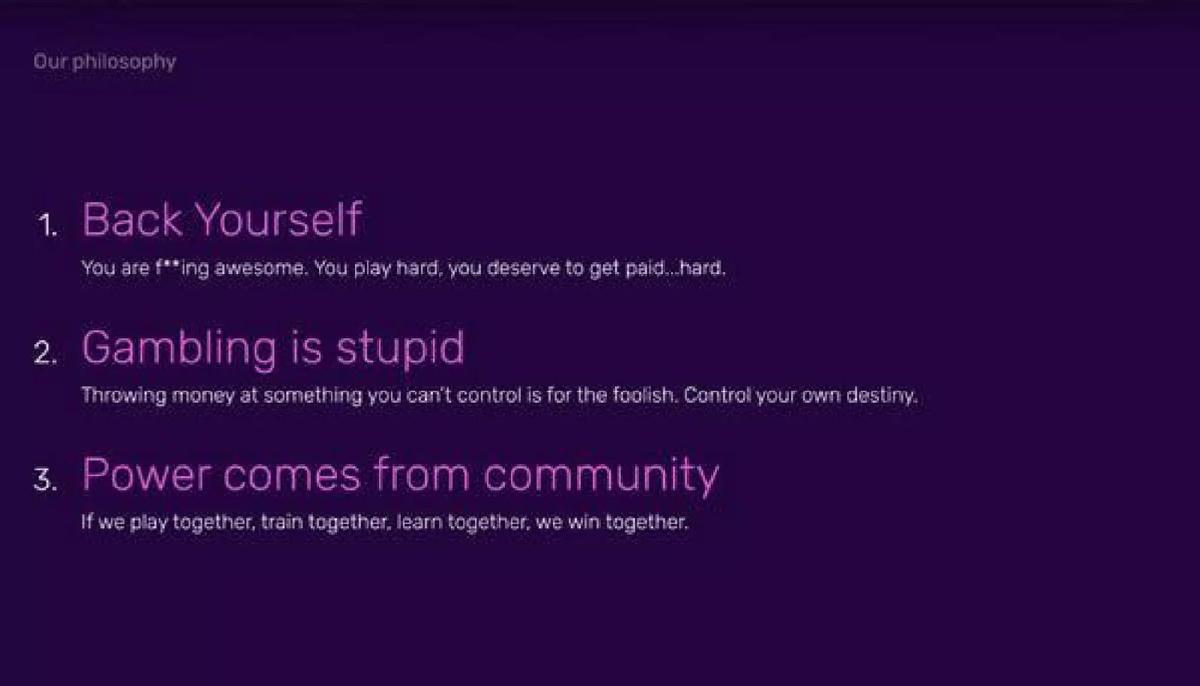
Slide 2 , titled "Our philosophy," is the most important slide for establishing the brand's voice. It lists three pillars: "Back Yourself," "Gambling is stupid," and "Power comes from community." By labeling gambling as "foolish" and for those who "can't control" the outcome, Stakester creates a moral and logical distinction between their product and traditional sportsbooks. This is a strategic move to lower the psychological barrier for potential users and investors who might be wary of the gambling industry.
The Problem and Solution (Slides 3-5)
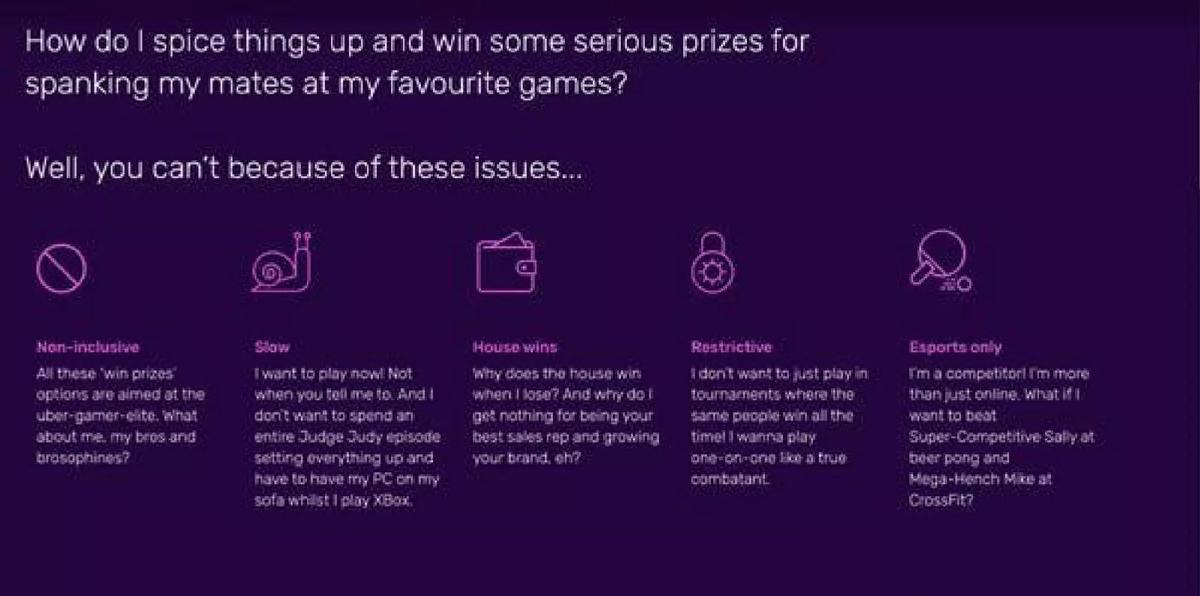
Slide 3 identifies the pain points in the current gaming landscape. It uses informal language like "spanking my mates" and "bros and brosophines." The five issues listed are: Non-inclusive (aimed at elites), Slow (long setup times), House wins (the house takes too much), Restrictive (tournament-only), and eSports only (ignoring physical sports like beer pong or CrossFit). This slide effectively argues that there is no easy way for casual competitors to monetize their skills in a 1v1 format.
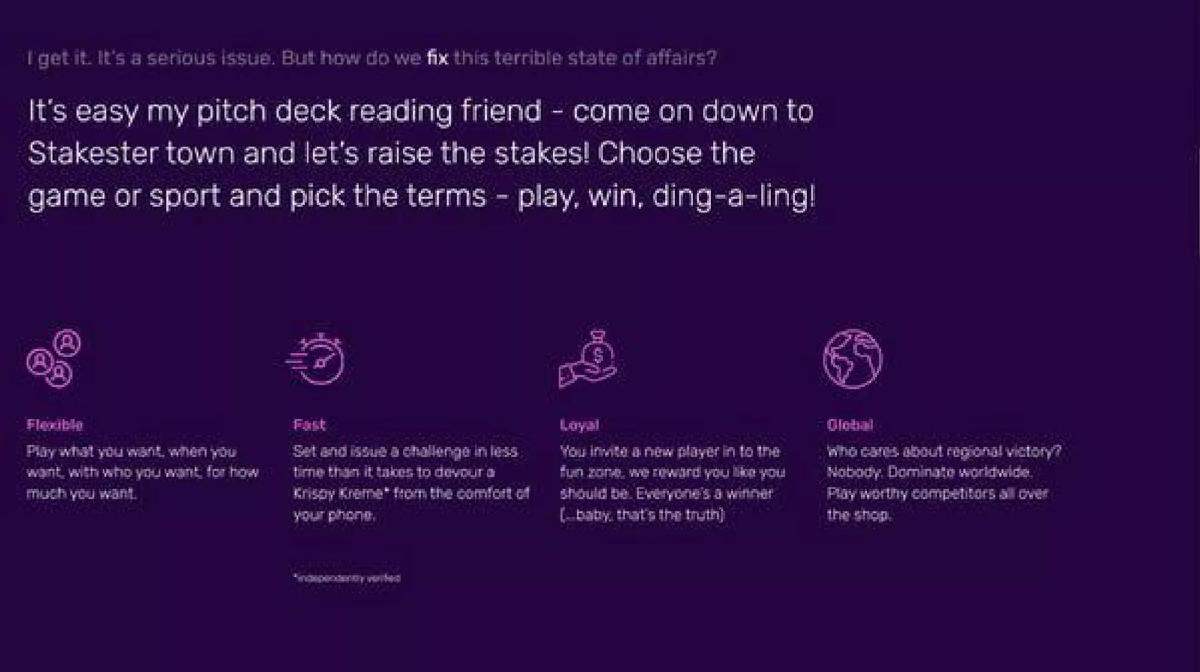
Slide 4 introduces the solution with the playful greeting, "It’s easy my pitch deck reading friend." It promises a platform that is Flexible, Fast, Loyal, and Global. The claim that a user can issue a challenge in less time than it takes to "devour a Krispy Kreme" emphasizes the mobile-first, friction-less nature of the app.
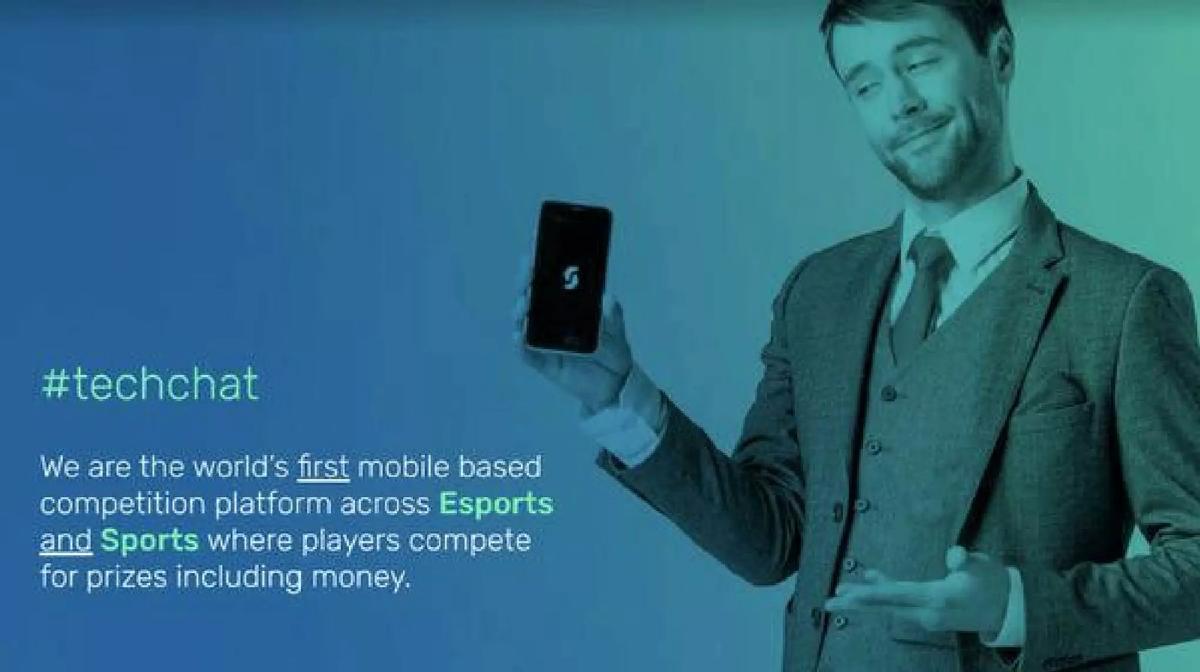
Slide 5 acts as a transition, using the hashtag #techchat. It provides the formal definition of the company: "the world's first mobile based competition platform across Esports and Sports where players compete for prizes including money." This is the first time the deck explicitly mentions money as a prize, anchoring the previous "philosophy" in a concrete business model.
Market Opportunity and Revenue (Slides 6-7)
Slide 6 tackles market sizing. It cites a Primary Addressable Market of 2.4bn games played in June. More importantly, it uses a bottom-up calculation for Year 1. It notes that their "closest competitor" (unnamed) achieved 200k games in July when they were two years old. Stakester sets a goal to reach this in six months, which they equate to $2m revenue per annum. This is based on an average entry fee of $5 and a 10% Stakester fee. This slide is crucial because it provides the unit economics of a single transaction.
Slide 7 outlines the growth and revenue strategy. It claims the product is "inherently viral" because "it takes two to tango"—meaning every user must bring an opponent. The revenue streams are simplified into "Fees per challenge" and "Subscription." The lack of detail on the subscription model is a notable omission, as it leaves the investor wondering what value-add features would justify a recurring cost in a transactional marketplace.
Validation and Competitive Edge (Slides 8-9)
Slide 8 presents survey data from 600 gamers in the UK and US. The "sexy numbers" include: 67% play 2hrs+ a day, 63% would back themselves financially, 47% play 21+ matches a day, and 37% would stake $10+ on themselves. This data is used to prove that the appetite for self-wagering exists among the core gaming demographic.
Slide 9 uses a grid to explain why Stakester is "deliciously awesome." It highlights the Squad, Timing, Loyalty, Market Approach, Product, and Technology. The "Timing" section claims the technology is finally available and the market is established but not exploited. The "Product" section reiterates that they are the only ones offering both eSports and physical Sports (like the aforementioned CrossFit or beer pong).
The Team and Legal Legitimacy (Slides 10-11)
Slide 10 is the "Squad" slide, and it is the strongest evidence of the company's potential. It features:
Tom Fairey (Founder): Previously a founding team member at a tech startup that grew from 0 to £125m valuation in two years. · Monika Hathaway (Head of Growth): Former MD at Lewis PR. · Leander Hambley (Lead Developer): Co-creator of the acclaimed 'Prison Architect.' · Gary J. Foreman (CTO): Co-founder of Rockstar Games, the creators of 'Grand Theft Auto.'
The inclusion of a Rockstar Games co-founder is a massive credibility signal in the gaming world, suggesting the platform will have the technical infrastructure and industry connections to scale.
Slide 11 addresses the "legal conundrum." It states they have sought advice from leading law firms and gaming commissions. The key takeaway is that Stakester is "officially confirmed as non-gambling and therefore not regulated in the UK and 39 US states." For an investor, this slide mitigates the single largest risk factor associated with the business model.
Traction and Partnerships (Slides 12-14)
Slide 12 highlights a partnership with ESL (Europe's #1 eSports League). This provides "instant access to the most competitive gamers" and serves as a primary distribution channel. Partnerships with established leagues are vital for a platform that needs to verify match results and prevent cheating.
Slide 13 provides early traction metrics. It mentions a manifesto video watched by 12,000 people and an app launch in early April that saw 3,000 downloads in the first twenty days. It claims 15,000+ Active Users. These numbers, while modest, show a clear path from interest to active participation.
Slide 14 is the contact slide featuring the founder, Tom Fairey, in a celebratory pose. It includes email, website, and office locations in London and NYC. Notably, there is no "Ask" on this slide or anywhere else in the deck. There is no mention of how much capital is being raised in this specific round or what the milestones for the next 18 months will be.
What Works
The Rockstar CTO: Leveraging Gary J. Foreman’s pedigree is the deck's strongest move. It transforms a "betting app" into a "gaming technology company." · Legal Clarity: By naming the specific number of US states (39) where they are legal, they answer the most obvious investor question before it can be asked. · Brand Voice: The deck feels like the product. It is aggressive, competitive, and youthful. This consistency suggests the founders deeply understand their target user. · Bottom-Up Market Sizing: Instead of claiming a trillion-dollar market, they look at a specific competitor's game volume and apply their own fee structure to it. This is much more believable.
What is Missing
The Ask: The deck never says how much money they want. While this is common in decks shared publicly after a round, a fundraising deck must have a clear target and a plan for the funds. · Unit Economics (CAC/LTV): While they show the 10% fee, they don't show how much it costs to acquire a user (CAC) or how long that user stays on the platform (LTV). In a viral-dependent model, these numbers are life or death. · Product Depth: There are no screenshots of the actual user experience. How does the app verify who won a game of FIFA or a CrossFit match? The "how it works" is glossed over in favor of "why it matters." · Financial Projections: Beyond the Year 1 estimate, there is no roadmap for when the company becomes profitable or what the long-term revenue ceiling looks like.
What a Founder Should Copy
The "Philosophy" Slide: Use a philosophy slide to frame your industry's biggest negative as your biggest opportunity. Stakester turned "gambling is risky" into "our platform is about skill and control." · Validation Surveys: If you don't have massive traction yet, a well-structured survey of 600+ target users (Slide 8) is a great way to prove market demand. · The "Squad" Layout: Notice how Slide 10 focuses on specific, high-value achievements (valuation growth, specific game titles) rather than just a list of former employers. · Direct Problem Statements: Slide 3 doesn't use corporate jargon. It uses the language of the customer. If your product is for gamers, talk like a gamer.
Frequently asked questions
- How does Stakester differentiate itself from gambling platforms?
- Stakester positions itself as a 'skill-based competition platform.' On slide 2, they explicitly state 'Gambling is stupid' because it involves throwing money at things you cannot control. By focusing on games of skill where players 'control their own destiny,' they legally distance themselves from traditional betting, which they claim is confirmed by legal counsel in the UK and 39 US states (Slide 11).
- What is the primary revenue model for the platform?
- According to slide 7, Stakester utilizes two core revenue streams. The first is 'Fees per challenge,' which is a standard rake or commission on every match played for prizes. The second is a 'Subscription' model, though the deck does not specify the pricing tiers or the specific features included in the subscription.
- Who is the target audience for Stakester?
- While the deck claims 'if you are alive and like to compete, we've got your back,' slide 6 narrows the primary focus to gamers aged 18 to 35. This demographic is further validated on slide 8 through a survey of 600 gamers in the UK and US who play more than 2 hours a day.
- Does the deck show actual product functionality?
- The deck is light on UI/UX walkthroughs. Slide 11 shows a small mockup of 'Version 1.0' on a smartphone screen, but it does not detail the user flow for issuing a challenge, verifying a winner, or withdrawing funds. It relies more on the promise of the technology being 'slicker than Ryan Reynolds' than on technical specifications.
- What are the biggest risks identified in the deck?
- The deck identifies the 'complex legal conundrum' of skill-based betting on slide 11. It also hints at the difficulty of user acquisition by emphasizing 'community growth' and 'viral' mechanics on slide 7, suggesting that the platform's success is entirely dependent on maintaining a critical mass of active competitors.