The Atlas pitch deck is a masterclass in identifying a massive, underserved market—local government—and proposing a business model that bypasses its biggest hurdle: the procurement cycle. Rather than selling to cities, The Atlas built a free community for city officials to share case studies, then monetized the vendors trying to reach them. The deck highlights a 66% decrease in the B2G sales cycle and $300K in ARR from paying company customers. With only 12 slides, the presentation relies heavily on emotional resonance (the 'Selling to government is the worst' slide) and clear traction metric…
Key takeaways
- The deck identifies a $1.6 trillion annual market in local government spending on slide 10.
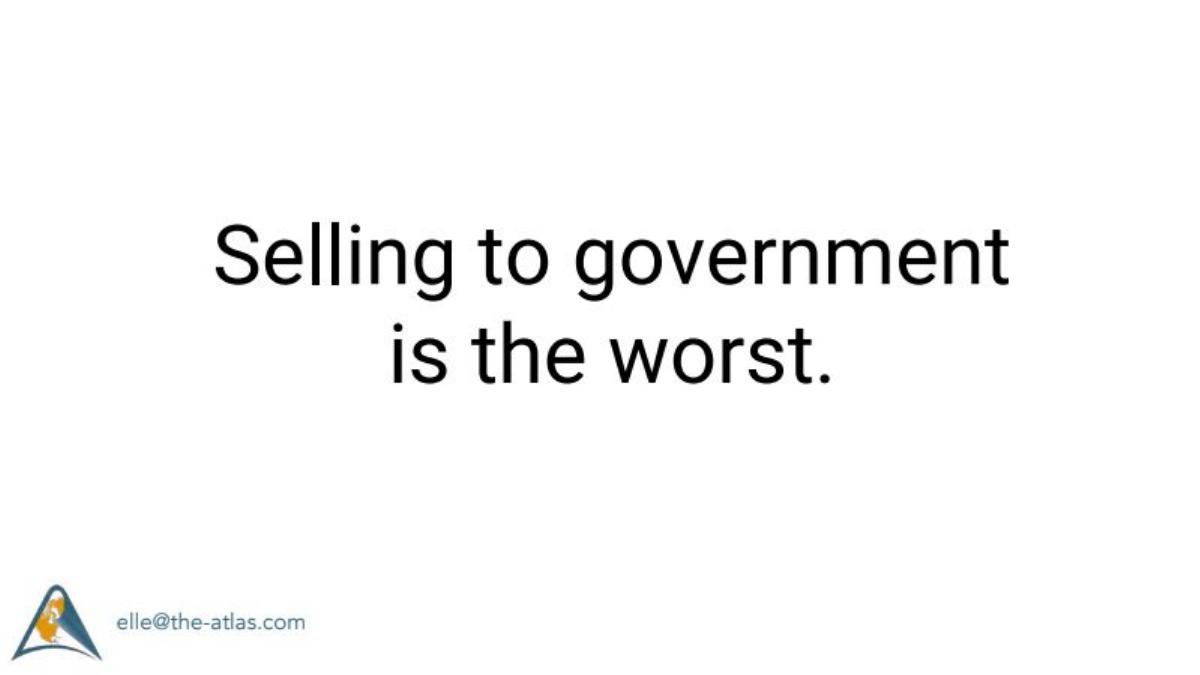
- Slide 2 uses a bold, emotional hook stating 'Selling to government is the worst' to immediately align with investor frustrations.
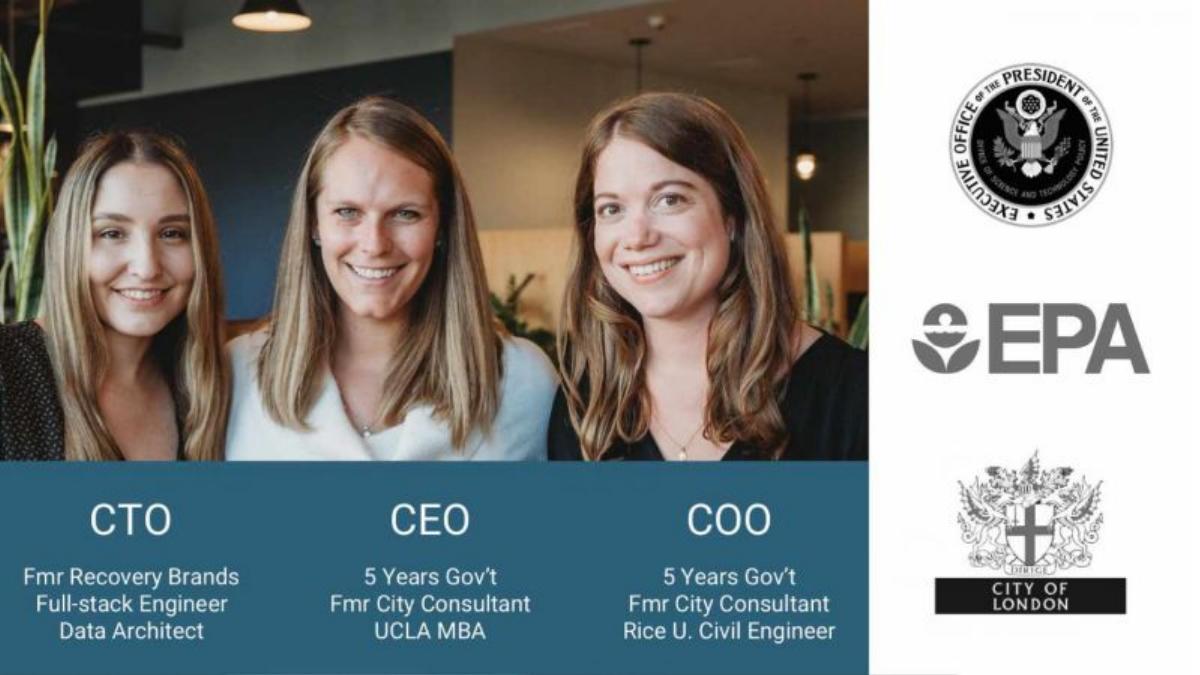
- The founders demonstrate deep domain expertise on slide 6, citing experience with the EPA, City of London, and the Executive Office of the President.
- Traction is clearly defined on slide 8 as 12,000 city users and $300,000 in ARR from paying company customers.
- Slide 11 claims a 66% decrease in the B2G sales cycle, a critical metric for the government tech sector.
- The business model avoids the 'city sales' trap by offering a free platform for officials (slide 7) while charging vendors.
- The deck lacks a formal 'Ask' slide, omitting the specific funding amount or valuation sought during the round.
- Future product plans on slide 9 include a 'Buy Now' feature for municipal software, indicating a move toward direct marketplace transactions.
The Atlas: A Strategic Approach to the $1.6T GovTech Market
The Atlas pitch deck is a concise 12-slide presentation that focuses on a specific pain point: the friction of B2G (Business-to-Government) sales. By framing the problem through the eyes of both the city official and the vendor, the founders built a compelling case for a platform that functions as a LinkedIn-meets-Pinterest for local government. The deck is notable for its lack of fluff and its heavy reliance on a few high-impact metrics.
Slides 1-3: The Emotional Hook and the Problem
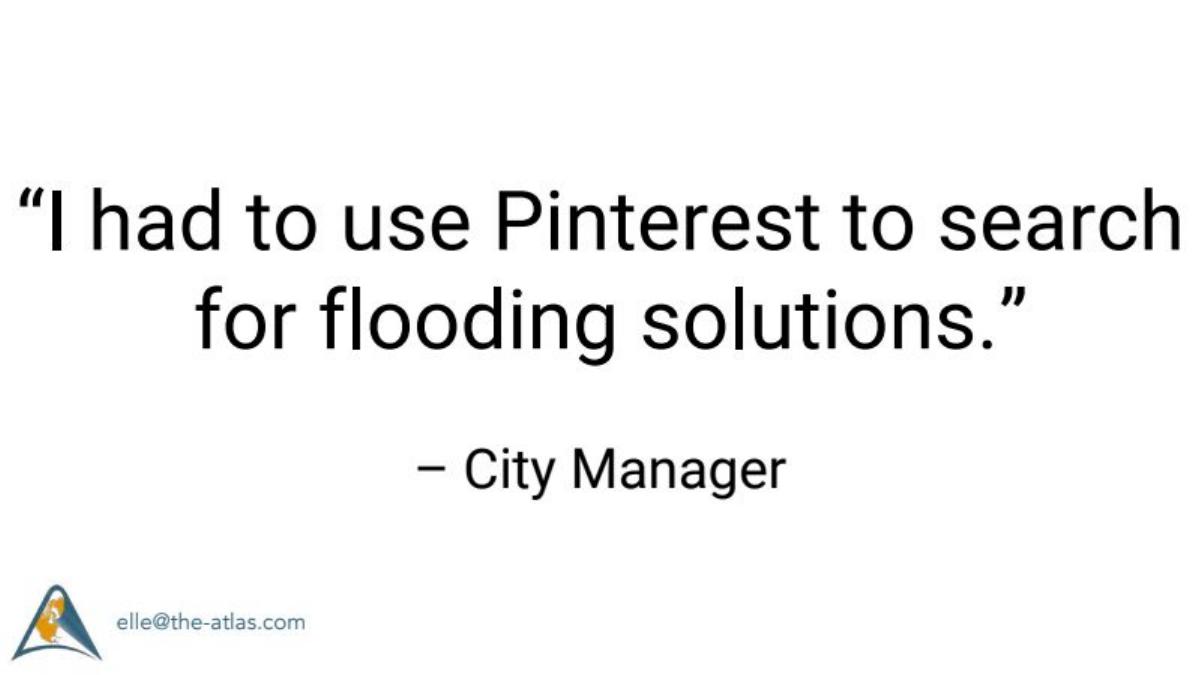
Slide 1 introduces the company name and a clear value proposition: "Unlocking the $1.6T local government market." It establishes the scale of the opportunity immediately. Slide 2 is a rare example of a 'mood slide' that works. It simply states, "Selling to government is the worst." This resonates with any investor who has ever backed a GovTech company and watched it die in a 24-month procurement cycle. Slide 3 provides a specific, almost absurd anecdote to illustrate the problem: a quote from a City Manager stating they had to use Pinterest to find flooding solutions. This highlights the total lack of professional infrastructure for municipal knowledge sharing.
Slides 4-5: The Inefficiency of Current Solutions
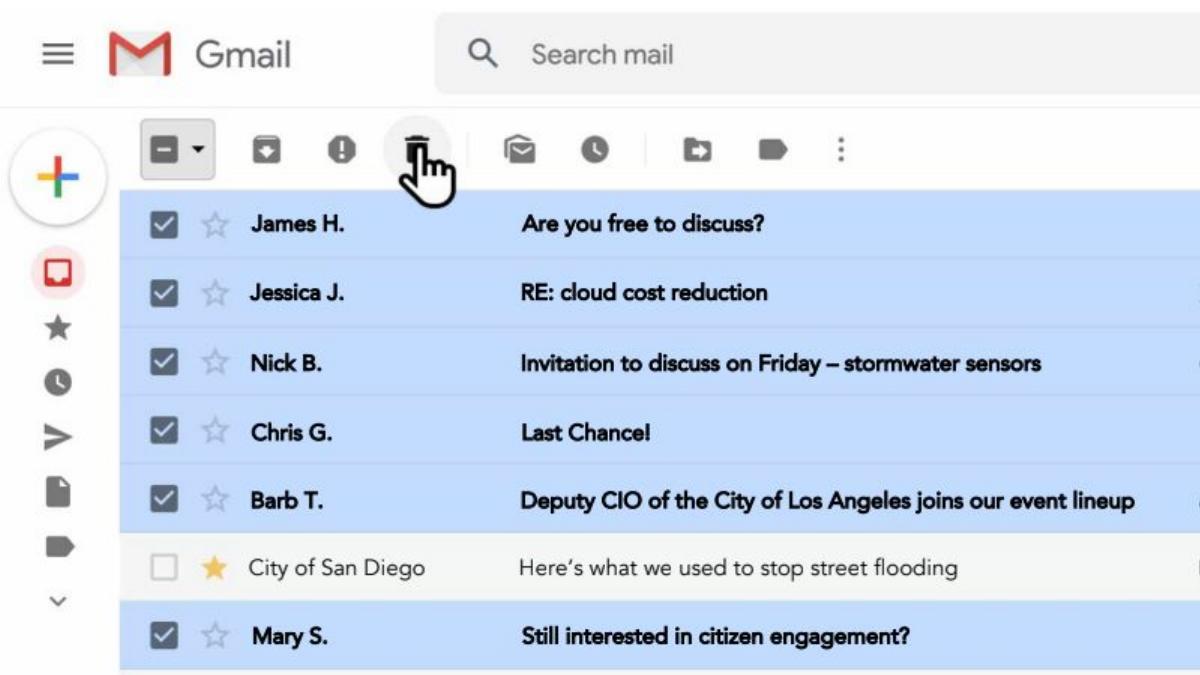
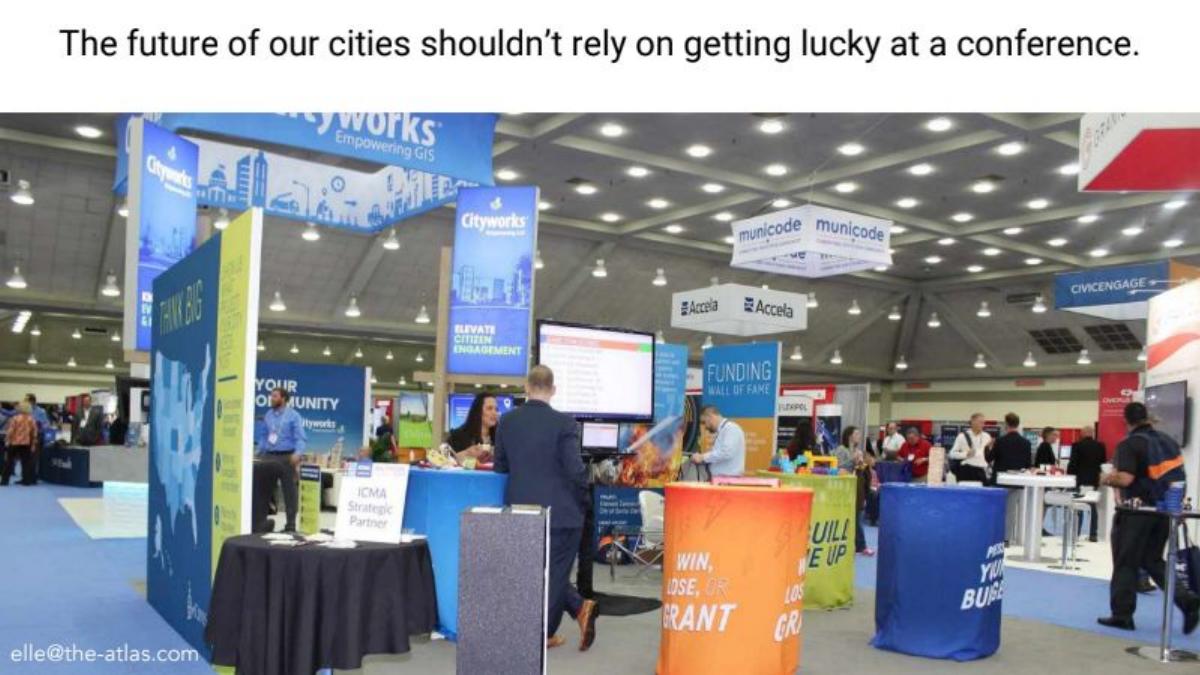
Slide 4 uses a visual of a Gmail inbox to show how city officials are bombarded with vendor outreach. The cursor is shown clicking 'delete' on emails from vendors, while a single email from the "City of San Diego" about stopping street flooding remains unselected. This visualizes the core insight: city officials trust their peers, not salespeople. Slide 5 reinforces this by showing a crowded, expensive-looking trade show floor with the caption, "The future of our cities shouldn't rely on getting lucky at a conference." These slides effectively argue that the current B2G sales model is broken for both sides.
Slide 6: Team and Credibility
The team slide is exceptionally strong for a pre-seed round. It features three founders: a CTO who was a former Data Architect at Recovery Brands, a CEO with 5 years of government experience and a UCLA MBA, and a COO with 5 years of government experience and a Civil Engineering degree from Rice University. The logos on the right—the Executive Office of the President , the EPA , and the City of London —provide immediate institutional credibility. They aren't just building a social network; they are government insiders building a tool they know the market needs.
Slides 7-9: The Product and Business Model
Slide 7 introduces the solution: "The Atlas is a free online community for city officials." The screenshot shows a clean interface where users can browse case studies (e.g., "Smart Sewer System in Pawnee, IN") and follow topics. By keeping the platform free for the demand side (cities), they remove the biggest barrier to entry. Slide 8 reveals the traction: 12,000 city users leading to $300,000 in ARR from paying company customers. This is the 'aha' moment of the deck—proving that vendors will pay for access to a pre-qualified audience of city officials. Slide 9 looks toward the future, showing a "Buy Now" button for municipal software, suggesting a transition from a lead-generation platform to a full-scale marketplace.
Slides 10-12: Market Size and Final Traction
Slide 10 breaks down the $1.6 trillion market into specific verticals: waste water, air quality, drinking water, solid waste, noise pollution, and energy management. This helps investors visualize where the money is actually being spent. Slide 11 summarizes the three most important metrics: 12,000 city users in less than a year, $300K ARR, and a 66% decrease in the B2G sales cycle . That final metric is the most powerful, as it directly addresses the problem stated on slide 2. Slide 12 is a simple contact slide for Elle Hempen, the CEO.
What Makes This Deck Work?
The Atlas deck succeeds because it identifies a massive market and a massive problem, then provides a simple, scalable solution. The founders don't get bogged down in technical details of the platform; instead, they focus on the network effect and the shortened sales cycle . The use of a 'freemium' model where the government pays nothing is a brilliant way to bypass the very procurement hurdles they are criticizing. The deck also benefits from a very high 'signal-to-noise' ratio, with almost no unnecessary text.
What is Missing?
The Ask: There is no slide detailing how much money they are raising, what the terms are, or how the funds will be allocated. · Competition: The deck assumes there are no direct competitors, or that traditional conferences and Pinterest are the only alternatives. A slide addressing other GovTech platforms would have added depth. · Unit Economics: While $300K ARR is impressive, the deck doesn't explain the Cost of Customer Acquisition (CAC) for the vendors or the Lifetime Value (LTV) of those contracts. · Roadmap: Beyond the "Buy Now" button on slide 9, there is no timeline for product development or geographic expansion.
Founder's Playbook: What to Copy
The Emotional Hook: If you are in a difficult industry (like GovTech, HealthTech, or LegalTech), don't be afraid to state plainly that the current system "is the worst." It builds immediate rapport with investors who know the space. · Peer-to-Peer Trust: The Atlas correctly identified that in B2B, the best marketing is peer validation. If your product facilitates this, make it the center of your pitch. · Clear Traction: Using large, bold numbers for users and ARR (Slide 8) is much more effective than complex charts. · Institutional Logos: If your team has worked for recognizable entities, put those logos front and center. In government and enterprise sales, pedigree equals de-risking.
Frequently asked questions
- What was the business model of The Atlas?
- The Atlas operated as a B2B SaaS platform and private social network. According to slide 7, the platform was free for city officials to browse case studies and post questions. Revenue was generated from 'paying company customers' (vendors), as shown on slide 8, who paid for access to the 12,000 city users on the platform.
- How did The Atlas prove market demand?
- The deck uses a combination of user growth and revenue. Slide 11 notes that they reached 12,000 city users in less than one year. More importantly, they converted this engagement into $300,000 in Annual Recurring Revenue (ARR) from vendors, proving that companies were willing to pay to bypass traditional government sales hurdles.
- Who were the founders of The Atlas?
- The team consisted of three female founders with significant government experience. According to slide 6, the CEO and COO both had 5 years of government experience and were former city consultants. Their backgrounds included the EPA, the City of London, and the Executive Office of the President of the United States.
- What specific problem were they solving in the government sector?
- They addressed the inefficiency of information sharing and procurement. Slide 3 quotes a city manager who had to use Pinterest to find flooding solutions, while slide 5 argues that city progress shouldn't rely on 'getting lucky at a conference.' Their solution was a centralized digital repository of municipal case studies.
- What happened to The Atlas after this deck was used?
- According to the catalogue listing, The Atlas was acquired by Government Executive Media Group for an undisclosed amount. The deck successfully positioned them as a high-growth bridge between the $1.6 trillion municipal market and the vendors serving it, leading to a strategic exit in 2019.