The Flame in the Flood deck is a 16-slide visual journey that leverages the immense industry experience of its founding team to sell a creative vision. Rather than focusing on market size or monetization strategies, the deck leans heavily into the 'roguelike survival adventure' genre, using evocative art and specific gameplay loops to define the player experience. The founders, hailing from franchises like Bioshock, Halo, and Rock Band, use their pedigree as the primary de-risking mechanism. The deck successfully communicates a unique aesthetic—a procedurally generated river world—while groun…
Key takeaways
- The deck uses a high-concept pitch on slide 3, describing the game as 'Toobin' meets Oregon Trail' to instantly communicate the core loop.
- Founder pedigree is the primary selling point, with team members citing roles on Bioshock Infinite, Halo 2/3, and Rock Band on slide 15.
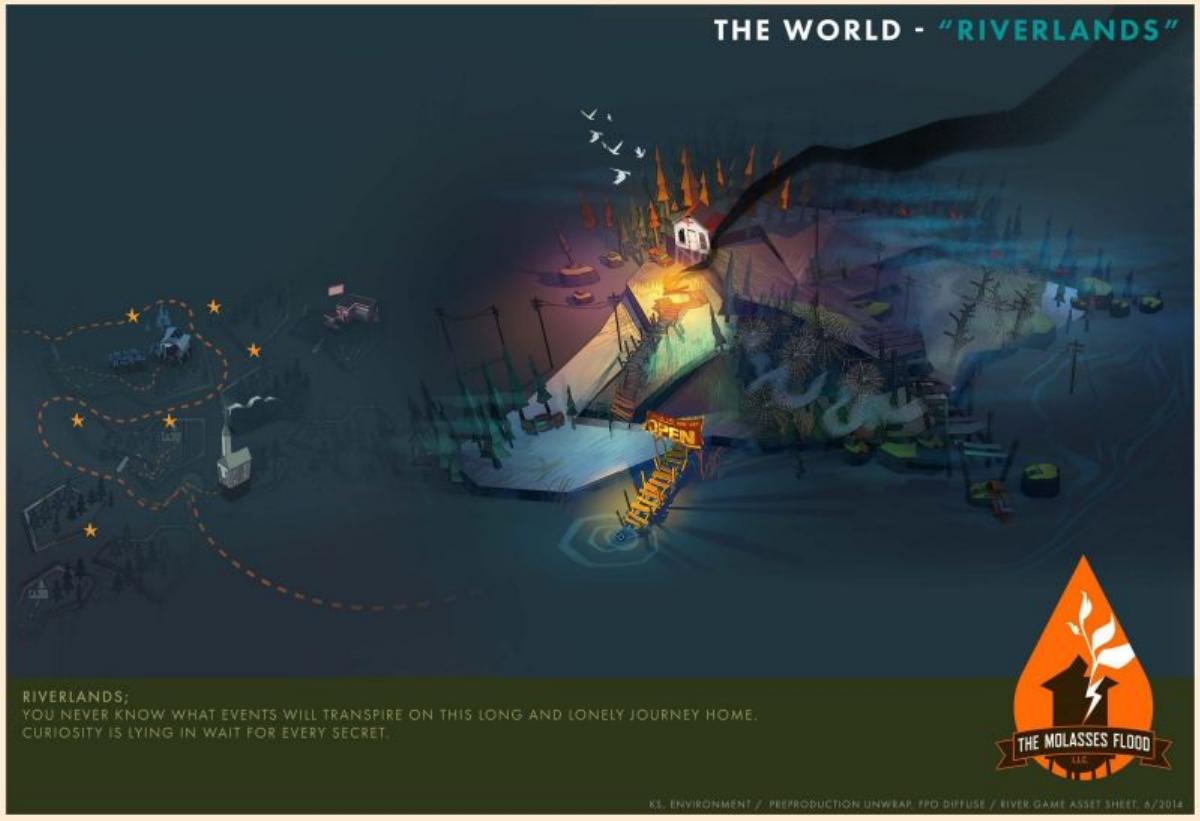
- Atmospheric art direction is used to sell the 'Riverlands' setting, emphasizing a 'long and lonely journey home' on slide 4.
- The deck details specific survival mechanics, including crafting traps and leveraging systemic behaviors, as seen on slide 2.
- Customization and progression are highlighted through the 'Player Raft' slide (slide 7), showing how players can upgrade their 'Piece of Ship' with skins and ornaments.
- The inclusion of a dedicated soundtrack slide (slide 14) featuring Chuck Ragan signals a focus on high-production value and cross-media appeal.
- The deck omits all financial projections, market analysis, and specific funding asks, focusing entirely on product and team.
- Gameplay is demonstrated through pre-production UI mockups on slides 9, 10, and 11, showing the player's status through 'rains gone-by' and environmental hazards.
The Visual Narrative of a AAA-Pedigree Indie
The Flame in the Flood pitch deck is a masterclass in how to sell a creative vision when your team’s resume is your strongest asset. In the gaming industry, where execution is everything, The Molasses Flood chose to lead with atmosphere and experience rather than spreadsheets. This teardown examines how they used 16 slides to define a new survival sub-genre.
Slide 1: Title and Branding
The cover slide is minimalist, featuring the game title and the studio logo: The Molasses Flood LLC. The imagery—a water tower with a plant growing through a crack—immediately sets a tone of post-apocalyptic reclamation. There are no taglines here; the art does the heavy lifting.
Slide 2: The High-Level Concept
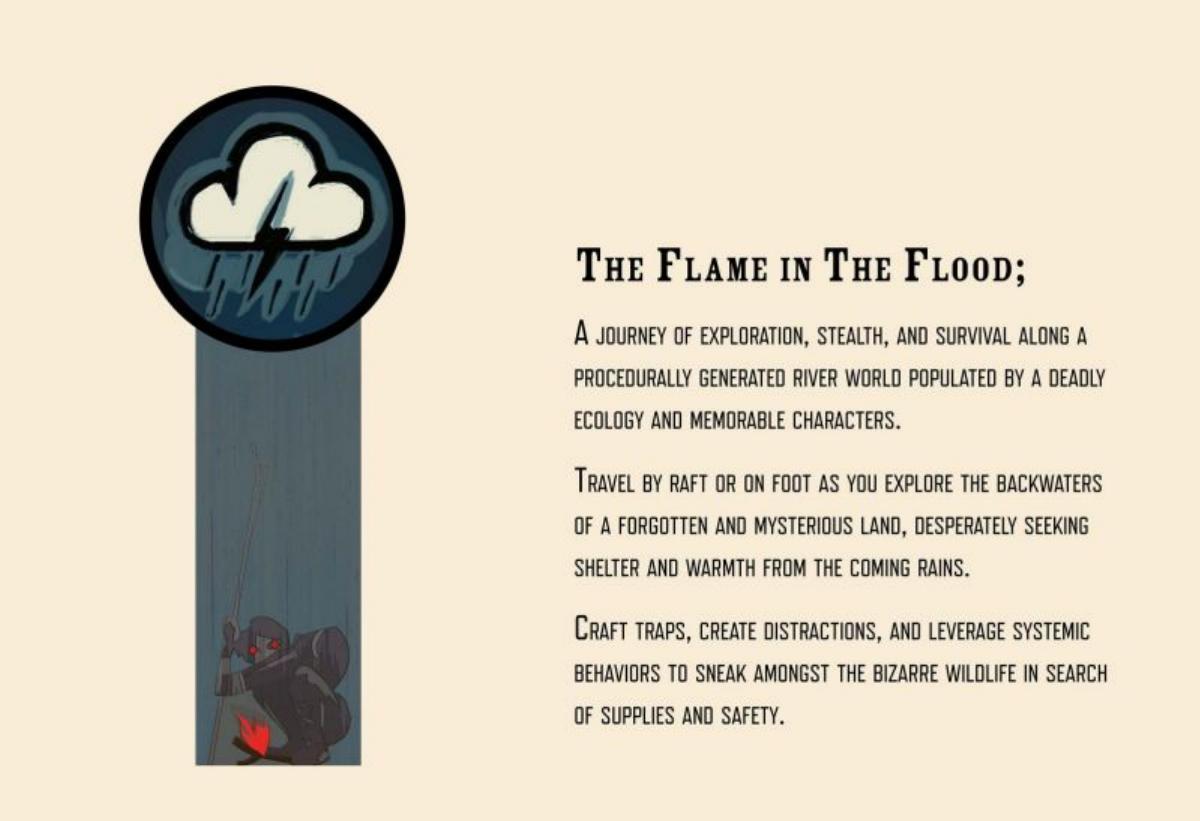
Slide 2 provides the first text-heavy description. It defines the game as a "journey of exploration, stealth, and survival along a procedurally generated river world." It lists three core pillars: travel (raft or foot), survival (seeking shelter and warmth), and systems (crafting traps and leveraging systemic behaviors). This slide is crucial because it moves the project from a vague idea to a specific set of mechanics.
Slide 3: The Mechanical Hook
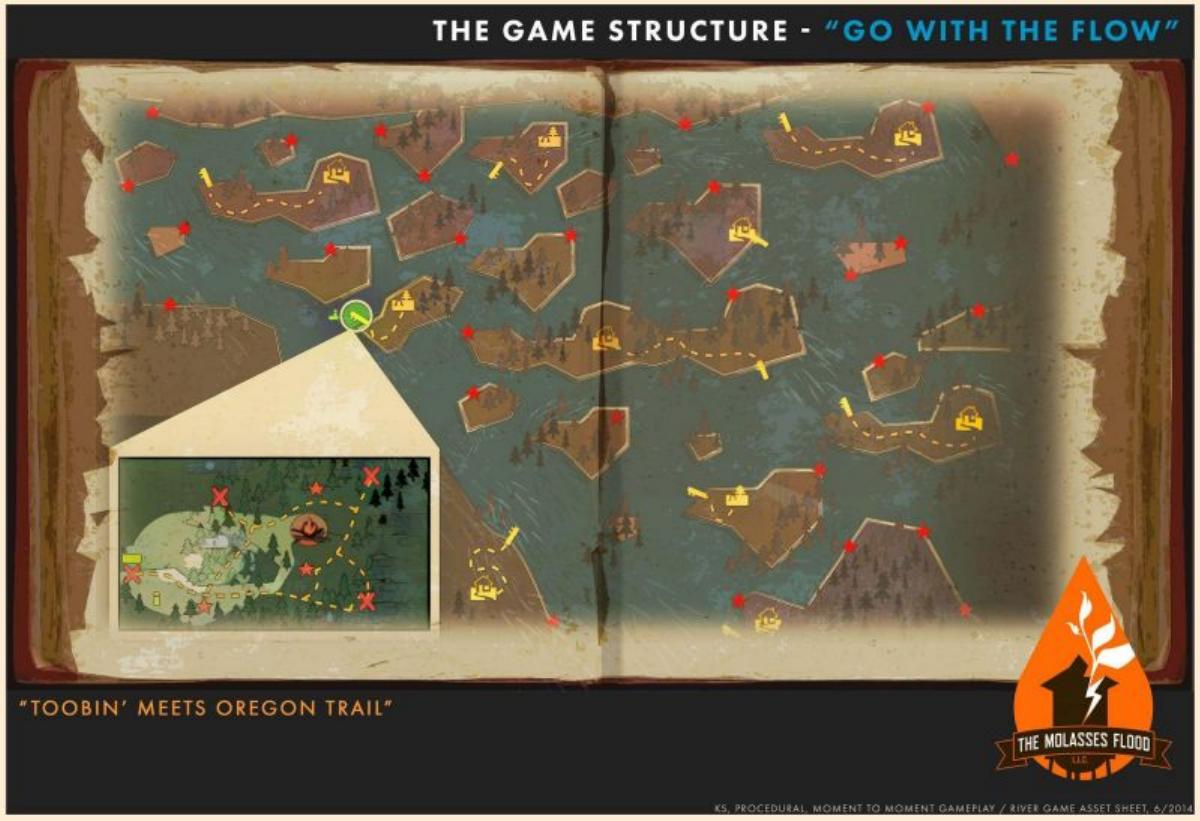
This is perhaps the most effective slide in the deck. Under the heading "THE GAME STRUCTURE - 'GO WITH THE FLOW'", it uses a simple analogy: "TOOBIN' MEETS OREGON TRAIL." By referencing two well-known games, the founders instantly communicate the gameplay loop to an investor. The visual shows a map of islands and river paths, illustrating the procedural nature of the world.
Slide 4: World Building
Titled "THE WORLD - 'RIVERLANDS'", slide 4 focuses on the emotional resonance of the setting. The text describes a "long and lonely journey home" where "curiosity is lying in wait for every secret." The art shows a dark, atmospheric environment with a single point of light at a dock, reinforcing the survival theme.
Slide 5: Character Design - Scout
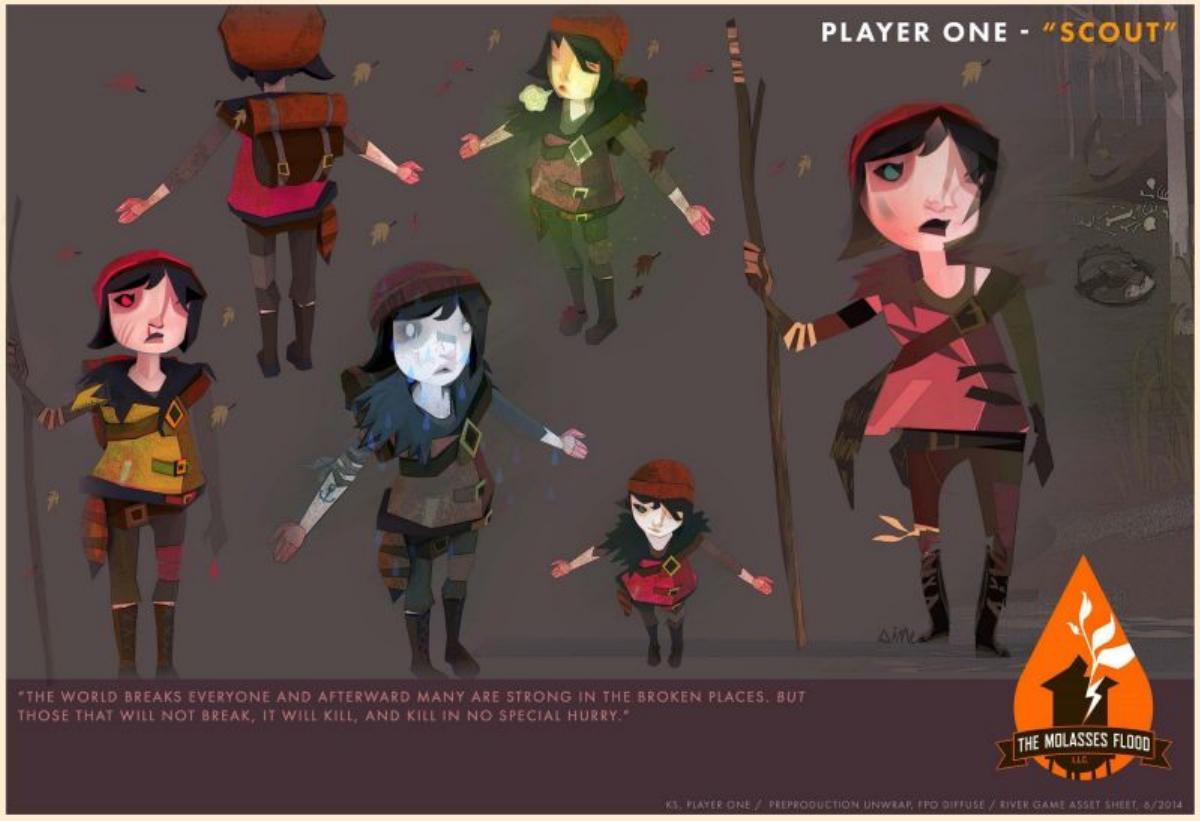
Slide 5 introduces the protagonist, "Scout." It shows various states of the character: cold, injured, and determined. A quote from Ernest Hemingway is included at the bottom: "The world breaks everyone and afterward many are strong in the broken places." This adds a layer of literary weight to the game's narrative ambitions.
Slide 6: The Companion
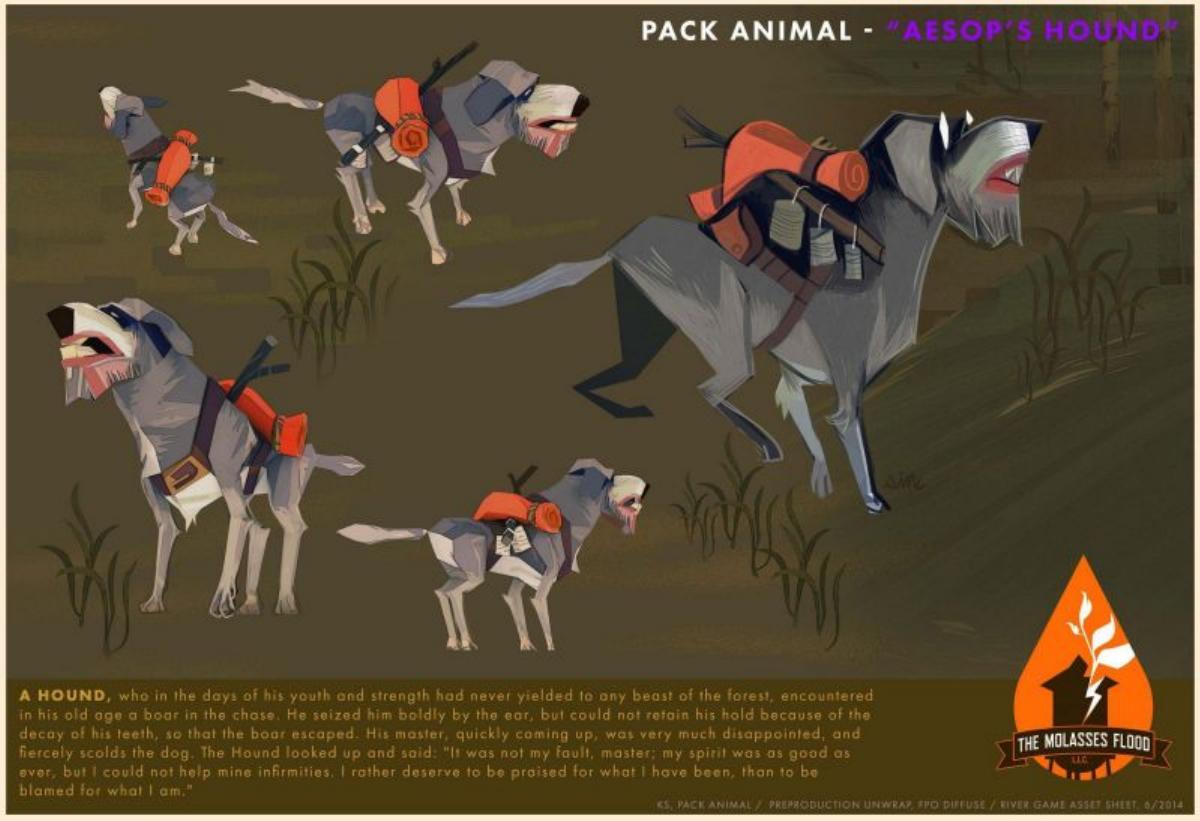
Every survival game needs a hook, and for The Flame in the Flood, it is "Aesop's Hound." Slide 6 details the pack animal, using a fable-like description of an old hound. This suggests that the dog is not just a mechanic (inventory space) but a narrative companion that grounds the player in the world.
Slide 7: The Raft - Piece of Ship
Slide 7 introduces the primary vehicle: the raft. It labels various components like "Player Storage," "Player Decal," and "Player Ornament." This slide is important because it hints at progression and customization—key drivers for player retention in the survival genre.
Slide 8: Local Color
Slide 8, titled "THE JOURNEY - 'WELCOME'", shows an NPC (Non-Player Character) shop. It promises "memorable local color" and "moment to moment" engagement. The art is cluttered and detailed, suggesting a world that is lived-in and mysterious despite its procedural generation.
Slides 9-11: Gameplay Mockups
These three slides are essential for proving the game is more than just concept art. They show the UI (User Interface) in action. Slide 9 shows "Thistledew Marsh Way" at night. Slide 10 shows "Belle Glade Fortunes" in bright daylight with rapids. Slide 11 shows "Hard Water Hammock" during a storm. The UI elements—icons for hunger, thirst, and temperature—show a functional understanding of survival mechanics. The use of "Rains Gone-By" as a time metric is a clever bit of world-building.
Slide 12: Exploration
Slide 12, "INTO THE WILD", shows the player on foot in a dark forest filled with spider webs. It uses a quote from Henry David Thoreau about the "tonic of wildness." This slide reinforces the idea that the game isn't just about the river; it's about the dangerous excursions onto land.
Slide 13: The Threat
Slide 13, "PLAYER DEMISE", shows a "Mangy Backwater Wolf." It’s a visceral image of a predator over a carcass. The tagline "All we are is what we leave behind" emphasizes the roguelike nature of the game, where death is permanent and impactful.
Slide 14: The Soundtrack
In a rare move for an early-stage pitch, slide 14 is dedicated to the music. It features Chuck Ragan and includes press clippings from Rolling Stone, Esquire, and New Noise Magazine. This signals that the game is a premium product with high-end partnerships already in place.
Slide 15: The Pedigree
This is the "Why Us" slide. It lists six founders, each with a staggering list of credits:
Bryn Bennett: Tech Director on Freedom Force 2, Lead Programmer on Titan Quest. · Chad LaClair: Senior Level Builder on Bioshock Infinite. · Damian Isla: Lead AI Programmer on Halo 2, 3, and O.D.S.T. · Forrest Dowling: Design Lead on Bioshock Infinite. · Gwen Frey: Senior Technical Animator on Bioshock Infinite. · Scott Sinclair: Art Director for Bioshock and Bioshock Infinite.
For an investor, this slide eliminates the "can they build it?" risk. This is a team that has shipped some of the most successful games in history.
Slide 16: Conclusion
The final slide is a simple "Thank You!" with the studio logo. There is no call to action, no contact info, and no specific ask. This suggests the deck was likely used as a visual aid for a meeting rather than a cold-outreach document.
What Works in This Deck
The Flame in the Flood deck succeeds because it understands its audience. It doesn't waste time explaining that the gaming market is large; it assumes the investor knows that. Instead, it focuses on differentiation and de-risking . The art direction is so strong that it serves as a proof of concept on its own. The "Toobin' meets Oregon Trail" comparison is a perfect elevator pitch that makes the complex idea of a procedural survival game immediately accessible.
What Is Missing
From a traditional venture capital perspective, this deck is missing almost everything. There are no financials , no market size (TAM/SAM/SOM), no roadmap , and no funding ask . It also lacks a competitive analysis. While it mentions "roguelike survival," it doesn't explain how it will compete with titles like Don't Starve or DayZ, which were popular at the time. However, in the world of indie game publishing, these omissions are often filled by a separate technical design document (TDD) and a budget spreadsheet.
What Founders Should Copy
Founders in creative industries should copy the analogy-driven pitching found on slide 3. Being able to describe your product as "X meets Y" is the fastest way to build a mental model for your audience. Additionally, the way the team presented their pedigree on slide 15 is exemplary. They didn't just list titles; they listed specific, high-impact roles on recognizable franchises. Finally, the use of UI mockups (slides 9-11) is a great way to show that you have thought through the user experience, even if the code isn't fully written yet.
Frequently asked questions
- What is the core gameplay loop described in the deck?
- The core loop is a survival journey along a procedurally generated river. As shown on slides 2 and 3, players travel by raft or on foot, seeking shelter and warmth while avoiding a 'deadly ecology.' The game combines river navigation (Toobin') with resource management and survival decision-making (Oregon Trail), requiring players to craft traps and manage supplies to reach the end of the river.
- How does the team establish credibility without financial data?
- The team relies entirely on their professional history. Slide 15 lists six founders with extensive AAA experience. Key credits include the Tech Director of Freedom Force 2, the Lead AI Programmer for Halo 2 and 3, and the Art Director for Bioshock and Bioshock Infinite. This 'all-star' indie team composition serves as the primary proof of execution capability.
- What role does art play in this pitch?
- Art is the central pillar of the deck. Slides 4 through 13 use stylized, high-contrast illustrations to establish the 'Riverlands' aesthetic. By showing character designs for 'Scout' (slide 5) and enemies like the 'Mangy Backwater Wolf' (slide 13), the deck proves that the visual identity of the game is already fully realized, which is critical for securing publishing or funding in the gaming sector.
- Is there a clear monetization or business model?
- No. The deck is a creative and technical pitch rather than a business plan. It does not mention price points, platform revenue splits, or sales projections. It focuses on the 'what' and 'who' of the project, assuming that the quality of the product and the experience of the team will justify the investment.
- What are the primary risks identified in the deck?
- The deck doesn't explicitly list risks, but it illustrates them through gameplay mechanics. Slide 13, titled 'Player Demise,' shows a wolf attacking the player, and slide 11 shows a raft in a storm. These slides emphasize that the game is a 'roguelike,' where death is a core part of the experience, suggesting a high-difficulty, high-engagement product.