The Good Face Project’s 11-slide deck is a masterclass in identifying a specific, high-friction bottleneck within a massive industry. By positioning themselves as the 'Beauty Industry’s R&D Cloud,' they address the chaotic intersection of 6.5k geographic regulatory changes, 3.2k retailer standards, and 167 consumer certifications. The deck effectively transitions from consumer sentiment (73% of millennials seeking clean products) to the technical nightmare of manual formulation spreadsheets. While the deck lacks explicit financial projections or a detailed team slide in this version, the trac…
Key takeaways
- The deck identifies a massive regulatory burden, citing 6.5k geographic regulation changes that brands must navigate (Slide 3).
- Consumer demand is quantified as a primary driver, with 3 out of 4 consumers wanting clean formulation (Slide 2).
- The 'Problem' is visualized as a fragmented ecosystem of 3.2k unique retailer standards and 167 consumer certifications (Slide 3).
- The solution, 'GF Formulator,' is presented as an 'AI-Powered R&D Sandbox' that integrates safety, regulations, and design (Slide 4).
- Traction is demonstrated across the entire value chain, including brands (Hero, Kopari), manufacturers (Givaudan), and retailers (Target) (Slide 5).
- The deck highlights the inefficiency of the status quo, specifically the reliance on '1 out of date spreadsheet' (Slide 3).
- The product features a '1-click' safety profile assessment for entire formulas (Slide 4).
- The company positions itself as an EvoNexus portfolio company and a Target Technology Accelerator participant (Slide 1, Slide 6).
The Beauty Industry's Digital Transformation
The Good Face Project's deck is a focused look at vertical SaaS in a sector that has historically been slow to digitize: cosmetic chemistry. While the beauty industry is worth hundreds of billions, the back-end R&D process has remained remarkably manual. This deck, which supported a $5.7M Seed round in 2022, focuses on the friction between increasing consumer demands for 'clean' products and the staggering complexity of global regulations.
Slide 1: Title and Positioning
The cover slide establishes a clear value proposition: "Beauty Industry’s R&D Cloud." By using the term "Cloud," the company immediately signals a SaaS business model. The sub-headline, "Science Backed. AI Powered," targets the two biggest trends in beauty tech. Notably, the slide features the EvoNexus logo, providing early institutional credibility.
Slide 2: The Consumer Mandate
Slide 2 focuses on the "Why Now?" from a consumer perspective. It cites that 3 out of 4 consumers want clean formulation. The data points are specific: 59% of women over 35 believe green beauty is important, and 73% of millennial women seek cleaner products. This slide establishes that the market demand is not just a trend but a fundamental shift in purchasing behavior that brands must address to survive.
Slide 3: The Complexity Crisis
This is arguably the strongest slide in the deck. It visualizes the "Problem" by showing a frustrated worker at a computer, surrounded by the numbers that define her struggle: 167 consumer certifications, 6.5k geographic regulation changes, and 3.2k unique retailer standards. The punchline is the "1 Out of date spreadsheet." This slide effectively argues that the current way of working is unsustainable, leading to increased R&D cycles, slower time to market, and higher innovation costs.
Slide 4: The Solution - GF Formulator
The deck introduces the "GF Formulator" as an AI-powered R&D sandbox. The slide uses a laptop mockup to show the UI, which categorizes formula feedback into three pillars: Safety, Regulations, and Design. The safety column uses a traffic-light color system (green, yellow, red) for ingredients like Aloe Barbadensis Leaf Juice vs. Benzyl Benzoate. It also lists features like "Ingredient INCI finder" and "Customized ingredient blacklists," showing a deep understanding of the chemist's daily workflow.
Slide 5: Traction and Social Proof
Slide 5 demonstrates impressive market penetration for a Seed-stage company. It divides its customers into three tiers: Brands, Manufacturers/Suppliers, and Retailers. Seeing Givaudan (a global leader in fragrance and flavors) alongside Target and Cos Bar suggests that The Good Face Project is positioning itself as the connective tissue for the entire industry. This multi-stakeholder adoption is a strong signal of a "network effect" or at least a platform that solves problems for every player in the value chain.
Slide 6: Expansion and Contact
The final slide shows a variety of household cleaning and personal care bottles, suggesting that the technology is applicable beyond just makeup and skincare. It includes the Target Technology Accelerator logo and a direct contact email for the founder. This slide hints at a much larger TAM (Total Addressable Market) including home care and potentially OTC pharmaceuticals.
What The Good Face Project Does Well
Quantifying the Chaos: The deck does an excellent job of putting numbers on the "regulatory headache." By citing 6,500 regulatory changes, they make the problem feel urgent and impossible to solve without automation. Founders often describe problems qualitatively; The Good Face Project describes them quantitatively.
Value Chain Breadth: Most B2B startups focus on one persona. This deck shows that they have captured the brand, the factory, and the storefront. This is a powerful narrative for investors because it suggests the product could become an industry standard rather than just a tool.
Visualizing the Product: Slide 4 doesn't just list features; it shows a functional dashboard. Investors can immediately see how a formulator would use the tool to check a formula against "Target" or "Sephora" standards with one click.
What is Missing from the Deck
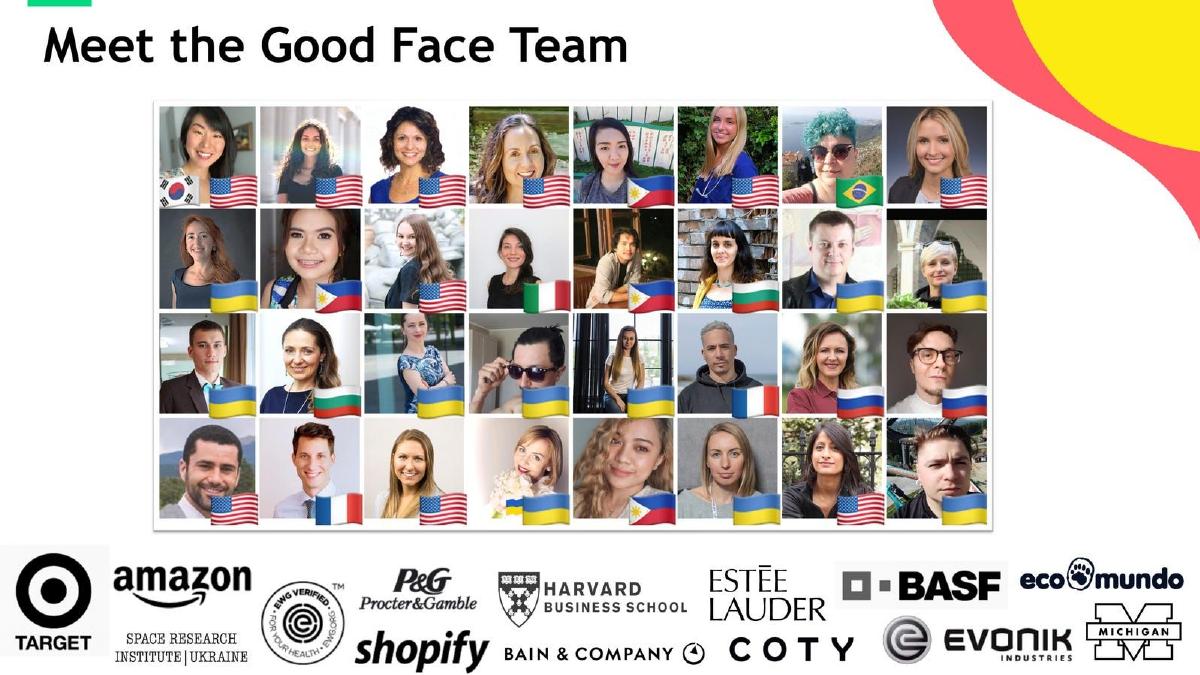
The Team: In the 11-slide version provided, there is no dedicated team slide. For a Seed round, the pedigree of the founders (especially in a technical field like AI and chemistry) is usually a primary decision factor for VCs. The absence of this information is a significant gap in the narrative.
Financials and Unit Economics: There is no mention of ARR, growth rates, or the pricing model. While the traction slide shows logos, it doesn't disclose if these are paid enterprise contracts, pilots, or freemium users. Investors would need to see the revenue quality to justify a $5.7M round.
The Competitive Landscape: The deck assumes a vacuum. It doesn't address legacy PLM (Product Lifecycle Management) software or other emerging beauty-tech competitors. Explaining why a generalist PLM fails where GF Formulator succeeds would strengthen the pitch.
The Ask: There is no slide detailing how much capital is being raised or how it will be spent. While we know the outcome was $5.7M, a standard pitch deck should include a roadmap of how the funds will be used to reach the next milestone (e.g., "Hiring 10 engineers," "Expanding into EU markets").
Lessons for Founders
Use 'The Spreadsheet' as the Enemy: If your startup replaces a manual process, explicitly call out the "Out of date spreadsheet." It is a relatable pain point for almost every enterprise buyer and a clear indicator of a market ready for disruption.
Segment Your Traction: If you have different types of customers, don't just lump them together. Segmenting them into Brands, Manufacturers, and Retailers (as seen on Slide 5) shows that you understand the ecosystem and have a strategy for each segment.
Bridge Consumer Trends to B2B Solutions: The Good Face Project didn't just say "we have a database." They started with "consumers want clean products." By linking a B2B tool to a massive B2C trend, they make the business feel like an inevitable part of a larger market shift.
Frequently asked questions
- What specific problem does The Good Face Project solve?
- The company solves the 'regulatory and R&D bottleneck' in the beauty industry. According to Slide 3, brands are currently overwhelmed by 6,500 regulatory changes, 3,200 retailer standards, and 167 certifications. By replacing manual spreadsheets with an AI-powered cloud, they reduce R&D cycles, time to market, and innovation costs.
- How does the product actually work for formulators?
- The 'GF Formulator' acts as an R&D sandbox. As shown on Slide 4, it allows users to input a formula and receive instant feedback on safety (color-coded ingredient lists), regulatory compliance across different geographies (US, EU, etc.), and design efficacy (plumpness, elasticity, etc.).
- Who are The Good Face Project's customers?
- Their customer base is diversified across the beauty supply chain. Slide 5 lists brands like Vegamour and The Honey Pot, major manufacturers like Givaudan and Roberts Beauty, and massive retailers including Target and Grove Collaborative. This suggests the platform is a standard-setting tool, not just a niche brand utility.
- What is the primary market driver mentioned in the deck?
- The primary driver is the shift toward 'Clean Beauty.' Slide 2 notes that 59% of women over 35 value green beauty and 73% of millennial women seek all-natural products. The deck argues that brands cannot meet this demand efficiently using legacy tools.
- What is missing from this pitch deck?
- This 11-slide version is missing several core venture components: a detailed team slide with backgrounds, a clear financial roadmap or 'The Ask' (though we know they raised $5.7M), a competitive landscape analysis, and specific unit economics like CAC or LTV.