Tylko’s Series C deck is a masterclass in positioning a physical product company as a technology-driven platform. By focusing on the 'furniture waste' problem—citing a rise from 2 million to 10 million tons of furniture thrown away in the US (Slide 3)—Tylko establishes a moral and economic imperative for high-quality, long-lasting shelving. The deck highlights a significant revenue jump from €4.3M in 2017 to €36M in 2020 (Slide 21), underpinned by an asset-light model that uses proprietary 'CAPE' design software and automated production (Slide 19). While the deck is visually stunning and data…
Key takeaways
- Net sales grew from €4.3M in 2017 to €36M in 2020, representing a 2.3x increase in the final year shown (Slide 21).
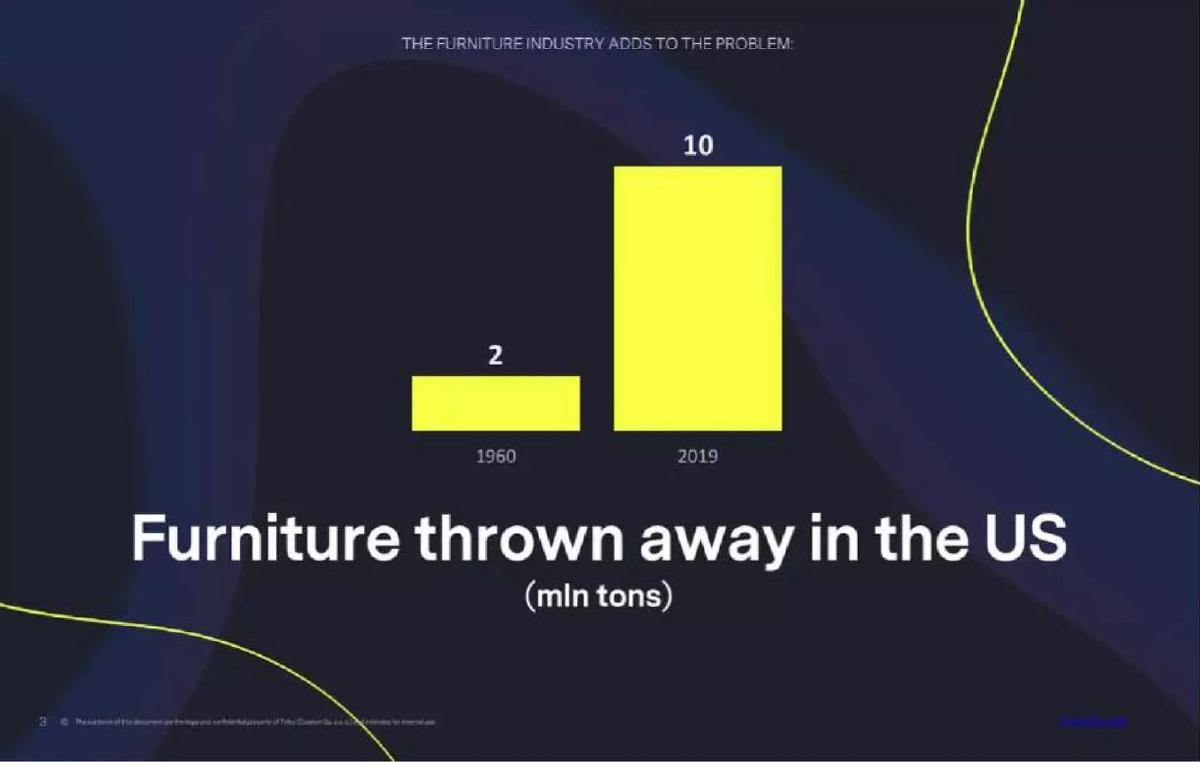
- The company identifies a massive sustainability gap, noting that US furniture waste increased from 2 million tons in 1960 to 10 million tons in 2019 (Slide 3).
- Tylko utilizes a proprietary design and configuration system called [CAPE] to bridge the gap between customer discovery and automated production (Slide 19).
- The business model is described as 'asset-light' because manufacturing is outsourced to partners in Poland (Slide 19).
- Germany (DE) is the company's largest market, accounting for 40% of sales in H1 2020 (Slide 21).
- The Serviceable Addressable Market (SAM) is defined as €60.7BN, focusing on storage furniture in regions with GDP per capita over 30k EUR (Slide 23).
- The founding team has a 10-year history of working together across past ventures (Slide 25).
- Product longevity is supported by a 'digital backup' system that allows customers to replace broken parts or reconfigure designs years later (Slide 15).
Introduction: The Series C Pivot to Tech-Enabled Customization
Tylko’s Series C pitch deck represents a transition point for the company. It moves away from being viewed as a simple Direct-to-Consumer (D2C) furniture brand and positions itself as a technology platform for mass customization. The deck is structured to justify a later-stage valuation by showing aggressive revenue growth, a proprietary software stack, and a clear path to capturing a massive Total Addressable Market (TAM).
The Problem: The Environmental Cost of Fast Furniture
Slide 3 sets the stage with a jarring environmental statistic. It shows a bar chart where furniture thrown away in the US rose from 2 million tons in 1960 to 10 million tons in 2019. This immediately frames Tylko not just as a furniture seller, but as a solution to a global waste crisis. By identifying 'The furniture industry adds to the problem,' they position their 'made-to-order' model as the ethical alternative to mass-produced, disposable items.
The Market Context: Changing Lifestyles
Slide 7 identifies the 'Key Trends' driving the business. These include 'Remote-Everything,' 'Home = safe haven,' and 'Conscious consumerism.' By listing 'Nesting' and 'Mobility' as core trends, Tylko suggests that their furniture is designed for a modern workforce that values both a high-quality home environment and the ability to move or reconfigure their belongings. This slide serves to validate why the timing is right for a premium, customizable furniture solution.
The Product Experience: AR and Customization
Slide 11 is a purely visual demonstration of the user interface. It shows two hands holding a smartphone: one browsing a catalog and the other using Augmented Reality (AR) to place a virtual shelf in a real room. This is the 'magic' of the Tylko experience. It removes the primary friction of furniture shopping—the fear that an item won't fit or look right in the space.
Slide 13 and Slide 15 delve into the 'Product Experience.' Slide 13 focuses on 'Desirable, long-lasting design,' mentioning high-grade materials and plastic-free packaging. Slide 15 introduces a critical technical advantage: 'Digital backup & reconfiguration.' Tylko maintains a database of all customer designs. This allows for two things: easy replacement of broken parts and the future ability for customers to 'reconfigure their products in case their needs change.' This is a powerful retention and sustainability play that traditional furniture retailers cannot match.
The Business Model: Proprietary Automation
Slide 19 explains the 'Sustainable Asset-Light Business Model.' This is perhaps the most important slide for a Series C investor. It breaks down the customer journey into Discovery, Adaptation, Purchase, Order Management, and Delivery. Below this, it highlights Tylko's proprietary contributions: the 'Design and configuration system [CAPE]' and the 'Automated production system.' By outsourcing the actual manufacturing to Poland while keeping the software and automation in-house, Tylko maintains high margins and scalability without the overhead of factory labor and equipment maintenance.
Traction: Proven Scalability
Slide 21 presents the 'Traction' data, which is the backbone of the deck. The net sales figures show a clear upward trajectory:
2017: €4.3 M · 2018: €8.3 M (1.9x growth) · 2019: €15.4 M (1.9x growth) · 2020: €36.0 M (2.3x growth)
The acceleration to 2.3x growth in 2020 is particularly impressive and likely reflects the 'Remote-Everything' trend mentioned earlier. The slide also includes a country split for H1 2020, showing that Germany (40%), France (15%), and the UK (15%) are their primary markets.
Market Size: The €341 Billion Opportunity
Slide 23 defines the market opportunity. They calculate a Total Addressable Market (TAM) of €341.1 BN for the total furniture market in Europe and the US. More importantly, they define a Serviceable Addressable Market (SAM) of €60.7 BN. This SAM is specifically narrowed down to 'Living room & bedroom storage furniture + kitchens' in regions with a GDP per capita greater than 30k EUR. This level of specificity in market sizing shows a sophisticated understanding of their target demographic—affluent urbanites who value design and sustainability.
The Team: A Decade of Collaboration
Slide 25 introduces the 'Founding Team.' Rather than just listing resumes, the text emphasizes that 'The founding team has been working together for 10 years.' In the world of venture capital, founder chemistry is a major risk factor; Tylko uses this slide to signal stability and deep-rooted expertise. The team of 140 is organized into 'independent Tribes,' a nod to the 'Spotify model' of agile software development, further reinforcing their identity as a tech company rather than a furniture shop.
What Works in This Deck
The Growth Story: The traction slide (Slide 21) is the strongest part of the deck. Seeing growth accelerate from 1.9x to 2.3x at a €36M run rate is exactly what Series C investors look for. It proves that the model isn't just working, it's gaining efficiency as it scales.
The 'Tech-Plus' Positioning: By highlighting the [CAPE] system and the 'Digital Backup' (Slide 15), Tylko successfully moves the conversation away from 'how many shelves did you sell' to 'how valuable is your proprietary automation stack.' This is crucial for achieving a tech-multiple valuation in a retail sector.
Visual Consistency: The deck is beautifully designed, reflecting the 'harmony' and 'aesthetic' values of the brand itself. The use of high-quality lifestyle photography alongside clean, minimalist charts makes the deck feel premium and professional.
What Is Missing
Unit Economics: While the top-line revenue is clear, the deck (in the provided slides) omits Customer Acquisition Cost (CAC), Lifetime Value (LTV), and Contribution Margin. For a D2C brand, these are the 'make or break' metrics. Investors would want to know if that €36M in sales was bought at an unsustainable cost.
The Ask: There is no slide in this sequence detailing how much capital is being raised or how it will be allocated. While common in 'leaked' or public versions of decks to protect confidentiality, the absence of a 'Use of Funds' slide leaves the narrative unfinished.
Competitive Landscape: The deck assumes Tylko is in a vacuum. There is no mention of traditional giants like IKEA or other high-end modular competitors like USM Haller. A Series C deck usually needs to explain why their 'moat' (the CAPE software) is enough to fend off well-capitalized incumbents.
What a Founder Should Copy
The Problem-Solution Bridge: Use a macro-trend (like the 10 million tons of waste on Slide 3) to make your product feel like a necessity rather than a luxury. It gives the investor a 'moral' reason to back the company.
The Asset-Light Explanation: If you are in a physical goods space, clearly delineate what you own (the IP/Software) versus what you outsource (the Manufacturing). Slide 19 is a perfect template for showing how a company can scale without becoming a heavy industrial firm.
Specific SAM Definition: Don't just say 'the market is billions.' Follow Tylko's lead on Slide 23 and filter your market by specific product categories and even GDP per capita. It shows you know exactly who your customer is and where they live.
Frequently asked questions
- What is Tylko's core value proposition?
- Tylko offers high-quality, customizable shelving designed via an AR-powered mobile app. The value proposition centers on 'perfectly fitting' furniture that eliminates the waste associated with 'fast furniture.' By using a digital-first design process, they ensure the product fits the customer's specific space exactly, which they claim leads to longer-lasting use and 'harmony' in the home.
- How does Tylko handle manufacturing without owning factories?
- The deck describes their model as 'sustainable asset-light.' Tylko owns the software layer—specifically the [CAPE] design system and an automated production system—which translates customer designs into machine-ready instructions. The actual physical fabrication is outsourced to specialized manufacturing partners in Poland, allowing Tylko to scale without the heavy capital expenditure of factory ownership.
- What does the traction data reveal about their market concentration?
- As of H1 2020, Tylko is heavily concentrated in Europe. Germany is their primary driver at 40% of sales, followed by France at 15% and the UK at 15%. The remaining 30% is distributed across other markets. This concentration suggests a strong product-market fit in high-GDP European nations before their planned expansion into the broader €341.1BN US and European market.
- How does the company address sustainability beyond marketing speak?
- Tylko integrates sustainability into the product lifecycle through 'digital backups.' Because they maintain a database of every design ever sold, they can provide exact replacement parts if a single component breaks, preventing the entire unit from being discarded. They also emphasize plastic-free packaging and responsibly sourced wood, aiming to reverse the trend of the 10 million tons of furniture waste generated annually in the US.
- What is the composition of the leadership team?
- The company is led by an interdisciplinary team of 140 members. The core leadership consists of four founders: Jacek Majewski (Co-CEO), Mikolaj Molenda (Co-CEO), Benjamin Kuna (CBO), and Hanna Kokczyńska (CCO). A key highlight in the deck is their 10-year history of working together, which mitigates co-founder conflict risk for Series C investors.