The Twilio 2010 deck, technically a board deck used during their Series B era, reveals a company obsessed with developer velocity and infrastructure reliability. Unlike typical SaaS decks of the era that focused on top-down sales, Twilio highlights a 5.8% conversion rate from free developer registrations to paid accounts. The deck provides a granular look at their internal 'Metrics Board,' which tracks everything from SLA response times to the number of simultaneous calls. With 7,841 developer accounts and a clear hiring roadmap for 'Evangelists,' the presentation demonstrates how Twilio buil…
Key takeaways
- Twilio achieved a 5.8% conversion rate from developer registrations to upgraded accounts as of March 2010 (Slide 4).
- The company tracked a total of 7,841 developer accounts, with a growth rate exceeding 1,000 new accounts per month (Slide 5).
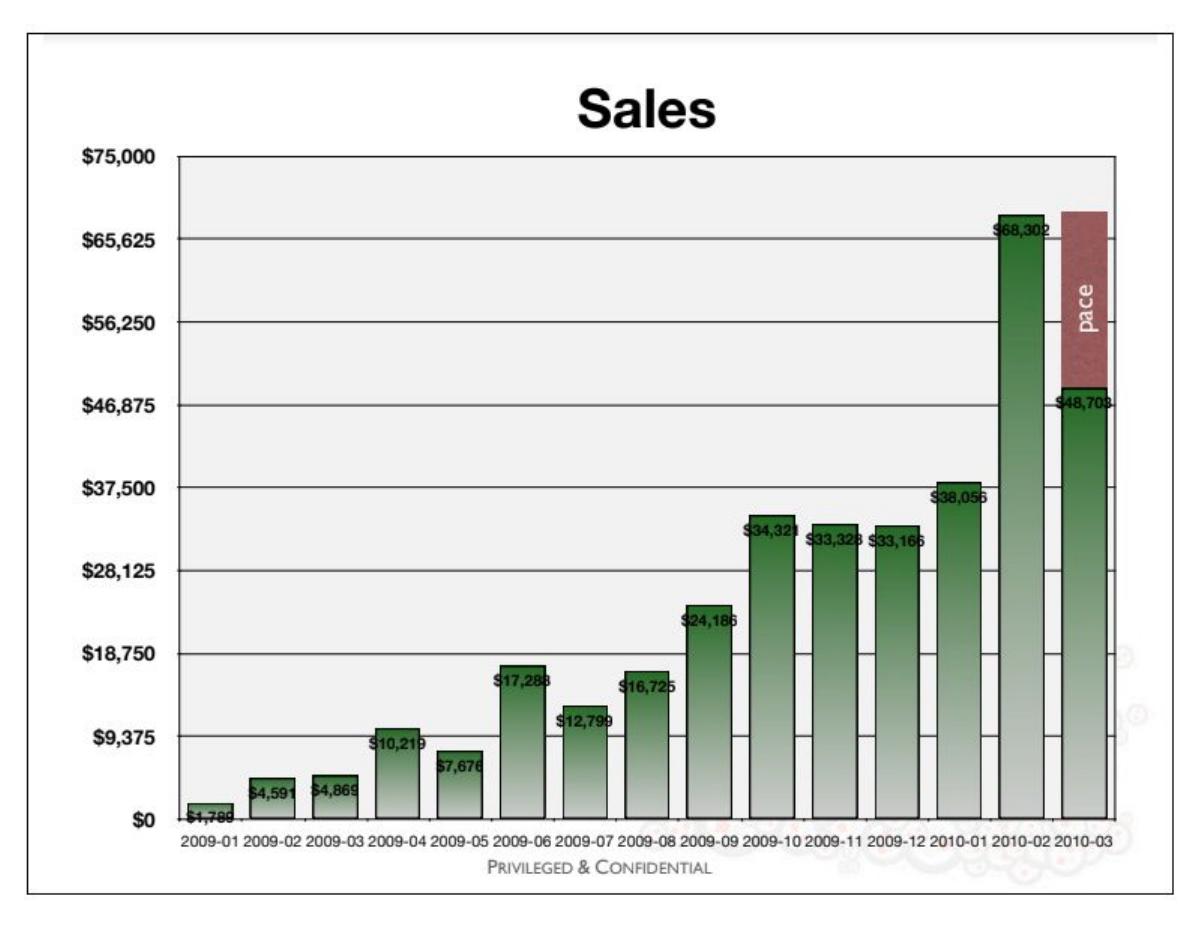
- Sales growth was aggressive, jumping from $38,056 in January 2010 to $68,302 in February 2010 (Slide 3).
- The internal 'Metrics Board' prioritized service SLAs and system status alongside traditional sales figures (Slide 7).
- Scalability was measured specifically by the number of simultaneous calls and identifying cluster bottlenecks (Slide 10).
- Reliability efforts focused on eliminating single points of failure in load balancers and EC2 availability zones (Slide 11).
- The hiring plan was heavily weighted toward technical roles and 'Evangelists' rather than traditional account executives (Slide 6).
- The 'Board Help' slide specifically requested assistance with a 'Big BD Hire' and finding distribution partners (Slide 18).
The Anatomy of a Developer-First Powerhouse
The Twilio deck from March 2010 is a historical artifact that captures the moment the 'API economy' began to take shape. At this stage, Twilio was not just selling a service; they were selling a new way for software to interact with the physical world of telephony. This teardown examines the 18 slides that helped secure their position as the leader in programmable communications.
Slide 1: Title and Context
The cover slide is minimalist, featuring the Twilio logo and the date: March 23, 2010. It is marked 'Privileged & Confidential' and specifically identifies the presentation as a 'Board Meeting.' This context is vital; board decks are often more data-dense and less 'flashy' than pure pitch decks, as they are designed to update existing partners on progress and roadblocks.
Slide 2: The 'Aha' Moment
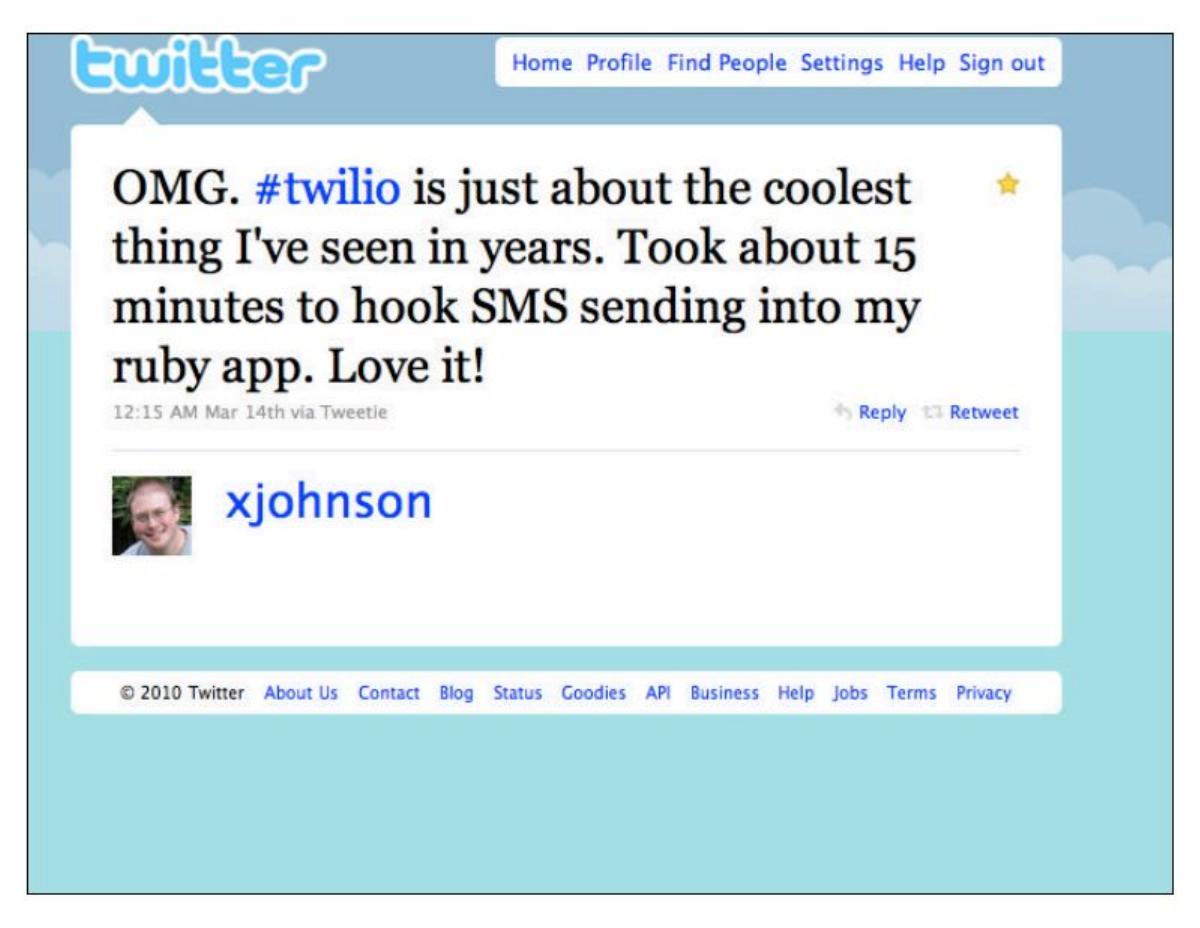
Twilio opens with a social proof slide. It features a tweet from user 'xjohnson' stating: 'OMG. #twilio is just about the coolest thing I’ve seen in years. Took about 15 minutes to hook SMS sending into my ruby app. Love it!' This slide perfectly encapsulates the value proposition: speed to implementation for developers. In 2010, integrating SMS into an app usually took months of carrier negotiations; Twilio reduced it to 15 minutes.
Slide 3: Sales Velocity
The 'Sales' chart shows monthly revenue from January 2009 to March 2010. The growth is exponential. Revenue started at a mere $1,789 in Jan 2009 and climbed to $68,302 by February 2010. The March 2010 bar shows a 'pace' projection, indicating they were on track to exceed $70,000 for the month. This chart proves that the developer interest shown on Slide 2 was translating into actual dollars.
Slide 4: Conversion Metrics
This slide highlights a '5.8% Conversion' rate. It tracks 'Developer Registrations' per month. While registrations fluctuated—peaking at 1,005 in February 2010—the consistent conversion rate suggested a highly efficient self-service funnel. The 'pace' for March 2010 showed a slight dip in registrations but remained significantly higher than the 2009 average.
Slide 5: The Developer Moat
Twilio presents their cumulative totals as of March 22nd: 7,841 Developer Accounts and 1,316 Upgraded Accounts. The bottom of the slide highlights their current growth rates: adding more than 1,000 new developer accounts per month and more than 250 upgraded (paid) accounts per month. This 4:1 ratio of free-to-paid users is a classic SaaS 'land and expand' metric.
Slide 6: Recruiting and Talent Gaps
The 'Recruiting' slide is split into 'Filled' and 'Open' roles. Since the last meeting, they added an Office Manager, an Evangelist/CS, and two recruiting contractors. However, the 'Open' list is long: 2 Web Engineers, 1 Senior Web Engineer, 1 Core Engineer, 1 Ops Engineer, 1 Sales Evangelist, 1 Developer Evangelist, 1 Apps Product Manager, and 1 Telecom BD. The 'Big Hire' identified is a VP of Business Development, signaling a transition toward more formal enterprise partnerships.
Slide 7: The Internal Dashboard
This slide, titled 'Metrics,' shows a wireframe of their internal 'Metrics Board.' It is divided into three sections: Service Board (SLA, tickets, resolution time), Sales Board (Revenue, Phone Numbers, Calls, SMS), and Adoption Board (Signups, Upgrades). It also includes a 'System Status Board' and a 'Twitter' feed. This demonstrates a culture of transparency and real-time monitoring.
Slide 8: Twilio Scales
A curious slide featuring a 'Health o meter' scale with the Twilio logo and the number '135.2'. This likely refers to a specific internal milestone or a metaphorical representation of 'weighing' the platform's impact, though without the accompanying speech, the exact metric is ambiguous. It serves as a transition into the technical deep dive.
Slide 9-11: Scalability and Reliability
Twilio defines their technical north stars on Slide 9: Scalability (measured by # of Simultaneous Calls) and Reliability (measured by Points of Failure). Slide 10 digs into scalability risks, citing 'Cluster Bottlenecks' in the persistence layer and 'Carrier Capacity' limits. Slide 11 addresses reliability risks, specifically 'Single points of failure' in load balancers and 'Massive correlated failures' due to being limited to a single EC2 availability zone. This level of technical honesty is rare in decks and likely built significant trust with investors.
Slide 12: Project Roadmap
The 'Projects' slide uses a Gantt-style chart to show work streams from March to June 2010. Key projects include Scalability/Reliability (assigned to John/Evan), Twilio DIDs (John/Adam), and 'Short Code SMS' (Evan). The presence of 'Frank?' with a question mark on the 'Tools' project indicates a need for more headcount to fulfill the roadmap.
Slide 13: Ecosystem Breadth
This slide, 'Explore Apps and Developers,' lists the industries, technologies, features, and languages Twilio supports. It covers everything from Activism to Healthcare and languages from .NET to Visual Basic. This slide proves that Twilio is a horizontal platform, not a niche tool.
Slide 14: Marketing Funnel
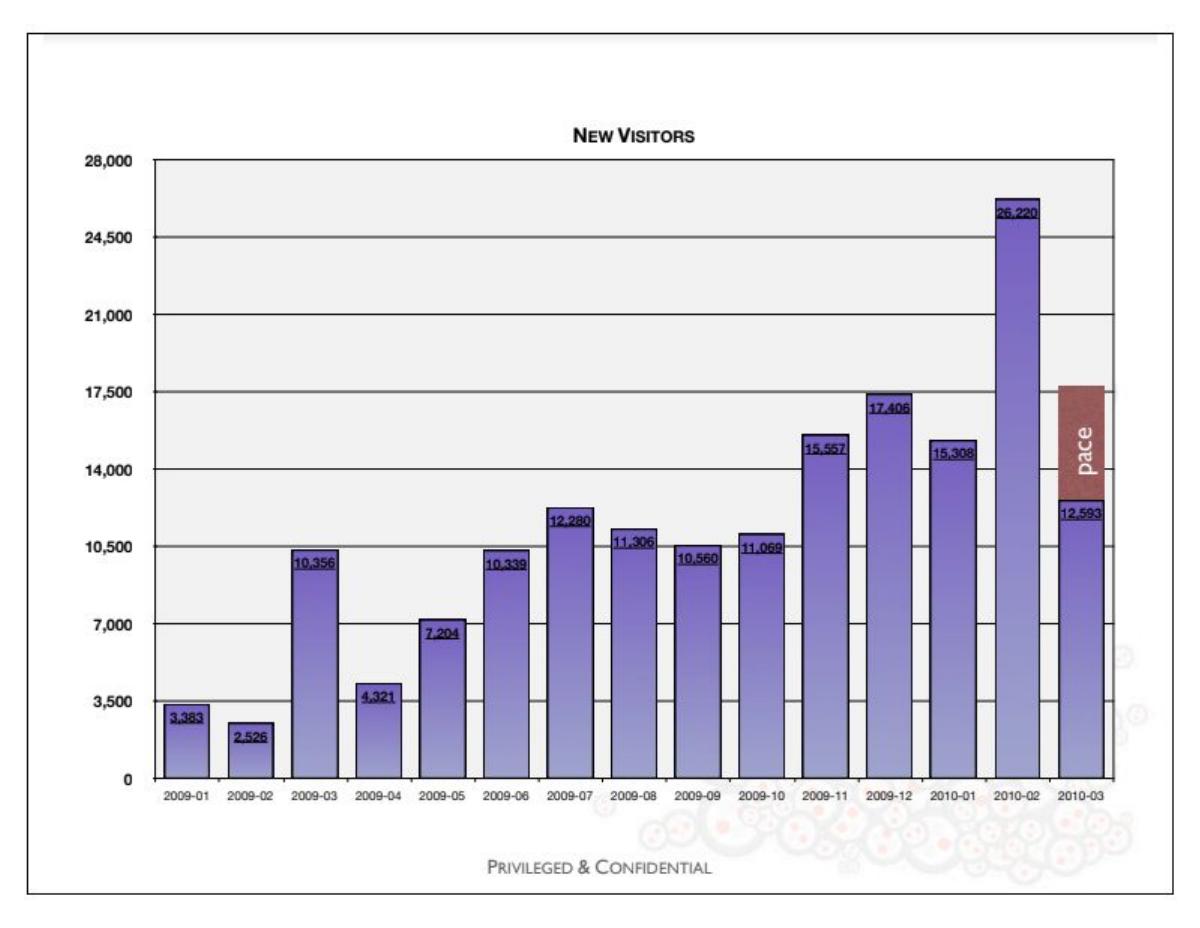
A simple header slide for 'Marketing Metrics,' identifying the key stages of their funnel: New Website Visitors, Signups, and Upgrades. This reinforces the three-step process they use to measure growth.
Slide 15: Event Strategy
Twilio's marketing was heavily event-driven. In March, they attended 3 Hackathons in NYC and a 'VBX VIP Weekend.' Looking ahead to May, they planned to be at Gov 2.0, Google I/O, and GlueCon. This 'boots on the ground' approach was central to winning developer mindshare.
Slide 16-17: VBX and Launch Priorities
These slides focus on 'VBX' (likely OpenVBX, their open-source virtual phone system). Slide 17 lists launch priorities for the week of April 26th, including API improvements, bug fixes, and website collateral. They were also searching for a 'Venue?' for the launch event.
Slide 18: The Ask (Board Help)
The final slide is a direct call to action for the board. They need help with: 1) Recruiting the 'Big BD Hire,' and 2) Launching OpenVBX, specifically finding 'Launch PR' and 'Launch Distribution Partners.' This is a highly effective way to end a board meeting, turning the investors into active participants in the company's success.
What Twilio Did Right
Developer-Centricity: By putting a developer's tweet on Slide 2, they signaled that their primary customer was the builder, not the C-suite. · Granular Technical Risks: Slides 10 and 11 show a deep understanding of infrastructure. Investors love seeing that founders know exactly where their system might break. · Clear Conversion Funnel: The 5.8% conversion rate (Slide 4) is a 'goldilocks' metric—high enough to show value, low enough to show there is still room for optimization. · Actionable 'Ask': Slide 18 doesn't just ask for money; it asks for specific networking help that board members are uniquely positioned to provide.
What Was Missing
Unit Economics: While revenue and conversion are shown, the deck does not explicitly state the Customer Acquisition Cost (CAC) or the Lifetime Value (LTV) of an upgraded account. · Competitive Landscape: There is no mention of other VoIP or SMS gateway providers. While Twilio was a pioneer, the lack of a 'Why Us vs. Them' slide is a notable omission for a Series B. · Financial Projections: The deck shows historical sales but lacks a long-term financial forecast or a 'Path to $100M' slide.
Lessons for Founders
Show, Don't Just Tell: Instead of saying 'developers love us,' Twilio showed a tweet and a chart of 7,000+ accounts. · Be Transparent About Hiring: Listing specific open roles (Slide 6) helps investors understand exactly how the capital will be deployed. · Focus on the 'North Star' Metric: For Twilio, it was 'Simultaneous Calls.' Every founder should identify the one technical metric that defines their platform's utility and track it relentlessly.
Frequently asked questions
- Is this a pitch deck or a board deck?
- Slide 1 explicitly labels this as a 'Board Meeting' deck from March 23, 2010. However, in the startup world, high-growth board decks from successful rounds are often used as the primary 'pitch' materials for follow-on investors because they contain the most honest and granular data about the business's health.
- What was Twilio's primary growth engine in 2010?
- Developer adoption. Slide 5 shows they were adding over 1,000 developer accounts per month. Slide 2 reinforces this with a testimonial about how easy it was to integrate SMS into a Ruby app in just 15 minutes, highlighting the 'self-serve' nature of their growth.
- How did Twilio measure technical success?
- They focused on two core pillars: Scalability and Reliability. Slide 10 defines scalability as the number of simultaneous calls, while Slide 11 defines reliability as the absence of customer-facing failures and the mitigation of 'massive correlated failures' within AWS EC2 zones.
- What were the biggest risks identified in the deck?
- The deck is surprisingly transparent about technical risks. Slide 10 mentions 'Cluster Bottlenecks' and 'Carrier Capacity' as threats to scalability. Slide 11 notes that being limited to a single EC2 availability zone was a risk for reliability.
- What kind of talent was Twilio looking for at Series B?
- According to Slide 6, they were hiring for 10 open positions, including Web Engineers, a Core Engineer, and a 'Sales Evangelist.' The most critical role mentioned was a 'VP Bus Dev,' which they categorized as a 'Big Hire.'