iBillionaire's pitch deck is a masterclass in brevity, using just 10 slides to communicate a high-conviction value proposition: democratizing the investment strategies of the world's wealthiest individuals. By positioning themselves as a 'Mobile-First Global Asset Manager,' the company successfully bridged the gap between social sentiment and institutional-grade financial products. The deck highlights significant early traction, including 1,500 US clients and a $60 million ETF, proving that there is a hungry market for 'copy-trading' legendary investors like Warren Buffett and Carl Icahn. Whi…
Key takeaways
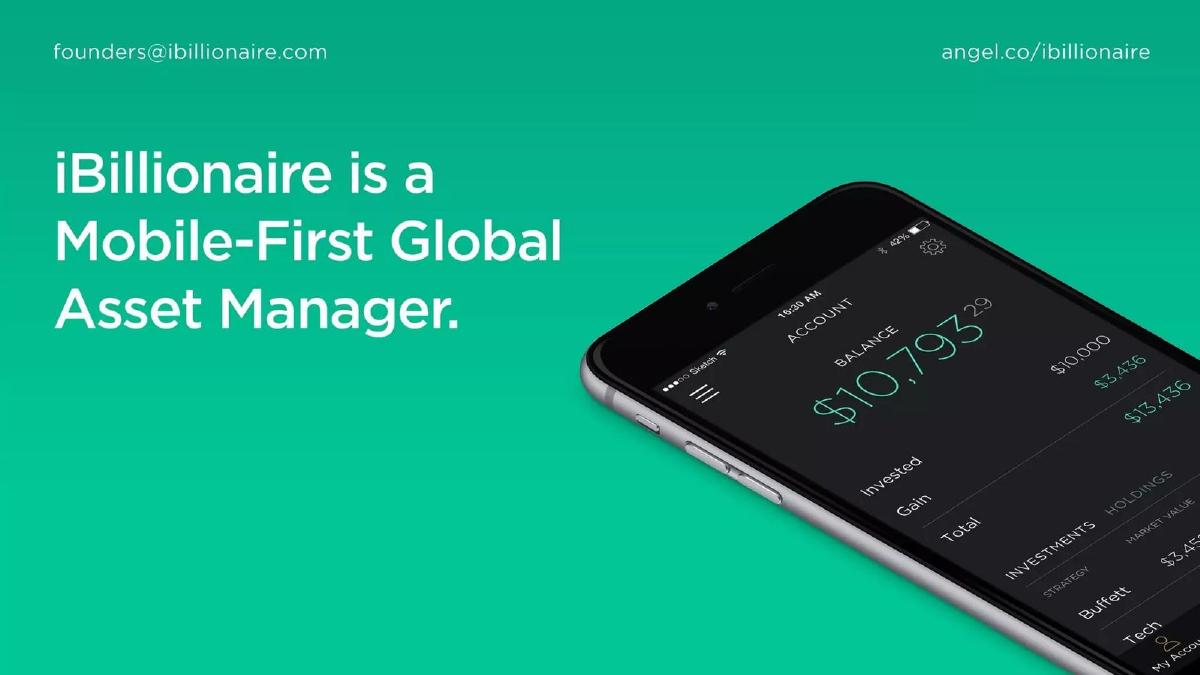
- The company defines itself as a 'Mobile-First Global Asset Manager' on slide 2, signaling a shift away from traditional desktop-bound brokerage tools.
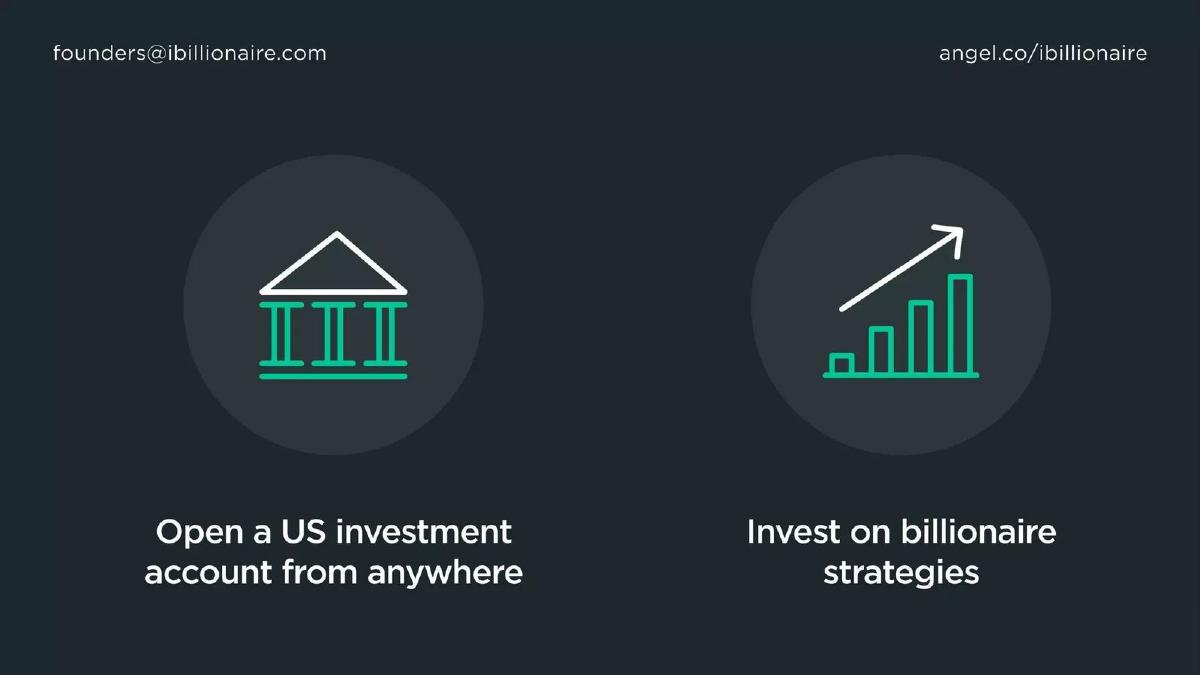
- iBillionaire offers two core value propositions: opening a US investment account from anywhere and investing based on billionaire strategies, as shown on slide 3.
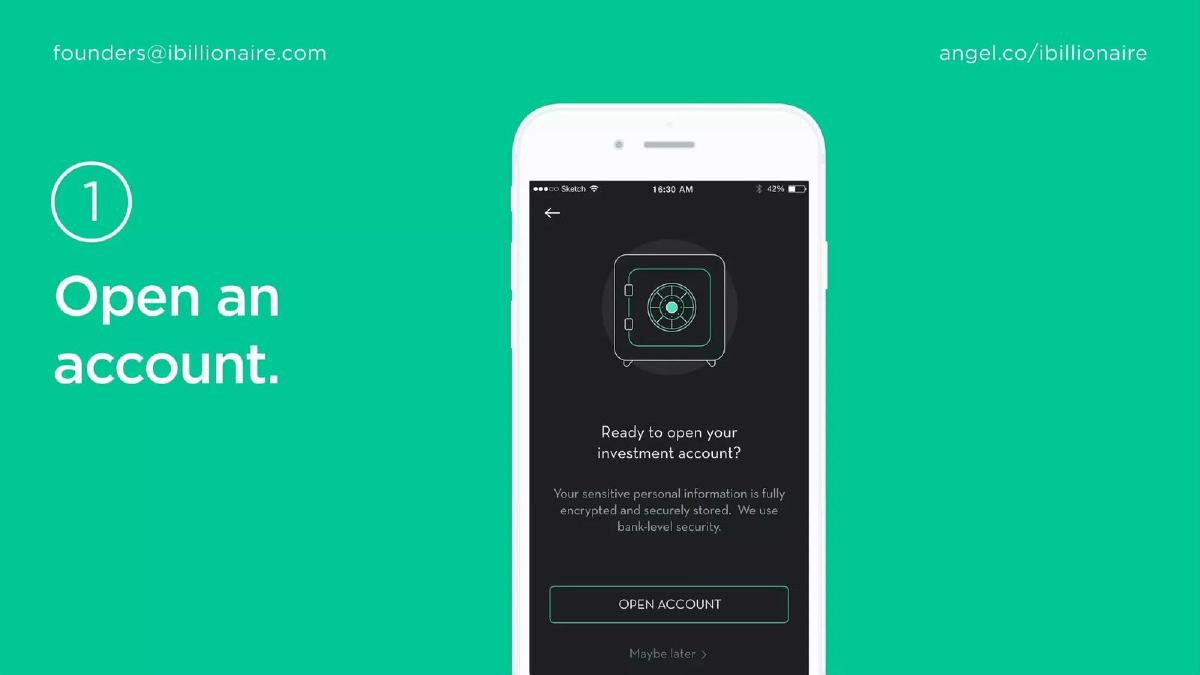
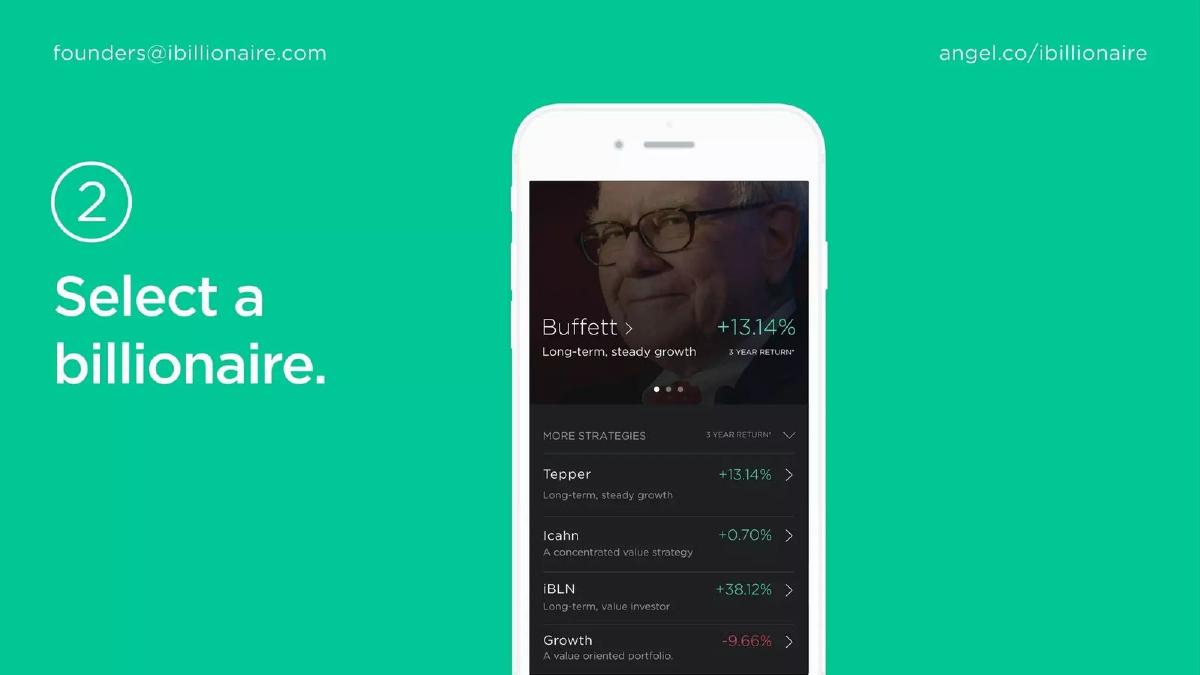
- The product workflow is reduced to three steps: open an account, select a billionaire, and invest with one click (slides 4-6).
- Historical performance data for Warren Buffett (+9%) and Carl Icahn (+16%) is used on slide 7 to validate the 'billionaires do it better' thesis.
- At the time of the deck, the platform had 1,500 US clients and an international waitlist of 2,500 people (slide 8).
- The deck claims that 95% of their users have made money since the launch (slide 8).
- The iBillionaire ETF is listed as having $60 million in assets, providing significant institutional credibility (slide 9).
- The deck completely omits a specific 'Ask' slide, failing to detail the amount of capital sought or the intended use of funds.
The iBillionaire Pitch Deck: A Minimalist Approach to Wealth Management
iBillionaire’s pitch deck is a stark departure from the data-heavy, 20-plus slide presentations common in the fintech sector. With only 10 slides, the company focuses on a singular, powerful narrative: retail investors want to trade like billionaires, and iBillionaire provides the simplest possible interface to do so. This teardown examines how they used product-centric visuals and high-level traction metrics to raise $2.4 million.
The Vision and Product Identity (Slides 1-3)
Slide 1: Title Slide The deck opens with a clean, dark aesthetic featuring a minimalist 'B' logo. It includes contact information (founders@ibillionaire.com) and a link to their AngelList profile. There is no tagline here, allowing the brand name to speak for itself.
Slide 2: The Value Proposition The company immediately defines its category: "iBillionaire is a Mobile-First Global Asset Manager." This is a strategic choice. By calling themselves an "Asset Manager" rather than just an "app," they elevate the perceived value of the business. The "Mobile-First" descriptor targets the burgeoning trend of smartphone-based investing that was gaining momentum in the early 2010s.
Slide 3: Core Functionality This slide splits the offering into two pillars: "Open a US investment account from anywhere" and "Invest on billionaire strategies." This addresses two distinct pain points: global access to US markets and the difficulty of active portfolio management for non-professionals.
The User Experience Walkthrough (Slides 4-6)
Slide 4: Step 1 - Account Opening iBillionaire uses high-fidelity mobile mockups to demonstrate the ease of use. Slide 4 shows the "Open Account" screen, emphasizing "bank-level security" and encrypted data. The visual design is dark, sleek, and premium, reinforcing the "billionaire" branding.
Slide 5: Step 2 - Strategy Selection This is the heart of the product. The mockup displays various strategies based on famous investors. It lists "Buffett" (Long-term, steady growth) with a +13.14% 3-year return, "Tepper," "Icahn," and their own "iBLN" index which shows a +38.12% return. This slide effectively demonstrates how they turn complex 13F filings into actionable investment buttons.
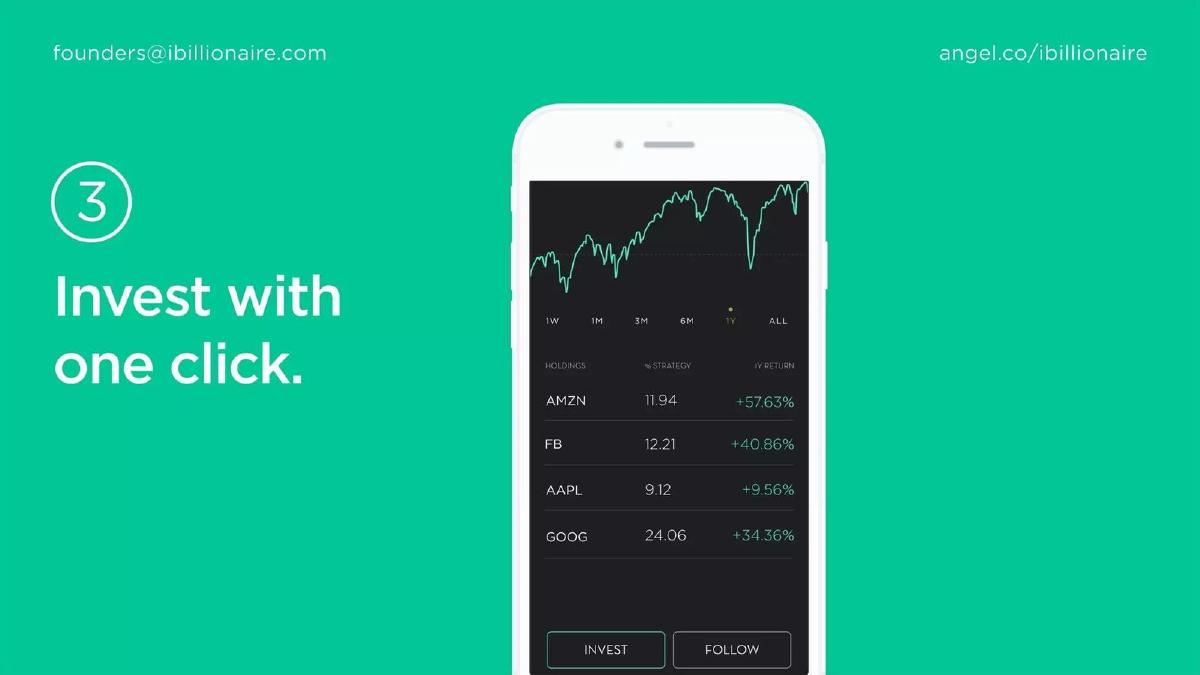
Slide 6: Step 3 - Execution The final step in the user journey is "Invest with one click." The mockup shows a portfolio breakdown including AMZN (11.94%), FB (12.21%), AAPL (9.12%), and GOOG (24.06%). By showing recognizable tickers and high 1-year returns (e.g., AMZN at +57.63%), the deck creates a sense of immediate opportunity and simplicity.
Validation and Traction (Slides 7-9)
Slide 7: The Thesis Under the heading "Billionaires do it better," the deck provides the historical justification for the product. It cites 10-year annualized returns for Warren Buffett (+9%) and Carl Icahn (+16%). This slide is intended to overcome skepticism regarding the efficacy of following institutional whales.
Slide 8: Growth Metrics iBillionaire presents three key figures to prove market fit: 1,500 US Clients, 2,500 on an International Waitlist, and the claim that "95% Have Made Money." While the 95% figure is a bold marketing claim that would likely face heavy regulatory scrutiny today, in a pitch deck setting, it serves to demonstrate the success of the initial cohort.
Slide 9: The Team and Institutional Traction This slide is unconventional. Instead of headshots and resumes, it features a photo of the team at the New York Stock Exchange for the listing of the iBillionaire ETF (IBLN). The text "$60 Million iBillionaire ETF" is the primary focus. This is a powerful credibility signal; it tells investors that the company has already successfully navigated the complexities of launching a public financial product and managed significant capital.
Closing and Call to Action (Slide 10)
Slide 10: Final Hook The deck ends with the repeating mantra "Billionaires do it better" alongside links to the App Store and Google Play. It functions as a reminder that the product is live and accessible, rather than a theoretical concept.
What Works in the iBillionaire Deck
1. Extreme Clarity: The deck never gets bogged down in the technicalities of how they scrape 13F filings or the legal structure of their brokerage partnerships. It focuses entirely on the user experience and the results.
2. Institutional Credibility: Mentioning the $60 million ETF is the strongest part of the deck. It proves that the founders aren't just app developers; they understand the plumbing of the financial markets and can work with partners like Direxion (mentioned in the catalogue facts) to scale.
3. Visual Consistency: The dark mode UI shown in the mockups is consistent with the deck's design, creating a professional and cohesive brand image that feels "premium," fitting the billionaire theme.
What is Missing from the iBillionaire Deck
1. The Team Slide: While the NYSE photo is impressive, it tells the investor nothing about the founders' backgrounds. Are they former hedge fund managers? Software engineers? Regulatory experts? The lack of names and titles is a significant omission for a Seed round where the "who" is often as important as the "what."
2. The Business Model: The deck does not explain how iBillionaire makes money. Do they charge a management fee, a subscription fee, or do they earn from payment for order flow (PFOF)? Without a revenue slide, the sustainability of the business is unclear.
3. The Ask: There is no mention of how much money they are raising or what they plan to do with it. A standard pitch deck should include a slide detailing the funding goal and the milestones that capital will help achieve.
4. Competition and Market Size: The deck assumes the investor already agrees that the market is large. It ignores competitors (like Covestor or traditional brokerages) and fails to define the Total Addressable Market (TAM).
What a Founder Should Copy
1. The Three-Step Product Demo: Slides 4, 5, and 6 are a perfect example of how to show, not tell. If your product is a mobile app, use large, clear mockups that walk the investor through the core user flow in under 30 seconds.
2. Leading with Traction: iBillionaire put their most impressive numbers—the ETF AUM and the user growth—front and center. Founders should always prioritize their "unfair advantage" or most significant milestone.
3. High-Signal Imagery: The photo at the NYSE (Slide 9) is worth more than a dozen bullet points about "partnerships." If you have a moment of significant industry validation, use a high-quality photo to anchor your credibility.
Final Thoughts
The iBillionaire deck is a product-first presentation that relies on the strength of its concept and early institutional success. While it breaks several "rules" of fundraising—most notably the omission of a team and an ask—it succeeded because it presented a clear, timely solution to a universal desire: making money like the pros. For founders today, this deck serves as a reminder that a simple, compelling narrative can often outweigh a 20-page document filled with speculative projections.
Frequently asked questions
- What is the core product offered by iBillionaire?
- iBillionaire is a mobile application that allows retail investors to mirror the portfolios of famous billionaires. According to slide 3 and 5, users can open a US investment account and select specific strategies, such as those used by Warren Buffett or Carl Icahn, to invest their capital with a single click.
- How does iBillionaire validate its investment strategy?
- The company uses historical 10-year annualized returns to justify its approach. Slide 7 highlights that Warren Buffett achieved a +9% return and Carl Icahn achieved a +16% return, supporting their marketing tagline that 'Billionaires do it better.'
- What traction did the company have at the time of this deck?
- Slide 8 reports that the platform had 1,500 active US clients and a waitlist of 2,500 international users. Additionally, slide 9 notes that the iBillionaire ETF (IBLN) had reached $60 million in assets under management, indicating successful cross-over into traditional financial markets.
- Who are the founders of iBillionaire?
- The pitch deck does not explicitly name the founders or provide their professional biographies. Slide 9, titled 'Our Team,' shows a photograph of several individuals at a stock exchange podium but lacks any text detailing their specific roles, past experiences, or credentials.
- Is there a clear exit strategy or financial projection in the deck?
- No. The 10-slide deck focuses almost entirely on the current product interface and existing traction. It omits revenue models, five-year financial projections, market size (TAM/SAM/SOM) analysis, and any mention of a potential exit for investors.