Hyve’s 9-slide deck is a study in minimalism, prioritizing market trends and team pedigree over granular product mechanics. The narrative centers on the decline of traditional Pay-TV, which fell from 79% to 67% between 2015 and 2018 (Slide 2), and the massive $40 billion content spend by streaming giants in 2020 (Slide 3). Hyve positions itself as a bridge, using social data to 'break' new shows with analytic feedback (Slide 5). While the deck successfully establishes a high-level value proposition and a credible team—including co-founder Jibril Jackson and Dame Dash (Slide 8)—it lacks critic…
Key takeaways
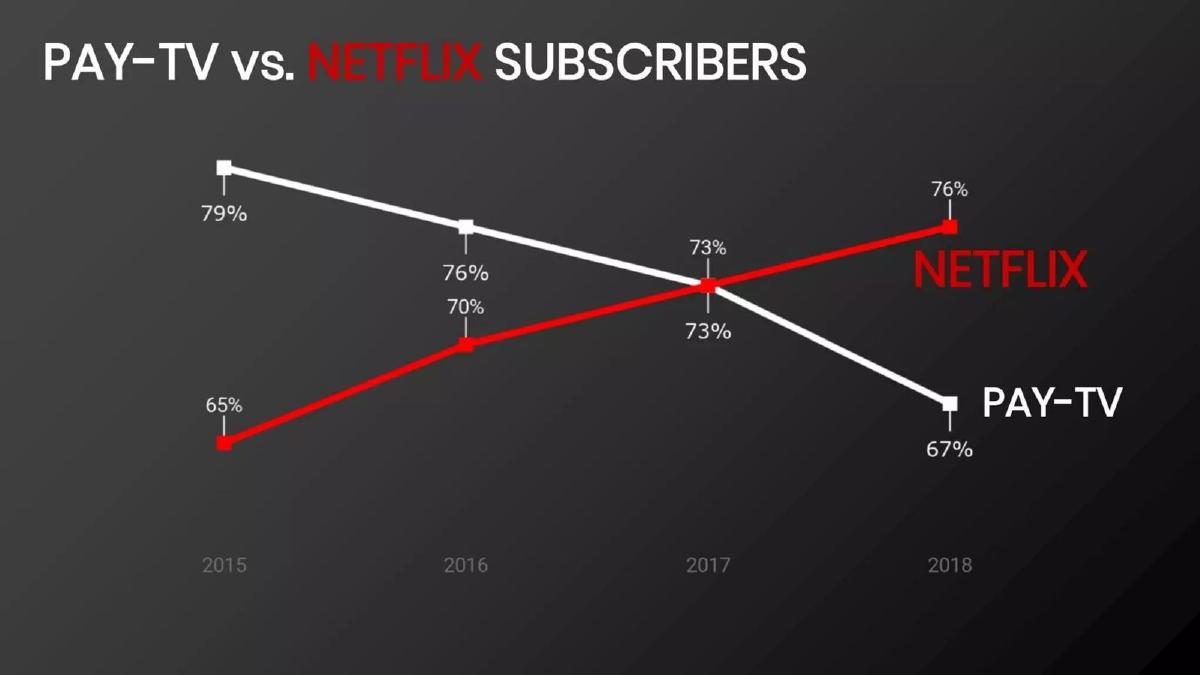
- The deck highlights a significant market shift, noting Pay-TV penetration dropped to 67% by 2018 while Netflix rose to 76% (Slide 2).
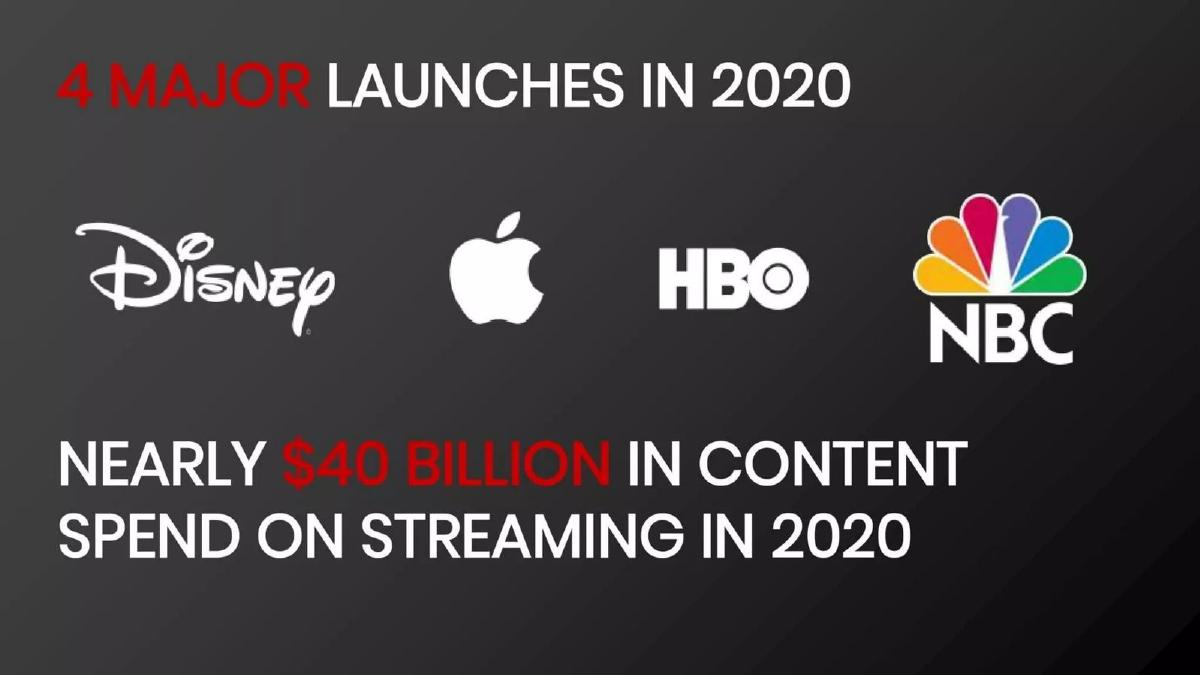
- Hyve targets a massive market opportunity defined by nearly $40 billion in streaming content spend in 2020 (Slide 3).
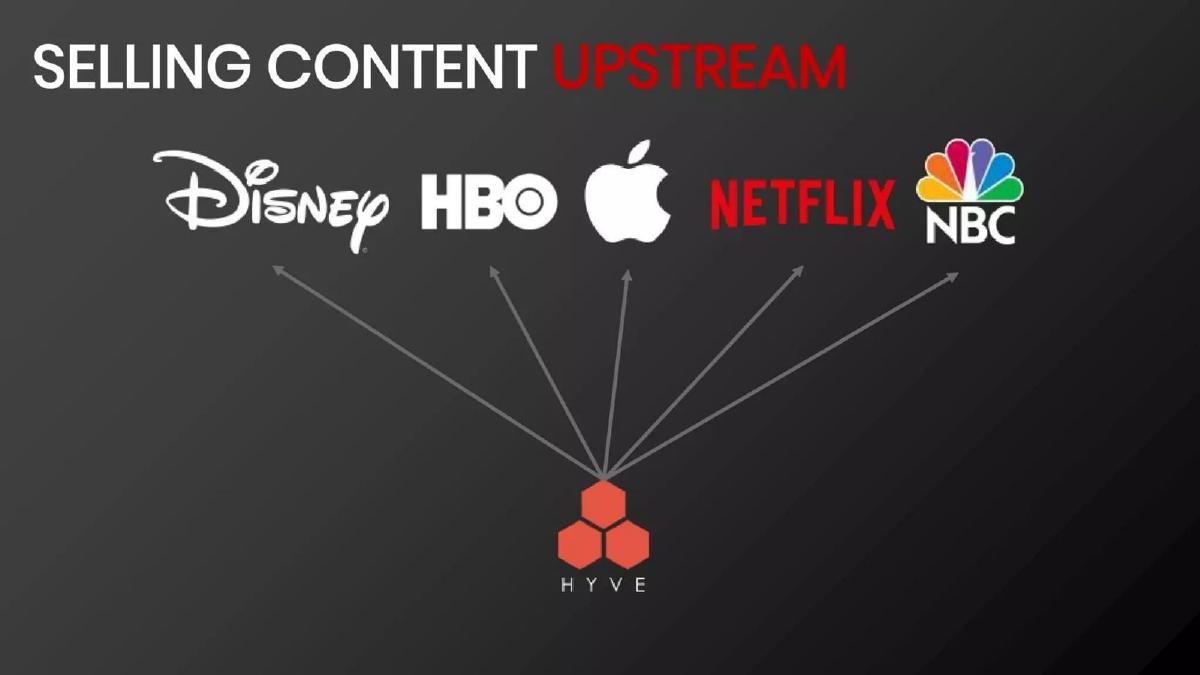
- The core business model involves selling content 'upstream' to major players like Disney, HBO, Apple, Netflix, and NBC (Slide 7).
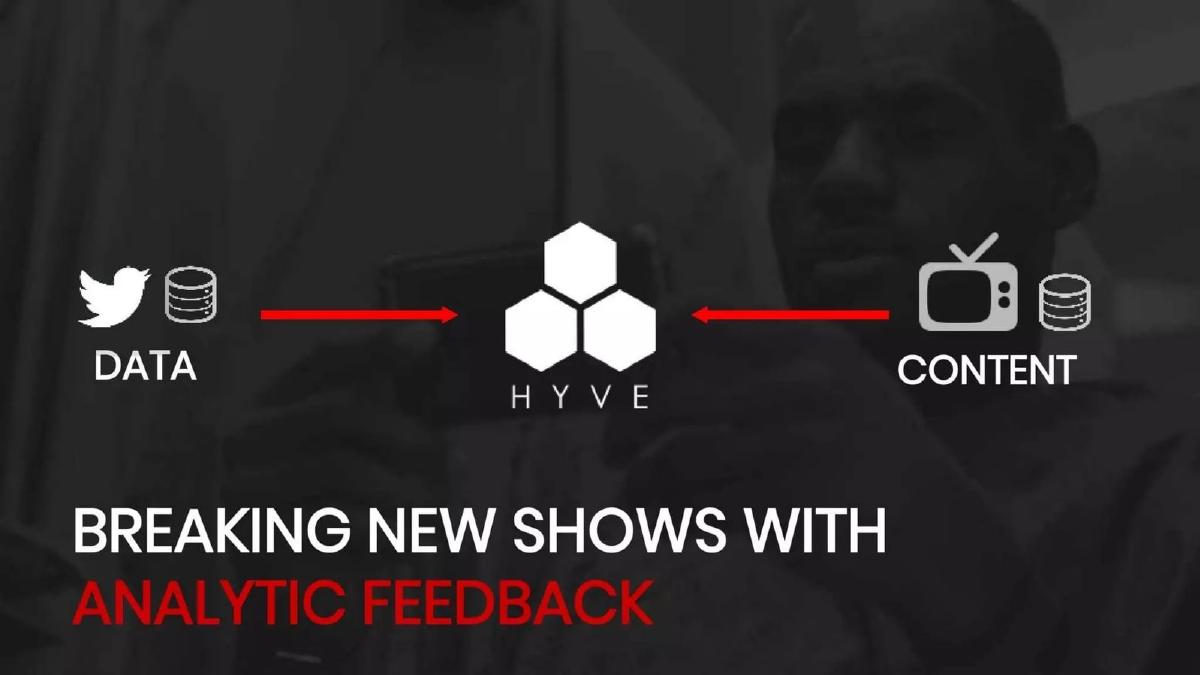
- The product vision relies on connecting Twitter data and content to provide analytic feedback for new shows (Slide 5).
- The team slide leverages high-profile names and logos, including Dame Dash and brands like Nike, Adidas, and Coca-Cola (Slide 8).
- A 'Morehouse Launch' strategy suggests a targeted go-to-market focus on HBCUs, including Spelman, Howard, and Hampton (Slide 9).
- The deck is entirely devoid of financial projections, current revenue, or a specific investment ask.
- There is no detailed explanation of the underlying technology or how the 'analytic feedback' is generated (Slide 5).
The Vision: Data-Driven Media Production
Hyve presents a 9-slide pitch deck that is remarkably light on text and heavy on high-level conceptualization. The deck is designed to sell a 'vibe' and a strategic position rather than a technical product. Based on the catalogue facts, the company raised $150,000 in 1991, though the deck itself references data from 2018 and launches in 2020, suggesting this is a modern iteration of the brand or a pivot. The core premise is simple: the media landscape is shifting to streaming, and those who use data to create content will win.
Slide 1: Title Slide
The deck opens with a dark, atmospheric image of what appears to be a subway station or an industrial space. The Hyve logo—three orange hexagons arranged in a larger triangular shape—is centered. It is a minimalist start that establishes a brand identity without providing any immediate context about the business model.
Slides 2-3: The Market Opportunity
Slide 2 provides the 'Why Now' for the business. It features a line graph comparing Pay-TV vs. Netflix subscribers from 2015 to 2018. The data shows Pay-TV declining from 79% to 67%, while Netflix rose from 65% to 76%. This 'X' crossover serves as a visual representation of the death of traditional media.
Slide 3 doubles down on the market size. It lists '4 Major Launches in 2020' (Disney, Apple, HBO, NBC) and states there is 'Nearly $40 Billion in Content Spend on Streaming in 2020.' By citing these figures, Hyve is telling investors that they are operating in a market where the buyers (the streaming platforms) have massive budgets and an insatiable need for new content.
Slides 4-5: The Solution and Product
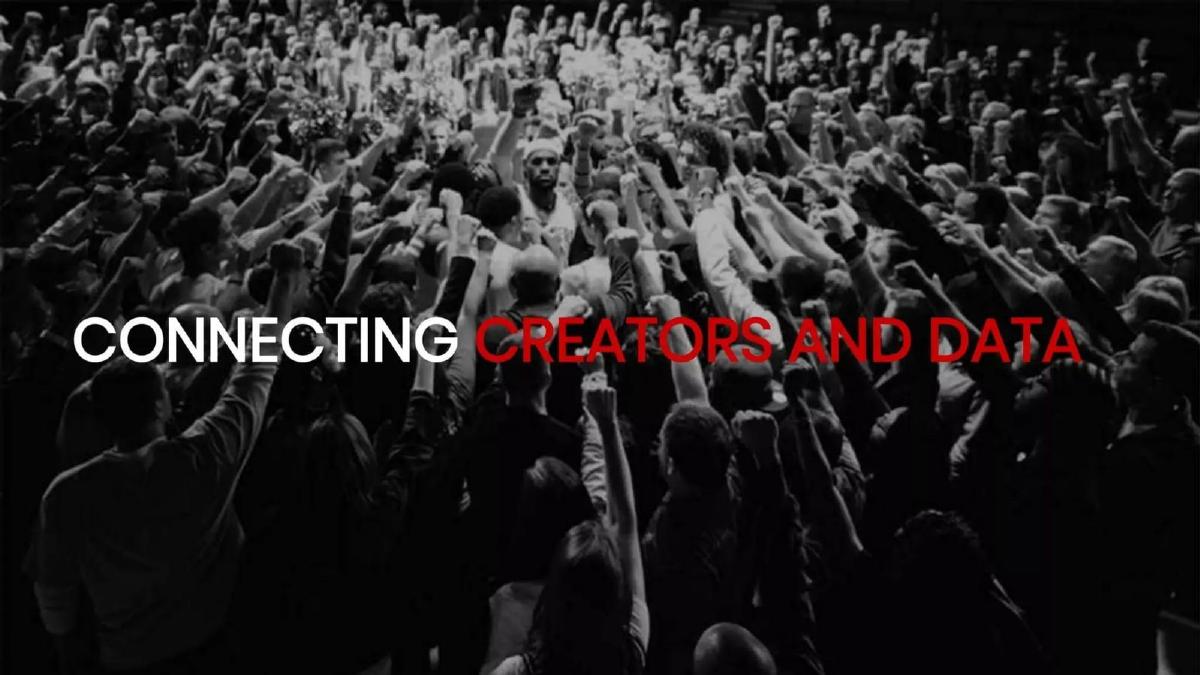
Slide 4 features a black-and-white image of a crowd with the text 'Connecting Creators and Data.' This is the first hint at what Hyve actually does. It positions the company as an intermediary between the raw talent (creators) and the information needed to make that talent successful (data).
Slide 5 attempts to explain the mechanics. It shows a diagram where 'Data' (represented by a Twitter logo and a database icon) and 'Content' (represented by a TV icon and a database icon) flow into the Hyve logo. The caption reads: 'Breaking New Shows with Analytic Feedback.' This suggests that Hyve uses social media sentiment and engagement data to develop or refine television shows before they are fully produced or sold.
Slides 6-7: The Strategy and Business Model
Slide 6 is a repeat of the 'Connecting Creators and Data' imagery, likely used as a transition or to emphasize the mission statement. Slide 7, titled 'Selling Content Upstream,' is the most important slide for understanding how Hyve makes money. It shows arrows pointing from the Hyve logo to Disney, HBO, Apple, Netflix, and NBC. This confirms that Hyve is a B2B play, acting as a production house or a data-backed talent agency that sells finished or semi-finished products to the major streamers.
Slides 8-9: Team and Go-To-Market
Slide 8 introduces the team. Jibril Jackson (CEO) and Jonathan Clark (COO) bring corporate and legal pedigree from firms like Skadden and K&L Gates. Miko Lim (Creative Director) adds brand experience with Nike and Adidas. The most recognizable name is Dame Dash, listed as the founder of Dame Dash Studios. This slide is intended to provide the 'right to win,' suggesting the team has the creative connections and the operational discipline to execute.
Slide 9, 'The Morehouse Launch,' features the seals of Morehouse, Spelman, Howard, and Hampton. This indicates a targeted launch strategy within the HBCU community. It suggests that Hyve plans to source its initial data or creators from these institutions, creating a 'culture-first' data set that can then be sold to the broader market.
What Works in the Hyve Deck
Clarity of Macro Trends: The deck does an excellent job of illustrating the decline of cable and the rise of streaming. By using a simple line graph on Slide 2, they make the market shift undeniable. Investors like to see that a company is swimming with the current, not against it.
High-Value Exit Partners: Slide 7 clearly identifies the potential customers. By showing the logos of the world's largest media companies, Hyve makes the 'exit' or the 'revenue source' feel tangible. It frames Hyve as a necessary supplier to a multi-billion dollar industry.
Strong Team Pedigree: The inclusion of Dame Dash provides immediate credibility in the 'Culture' and 'Content' space, while the legal and corporate backgrounds of the co-founders balance that creative energy with perceived professional stability. The use of recognizable logos (Nike, Coca-Cola) on the team slide acts as a powerful shorthand for competence.
What is Missing from the Hyve Deck
The 'How' of the Technology: While Slide 5 mentions 'Analytic Feedback,' it doesn't explain what that actually means. Is it a proprietary AI? Is it a manual survey process? Without a glimpse into the 'secret sauce,' the data aspect of the business feels like a buzzword rather than a competitive advantage.
Financials and Traction: There are no numbers regarding Hyve's performance. The deck doesn't mention if they have already produced a show, if they have any active pilots, or if they have signed any letters of intent with the 'upstream' partners mentioned on Slide 7. There is no revenue model—do they take a percentage of the sale, a licensing fee, or a retainer?
The Ask: A pitch deck is a tool to raise money, yet this deck never specifies how much capital is needed or what it will be used for. Without an 'Ask' slide, the presentation feels more like a partnership proposal than a venture capital pitch.
What a Founder Should Copy
Minimalist Design: Founders should emulate the clean, high-contrast aesthetic of this deck. It uses very few words per slide, which forces the presenter to speak and the audience to listen, rather than everyone reading a wall of text. The use of red as an accent color against a dark background creates a premium, modern feel.
Visualizing the Business Model: Slide 7 is a perfect example of how to show a business model visually. Instead of explaining 'We sell to major networks,' they show the flow of value with a simple diagram. This is much more effective for quick comprehension during a pitch.
Focusing on the 'Why Now': The use of the 2015-2018 data to show a trend is a great way to build urgency. Founders should always look for 'X-graphs' where one trend is dying and another is rising, and place their company at the center of that intersection.
Final Editorial Thoughts
The Hyve deck is a 'vision' deck. It is designed to get a meeting based on the strength of the market opportunity and the reputation of the team. However, as a standalone document, it leaves too many questions unanswered. For a Seed round, an investor would typically expect to see at least a basic roadmap or a more detailed explanation of the data platform. The 'Morehouse Launch' is a compelling hook, but without knowing what is actually being launched—an app, a series, or a talent portal—the deck remains a bit too mysterious for its own good. It succeeds in being memorable, but it fails to be informative regarding the actual business operations.
Frequently asked questions
- What is Hyve's primary business model according to the deck?
- Hyve's model is to act as a content incubator and data provider. According to Slide 7, they aim to sell content 'upstream' to major streaming platforms like Disney, HBO, and Netflix. They intend to use data from social platforms like Twitter to inform the creation and 'breaking' of these shows, theoretically reducing the risk for the major networks that purchase the content.
- Who are the key members of the Hyve team?
- The team includes Jibril Jackson (Co-Founder/CEO) with a background involving Skadden and Guggenheim; Jonathan Clark (Co-Founder/COO) with Michigan and K&L Gates ties; Miko Lim (Co-Founder/Creative Director) who has worked with Nike and Adidas; and Dame Dash (Founder of Dame Dash Studios), a well-known figure in the music and media industry (Slide 8).
- What market problem does Hyve address?
- The deck addresses the 'streaming wars' and the decline of traditional television. Slide 2 shows the inverse relationship between Pay-TV and Netflix subscribers, while Slide 3 highlights the $40 billion being spent on content. Hyve positions itself to help creators and platforms navigate this high-spend environment by 'Connecting Creators and Data' (Slide 4).
- How does Hyve plan to launch its product?
- Slide 9, titled 'The Morehouse Launch,' features the logos of several Historically Black Colleges and Universities (HBCUs), including Morehouse College, Spelman College, Howard University, and Hampton University. This suggests a niche community-led launch strategy, likely using these campuses as a testing ground for their content and data collection.
- What critical information is missing from this pitch deck?
- The deck is missing almost all standard venture metrics. There are no slides covering unit economics, customer acquisition costs, current traction (users or revenue), or a competitive landscape. Most importantly, there is no 'The Ask' slide detailing how much money they are raising or how the funds will be allocated.