Ovation raised $1.4 million in 2017 with a 14-slide deck that prioritizes traction and problem-awareness over technical specifications. The company, operating in the brick-and-mortar customer engagement space, led with a strong $250k ARR figure and 35% month-over-month growth. The deck effectively uses the 'cost of inaction' strategy by citing a study that values a single negative review at a loss of $300-$500 for a business. While the deck is light on competitive analysis and specific product architecture, its focus on high-profile logos like The Halal Guys and Which Wich, combined with a 95…
Key takeaways
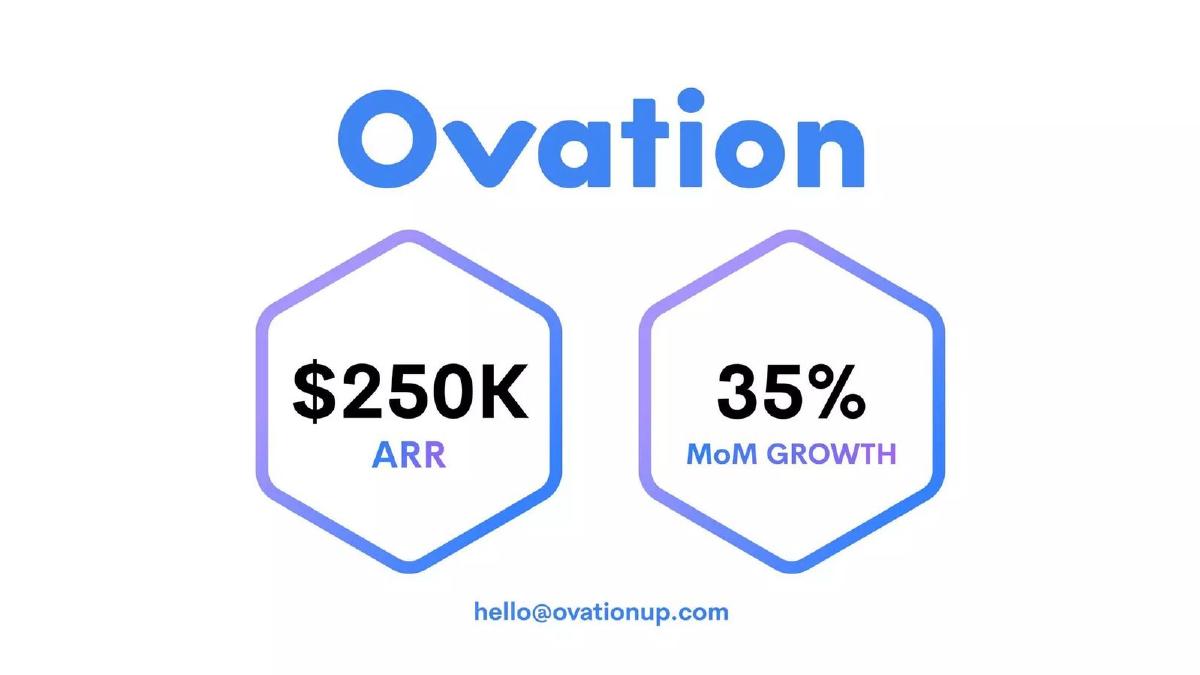
- The deck leads immediately with traction, citing $250K ARR and 35% MoM growth on slide 2.
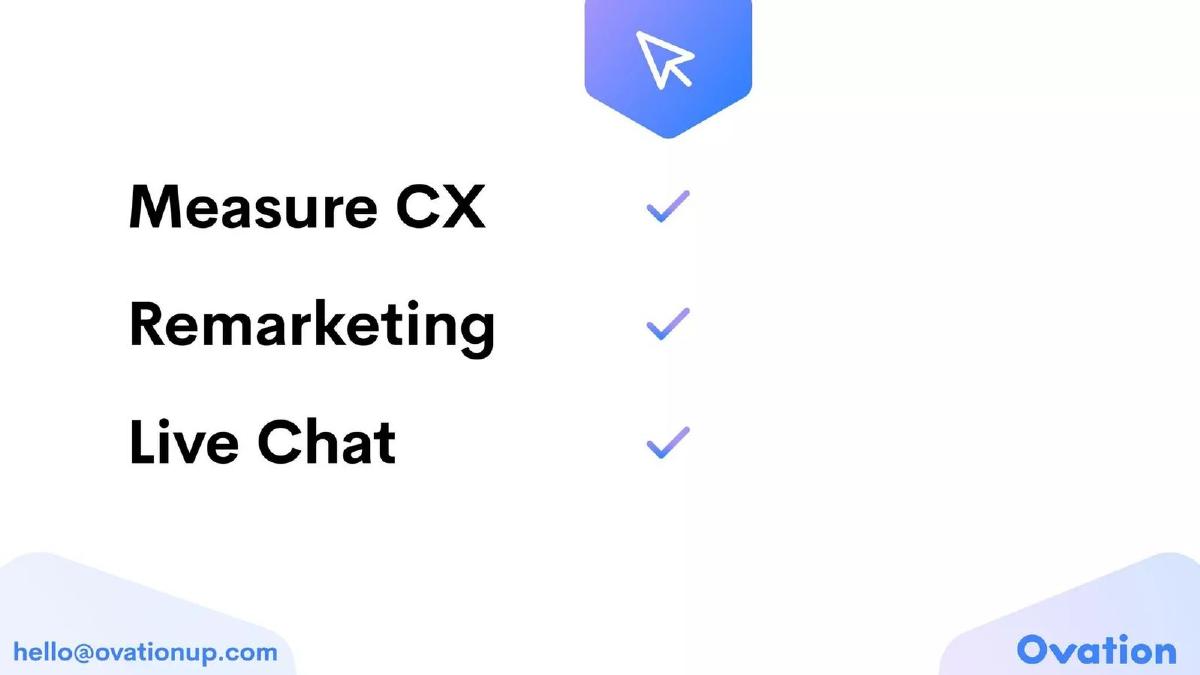
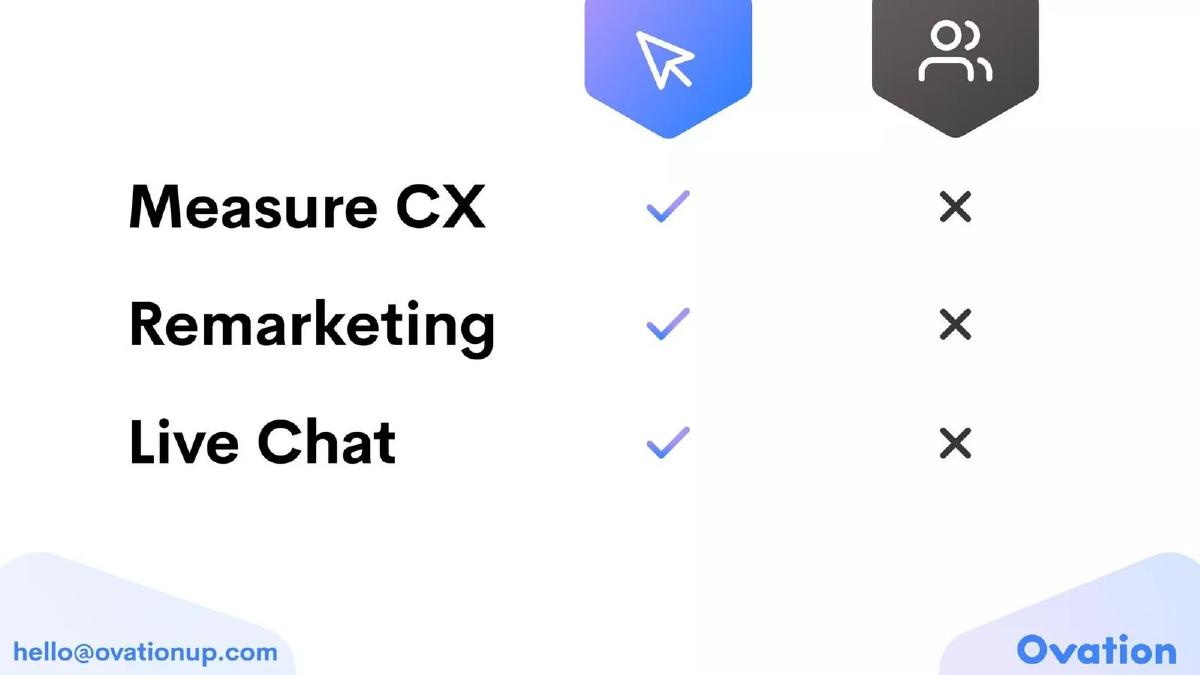
- Ovation defines its core value proposition through three pillars: Measure CX, Remarketing, and Live Chat (slide 3).
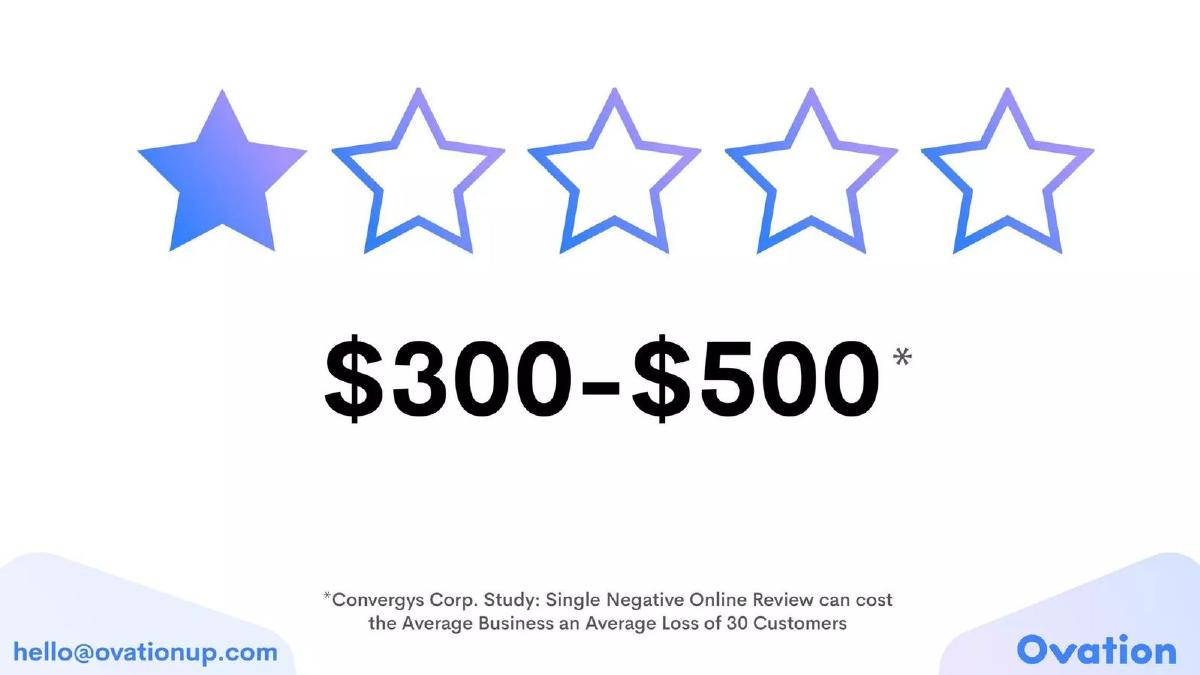
- The 'Problem' is quantified financially, stating a single negative review costs a business $300-$500 (slide 6).
- Product delivery is shown through physical touchpoints, including QR code stands and digital kiosks (slide 7).
- The platform claims to deliver a 10x monthly ROI and a 3x reduction in 1-star reviews (slide 10).
- Customer retention is exceptionally high, with a 95% 'Upgrade & Renew' rate shown on slide 11.
- The market opportunity is projected to reach $32B by 2025 (slide 12).
- The team slide emphasizes experience by highlighting '2 Exits' and logos from Nasdaq, PwC, and Q2 (slide 13).
The Power of Minimalism in Seed Fundraising
Ovation’s 2017 pitch deck is a study in restraint. In an era where many founders feel compelled to pack 40 slides with every conceivable data point, Ovation secured $1.4 million using just 14 slides, most of which contain fewer than ten words. This teardown explores how they leveraged high-level traction and a clear emotional hook to win over investors.
Slides 1-2: The Hook and the Proof
Slide 1 introduces the company with a simple tagline: "Intelligent Customer Engagement for Brick and Mortar." It immediately identifies the target market (physical retail/service) and the product category. By slide 2, the deck has already delivered its most important message. Instead of waiting for a 'Traction' slide at the end, Ovation puts "$250K ARR" and "35% MoM GROWTH" front and center. This is a strategic move; for a Seed stage company, these numbers are strong enough to justify the rest of the meeting regardless of the product's technical complexity.
Slides 3-4: The Functional Framework
Slide 3 lists the three pillars of the business: Measure CX, Remarketing, and Live Chat. Slide 4 repeats these points but adds a column with 'X' marks, implying that the current market alternatives (likely traditional surveys or Yelp) fail to provide these integrated services. This is a very high-level way of addressing the 'Why Now' and 'Why Us' questions without getting bogged down in a feature-by-feature comparison.
Slides 5-6: The Financial Pain of a Bad Review
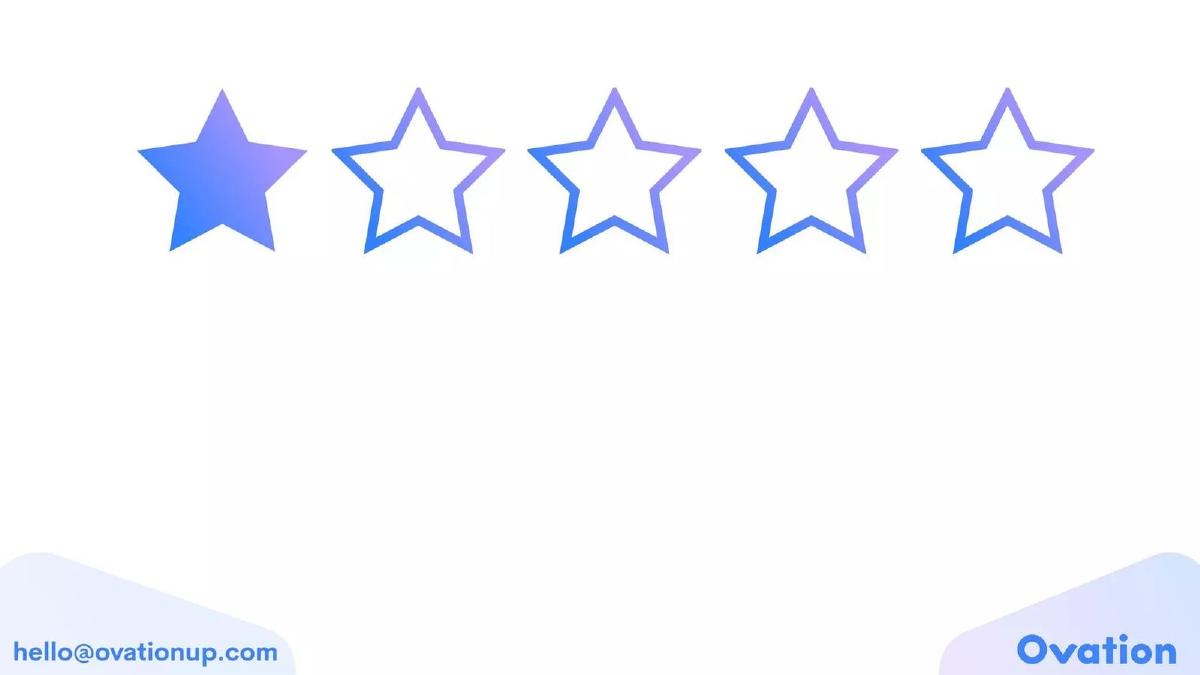
Slides 5 and 6 use visual storytelling to establish the problem. Slide 5 shows a single star, and slide 6 attaches a dollar value to it: "$300-$500." By citing a Convergys Corp. study stating that a single negative review can cost a business 30 customers, Ovation transforms their software from a 'nice-to-have' marketing tool into a 'must-have' insurance policy against revenue loss. This is a classic 'painkiller vs. vitamin' argument.
Slides 7-10: Product and Outcome
Slide 7 provides the only look at the physical product. It shows a table tent with a "$100 Gift Card" incentive, a "Text WIN" call to action, and a QR code . It also shows a tablet kiosk with a simple emoji-based rating system (Terrible to Loved it). This illustrates the low friction for the end consumer. Slide 8 and 9 use emojis (angry face vs. heart-eyes face) to show the transition from a complaint to a positive outcome. Slide 10 quantifies these outcomes: "3x FEWER 1-STAR" reviews and a "10x MONTHLY ROI." These are bold claims, but they align with the traction shown on slide 2.
Slides 11-12: Social Proof and Market Size
Slide 11 is the 'Logos' slide. It features Which Wich, The Halal Guys, Hand & Stone, Mr. Mac, Wee Kare Pediatrics, and Kid to Kid. The central metric here is "95% UPGRADE & RENEW," which is a powerful indicator of product-market fit and customer satisfaction. Slide 12 addresses the Total Addressable Market (TAM), projecting a "$32B BY 2025" market. While the source of this figure isn't cited on the slide, it serves to show the scale of the opportunity in the brick-and-mortar tech sector.
Slide 13: The Team
The team slide is unconventional. Rather than a grid of professional headshots, it features a candid photo of the team with their families. The text, however, is strictly professional, highlighting "2 EXITS" and logos from Nasdaq, PwC, Q2, Unbill, Imply Labs, and Clear View Social. This suggests a team that has worked together before and has a track record of building and selling companies, which significantly de-risks the investment for Seed participants.
Slide 14: The Conclusion
The deck ends by repeating the traction metrics from slide 2: $250K ARR and 35% MoM Growth. This reinforces the core message one last time before the Q&A begins.
What Works in the Ovation Deck
Immediate Credibility: By leading with ARR and growth rates, Ovation bypasses the skepticism often faced by early-stage startups. They prove the market wants the product before they even explain what the product does.
Quantified Problem: Most founders describe the problem qualitatively (e.g., "Businesses hate bad reviews"). Ovation describes it quantitatively ("A bad review costs $500"). This makes the ROI calculation simple for the customer and the investor.
Visual Simplicity: The deck is extremely easy to digest. There are no dense paragraphs or complex charts. It is designed to be a backdrop for a conversation, not a document that needs to be read in silence.
What is Missing from the Ovation Deck
The Ask: There is no mention of how much money is being raised, the valuation cap, or how the funds will be allocated. While this is sometimes left for the verbal pitch, having a 'Use of Funds' slide is standard practice to show operational maturity.
Competitive Landscape: The deck hints at competitors on slide 4 but never names them. Investors would likely want to know how Ovation differentiates itself from giants like Yelp or newer entrants like Podium and Birdeye.
Unit Economics: While 10x ROI for the customer is mentioned, the deck does not show the unit economics for Ovation itself. Metrics like Customer Acquisition Cost (CAC) vs. Lifetime Value (LTV) are missing, which are crucial for understanding the scalability of the 35% MoM growth.
What a Founder Should Copy
The 'Traction First' Strategy: If you have revenue and growth, do not hide it on slide 10. Put it on slide 2. It changes the entire tone of the meeting from 'convincing' to 'validating.'
The 'Cost of Inaction' Slide: Find a reputable study that quantifies the cost of the problem you are solving. If you can show that not using your software costs the customer $500 per incident, your subscription fee becomes an easy sell.
High-Signal Logos: Even if you only have a few well-known customers, feature them prominently. The inclusion of The Halal Guys and Which Wich provides instant industry validation that no amount of self-description can match.
Conclusion Ovation’s deck succeeded because it focused on the only two things that truly matter at the Seed stage: a massive, quantifiable problem and early proof that the team can execute on a solution. By stripping away the fluff, they allowed their traction to speak for itself, ultimately resulting in a $1.4 million capital injection.
Frequently asked questions
- What was Ovation's primary traction metric at the time of this pitch?
- Ovation reported an Annual Recurring Revenue (ARR) of $250,000. This was paired with a significant growth metric of 35% month-over-month (MoM) growth. These figures were placed on the second slide, serving as a 'hook' to establish immediate credibility with investors before explaining the product mechanics.
- How does Ovation justify the need for its service to brick-and-mortar businesses?
- The deck uses a financial pain point: the cost of negative feedback. According to slide 6, which cites a Convergys Corp. study, a single negative online review can cost the average business between $300 and $500, representing a loss of approximately 30 customers. Ovation positions itself as the tool to intercept this dissatisfaction before it reaches public forums.
- Which industries or brands were using Ovation in 2017?
- The deck showcases a diverse range of brick-and-mortar clients on slide 11. Notable logos include food service brands like Which Wich and The Halal Guys, healthcare providers like Wee Kare Pediatrics, and retail/service businesses such as Hand & Stone Massage and Facial Spa, Mr. Mac, and Kid to Kid.
- What are the core features of the Ovation platform?
- As outlined on slide 3, the platform focuses on three functional areas: Measuring Customer Experience (CX), Remarketing to existing customers, and providing a Live Chat interface. The goal is to turn 'fans into marketers' and 'win back unhappy customers' through kiosks, QR codes, and text marketing, as noted in the company's self-description.
- What is missing from this pitch deck that a typical Seed investor might expect?
- The deck is notably missing a slide detailing the specific 'Ask' (how much they are raising and on what terms). It also lacks a detailed breakdown of unit economics (CAC/LTV), a formal competitive matrix comparing them to players like Yelp or Podium, and a roadmap of future product developments beyond the 2025 market size projection.