Overtime’s pitch deck focuses heavily on the 'Gen Z' demographic, positioning the company as the primary gateway for brands to reach younger sports fans. The deck highlights a massive audience of 45 million followers and 1.6 billion monthly video views, achieved with zero marketing spend. A key strategic pillar is their avoidance of expensive live sports rights, opting instead for proprietary content and a network of 7,000 creators. The deck successfully transitions from a pure media play into a diversified business model involving apparel, live events, and their own sports league, Overtime E…
Key takeaways
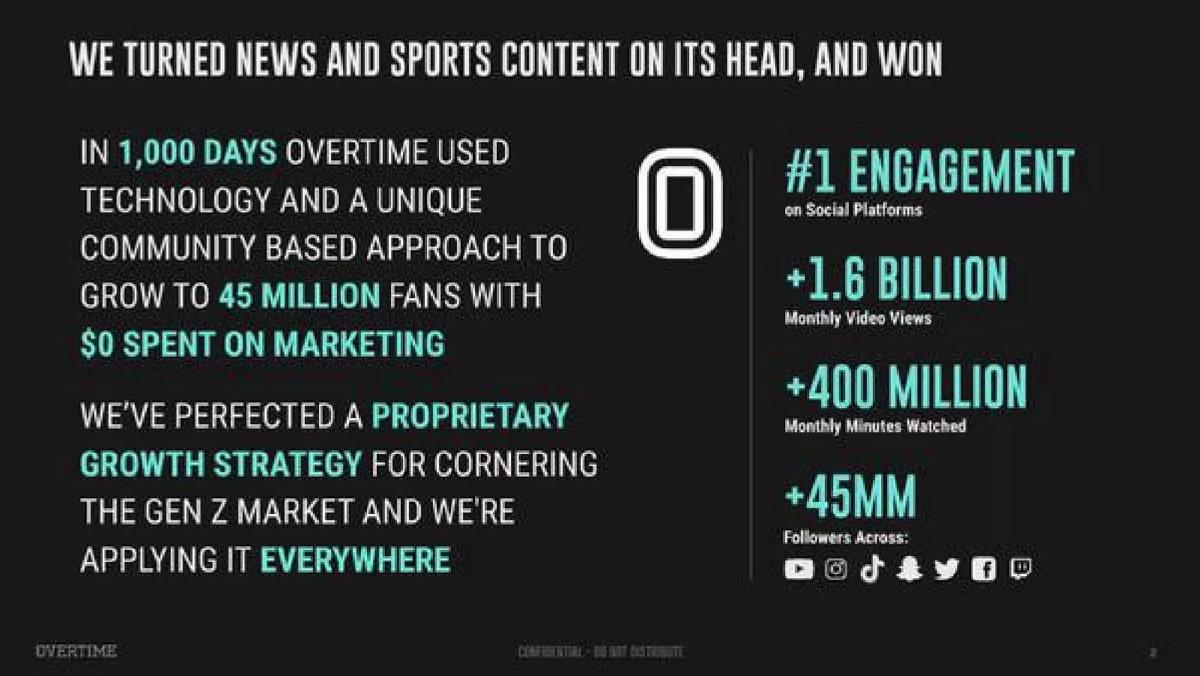
- Overtime reached 45 million fans in 1,000 days with $0 spent on marketing (Slide 2).
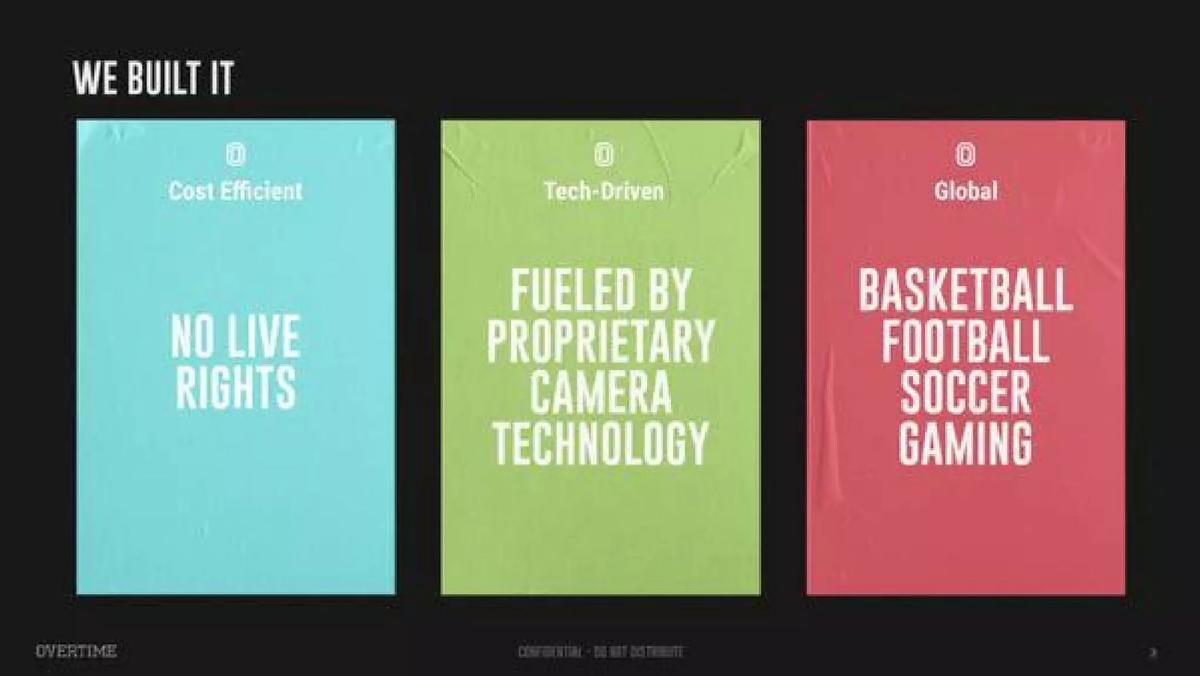
- The company avoids the high cost of live sports rights, focusing instead on proprietary camera technology and community-based content (Slide 3).
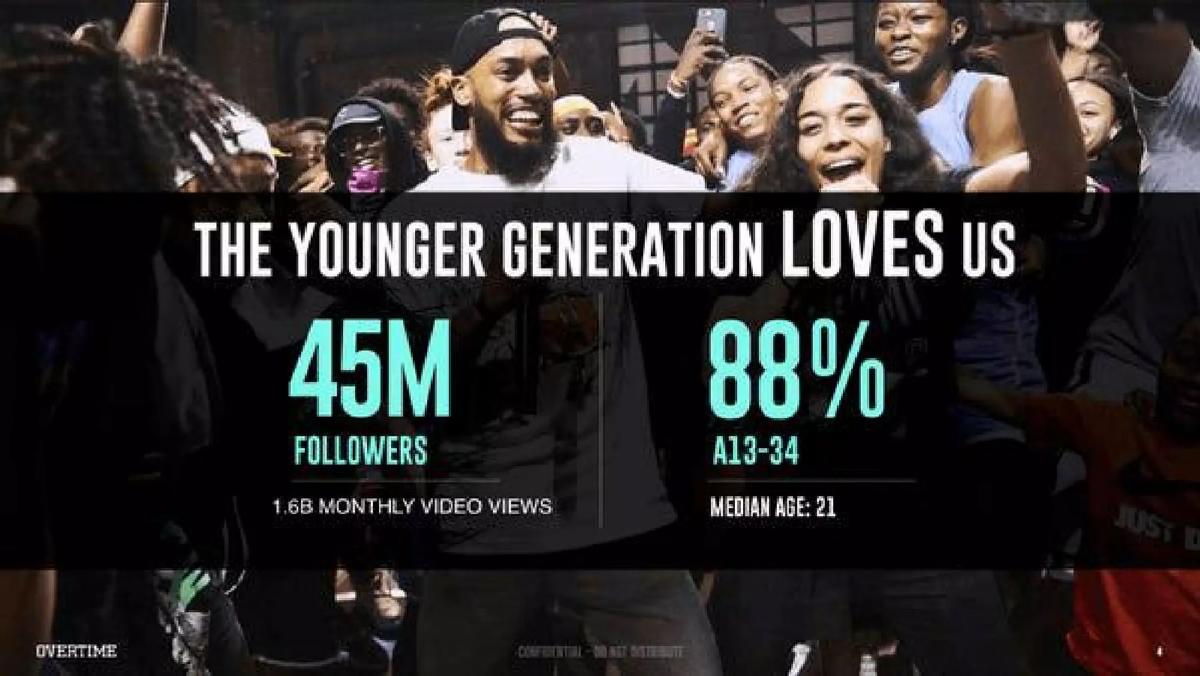
- 88% of Overtime's audience is in the A13-34 demographic, with a median age of 21 (Slide 4).
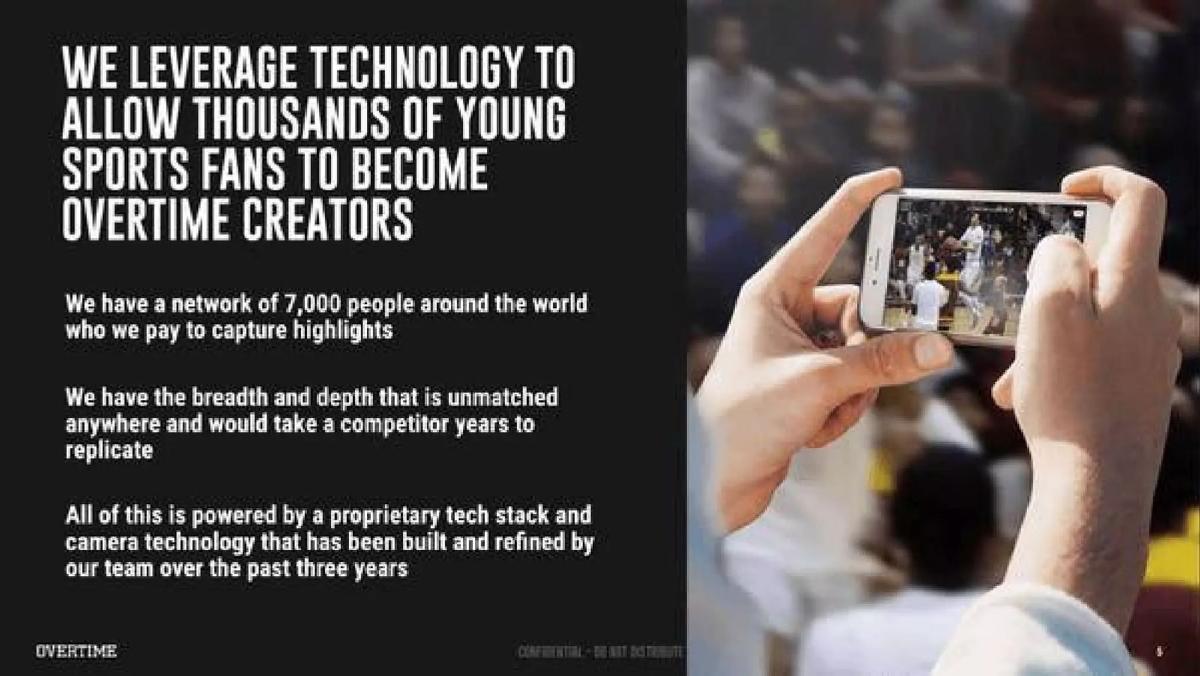
- The business model relies on a global network of 7,000 paid creators who capture highlights using proprietary tech (Slide 6).
- Overtime claims the #1 engagement spot on social platforms compared to all major competitors (Slide 8).
- The company projected a growth to over $200 million in revenue within three years of the deck's presentation (Slide 11).
- Revenue diversification is a core focus, moving from ad-dependency to social commerce and owned sports IP like Overtime Elite (Slide 10, 16).
- The deck lists blue-chip investors including Andreessen Horowitz, Spark Capital, and athletes like Kevin Durant (Slide 20).
The Gen Z Sports Disruption
Overtime’s pitch deck is a aggressive statement of market capture. In an era where traditional sports networks are struggling to retain younger viewers, Overtime presents itself as the definitive solution. The deck is less about 'what we might do' and entirely about 'what we have already conquered.' With a total of $215.1 million raised according to catalogue facts, this deck represents the mid-to-late stage transition from a content creator to a diversified sports empire.
Slides 1-4: The Hook and the Audience
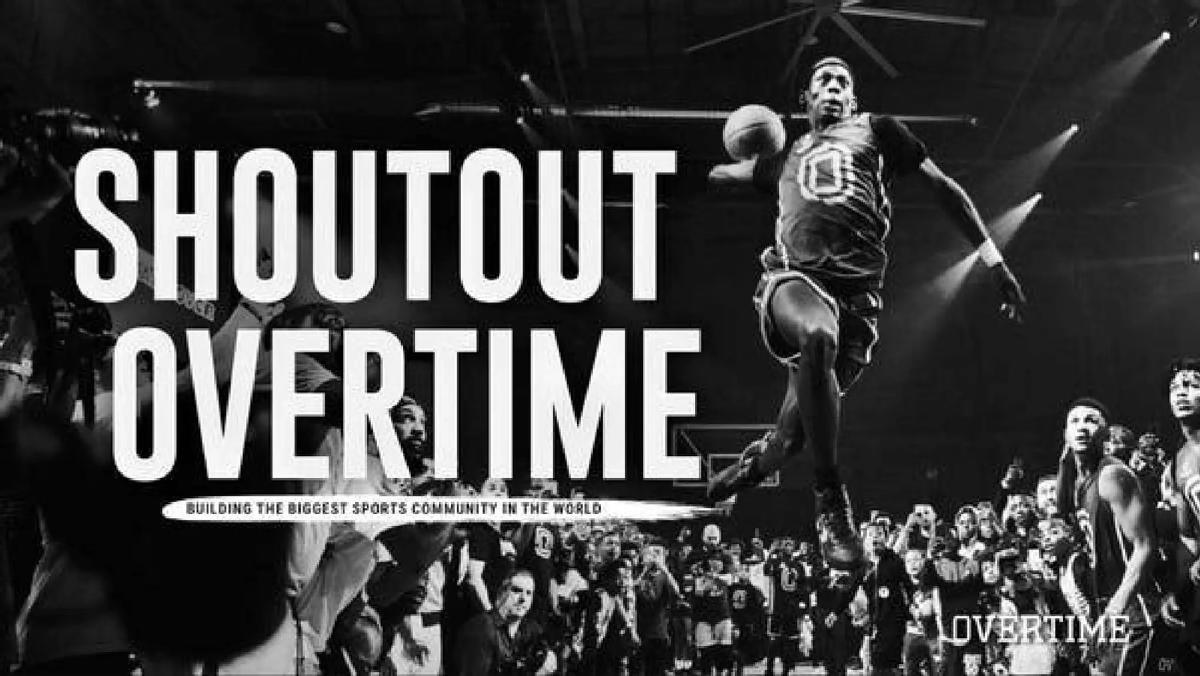
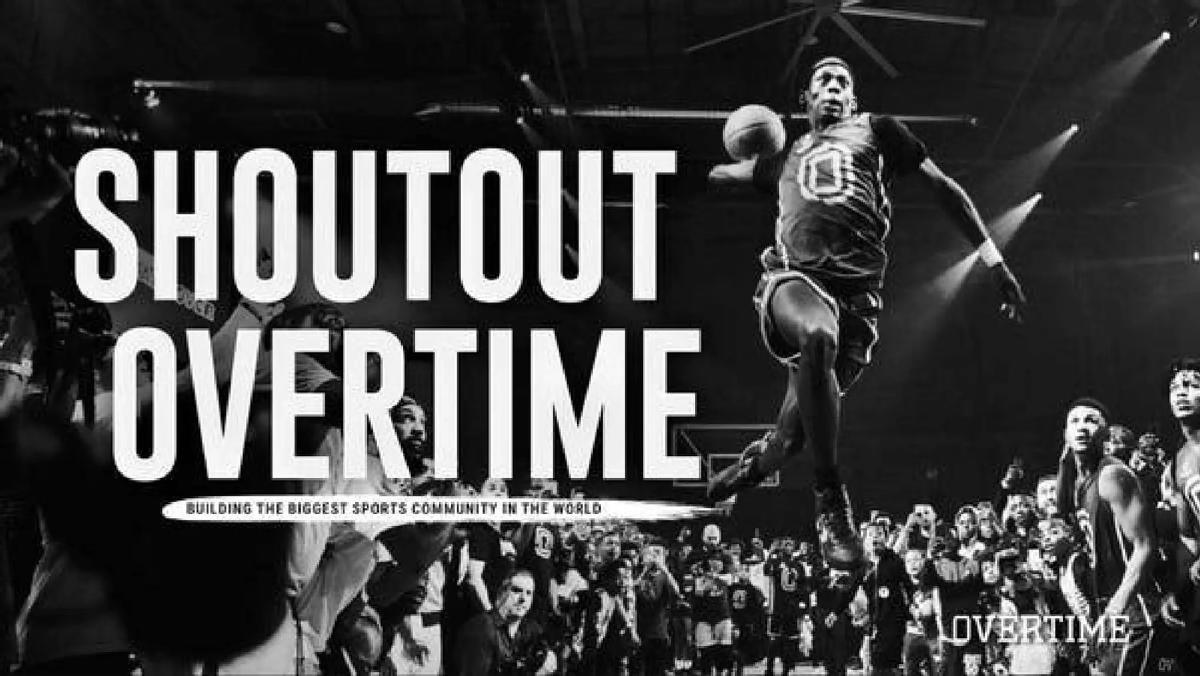
Slide 1 is a high-energy title slide featuring a basketball player in mid-air, setting the tone for a brand built on 'Building the biggest sports community in the world.' It immediately establishes the company's identity: sports, energy, and community.
Slide 2 delivers the 'wow' metrics. It claims 45 million fans grown in 1,000 days with '$0 spent on marketing.' This is a critical point for investors; it proves organic product-market fit and a viral loop that doesn't require heavy CAC (Customer Acquisition Cost). The slide also lists 1.6 billion monthly video views and 400 million monthly minutes watched, asserting their position as #1 in engagement.
Slide 3 outlines the strategic 'moat.' Overtime explicitly states they have 'No Live Rights.' This is a counter-intuitive strength. By avoiding the multi-billion dollar bidding wars for NBA or NFL broadcast rights, they remain 'Cost Efficient.' Instead, they are 'Tech-Driven,' fueled by proprietary camera technology across basketball, football, soccer, and gaming.
Slide 4 defines the demographic. 88% of their audience is between ages 13-34, with a median age of 21. For brands looking to reach Gen Z, these numbers are the primary selling point.
Slides 5-9: Global Scale and Content Dominance
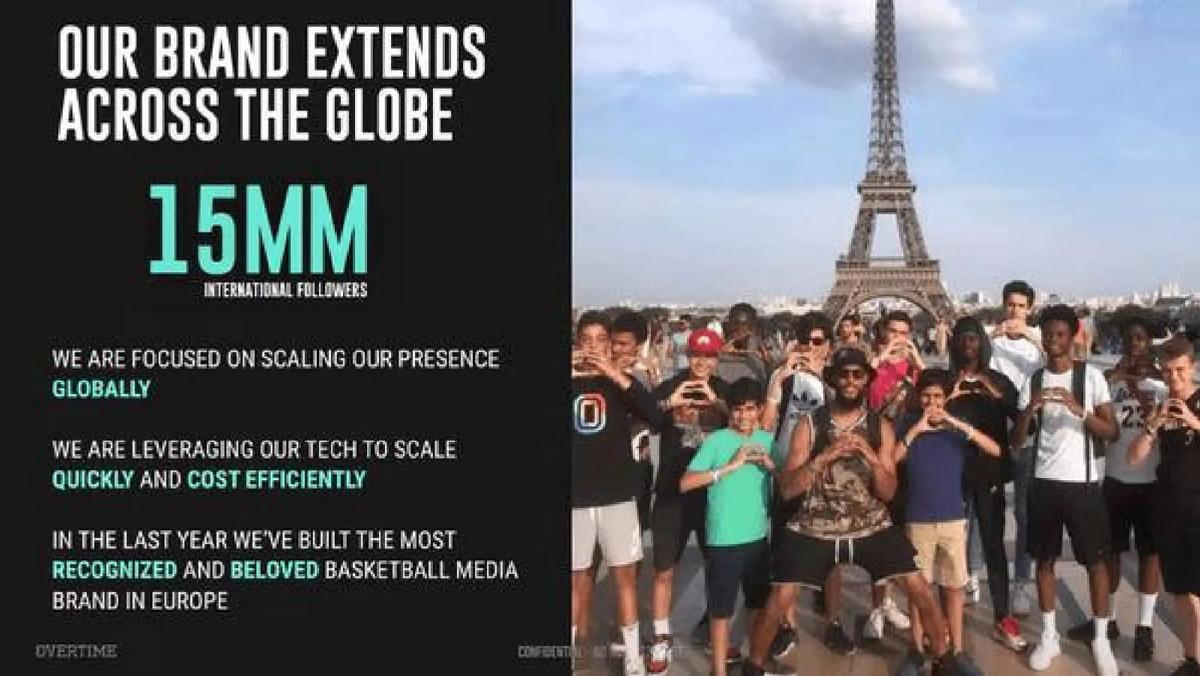
Slide 5 focuses on international expansion, claiming 15 million international followers and the title of the 'most recognized and beloved basketball media brand in Europe.' This suggests the model is geographically agnostic.
Slide 6 explains the 'how.' Overtime employs a network of 7,000 people globally to capture highlights. This decentralized production model is their 'proprietary tech stack,' which they claim would take competitors years to replicate. This slide moves the company from a 'media company' to a 'platform company.'
Slide 7 and 8 showcase their original programming. Slide 7 lists shows like 'OT Challenge' and 'Ma Route a la NBA,' noting that original content is consumed by 30 million people monthly. Slide 8 claims they are #1 on YouTube, Snapchat, and TikTok versus all major competitors, specifically mentioning they have 4 of the top 15 sports accounts on TikTok.
Slide 9 highlights 'The Takeover,' a competitive basketball event that garnered 150M+ views. They use a specific comparison here: their girls' event movie had 5x more viewership than the best performing WNBA Finals game that year. This is a bold use of comparative metrics to show the power of their distribution over traditional broadcast.
Slides 10-14: The Pivot to Owned IP and Financials
Slide 10 introduces 'Overtime Elite.' This is a pivotal shift in the deck. The company is no longer just reporting on sports; they are creating their own league. They describe it as a basketball community that puts the 'athlete first,' signaling a move into owning the primary IP rather than just the highlights.
Slide 11 sets a massive goal: +$200M in revenues in the next 3 years. They attribute this to their unique audience ownership and the ability to 'reformat traditional categories' for Gen Z.
Slide 12 introduces the 'Executive Talent.' They highlight a CRO from Bleacher Report/Pluto TV, an Adidas exec, and former leadership from the NBA G-League and MLB. This slide is designed to prove that the 'kids' running the social media accounts are backed by industry veterans who know how to scale to hundreds of millions in revenue.
Slide 13 provides historical and projected financials. Revenue grew from near-zero in 2017 to approximately $13M in 2020. The projections for 2025 show a massive leap to nearly $300M, with 'Overtime Elite' (the dark teal bars) expected to account for a significant portion of that growth starting in 2023.
Slide 14 shows the 'Apparel' business. With a +$65 Average Order Value and 3x YoY growth, they demonstrate that their fans aren't just watching; they are buying. They also note 150,000 opt-in phone numbers, which is a high-value direct marketing asset.
Slides 15-20: Resilience and The Ask
Slide 15 addresses the COVID-19 pandemic. While traditional sports were cancelled, Overtime saw a 39% increase in watch time. This proves the 'anti-fragility' of their digital-first, highlight-driven model.
Slide 16 breaks down the revenue streams: Direct Brand Sales, Social Commerce, and Programmatic. They explicitly state they are 'not just an ad dependent media company,' which reduces the perceived risk of platform algorithm changes.
Slide 17 focuses on 'Co-ed Content,' claiming 14 million female followers. This is a 'funnel widener' strategy, showing they aren't just a 'boys' club' and have a massive untapped market in female sports fans.
Slide 18 highlights the team's diversity and youth. With an average age of 26, they argue that their staff is the target demographic, giving them an authentic edge in content creation.
Slide 19 is the 'Logo Slide' for brands. It features heavyweights like Nike, Gatorade, McDonald's, and Netflix, proving that blue-chip advertisers already trust the platform.
Slide 20 concludes with their funding history. They have raised $50M+ to date (at the time of this deck) from Andreessen Horowitz, Spark Capital, and athletes like Kevin Durant and Carmelo Anthony. This provides the 'social proof' necessary to close a later-stage round.
What Works
The 'No Live Rights' Argument: Turning a potential weakness (not owning the games) into a strength (cost efficiency and tech focus) is brilliant positioning. · Demographic Dominance: The deck repeatedly hammers home their ownership of the 13-34 age bracket, which is the 'holy grail' for modern advertisers. · Diversified Revenue: By showing apparel, events, and a new league, they move away from the 'risky media company' label and toward a 'conglomerate' valuation. · Social Proof: Listing Andreessen Horowitz and Kevin Durant on the final slide leaves the investor with the impression that the 'smart money' is already in.
What is Missing
Unit Economics: While they show revenue growth, there is no mention of Gross Margins or the cost of acquiring the 7,000 creators. · Burn Rate: For a company raising such large sums, there is no indication of their current burn or path to profitability. · Platform Risk: They mention being #1 on TikTok and Snapchat, but they don't detail how they would survive if those platforms changed their monetization or distribution algorithms. · Overtime Elite Details: The league is a massive undertaking. The deck is light on the actual logistics, costs, and legalities of starting a professional sports league for minors.
What a Founder Should Copy
The 'Traction First' Approach: Lead with the 45 million followers and 1.6 billion views. If you have scale, make it the first thing they see. · Comparative Metrics: Comparing their girls' event to the WNBA Finals (Slide 9) is a powerful way to provide context to large numbers. · The Talent-to-Revenue Map: Slide 12, which maps specific executive hires to specific revenue goals (Brand, Commerce, Sports IP), is a great way to show that you are hiring for a reason. · Visual Consistency: The deck uses a high-contrast, 'street' aesthetic that perfectly matches the brand they are building. The deck feels like the product.
Frequently asked questions
- How does Overtime monetize its audience?
- According to slide 16, Overtime moves beyond simple ad dependency. Their revenue model includes direct brand sales (sponsorships), social commerce through lifestyle apparel, and programmatic advertising revenue shared by platforms like Snapchat and YouTube. They also leverage owned IP, such as the Overtime Elite league, to drive media rights and sponsorship revenue.
- What is Overtime's competitive advantage in content creation?
- Slide 6 highlights a network of 7,000 people worldwide paid to capture highlights. This 'breadth and depth' is powered by a proprietary tech stack and camera technology built over three years, which the company claims would take competitors years to replicate. This allows them to capture high-volume, high-engagement content without the overhead of traditional broadcast crews.
- Who is the target demographic for Overtime?
- The deck explicitly targets Gen Z. Slide 4 notes that 88% of their 45 million followers are aged 13-34, with a median age of 21. Slide 11 emphasizes that their 'unique ownership' of this specific demographic is a primary driver for their projected $200M+ revenue growth.
- What is 'Overtime Elite' mentioned in the deck?
- Slide 10 introduces Overtime Elite as a 'first-of-its-kind basketball community' and sports property. It is positioned as an alternative to the traditional high school basketball system, focusing on athlete health, education, and development while creating a 'lucrative financial opportunity' for the company through owned IP.
- How did COVID-19 impact Overtime's growth?
- Slide 15 shows that 'quarantine months' were record-breaking for the company. They saw a 39% increase in watch time and projected that revenues would nearly double despite the challenging year, illustrating the resilience of digital-first media compared to traditional live sports.