Ownership presents a solution to one of the most contentious aspects of startup life: the equity split. By moving away from arbitrary upfront agreements to a 'dynamic equity' model, the app allows founders to reward team members based on actual contributions, such as hours worked or milestones achieved. The deck effectively utilizes a high-contrast aesthetic and clear product visualizations to explain a complex legal and financial concept. While the initial value proposition is a SaaS tool for founders, the long-term vision involves a marketplace and a blockchain-powered exchange for trading…
Key takeaways
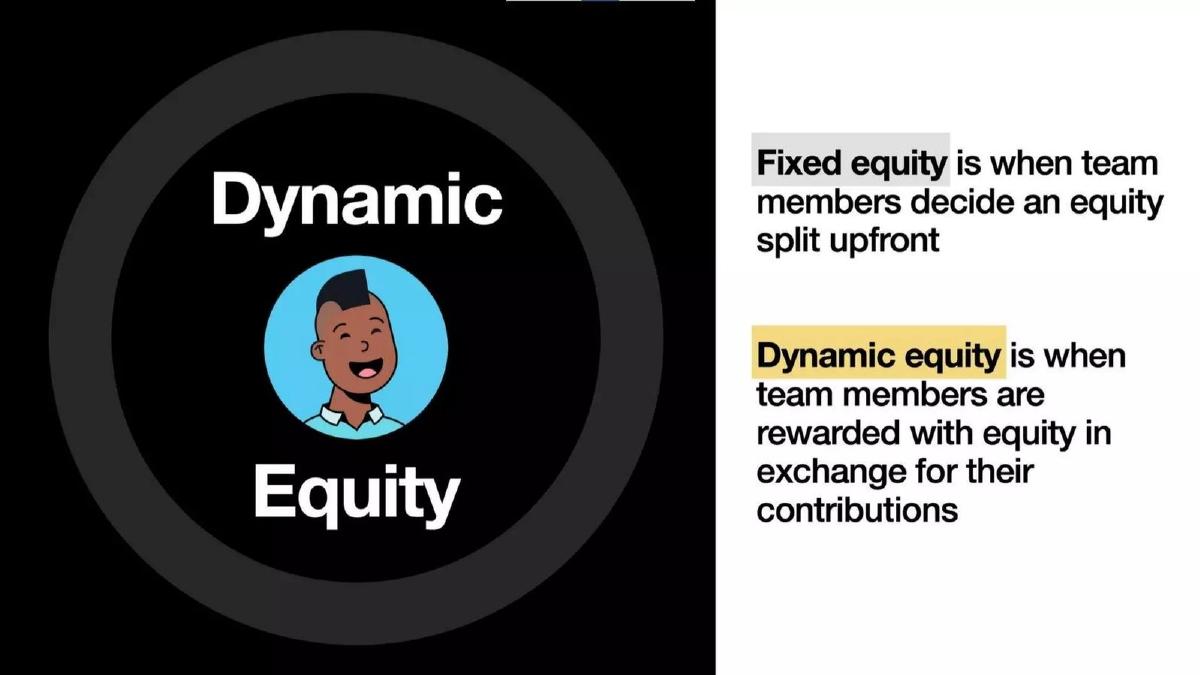
- The platform defines 'Dynamic Equity' as rewarding team members in exchange for contributions rather than deciding splits upfront (Slide 4).
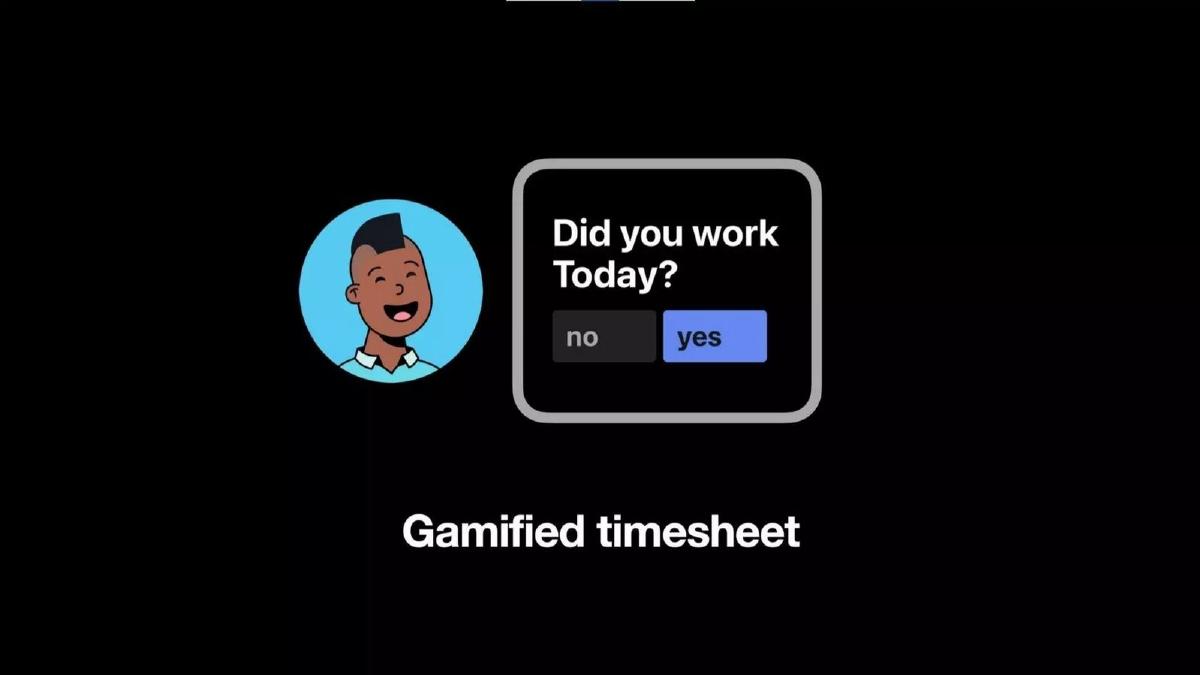
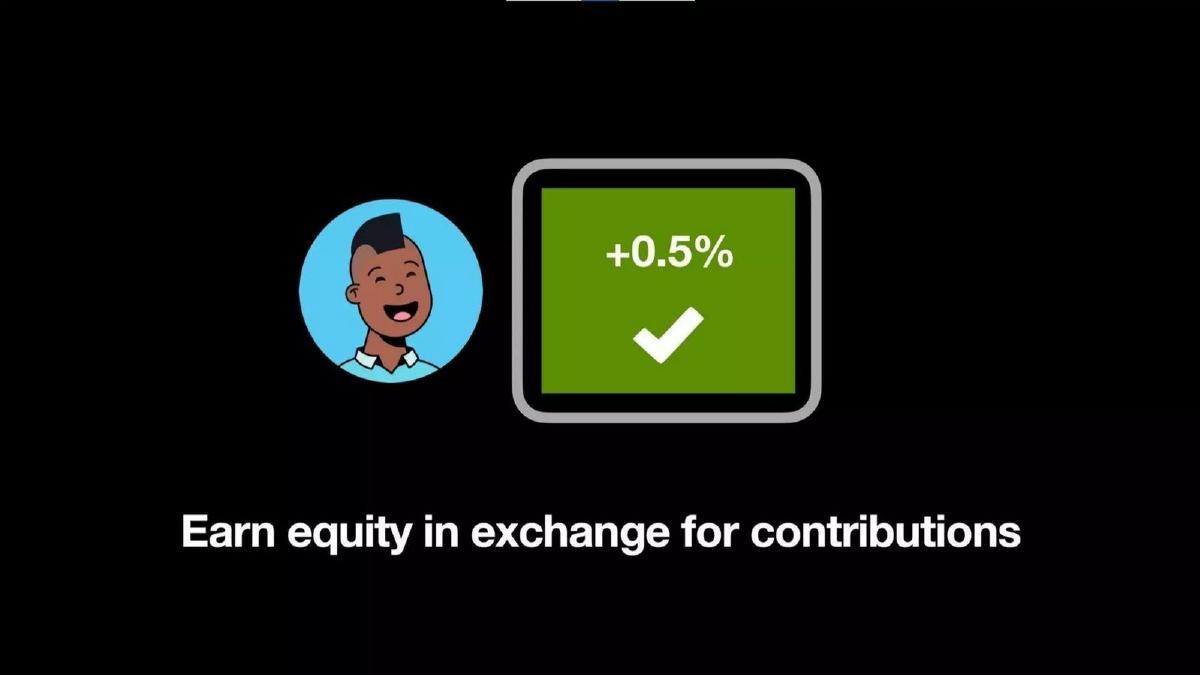
- The product features a 'gamified timesheet' where users log work to earn equity increments, such as +0.5% (Slides 5-6).
- Ownership targets a massive market, citing 300 million current founders and a $51.8B worldwide TAM (Slide 10).
- The roadmap outlines a transition from a $29/month SaaS model in 2022 to a blockchain-based equity exchange by 2024 (Slide 11).
- Competitive positioning highlights a gap in the market for a 'consumer-led' platform that combines equity tracking with global payroll (Slide 12).
- Early validation shows 90% of beta users would pay over $30/month for a pro plan and 100% would not return to fixed equity (Slide 17).
- The team consists of a design freelancer with 15+ years of experience and a strategist with a background in major cloud ecosystems (Slide 13).
- The deck omits a specific funding amount, stating only that the 'Pre-Seed/Seed' round closes on May 1st, 2022 (Slide 18).
Executive Summary: The End of the Handshake Equity Deal
Ownership is a platform designed to automate and de-risk the process of starting a company. The core thesis is that 'fixed equity'—the practice of splitting a company 50/50 or 60/40 on day one—is fundamentally flawed because it doesn't account for the actual work performed over time. By using a 'gamified timesheet' and a dynamic algorithm, Ownership allows founders to distribute equity based on real-world contributions. This teardown explores a deck that is heavy on product vision and social proof but light on the hard numbers typically expected in a Seed round.
Slides 1-3: The Hook and the Vision
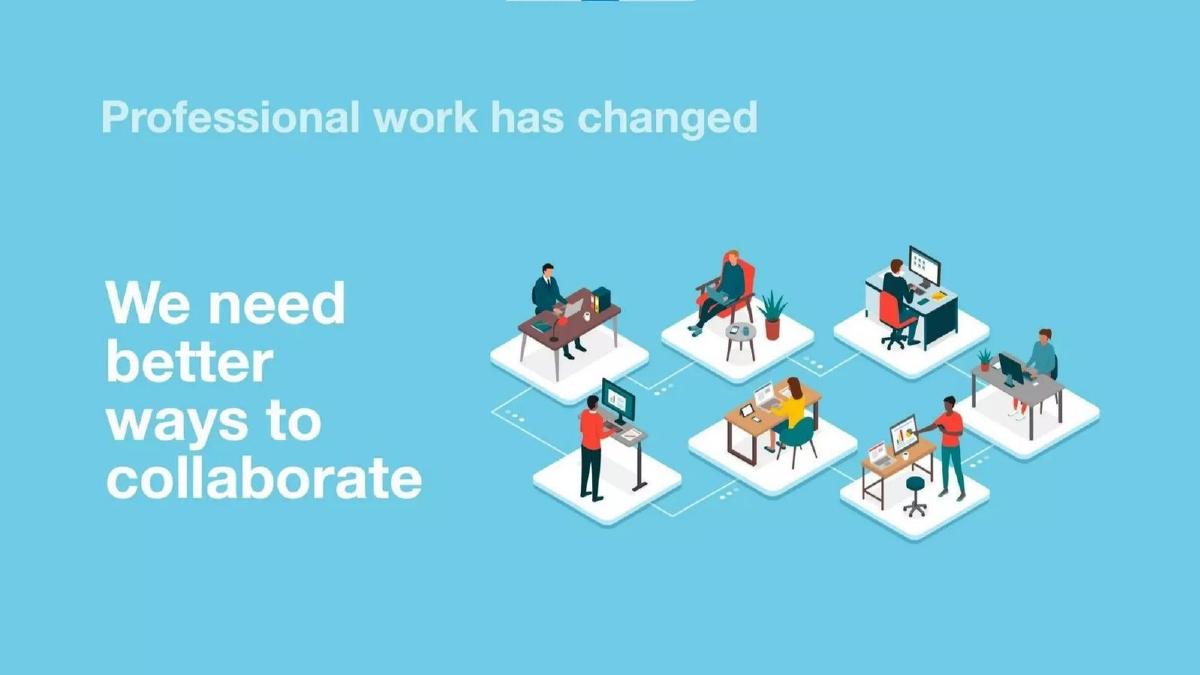
The deck opens with a high-quality lifestyle image of a modern office, immediately followed by an isometric illustration on Slide 2 stating, 'Professional work has changed. We need better ways to collaborate.' This sets a broad stage for the problem. Slide 3 introduces the brand: 'Ownership: Next-generation company formation with dynamic equity.' The use of a black background with high-contrast yellow and white text creates a premium, tech-forward feel that persists throughout the presentation.
Slides 4-7: Defining Dynamic Equity
Slides 4 through 7 are the most critical for explaining the product's mechanics. Slide 4 provides a clear definition: 'Fixed equity is when team members decide an equity split upfront. Dynamic equity is when team members are rewarded with equity in exchange for their contributions.' This is a classic 'Old Way vs. New Way' slide that identifies a specific pain point. Slides 5 and 6 show the user interface: a simple 'Did you work Today?' prompt that leads to an equity reward (e.g., '+0.5%' ). Slide 7 visualizes the 'Automated Ownership Split,' showing a mobile app interface where team members' percentages shift dynamically based on their roles (Marketing, Sales, Software Development) and hours logged.
Slides 8-9: Value Propositions for Founders and Professionals
The deck bifurcates its value prop into two categories. For Founders (Slide 8), the benefits are 'Access to talent without cash,' the ability to 'Buy back equity on success,' and 'The simplest way to start up.' For Professionals (Slide 9), it offers 'Access to startup opportunities,' the chance to 'Work on something you love,' and 'Secondary streams of income.' This framing positions Ownership as a two-sided marketplace for talent and equity, rather than just a cap table management tool.
Slides 10-12: Market Size and Roadmap
Slide 10 makes a bold claim: 'There are 300 million founders in the world today. We're targeting the next 1 billion founders.' It cites a '$51.8B Worldwide TAM' sourced from Micro Biz Mag. While the '1 billion founders' figure is aspirational, the slide effectively communicates the scale of the ambition. Slide 11 outlines the '2022 SaaS ($29/mo),' '2023 Marketplace,' and '2024 Exchange' roadmap. This is a significant pivot from a simple tool to a 'Blockchain network platform' where equity is converted to tokens and traded publicly. Slide 12 uses a standard checkmark grid to compare Ownership against incumbents like Carta, Deel, and Slicing Pie , claiming the 'Consumer Led' mantle for itself.
Slides 13-16: Team and Social Proof
The team slide (Slide 13) features Dominic Vinyard (Design fanatic, 15+ years freelancer) and Naima Camara (Strategist, Community manager for startup ecosystem). The following three slides (14-16) are dedicated entirely to social proof, featuring photos of the founders at Web Summit , logos for Barclays Eagle Labs , and a feature in the Financial Times . The inclusion of a 'Trade mission to New York' with the Department for International Trade adds a layer of institutional credibility that compensates for the lack of revenue data.
Slides 17-20: Traction, The Ask, and Appendix
Slide 17 provides the only 'hard' traction metrics: a public beta with '20 co-creator teams,' where '90% would pay +$30/mo' and '100% will never go back to fixed equity.' These are survey-based metrics rather than realized revenue, which is typical for a pre-seed stage. Slide 18 is the 'Ask' slide, but it is notably missing a dollar amount. It simply states 'Pre-Seed/Seed' and that the 'Round closes 1st May 2022.' The deck concludes with an Appendix (Slides 19-20) that handles frequently asked questions regarding market rates, buyout clauses, and legal contracts.
What Works in the Ownership Deck
Clarity of Concept: The distinction between fixed and dynamic equity is explained so simply that even a non-technical investor can grasp the value proposition in seconds. · Visual Storytelling: The use of app mockups (Slides 7 and 19) makes the abstract concept of 'dynamic equity' feel like a tangible, easy-to-use product. · Strong Social Proof: For a company at this stage, the press coverage (Financial Times) and institutional support (Department for International Trade) are highly effective at building trust. · The 'Why Now' Factor: By mentioning the change in professional work (Slide 2), the deck taps into the post-pandemic shift toward fractional work and the 'gig economy' for high-skilled professionals.
What is Missing from the Ownership Deck
Specific Funding Ask: The deck mentions a round is closing but does not state how much capital is being raised or how it will be allocated (e.g., hiring, marketing, R&D). · Financial Projections: While there is a SaaS price point of $29/month, there are no projections on user growth, churn, or the expected volume of the 2024 'Exchange' model. · Legal/Regulatory Detail: Moving equity into a blockchain exchange (Slide 11) carries massive regulatory hurdles. The deck mentions 'buyout clauses' but avoids the complexities of securities law, which would be a primary concern for a Seed investor. · Unit Economics: There is no mention of Customer Acquisition Cost (CAC) or Lifetime Value (LTV), even in the context of the beta teams.
What a Founder Should Copy
The FAQ Appendix: Slide 20 is a masterclass in preempting objections. By addressing 'messy cap tables' and 'VC compatibility' upfront, the founders save time in the Q&A portion of a pitch. · High-Contrast Design: The aesthetic is clean, professional, and consistent. It uses color sparingly to draw the eye to key data points like '+0.5%' or '65%'. · The Roadmap as a Narrative: Instead of just listing features, Slide 11 tells a story of evolution from a tool to a marketplace to a platform. This helps justify a 'venture-scale' valuation for what might otherwise look like a simple utility app. · Focus on User Sentiment: In the absence of massive revenue, the '100% will never go back' metric (Slide 17) is a powerful way to demonstrate product-market fit and the 'stickiness' of the solution.
Frequently asked questions
- How does Ownership calculate equity splits?
- According to Slide 20, equity is not solely based on hours. It can be awarded for milestones, commissions, and other contributions. Market rates are used to determine the relative value of those hours, ensuring that a developer's hour and a marketer's hour are weighted appropriately within the dynamic cap table algorithm.
- What is the business model for Ownership?
- The company utilizes a multi-stage monetization strategy. Slide 11 shows a starting SaaS model with plans from $29/month. The roadmap indicates a move toward a marketplace connecting startups to professional services in 2023, followed by a blockchain exchange in 2024 that generates revenue through tokenized equity trading.
- Does the platform handle legal contracts?
- The deck is transparent about legal limitations. Slide 20 states that Ownership does not currently offer legally binding contracts and advises teams to put external contracts in place. However, it does include built-in buyout (drag-along) clauses to help founders manage the cap table as the company grows.
- Who are the primary competitors identified in the deck?
- Slide 12 compares Ownership against Slicing Pie (dynamic equity calculator), Qadre (blockchain cap table), Deel (global payroll), and Carta (cap table management). Ownership claims to be the only solution that is 'Consumer Led' while covering all three functional areas: equity tracking, payroll, and company formation.
- What traction has the company achieved?
- The deck highlights qualitative traction and brand presence. Slide 17 notes a public beta with 20 'co-creator teams.' Slides 14 and 15 showcase participation in Barclays Eagle Labs, Web Summit, a trade mission to New York with the Department for International Trade, and press coverage in the Financial Times.