Oxbotica, founded in 2014 by Oxford University professors, used this 9-slide deck to secure a significant Series B round. The deck is notable for its heavy emphasis on technical differentiation, specifically through its 'Universal Autonomy Platform' which claims to be sensor, vehicle, and place agnostic. Rather than focusing on burn rates or revenue multiples, the deck leans into a comprehensive timeline of partnerships (Ocado, Cisco, ZF) and a sophisticated market sequencing strategy that prioritizes mining and airports before moving to urban shuttles. While it lacks a formal 'Ask' slide or…
Key takeaways
- The company was founded in 2014 by Oxford University professors Paul Newman and Ingmar Posner, establishing deep academic credibility from slide 3.
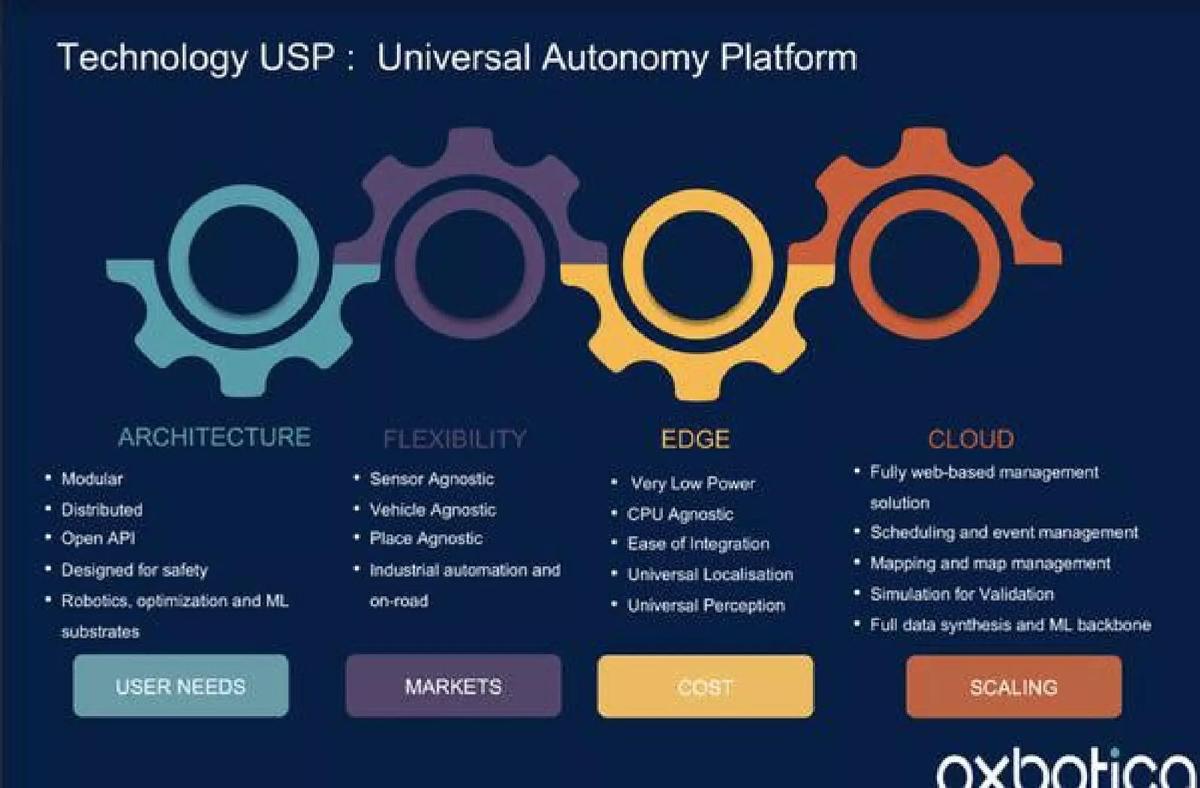
- Oxbotica positions its software as 'Universal,' meaning it is sensor-agnostic, vehicle-agnostic, and place-agnostic as detailed on slide 4.
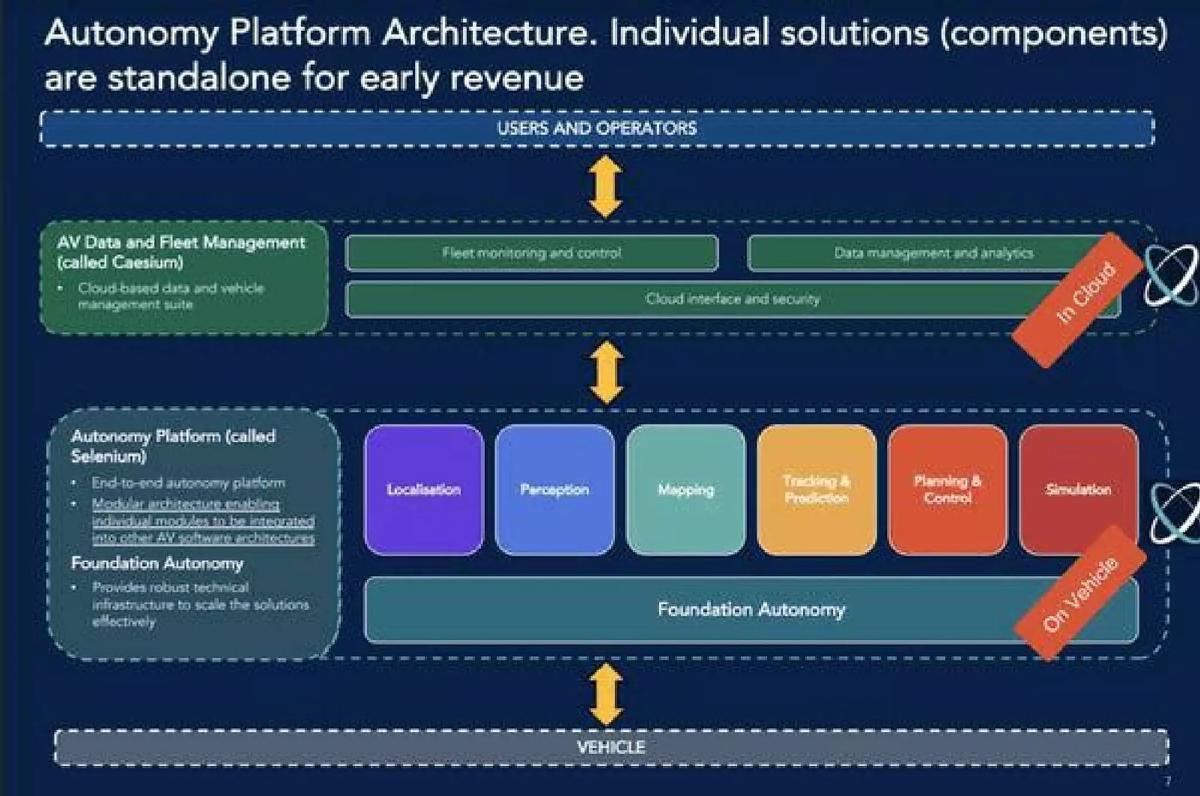
- The product architecture is split into two distinct brands: 'Selenium' for on-vehicle autonomy and 'Caesium' for cloud-based fleet management on slide 6.
- A robust partnership history is showcased on slide 3, including collaborations with Ocado, Heathrow Airport, and Cisco.
- Market sequencing is visualized on slide 8, showing a strategic transition from industrial niches like Mining and Ports to broader Goods Delivery and Shuttles.
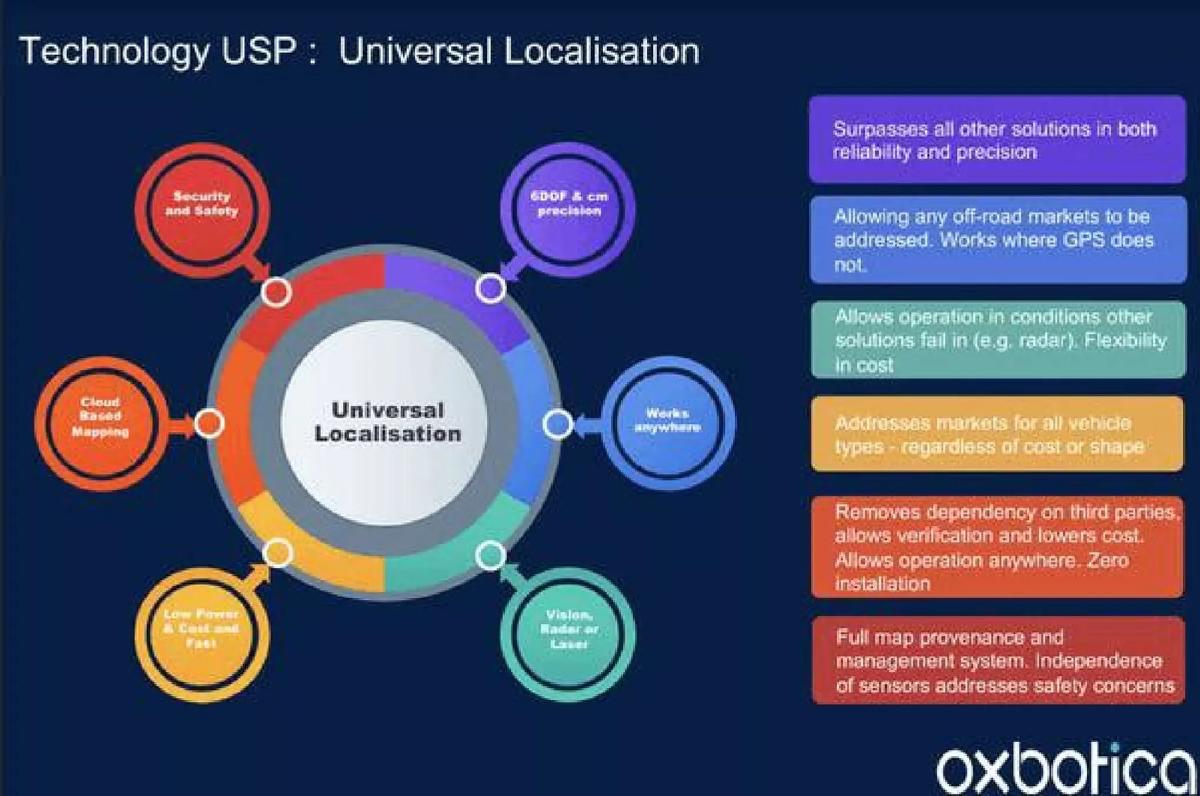
- The technology claims '6DOF & cm precision' for localization, asserting it works where GPS does not on slide 5.
- The leadership team features heavyweights from Ford, Jaguar Land Rover, and Tantalum Corporation, as listed on slide 9.
- The deck completely omits financial projections, current burn rate, and a specific funding ask.
Introduction: The Academic Powerhouse of Autonomy
Oxbotica represents a specific breed of deep-tech startup: the university spin-out that successfully bridges the gap between theoretical research and industrial application. Founded in 2014 by Oxford University professors, the company entered a crowded autonomous vehicle (AV) market not by building a car, but by building the 'brain' that could inhabit any vehicle. This 9-slide deck, dated January 2021, served as a vehicle for their Series B messaging, ultimately contributing to a total raise of $89,500,000.
Slide 1: Title and Positioning
The cover slide is minimalist, featuring the Oxbotica logo and the phrase "UNIVERSAL AUTONOMY" . The date, January 2021, marks a period where the initial hype of self-driving cars was being replaced by a focus on specialized, industrial applications—a shift Oxbotica was well-positioned to exploit. The term 'Universal' is the central pillar of their brand, signaling that they are not tethered to a specific hardware manufacturer or use case.
Slide 2: The Executive Summary
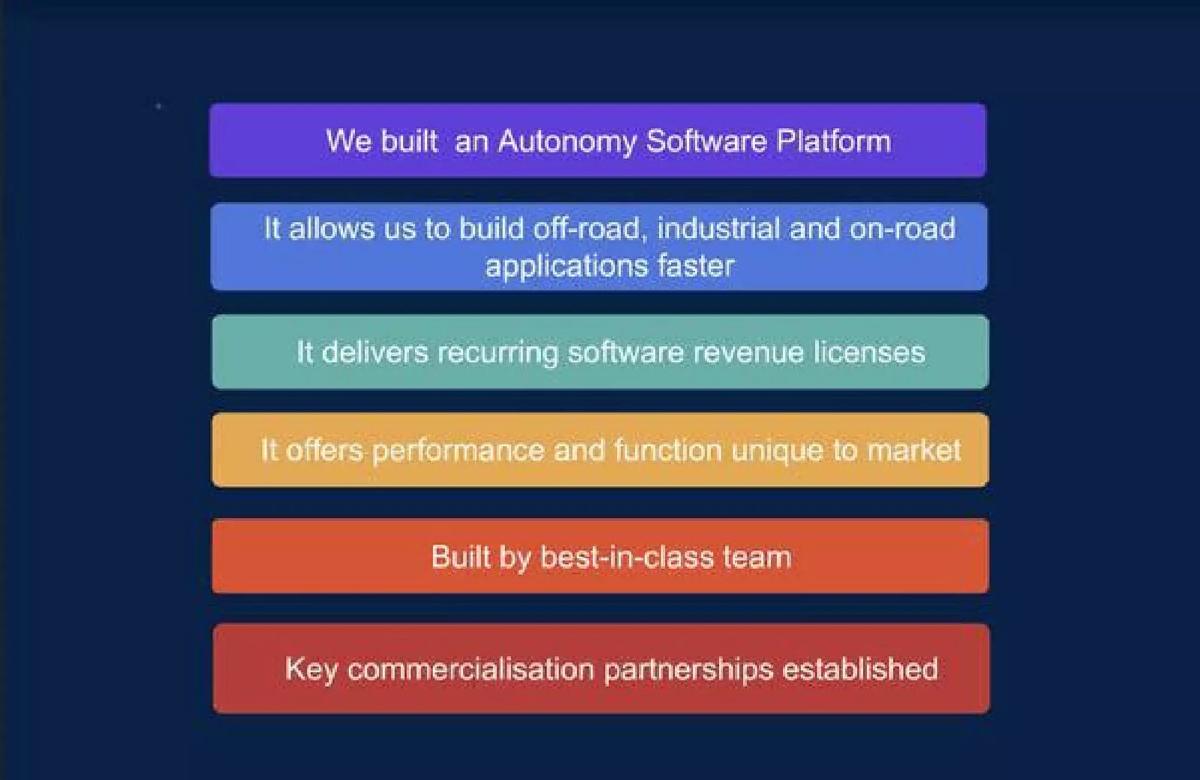
Slide 2 acts as a high-level summary of the investment thesis. It uses six horizontal bars to lay out the value proposition: an autonomy software platform that enables faster builds for off-road, industrial, and on-road applications. Crucially, it mentions "recurring software revenue licenses," which is music to a VC's ears in a sector often bogged down by heavy service-based engineering costs. It also highlights the "best-in-class team" and "key commercialisation partnerships," setting the stage for the evidence to follow.
Slide 3: The Traction Timeline
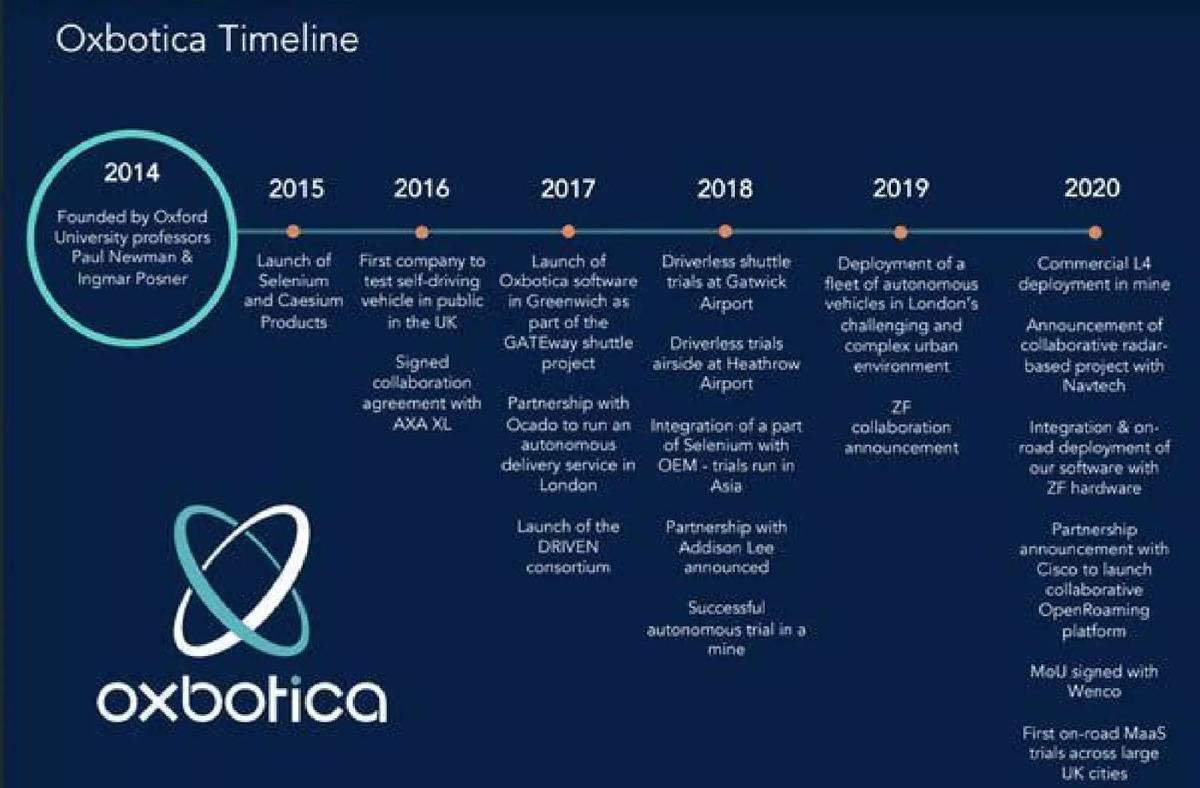
This is one of the most information-dense slides in the deck. The timeline from 2014 to 2020 tracks the company's evolution from an Oxford spin-out to a global player. Key milestones include the 2015 launch of 'Selenium' and 'Caesium' products, the 2017 partnership with Ocado for autonomous delivery in London, and 2018 trials at Gatwick and Heathrow Airports . By 2020, the company notes a "Commercial L4 deployment in mine" and an "MoU signed with Wenco." This slide proves that the technology isn't just theoretical; it has been tested in diverse, high-stakes environments with blue-chip partners.
Slide 4: The Universal Autonomy Platform
Slide 4 introduces the technical architecture using a four-gear graphic: Architecture, Flexibility, Edge, and Cloud. Under 'Flexibility,' the deck lists "Sensor Agnostic," "Vehicle Agnostic," and "Place Agnostic." This is a direct challenge to competitors who build systems optimized for specific LIDAR setups or specific city maps. The 'Edge' section emphasizes "Very Low Power" and "CPU Agnostic" capabilities, which are critical for scaling AV technology without requiring a server rack in the trunk of every car.
Slide 5: Technical USP - Universal Localisation
Localization—the ability of a vehicle to know exactly where it is—is a primary hurdle for AVs. Slide 5 claims their solution "Surpasses all other solutions in both reliability and precision." It specifically notes that it "Works where GPS does not," which is a vital requirement for mining (underground or deep pits) and urban canyons. The slide details "6DOF & cm precision" and a "Zero installation" requirement, meaning they don't need to embed sensors in the environment to make the vehicle work.
Slide 6: Product Architecture
This slide provides a functional map of how the software actually works. It separates the stack into "Selenium" (the on-vehicle autonomy platform) and "Caesium" (the cloud-based fleet management suite). Selenium is described as a "Modular architecture enabling individual modules to be integrated into other AV software architectures." This modularity is a key business strategy, as it allows Oxbotica to sell pieces of their tech (like just the perception or just the mapping) to other OEMs who might be struggling with one specific part of their own stack.
Slide 7: Technical USP - Universal Perception
Following the localization slide, Slide 7 focuses on Perception—how the vehicle sees and understands objects. It highlights a "Dual Approach of ML & Optimization" for safety and consensus. The slide claims the "Fastest solution on market" with "Ultra low power" requirements. By being "Domain Agnostic," the perception system can identify obstacles in a forest, a mine, or a city street without needing a complete rebuild of the underlying models.
Slide 8: Market Selection and Sequencing
Deep-tech companies often fail by trying to do everything at once. Slide 8 shows Oxbotica's disciplined approach. They use a 3D bar chart to visualize "Effort and Time" versus "Reward." Their "Autonomy Focus" starts with Mining, Airports, and Ports . These are controlled environments with high 'Market Immediacy.' The sequence then moves to Shuttles and Goods Delivery , with "Other" (presumably general consumer on-road) left for the future. This sequencing demonstrates a clear path to revenue while the technology matures for more chaotic environments.
Slide 9: The Leadership Team
The final slide reinforces the 'best-in-class' claim from Slide 2. It features Ozgur Tohumcu (CEO) , Paul Newman (Founder & CTO) , and other executives with deep roots in automotive (Ford, Jaguar Land Rover) and finance. The academic pedigree of Newman (BP Professor at Oxford) combined with the industrial experience of the rest of the team provides the necessary balance of innovation and commercial operational capacity.
What Works in the Oxbotica Deck
Technical Authority: The deck does not shy away from technical jargon like "6DOF," "cm precision," and "CPU Agnostic." For a Series B round in a highly specialized field, this level of detail is necessary to satisfy technical due diligence from sophisticated investors.
Strategic Sequencing: The market sequencing slide is excellent. It shows that the company understands the difference between a 'cool technology' and a 'viable business.' By targeting mining and ports first, they address markets where the ROI for autonomy is immediate and the regulatory hurdles are lower than on public roads.
Partnership Validation: The timeline slide is a masterclass in 'show, don't tell.' Listing Ocado, Cisco, ZF, and Heathrow provides massive social proof that the world's largest logistics and infrastructure companies trust Oxbotica's code.
What is Missing from the Oxbotica Deck
Financial Data: There are zero numbers regarding revenue, burn rate, or margins. While the deck mentions "recurring software revenue licenses," it provides no evidence of the current scale of that revenue. Even for a Series B, investors usually expect to see a historical growth chart and a forward-looking projection.
The Ask: The deck ends abruptly with the team slide. There is no slide detailing how much money they are raising, what the valuation expectations are, or how the capital will be deployed (e.g., hiring, R&D, international expansion).
Competitive Landscape: The AV space is incredibly crowded, with players ranging from Waymo and Cruise to smaller startups. Oxbotica claims their solution "surpasses all other solutions," but they don't provide a feature-by-feature comparison or a matrix to show where they sit relative to the competition.
What a Founder Should Copy
The 'Universal' Framework: If you are building a platform, use Oxbotica's approach of defining what you are 'agnostic' to. By stating they are sensor, vehicle, and place agnostic, they effectively expanded their TAM to every moving machine on earth.
Modular Product Naming: Giving distinct, trademarkable names to different parts of the stack (Selenium and Caesium) makes a complex software product feel like a tangible asset. It also makes it easier for customers to understand that they can buy parts of the solution rather than the whole thing.
Visualizing Effort vs. Reward: The 3D chart on slide 8 is a great way to communicate a complex go-to-market strategy. It tells investors that you aren't just chasing the biggest market, but the most logical one based on current technical capabilities.
Final Thoughts
Oxbotica's deck is a high-conviction technical document. It assumes the reader understands the value of autonomy and focuses entirely on why Oxbotica's specific architectural approach is the winning one. While it lacks the financial transparency typical of later-stage decks, its strength lies in its clear product-market fit sequencing and its undeniable team pedigree. It is a deck designed to win over the 'smart money'—investors who care more about the robustness of the IP than the current month's MRR.
Frequently asked questions
- What is the core product offering of Oxbotica?
- Oxbotica offers a full-stack autonomy software platform. According to slide 6, this is divided into 'Selenium,' which handles on-vehicle functions like localization, perception, and mapping, and 'Caesium,' a cloud-based suite for fleet management and data analytics. The primary value proposition is that these components can be standalone to generate early revenue or integrated for a full L4 autonomous solution.
- How does Oxbotica differentiate itself from other AV companies?
- The deck emphasizes 'Universal Autonomy.' As shown on slides 4 and 5, their system is designed to be hardware-agnostic, meaning it can run on various CPUs and use any sensor suite (Vision, Radar, or Laser). They specifically highlight their ability to operate in GPS-denied environments and off-road markets, which are often underserved by standard autonomous road vehicle developers.
- Which markets is Oxbotica targeting first?
- Slide 8 outlines a clear sequencing strategy. They are focusing first on Mining, Airports, and Ports. These are controlled environments where the 'Market Immediacy' is high. The deck suggests that the 'Universal Core' will eventually scale into more complex environments like Shuttles and urban Goods Delivery as the technology and safety validation mature.
- What is missing from this pitch deck?
- This is a product and team-centric deck. It lacks several standard venture components: there is no slide detailing the size of the round or the use of proceeds, no financial history or projections, and no competitive landscape analysis. It assumes the investor is already sold on the massive TAM of autonomous vehicles and is looking for the best technical team.
- Who are the key people behind the company?
- The team is led by CEO Ozgur Tohumcu (formerly of Tantalum and Ericsson) and Founder/CTO Paul Newman, a BP Professor at Oxford. The leadership team, detailed on slide 9, includes veterans from major automotive and tech firms like Ford, Jaguar Land Rover, and Prodrive, providing a mix of academic innovation and industrial execution experience.