The Transtutors pitch deck from 2007 is a fascinating look at the early days of online academic assistance. Spanning 15 slides, the deck prioritizes a service-oriented value proposition over traditional venture capital metrics. It highlights a workforce of over 100 qualified experts and a massive range of academic offerings, from SAT prep to doctoral-level support. However, from a fundraising perspective, the deck is remarkably thin. It contains zero financial data, no mention of revenue, no competitive analysis, and no specific 'ask' or use of funds. By modern standards, this is less of a pi…
Key takeaways
- The company claims a workforce of 100+ qualified academicians and experts to handle student inquiries (Slide 4).
- Transtutors utilizes a 'self-picked price' model, allowing students to set their own nominal fees for expert answers (Slide 2).
- The service scope is exceptionally broad, covering everything from sophomores to doctoral programs and standardized tests like the GRE and GMAT (Slide 6).
- Geographic focus is explicitly stated as the US, UK, and Australia, leveraging global tutors for these specific curricula (Slide 5).
- The deck lists nine distinct service categories, including content development, voice support outsourcing, and essay writing (Slides 7-14).
- There is a complete absence of financial projections, historical revenue, or user growth metrics across all 15 slides.
- No 'Ask' slide exists; the deck concludes with social media icons and a vision statement rather than a funding requirement (Slide 15).
- The value proposition is centered on 'taking the burden' of assignment worries away from students (Slide 1).
The 2007 EdTech Landscape: A Service-First Approach
The Transtutors pitch deck is a time capsule from 2007, an era when 'online tutoring' was transitioning from a niche service to a globalized industry. This 15-slide deck, which reportedly helped secure $125,000 in funding, reflects a very different fundraising environment than the one founders face today. It is a document focused almost entirely on what the company does, with virtually no attention paid to how the business scales or why it is a lucrative investment.
Slides 1-3: The Value Proposition and Pricing Model
The deck opens with a direct appeal to the student's pain point. Slide 1 introduces Transtutors with the tagline: "Say goodbye to assignment worries and let us take the burden." This is a classic emotional hook, though it leans heavily into the 'homework help' category which often faces scrutiny regarding academic integrity.
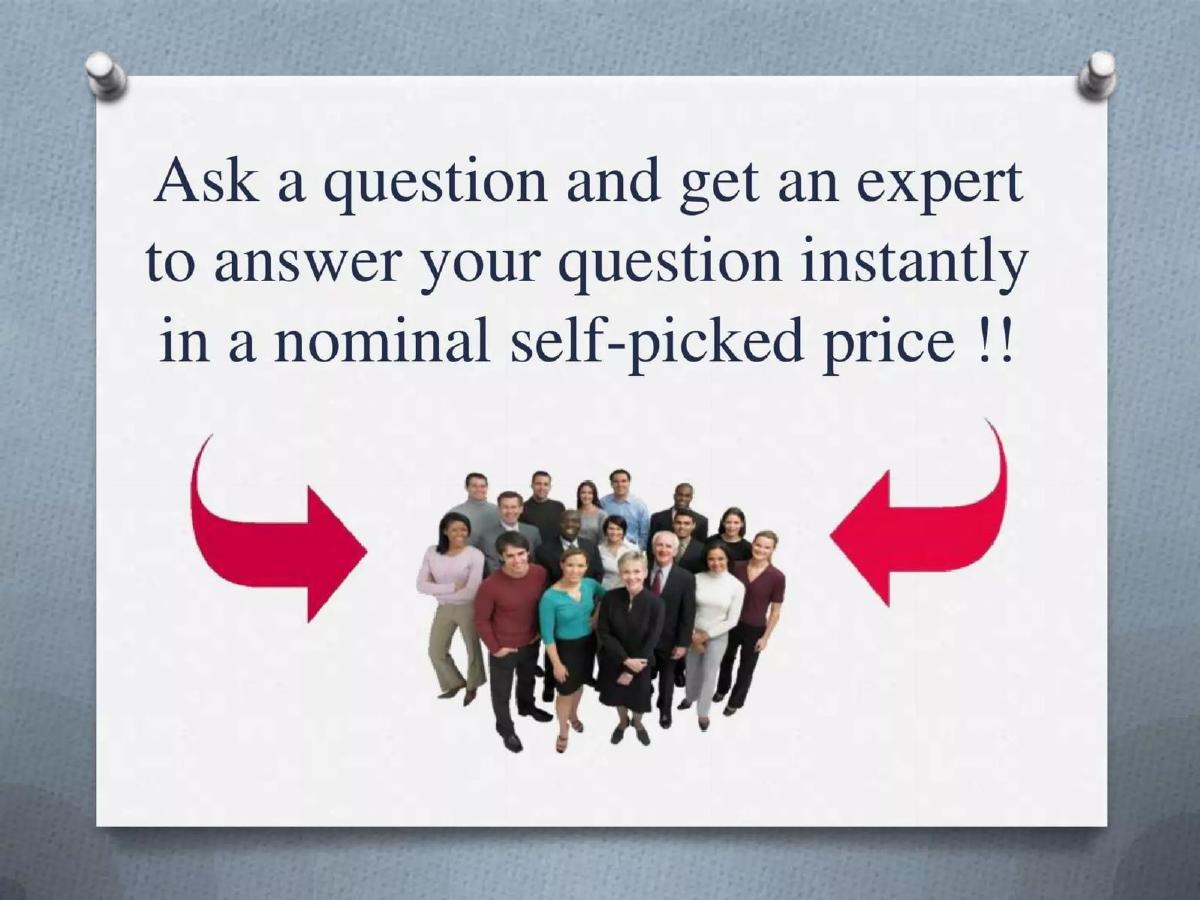
Slide 2 and Slide 3 introduce the core mechanic of the platform. The text is identical on both: "Ask a question and get an expert to answer your question instantly in a nominal self-picked price !!" Slide 3 adds a generic stock photo of a diverse group of professionals, presumably representing the 'experts.' The mention of a 'self-picked price' is the most interesting business detail in the entire deck, suggesting a flexible pricing model that could accommodate students from various economic backgrounds.
Slides 4-6: Operations and Geographic Focus
Slide 4 provides the only real 'scale' metric in the deck: "We have a team of 100 + Qualified Academicians, Experts and Tutors." It claims to have helped "thousands of students across globe." This slide establishes the company as a human-capital-intensive business rather than a pure software play.
Slide 5 addresses the 'Global-Local' bridge. It notes that Transtutors inducts tutors who are in-demand worldwide but ensures they are "well versed with the curriculums of schools and colleges in US, UK & Australia." This is a critical strategic point for an EdTech company based in a different region (the catalogue listing notes the website but the deck implies a global labor arbitrage model). Slide 6 further expands the scope, stating they serve everyone from "sophomores to students pursuing doctoral program."
Slides 7-14: The Service Catalog
The middle of the deck (Slides 7 through 14) is highly repetitive. Each slide uses the header "Our educational services comprises of:" and lists a single category. This is a poor use of slide real estate that could have been consolidated into a single 'Offerings' matrix. The categories listed are:
Slide 7: Standardized Test preparation (SAT, GRE, GMAT, AP, CLEP, AS/A levels, GCSE). · Slide 8: Classroom and Private Tuitions. · Slide 9: Test Assessment Services. · Slide 10: Online Tutoring. · Slide 11: Chat and Voice Support Outsourcing Services. · Slide 12: Content Development. · Slide 13: Essay Writing/Assessment and Homework-help. · Slide 14: Email Assignment Solutions.
The inclusion of "Chat and Voice Support Outsourcing" and "Content Development" suggests that Transtutors was not just a B2C platform for students, but also a B2B service provider for other educational institutions or platforms.
Slide 15: The Vision and Social Presence
The deck concludes on Slide 15 with a vision statement: "A vision to build a worldwide youth nation with spectrum of knowledge and diversity of intelligence to share among all..." It includes icons for Twitter, Facebook, LinkedIn, and Google+. The presence of these icons is a reminder of the deck's 2007-2010 era context, as Google+ did not launch until 2011 (suggesting this version of the deck may have been updated slightly after the initial 2007 raise mentioned in the catalogue).
What Works
Clear Problem/Solution Fit: The deck does not hide what it is. It is a service for students who are overwhelmed by assignments. By explicitly listing the exams they cover (Slide 7) and the levels of education they support (Slide 6), they make the utility of the platform undeniable.
Labor Advantage: Highlighting a team of 100+ experts (Slide 4) who are trained in specific Western curricula (Slide 5) addresses a major concern for online tutoring: quality control. It signals to the investor that the company has solved the supply-side problem of finding qualified labor.
What is Missing
Financials and Metrics: This is the most glaring omission. There is no revenue data, no profit margins, and no growth rates. For a Series A deck, the lack of a financial model is extraordinary. Investors cannot determine the health of the business from this deck.
The Team: While Slide 4 mentions "100+ experts," there is no slide dedicated to the founders or the leadership team. In venture capital, the 'Who' is often more important than the 'What,' especially in the early stages. The absence of founder bios or relevant experience is a significant weakness.
Market Size (TAM): There is no attempt to quantify the opportunity. How many students are in the target markets? What is the total spend on private tutoring in the US, UK, and Australia? Without this, the '100+ experts' metric lacks context.
Competitive Landscape: The deck acts as if Transtutors exists in a vacuum. There is no mention of competitors like Chegg, Tutor.com, or Kaplan, nor is there a 'Why Us' slide that differentiates their technology or methodology from others.
The Ask: A pitch deck is a tool to raise money. This deck never asks for money. It doesn't state how much is being raised, at what valuation, or what the milestones will be for the next 18 months.
What a Founder Should Copy
Specific Curriculum Targeting: If you are building a global service, follow the example on Slide 5. Don't just say you have 'tutors.' Say you have tutors who specifically understand the nuances of the UK's GCSEs or the US's Common Core. This builds trust in the product's efficacy.
Broad Service Range (with caution): Showing that your platform can grow with the user—from high school (GCSE) to doctoral programs—is a strong way to imply high Lifetime Value (LTV), even if the deck doesn't use that specific term.
Direct Language: The deck avoids jargon. It uses plain English to describe its services. While the design is dated, the clarity of the service offering is something many modern, over-engineered decks could learn from.
Final Analysis
The Transtutors deck is a reminder that in the early 2000s, a clear service offering and a functional website were often enough to get a foot in the door. However, as a Series A pitch, it fails to provide the rigorous data required to justify a venture-scale valuation. It functions more as a brochure than a business plan. Modern founders should view this as a lesson in what not to do regarding data transparency and financial disclosure, while perhaps admiring the simplicity of its core message: we help students get their work done.
Frequently asked questions
- What was the business model of Transtutors in 2007?
- Based on the deck, the business model was a marketplace for academic help where students could 'ask a question' and receive an 'instant' answer from an expert. Notably, Slide 2 mentions a 'nominal self-picked price,' suggesting a bidding or user-defined pricing mechanism. The company also diversified into B2B-style services like 'Content Development' and 'Voice Support Outsourcing' (Slides 11-12), indicating a hybrid model between direct student tutoring and educational back-office support.
- How did Transtutors differentiate itself from other tutoring sites?
- The deck emphasizes its global reach and the specific training of its experts in Western curricula (US, UK, and Australia). Slide 5 highlights that their academicians are 'well versed' in these specific school and college systems. Additionally, the sheer breadth of services—ranging from high school GCSEs to doctoral programs—was positioned as a competitive advantage (Slide 6).
- Is there any mention of technology or proprietary software?
- The deck is very light on technical details. Slide 5 makes a vague reference to 'access to the latest web-based technologies for online tutoring,' but it does not specify what those are. There is no mention of a proprietary platform, AI, or unique algorithms; the focus remains almost entirely on the human capital of the '100+ Qualified Academicians' mentioned on Slide 4.
- What are the biggest red flags in this pitch deck?
- The primary red flag is the total omission of business metrics. There is no mention of customer acquisition cost (CAC), lifetime value (LTV), total addressable market (TAM), or even current user counts. Furthermore, the lack of a team slide (beyond a generic group photo) and the absence of a clear funding 'ask' would make this deck non-viable for most modern institutional investors.
- Who was the intended audience for this 15-slide presentation?
- Given the language ('Say goodbye to assignment worries') and the repetitive listing of services, the deck feels like it was adapted from a sales presentation intended for partners or students. For an investor audience, it serves only as a high-level introduction to the service capabilities rather than a rigorous business case for a Series A round.