TravelPerk’s 15-slide deck is a masterclass in product-led storytelling, designed for a later-stage audience that already understands the company's basic value proposition. The deck uses a clean, blue-themed aesthetic to walk through its mission of making business travel 'happy' rather than a 'nightmare.' It highlights a robust history of funding rounds and acquisitions, such as NextTravel and Albatross API, to demonstrate momentum. However, the deck is surprisingly light on hard data. There are no slides dedicated to market size (TAM), specific revenue figures, or a clear 'Ask' regarding the…
Key takeaways
- The mission is framed as a psychological shift: moving business travel from a 'nightmare' to a 'happy' experience (Slide 3).
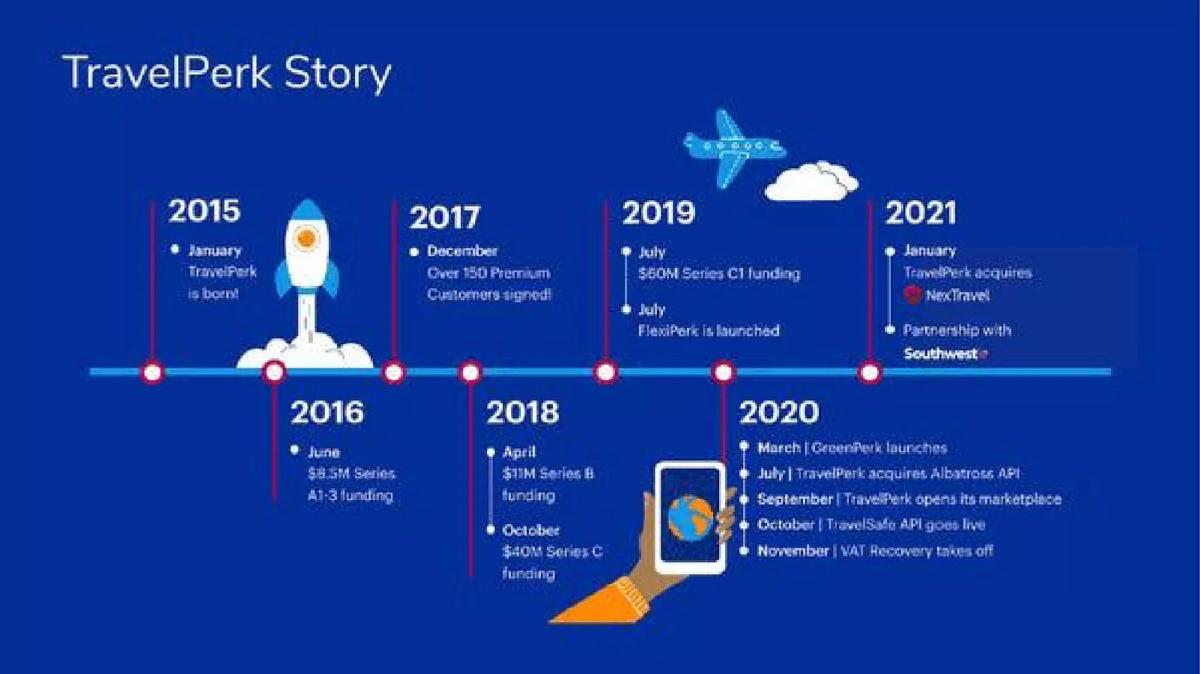
- A detailed timeline shows consistent execution from 2015 to 2021, including multiple funding rounds and three acquisitions (Slide 4).
- The platform aggregates a massive inventory by integrating competitors and partners like Expedia, Airbnb, and Booking.com (Slide 7).
- Customer support is a core competitive advantage, boasting a 15-second reply SLA (Slide 8).
- The deck highlights a 'One-stop-shop' model that integrates booking, invoicing, and reporting to eliminate 'chasing receipts' (Slide 9).
- Financial management is addressed through an Expensify integration and a reporting dashboard showing sample spends of €420,024.08 (Slide 10).
- Product innovation is categorized into five distinct pillars: FlexiPerk, TravelCare, OpenAPI, GreenPerk, and VATrecovery (Slide 12).
- The leadership team is presented with titles but lacks professional bios or past company logos on the slide (Slide 13).
Executive Summary: The Product-Led Growth Narrative
TravelPerk’s pitch deck is a refined example of later-stage storytelling. Founded in 2015 in Barcelona, the company has raised over $408 million, and this deck reflects that maturity. It avoids the frantic 'problem-solution' tropes of early-stage startups and instead focuses on the elegance of its integrated solution. The deck is structured to prove that TravelPerk has already won the product battle and is now focused on ecosystem dominance. By highlighting acquisitions and a broad feature set, the founders argue that they are the inevitable choice for modern corporate travel management.
Slides 1-3: Setting the Emotional Hook
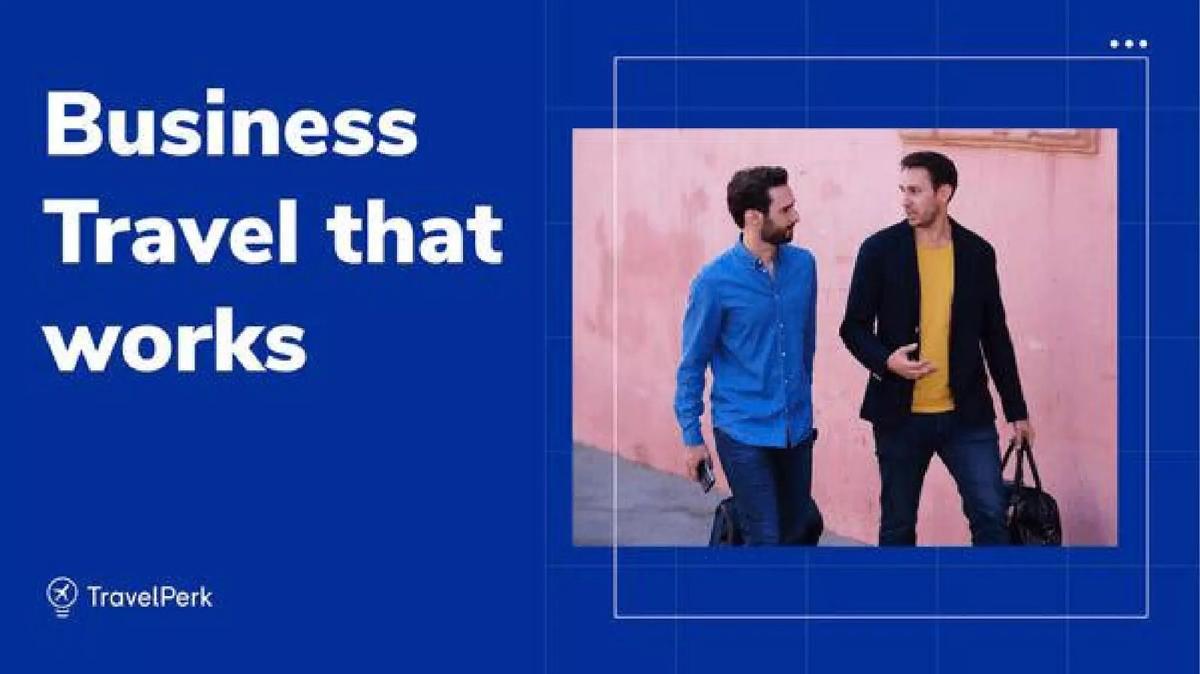
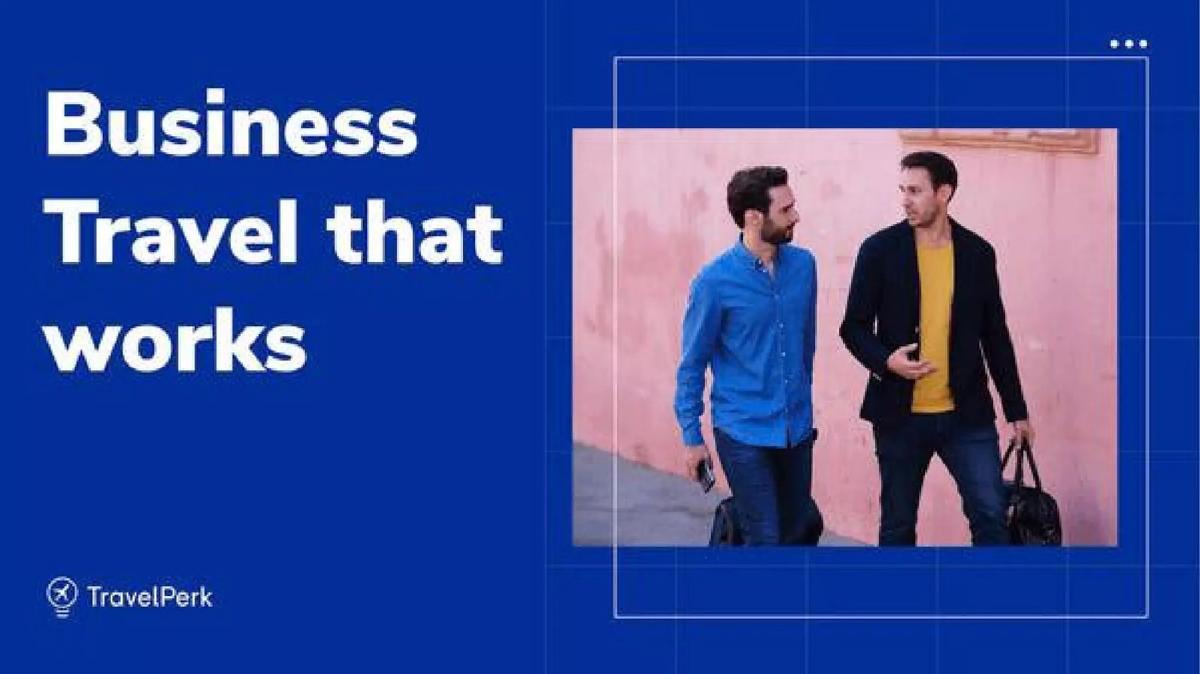
Slide 1: Title Slide. The deck opens with the tagline 'Business Travel that works.' The imagery is lifestyle-oriented, showing two professionals in a casual setting, signaling that TravelPerk is a modern, user-centric brand rather than a stuffy corporate legacy tool.
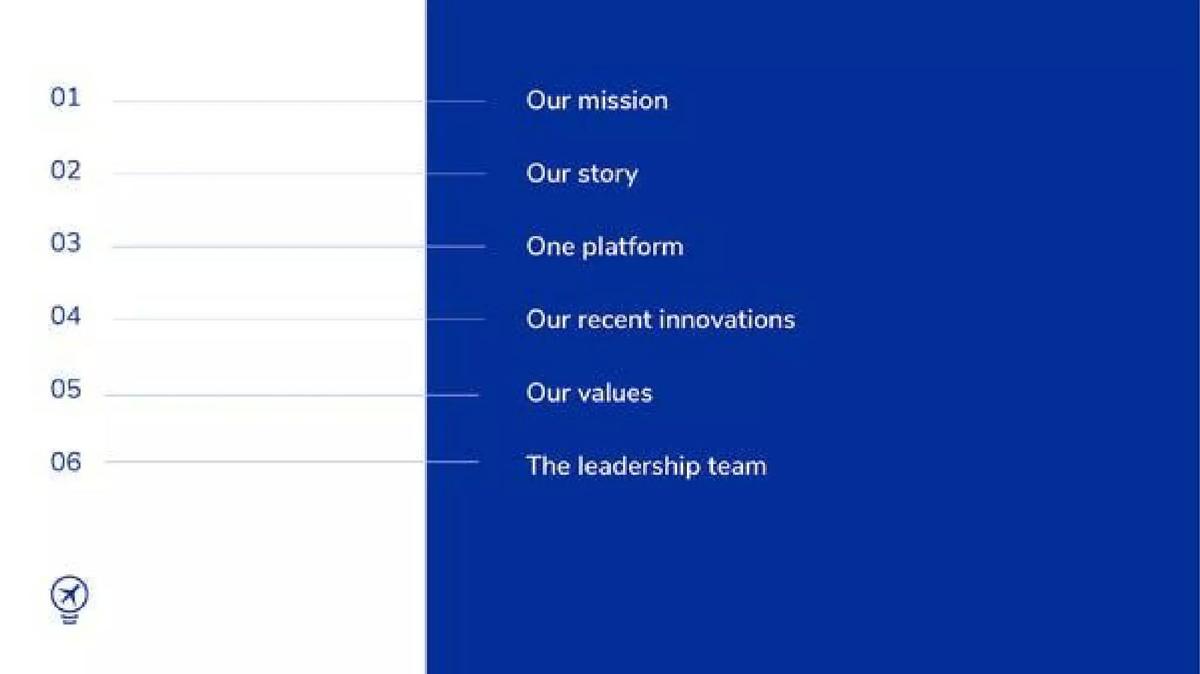
Slide 2: Agenda. A simple table of contents breaks the deck into six sections: Mission, Story, Platform, Innovations, Values, and Leadership. This structure suggests a comprehensive corporate overview rather than a quick pitch.
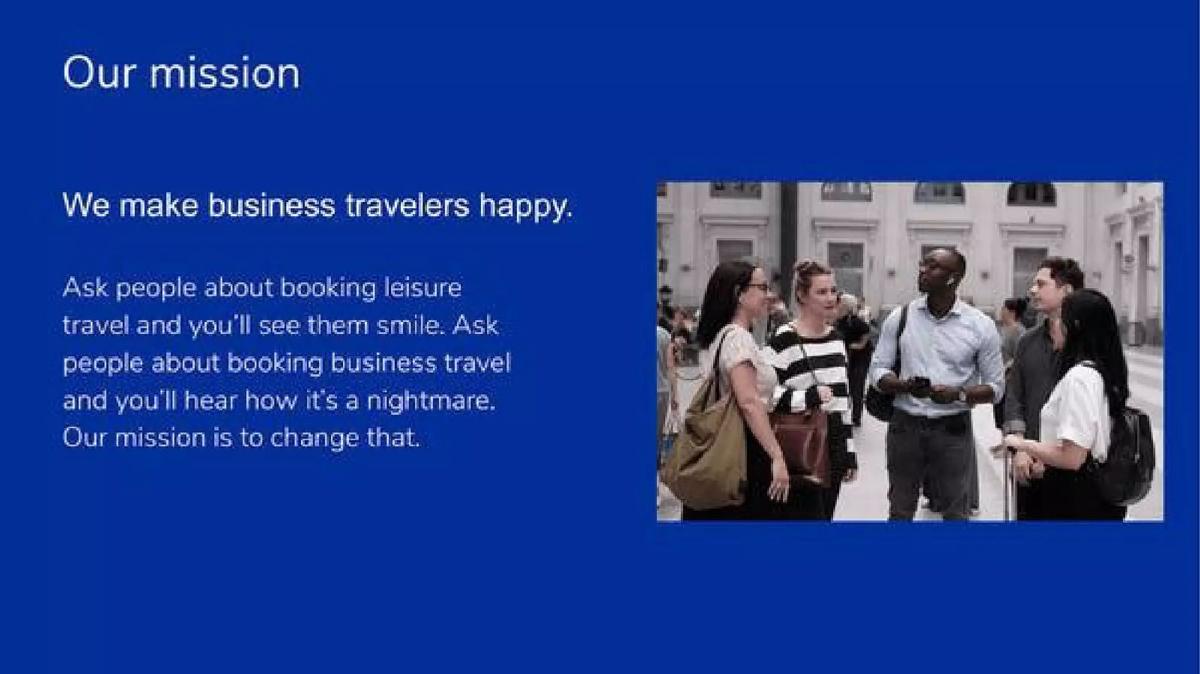
Slide 3: Our Mission. TravelPerk frames its mission through the lens of user happiness. They contrast the 'smile' of booking leisure travel with the 'nightmare' of booking business travel. The stated mission is 'to change that.' This is a classic 'consumerization of enterprise software' play, suggesting that employees should enjoy the tools they use at work as much as the ones they use at home.
Slides 4-7: The History of Execution and Inventory
Slide 4: TravelPerk Story. This is one of the most important slides in the deck. It provides a chronological timeline from 2015 to 2021. Key milestones include a $8.5M Series A in 2016, a $44M Series C in 2018, and a $60M Series C1 in 2019. Crucially, it lists three acquisitions: NextTravel, Albatross API, and the launch of various sub-products. This slide proves to investors that the team knows how to deploy capital effectively and integrate external technologies.
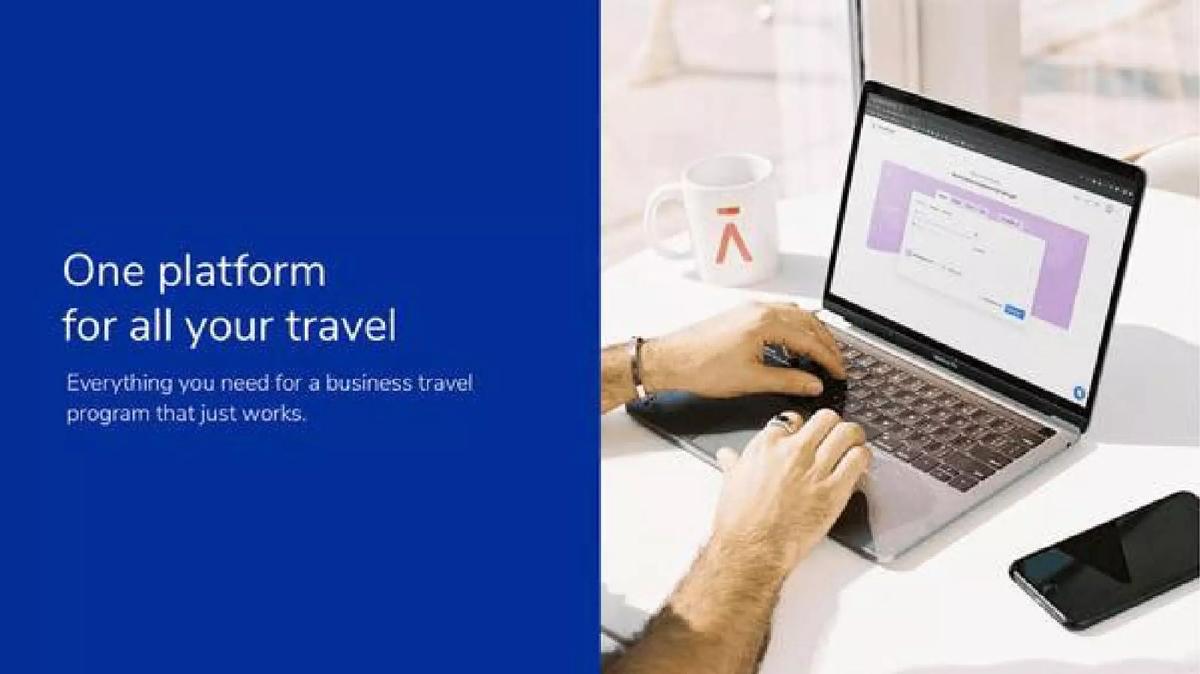
Slide 5: One Platform. A transition slide featuring a laptop showing the interface. It reinforces the 'all-in-one' message, stating they provide 'Everything you need for a business travel program that just works.'
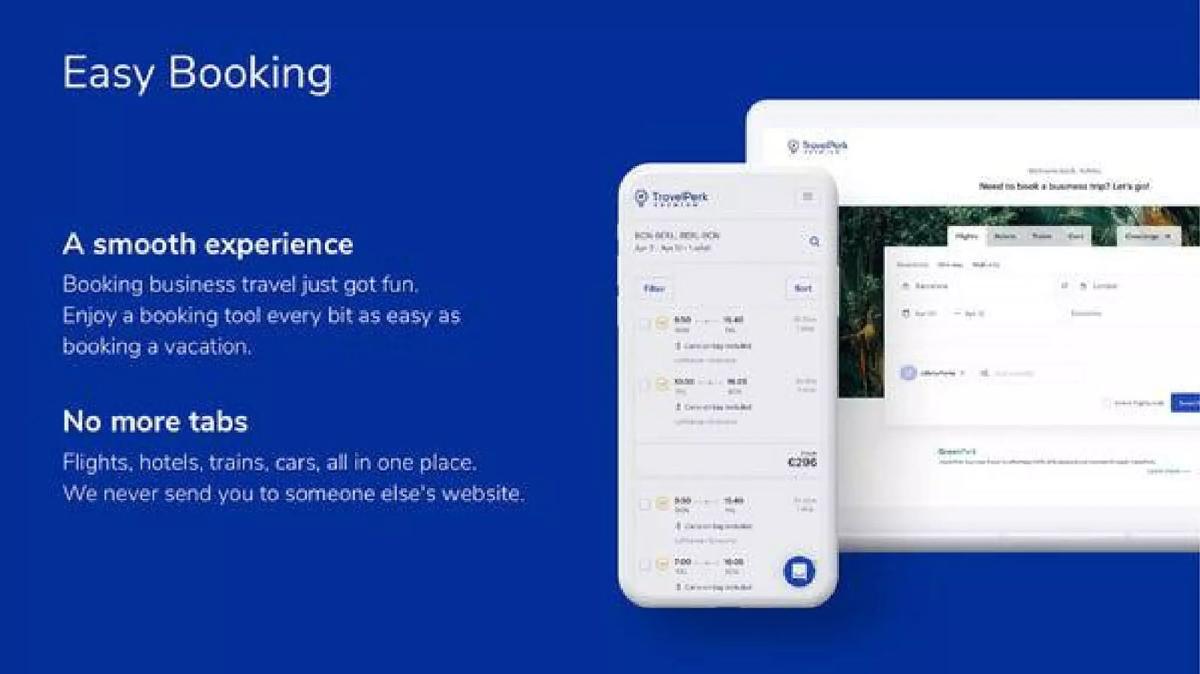
Slide 6: Easy Booking. This slide focuses on the UI/UX. It promises 'No more tabs' and a 'smooth experience.' The visual shows both mobile and desktop views, emphasizing that the booking process is 'every bit as easy as booking a vacation.'
Slide 7: World’s Largest Inventory. This slide addresses a major pain point in corporate travel: limited choice. By showing logos for Expedia, Travelport, Airbnb, Trainline, Amadeus, Skyscanner, and Booking.com, TravelPerk demonstrates that they are an aggregator of aggregators. They guarantee that the 'low-cost option is always available,' which appeals directly to the finance department's desire for cost savings.
Slides 8-11: Support, Operations, and Stakeholder Value
Slide 8: #1-rated Support. In a world of automated chatbots, TravelPerk leans into human-centric service. They claim 'Always On' 24/7 in-house care and, most impressively, a '15 sec reply' SLA. This is a bold claim that sets a high bar for competition.
Slide 9: One-stop-shop. This slide moves from the traveler's experience to the administrator's experience. It lists the full lifecycle of a trip: Search, book, pay, invoice, share, and report. The value proposition here is 'Stop chasing receipts,' a universal pain point for anyone who has ever filed an expense report.
Slide 10: Data at your fingertips. This slide showcases the reporting dashboard. It highlights an integration with Expensify, showing that TravelPerk doesn't exist in a vacuum but fits into the existing CFO tech stack. The sample data shown—€420,024.08 spent on 152 trips—gives a sense of the scale of clients they are targeting.
Slide 11: Better for everyone. This slide segments the value proposition for three distinct personas: The Traveller (self-booking), The Travel Manager (built-in policies and approvals), and The Finance Manager (control, oversight, and VAT recovery). This 'triangulation' of value is essential for B2B sales where the user, the buyer, and the payer are often different people.
Slides 12-15: Innovation, Team, and Culture
Slide 12: Our recent innovations. This slide demonstrates the company's R&D velocity. It lists five products: FlexiPerk (80% money back on cancellations), TravelCare (risk alerts), OpenAPI (workflow integration), GreenPerk (CO2 offsetting), and VATrecovery (up to 20% savings). These are not just features; they are potential upsell opportunities that increase the lifetime value (LTV) of a customer.
Slide 13: The leadership team. The slide features Avi Meir, JC Taunay-Bucalo, Huw Slater, and Ross McNairn. While the catalogue listing mentions their deep market expertise and successful exits, the slide itself is quite sparse, relying on the viewer to already know these individuals or to look them up.
Slide 14: Our core values. TravelPerk lists five values: 'Deliver a 7-Star experience,' 'Impact over effort,' 'Be a good person,' 'We are owners,' and 'We are a team.' The inclusion of 'Don't be an asshole' under 'Be a good person' suggests a transparent, high-accountability culture.
Slide 15: Thank you. A simple closing slide that mirrors the cover, maintaining brand consistency.
What Works in This Deck
The Timeline of Momentum: Slide 4 is a powerhouse. It doesn't just say they are growing; it shows a consistent cadence of funding, product launches, and acquisitions. This builds immense trust with later-stage investors who are looking for execution reliability.
Persona-Based Selling: Slide 11 effectively communicates why the platform is a 'win-win-win.' By addressing the specific needs of travelers, travel managers, and finance managers, they show a deep understanding of the B2B sales cycle.
Ecosystem Integration: Slide 7 and Slide 10 show that TravelPerk isn't trying to build a walled garden. By integrating with Airbnb, Trainline, and Expensify, they position themselves as the 'connective tissue' of the travel industry rather than just another vendor.
What is Missing from This Deck
The Financial 'Meat': For a company that has raised over $400 million, the lack of hard financial data in this deck is striking. There are no charts showing Year-over-Year (YoY) revenue growth, no mention of Gross Merchandise Value (GMV), and no data on customer retention or churn rates.
Market Size (TAM): The deck assumes the investor already knows that business travel is a multi-billion dollar industry. It lacks a slide defining the Total Addressable Market or the specific segment TravelPerk is currently capturing.
The Ask: There is no slide detailing how much money is being raised in the current round, the valuation expectations, or how the new capital will be allocated. This suggests the deck might be used for general partnership meetings or as a teaser rather than a final investment committee presentation.
What a Founder Should Copy
Visual Consistency: The use of a consistent color palette (blue, white, and teal) and professional photography makes the company look like a billion-dollar enterprise. Founders should copy this level of 'brand polish.'
Feature Grouping: Slide 12 is an excellent way to present a complex product roadmap. Instead of a long list of features, they grouped them into branded sub-products (FlexiPerk, GreenPerk). This makes the innovation feel strategic and marketable.
The 'Anti-Nightmare' Narrative: TravelPerk successfully identifies a common enemy—the 'nightmare' of corporate booking—and positions itself as the hero. Founders should always look for a way to frame their mission as a relief from a specific, widely-recognized pain point.
Conclusion: TravelPerk’s deck is a sophisticated, product-centric document. It excels at showing what the company has built and how it has evolved, though it leaves the how much and how fast (the financials) for the due diligence room. For founders, it serves as a reminder that as a company matures, the narrative should shift from 'we have a great idea' to 'we have a proven machine.'
Frequently asked questions
- What stage of funding is this deck intended for?
- Based on the timeline in Slide 4, which includes a Series C1 round in 2019 and acquisitions in 2021, this is a later-stage deck. It is designed to showcase a mature product ecosystem and a track record of successful scaling rather than the speculative growth typical of seed-stage decks.
- How does TravelPerk differentiate its product from traditional travel agencies?
- TravelPerk focuses on the 'all-in-one' nature of its platform. Slide 7 emphasizes the 'world's largest inventory,' combining consumer and corporate options (like Airbnb and low-cost carriers) that traditional agencies often lack. Slide 8 highlights a 15-second support response time, positioning them as a tech-first company with high-touch service.
- Does the deck provide information on the company's revenue or profitability?
- No. The deck is notably absent of revenue figures, growth percentages, or unit economics. Slide 10 shows a reporting interface with a figure of €420,024.08, but this appears to be a sample of customer spend rather than company revenue. This suggests the deck is a high-level overview rather than a detailed financial memorandum.
- What is the significance of the 'Innovations' slide?
- Slide 12 is crucial because it shows how TravelPerk is expanding its Average Contract Value (ACV). By adding services like FlexiPerk (cancellations), GreenPerk (carbon offsetting), and VATrecovery, they demonstrate multiple revenue streams beyond simple booking fees, making the platform stickier for enterprise clients.
- Who are the key people leading TravelPerk according to the deck?
- Slide 13 lists Avi Meir (CEO and Co-founder), JC Taunay-Bucalo (Chief Commercial), Huw Slater (CFO), and Ross McNairn (CPTO). While the slide provides their faces and titles, it does not detail their specific backgrounds in the travel industry, which is instead mentioned in the external catalogue listing.