Treblle’s Seed deck is a compelling example of how to transition from a services business to a product-led startup. The founders lean heavily on their 10-year history at their agency, Flip, to establish immediate credibility in the DevOps space. The deck identifies a massive, growing market—citing 25 million developers today growing to 40 million by 2030—and positions Treblle as an all-in-one solution for the 'complicated, frustrating, and confusing' API lifecycle. With a clear competitive matrix and a transparent pricing model ranging from free to custom enterprise tiers, the deck successful…
Key takeaways
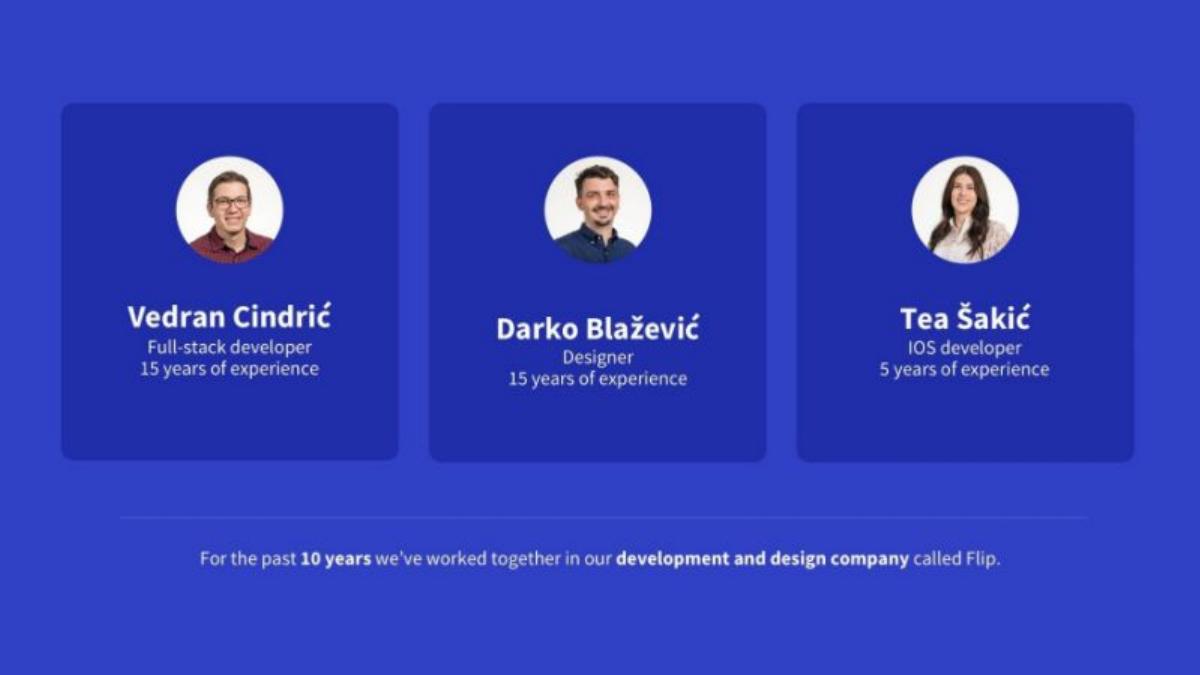
- The founders emphasize a 10-year working relationship at their previous company, Flip, to mitigate team risk (Slide 2).
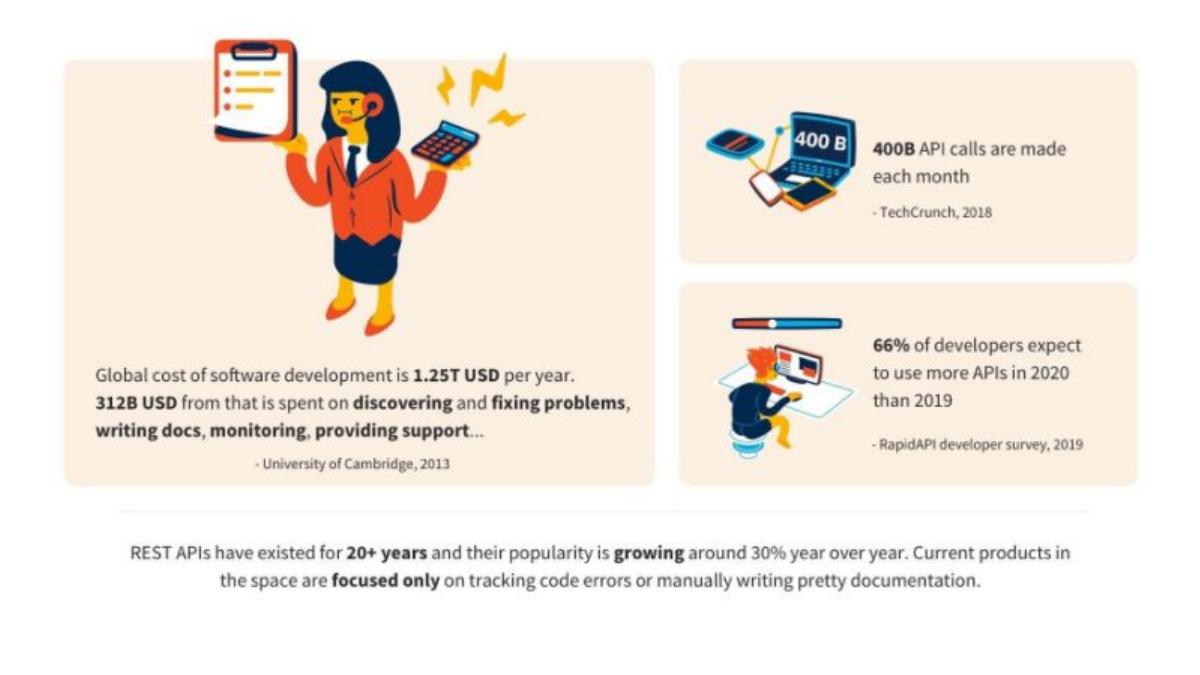
- The deck quantifies the inefficiency of API development, citing a $312B global cost for fixing problems and writing documentation (Slide 6).
- Treblle positions itself as a '2-minute' setup solution for major platforms like PHP, Rails, .NET, and Python (Slide 7).
- Early traction is demonstrated through 30 real-life projects and 2 million API requests processed (Slide 10).
- The competitive landscape is framed as a fragmented market where Treblle is the only player offering a unified workflow (Slide 12).
- A 'bottom-up' go-to-market strategy targets individual developers through community platforms like Twitter and Reddit (Slide 13).
- The financial ask is clearly stated as a range of 1.5 - 2 million EUR (Slide 15).
- Post-funding milestones are broken down into 3-month increments over a 2-year horizon, focusing on key hires like a CMO and Sales Manager (Slide 16).
The Narrative: From Agency Pain to Scalable SaaS
Treblle’s pitch deck is a textbook example of the 'Founder-Market Fit' narrative. Instead of starting with a broad market trend, the deck begins by introducing the people. This is a strategic choice for a Seed round, especially for a team coming out of a service-oriented background. They aren't just building a tool; they are building the tool they wish they had during their decade of running a development agency.
Slides 1-3: The Team and the Origin Story
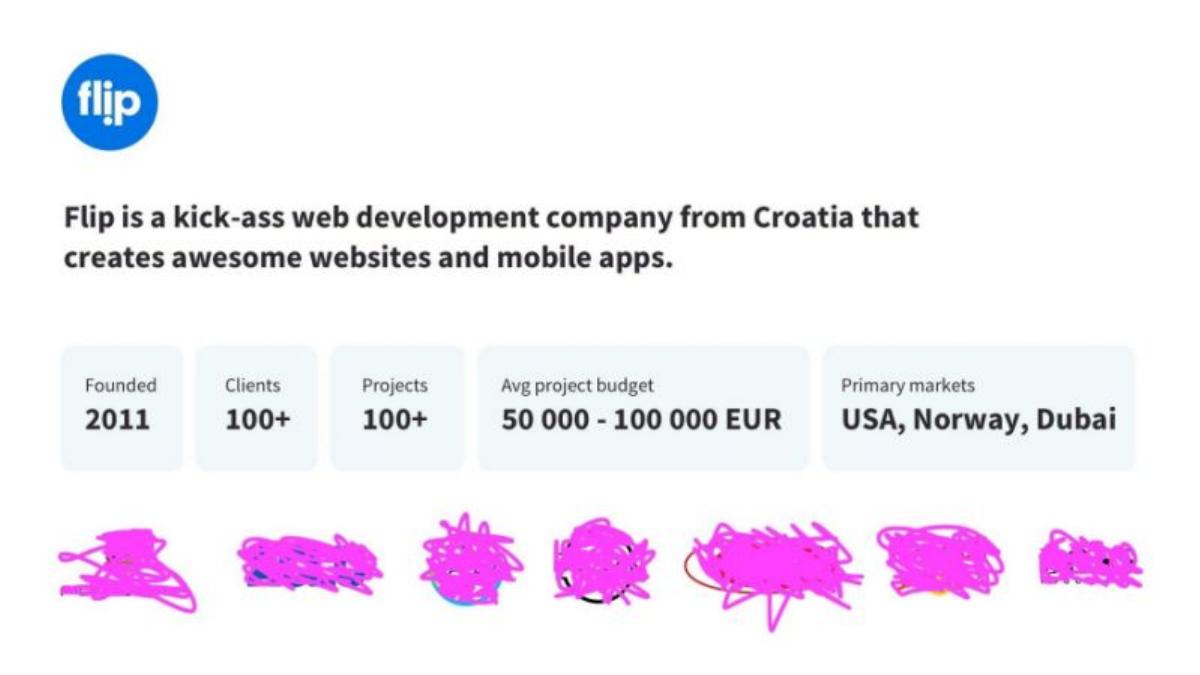
The deck opens with a clean title slide (Slide 1) featuring the tagline 'Stay in tune with your APIs.' This immediately identifies the sector (DevTools/API). Slide 2 introduces Vedran Cindrić, Darko Blažević, and Tea Šakić. The key takeaway here is the 10 years they have worked together at their development company, Flip. Slide 3 provides the 'proof of work' for Flip: 100+ clients, 100+ projects, and average budgets between 50,000 and 100,000 EUR. By establishing this, the founders pre-emptively answer the question: 'Do you actually understand the enterprise development workflow?'
Slides 4-6: Defining a Massive, Expensive Problem
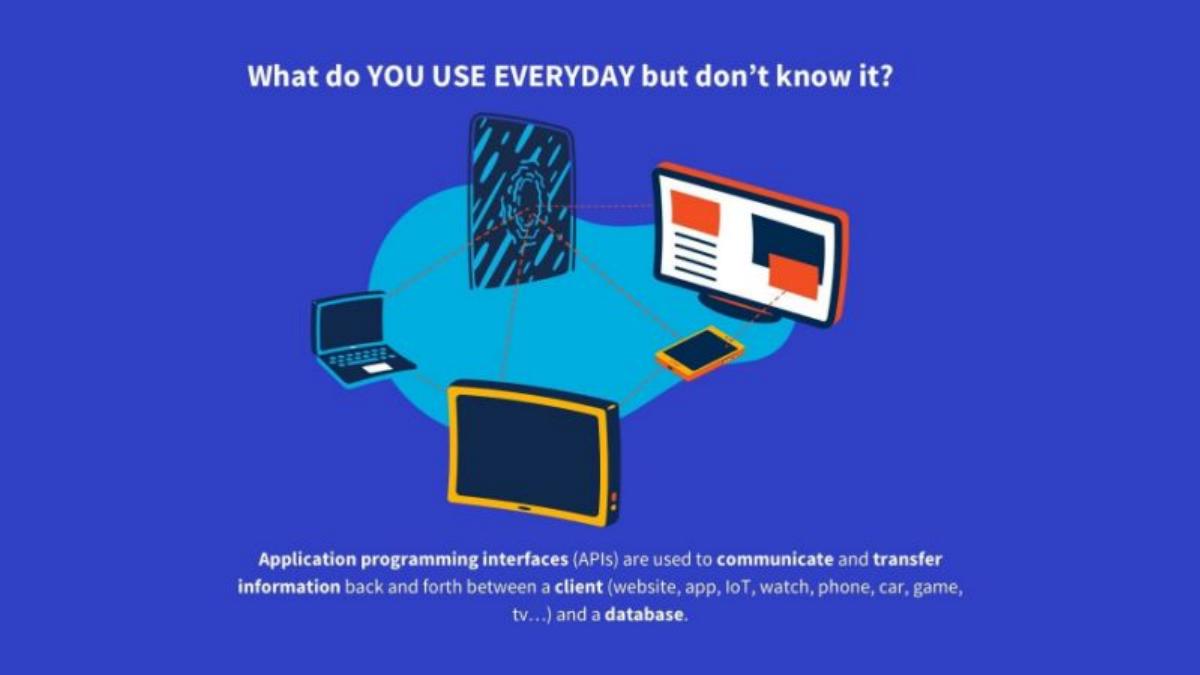
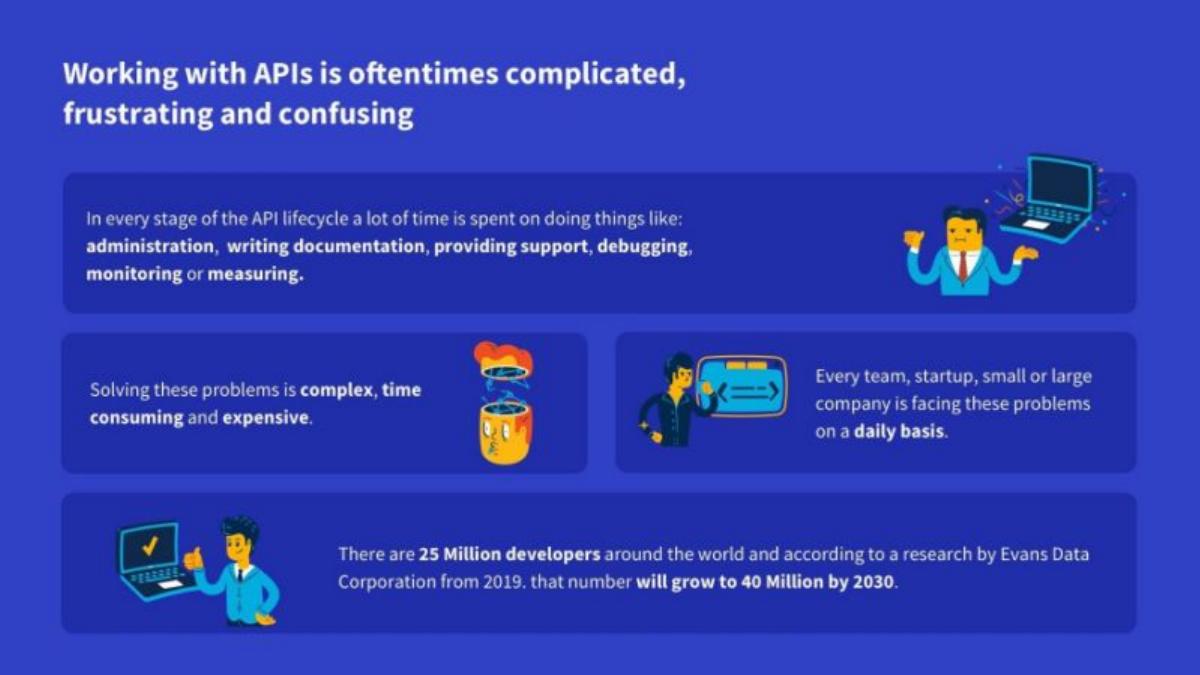
Slide 4 provides a basic definition of APIs for the non-technical investor, using a hub-and-spoke diagram connecting clients to databases. Slide 5 shifts to the 'Why now?' and the pain points. It lists administration, documentation, debugging, and monitoring as time-wasters. Crucially, it cites research from Evans Data Corporation stating the developer population will grow from 25 million to 40 million by 2030 . Slide 6 adds financial weight to the problem, quoting a University of Cambridge study that claims $312B USD is spent globally on discovering and fixing problems, writing docs, and monitoring. This frames Treblle not as a 'nice-to-have' tool, but as a solution to a multi-billion dollar efficiency leak.
Slides 7-9: The Product and the '2-Minute' Promise
Slide 7 is the 'How it works' slide. It lists supported platforms including PHP, Rails, .NET, Python, and Laravel. The most aggressive claim here is that setup takes less than 2 minutes . For developers, 'time to value' is the most important metric, and Treblle hits it hard. Slide 8 lists specific capabilities, such as masking sensitive data, measuring load times, and detecting anomalies. Slide 9 provides product screenshots, showing a dashboard with a 'Treblle score'—a gamified quality metric—and real-time request logs. This proves the product is more than just a mockup; it is a functional platform.
Slides 10-12: Traction and Competitive Positioning
Slide 10 displays early traction: 30 projects, 2 million requests processed, and 60 beta users. While these aren't 'unicorn' numbers, they represent solid usage for a Seed-stage DevTool. Slide 11 and 12 handle the competition. Slide 11 uses qualitative statements about how the way APIs are developed is changing. Slide 12 is the 'Kill Slide'—a feature matrix comparing Treblle against API Gateways (MuleSoft, AWS), Bug Trackers (Sentry, Rollbar), and Documentation tools (Postman, Swagger). The matrix shows Treblle as the only solution that checks every box, particularly in 'Quality scoring' and 'Automatically generated documentation.'
Slides 13-14: Business Model and GTM Strategy
Slide 13 outlines a 'Bottom up' go-to-market strategy . They explicitly state they will target developers first on Twitter, Reddit, and LinkedIn before moving to the enterprise market. This is a standard and successful playbook in modern SaaS (think Slack or Zoom). Slide 14 provides the pricing tiers. By showing a Free tier alongside a $500/mo Large tier and a Custom Enterprise option, they demonstrate a clear path to monetization and an understanding of how to scale with a customer's usage (volume-based pricing).
Slides 15-18: The Ask and the Roadmap
Slide 15 contains the 'Ask': 1.5 - 2 million EUR . Interestingly, the catalogue facts indicate they closed $1.2M , suggesting a slight adjustment during the actual raise or a staged closing. Slide 16 provides a detailed 2-year roadmap. It isn't just about features; it’s about organizational growth . They plan to hire a CMO in months 3-6, a Sales Manager in months 9-12, and a Front-end developer in Year 2. This shows investors they have thought through the operational requirements of scaling a startup, not just the code. Slide 17 is a simple 'Thank you' with direct contact info for the CEO.
What Treblle Does Well
Credibility through History: The founders don't hide their agency background; they use it as a badge of expertise. · Clear Value Prop: The '2-minute setup' and 'automatic documentation' are highly specific, high-value features that resonate with the target audience. · Market Sizing: They use reputable sources (Cambridge, Evans Data) to prove the market is both massive and growing. · Feature Matrix: Slide 12 does an excellent job of grouping competitors by category (Gateways vs. Trackers) rather than just listing names, which helps investors understand the ecosystem.
What is Missing
Unit Economics: There is no mention of Customer Acquisition Cost (CAC) or Lifetime Value (LTV). While expected at Seed, some early data on the cost of acquiring those 60 beta users would be helpful. · Revenue: The deck is purely usage-focused. Even a small amount of MRR (Monthly Recurring Revenue) from the '30 real-life projects' would strengthen the case for the $2M ask. · Churn/Retention: With 2 million requests processed, there should be some data on how many developers stick with the tool after the initial '2-minute' setup.
Founder's Guide: What to Copy
The 'Post-Funding Milestones' Slide: Slide 16 is excellent. It shows a clear link between the capital raised and the specific hires/milestones that capital will unlock. · The Pricing Slide: Don't be afraid to show your prices. It proves you have a business, not just a project. Treblle’s tiered approach is easy to understand and professional. · The 'Problem' Framing: Use Slide 6 as a template. Don't just say 'it's hard'; say 'it costs the world $312B.' Quantifying the pain makes the solution feel mandatory.
Frequently asked questions
- How does Treblle prove founder-market fit?
- Treblle uses slides 2 and 3 to showcase that the core team has worked together for 10 years at Flip, a web development company. They explicitly state they have completed over 100 projects with budgets up to 100,000 EUR. This history proves they have lived the pain point of API management firsthand across diverse markets like the USA and Norway.
- What is the primary value proposition for developers?
- The deck focuses on speed and automation. Slide 7 highlights that Treblle can be installed in less than 2 minutes and provides 'out of the box' real-time monitoring, logging, and automatically generated documentation. This addresses the 'frustrating' administrative tasks mentioned in the problem slides.
- How does the company plan to compete with giants like AWS and MuleSoft?
- Treblle uses slide 12 to argue that existing API Gateways and Bug Trackers only solve parts of the problem. They claim that while AWS or Sentry might handle monitoring or error tracking, they lack 'Quality scoring' and 'Automatically generated documentation.' Treblle positions itself as the only tool focused on the entire 'real-life workflow.'
- What is their monetization strategy?
- Treblle employs a classic SaaS 'freemium' model. Slide 14 details a tiered pricing structure: a Free tier for 10K requests, a $50/mo Small tier, a $200/mo Medium tier, and a $500/mo Large tier. This supports their 'bottom-up' strategy of getting developers hooked for free before scaling into enterprise contracts.
- Is there any mention of revenue or growth rates?
- The deck is notably silent on revenue figures. Instead, it relies on usage metrics as a proxy for growth. Slide 10 mentions 60 beta users and 2 million requests processed. For a Seed round, this focus on 'developer adoption first' (as stated on slide 13) is a common tactic to show potential before monetization fully kicks in.