Tricolor’s venture-stage deck is a masterclass in combining social mission with hard economic data. The company targets the underserved Hispanic consumer market, which it values at a $2.6 trillion GDP (Slide 9). By positioning itself as a Community Development Financial Institution (CDFI) certified by the U.S. Treasury (Slide 7), Tricolor moves beyond being a simple lender to a mission-aligned partner. The deck highlights a physical footprint of 45 dealerships across 18 markets (Slide 23) while emphasizing a mobile-first, data-driven lending platform. While the deck is heavy on market opportu…
Key takeaways
- The company is a U.S. Treasury-certified Community Development Financial Institution (CDFI), a key validation for its social impact mission (Slide 7).
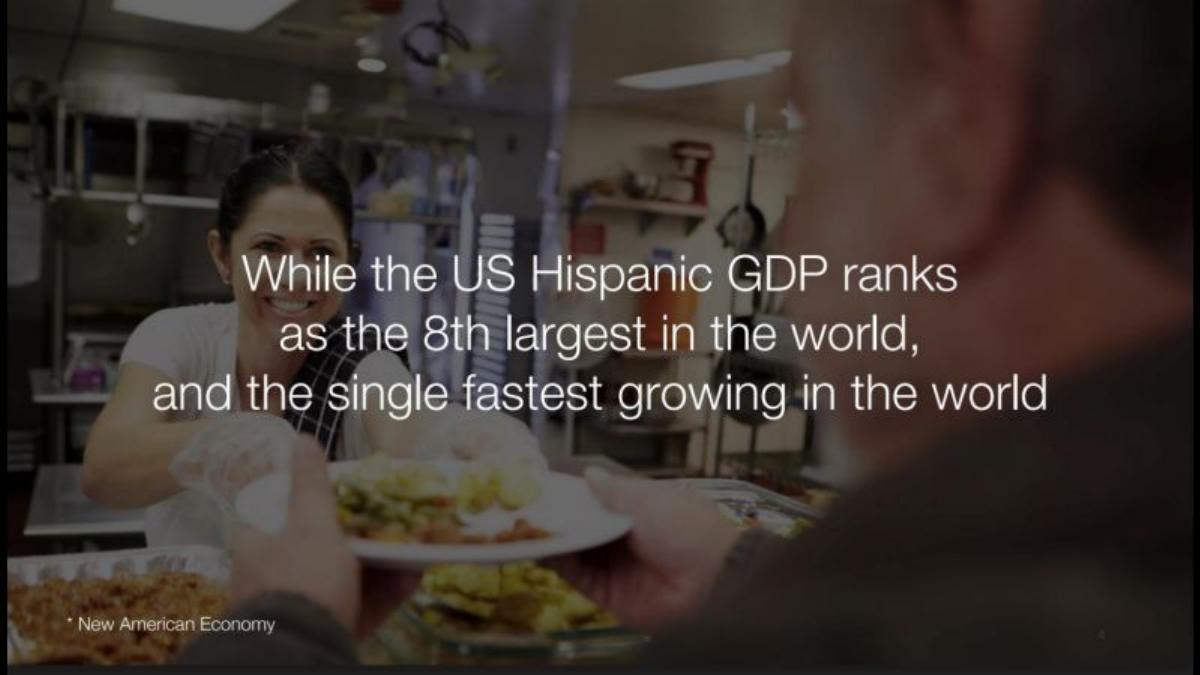
- Tricolor targets a massive market, noting that the U.S. Hispanic GDP would rank #8 globally at $2.6 trillion (Slide 9).
- Hispanic consumers are 125% more likely than the general population to use a mobile device for car research, justifying a mobile-first strategy (Slide 17).
- The business model integrates physical and digital assets, operating 45 dealerships across 18 markets (Slide 23).
- The company claims to have established credit for 28% of its borrowers who previously had no credit history (Slide 15).
- Tricolor invests an average of $1,800 per unit in vehicle reconditioning to ensure quality (Slide 15).
- The deck emphasizes a 'Data Network Effect' where more users contribute data that makes the lending product smarter (Slide 21).
- Validation is provided through partnerships with major financial institutions like J.P. Morgan, Credit Suisse, and Wells Fargo (Slide 7).
Mission and Problem: The Hispanic Financial Gap
Slide 1: Mission Statement
The deck opens with a high-contrast image of a family and a clear mission statement: "Our mission is to empower the Hispanic consumer to achieve the American dream." This sets a mission-driven tone immediately, positioning the company as a social impact player rather than just a fintech utility.
Slide 3: The Problem of Predatory Lending
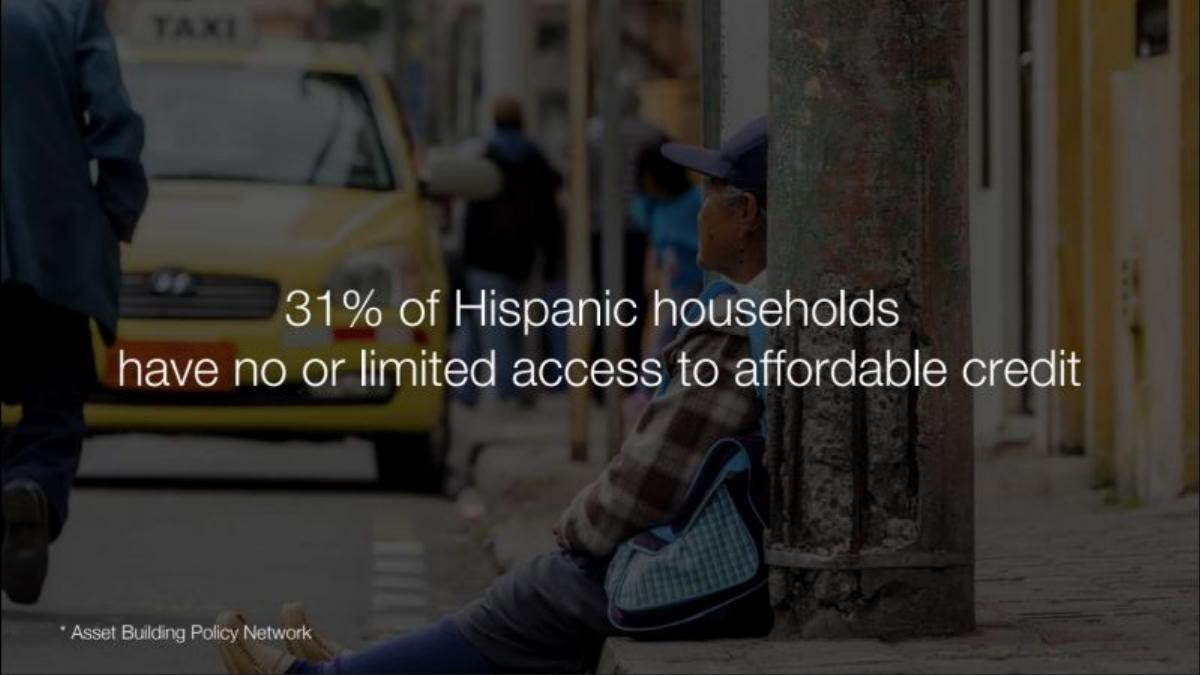
Slide 3 identifies the pain point. It states that Hispanic consumers turn to "alternative financial services and predatory terms at nearly double the rate of the average consumer." The imagery is somber, emphasizing the negative consequences of the current financial landscape for this demographic.
The Solution: Tech-Powered Inclusion
Slide 5: The Direct-to-Consumer Model
Tricolor introduces its solution as a "technology-powered direct-to-consumer model." The slide emphasizes "unsurpassed value," though it does not yet define the specific mechanics of that value. The imagery shifts back to a smiling family, signaling the positive outcome of the company's intervention.
Slide 7: Validation and Certification
This is a heavy-hitting credibility slide. It lists major financial partners including J.P. Morgan, Credit Suisse, and Wells Fargo . It notes that Tricolor has completed "Seven well-received ABS transactions" and is the "only issuer in all of subprime auto ABS with loans backed by no-file/thin file borrowers." Crucially, it highlights its CDFI certification from the U.S. Treasury, awarded in November 2019, which recognizes its commitment to financial inclusion.
Market Opportunity: The $2.6 Trillion Demographic
Slide 9: Economic Impact
Tricolor presents four massive data points to justify its market focus. It claims the U.S. Hispanic GDP is $2.6T , which would rank #8 globally. It also notes a 72% growth rate of U.S. Hispanic GDP vs. the non-Hispanic U.S. economy between 2010-2018, and that 82% of U.S. workforce growth since the financial crisis has come from Hispanics.
Slide 11: Automotive Specifics
Narrowing the focus to the auto industry, Slide 11 claims a 100% increase in vehicles purchased by U.S. Hispanics from 2010 to 2020. It cites $44B in annual Hispanic automotive spending power and notes that this group accounts for 11% of all vehicle sales.
Product and Value Proposition
Slide 13: Jobs to be Done Framework
The company uses the "Jobs to be Done" framework to categorize its product features: "Match me to the vehicle I want," "Help me get the financing I need," and "Keep me driving and happy." This slide shows early glimpses of the digital interface on desktop and mobile devices.
Slide 15: The Three Pillars of Value
Tricolor breaks its value proposition into three categories: Certified Vehicle Quality (150-point inspection, $1,800 average reconditioning investment), Affordable Credit-building Loans (28% of borrowers started with no credit), and Superior Customer Experience (4.5-star rating). This slide bridges the gap between a digital fintech and a physical car dealership.
Slide 17: Mobile-First Strategy
This slide justifies the product's design. It states that Hispanics are 125% more inclined than the general population to use a mobile device when researching a car. The slide displays the "FAST-LANE" mobile interface, showing steps for prequalification and document uploading (Proof of Income, Proof of Address).
Defensibility and Scale
Slide 19: The Competitive Moat
Slide 19 is a conceptual illustration of a "wide competitive moat" around the customer. While visually simple, it sets up the following slide regarding data advantages.
Slide 21: The Virtuous Cycle
Tricolor explains its data advantage through a circular diagram. Users contribute data, which makes the product smarter, which attracts more people to use the service. This "Data Network Effect" is presented as the core engine of their long-term defensibility in underwriting thin-file borrowers.
Slide 23: Strategic Footprint
The deck moves to physical scale, showing 45 Dealerships across 18 Markets . It reinforces the "Premium Brand Experience" with a 4.5-star rating. This slide is vital because it proves the company isn't just a software layer; it owns the distribution and the inventory, which is a significant capital barrier to entry.
Slide 25: Social Proof
The final slide in this set is a collage of customers with their new vehicles, captioned "Aspiring to be the best of doing well by doing good." It reinforces the emotional and social impact narrative established in the opening slides.
What Works in This Deck
1. Strong Macro-Economic Narrative: The deck does an excellent job of framing the Hispanic market not just as a niche, but as a global economic powerhouse. Using the "#8 Global GDP" stat (Slide 9) makes the opportunity feel venture-scale.
2. Regulatory and Institutional Validation: The inclusion of the CDFI certification and the logos of J.P. Morgan and Wells Fargo (Slide 7) provides immediate trust. For a company dealing in subprime auto loans, this prevents them from being viewed as just another predatory lender.
3. Specificity of the Value Prop: Slide 15 provides concrete numbers—$1,800 spent on reconditioning and 28% of borrowers with no prior credit. These specific data points are much more convincing than vague claims of "quality" or "inclusion."
What Is Missing
1. Unit Economics: The deck is silent on the profitability of a single loan or vehicle sale. There is no mention of Net Interest Margin (NIM), default rates, or recovery rates on repossessed vehicles, which are critical for any lending business.
2. Team Slide: In the 13 slides provided, there is no information on the founders or management team. For a $90M venture round, investors would need to see deep expertise in both automotive retail and credit underwriting.
3. Competitive Landscape: While the deck mentions a "moat," it doesn't explicitly name competitors like Carvana, Vroom, or traditional local dealerships. It assumes the audience agrees that the Hispanic market is currently unserved.
Founder Takeaways
Leverage Niche Data: Tricolor’s use of the "125% more inclined to use mobile" stat (Slide 17) is a perfect example of using demographic-specific behavior to justify a product roadmap. Founders should look for these specific behavioral deltas in their own target markets.
Combine Mission with Institutional Backing: If you are a social impact startup, don't just talk about "doing good." Show the certifications (like CDFI) and the institutional partners (like J.P. Morgan) that prove your model is sustainable and respected by the traditional financial world.
The 'Jobs to be Done' Framework: Using this framework (Slide 13) is a great way to simplify a complex business model. It tells the investor exactly what the customer is trying to achieve and how the company facilitates each step of that journey.
Frequently asked questions
- What is Tricolor's core business model?
- Tricolor operates a technology-powered direct-to-consumer model in the automotive and financial services sector. According to Slide 13 and Slide 23, they combine a mobile-first digital platform for financing and vehicle selection with a physical footprint of 45 dealerships. They focus on providing certified vehicle quality and affordable credit-building loans specifically for the Hispanic consumer segment.
- How does Tricolor justify its focus on the Hispanic market?
- The deck uses macroeconomic data to frame the Hispanic consumer as an underserved powerhouse. Slide 9 notes that this demographic accounts for 82% of U.S. workforce growth since the financial crisis. Slide 11 further specifies that Hispanic automotive spending power is $44 billion annually, with an 11% share of all vehicle sales, representing a high-growth opportunity.
- What makes Tricolor's lending approach different from traditional subprime lenders?
- Tricolor positions itself against 'predatory terms' (Slide 3) by obtaining CDFI certification from the U.S. Treasury (Slide 7). They focus on 'credit-building loans' and claim that 28% of their borrowers had no credit before using the service (Slide 15). Their approach is validated by seven ABS transactions backed by no-file or thin-file borrowers.
- What is the 'virtuous cycle' mentioned in the deck?
- Slide 21 illustrates a 'Virtuous Cycle of Data Network Effects.' As more people use the service, users contribute more data. This data allows the product to get 'smarter' (presumably in risk assessment and underwriting), which leads to better service and attracts more users, creating a self-reinforcing competitive moat.
- What key financial metrics are missing from the provided slides?
- While the deck mentions a $90M raise in the catalogue facts, the slides themselves do not disclose specific revenue figures, net interest margins, default rates, or customer acquisition costs (CAC). It focuses on high-level market stats and brand sentiment (4.5-star rating) rather than detailed P&L data.