Treecard raised $6.2M in 2020 with a 12-slide deck that successfully bridged the gap between environmental activism and profitable fintech. The deck relies heavily on two macro trends: the mainstreaming of challenger banks and the explosion of public concern for the environment. Its strongest asset is the clarity of its unit economics, explicitly stating on slide 6 that an average user generates $78/year in revenue with a $53/year profit. By anchoring their growth strategy to a partnership with Ecosia, Treecard bypassed the traditional high customer acquisition costs (CAC) that plague most ne…
Key takeaways
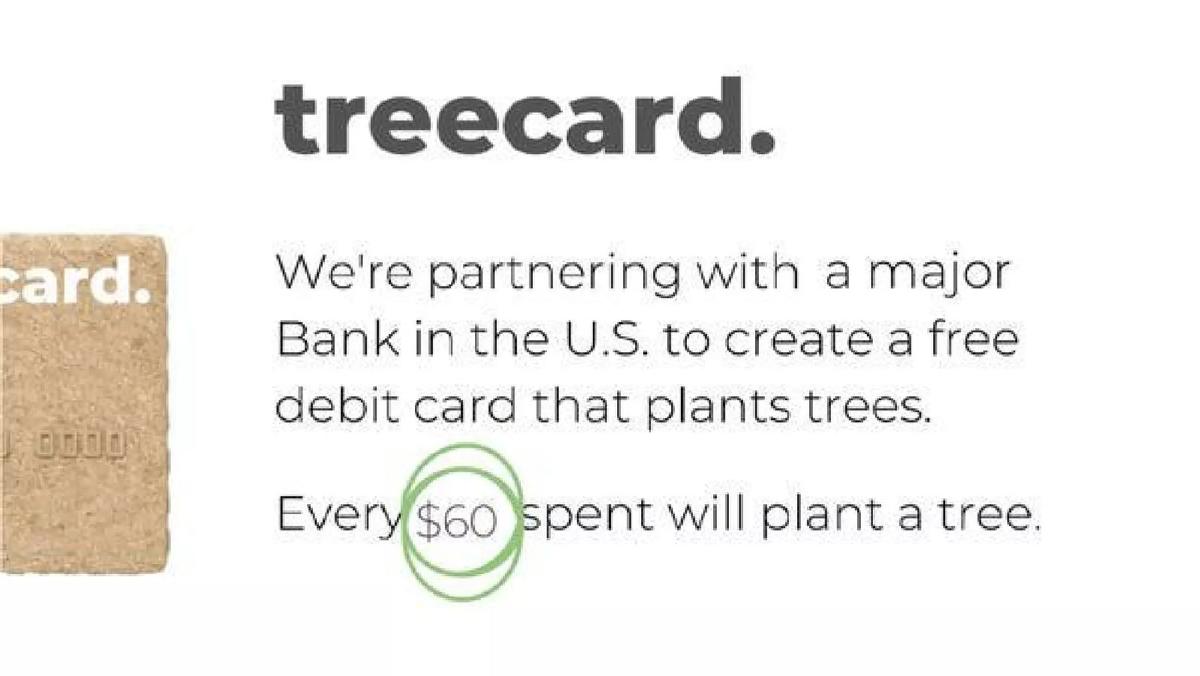
- The deck identifies a specific revenue model where every $60 spent plants one tree, as seen on slide 5.
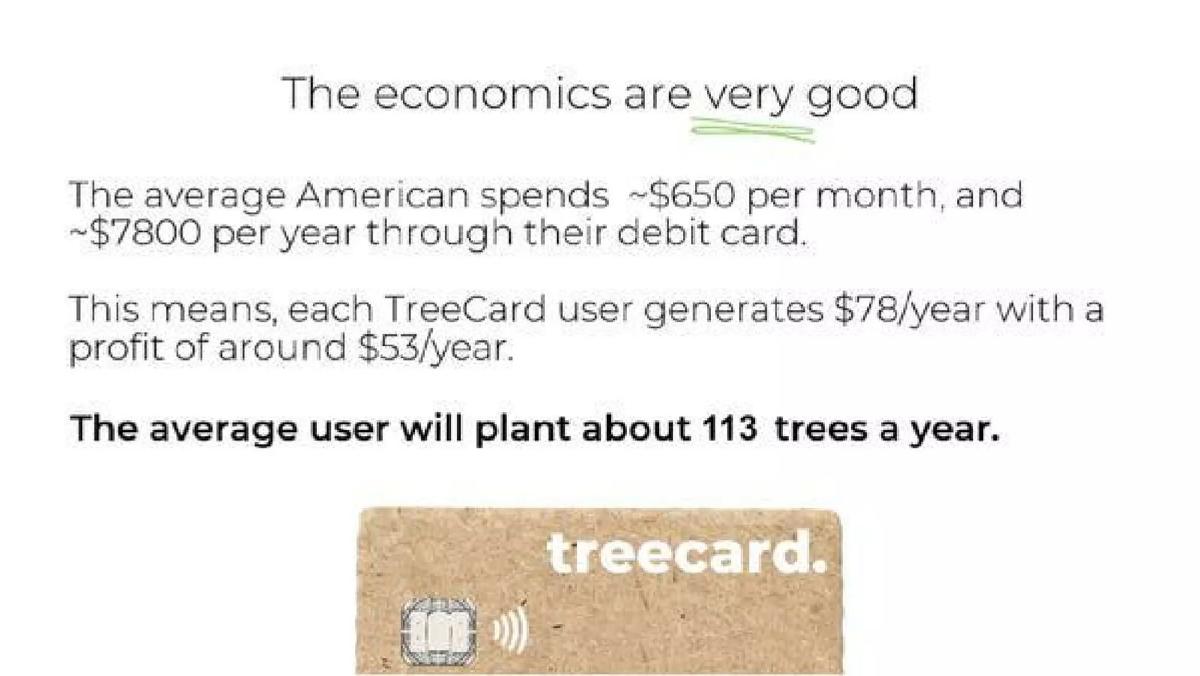
- Unit economics are clearly defined on slide 6, projecting $78 in annual revenue and $53 in profit per average user.
- The company leverages a 'major Bank in the U.S.' partnership to facilitate its free debit card offering (slide 5).
- The growth strategy is heavily reliant on a primary user base from Ecosia, targeting individuals who will change habits for ecological benefit (slide 11).
- The team slide (slide 10) highlights significant prior entrepreneurial success, including a founder with a $150k MRR business and a YC alum.
- Treecard positions itself as an emulator of successful neobanks like Revolut, Chime, and Monzo, focusing on minimalist design (slide 8).
- The deck omits a specific financial 'Ask' or a breakdown of how the $6.2M seed capital would be allocated.
- Security features are standardized for fintech, including 128-bit AES encryption and biometric authentication (slide 9).
The Mission-Driven Fintech Playbook
Treecard’s 2020 Seed deck is a concise 12-slide presentation that focuses on the intersection of consumer fintech and environmental sustainability. At a time when neobanks like Chime and Revolut were reaching massive valuations, Treecard proposed a specialized alternative: a 'green' finance platform. The deck is notable for its visual simplicity and its reliance on a high-leverage partnership with Ecosia to solve the most difficult problem in fintech—customer acquisition.
Slides 1-2: The Hook and the Vision
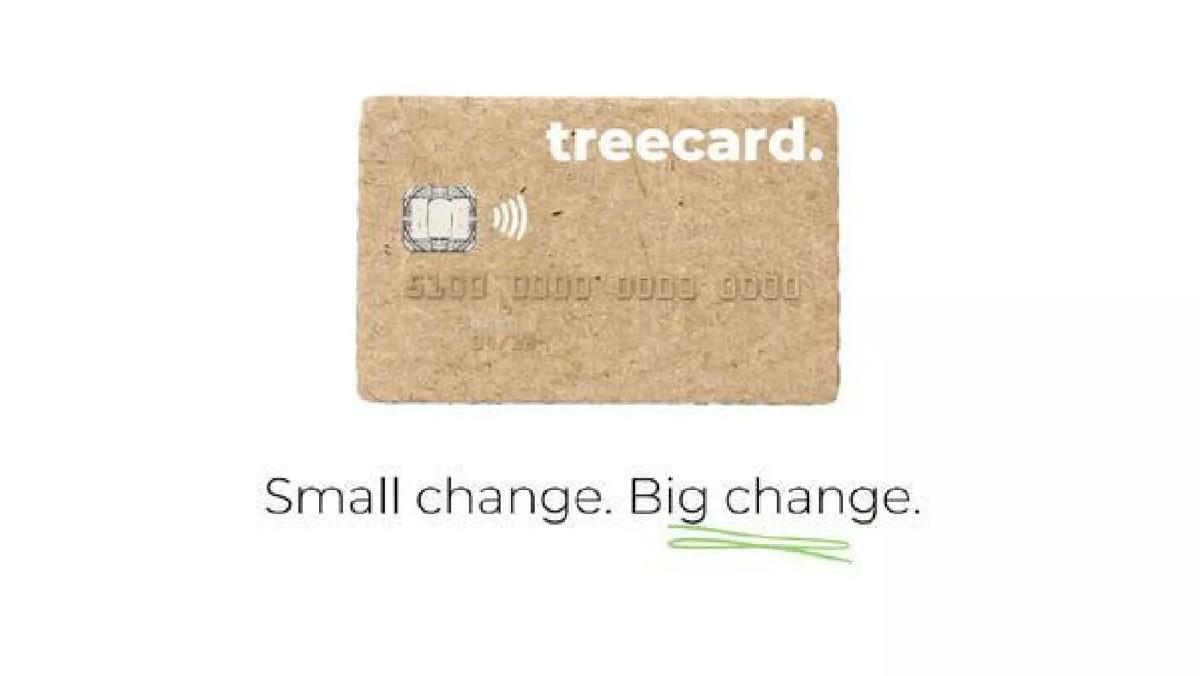
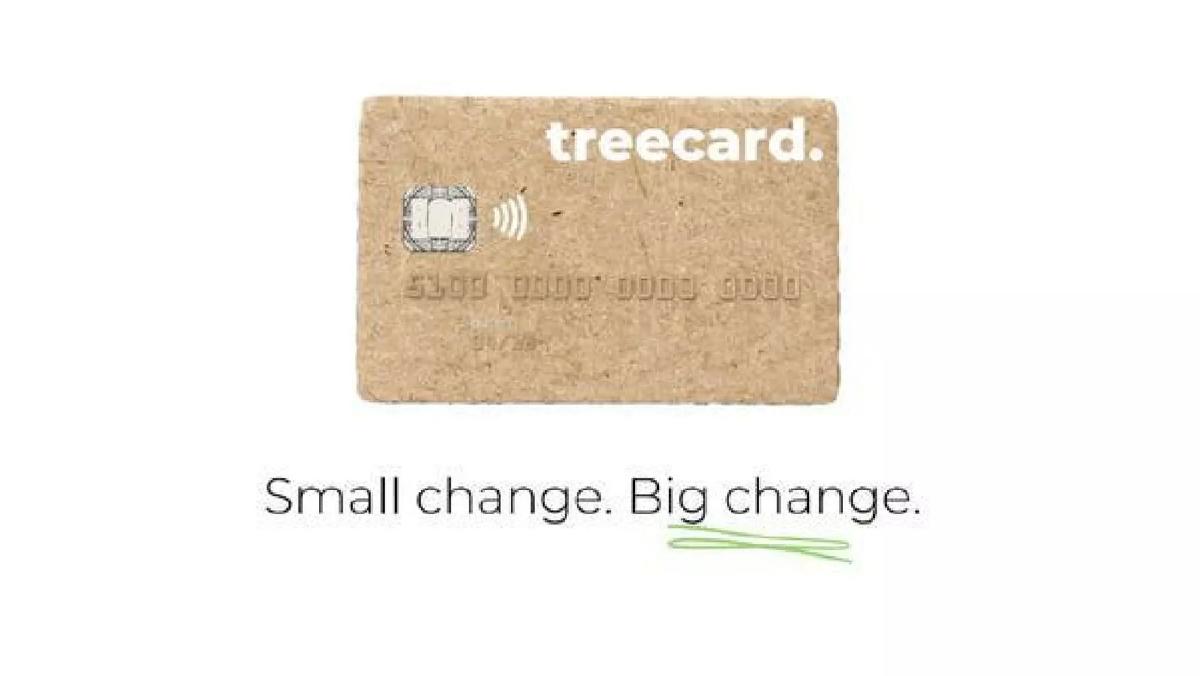
Slide 1 is a minimalist title slide featuring the product itself: a wooden debit card. The tagline 'Small change. Big change.' serves as a double entendre, referring to both monetary spare change and the incremental nature of environmental impact. This immediately establishes the brand's aesthetic—natural, tactile, and modern.
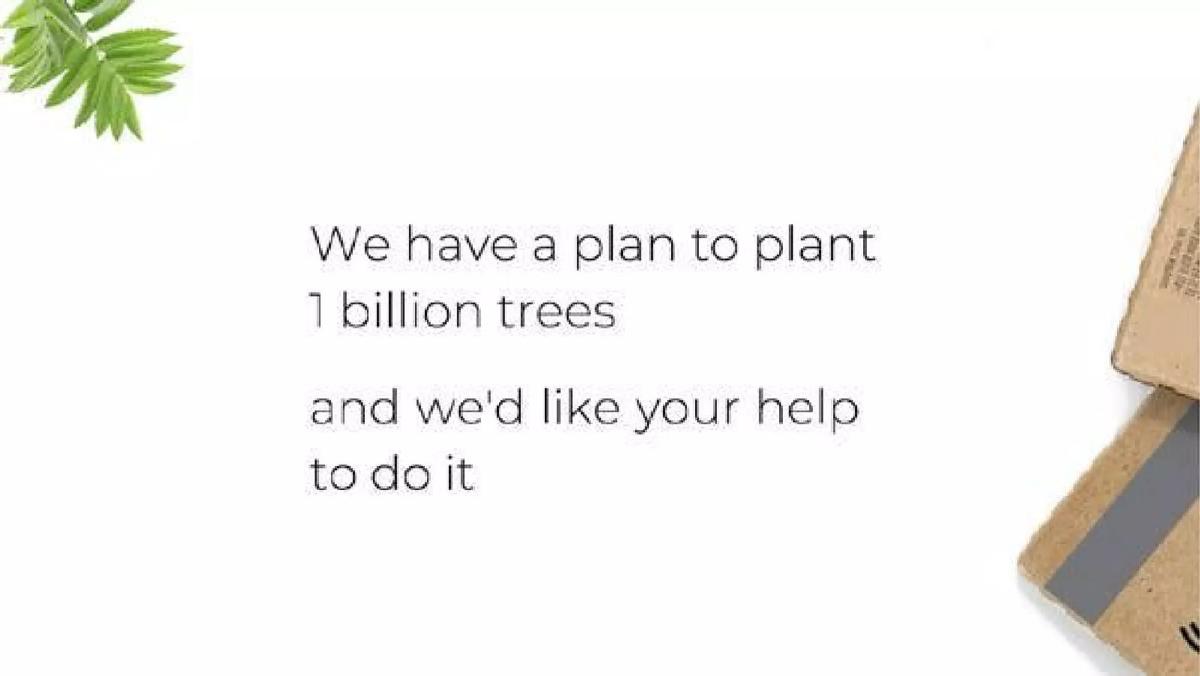
Slide 2 moves straight to the 'North Star' metric: 'We have a plan to plant 1 billion trees and we'd like your help to do it.' By leading with a massive, quantifiable environmental goal rather than a financial one, Treecard frames the investment as a philanthropic mission powered by a scalable business engine.
Slides 3-4: Market Trends and Timing
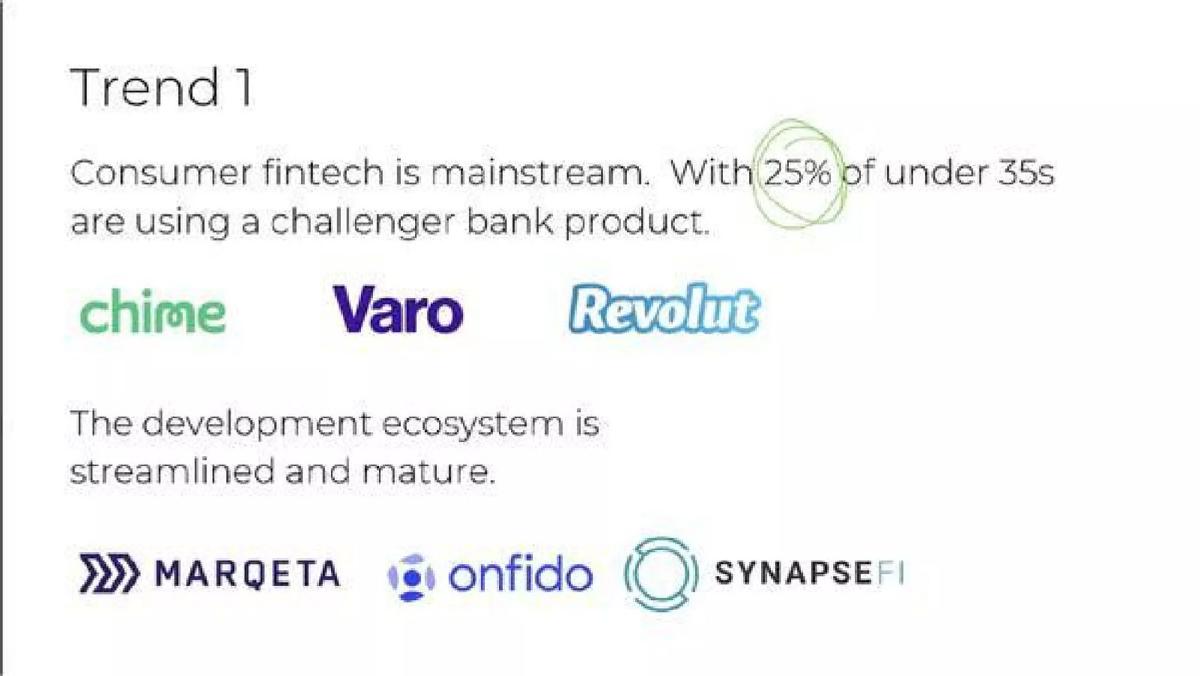
Slide 3 addresses 'Trend 1,' noting that consumer fintech is mainstream, with 25% of people under 35 using a challenger bank. It lists logos of successful predecessors (Chime, Varo, Revolut) and infrastructure providers (Marqeta, Onfido, SynapseFI). This slide is crucial because it signals to investors that the technical 'heavy lifting' of building a bank is now a solved problem thanks to the 'mature development ecosystem.'
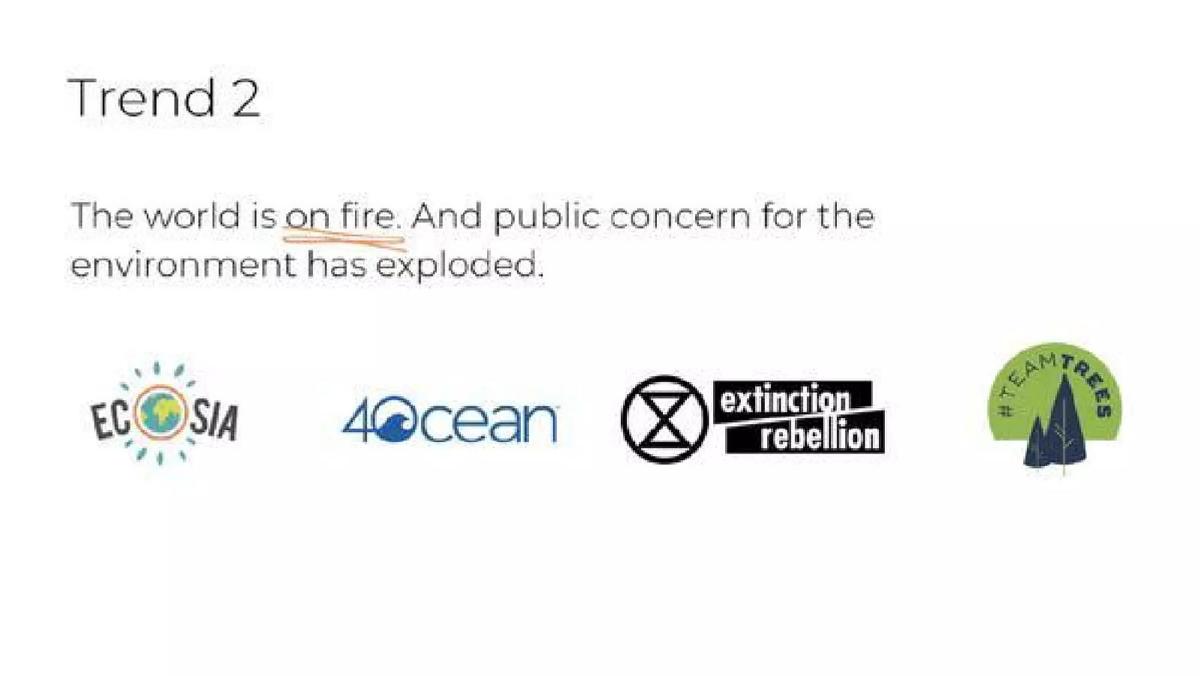
Slide 4 introduces 'Trend 2,' stating 'The world is on fire.' It cites the explosion of public concern for the environment, using logos like Extinction Rebellion and Ecosia to demonstrate a ready-and-willing audience. This sets the stage for Treecard as the logical convergence of these two macro trends.
Slides 5-6: The Product and Unit Economics
Slide 5 provides the core product mechanics. Treecard announces a partnership with a 'major Bank in the U.S.' to offer a free debit card. The key value proposition is highlighted: 'Every $60 spent will plant a tree.' This is a simple, digestible hook for consumers.
Slide 6 is perhaps the most important slide for a Seed-stage investor. It breaks down the unit economics with surprising specificity. It notes that the average American spends ~$650/month ($7,800/year) via debit. Treecard claims this generates $78/year in revenue per user, with a profit of ~$53/year. It also translates this into impact: 'The average user will plant about 113 trees a year.' This slide proves that the mission does not compromise the margin; in fact, the margin is what enables the mission.
Slides 7-9: UX and Competitive Positioning
Slide 7 displays the app interface. The design is 'mission-focused,' featuring a 3D isometric forest that grows as the user spends. It includes standard fintech features like payment categorization and live notifications, but the 'detailed overview of trees planted' is the primary differentiator.
Slide 8 explicitly states, 'We will emulate leading players,' showing the UI and cards of Revolut, Chime, and Monzo. This is a strategic move to de-risk the product design in the eyes of investors. By promising to follow the UI/UX patterns of multi-billion dollar companies, Treecard suggests they aren't reinventing the wheel—just the purpose of the wheel.
Slide 9 covers 'World class security and features.' It lists standard industry specs: 128-bit AES encryption, biometric authentication, and 3D secure. This slide is a 'check-the-box' exercise to ensure investors that the 'wooden' nature of the product doesn't imply a lack of digital sophistication.
Slides 10-12: Team, Growth, and The Ecosia Moat
Slide 10 introduces the team. James Cox (CEO) is highlighted as a Thiel Fellow and founder of FluidStack ($150k MRR). James Dugan (CMO) and Peter Francis (COO) bring experience from Cashew and humanitarian sectors. The slide is dense with 'prestige' logos (Oxford, LSE, Y Combinator, GFC), which is a standard tactic to build founder-market fit credibility at the Seed stage.
Slide 11 outlines the growth strategy. The 'Primary user' is the Ecosia user. This is the 'unfair advantage.' Rather than spending millions on Facebook ads to compete with Chime, Treecard plans to tap into an existing community of environmentally conscious users. The 'Secondary user' is attracted by the novelty of the wooden card itself.
Slide 12 closes with the Ecosia partnership details. It shows a reciprocal relationship where Treecard provides a new product for Ecosia's audience, and Ecosia provides 'Marketing and growth support' for an 'identical target market.' This partnership is the 'moat' that makes the projected unit economics on Slide 6 actually achievable.
What Works in This Deck
The Clarity of the Revenue Model: Many mission-driven startups struggle to explain how they will make money without sounding like a non-profit. Treecard avoids this by putting the $78 revenue / $53 profit figure front and center. It treats the tree-planting as a Cost of Goods Sold (COGS) that is already factored into a healthy margin.
The Partnership Moat: By anchoring the entire growth strategy to Ecosia, Treecard solves the 'Fintech CAC' problem. Investors know that acquiring banking customers is expensive; showing a path to 'identical target markets' via a partner is a powerful de-risking mechanism.
Visual Consistency: The deck uses a clean, earthy color palette and high-quality product renders. It feels like a premium consumer brand from the first slide to the last.
What Is Missing
The Ask: There is no slide detailing how much money is being raised, the terms of the round, or the specific milestones the team intends to hit with the capital. While this is often omitted in public versions of decks, its absence leaves the 'help' requested on Slide 2 undefined.
Roadmap: The deck focuses entirely on the debit card. As a 'fullstack green finance platform' (per the company description), there is no mention of the 'save and invest' components of the future product suite. Investors usually want to see the 'wedge' (the card) and the 'expansion' (the platform).
Regulatory/Compliance Detail: While they mention a 'major Bank in the U.S.,' they don't name the partner or explain the specifics of the BaaS (Banking-as-a-Service) arrangement, which is a high-risk area for fintech startups.
What a Founder Should Copy
The 'Trend Convergence' Slide: Slides 3 and 4 are excellent examples of how to use macro trends to create a sense of inevitability. If you can show that your product is the intersection of two massive, proven movements, the 'Why Now?' question answers itself.
Quantified Impact: If you are a social impact startup, copy the way Treecard translates dollars spent into specific impact units (1 tree per $60). This makes the mission tangible and allows the investor to visualize the scale of the impact alongside the scale of the revenue.
The 'Emulation' Strategy: Don't be afraid to say you are emulating the best parts of existing giants. By showing the Revolut and Chime UIs, Treecard signaled that they wouldn't waste time or money on 'experimental' UX, focusing instead on their unique value prop: the trees.
Frequently asked questions
- How does Treecard actually make money?
- According to slide 6, Treecard generates revenue through interchange fees. They estimate the average American spends $7,800 per year on a debit card, which generates $78 in revenue for Treecard. After the costs of planting trees and operations, they project a profit of approximately $53 per user per year.
- What is the relationship between Treecard and Ecosia?
- Slide 12 outlines a symbiotic relationship. Treecard provides Ecosia users with a new product line and more funds for reforestation. In return, Ecosia provides Treecard with marketing support, co-branding, and direction for effective donations, essentially serving as a low-cost acquisition channel for an 'identical target market.'
- Who is the target audience for this product?
- Slide 11 segments the audience into two groups. The primary user is an 'Ecosia user' who is willing to change their technological habits for ecological benefits. The secondary user is someone attracted to the 'feature offering,' specifically the wooden card and the visual experience of tracking tree planting in the app.
- What are the core features of the Treecard app?
- Slide 7 showcases the app interface, which includes payment categorization, live payment notifications, and a 'detailed overview of trees planted.' The UI features a gamified 3D island graphic that visualizes the user's reforestation impact over time.
- Is there a specific funding request in this deck?
- No. The 12-slide deck provided does not include an 'Ask' slide. It does not specify the amount being raised, the valuation, or the intended use of funds. This information was likely handled in a separate document or during the verbal pitch.