Avision's 2015 pitch deck is a masterclass in brevity, perhaps to a fault. Spanning only 8 slides, the deck focuses heavily on the 'why' and the 'who' rather than the 'how much.' By highlighting a $10B market opportunity and critical safety concerns—illustrated by news clippings of drone-related power outages and jet strikes—the founders established immediate urgency. The deck relies heavily on the credibility of its partners (NASA and the FAA) and the technical pedigree of its team, which includes experience in air traffic control systems and flight simulators. While it successfully raised $…
Key takeaways
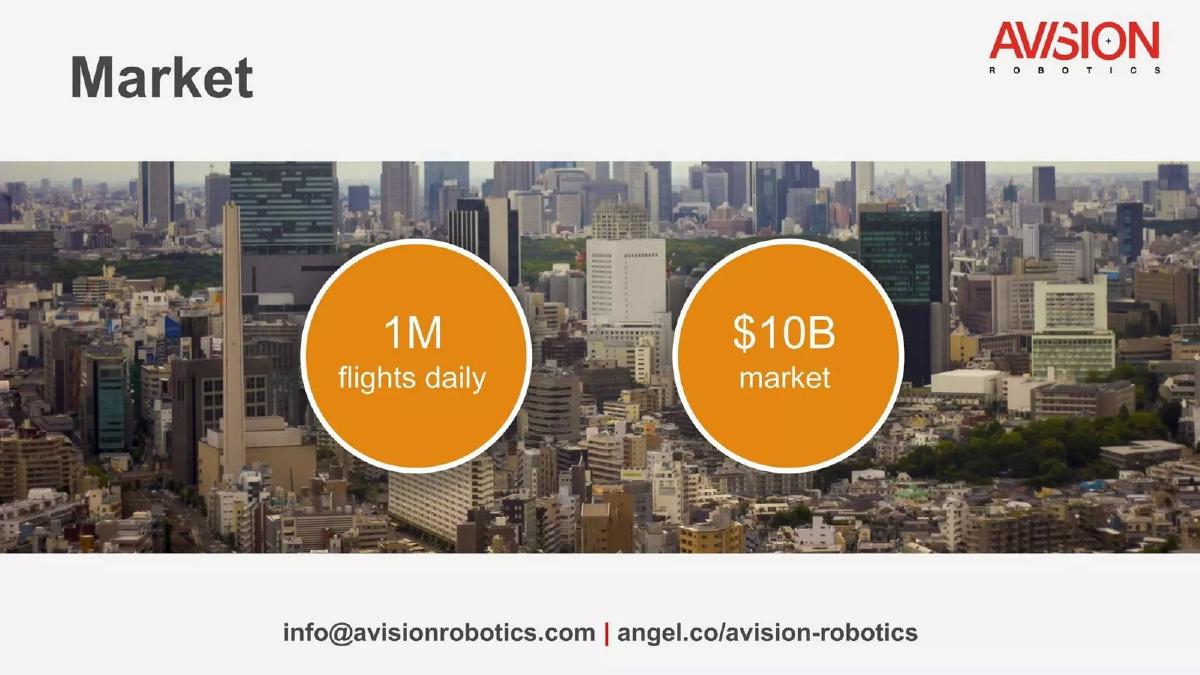
- The deck identifies a $10B market opportunity driven by a projected 1M daily flights (Slide 2).
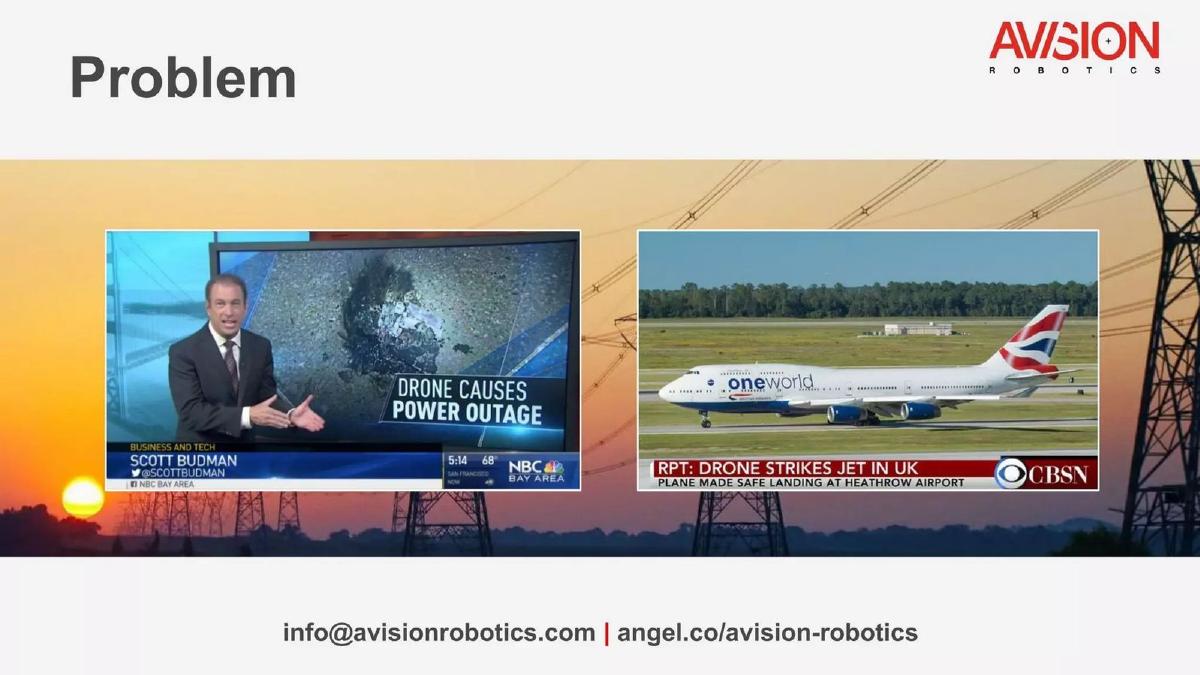
- Urgency is created through a 'Problem' slide that uses real-world news headlines about drone strikes and power outages (Slide 5).
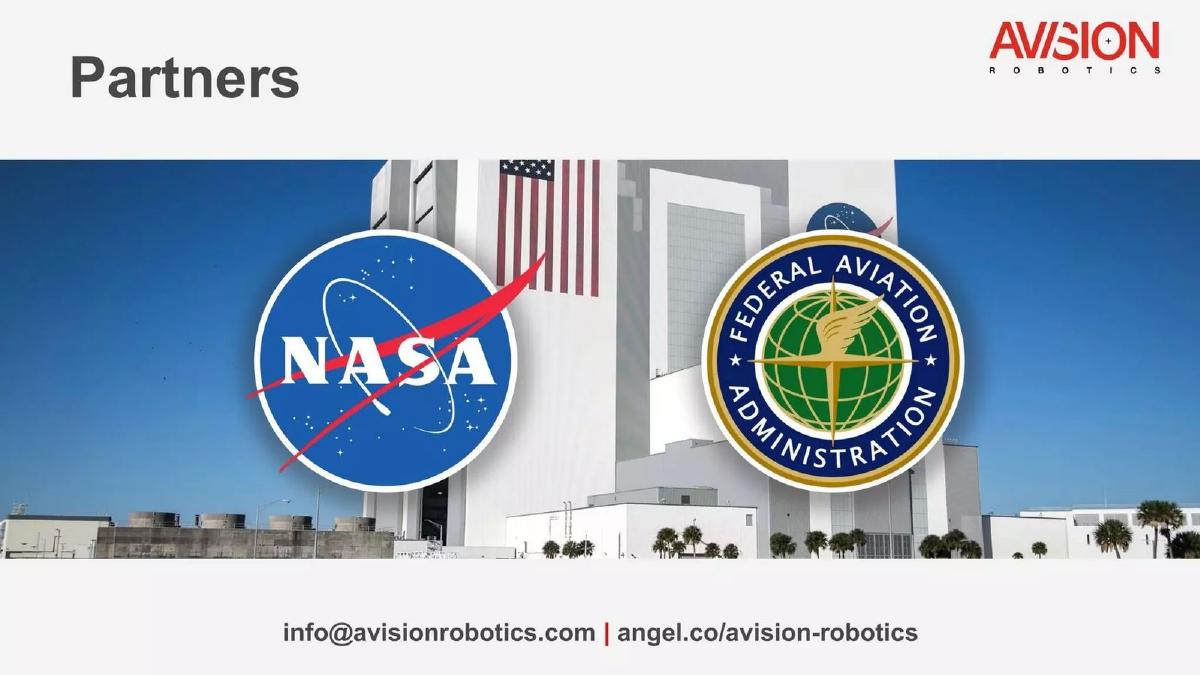
- Traction is demonstrated primarily through logos of major federal partners, NASA and the FAA (Slide 4).
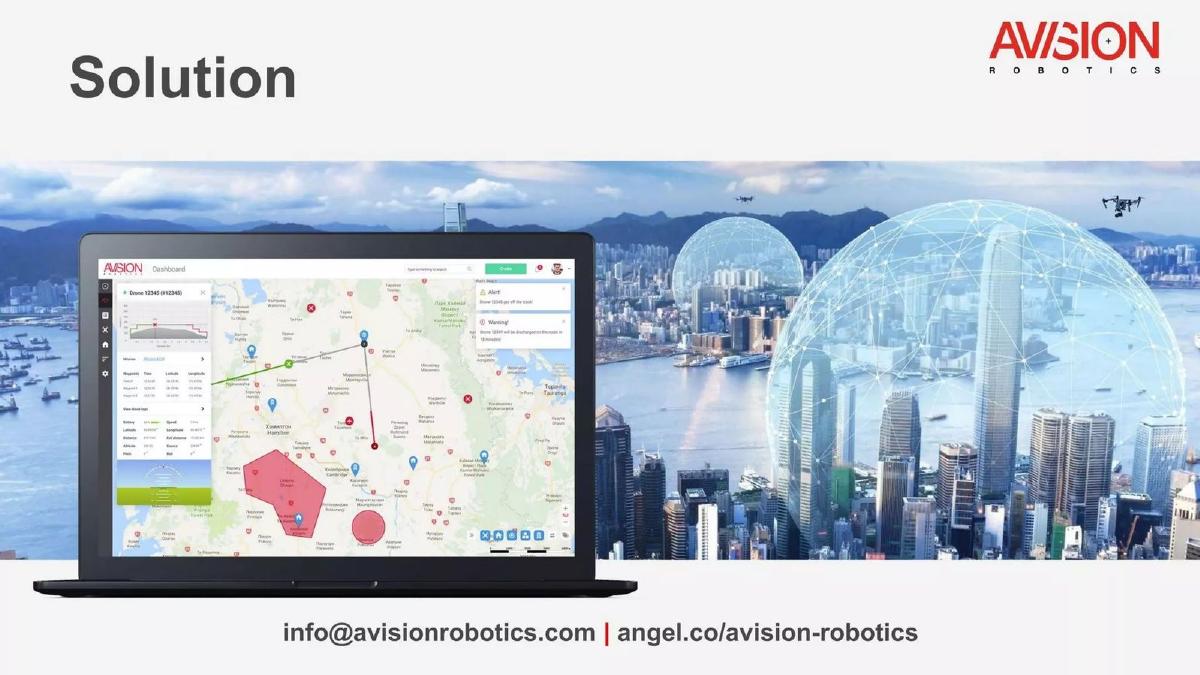
- The product is positioned as a 'Dashboard' for managing complex flight paths and alerts in urban environments (Slide 6).
- The team slide emphasizes domain expertise, specifically citing 'Air Traffic Control Systems' and 'Flight Simulators' (Slide 7).
- The deck completely omits a business model slide, leaving the revenue generation strategy unexplained.
- There is no 'Ask' slide detailing how much capital is being raised or how it will be deployed.
- Competitive analysis is entirely absent from the 8-slide presentation.
The Lean Infrastructure Play: Avision’s 8-Slide Strategy
Avision’s 2015 pitch deck is a relic of a time when the 'drone revolution' was just beginning to take flight in the eyes of venture capitalists. Raising $1,000,000 on just eight slides is an impressive feat of efficiency, but it also reveals a specific fundraising strategy: sell the vision and the pedigree, and leave the spreadsheets for the due diligence room. The deck, which lists its industry as 'Other' and its stage as 'Other' in the catalogue, functions as a high-level introduction to a complex technical problem.
The Opening Salvo: Vision and Market
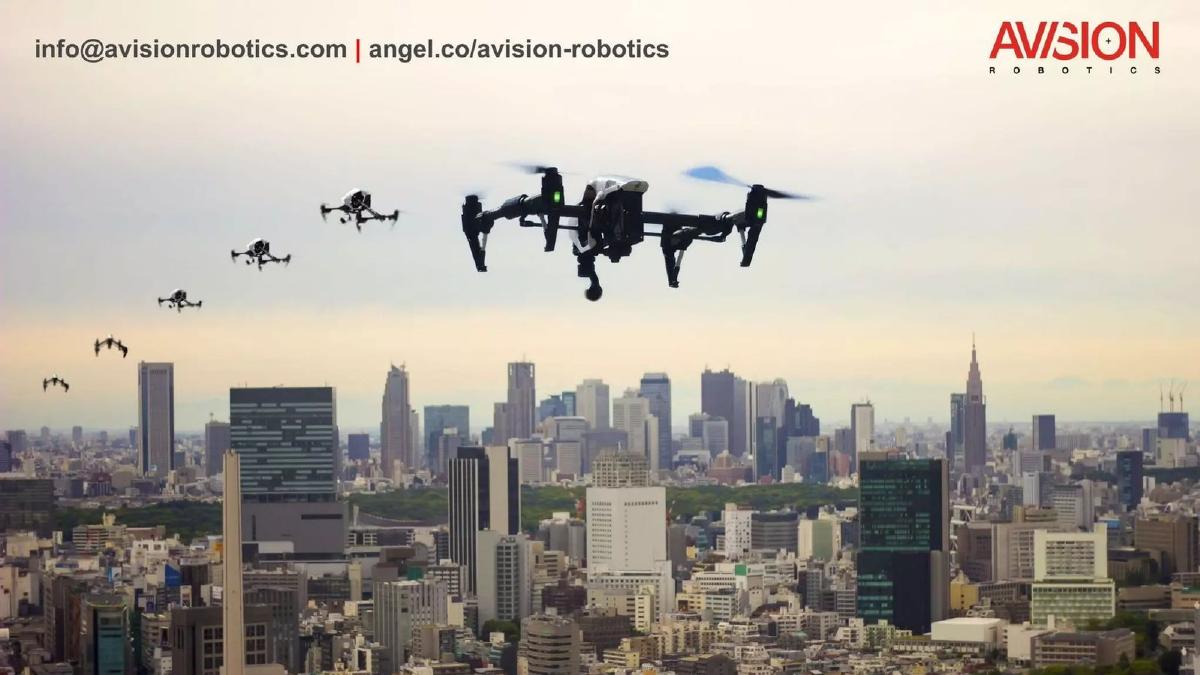
Slide 1: Title Slide The deck opens with a high-resolution image of a drone swarm over a dense urban skyline (likely Tokyo, based on the architecture). The branding is clean, and the contact information—including an AngelList URL—is placed prominently at the top. This immediately signals that the company is in active fundraising mode and provides a direct path for interested parties to view their profile.
Slide 2: Market Avision doesn't waste time with fluff. Slide 2 presents two massive numbers: '1M flights daily' and a '$10B market.' By placing these figures over the same urban backdrop, they anchor the scale of the opportunity. However, the slide lacks a source for these figures or a timeline for when this market size will be realized. It is a classic 'top-down' market slide designed to excite rather than inform.
Slide 3: The Mission Statement Slide 3 provides the core value proposition: 'Air Traffic Management for Autonomous Commercial Drones.' This is a critical distinction. They aren't building drones; they are building the 'rails' that drones must run on. By focusing on 'Autonomous' and 'Commercial,' they distance themselves from the toy/hobbyist market and align with high-value enterprise use cases.
Validation and Urgency
Slide 4: Partners This is arguably the most important slide in the deck. It features the logos of NASA and the Federal Aviation Administration (FAA). In a highly regulated industry like aviation, these partnerships are the ultimate form of traction. For a $1M seed round, showing that you are already 'in the room' with the regulators who will decide the fate of the industry is a powerful de-risking mechanism.
Slide 5: Problem To justify the need for their software, Avision uses 'fear, uncertainty, and doubt' (FUD) effectively. Slide 5 shows two news segments: one from NBC Bay Area regarding a drone causing a power outage, and another from CBSN regarding a drone strike on a British Airways jet at Heathrow. This slide answers the question: 'Why does this need to exist now?' The answer provided is public safety and the prevention of catastrophic infrastructure failure.
The Solution and The People
Slide 6: Solution The solution slide shows a laptop displaying the 'Avision Dashboard.' The UI features a map with 'Alerts' and 'Warnings' (e.g., 'Drone 12348 got off the track!'). Next to the laptop is a conceptual visualization of 'geofencing' bubbles over a city. This is the only slide that hints at the product's functionality. It suggests a cloud-based SaaS platform that monitors flight paths in real-time and provides automated intervention. Notably, there is no mention of how the software integrates with the drones themselves.
Slide 7: Team The team slide is a standard 'four-head' layout. Stas (CEO) is linked to 'Enterprise Technology,' Alex (Product) to 'UX/UI,' Vitaly (Engineering) to 'Helicopter & Airplane Simulators,' and Dmitry (CTO) to 'Air Traffic Control Systems.' The logos at the bottom—Wharton, GE, Sony, and BNP Paribas—provide the necessary corporate and academic weight. The technical backgrounds of Vitaly and Dmitry are the 'secret sauce' here, as they have direct experience in the legacy systems that Avision is looking to modernize.
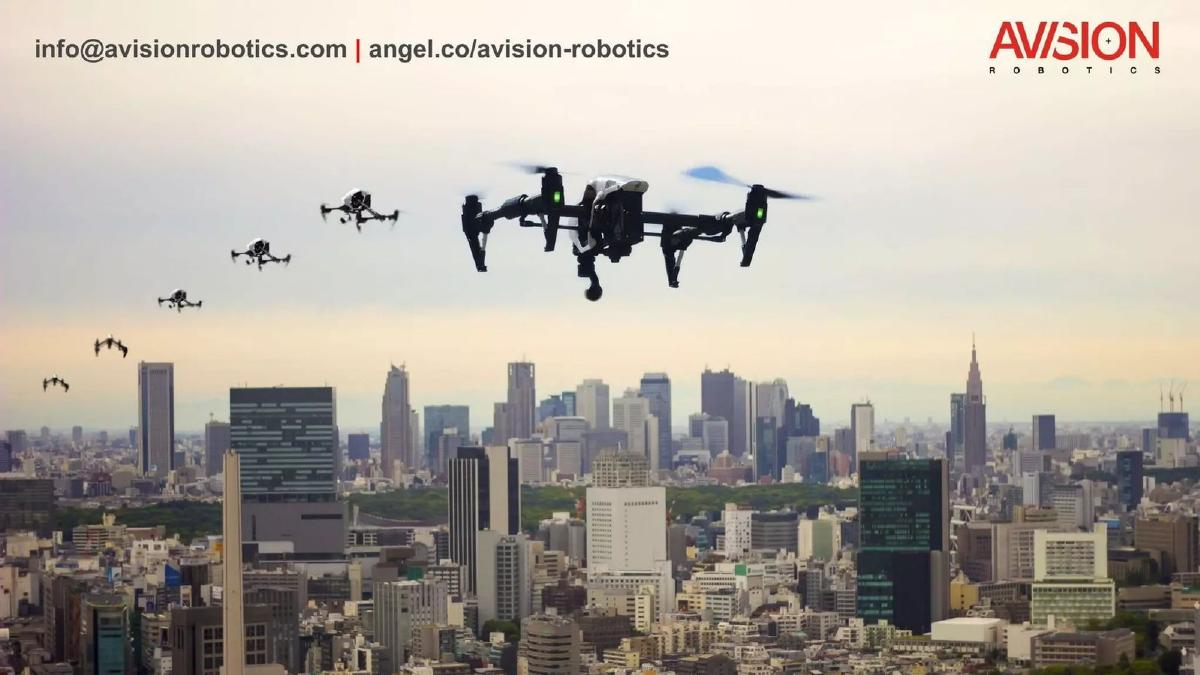
Slide 8: Closing The deck ends exactly as it began, repeating the title slide image and contact info. There is no 'Ask' slide, no 'Milestones' slide, and no 'Roadmap.' It is an abrupt conclusion that assumes the previous seven slides have done enough to earn a meeting.
What Works in the Avision Deck
1. Regulatory Traction: By leading with NASA and the FAA on Slide 4, Avision bypasses the need for revenue metrics. In 2015, being a partner in NASA’s UTM (Unmanned Aircraft System Traffic Management) research was a massive signal of technical legitimacy.
2. Visual Urgency: The use of real news clippings on Slide 5 is much more effective than a bulleted list of 'safety concerns.' It makes the problem feel real, immediate, and expensive for the parties involved (airlines and utilities).
3. Clear Positioning: The deck makes it very clear that Avision is a software/infrastructure company, not a hardware company. This is a much more scalable and VC-friendly business model in the robotics space.
What is Missing from the Avision Deck
1. The Business Model: There is zero information on how Avision makes money. Is it a per-flight fee? A subscription for drone manufacturers? A government contract? This is a glaring omission that would require a long conversation in a follow-up meeting.
2. The Competitive Landscape: Avision was not the only company working on UTM in 2015 (companies like AirMap and Skyward were active). The deck fails to explain why Avision’s approach is superior to these competitors.
3. The Financial Ask: A pitch deck is a tool to raise money. Failing to state how much you are raising and what you will do with it (e.g., 'Hiring 5 engineers to complete the FAA integration') is a missed opportunity to set the terms of the deal.
4. Unit Economics and Scale: While they mention a $10B market, they don't explain the 'bottom-up' math. How many drones need to be in the air for Avision to reach $10M in ARR? The deck stays strictly in the realm of high-level vision.
What a Founder Should Copy
1. The Consistent Footer: Putting your email and AngelList/LinkedIn link on every slide is a smart move. It ensures that no matter where an investor stops scrolling, they know how to reach you.
2. Domain-Specific Team Mapping: Don't just list your team's titles. List their specific expertise that relates to the problem. Avision’s CTO having 'Air Traffic Control Systems' experience is the most bankable line in the entire deck.
3. High-Quality Imagery: The deck uses professional, consistent imagery that makes the company look larger and more established than a typical seed-stage startup. The 'future of flight' aesthetic is maintained throughout.
Final Analysis
Avision’s deck is a 'Vision Deck.' It is designed to sell a future that doesn't exist yet, backed by the credibility of the people who might be able to build it. While it lacks the rigor of a modern Series A deck, its success in raising $1M proves that at the seed stage, a clear problem, a massive market, and extreme technical domain expertise can outweigh the lack of a formal business plan. However, founders today should view this as a 'teaser' deck rather than a complete fundraising package.
Frequently asked questions
- How did Avision raise $1M with only 8 slides?
- Avision focused on two high-leverage factors: a massive, untapped market ($10B) and extreme technical credibility. By showing partnerships with NASA and the FAA, they signaled that they were already integrated into the regulatory framework required for drone flight. In 2015, the drone industry was nascent, and investors were often willing to bet on technical teams with regulatory 'in-roads' rather than proven revenue models.
- What is the biggest weakness in the Avision deck?
- The total absence of a business model and financial projections is a significant gap. The deck explains what the product does (manages traffic) but never explains who pays for it—whether it is the drone operators, the cities, or the federal government. This lack of commercial clarity is a common trait in early-stage 'deep tech' or infrastructure decks but remains a risk for founders.
- Why did the founders include news clippings in the problem slide?
- Using news clippings (Slide 5) is a psychological tactic to prove 'market pull' and regulatory necessity. By showing a British Airways jet strike and a power outage, Avision moves the conversation from 'drones are a cool hobby' to 'drones are a public safety liability that requires our software.' It justifies the existence of their platform as a mandatory safety layer.
- Is the team slide effective despite its simplicity?
- Yes. Slide 7 is effective because it maps specific past experiences to the current problem. Dmitry’s background in 'Air Traffic Control Systems' and Vitaly’s work on 'Flight Simulators' are direct precursors to building a drone traffic management system. The inclusion of blue-chip logos like GE, Sony, and Wharton provides the necessary 'institutional validation' for a $1M seed round.
- Should modern founders copy this 8-slide format?
- Only if they have similar high-level partnerships. Most founders today will need at least 12-15 slides to cover competition, go-to-market strategy, and unit economics. Avision’s deck works as a 'teaser' or a deck meant to accompany a verbal presentation where the details are filled in manually. As a standalone document, it leaves too many unanswered questions for a modern VC process.