Avventura is a peer-to-peer rental platform for outdoor equipment, positioning itself as a solution for consumers with limited storage space and restricted budgets. Based in Buffalo, NY, the company targets the 141.4 million recreational participants in the U.S. Their business model relies on a 10% commission per transaction, with a pilot program goal of generating $350,000 in revenue from $100,000 targeted transactions in Western New York. While the deck provides a clear competitive landscape and a basic mobile mockup, it suffers from significant omissions: there is no team slide, no mention…
Key takeaways
- The company identifies three primary pain points: limited storage space, high initial investment costs for gear, and lack of commitment to specific hobbies (Slide 2).
- Avventura positions itself as a 'web platform' for peer-to-peer rentals to save users money and space (Slide 3).
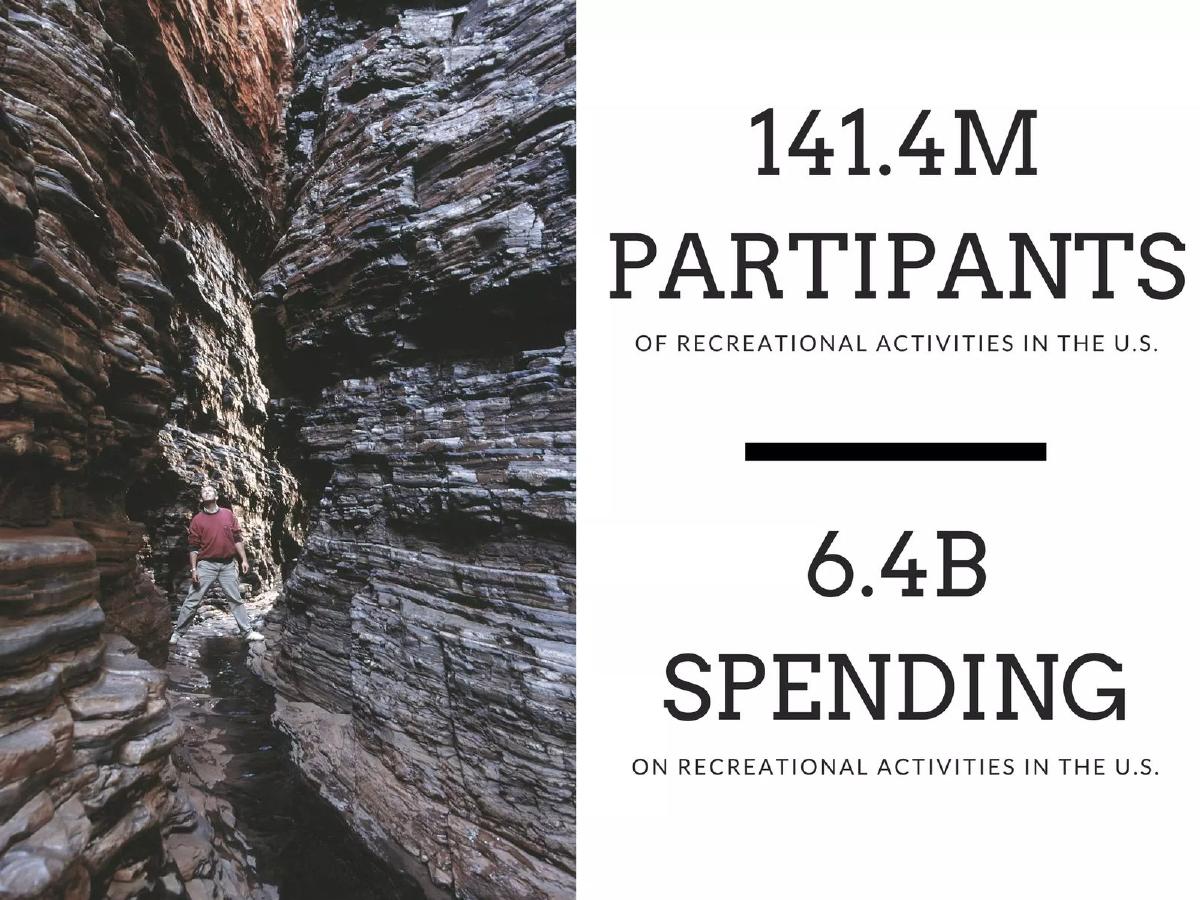
- Market size is cited at 141.4 million participants and $6.4 billion in spending on recreational activities in the U.S. (Slide 4).
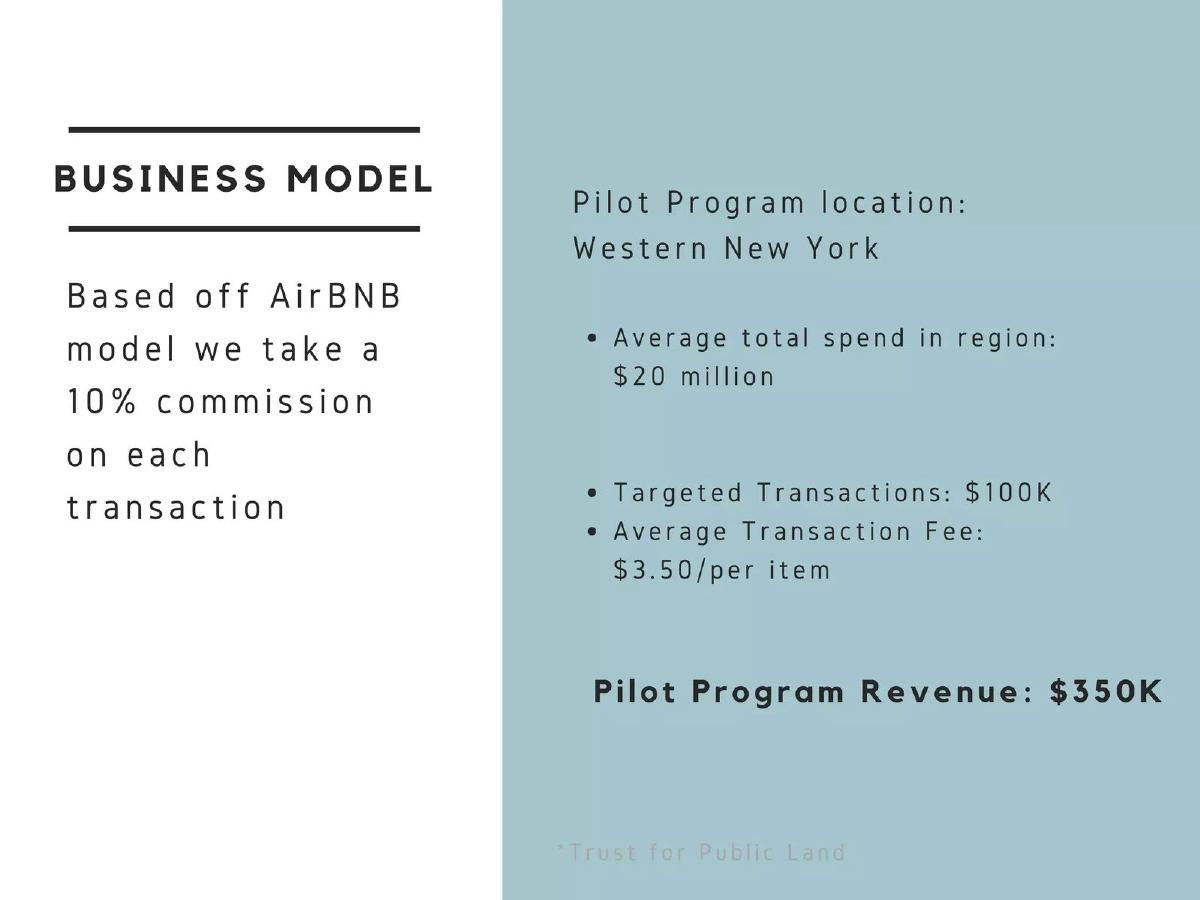
- The revenue model is a 10% commission on each transaction, explicitly modeled after Airbnb (Slide 5).
- A pilot program in Western New York targets 100,000 transactions with an average fee of $3.50 per item (Slide 5).
- The competitive landscape includes traditional retailers like Dick's and Sports Authority, and general marketplaces like Craigslist and eBay (Slide 9).
- The deck lacks a team slide, financial projections beyond the pilot, and a specific capital request.
- Logistical concerns such as insurance, damage protection, and gear handoff are not addressed in the slides.
Slide-by-Slide Analysis
Slide 1: Title Slide
The deck opens with a high-resolution image of a forest, establishing the outdoor theme immediately. The tagline is 'Your Guide to Outdoor Adventures.' Notably, it identifies the company as 'Based in Buffalo, NY.' This local branding suggests a grassroots start, though it may signal a lack of immediate national ambition to some investors.
Slide 2: The Problem
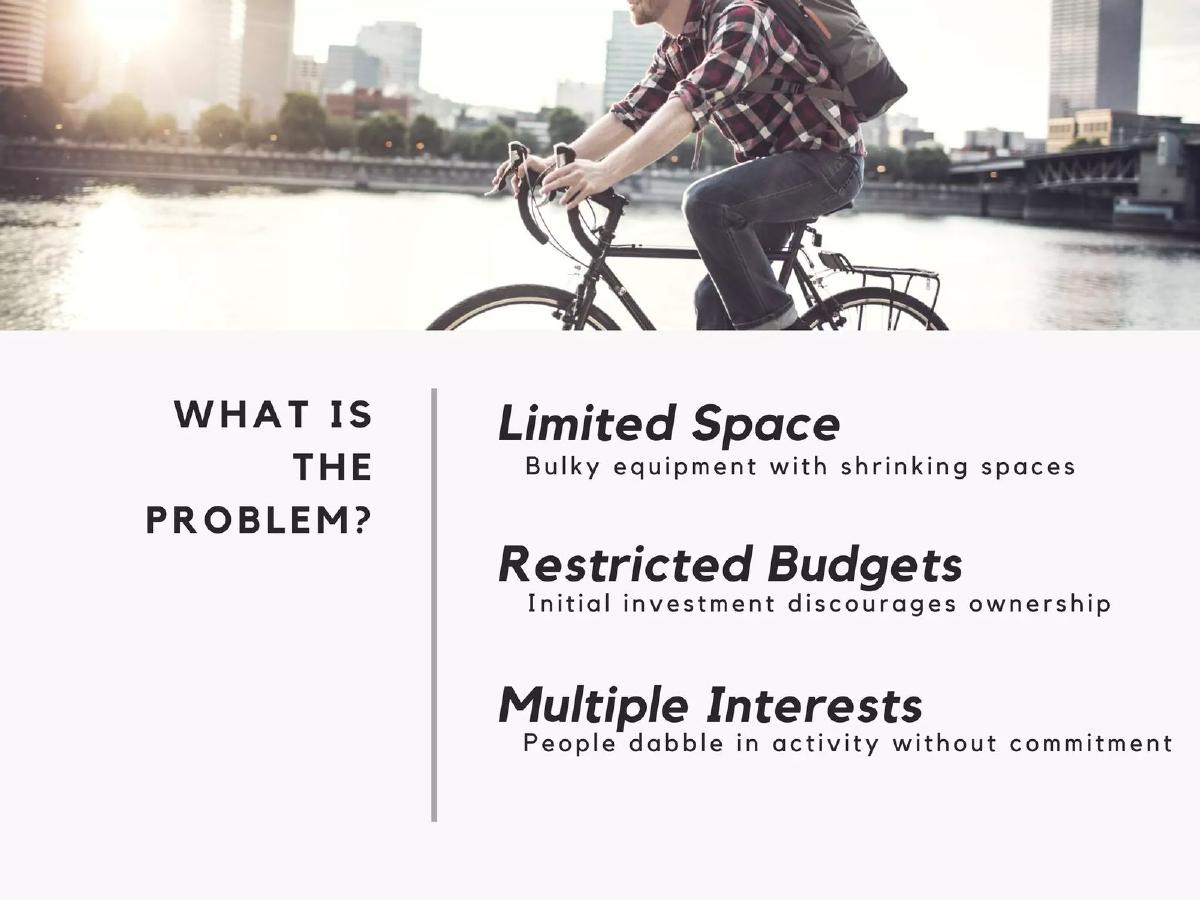
Avventura identifies three core problems: Limited Space (bulky equipment in shrinking living spaces), Restricted Budgets (high cost of ownership), and Multiple Interests (people wanting to 'dabble' without commitment). This is a standard and effective way to frame a sharing-economy pitch, focusing on the friction of ownership.
Slide 3: Our Solution
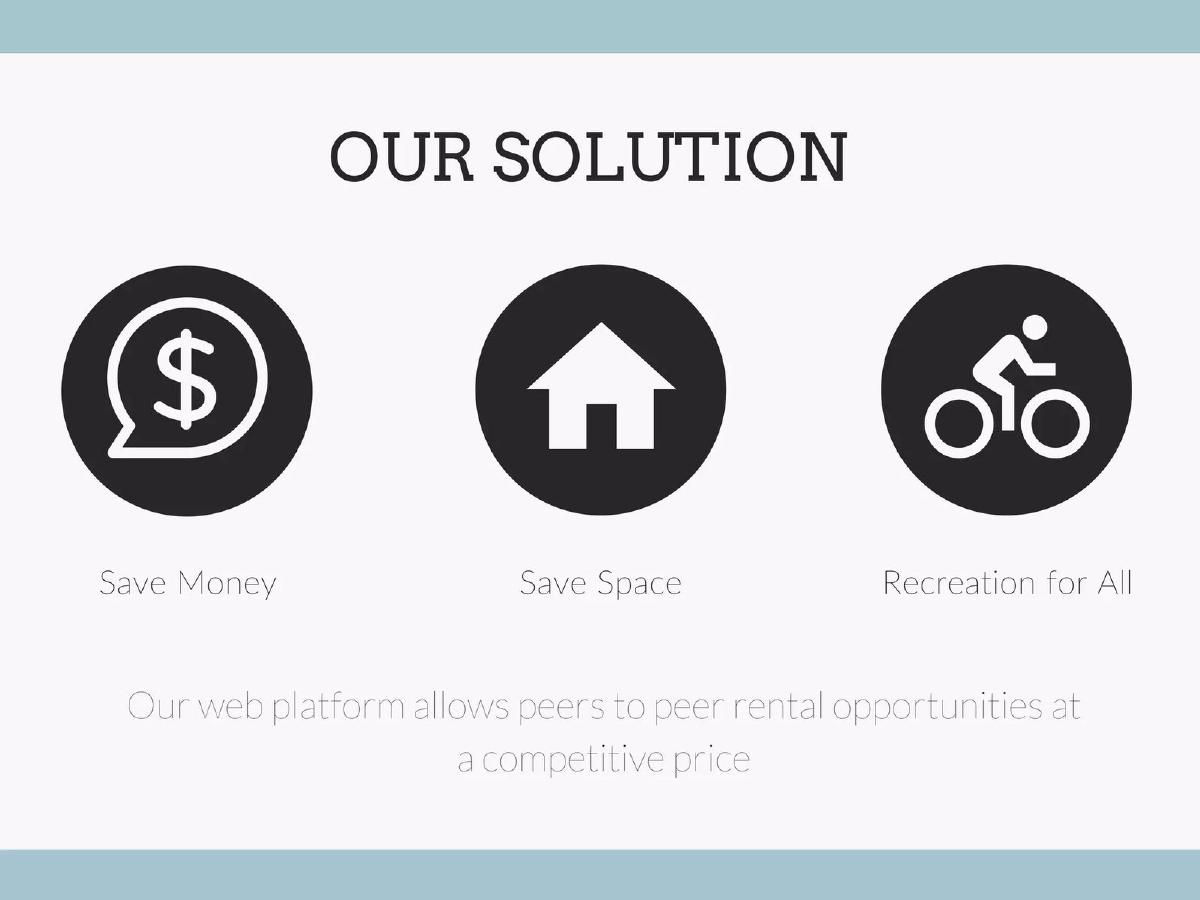
The solution is presented as a 'web platform' that facilitates peer-to-peer rentals. The slide uses three icons to represent saving money, saving space, and 'Recreation for All.' While clear, it lacks a unique value proposition beyond being a marketplace for a specific niche.
Slide 4: Market Size
The deck cites 141.4 million participants and $6.4 billion in spending on recreational activities in the U.S. These are large, top-down numbers. However, the slide does not break down the Serviceable Addressable Market (SAM) or the specific portion of that $6.4 billion that is spent on gear versus travel or fees.
Slide 5: Business Model
This is the most data-heavy slide in the deck. It states a 10% commission model based on Airbnb. For the Western New York pilot, they target 100,000 transactions with an average fee of $3.50 per item, leading to a projected pilot revenue of $350,000. Critical Observation: An average fee of $3.50 implies an average rental price of $35. Processing 100,000 physical gear handoffs for a $3.50 margin per item presents a massive logistical and customer acquisition cost challenge.
Slide 6: Transition Slide
A simple visual break with the text 'Choose Your Avventura.' It serves no informational purpose but maintains the aesthetic of the deck.
Slide 7: Product Mockup
This slide shows a basic mobile interface mockup. It features two input fields: 'Where are you?' and 'What are you looking for?' and a 'Discover Avventuras' button. It is a very high-level wireframe that does not show the actual inventory, booking flow, or payment interface.
Slide 8: Market Adoption
The go-to-market strategy includes targeted events, promotional offerings, social media (Instagram, Bloggers, Facebook), and partnerships. The phrase 'Do it for the Gram' is used as a sub-header, indicating a focus on the 'experience economy' and visual social proof as a driver for rentals.
Slide 9: Competitive Landscape
The 2x2 matrix plots competitors along two axes: Buy vs. Rent and General Focus vs. Recreation Focus. Avventura places itself alone in the 'Recreation Focus / Rent' quadrant. It lists Sports Authority (which went bankrupt in 2016, potentially dating this deck) and Dick's as 'Buy/Recreation' competitors. Craigslist and eBay are listed as 'Buy/General.'
Slide 10: Competitive Advantage
The deck lists seven advantages: 1st to Market, Owner Incentive, List Once, Ease of Use, Profiles, Customer Reviews, and Sharable Activity. Analysis: '1st to Market' is rarely a sustainable advantage, and features like 'Profiles' and 'Customer Reviews' are table stakes for any marketplace, not unique advantages.
Slide 11: Contact and Closing
The deck ends with a 'Thank You' and the URL 'www.avventura.com.' There are no specific contact details for founders, no phone numbers, and no call to action regarding a fundraise.
What Works
Clear Problem Identification: The deck does a good job of explaining why someone would want to rent gear rather than buy it. The 'dabbling' aspect (Slide 2) is a particularly strong point for the outdoor industry, where gear for specialized hobbies like kayaking or skiing is expensive and space-consuming.
Local Pilot Strategy: By focusing on Western New York (Slide 5), the company shows a willingness to prove the concept in a contained geographic area before attempting to scale. This is often more realistic for marketplaces that require physical density to work.
Visual Consistency: The deck uses high-quality photography that aligns well with the brand's outdoor focus. It looks professional and thematic.
What is Missing
The Team Slide: This is the most glaring omission. Investors invest in people, especially at the early stage. Without knowing who is building Avventura, it is impossible to assess the execution risk.
The Ask: The deck never mentions how much money the company is looking to raise, what the valuation is, or what the milestones for the funding will be. This makes it feel more like a project proposal than a fundraising deck.
Logistics and Liability: Peer-to-peer rental of physical goods (like bikes or climbing gear) carries significant liability and logistical hurdles. The deck does not mention insurance, how gear is inspected for safety, or how the handoff occurs. In a $3.50-per-item margin business, these costs could easily exceed the revenue.
Unit Economics: While they mention the 10% fee, they do not mention Customer Acquisition Cost (CAC). Acquiring a customer for a $3.50 gross profit transaction is notoriously difficult in the digital advertising space.
Founder Takeaways
Address the 'Dirty Work': If you are building a marketplace for physical goods, you must explain how the goods get from Person A to Person B and who is responsible if the goods are broken or cause injury. · Be Realistic About Margins: A 10% take rate on low-cost items (Slide 5) requires massive volume to sustain a business. Founders should consider whether a flat fee or a higher percentage is necessary for low-ticket rentals. · Include the Team: Never send a deck without a team slide. Highlight why your specific background makes you the right person to solve this specific problem. · Update Competitors: Including a defunct company like Sports Authority (Slide 9) suggests the deck hasn't been updated in years or the founders aren't tracking their industry closely.
Frequently asked questions
- What is Avventura's primary business model?
- Avventura operates as a peer-to-peer marketplace for outdoor gear. According to slide 5, they take a 10% commission on every transaction. They compare this directly to the Airbnb model. For their pilot program, they anticipate an average transaction fee of $3.50 per item, which suggests a very low average rental price of $35 per transaction.
- Where is the company launching its initial operations?
- The company is based in Buffalo, NY, as stated on the title slide. Slide 5 specifies that their pilot program is focused specifically on the Western New York region, where they cite an average total recreational spend of $20 million.
- Who are the competitors identified in the deck?
- Slide 9 uses a 2x2 matrix to categorize competitors. Traditional 'Buy' competitors include Dick's, Sports Authority, and EMS. General 'Rent' or 'Secondary Market' competitors include Rent-a-Center, Buffalo Party Rental, eBay, Amazon, Letgo, and Craigslist. Avventura claims the top-right quadrant: 'Recreation Focus' and 'Rent'.
- What are the major omissions in this pitch deck?
- This deck is missing several critical components required for a professional fundraise. There is no team slide to establish founder credibility, no 'Ask' slide detailing how much money is being raised, and no financial roadmap. Furthermore, it lacks a slide on operations, which is vital for a rental business involving physical goods.
- How does Avventura plan to acquire customers?
- Slide 8 outlines a 'Market Adoption' strategy consisting of targeted events, promotional offerings, partnerships, and social media. They specifically mention Instagram, Facebook, and bloggers, using the phrase 'Do it for the Gram' to highlight the visual nature of outdoor adventure marketing.