GitLab’s 2015 seed deck is remarkably concise, utilizing just nine slides to secure $1.5M from a prestigious roster of investors including Khosla Ventures and Y Combinator. Rather than focusing on complex technical diagrams or long-winded problem statements, the deck leans heavily on social proof and exponential growth. By Slide 2, they showcase over 100,000 organizations using the platform, including Fortune 500 giants like IBM and Microsoft. The narrative is built on the 'open source beats closed source' thesis, positioning GitLab as the inevitable successor to GitHub for the enterprise. Wi…
Key takeaways
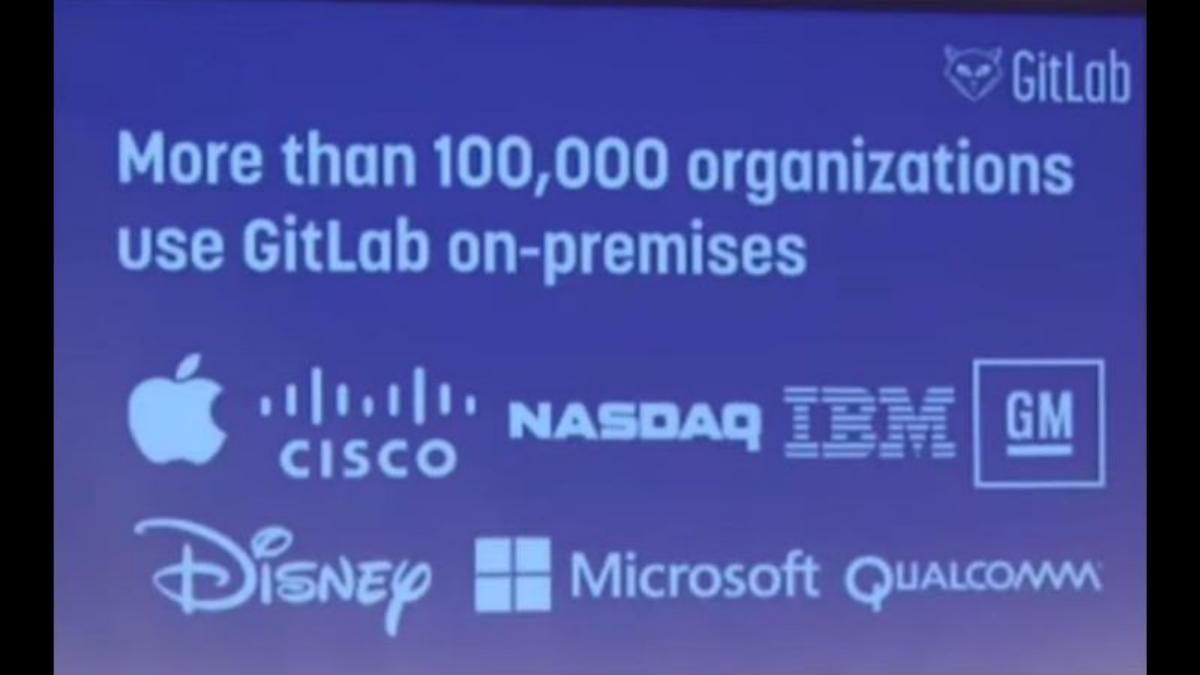
- Social proof is established immediately on Slide 2, listing 100,000+ organizations including Apple, Cisco, and Disney.
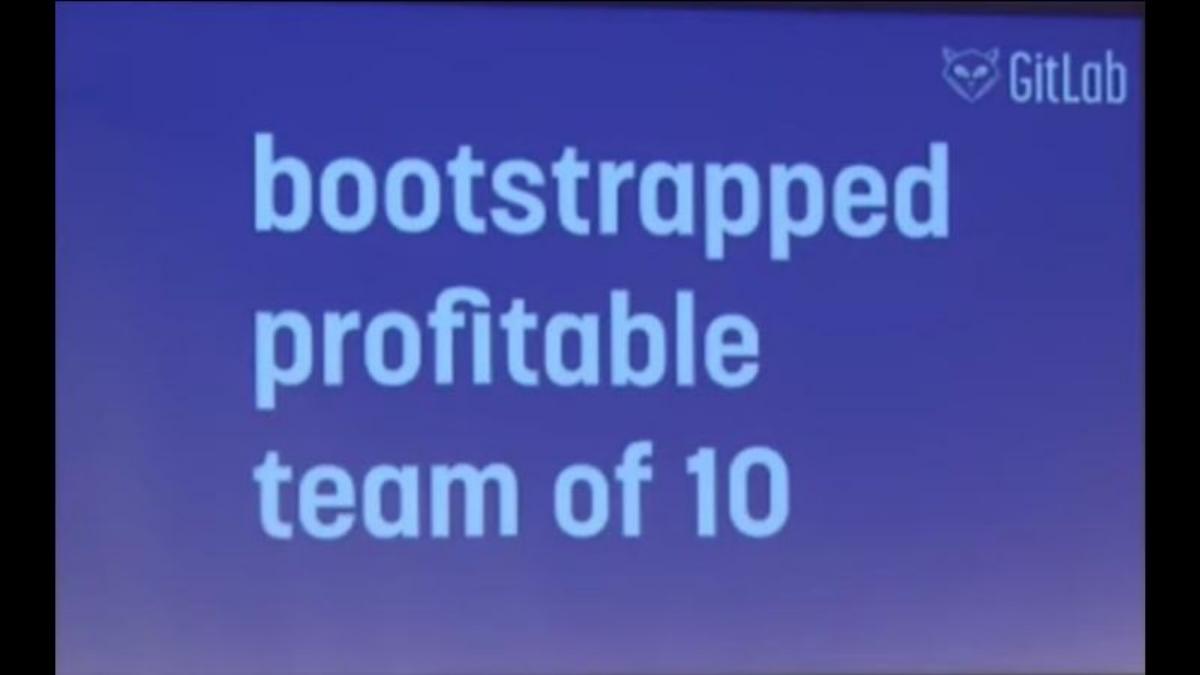
- The company emphasizes its lean operations on Slide 4, noting they were a 'bootstrapped profitable team of 10' prior to the raise.
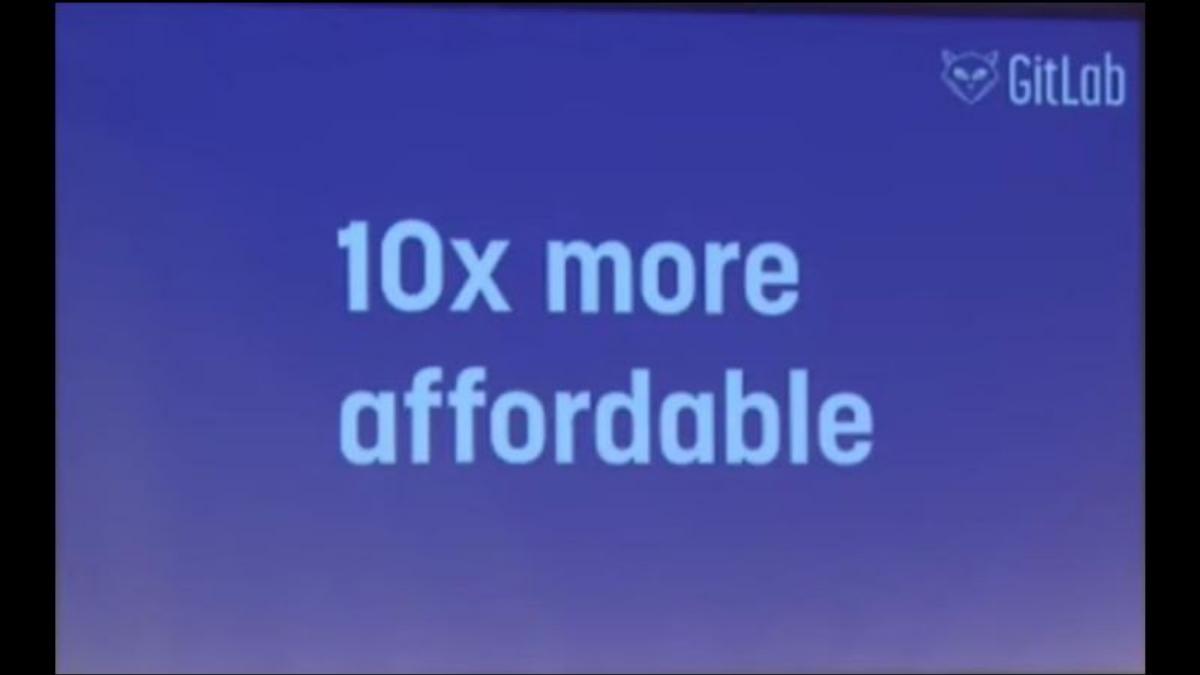
- GitLab claims a significant price advantage on Slide 5, stating they are '10x more affordable' than competitors.
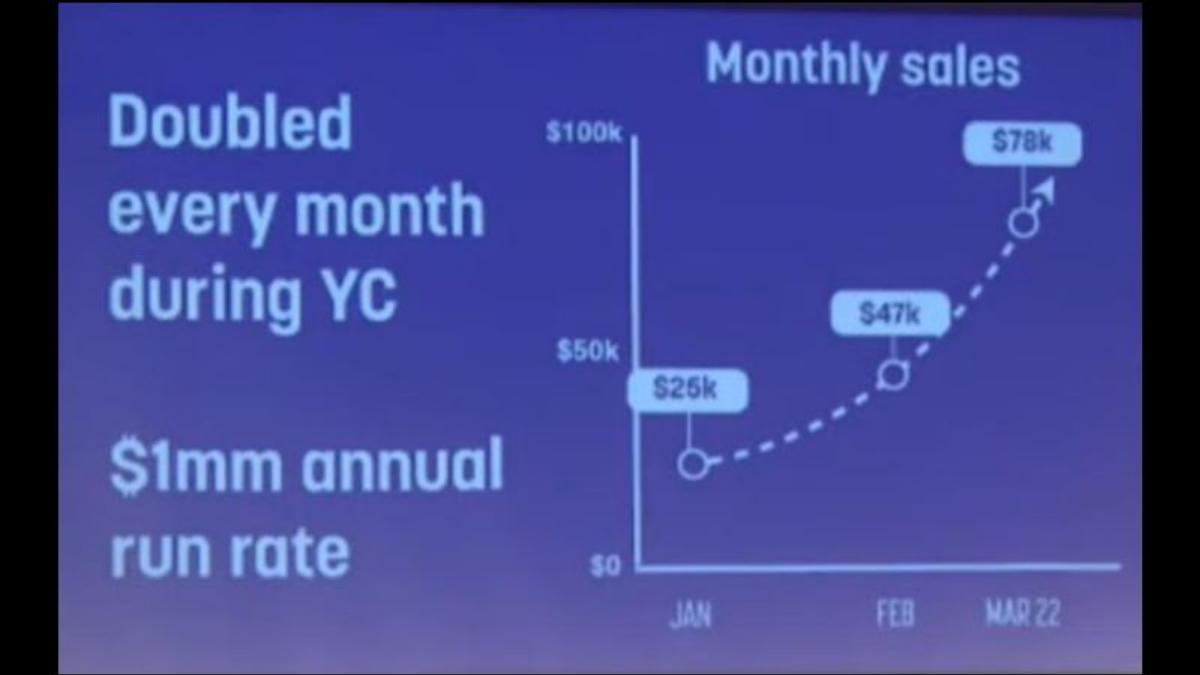
- Traction is demonstrated with a monthly sales graph on Slide 6, showing growth from $25k in January to $78k by March 22.
- The deck reports a '$1mm annual run rate' on Slide 6, a high figure for a seed-stage startup in 2015.
- Slide 7 uses historical analogies (Wordpress, RedHat) to argue that open source inevitably replaces closed source incumbents.
- The deck completely omits a traditional 'Team' slide with bios, relying instead on the company's output and profitability to validate the founders.
- There is no explicit 'Ask' slide detailing the valuation or specific use of the $1.5M funds within the 9-slide sequence.
The Power of Brevity: GitLab's 9-Slide Seed Deck
In 2015, GitLab raised $1.5M for its seed round using a deck that is strikingly short by modern standards. At only 9 slides, it ignores many of the 'rules' of pitch deck design—there are no deep-dive bios, no complex market size (TAM) calculations, and no product screenshots. Instead, GitLab focused on a single, powerful narrative: they were an open-source juggernaut already being used by the world's largest companies.
Slide 1: The Vision Statement
The title slide features the GitLab logo and the tagline: 'How companies work on software together.' This is a broad, collaborative vision. It moves the conversation away from being just a 'code repository' to being a platform for organizational workflow. It is simple, clean, and sets a professional tone.
Slide 2: Massive Social Proof
GitLab leads with its strongest hand. Slide 2 states, 'More than 100,000 organizations use GitLab on-premises.' Below this headline is a 'wall of fame' featuring logos for Apple, Cisco, Nasdaq, IBM, GM, Disney, Microsoft, and Qualcomm. By showing that these tech giants already use the product, GitLab eliminates 'technical risk' in the eyes of the investor. If it is good enough for Apple and Microsoft, the product clearly works at scale.
Slide 3: The Open Source Advantage
Slide 3 addresses the 'How' of their development: 'open source: more relevant features shipped faster.' This slide explains their competitive edge. By leveraging a global community of contributors, GitLab can out-pace the R&D departments of closed-source competitors. It frames open source not just as a philosophy, but as a superior business engine for product development.
Slide 4: Efficiency and Profitability
In a rare move for a seed-stage company, Slide 4 highlights their financial discipline. It lists three points: 'bootstrapped,' 'profitable,' and 'team of 10.' This tells investors that the founders are excellent stewards of capital. It suggests that any venture funding will be used as 'fuel on a fire' rather than a lifeline to keep a struggling ship afloat.
Slide 5: The Disruption Hook
Slide 5 is the shortest in the deck, containing only three words: '10x more affordable.' This is a classic 'Value Proposition' slide. In the enterprise software world, being 10x cheaper while remaining 'profitable' (as stated on the previous slide) is a terrifying prospect for incumbents and an attractive one for customers and investors alike.
Slide 6: The Traction Curve
This is the 'Money Slide.' It features a graph of 'Monthly sales' showing a steep upward curve. The data points are specific: '$25k' in January, '$47k' in February, and '$78k' by March 22. To the left, it notes they 'Doubled every month during YC' and have a '$1mm annual run rate.' This slide proves product-market fit and execution speed. It transforms the pitch from a theoretical idea into a high-growth reality.
Slide 7: The Inevitability Thesis
Slide 7 provides the strategic context. Titled 'Open source beat closed source,' it uses three bullet points with strikethroughs to show historical shifts:
Movable Type -> Wordpress · Windows Server -> RedHat Linux · GitHub -> GitLab
By placing themselves at the end of this list, GitLab argues that their victory over GitHub is a matter of historical pattern, not just luck. It’s a bold claim that positions them as the 'RedHat of DevOps.'
Slide 8: Closing Brand Reinforcement
Slide 8 is a repeat of the title slide. In a live pitch environment, this is the slide that stays on the screen during the Q&A session. It reinforces the brand and the core mission: 'How companies work on software together.'
Slide 9: BestPitchDeck.com Attribution
The final slide is an external attribution slide from the catalogue source and was not part of the original pitch to investors.
What Works in This Deck
1. Traction as the Primary Argument: GitLab doesn't spend time explaining what 'Git' is or why software development is important. They assume the investor knows the market and spend 100% of their time proving that they are winning that market. The $1M ARR and the 100k organizations are the stars of the show.
2. Extreme Focus: Each slide has a single job. Slide 2 is for credibility. Slide 5 is for pricing. Slide 6 is for growth. This makes the deck incredibly easy to digest in under two minutes.
3. The 'Inevitability' Narrative: By comparing themselves to Wordpress and RedHat, they aren't just asking for money to build a tool; they are asking for money to facilitate a market shift that they claim is already happening.
What Is Missing
1. The Team Slide: While they mention being a 'team of 10,' there are no names, faces, or backgrounds. Usually, investors want to see the 'founder-market fit.' GitLab relies entirely on their metrics to prove the team's worth.
2. The 'Ask' and Use of Funds: The deck never specifies how much they are raising (though we know from the catalogue it was $1.5M) or what they will do with the money. There is no roadmap or hiring plan included in these 9 slides.
3. Competitive Matrix: Aside from the strikethrough of 'GitHub' on Slide 7, there is no detailed comparison of features. They rely on the '10x more affordable' and 'open source' labels to differentiate themselves without getting into the technical weeds.
What Founders Should Copy
The 'Wall of Logos' Early: If you have big-name users, don't hide them on Slide 12. Put them on Slide 2. It changes the way investors listen to the rest of your pitch.
Specific Monthly Data: Instead of showing a vague 'cumulative users' graph, GitLab showed actual monthly revenue during their accelerator period. Specificity creates trust.
The 'Historical Parallel': If you are disrupting a market, find a historical example of a similar disruption. It helps investors categorize your 'moat' and understand your long-term strategy without needing a 50-page business plan.
Frequently asked questions
- How did GitLab demonstrate traction without a long history?
- GitLab focused on 'Monthly sales' during their time at Y Combinator. Slide 6 shows a clear upward curve, jumping from $25,000 in January to $78,000 by March. This specific, short-term data proved the immediate market demand and their ability to convert users into paying customers rapidly.
- Why did GitLab include logos of companies like Microsoft and IBM?
- On Slide 2, GitLab highlights that these organizations use their 'on-premises' version. This was a strategic move to show that while GitHub dominated the public cloud, GitLab was the preferred choice for large enterprises that required self-hosted, secure environments for their proprietary code.
- What was the core 'Why Now' argument in the deck?
- The argument was based on the 'Open source beat closed source' thesis on Slide 7. By comparing the GitHub/GitLab rivalry to Wordpress/Movable Type and RedHat/Windows Server, GitLab framed their success not as a possibility, but as a historical inevitability.
- Is the lack of a team slide a mistake?
- For most startups, yes. However, GitLab's Slide 4 mentioned they were a 'bootstrapped profitable team of 10.' This suggested that the team was already highly competent and efficient. In the context of a Y Combinator Demo Day style pitch, the traction often speaks louder than individual resumes.
- How did GitLab position its pricing strategy?
- They used a '10x' hook. Slide 5 simply states '10x more affordable.' This is a classic disruption tactic, suggesting that they could capture the market by offering similar or better utility at a fraction of the cost of legacy enterprise incumbents.