Gist's 10-slide deck, dated April 2021, is a conceptual pitch for a social commerce platform. It leans heavily on the success of Asian counterparts like Pin Duo Duo and Shopee to justify a similar revolution in the West. The narrative focuses on the shift from 'commodities' to 'personal goods' and the role of identity in driving discovery. While the deck effectively illustrates a 'natural flywheel' of syncing, creating, sharing, and purchasing, it is notably light on operational details. There is no team slide, no financial projections, no specific ask, and no evidence of existing user tracti…
Key takeaways
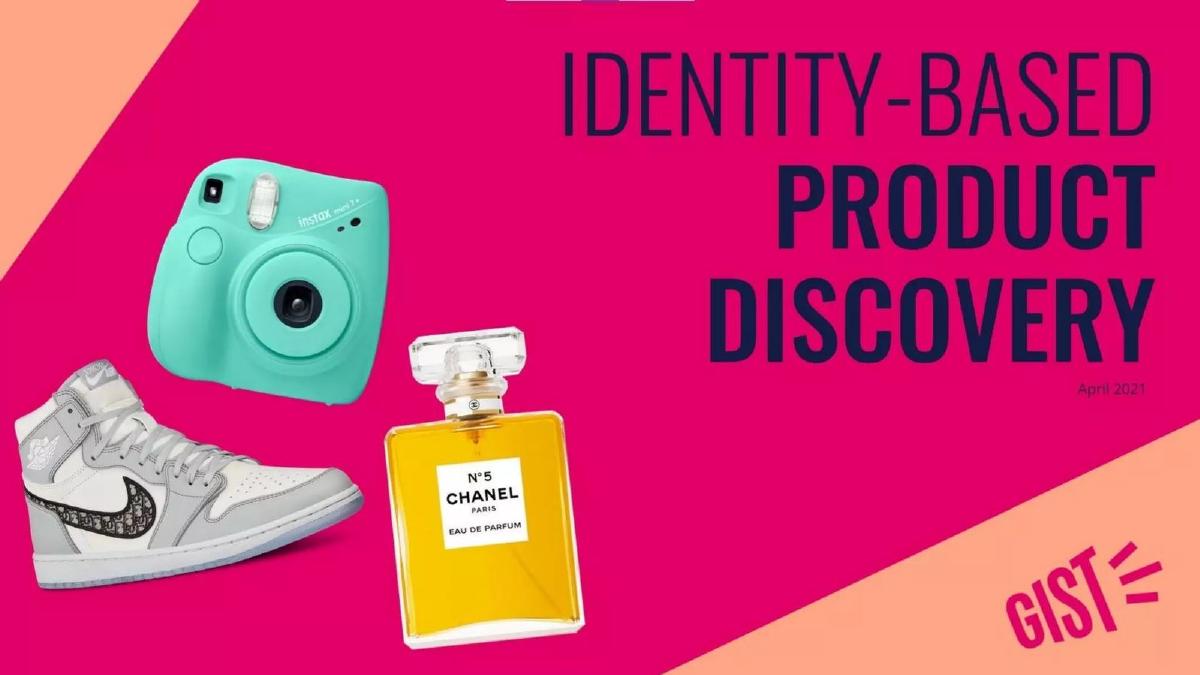
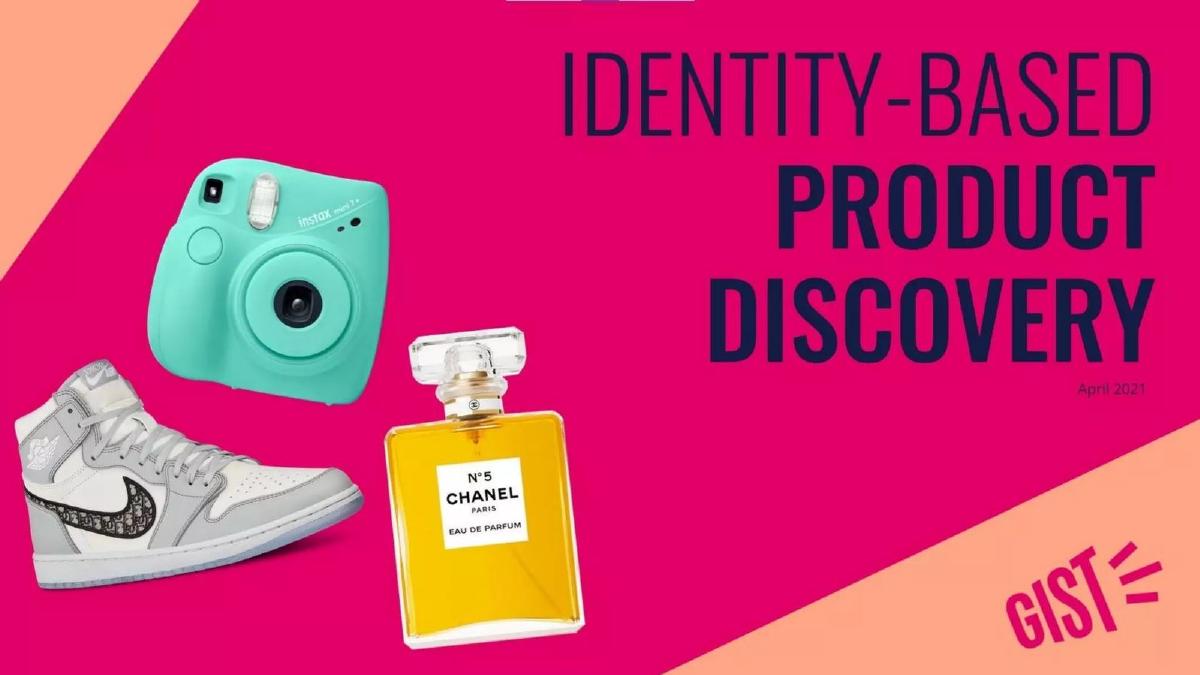
- The deck defines its core value proposition as 'Identity-Based Product Discovery' on slide 1.
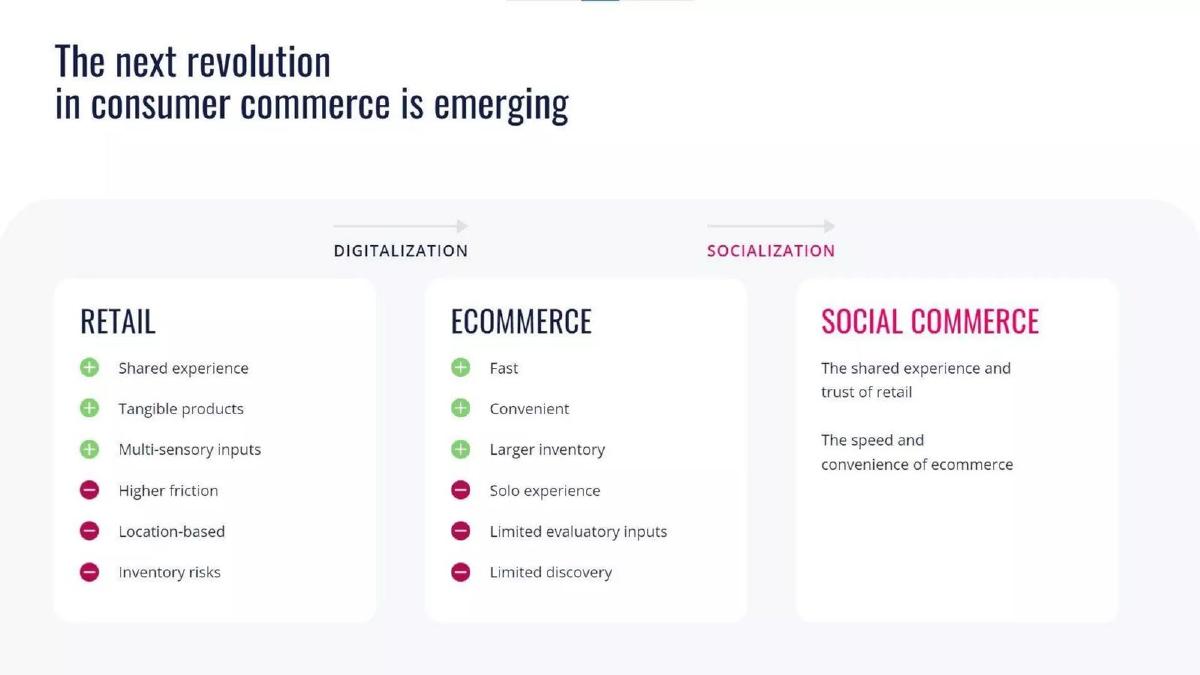
- It positions social commerce as the synthesis of retail's trust and ecommerce's speed on slide 2.
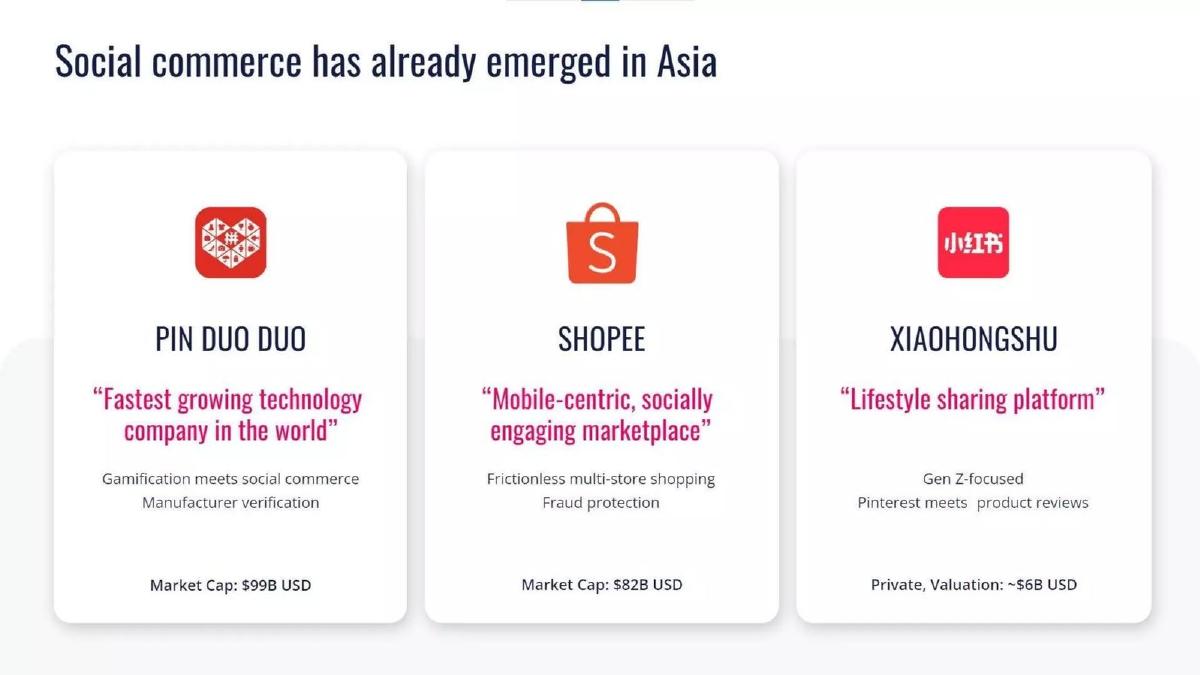
- Gist uses Asian market leaders like Pin Duo Duo ($99B Market Cap) and Shopee ($82B Market Cap) as proof of concept on slide 4.
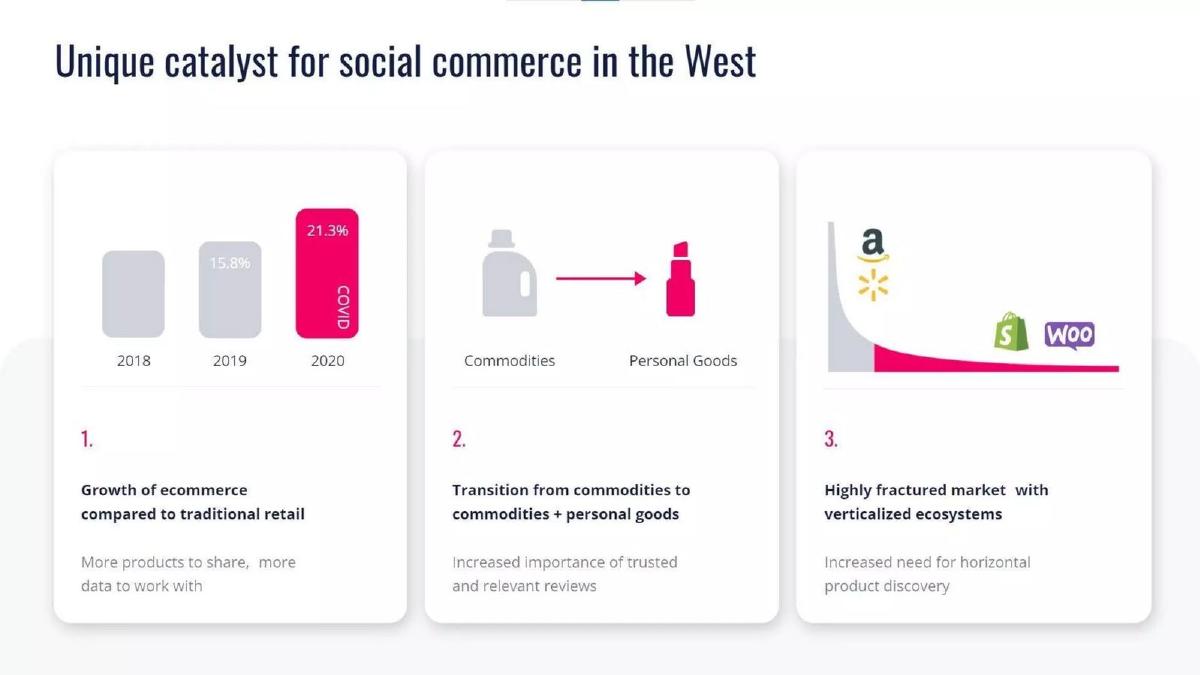
- The company identifies a 'Unique catalyst' in the West, noting ecommerce growth hit 21.3% in 2020 due to COVID on slide 5.
- A 'natural flywheel' is proposed on slide 7, involving Sync, Create, Share, Discover, and Purchase phases.
- The platform aims to provide brands with 'omnichannel purchasing data with attribution like never before' on slide 8.
- Go-to-market strategy relies on off-platform distribution via Facebook, Twitter, and Instagram as shown on slides 7 and 9.
- The deck completely omits a team slide, financial data, unit economics, and a specific funding ask.
The Vision of Identity-Based Discovery
Gist’s pitch deck, dated April 2021, is a study in macro-trend positioning. Rather than leading with a product demo or a team's pedigree, the deck attempts to sell a narrative: that the Western world is overdue for a social commerce revolution similar to what has occurred in Asia. The aesthetic is clean and consumer-focused, using high-contrast colors and lifestyle imagery to signal its target demographic.
Slide 1: Title and Core Thesis
The deck opens with a bold declaration: "IDENTITY-BASED PRODUCT DISCOVERY." The imagery includes a Dior sneaker, a Chanel No. 5 bottle, and a teal Instax camera. This immediately signals that Gist is not interested in the 'commodity' side of commerce (toilet paper, batteries) but rather in 'personal goods'—items that define a user's identity. The date is noted as April 2021.
Slides 2-3: The Evolution of Commerce
Slide 2, titled "The next revolution in consumer commerce is emerging," charts the path from Retail to Ecommerce to Social Commerce. It lists the pros and cons of each. Retail offers 'Shared experience' and 'Tangible products' but suffers from 'Higher friction.' Ecommerce offers 'Speed' and 'Convenience' but is a 'Solo experience' with 'Limited discovery.' Social Commerce is presented as the solution that combines the trust of retail with the speed of ecommerce. Slide 3 reinforces this with a simple text-based transition: "WE BELIEVE IDENTITY IS THE NEXT DRIVER OF COMMERCE."
Slides 4-5: Market Validation and Catalysts
Slide 4 looks East for validation. It cites Pin Duo Duo (Market Cap: $99B USD), Shopee (Market Cap: $82B USD), and Xiaohongshu (Valuation: ~$6B USD). By highlighting these multi-billion dollar entities, Gist is attempting to show the massive ceiling for social commerce. Slide 5 then addresses why this hasn't happened in the West yet and why now is the time. It cites three catalysts: the growth of ecommerce to 21.3% in 2020 (attributed to COVID), the shift from commodities to personal goods, and a 'highly fractured market' where brands on Shopify or WooCommerce lack a horizontal discovery platform.
Slides 6-7: The Gist Solution and Flywheel
Slide 6 is a transition slide stating, "WE’VE IDENTIFIED WHY PEOPLE LOVE GIST." This leads into Slide 7, "Creating a natural flywheel." This is the most 'product-adjacent' slide in the deck. It shows a circular process: Sync -> Create -> Share -> Discover -> Purchase . The 'Share' phase explicitly points to Facebook, Twitter, and Instagram, suggesting that Gist relies on these platforms for distribution rather than trying to build a closed social network from scratch.
Slide 8: Value Propositions
Slide 8 uses a geometric shape to map "Symbiotic value propositions" between Users, Brands, Creation, and Consumption. For users, it is a means of discovery from 'trusted reviewers.' For brands, it offers "Omnichannel purchasing data with attribution like never before," which Gist claims leads to a lower CAC (Customer Acquisition Cost). This is the first hint at a B2B revenue model—selling data and attribution to brands.
Slide 9: Go-to-Market and Partnerships
Slide 9, "Go-to-market and user acquisition," shows a mockup of an Instagram post by 'gistapp' featuring a 'Pet Gift Pack.' It lists two pillars of growth: Users' social media channels (off-platform distribution) and D2C brand partnerships. Logos for brands like Parade, Moon Juice, Brain-Dead, Strand, and Outdoor Voices are displayed. The slide claims brands share their user lists with Gist for 'amplification and insight opportunities.'
Slide 10: Conclusion
The deck ends abruptly on Slide 10 with a simple "THANK YOU" and the Gist logo. There is no contact information, no summary of the round, and no call to action.
What Works in the Gist Deck
The deck is exceptionally strong at narrative framing . By positioning the company at the intersection of a proven global trend (social commerce) and a specific Western pain point (fractured D2C discovery), it creates a sense of inevitability. The distinction between 'commodities' and 'personal goods' is a sharp insight that helps investors understand exactly what kind of inventory will live on the platform. The 'flywheel' graphic on slide 7 is also effective; it explains the user journey without requiring a complex technical diagram.
What is Missing from the Gist Deck
This deck is missing nearly every piece of 'hard' evidence required for a traditional Series A or even a late Seed round. The most glaring omission is the Team Slide. Investors fund people, and there is no mention of who is building this. Furthermore, there are no metrics . While the deck claims to know 'why people love Gist,' it provides no data on active users, retention rates, or GMV (Gross Merchandise Volume). There is also no Business Model slide; while slide 8 hints at data attribution for brands, it doesn't explain how Gist actually makes money (e.g., take rate, SaaS fees, or advertising). Finally, the lack of an 'Ask' slide makes it unclear what the purpose of the deck is—whether it's for a $500k pre-seed or a $10M Series A.
What a Founder Should Copy
Founders should emulate Gist's visual clarity . The slides are not cluttered with text; they use large fonts and clear headings to convey one idea per slide. The use of external validation (the Asian market caps on slide 4) is a great way to anchor a valuation or a market opportunity when your own company is still early-stage. Additionally, the catalyst slide (Slide 5) is a perfect example of how to answer the 'Why Now?' question by using specific data points like the 21.3% ecommerce growth rate. This turns a subjective opinion into an objective market reality.
Conclusion
The Gist deck is a 'Vision Deck.' It is designed to sell a future state of the world rather than a specific business operation. While this can be effective for high-profile founders with previous exits, it is a risky strategy for most. Without a team slide or traction data, the deck relies entirely on the investor agreeing with the macro-thesis of social commerce. It is a beautiful presentation, but as a fundraising tool, it leaves too many questions unanswered to stand on its own without a significant verbal pitch or a robust data room.
Frequently asked questions
- What is Gist's primary product?
- Based on the deck, Gist is a social commerce platform focused on 'Identity-Based Product Discovery.' It allows users to sync their purchases, create content around those products, and share them across social media channels. The goal is to create a discovery layer for personal goods where users act as 'brand champions' and provide trusted reviews for their community.
- How does Gist justify the market opportunity in the West?
- Gist points to three catalysts on slide 5: the accelerated growth of ecommerce (reaching 21.3% in 2020), a transition in consumer behavior from buying simple commodities to 'personal goods' that require trusted reviews, and a highly fractured market with verticalized ecosystems (like Shopify and WooCommerce) that need a horizontal discovery layer.
- What are the key components of Gist's growth flywheel?
- As illustrated on slide 7, the flywheel begins with 'Sync' (likely syncing purchase history), leading to 'Create' (content generation). This content is then 'Shared' on external social platforms, which leads to 'Discovery' by new users, ultimately resulting in a 'Purchase' that feeds back into the sync phase.
- Which brands are associated with Gist's go-to-market strategy?
- Slide 9 displays several D2C brand logos as potential or existing partners, including Parade, Moon Juice, Brain-Dead, Strand, OV (Outdoor Voices), and Coco Rose. The deck claims these brands are 'happy to share their user lists' to gain amplification and insight opportunities.
- What critical information is missing from this pitch deck?
- This deck is missing almost all standard 'hard' metrics. There is no slide introducing the founders or their expertise. There are no financial figures, revenue models, or user growth stats. Most importantly, there is no 'Ask' slide detailing how much capital is being raised or how it will be deployed.