Insha's 2020 pitch deck is a concise 13-slide presentation that successfully secured $3M in Seed funding. The company positions itself as a solution for the growing segment of European consumers seeking ethical and principle-based financial products. By contrasting the growth of ethical banks against the stagnation of systemic banks—citing a 13.06% deposit growth for ethical banks versus 3.74% for systemic banks over a 10-year period—Insha builds a strong macro-economic case. While the deck is visually polished and clear on product features like 'inGold' and 'inSave,' it notably lacks a team…
Key takeaways
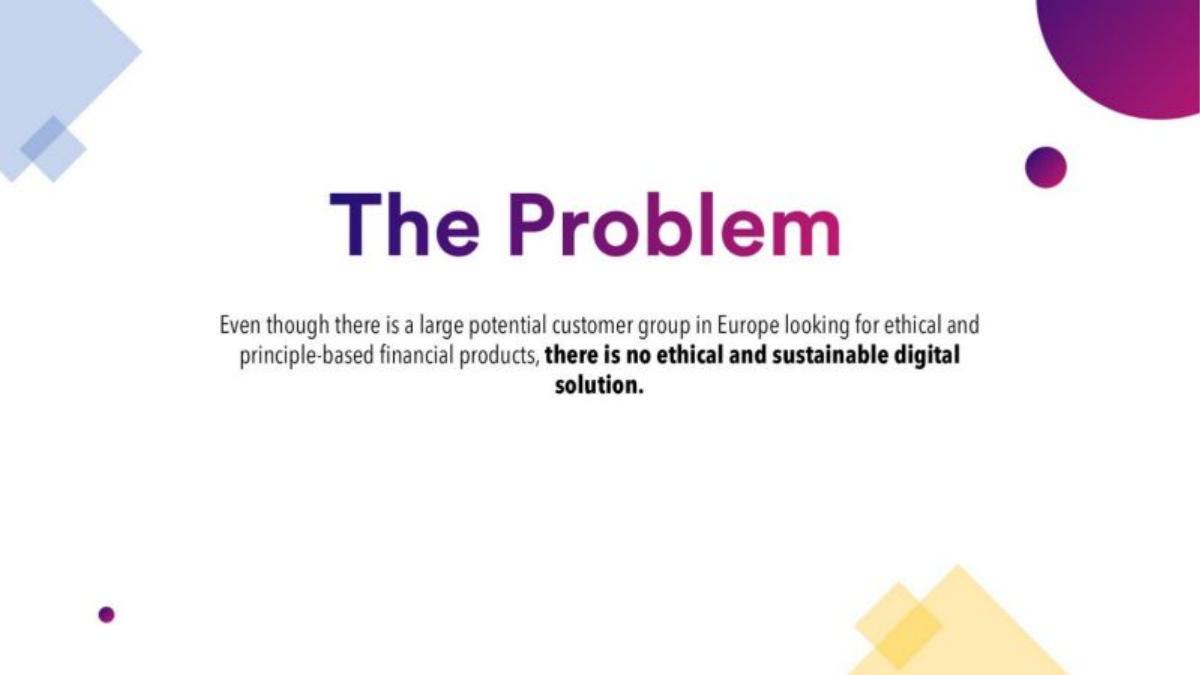
- The problem is defined as a lack of ethical and sustainable digital solutions for a large European customer group (Slide 3).
- Ethical banks outperformed systemic banks in net income growth from 2006-2016, showing 5.93% growth vs -14.58% for systemic banks (Slide 9).
- The product ecosystem includes inSave (goal-based accounts), inGold (vaulted gold storage), and inBox (a fintech marketplace) (Slides 4, 7).
- Insha claims a competitive advantage by being backed by a 'big banking group' while maintaining startup agility (Slide 10).
- The deck highlights a 2850% increase in Fairtrade product sales in Germany since 2005 to prove shifting consumer sentiment (Slide 12).
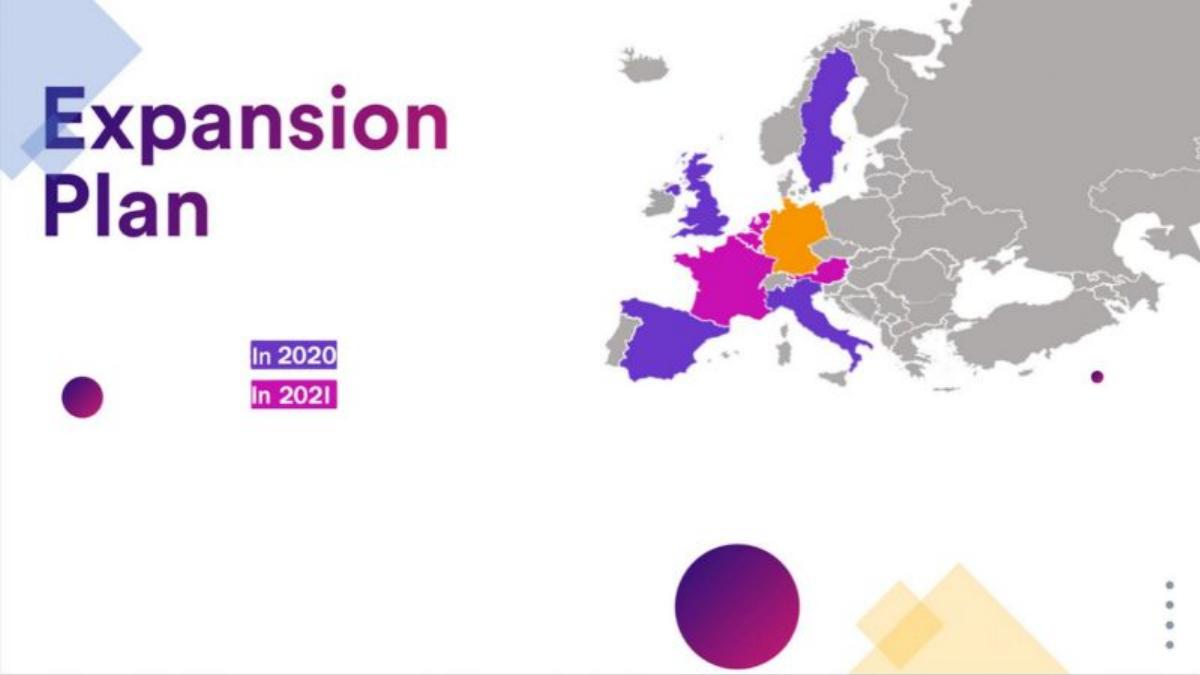
- Expansion plans were targeted for Germany in 2020, with France, Spain, Italy, and others slated for 2021 (Slide 6).
- The company defines its brand through '13 insha principles,' including an interest-free model and social responsibility (Slide 11).
- The deck completely omits a team slide, which is highly unusual for a $3M Seed round (Slides 1-13).
The Principle-Based Fintech Narrative
Insha’s 2020 Seed deck is a study in narrative-driven fundraising. At 13 slides, it is lean, visually consistent, and focused heavily on the 'Why' and the 'What,' rather than the 'Who' or the 'How Much.' The deck successfully secured $3M by tapping into the zeitgeist of sustainable finance and ethical consumerism in Europe. By framing the banking industry not just as a technological laggard, but as a moral one, Insha creates a distinct category for itself: the ethical neobank.
Slides 1-2: Brand Identity and Visual Hook
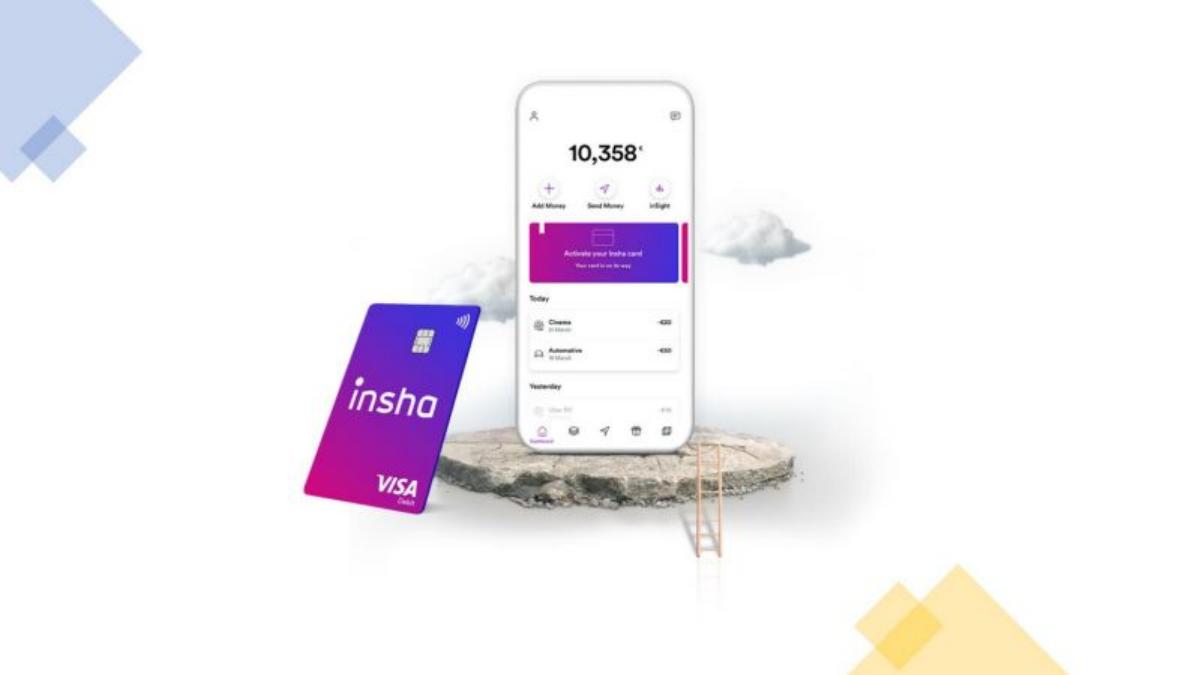
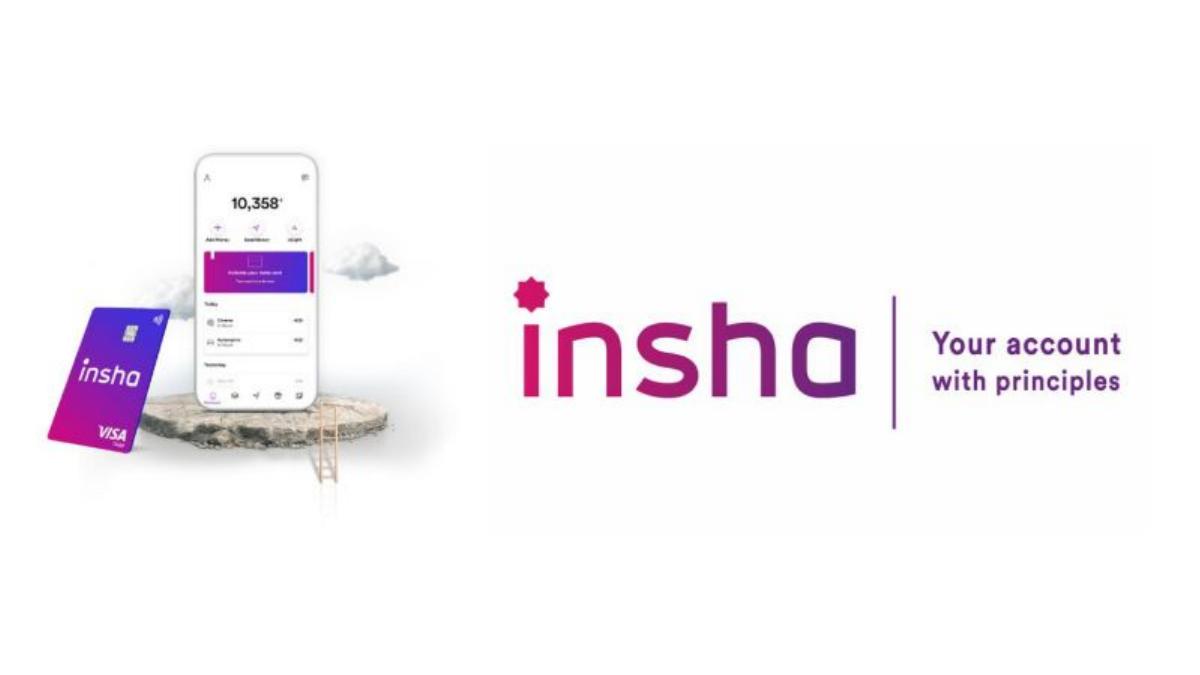
The deck opens with a clean title slide (Slide 1) featuring the logo and the tagline: "Your account with principles." This immediately sets the tone. Slide 2 follows with a high-quality product render showing a physical Visa debit card and a mobile interface displaying a balance of 10,358€ . The imagery is aspirational, using clouds and a ladder to suggest growth and stability. This is a standard but effective way to prove that the product is not just a concept, but a functional, well-designed digital experience.
Slide 3: Defining the Ethical Gap
The Problem slide (Slide 3) is minimalist. It states: "Even though there is a large potential customer group in Europe looking for ethical and principle-based financial products, there is no ethical and sustainable digital solution." By bolding the second half of the sentence, Insha identifies a specific market void. They aren't just competing with banks; they are competing for a specific type of customer that traditional digital banks (like N26 or Revolut) may not be satisfying on a values level.
Slides 4-5: The Core Product Experience
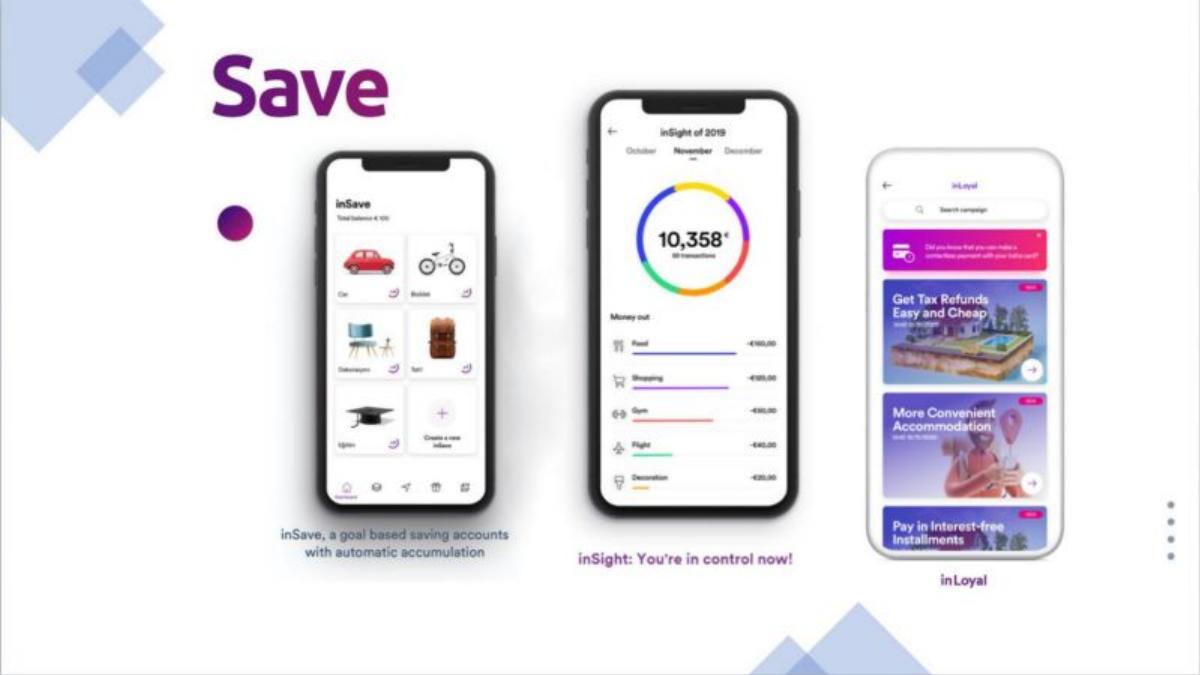
Slide 4 introduces the 'Save' functions. It highlights inSave , described as "a goal based saving accounts with automatic accumulation," and inSight , which promises "You're in control now!" through spend tracking. Slide 5 repeats the branding from the cover, serving as a transition or a 'breather' slide, which is somewhat redundant in a short deck but reinforces the visual identity.
Slide 6: The European Roadmap
The Expansion Plan (Slide 6) uses a color-coded map of Europe. It identifies Germany as the 2020 target and lists a broad swathe of Western and Southern Europe for 2021. This slide demonstrates ambition but lacks the operational detail of how they intend to navigate the varying regulatory environments of the UK versus Italy or Spain. It is a high-level strategic intent slide rather than a tactical roadmap.
Slide 7: Diversifying the Fintech Ecosystem
Slide 7, titled 'Grow,' introduces more advanced features. inGold is presented as a way to buy and sell gold, with a note that it is "stored at insha vault." inWin is labeled as a "New way of participation accounts," and inBox is positioned as a "Marketplace for all fintech products." This slide is crucial because it shows that Insha isn't just a checking account; it is building a multi-revenue stream platform that includes commodities and third-party commissions.
Slide 8: The Solution Statement
Slide 8 mirrors the Problem slide, stating: "We offer ethical and principle based fully digital financial solutions to this customer group." It uses a lifestyle image of a customer using the app, reinforcing the human element of the brand.
Slide 9: The Data-Driven Justification
This is arguably the most important slide in the deck. It provides a table comparing "European ethical/sustainable banks" against "European systemic banks" using CAGR data from 2006-2016. The figures are compelling:
Deposits: Ethical banks grew at 13.06% vs. 3.74% for systemic banks. · Net Income: Ethical banks grew at 5.93% while systemic banks declined by 14.58%. · Total Assets: Ethical banks grew at 10.13% vs. 1.47% for systemic banks.
By using a 10-year data set, Insha proves that ethical banking isn't a fad, but a long-term trend that significantly outperforms the traditional banking sector in growth and profitability.
Slide 10: Competitive Advantage and Backing
Slide 10 addresses the 'Why Us' question. It states: "We are backed by a big banking group as well as a fintech ecosystem and benefit from their experiences." A Venn diagram shows the intersection of "Act Like Entrepreneur," "Financial Power," and "Knowledge." While it doesn't name the banking group on the slide, this indicates that Insha is not a 'garage startup' but a corporate-backed venture, which reduces the perceived risk for Seed investors regarding regulatory compliance and capital requirements.
Slides 11-12: The Principles and Social Proof
Slide 11 lists the "13 insha principles," including "Interest-free model," "Real & circular economy," and "Environmental friendly." This codifies the brand's 'ethical' claim. Slide 12 provides social proof of the broader movement, citing a 2850% increase in Fairtrade sales in Germany and the fact that 1.8 million people participated in 'Fridays for Future' protests in May 2019. It concludes that 45% of shoppers make more sustainable decisions today. This connects Insha’s product to a massive, existing shift in consumer behavior.
What Insha Does Well
Insha excels at market positioning . By focusing on 'principles' and 'ethics,' they move the conversation away from feature-parity with other neobanks and toward a values-based relationship with the customer. The use of long-term macro-economic data (Slide 9) is a masterclass in justifying a niche market by showing that the 'niche' is actually outperforming the 'mainstream.' The visual design is also top-tier, maintaining a consistent purple and white palette that feels professional and modern.
What is Missing from the Deck
The most glaring omission is the Team Slide . In a Seed round, investors are primarily betting on the founders. By leaving out the leadership team, the deck relies entirely on the strength of the idea and the backing of the unnamed 'big banking group.' Furthermore, there is no Financials or Metrics slide. While we see a balance on a mock-up, there is no data on current user count, revenue, or burn rate. Finally, the lack of an Ask Slide is a missed opportunity to define the terms of the round and the milestones the $3M will help achieve.
Founder's Takeaway: Copy the Context, Not the Omissions
Founders should copy Insha’s approach to contextualizing their market . If you are entering a crowded space (like fintech), don't just say you are better; show that the segment you are targeting is growing faster than the rest of the industry. However, do not follow Insha’s lead in omitting the team and the ask. Unless you have a massive corporate backer providing an implicit guarantee of talent and funding, you must sell your team's ability to execute and be transparent about your capital needs. Insha likely relied on off-deck conversations and their existing banking partnerships to fill these gaps, a luxury most independent startups do not have.
Company: Insha · Sector: Fintech · Stage: Seed · Year: 2020 · Amount Raised: $3M · Slides: 13
Frequently asked questions
- What is Insha's core value proposition?
- Insha positions itself as a 'principle-based' digital bank. According to Slide 3 and Slide 8, the company aims to provide ethical and sustainable financial solutions to a large, underserved customer group in Europe. This is further defined by their '13 principles' on Slide 11, which include an interest-free model, full transparency, and social responsibility, catering to consumers who want their banking to align with their moral or religious values.
- How does Insha justify the market opportunity?
- The deck uses comparative growth data on Slide 9 to show that ethical/sustainable banks are outperforming traditional systemic banks. For example, between 2006 and 2016, ethical banks saw a 13.06% growth in deposits compared to just 3.74% for systemic banks. Additionally, Slide 12 cites that 45% of shoppers today make more sustainable decisions, suggesting a broad cultural shift toward the 'ethical' services Insha provides.
- What specific features does the Insha app offer?
- The product is divided into several modules shown on Slides 4 and 7. 'inSave' offers goal-based saving with automatic accumulation. 'inSight' provides transaction tracking and control. 'inGold' allows users to buy, sell, and store fine gold in a vault or have it shipped. 'inWin' is described as a new way of participation accounts, and 'inBox' serves as a marketplace for other fintech products.
- What is missing from the Insha pitch deck?
- The deck is missing several standard components required for a comprehensive investor review. Most notably, there is no team slide (Slide 1-13), meaning the founders' backgrounds are not presented. There is also no 'Ask' slide detailing the $3M raise mentioned in the catalogue facts, no financial projections, and no detailed unit economics or customer acquisition cost (CAC) data.
- What was Insha's geographic expansion strategy?
- Slide 6 outlines a two-phase European rollout. In 2020, the focus was on Germany (highlighted in orange). For 2021, the plan included expansion into the United Kingdom, France, Spain, Italy, Austria, and Sweden (highlighted in purple). This suggests a strategy of capturing the largest Western European markets first before moving into the Nordics and Southern Europe.