Notably's 2022 pre-seed deck is a masterclass in using high-quality social proof to bridge the gap between a massive, abstract problem and a specific software solution. The company addresses a $60 billion market opportunity in experience management by targeting the 'innovation failure' costs that plague enterprise software. While the deck is light on specific unit economics and long-term financial projections, it compensates with impressive user logos—including Google, Lululemon, and Patreon—and a clear product roadmap that transitions from automated tagging to a 'Web 3' decentralized researc…
Key takeaways
- The deck identifies a massive pain point: companies lose $1 trillion a year on failed software projects due to slow learning cycles (Slide 5).
- Notably positions itself as a 'decentralized research platform' that combines AI with proven qualitative methods (Slide 9, 10).
- The startup demonstrates significant early adoption with 1,500+ users from major brands like Google, DocuSign, and Home Depot (Slide 12).
- Social proof is a core pillar of the pitch, featuring a dedicated slide for Twitter endorsements and another for direct user quotes (Slides 13, 14).
- The market opportunity is framed as a $60 billion Experience Management sector, with Notably aiming for a $1 billion slice (Slide 15).
- Traction shows a clear upward trend in new users (reaching 1,427 by March) and MRR (climbing to $1,100 in the same period) (Slide 16).
- The $1.5M pre-seed ask is specifically earmarked for product-led growth, research, and development (Slide 16).
- The team slide highlights a mix of design and engineering talent, supported by an 'Interim CTO' and a robust list of advisors from companies like Webflow and Splunk (Slides 17, 18).
Notably: A Vision for AI-Driven Qualitative Research
Notably entered the market in 2022 with a clear mission: to fix the broken process of customer research. At the time of this pre-seed deck, the company was positioning itself at the intersection of AI and qualitative analysis, aiming to help product teams move faster by reducing the friction of learning. This teardown examines the 20-slide deck that helped them secure $1.5M in funding.
The Hook: A Timeless Human Problem
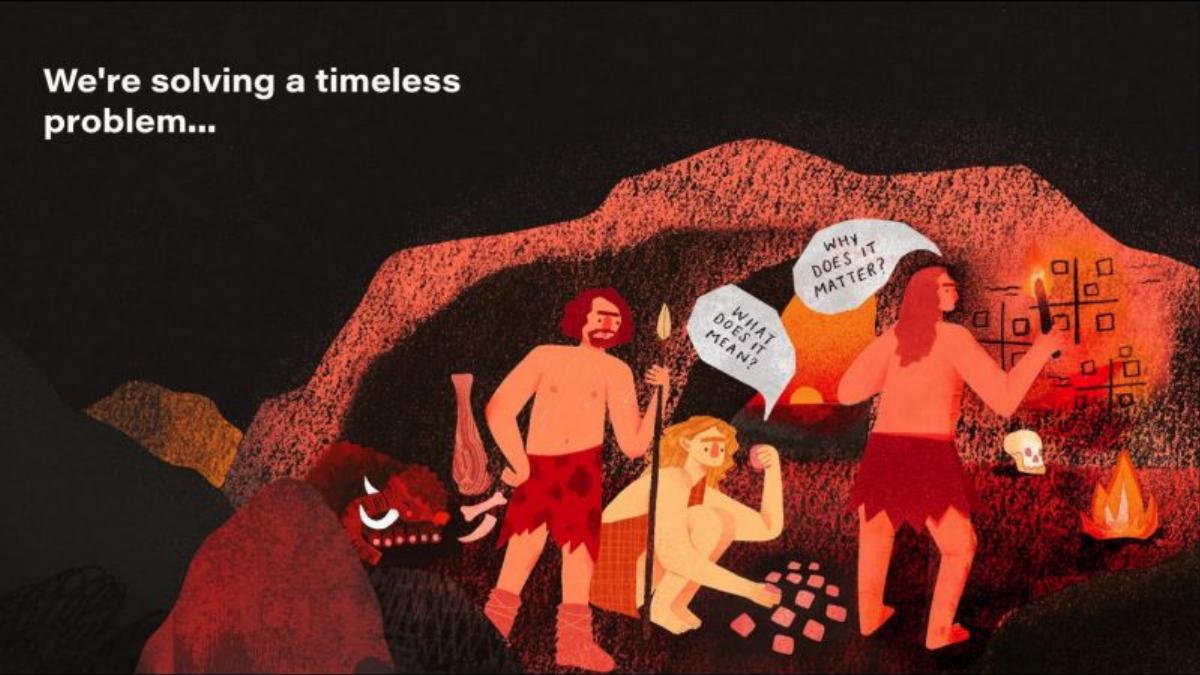
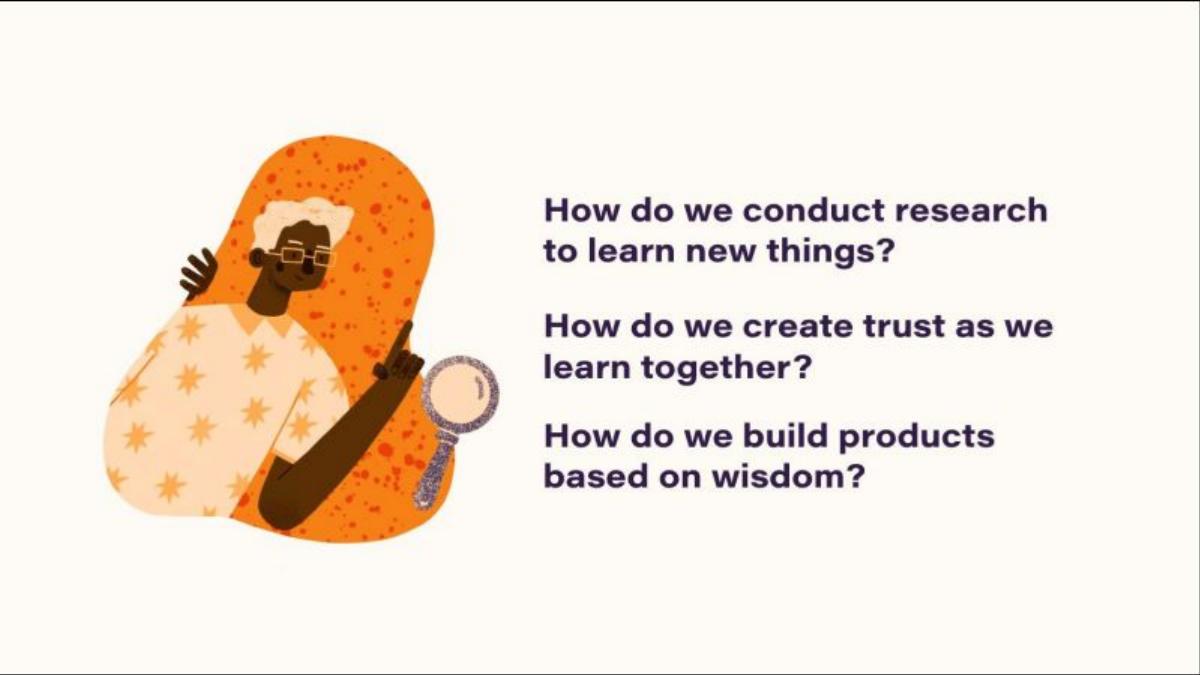
Slides 1-4 serve as the narrative introduction. Notably avoids starting with a dry product description. Instead, they use stylized illustrations to frame research as a 'timeless problem' (Slide 2). By showing cavemen asking 'What does it mean?' and 'Why does it matter?' and then mirroring those same questions in a futuristic, VR-enabled setting (Slide 3), they establish that the need for insight is permanent. Slide 4 boils this down into three core questions regarding how we conduct research, create trust, and build products based on 'wisdom.'
Defining the $1 Trillion Problem
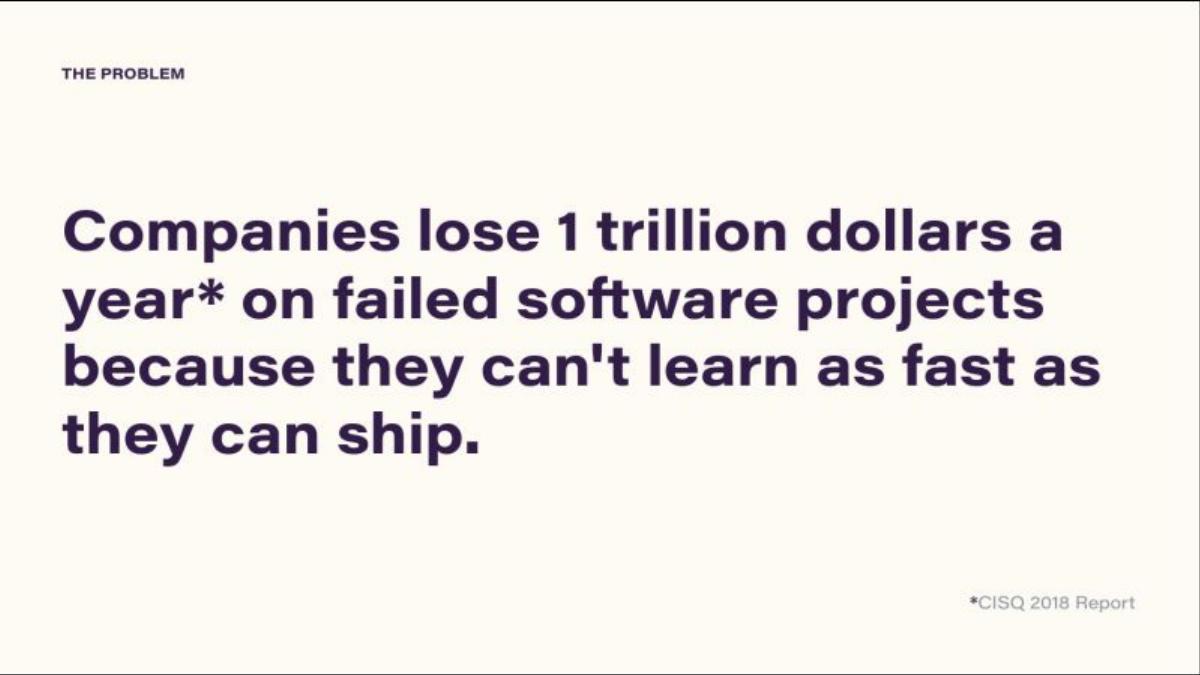
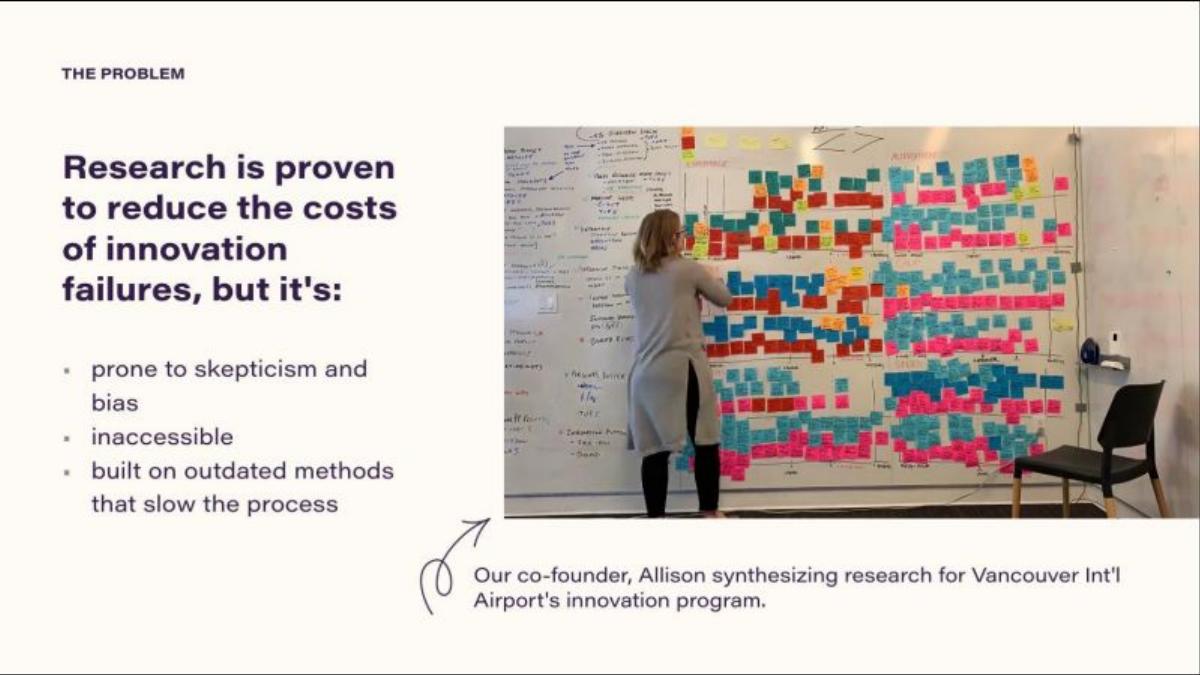
Slides 5-7 transition from the abstract to the financial. Slide 5 makes a bold claim: 'Companies lose 1 trillion dollars a year on failed software projects because they can't learn as fast as they can ship.' This is a classic 'hair on fire' problem statement. They attribute this figure to a CISQ 2018 Report, providing necessary credibility for such a large number. Slide 6 gets specific about why research fails today: it is prone to bias, inaccessible, and built on outdated methods. The slide includes a photo of co-founder Allison Marshall manually synthesizing research with hundreds of sticky notes, a visual representation of the 'outdated methods' they intend to replace. Slide 7 concludes this section by elevating the issue from a software problem to a 'societal' and 'human' problem.
The Solution: AI-Powered Synthesis
Slides 8-11 introduce Notably as the solution. Slide 8 positions researchers as 'harbingers of the future' across commercial, government, and healthcare sectors. Slide 9 provides the high-level definition: Notably is a 'decentralized research platform.' Slide 10 offers the first glimpse of the product, showing a digital canvas that organizes qualitative data into themed blocks like 'Learning curve for teachers' and 'Human Connection.' The text explains that Notably 'superpowers research by combining AI and proven research methods.' Slide 11 is particularly interesting as it lays out a three-stage roadmap: 'Present' (transcriptions and automated tagging), 'Near term' (democratizing research via repositories), and 'Future' (decentralizing research via Web 3 and open source models).
Social Proof and Early Traction
Slides 12-14 are the strongest part of the deck. For a pre-seed company, Notably boasts an incredible roster of early adopters. Slide 12 lists 1,500+ users from companies including Google, Lululemon, Patreon, DocuSign, and The Home Depot. They also mention a 13.5k Twitter following. Slide 13 doubles down on this with a 'What We're Hearing' section, featuring glowing quotes from UX designers at Realtor.com, Pinterest, and Whisk. Slide 14 is a collage of Twitter screenshots, showing organic excitement from the design community. This level of social proof is rare at the pre-seed stage and likely did the heavy lifting in their fundraising efforts.
Market Opportunity and Financials
Slides 15-16 cover the business case. Slide 15 uses a nested circle diagram to show a $60 billion total market for 'Experience Management,' a $15 billion market for 'Product Experience,' and a $1 billion target for Notably (representing 5% of the total market). Slide 16 presents the hard data. The 'New Users' graph shows a steady climb from 70 in September to 1,427 in March. The 'MRR' graph shows a more aggressive hockey-stick curve, though the absolute numbers are small, growing from $25 in November to $1,100 in March. The slide concludes with the ask: '$1.5m pre-seed to fund product-led growth, research, and development.'
The Team and Advisors
Slides 17-18 introduce the people. The core team (Slide 17) consists of Brittany Fuller (CEO), Allison Marshall (CPO), and three engineers. Notably, they list John Adams as an 'Interim CTO, Advisor,' suggesting they were still looking for a permanent technical lead at the time. Slide 18 showcases a deep bench of advisors from Honey Badger Capital, Splunk, Drift, Webflow, and PandaDoc. This 'who's who' of SaaS leadership further validates the founders' ability to network and attract top-tier talent to their orbit.
Conclusion and Call to Action
Slides 19-20 wrap up the presentation. Slide 19 features the Notably logo against a colorful pattern and includes a link to a 5-minute demo video from the CEO. Slide 20 is a standard closing slide from the deck provider. Notably's deck is a textbook example of how to sell a vision when the revenue is still in its infancy. By focusing on a massive problem, showing a product that works, and proving that people at the world's biggest companies want to use it, they made a compelling case for a $1.5M investment.
What Notably Got Right
Visual Storytelling: The use of custom illustrations rather than stock photos gives the deck a premium, cohesive feel that matches the 'design-forward' nature of their product. · Logo Soup: Listing Google, Pinterest, and DocuSign as users for a pre-seed startup is an immediate credibility booster that offsets the low MRR. · Clear Roadmap: They didn't just sell what they had; they sold a three-stage evolution that included trendy (at the time) concepts like Web 3, giving investors a reason to believe in a massive future exit. · The 'Sticky Note' Photo: Using a real photo of the founder struggling with the manual process (Slide 6) makes the problem visceral and relatable.
What Was Missing
Competitive Landscape: The deck does not mention competitors like Dovetail or EnjoyHQ. Investors would certainly ask how Notably differentiates itself from these established players in the research repository space. · Unit Economics: There is no mention of Customer Acquisition Cost (CAC) or Lifetime Value (LTV). While expected at pre-seed, some indication of the sales motion (bottom-up vs. top-down) would have been helpful. · Pricing Strategy: While Slide 16 mentions a 'pricing model,' it isn't detailed in the deck. Understanding how they planned to get from $1,100 MRR to a $1 billion market share is a significant gap. · Burn Rate and Runway: The deck asks for $1.5M but doesn't explicitly state how long that capital will last or what specific milestones (beyond 'growth') it will trigger.
Founder's Playbook: What to Copy
Use Social Proof Early: If you have 1,000 users, even if they aren't paying much, shout it from the rooftops. Notably proved that user volume and brand names are more important than revenue at the pre-seed stage. · Frame the Problem Financially: Don't just say 'research is hard.' Say 'companies lose $1 trillion because they can't learn.' Attaching a dollar value to the pain point makes the solution feel like a necessity rather than a luxury. · Leverage Advisors: If your core team is small, fill the gaps with high-profile advisors. Notably’s advisor slide (Slide 18) acts as a secondary team slide, providing the 'adult supervision' and industry connections that VCs look for. · Show, Don't Just Tell: The product screenshot on Slide 10 is simple, but it clearly communicates the 'canvas' nature of the tool, making the 'AI-powered synthesis' claim feel tangible.
Frequently asked questions
- What is Notably's core value proposition?
- Notably aims to solve the problem of 'innovation failure' by helping teams learn as fast as they ship. The platform uses AI to analyze qualitative data, such as customer interviews and research notes, turning them into actionable insights. By automating tasks like transcription and tagging, Notably seeks to make research more accessible and less prone to the biases inherent in manual synthesis.
- How does Notably justify its market size?
- The deck uses a top-down approach, citing a Qualtrics S1 report to value the Experience Management market at $60 billion. They further segment this into a $15 billion Product Experience vertical. Notably sets a target of capturing 5% of that total market, which they equate to a $1 billion opportunity, positioning them as a potential unicorn in the research space.
- What does the 'decentralized' aspect of their solution mean?
- On Slide 11, Notably outlines a roadmap that moves from individual researchers to organizations, and finally to 'communities.' The future vision includes 'Web 3, participant incentives and ownership, and open source research.' This suggests a shift away from siloed corporate data toward a more collaborative, perhaps blockchain-enabled, ecosystem for sharing research insights.
- Is the $1,100 MRR on Slide 16 a concern for a $1.5M raise?
- While $1,100 MRR is low for a typical Seed round, this was presented as a 'pre-seed' deck in 2022. The emphasis is on user growth (1,400+ users) and the high-profile nature of those users (Google, Pinterest). Investors likely viewed the low revenue as a sign of early-stage experimentation with monetization rather than a lack of product-market fit.
- Who are the key people behind Notably?
- The team is led by co-founders Brittany Fuller (CEO) and Allison Marshall (CPO). They are supported by a lead engineer and a senior engineer. Notably also leans heavily on an 'Interim CTO' and a deep bench of advisors from prominent tech firms like Drift, Webflow, and PandaDoc, providing the necessary industry credibility for an early-stage startup.