Numan’s pitch deck is a high-signal, low-noise document that secured significant interest in the competitive digital health space. Spanning just 11 slides, the deck focuses heavily on post-launch performance, showcasing a 12-month LTV/CAC ratio and a clear reduction in customer acquisition costs within the first year of operation. The company positions itself as a 'digital clinic' rather than just an e-commerce site, leveraging a CQC registration in the UK to differentiate from 'bloated' incumbents and horizontal startups. While the deck lacks a dedicated team slide or a specific 'Ask' amount…
Key takeaways
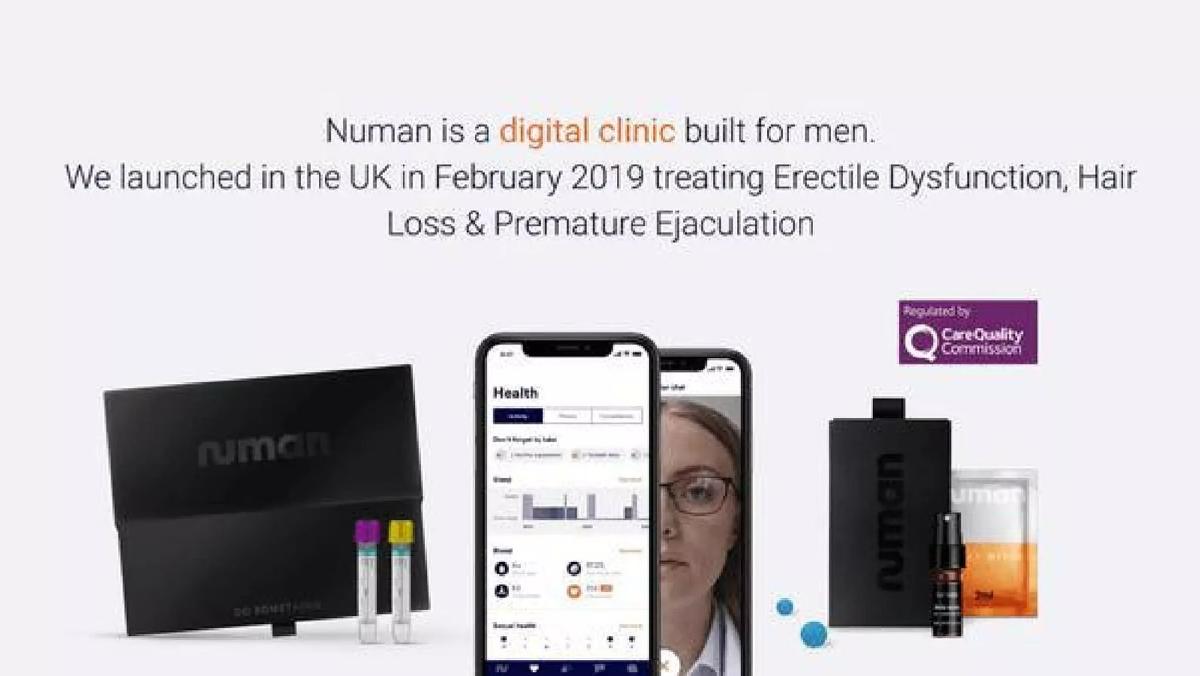
- The company launched in the UK in February 2019, initially focusing on Erectile Dysfunction, Hair Loss, and Premature Ejaculation as stated on slide 2.
- Numan emphasizes its regulatory status, noting it is a CQC-registered player in the UK, which differentiates it from horizontal competitors on slide 8.
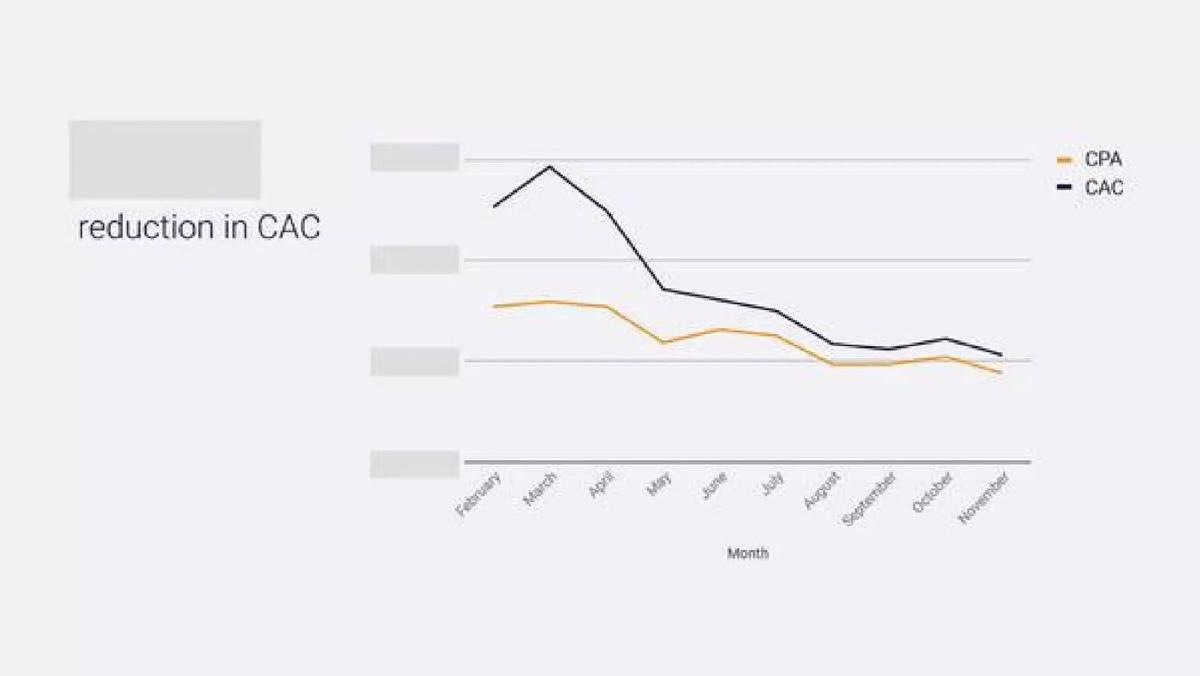
- The deck highlights a consistent reduction in Customer Acquisition Cost (CAC) and Cost Per Acquisition (CPA) from February to November on slide 4.
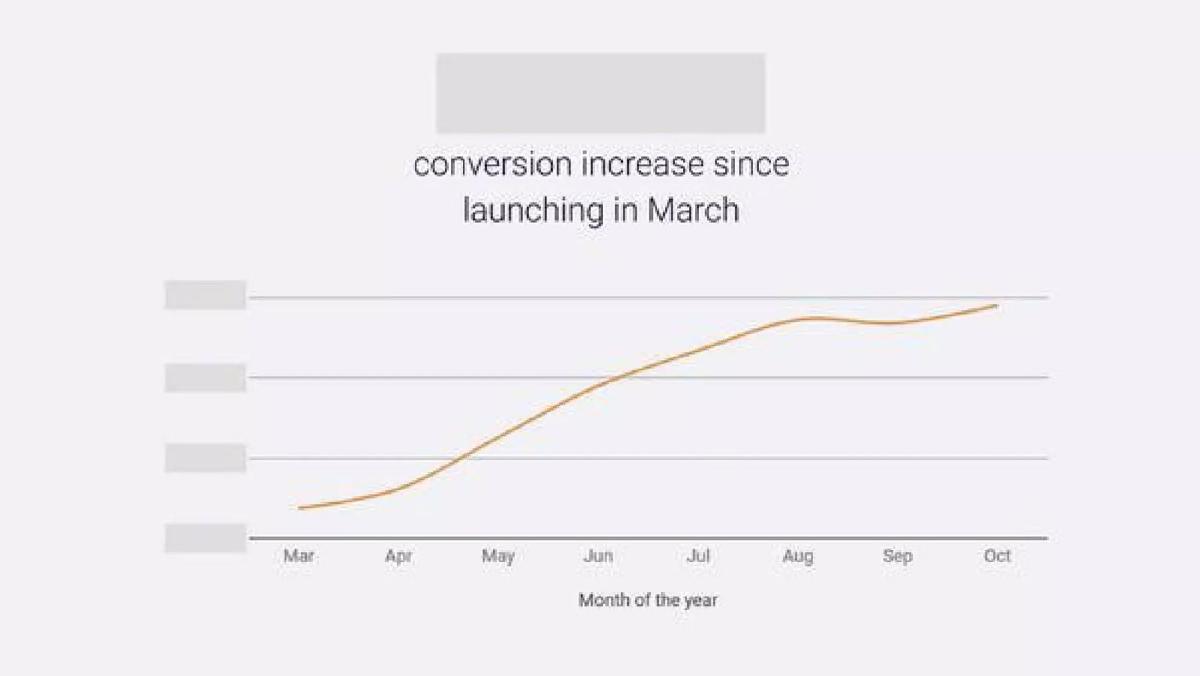
- Conversion rates showed a steady upward trajectory from launch in March through October, as visualized on slide 5.
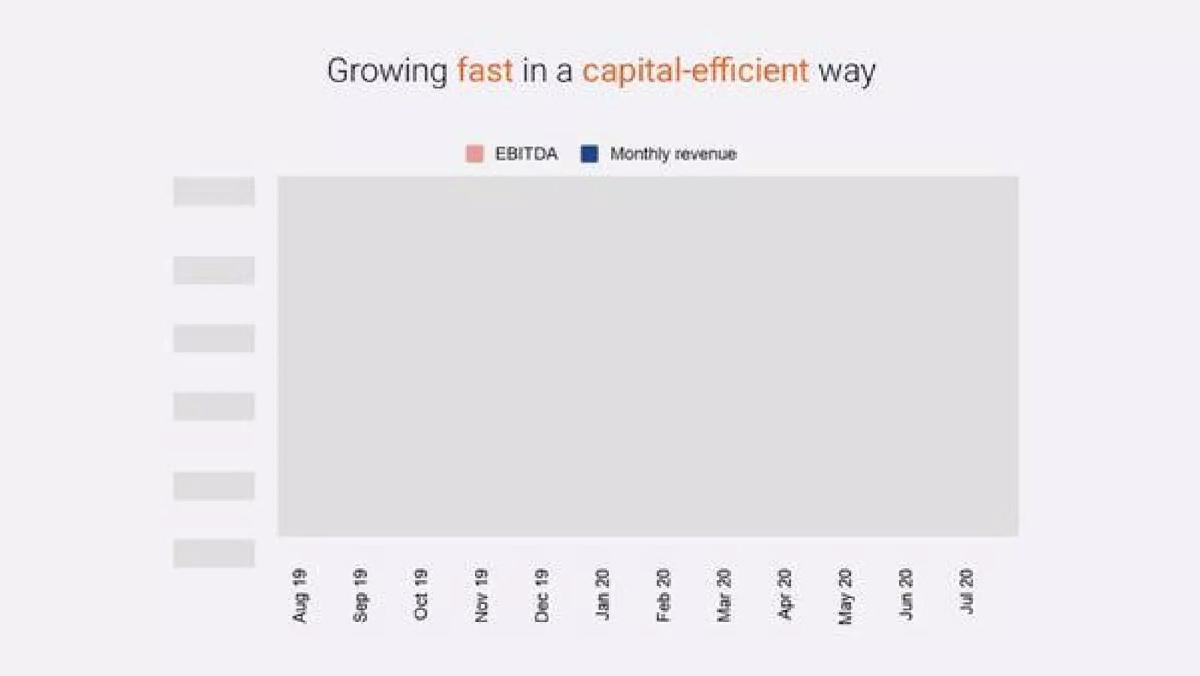
- Slide 6 demonstrates 'capital-efficient' growth by plotting monthly revenue against EBITDA from August 2019 to July 2020.
- The company achieved a specific 12-month LTV/CAC and a defined month-payback period within 18 months of launch, though specific figures are redacted on slide 7.
- Numan identifies its market as 'no-winner-takes-all,' contrasting itself against the NHS, private clinics, and 'bloated' online pharmacies on slide 8.
- The long-term vision involves building a platform that connects patients with stakeholders for new product development, as shown on slide 10.
The Numan Pitch Deck: Efficiency Over Everything
Numan’s 11-slide deck is a clinical example of how to present a Direct-to-Consumer (DTC) healthcare business. In an era where many health-tech startups focus on vague 'wellness' promises, Numan leans hard into the 'clinic' aspect of their identity. The deck is designed to prove one thing: that they have found a repeatable, scalable, and efficient way to acquire customers for sensitive health issues. With $72.9 million raised according to catalogue facts, this deck represents the transition from a niche solution to a major healthcare player.
Slides 1-2: The Identity and the Beachhead
Slide 1 is a minimalist title slide. It sets the tone with the tagline: "Consumer healthcare enabled by technology." It is professional, clean, and avoids the clutter of many early-stage decks. The branding is dark and masculine, aligning with their target demographic.
Slide 2 gets straight to the point. It defines Numan as a "digital clinic built for men." This is a crucial distinction; they are not just a pharmacy or a subscription box. They explicitly list their launch date (February 2019) and their initial focus areas: Erectile Dysfunction, Hair Loss, and Premature Ejaculation. By calling these out, they acknowledge the 'taboo' nature of their beachhead market, which they later argue is their greatest competitive advantage. The inclusion of the Care Quality Commission (CQC) logo on this slide is a strategic move to establish immediate regulatory credibility.
Slides 3-5: The Traction Narrative
Slide 3 focuses on revenue. While the specific numbers are redacted in this version, the slide title claims a "revenue increase in the last 6 months, with stable GMII." GMII (Gross Margin II) is a specific retail metric that accounts for variable costs like shipping and packaging. By highlighting this, Numan tells investors that their growth isn't coming at the expense of their margins.
Slide 4 addresses the most common concern in DTC: rising acquisition costs. The chart shows a clear "reduction in CAC" (Customer Acquisition Cost) and CPA (Cost Per Acquisition) from February to November. The fact that these lines trend downward while revenue (presumably) trends upward is the 'holy grail' for investors. It proves that the brand is gaining organic momentum or that their marketing engine is becoming more optimized over time.
Slide 5 reinforces this optimization narrative by showing a "conversion increase since launching in March." The graph shows a steady climb through October. This suggests that the product-market fit was not just found at launch but was actively improved through UI/UX iterations and better patient onboarding.
Slides 6-7: Unit Economics and Sustainability
Slide 6 is titled "Growing fast in a capital-efficient way." It plots Monthly Revenue against EBITDA. For a high-growth startup, showing EBITDA alongside revenue is a bold move. It signals to investors that the founders are disciplined about their burn rate. Even if the EBITDA is negative (which is common at this stage), the relationship between the two bars tells a story of how much capital is required to generate each pound of revenue.
Slide 7 summarizes the 18-month milestone. It lists four key metrics: 12M LTV/CAC, month payback, ARR (Annual Recurring Revenue), and the number of paying members. By grouping these together, Numan provides a snapshot of the business's health. The LTV/CAC ratio is particularly important here, as it justifies the marketing spend shown on previous slides. If the LTV (Lifetime Value) is significantly higher than the CAC, the business is essentially a 'money printer' once it reaches scale.
Slide 8: The Competitive Landscape
Slide 8 is one of the most content-dense slides in the deck. It uses a grid to compare Numan against six different categories: Public Health (NHS), Private Clinics, Online Pharmacy, Telemedicine 1.0, Funded horizontal startups, and Funded vertical startups. Numan’s self-positioning is that they have "momentum" while incumbents are "bloated." They criticize horizontal startups for a "lack depth of proposition" and vertical startups for being "hard to scale multiple brands." Numan claims to be the "only CQC-registered player in the UK" in their specific category, which is a powerful moat to claim in a regulated industry.
Slides 9-11: The Vision and Summary
Slide 9 and Slide 10 shift from the past to the future. Slide 9 mentions "Expanding into further conditions," though the details are redacted. Slide 10 describes the long-term goal: "Building towards a platform that connects patients with stakeholders for the development and distribution of new products." This moves Numan from a 'clinic' to a 'platform,' which typically commands a higher valuation multiple in the eyes of VCs.
Slide 11 provides a summary of the investment thesis. It hits five key points: a patient-led experience, the use of taboo issues as a beachhead, a superior economic model, a solid foundation (team, product, supply), and a scalable engine for growth. It ends on a high note, referencing a "multi-billion opportunity in consumer healthcare in Europe."
What Works in the Numan Deck
The most impressive aspect of this deck is its data density . Between slides 3 and 7, the founders provide a comprehensive look at the mechanics of their business. They don't just show that they are growing; they show how they are growing (conversion rates), at what cost (CAC), and with what efficiency (LTV/CAC and EBITDA). This level of transparency is rare and highly effective for attracting sophisticated investors.
Furthermore, the regulatory positioning is handled perfectly. In healthcare, regulation is often seen as a hurdle. Numan flips this by highlighting their CQC registration as a competitive advantage that 'Telemedicine 1.0' and 'horizontal startups' lack. This turns a potential risk into a moat.
What is Missing from the Numan Deck
The most glaring omission is the Team Slide . While slide 11 mentions a "solid foundation around the team," there are no names, faces, or pedigrees listed in these 11 slides. In venture capital, the 'who' is often as important as the 'what,' especially in a regulated field like medicine where clinical expertise is mandatory. It is possible this was a separate appendix or presented verbally, but its absence in the core deck is notable.
Additionally, there is no 'Ask' slide . The deck concludes with a summary but does not state how much capital is being raised or how that capital will be allocated. While this is sometimes left out of decks shared widely for security reasons, it leaves the reader without a clear understanding of the company's immediate capital requirements.
Finally, the Product Slide is somewhat thin. Slide 2 shows a few images of kits and an app, but there is no deep dive into the patient journey or the technology that 'enables' the healthcare, as promised on the title slide. Investors might want to see more of the 'magic' behind the interface.
What Founders Should Copy
Founders in the DTC or subscription space should study Slide 4 and Slide 6 . The way Numan tracks the relationship between acquisition costs and revenue growth is the gold standard for proving a business model. Instead of just showing a 'up and to the right' revenue chart, they show the efficiency of that growth.
Another takeaway is the 'Beachhead' strategy mentioned on slide 11. Numan doesn't try to be everything to everyone on day one. They pick three specific, high-intent, high-margin 'taboo' issues to dominate before talking about platform expansion. This focus makes their early metrics much cleaner and easier for an investor to digest. If you are building a platform, start by proving you can win a single, profitable niche first.
Conclusion Numan’s deck is a masterclass in metric-driven storytelling. It avoids the emotional appeals often found in healthcare pitches and instead relies on the cold, hard logic of unit economics. By proving they can acquire customers cheaply for difficult-to-discuss problems and keep them long-term, they built a compelling case for a $72.9M investment. It is a lean, professional, and highly effective document that prioritizes the 'business' of health over the 'idea' of health.
Frequently asked questions
- What is Numan's core business model according to the deck?
- Numan operates as a 'digital clinic' for men. As shown on slide 2, they provide technology-enabled healthcare services, specifically targeting conditions like hair loss and erectile dysfunction. They combine a digital interface with physical products (shown as blood kits and medication) and maintain regulatory compliance through the Care Quality Commission (CQC) in the UK.
- How does Numan differentiate itself from the NHS and other startups?
- Slide 8 provides a competitive matrix. Numan claims the NHS has 'long-wait times' and 'limited prescribing,' while private clinics have 'high friction and cost.' They differentiate from other startups by being CQC-registered and focusing on 'taboo' male health issues as a beachhead, rather than being a 'horizontal' startup that lacks depth.
- What metrics does the deck prioritize to show traction?
- The deck is heavily focused on unit economics. Slides 3 through 7 track revenue growth, CAC reduction, conversion rate increases, and LTV/CAC ratios. By showing 18 months of post-launch data, Numan demonstrates that their growth is 'capital-efficient' rather than just high-volume, which is a key signal for Series A and B investors.
- Is there a specific funding goal mentioned in the slides?
- No. The 11-slide deck does not include an 'Ask' slide or a breakdown of how funds will be used. This suggests the deck was likely used as a supporting document for meetings where the terms were discussed separately, or it was intended to generate interest before a formal term sheet was issued.
- What is the company's expansion strategy?
- According to slides 9 and 10, Numan plans to expand into 'further conditions' and eventually evolve into a platform connecting patients with stakeholders. The summary on slide 11 clarifies that they view their current focus as a 'beachhead' to capture a 'multi-billion opportunity in consumer healthcare in Europe.'