Omate's 11-slide deck from 2013 is a high-impact, visual-heavy presentation that prioritizes market validation and distribution over granular technical details. The company leverages a massive $1,032,352 Kickstarter success (Slide 2) and a staggering $7,000,000 in revenue (Slide 3) to establish immediate credibility. By positioning wearables within the $250B jewelry market (Slide 6) and showcasing partnerships with major retailers like Walmart and Amazon, as well as luxury brands like Emanuel Ungaro (Slide 8), Omate successfully pivots the conversation from 'gadget' to 'fashion accessory.' Wh…
Key takeaways
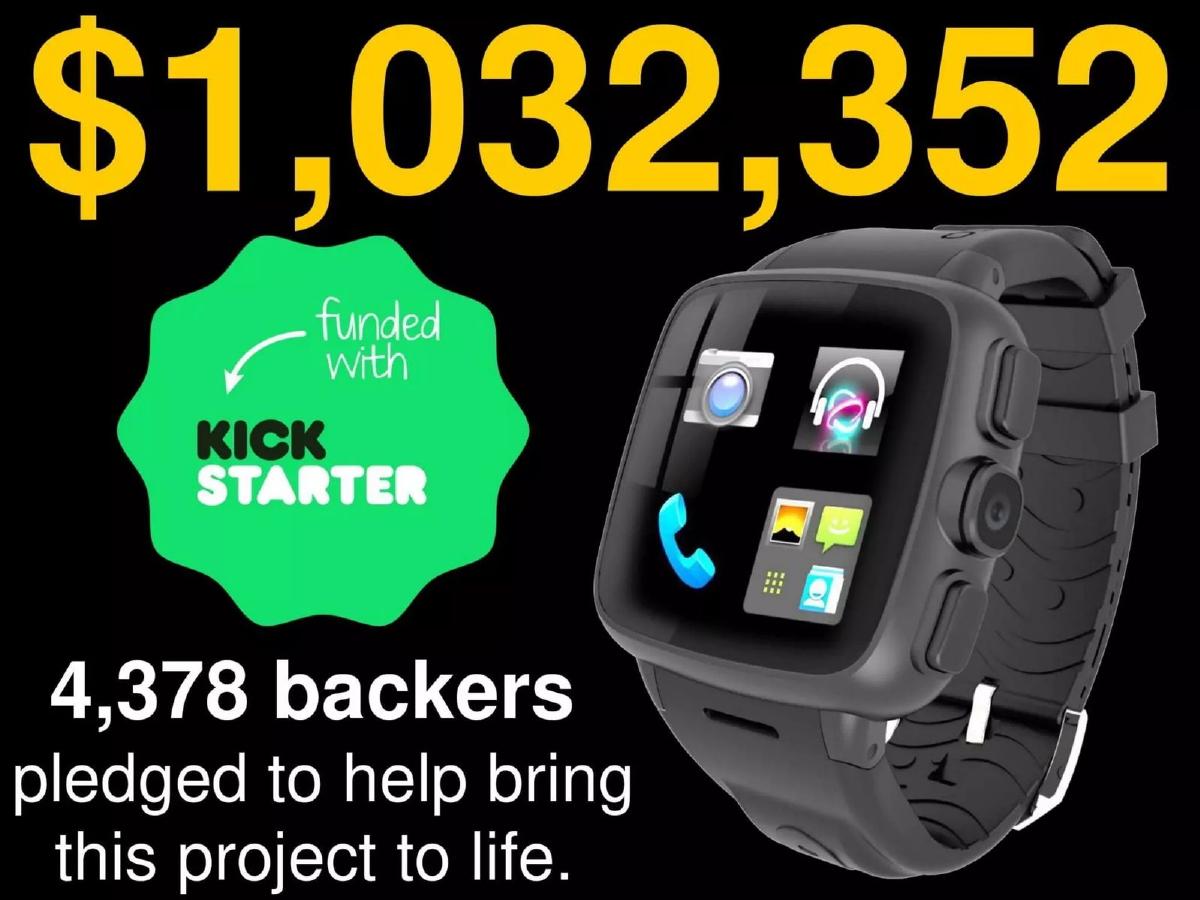
- Omate used a $1,032,352 Kickstarter campaign with 4,378 backers to prove initial product-market fit (Slide 2).
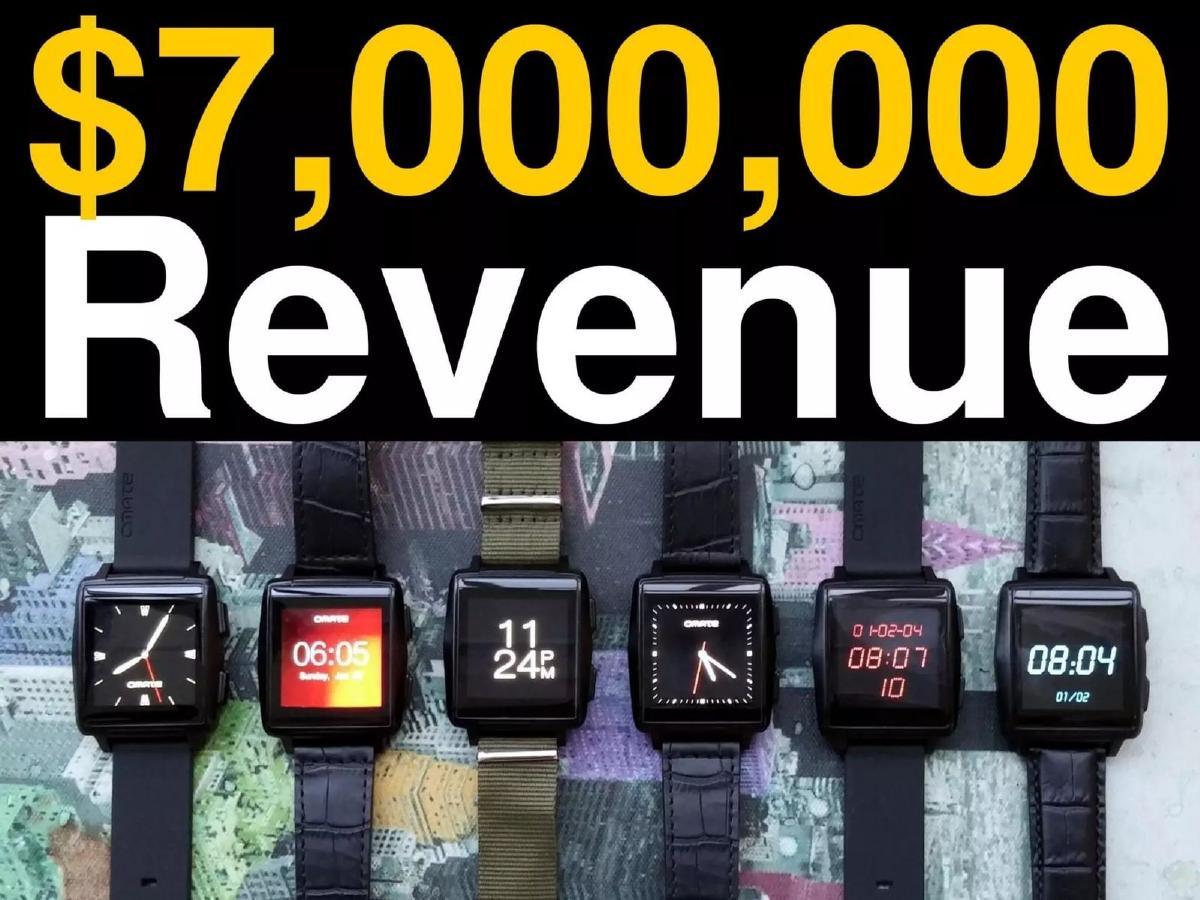
- The company reported $7,000,000 in revenue, providing a strong financial foundation for the pitch (Slide 3).
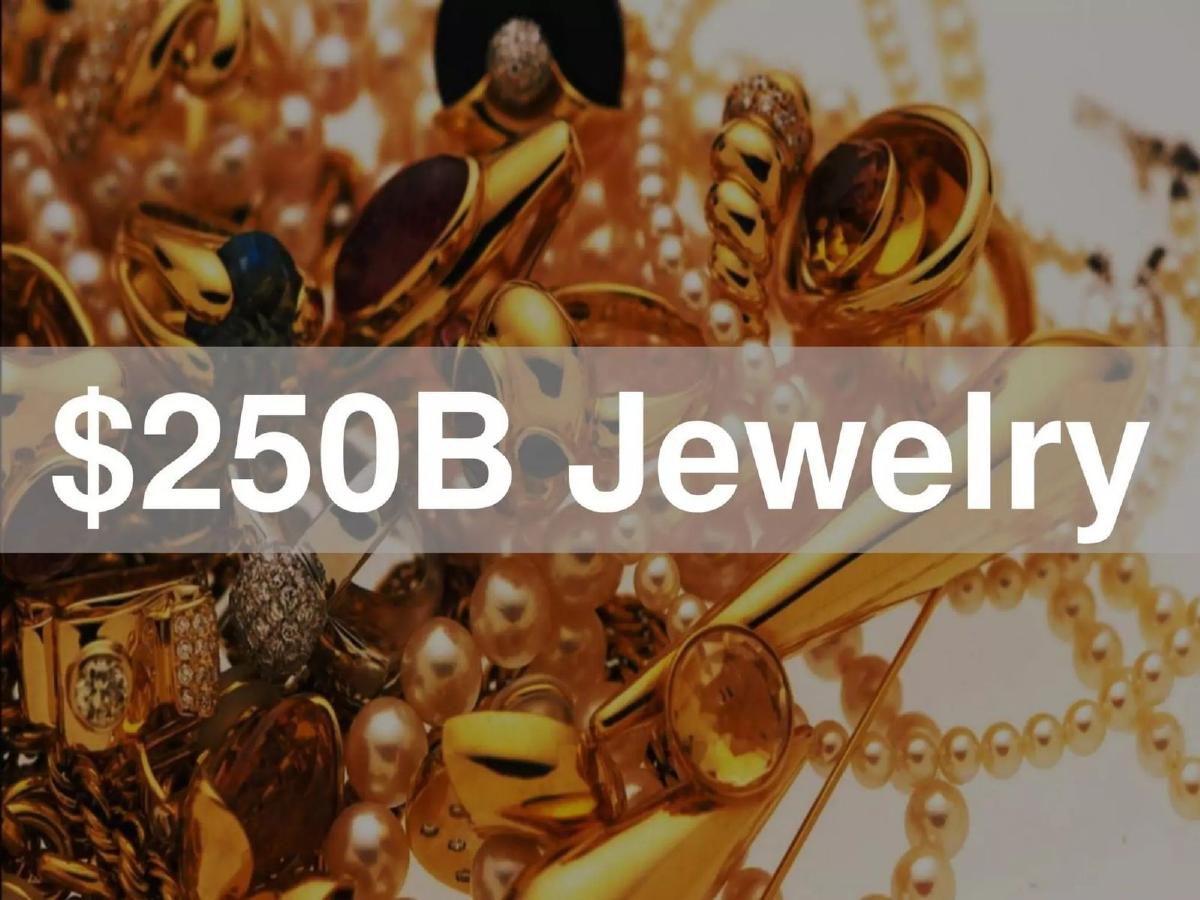
- The deck identifies a $250B jewelry market as the primary opportunity for wearable technology (Slide 6).
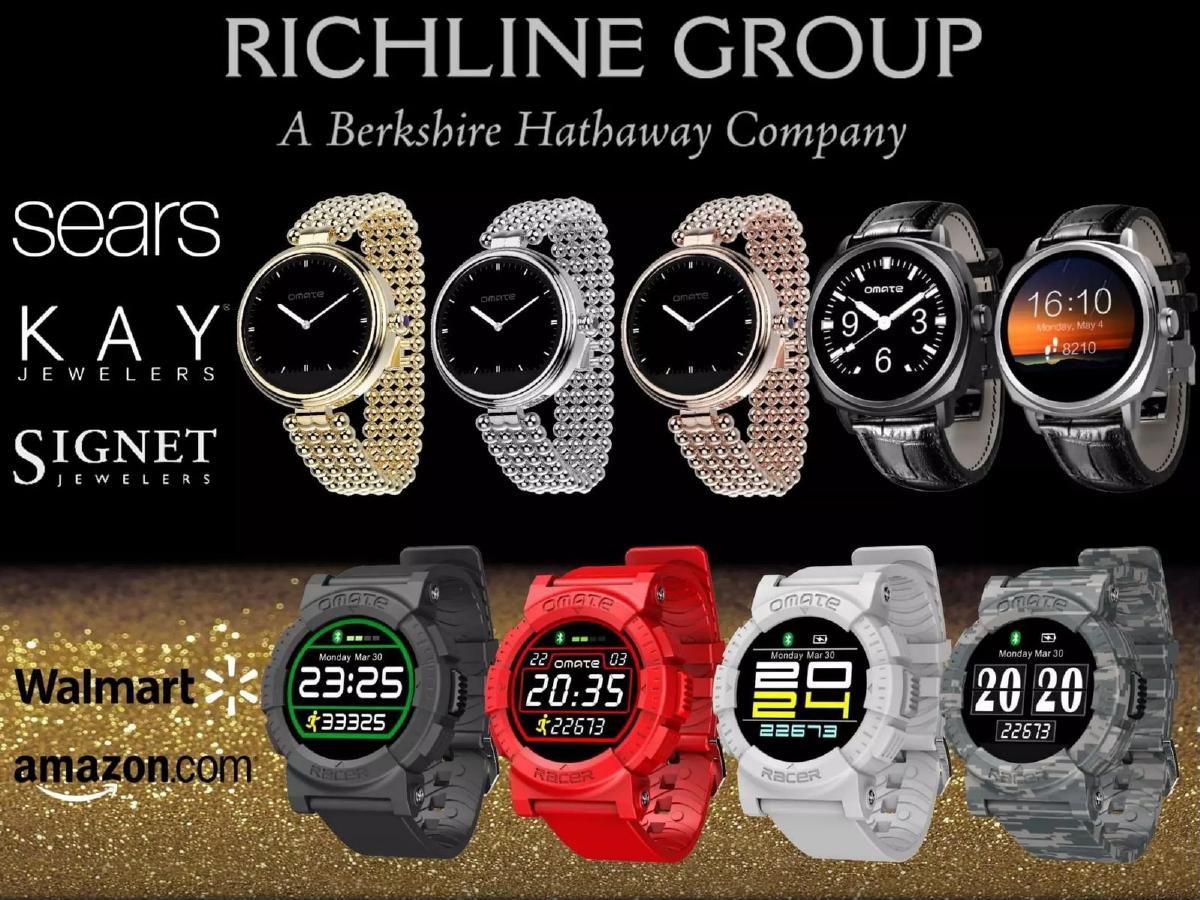
- Strategic distribution is highlighted through logos of major retailers including Walmart, Amazon, Sears, and Kay Jewelers (Slide 5).
- A high-profile partnership with Emanuel Ungaro Paris demonstrates the brand's luxury fashion aspirations (Slide 8).
- The leadership team features deep industry experience with logos from Philips, Dior, TAG Heuer, and Sonim (Slide 10).
- The deck omits a specific funding ask, use of proceeds, or detailed competitive analysis (Slides 1-11).
- The visual design emphasizes product aesthetics and lifestyle branding over technical hardware specifications (Slides 4-9).
The Omate Pitch Deck: A Traction-First Approach to Wearables
In 2013, the wearable technology market was in its nascent stages, with many startups struggling to move beyond the 'gadget' phase. Omate's pitch deck is a notable example of how to frame a hardware startup by emphasizing revenue, distribution, and brand partnerships rather than just the underlying technology. With only 11 slides, the deck is lean, visually aggressive, and designed to prove that the company has already cleared the hardest hurdles for any consumer electronics firm: manufacturing and sales.
The Opening: Validation Through Crowdfunding and Revenue
Slide 1: Title Slide The deck opens with the Omate logo over a background of a microprocessor. It introduces Laurent Le Pen and includes the hashtags #Wearable, #IoT, and #500strong, indicating the company's association with the 500 Startups accelerator.
Slide 2: Kickstarter Success Omate immediately leads with social proof. The slide features a large, bold figure: $1,032,352 . It notes that 4,378 backers pledged to bring the project to life via Kickstarter. This slide serves to eliminate 'market risk' in the eyes of an investor by showing that thousands of customers have already paid for the product before it was even manufactured.
Slide 3: Revenue Milestone If the Kickstarter slide proved interest, Slide 3 proves scale. It displays $7,000,000 Revenue in massive yellow and white text. Below the text is a photo of six different watch models, showing a variety of styles from digital faces to analog-style aesthetics. This is a powerful 'traction' slide that sets Omate apart from typical pre-revenue hardware startups.
Market Positioning: From Gadget to Fashion
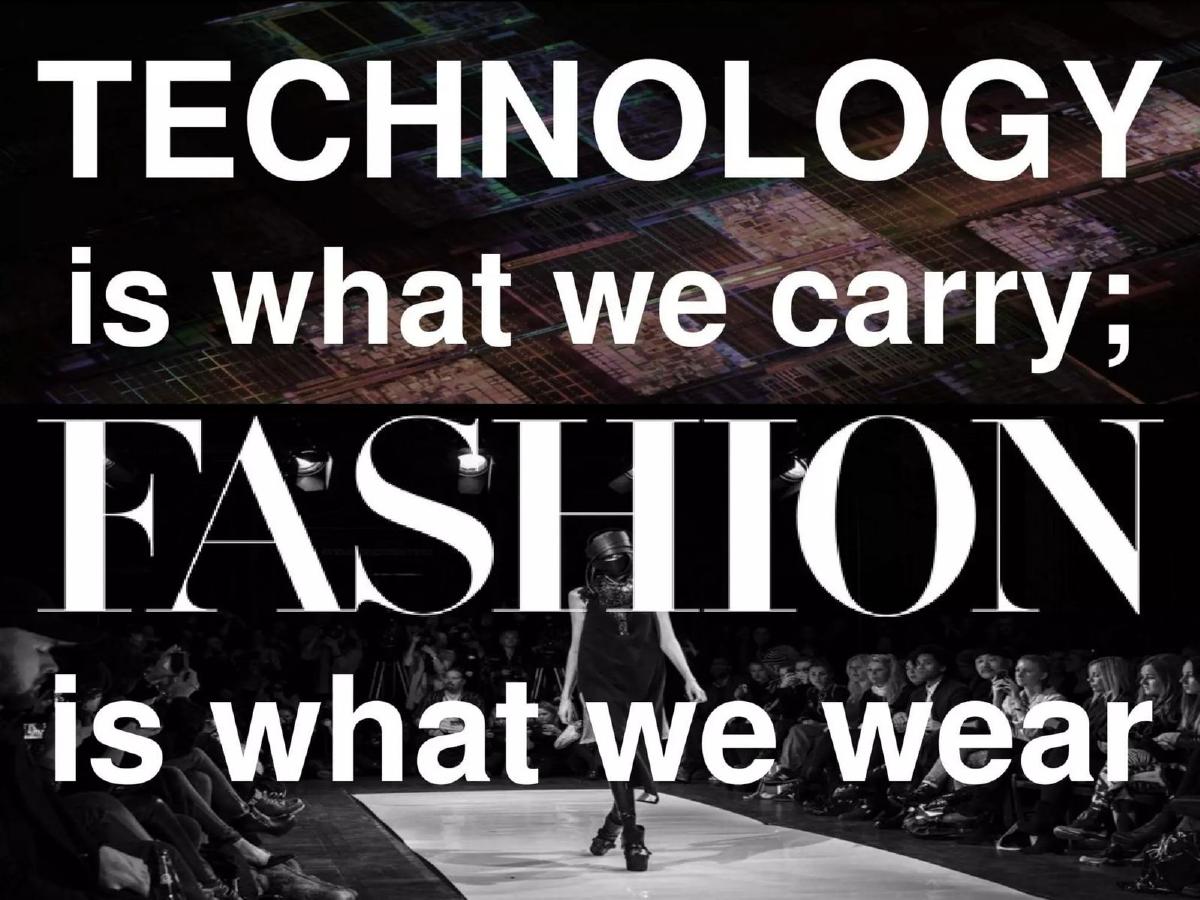
Slide 4: The Philosophy This slide acts as a bridge between the 'what' and the 'why.' It features a split-screen image: a circuit board on top and a fashion runway on the bottom. The text reads: "TECHNOLOGY is what we carry; FASHION is what we wear." This defines Omate's brand identity as a fashion-first wearable company.
Slide 5: Distribution and Partnerships This is arguably the most important slide for a hardware investor. It showcases the Richline Group (A Berkshire Hathaway Company) and lists major retail logos: Sears, Kay Jewelers, Signet Jewelers, Walmart, and Amazon.com . By showing these logos alongside images of diverse watch designs—ranging from elegant gold-mesh bands to rugged red and camo 'Racer' models—Omate demonstrates that it has secured the 'shelf space' necessary for mass-market success.
Slide 6: The Market Opportunity Omate quantifies the opportunity not by the 'smartwatch' market, but by the $250B Jewelry market. The background is a pile of gold jewelry and pearls. This suggests that Omate isn't just competing with Apple or Samsung; they are competing for a slice of the traditional accessory market.
The Luxury Collaboration
Slide 7: Brand Identity The text "Powered by Omate" appears above the phrase "Put the 'Wear' in 'Wearables'" . This slide reinforces the idea that Omate provides the technological engine for fashion-forward products.
Slide 8 & 9: Emanuel Ungaro Partnership These slides focus on a specific high-end collaboration. Slide 8 shows a large gold ring with a glowing stone, branded as "emanuel ungaro PARIS" and "ungaro x omate." Slide 9 shows the same ring on a hand. This move into 'smart jewelry' (specifically a ring) shows the versatility of Omate's tech stack beyond just watches and aligns them with luxury fashion houses.
The Team and Contact
Slide 10: Leadership The team slide features two key executives: Laurent Le Pen (Founder & CEO) and Shao Guoguang (COO) . Their headshots are framed within the 'Racer' watch bezel. The slide lists impressive previous experience via logos: Philips, Fly, TAG Heuer, Dior, Sonim, and Umeox for Le Pen, and Wherecom, Umeox, and Tsinghua University for Guoguang. This combination of consumer electronics (Philips), luxury (Dior/TAG Heuer), and rugged hardware (Sonim) experience is highly relevant to Omate's product mix.
Slide 11: Closing The final slide shows a grayscale photo of the broader Omate team with the company URL and the CEO's email address. There is no 'Ask' slide or summary of terms.
What Works in the Omate Deck
Immediate Credibility: Leading with $1M in Kickstarter funding and $7M in revenue (Slides 2 and 3) immediately puts the company in the top tier of startups. It's hard to argue with millions of dollars in realized sales. · Retail Validation: Hardware is notoriously difficult because of distribution. By showing logos like Walmart, Amazon, and Kay Jewelers (Slide 5), Omate proves they have solved the 'how do we sell this?' problem. · Clear Differentiation: The deck doesn't focus on CPU speeds or screen resolution. It focuses on fashion. By citing the $250B jewelry market (Slide 6), they frame the company as a lifestyle brand rather than a tech utility. · Relevant Pedigree: The team slide (Slide 10) is excellent. It doesn't just list names; it uses logos of world-class companies (Dior, TAG Heuer) that directly correlate to the 'fashion + tech' mission of the startup.
What is Missing from the Omate Deck
The Ask: This is a significant omission. There is no slide stating how much money the company is raising, what the valuation is, or what the specific milestones for the next 18 months are. · Unit Economics: While we see $7M in revenue, we don't see the margins. Hardware is a low-margin business for many; investors would want to know the Cost of Goods Sold (COGS) and the Customer Acquisition Cost (CAC). · Competitive Landscape: In 2013, the wearable market was becoming crowded. The deck does not mention competitors like Pebble, Fitbit, or the looming threat of the Apple Watch (which was rumored at the time). · Product Roadmap: The deck shows what has been done, but it doesn't clearly outline what is next. Are they moving deeper into jewelry? Are they expanding their WaaS (Wearable-as-a-Service) platform? The 'future' is left to the imagination.
What a Founder Should Copy
The 'Big Number' Start: If you have revenue or significant crowdfunding success, put it on Slide 2 or 3. Don't bury your best news at the end of the deck. · Logo Strategy: Using logos for both distribution partners and team history is a shorthand way to build massive trust quickly. It tells a story of 'who trusts us' and 'who trained us.' · Market Reframing: Don't just pick the obvious market. Omate could have picked 'Smartwatches,' but they picked 'Jewelry.' This changes the investor's perception of the ceiling for the company. · Visual Simplicity: This deck is not text-heavy. It uses high-quality product photography and large-font statistics. It is designed to be presented, not just read as a document.
Frequently asked questions
- How much did Omate raise with this deck?
- According to the catalogue data from pitchdeckhunt.com, Omate raised $1,400,000 in 2013. The deck itself does not specify the amount being sought or the terms of the round, focusing instead on the traction already achieved.
- What is Omate's primary business model?
- Based on the catalogue description, Omate operates a 'Wearable-as-a-Service' (WaaS) model. They provide IoT solutions and connected devices over telecom networks, specifically targeting the Kids, Seniors, and Enterprise segments, though the deck focuses heavily on the fashion and retail aspects.
- Who are Omate's key retail partners?
- Slide 5 of the deck lists several major retail partners, including Walmart, Amazon, Sears, Kay Jewelers, and Signet Jewelers. It also highlights a relationship with the Richline Group, noted as a Berkshire Hathaway Company.
- What is the 'fashion' angle in the Omate pitch?
- Omate explicitly positions its technology as a fashion accessory. Slide 4 states 'Technology is what we carry; Fashion is what we wear.' This is further supported by Slide 6, which cites the $250B jewelry market, and Slides 8 and 9, which showcase a collaboration with Emanuel Ungaro Paris.
- Does the deck include a roadmap or future product plans?
- No. The 11-slide deck is focused entirely on current achievements, existing partnerships, and market positioning. It lacks a product roadmap, technical milestones, or a breakdown of how future capital will be deployed.