Oloid's Series A pitch deck is a masterclass in positioning a software solution within a hardware-heavy industry. By framing physical access control systems (PACS) as antiquated and siloed, Oloid presents its cloud-based identity management platform as the necessary 'SSO for physical identity.' The deck highlights a significant cost advantage, claiming to reduce modernization costs by 10x compared to competitors who require full hardware replacement. With a strong founding team featuring a 2x SaaS founder and an identity-tech expert, Oloid targets a $21B market opportunity. The presentation e…
Key takeaways
- The founding team includes Mohit Garg, a 2x founder who previously grew Mindtickle's ARR by 1000+% in 3 years (Slide 2).
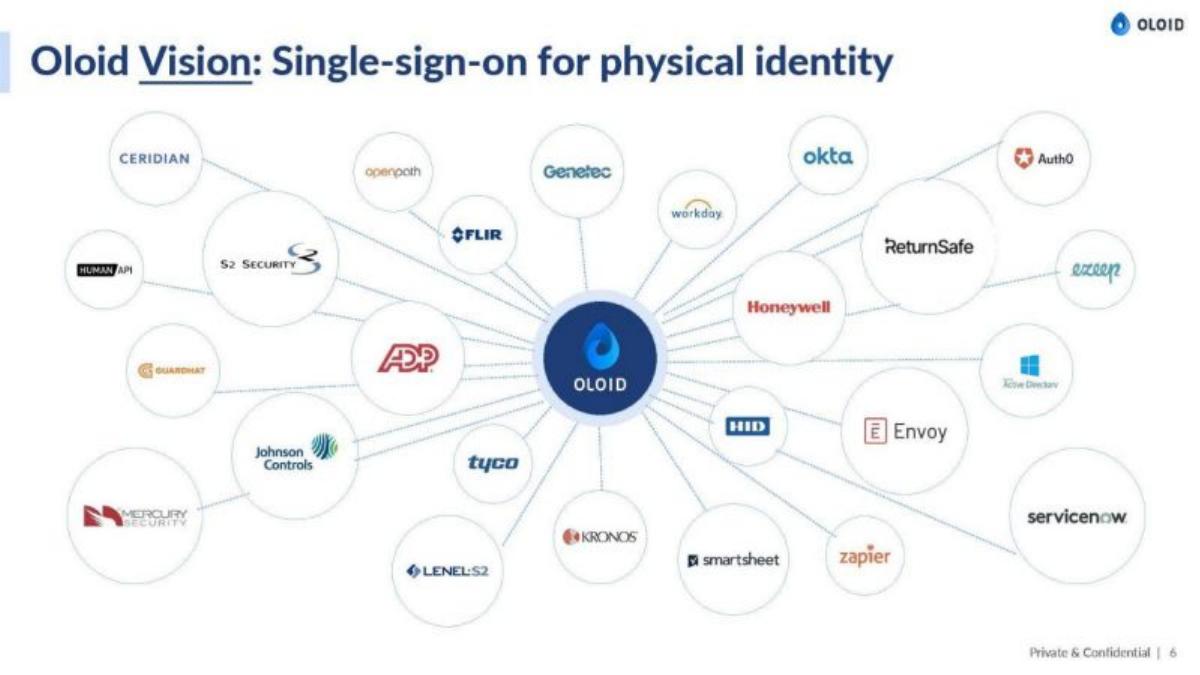
- Oloid positions itself as the 'Single-sign-on for physical identity,' integrating with major platforms like Okta, Workday, and ADP (Slide 6).
- The product is designed as a software overlay that works with existing Physical Access Control Systems (PACS), avoiding the need for 'rip and replace' (Slide 11).
- Oloid claims to reduce the cost per door upgrade from $1,500-$2,000 for competitors to less than $100 (Slide 14).
- Installation time is touted as under 1 hour via a self-installation process (Slide 14).
- The deck identifies a $21B global opportunity in Access Control SaaS for Commercial Real Estate (Slide 18).
- The Ideal Customer Persona (ICP) targets buildings with mixed workforces and those looking for retrofit options (Slide 17).
- The deck omits specific current revenue metrics, churn rates, and a detailed breakdown of how the Series A funds will be allocated.
Introduction and Team
Slide 1: Title Slide
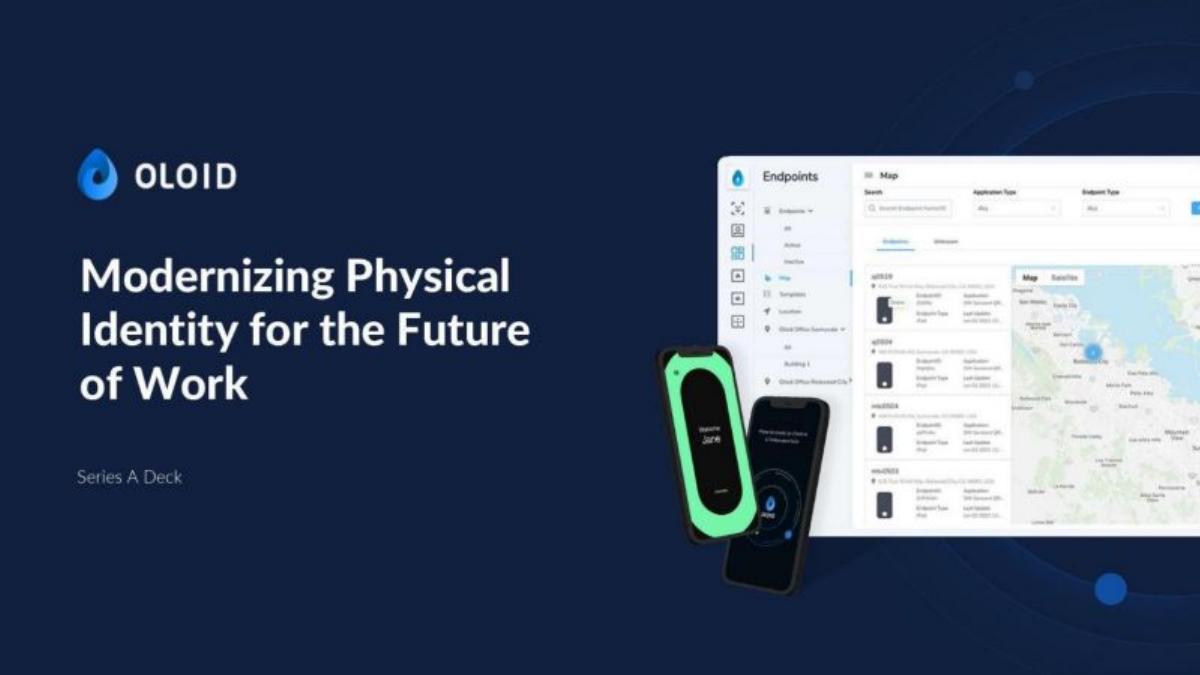
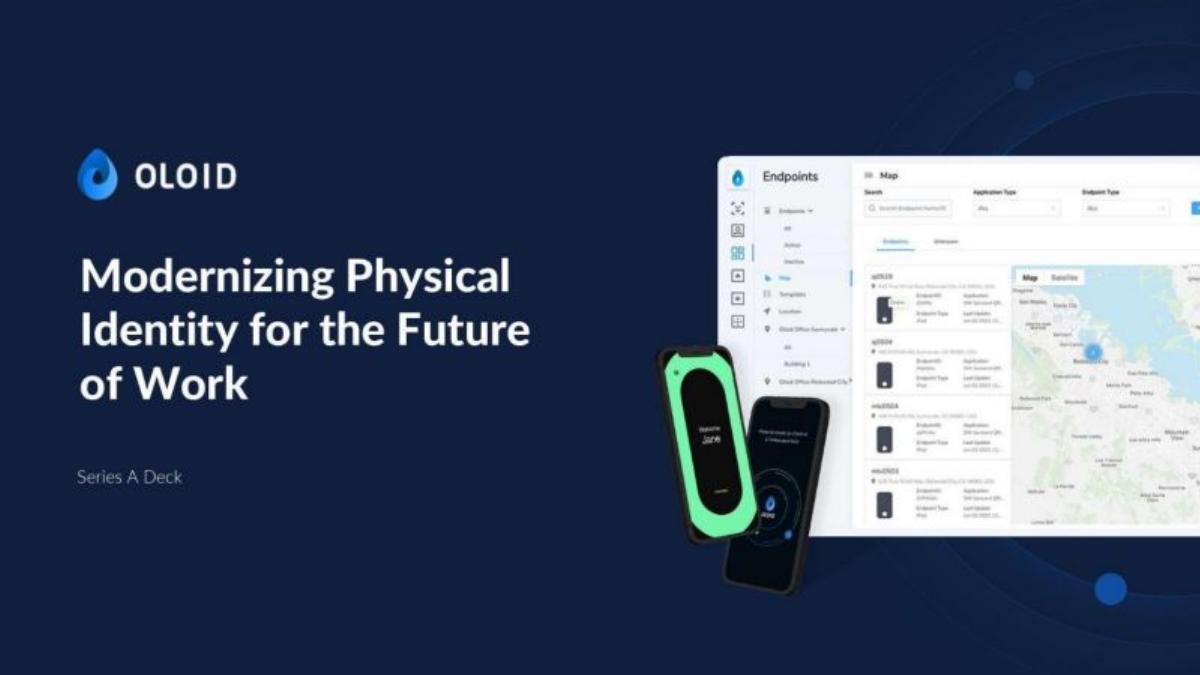
The deck opens with a clean, professional title slide featuring the Oloid logo and the tagline: Modernizing Physical Identity for the Future of Work . It clearly identifies the presentation as a Series A Deck . The visual includes a mockup of the Oloid dashboard and mobile interface, immediately establishing the product's digital nature.
Slide 2: Founding Team
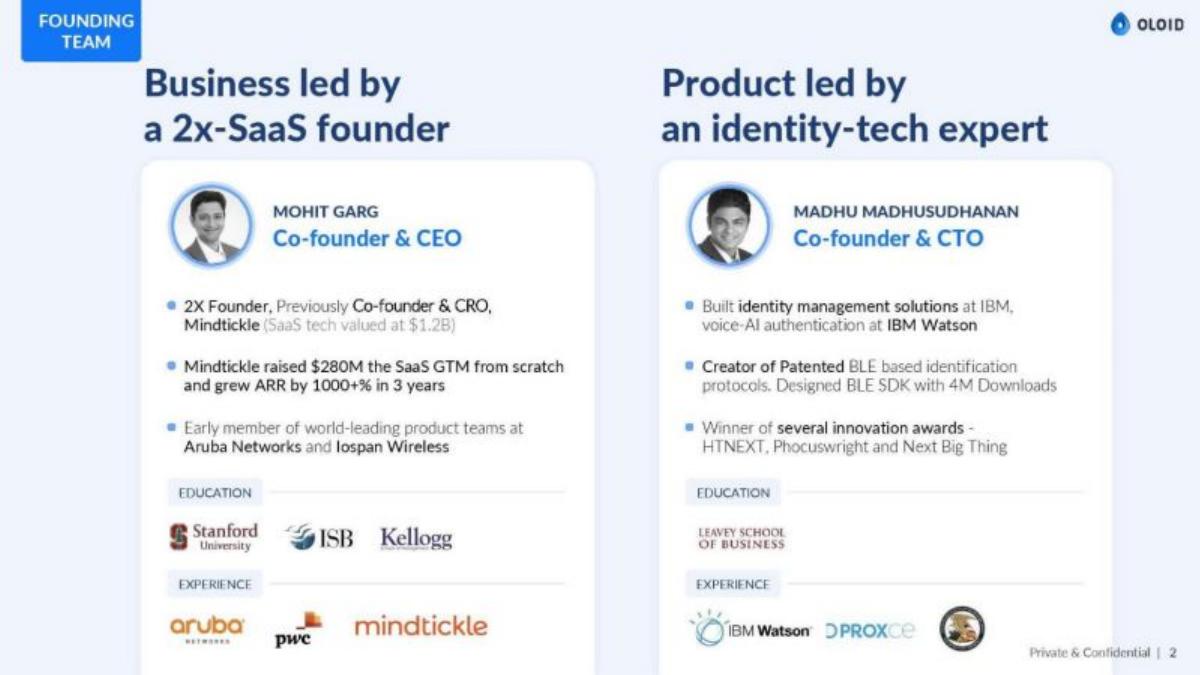
Oloid leads with its team, emphasizing a balance between business and technical expertise. Mohit Garg (Co-founder & CEO) is highlighted as a 2x-SaaS founder , noting his previous role at Mindtickle (valued at $1.2B), where he grew ARR by 1000+% in 3 years . Madhu Madhusudhanan (Co-founder & CTO) is described as an identity-tech expert with experience at IBM Watson and as the creator of patented BLE protocols with 4M downloads . The slide includes logos for Stanford, Kellogg, and Aruba Networks, reinforcing the team's pedigree.
The Problem and Market Context
Slide 3: Antiquated Systems
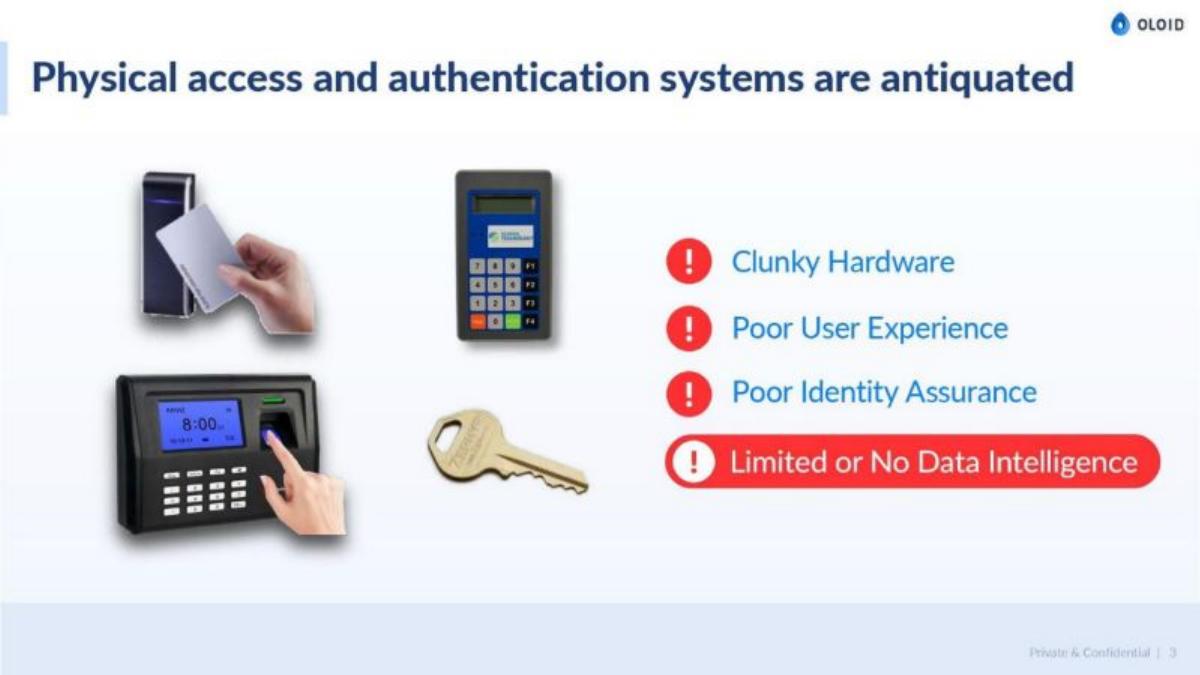
This slide defines the problem: Physical access and authentication systems are antiquated . It uses images of old badge readers, keypads, and physical keys to represent the status quo. The pain points listed are Clunky Hardware , Poor User Experience , Poor Identity Assurance , and Limited or No Data Intelligence .
Slide 4: Pandemic Acceleration
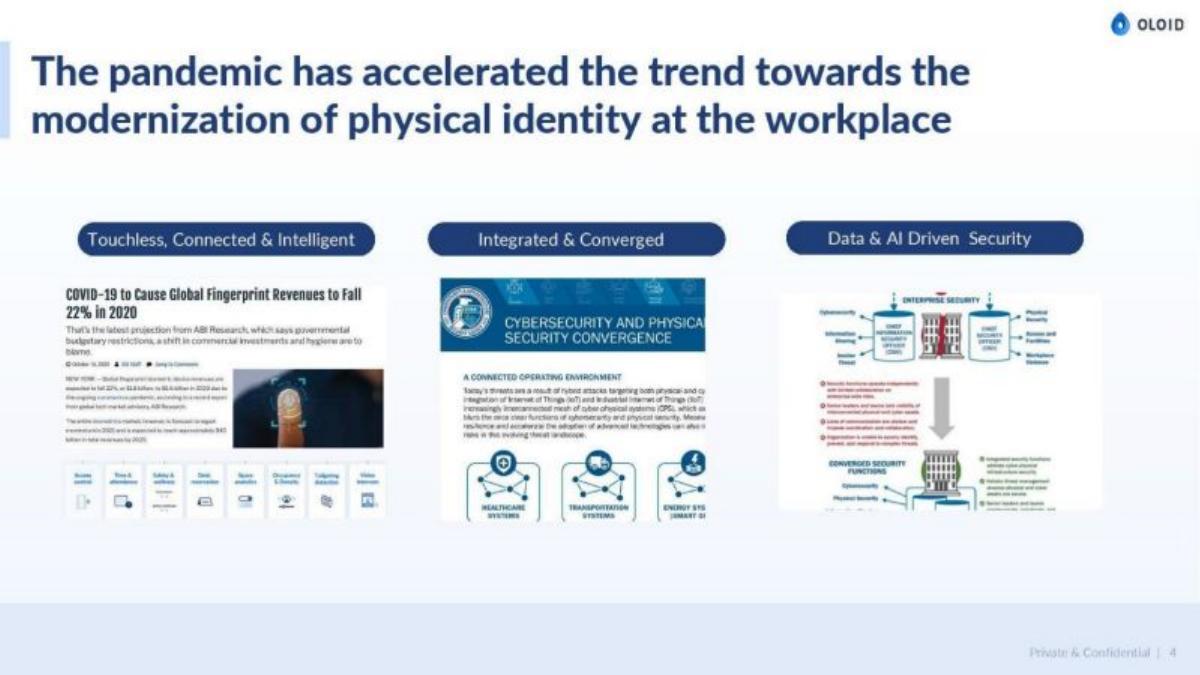
Oloid argues that the COVID-19 pandemic accelerated the need for modernization. It cites ABI Research, stating that global fingerprint revenues were expected to fall 22% in 2020 . The slide identifies three key trends: Touchless, Connected & Intelligent ; Integrated & Converged ; and Data & AI Driven Security .
Slide 5: Cyber vs. Physical Identity
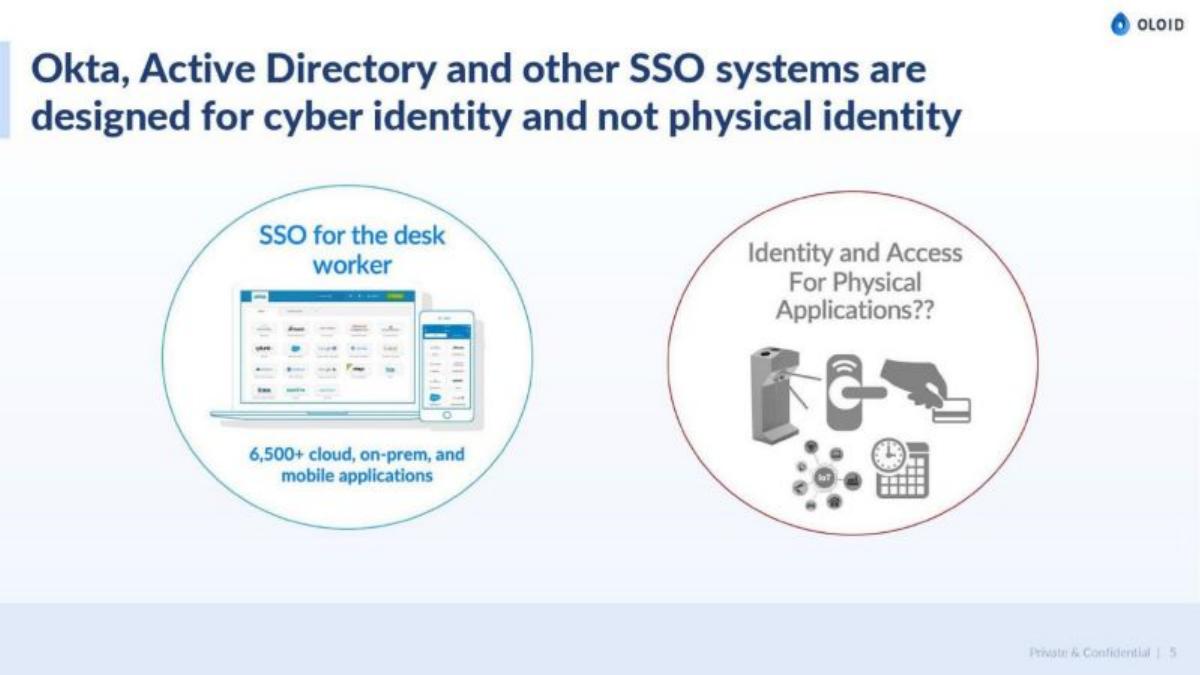
A critical strategic slide, it contrasts existing SSO systems like Okta and Active Directory , which are designed for 'cyber identity' and desk workers, with the lack of similar solutions for 'physical applications.' It poses the question: Identity and Access For Physical Applications?? , setting up Oloid as the answer.
The Oloid Vision and Solution
Slide 6: Oloid Vision
The vision is stated as: Single-sign-on for physical identity . A hub-and-spoke diagram shows Oloid at the center, connecting to a wide array of enterprise software and hardware providers, including ADP, Workday, Okta, Honeywell, and ServiceNow . This positions Oloid as an essential integration layer rather than a standalone tool.
Slide 7: Anchor Use Case
Oloid identifies physical access control (PACS) as its anchor use case. The solution offers a frictionless end-user experience (touchless, smartphone-enabled), integration with existing systems (vaccine management, desk reservation), and smarter administration through centralized remote access and real-time alerts.
Slide 8: Generational Upgrade
This slide visualizes the shift from Legacy systems (physical badges, on-premise, siloed) to Modern systems (contactless, cloud-based, integrated). It uses a simple diagram to show how siloed doors are connected via a cloud-based network in the modern model.
Slide 9: The Rip and Replace Problem
Oloid highlights a major barrier to adoption for its competitors: the need to rip and replace existing door readers and closet hardware. It names competitors like Verkada, Openpath, and Kisi , noting that replacing old custom hardware does not provide future-proofing, especially for emerging standards like NFC on Apple Wallet .
Product Deep Dive
Slide 10: Product Section Header
Slide 11: Cloud and Edge Intelligence
Oloid explains its technical approach: moving intelligence into the cloud and edge application while integrating with existing hardware . It draws a parallel to Nest in the home automation market, which integrated with existing HVAC systems rather than replacing them.
Slide 12: Software Overlay
The core of the Oloid value proposition is presented here: Modernizing physical access control as a software overlay . It shows an off-the-shelf tablet running the Oloid app at the door, connecting to the cloud and existing PACS systems. Key features include being Multimodal (BLE, FR, QR, NFC) , Cloud-based , and API accessible .
Slide 13: Integrated Cyber-Physical Identity
This slide expands on the integration vision, showing Oloid as the bridge between enterprise systems (Okta, Workday) and various physical functions like Access control , Time & attendance , and Safety & wellness . Several features, such as Space analytics and Tailgating detection , are marked as BETA .
Slide 14: Cost and Complexity Reduction
Oloid makes a bold claim: reducing the cost of modernization and installation complexity by 10X . A bar chart compares the cost per door upgrade , showing competitors at $1,500-2,000 while Oloid is . It also claims a self-installation time of .
Slide 15: Unlocking Data Value
The final product slide focuses on the data generated by the platform. It lists five areas of value: Physical Space Utilization , Operational Data , Anomaly Detection , Compliance Analytics , and Credential Management . This emphasizes the 'intelligence' aspect of their solution.
Go-to-Market and Market Opportunity
Slide 16: GTM Section Header
Slide 17: Scalable GTM Strategy
Oloid outlines its transition from an Existing Outbound GTM (direct sales, channel partners) to a New Inbound GTM post-Series A , focused on self-sign up and self-installation . The Ideal Customer Persona (ICP) is defined as occupiers who manage their own space, have a mixed workforce, and are looking for a retrofit option.
Slide 18: Market Opportunity
The market is presented in concentric circles, starting with a $70B Global TAM for PACS . Oloid focuses on Access Control SaaS for Commercial Real Estate , valued at $21B . Their immediate Current GTM (Enterprise) target is $1B (1M doors) . A long-term roadmap targets an additional $21B in residential and retail markets.
Slide 19: Why We Will Win
A summary slide highlighting three pillars: Product Market Fit (owning the retrofit segment), Innovative Product (industry-first self-installable solution), and Right Team (AI and hardware expertise with capital-efficient execution).
Slide 20: Conclusion
A 'Thank you' slide with the CEO's contact information and a final visual summarizing Oloid as the authentication layer for doors, elevators, terminals, and time clocks.
Slide 21: BestPitchDeck.com Promo
A standard promotional slide for the source of the deck, not part of the Oloid presentation.
What Works and What is Missing
What Works
Clear Positioning: The 'software overlay' and 'SSO for physical identity' framing is highly effective for an enterprise SaaS audience. · Strong Team: The founders' backgrounds are perfectly aligned with the problem they are solving, combining SaaS scaling experience with deep technical expertise in identity. · Compelling Cost Advantage: The 10x cost reduction claim (Slide 14) is a powerful hook for Series A investors. · Strategic Integrations: Showing logos of major enterprise platforms (Slide 6) demonstrates that Oloid is building a platform, not just a tool.
What is Missing
Traction Metrics: The deck is notably silent on current revenue, number of customers, or growth rates. For a Series A, investors typically expect to see these figures. · Case Studies: While the product is explained well, there are no specific examples of successful deployments or testimonials from existing enterprise clients. · Use of Funds: The deck mentions a $20M raise but does not provide a breakdown of how the capital will be used to achieve the goals outlined in the GTM strategy. · Competitive Landscape: While it mentions the 'rip and replace' problem of some competitors, a more detailed competitive matrix would help clarify Oloid's standing against both legacy players and other modern startups.
Founder Takeaways
Focus on the 'Why Now': Oloid does an excellent job of using a global event (the pandemic) to explain why a long-standing problem has suddenly become urgent. Founders should always look for these external catalysts to justify their timing.
Address the Barrier to Entry: By identifying 'rip and replace' as the primary reason customers don't modernize, Oloid positions its software-first approach as the only logical choice. Identifying and solving the biggest friction point in your industry is a winning strategy.
Sell the Vision, but Ground it in an Anchor Use Case: Oloid talks about a broad 'physical identity' vision but focuses its initial GTM on access control. This gives investors confidence that there is a clear, immediate path to revenue while maintaining a large long-term upside.
Pedigree Matters: If you have a strong track record, lead with it. Oloid's team slide (Slide 2) is one of its strongest assets, immediately establishing credibility in a complex technical field.
Frequently asked questions
- What is Oloid's core value proposition?
- Oloid provides a software-based identity management layer that modernizes existing physical access control systems. Instead of replacing expensive hardware like badge readers and controllers, Oloid's software overlay integrates with them, enabling mobile authentication (BLE, QR, NFC) and facial recognition through off-the-shelf tablets. This approach aims to provide a frictionless user experience and centralized cloud administration at a fraction of the cost of traditional hardware upgrades.
- How does Oloid compare to legacy access control systems?
- Legacy systems are described as 'antiquated,' featuring clunky hardware, poor user experience, and limited data intelligence. They are often on-premise and siloed. Oloid, by contrast, is cloud-based, integrated, and data-driven. A key differentiator is that Oloid does not require a 'rip and replace' of existing door readers, which is a common requirement for other modern competitors like Verkada or Openpath.
- What market segment is Oloid targeting?
- Oloid is initially focused on the enterprise market, specifically commercial real estate. Their Ideal Customer Persona includes organizations with a mixed workforce (desk and deskless workers) and those seeking a retrofit option for their existing infrastructure. They estimate their current GTM target market at $1B, within a broader $21B opportunity for access control SaaS in commercial real estate.
- Who are the founders of Oloid?
- The company is led by Mohit Garg (CEO) and Madhu Madhusudhanan (CTO). Garg is a 2x SaaS founder who was previously the Co-founder and CRO of Mindtickle, where he helped grow ARR by over 1000% in three years. Madhusudhanan is an identity-tech expert who built solutions at IBM and IBM Watson and holds patents for BLE-based identification protocols.
- What are the main risks or omissions in the deck?
- While the deck is strong on vision and product positioning, it is light on hard financial data. There are no mentions of current Annual Recurring Revenue (ARR), customer growth rates, or unit economics. Additionally, while the deck mentions a $20M Series A round, it does not provide a specific breakdown of how that capital will be spent across hiring, R&D, or marketing.