Spike’s pitch deck is a masterclass in identifying a universal pain point—app fatigue—and offering a solution that doesn't require users to abandon their primary communication tool: email. The deck highlights the massive scale of email, noting 3.7 billion users worldwide on slide 4, and contrasts this with the 'silo' nature of modern tools like Slack and iMessage on slide 5. The core of the pitch relies on impressive retention data, showing 41.0% retention at 120 days on slide 12, which the company claims is above SaaS benchmarks. While the deck is light on specific financial projections and…
Key takeaways
- Email remains the largest communication network with 3.7 billion users and 7% year-over-year growth as of slide 4.
- The primary problem identified is the fragmentation of productivity tools into 'mission critical silos' like CRMs and 'closed network silos' like Slack on slide 5.
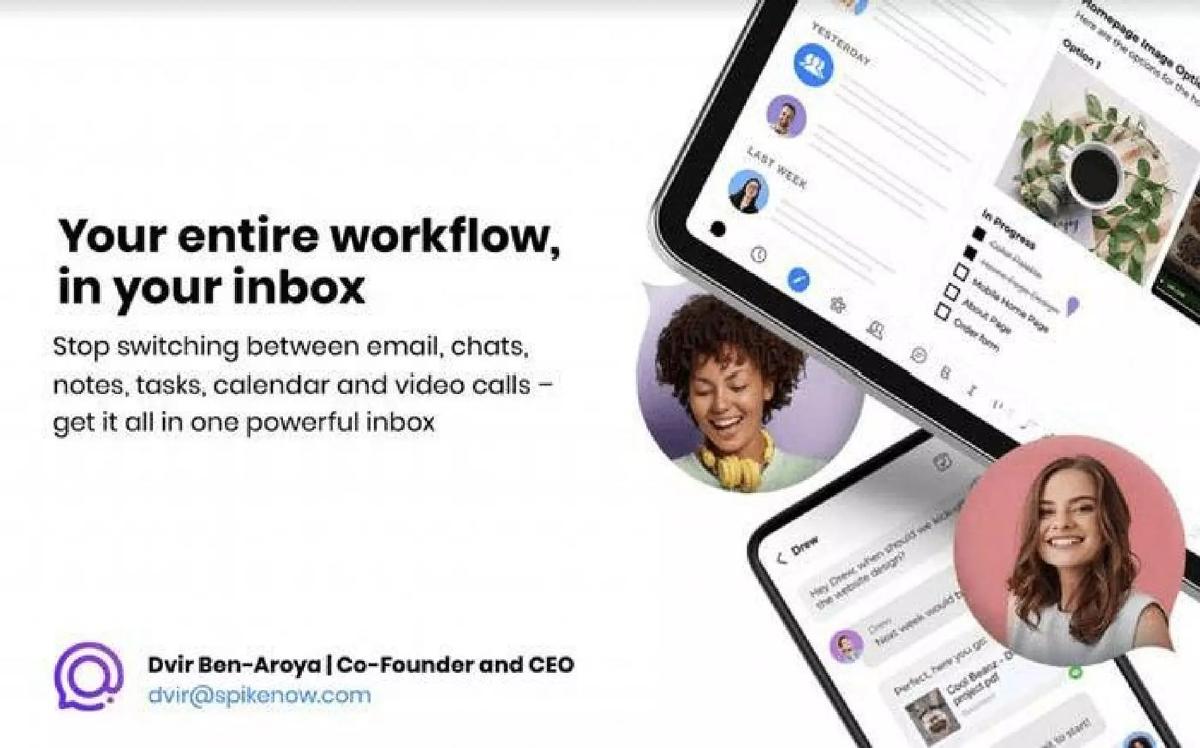
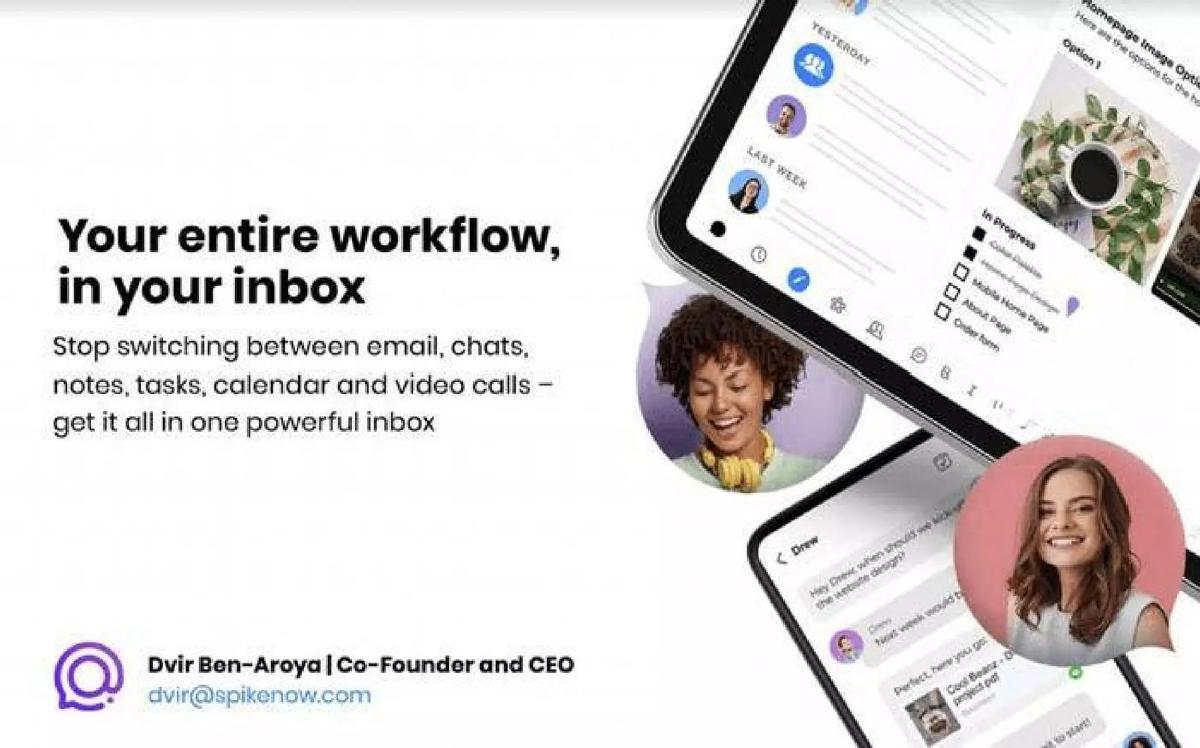
- Spike positions itself as a unified workspace that combines email, chats, notes, tasks, and video calls into a single inbox on slide 1.
- The product utilizes a chat-like interface for email to simplify collaboration, as shown in the 'Groups and Channels' mockup on slide 9.
- User retention is a core strength, with the deck reporting 66.8% at 30 days and stabilizing at 41.0% by day 120 on slide 12.
- The deck uses extensive social proof, featuring nine positive user reviews that highlight the app's ability to make email 'less painful' on slide 11.
- Spike aims to 'own the entire modern workspace category stack' by integrating disparate workflows into one interface on slide 7.
- The deck omits a formal team slide, business model details, and a specific 'ask' in the 13 slides provided for review.
Introduction: The Rebirth of the Inbox
Spike’s Series A pitch deck, used to secure a portion of its $30.3 million in total funding, centers on a bold premise: email isn't dead; it’s just poorly packaged. In an era where 'Slack fatigue' and 'app switching' have become standard complaints in the corporate world, Spike positions itself as the unifying layer. The deck focuses heavily on the product's interface and user retention metrics to prove that users are willing to return to the inbox if the experience mimics modern messaging.
The Hook and the Problem (Slides 1-3)
Slide 1 serves as the cover and the primary value statement: "Your entire workflow, in your inbox." It immediately lists the tools Spike intends to replace or consolidate: email, chats, notes, tasks, calendar, and video calls. The visual features Dvir Ben-Aroya, Co-Founder and CEO, and provides a clean look at the mobile and tablet interface. The messaging is direct, promising to "Stop switching" between apps.
Slide 2 and Slide 3 are transitional, minimalist slides. Slide 2 features an infinity-style loop with the text "And endless expectations," likely referring to the constant stream of communication professionals face. Slide 3 simply says "And yet...", acting as a narrative bridge to the market data that follows. These slides are designed for a live presentation to build suspense before dropping a significant data point.
Market Opportunity and the 'Silo' Problem (Slides 4-6)
Slide 4 establishes the massive scale of the opportunity. It uses a quote from David Pierce at WIRED Magazine: "Email is bigger than Facebook. Hell, it's bigger than the internet." Below the quote, Spike provides hard figures: 3.7 billion users worldwide, 269 billion emails sent every day, and a 7% year-over-year growth rate. Crucially, it notes that 54% of these are business emails, defining the target market as professional users.
Slide 5 introduces the concept of "silo productivity platforms." It divides the current landscape into two categories: "Mission critical silos" (Calendar, To-Do, CRM) and "Closed networks silos" (Slack, iMessage, WhatsApp). The slide argues that despite these tools, productivity remains fragmented because they cater to an "old paradigm." This sets the stage for Spike to be the "new paradigm" that breaks these silos.
Slide 6 uses a complex Venn diagram of various messaging apps (Skype, Telegram, Slack, WeChat, etc.) to illustrate "multiple platform confusion." The diagram is intentionally cluttered to visually represent the chaos of modern digital communication, reinforcing the need for a single, unified solution.
The Solution: A Unified Workspace (Slides 7-10)
Slide 7 makes a grand claim: "Spike will own the entire modern workspace category stack." It shows the product running across a laptop, tablet, and two smartphones, demonstrating cross-platform consistency. The interface shown is noticeably different from traditional email clients, looking more like a modern chat app with speech bubbles and simplified headers.
Slide 8 emphasizes "Multiplatform, Realtime, Open Collaboration." It shows a collaborative document or note being edited within the app, featuring images of coffee and a checklist. This highlights that Spike is not just for reading messages but for active work production.
Slide 9 focuses on "Groups and Channels." By using these terms, Spike is directly attacking Slack’s territory. The mockup shows a "Cool Beanz Website" group chat with a file gallery and member list on the sidebar. The text emphasizes that this collaboration is "Open to everyone," implying that unlike Slack, you can collaborate with anyone who has an email address without them needing to join a specific workspace.
Slide 10 showcases "Seamless collaborative notes and tasks in the user workflow." The visual shows a project brief for a website branding project. This slide reinforces the idea that the inbox is the place where the work actually happens, rather than just where notifications about the work are received.
Social Proof and Retention (Slides 11-13)
Slide 11 is a wall of social proof titled "Why Do People [Heart] Spike?" It features nine user reviews. One user, Joeri Dierckx, calls it a "Great experience" that "takes email where email has never gone before." Another review from "Leo" claims it is the "Best email app" and that they "don't dread opening my email anymore." This slide is critical for a Series A deck as it demonstrates that the radical interface change is actually being embraced by users.
Slide 12 is perhaps the most important slide for an investor. It shows the "Average retention" curve. The data points are: 100% at Day 0, 66.8% at 30 Days, 54.5% at 60 Days, 46.7% at 90 Days, and 41.0% at 120 Days. The slide includes a footer stating this is "Above any SaaS communication market benchmark." A 41% retention rate after four months is exceptionally high for a productivity tool, suggesting deep user stickiness.
Slide 13 is the closing slide, featuring the Spike logo and the CEO's email address. It is simple and maintains the purple and white branding seen throughout the deck.
What Works in the Spike Pitch Deck
The deck excels at visual storytelling . Rather than using bullet points to describe the interface, it uses high-quality mockups that show the product in action across multiple devices. This is essential for a product whose primary selling point is a superior user experience. By showing, not just telling, Spike makes the transition from "email" to "chat" feel intuitive.
The retention data on slide 12 is the 'meat' of the deck. In a Series A, investors are looking for proof of product-market fit. A retention curve that flattens out at 41% is a very strong signal that once users adopt the Spike workflow, they rarely go back to traditional clients. This quantitative data balances the qualitative praise found on the social proof slide.
Finally, the market sizing on slide 4 is effective because it reframes a "boring" legacy technology (email) as a massive, growing opportunity. By comparing email's scale to the entire internet and Facebook, Spike makes the potential upside feel enormous.
What is Missing from the Spike Pitch Deck
The most glaring omission in the provided slides is the Team Slide . While the CEO is mentioned on the cover, there is no information about the engineering talent or previous successes of the founding team. For a Series A, the ability of the team to execute on a complex technical challenge (rebuilding the email protocol layer) is a primary concern for investors.
There is also no Business Model slide. The deck explains what the product does and why people love it, but it never explains how the company makes money. Whether it is a per-seat SaaS model, a freemium model, or an enterprise play is left to the imagination in this set of slides.
Additionally, the Competitive Landscape is addressed only through the lens of "silos." There is no direct comparison to other modern email clients (like Superhuman or Front) or a deep dive into how Spike maintains a technical advantage over giants like Microsoft or Google, who could theoretically add chat-like features to their own clients.
What a Founder Should Copy
Founders should emulate Spike’s problem-framing . Instead of saying "email is bad," they say "productivity is fragmented into silos." This allows them to position their product as a solution to a broader organizational problem rather than just a marginal improvement on a single tool. It elevates the pitch from a utility to a platform.
The use of specific retention intervals (30, 60, 90, 120 days) is also a best practice. Many founders only show 30-day retention, which can be misleading. Showing that the curve stabilizes over 120 days proves that the product has long-term value and isn't just benefiting from a temporary 'novelty' effect.
Lastly, the narrative flow of the first six slides is excellent. It starts with a promise, identifies a macro trend (email scale), points out a systemic flaw (silos), and uses a visual (the Venn diagram) to create a sense of urgency. This logical progression makes the eventual reveal of the product feel like the only logical solution to the chaos described.
Final Thoughts
Spike’s deck is a product-centric pitch that relies on the strength of its UI and its user engagement metrics. While it lacks some of the structural components typical of a full Series A deck—such as financials and team bios—the slides provided focus heavily on the 'Why Now' and the 'Proof of Love.' By successfully arguing that the inbox is the natural home for all work, Spike managed to turn a legacy utility into a high-growth investment opportunity.
Frequently asked questions
- What is Spike's core value proposition according to the deck?
- Spike’s value proposition is the elimination of 'app-switching.' As stated on slide 1, it aims to bring an entire workflow—including email, chats, notes, tasks, and video calls—into a single, powerful inbox. By transforming the traditional email interface into a chat-like experience, Spike attempts to combine the ubiquity of email with the speed and collaboration features of modern messaging apps.
- How does Spike justify entering the crowded email and productivity market?
- Spike justifies its entry by highlighting the massive, underserved scale of email. Slide 4 quotes Wired Magazine stating email is 'bigger than the internet' and notes that 54% of the 269 billion daily emails are business-related. They argue that while new tools like Slack exist, they create 'closed network silos,' whereas Spike works on top of existing open protocols like IMAP and G Suite.
- What evidence of product-market fit does the deck provide?
- The deck provides two main forms of evidence: qualitative and quantitative. Quantitatively, slide 12 shows a retention curve that starts at 100% on Day 0 and levels off at 41.0% at 120 days, which is described as being above SaaS benchmarks. Qualitatively, slide 11 displays numerous five-star reviews from users who claim the app makes them '95% less painful' to manage their inbox.
- What are the 'silos' Spike refers to in its problem statement?
- On slide 5, Spike categorizes the competition into two types of silos. 'Mission critical silos' include Calendars, To-Do managers, and CRMs. 'Closed networks silos' include messaging platforms like Slack, WhatsApp, and iMessage. Spike argues that these tools are highly fragmented and cater to an 'old paradigm,' creating confusion rather than productivity.
- What key fundraising elements are missing from these slides?
- The provided 13 slides lack several standard Series A components. There is no team slide detailing the founders' backgrounds, no slide explaining the business model or monetization strategy, no financial projections, and no specific 'Ask' slide detailing how much capital is being raised or how it will be allocated. These may have been present in the 12 slides not included in this set.