Wingly’s pitch deck is a masterclass in addressing regulatory and safety hurdles head-on in a high-risk industry. By securing EASA certification and Allianz re-insurance, the company transformed a niche hobbyist activity into a scalable marketplace. The deck highlights a community of 300,000 members and a monthly GMV of 450,000€, proving significant early traction. While the deck leans heavily on the 'Uber for X' analogy, it justifies this by showing a clear three-phase roadmap that transitions from leisure cost-sharing to a full commercial transportation model. The team slide is particularly…
Key takeaways
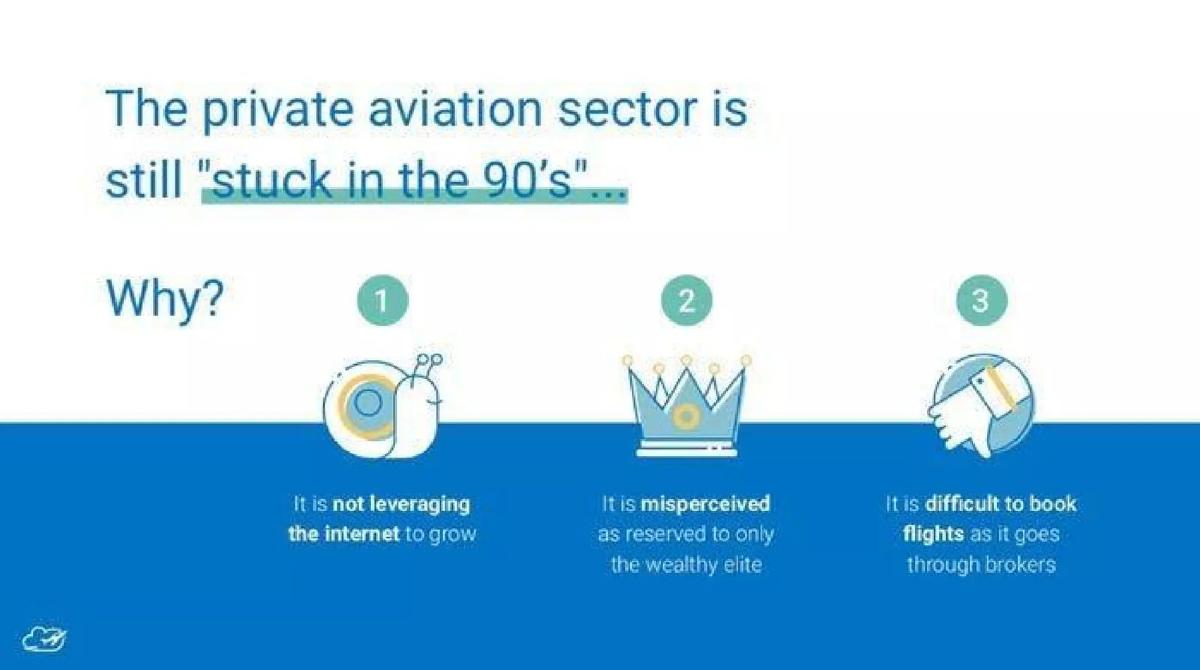
- The company identifies three core problems in private aviation: lack of internet leverage, elitist perception, and broker-heavy booking processes (Slide 2).
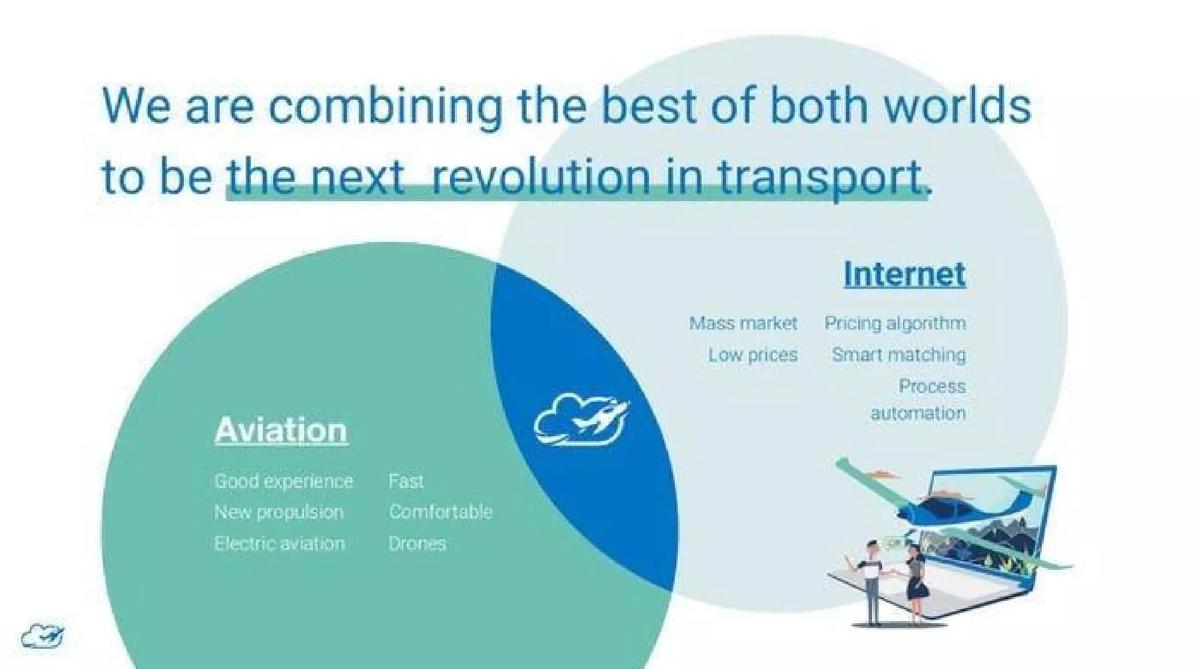
- Wingly positions itself at the intersection of Aviation (new propulsion, drones) and Internet (pricing algorithms, smart matching) (Slide 4).
- Traction is evidenced by a community of 17,000 pilots across 3 countries covering 500+ cities (Slide 7).
- Safety is addressed through EASA certification and a partnership with Allianz for re-insurance (Slide 9).
- The advisory board includes high-profile figures like Philipp Rösler, Former Vice-Chancellor of Germany (Slide 10).
- Market size is segmented into a $1.8T total transportation market, a $35B private aviation market, and a $2.5B leisure aviation niche (Slide 11).
- Financial performance shows a monthly Gross Merchandise Volume (GMV) of 450,000€ (Slide 14).
- The business model relies on a commission structure where Wingly takes 25€ on a 130€ passenger booking (Slide 15).
Executive Summary: The BlaBlaCar of the Skies
Wingly’s Series A pitch deck, produced in 2015, represents a pivotal moment for the flight-sharing economy. By 2015, the 'sharing economy' was a well-understood venture capital theme, but aviation remained a fortress of regulation and high entry barriers. Wingly’s deck succeeds by not just promising a marketplace, but by proving they have the regulatory 'keys' to the castle. With a €3m ask to scale across Europe, the deck balances the romanticism of flight with the cold reality of insurance, certification, and unit economics.
Slides 1-3: The Problem and The Context
Slide 1: Title The deck opens with a clear value proposition: "The Flight Sharing Platform: Making private aviation accessible to everybody." The background image of a cockpit immediately establishes the industry context.
Slide 2: The Problem Wingly identifies three specific pain points in the private aviation sector, which they claim is "stuck in the 90's." First, it fails to leverage the internet for growth. Second, it suffers from a perception of being reserved for the wealthy elite. Third, the booking process is difficult because it relies on traditional brokers. This slide sets up the 'democratization' narrative that is central to their mission.
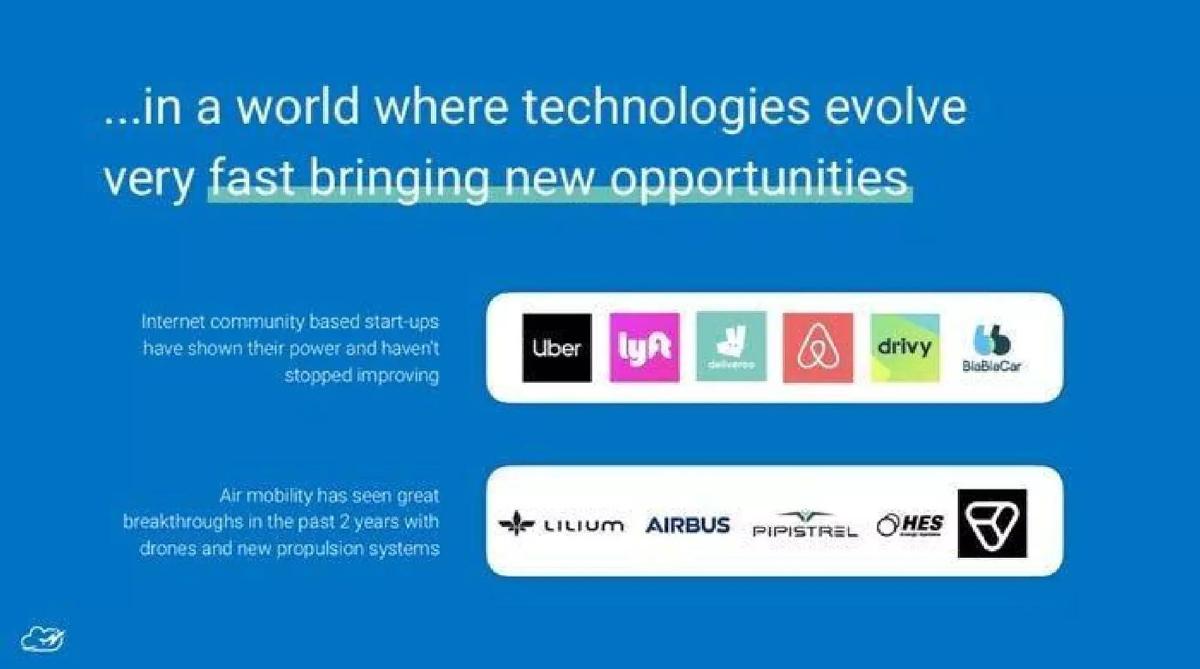
Slide 3: Market Context To validate the timing, Wingly points to two trends: the success of community-based startups (Uber, Lyft, Airbnb, BlaBlaCar) and breakthroughs in air mobility (Lilium, Airbus, Pipistrel). This slide is designed to make the investor feel that a 'sharing economy' for planes is the logical next step in a proven technological progression.
Slides 4-6: The Solution and Product Pillars
Slide 4: The Intersection Using a Venn diagram, Wingly positions itself at the overlap of 'Aviation' and 'Internet.' They claim to bring mass-market pricing and smart matching to an industry characterized by new propulsion and electric aviation. This slide attempts to bridge the gap between a software marketplace and a hardware-heavy industry.
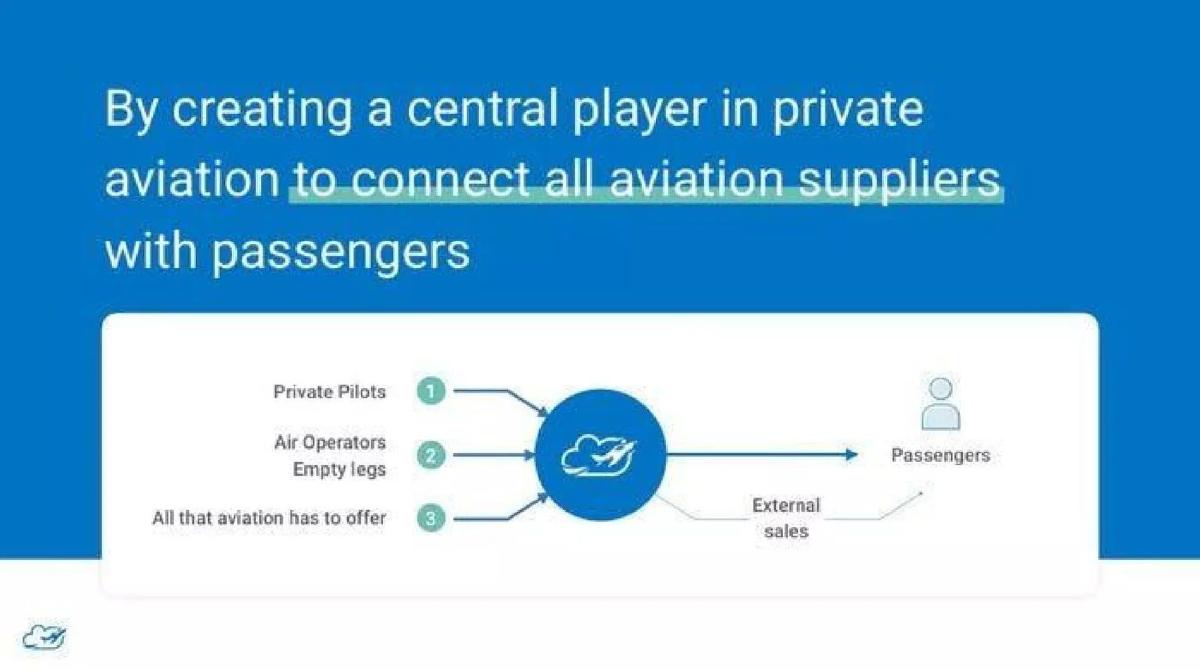
Slide 5: The Central Player This slide illustrates the marketplace mechanics. Wingly acts as the hub connecting private pilots, air operators (empty legs), and general aviation offerings to the end passenger. It also mentions 'External sales,' suggesting a B2B or API-driven distribution strategy.
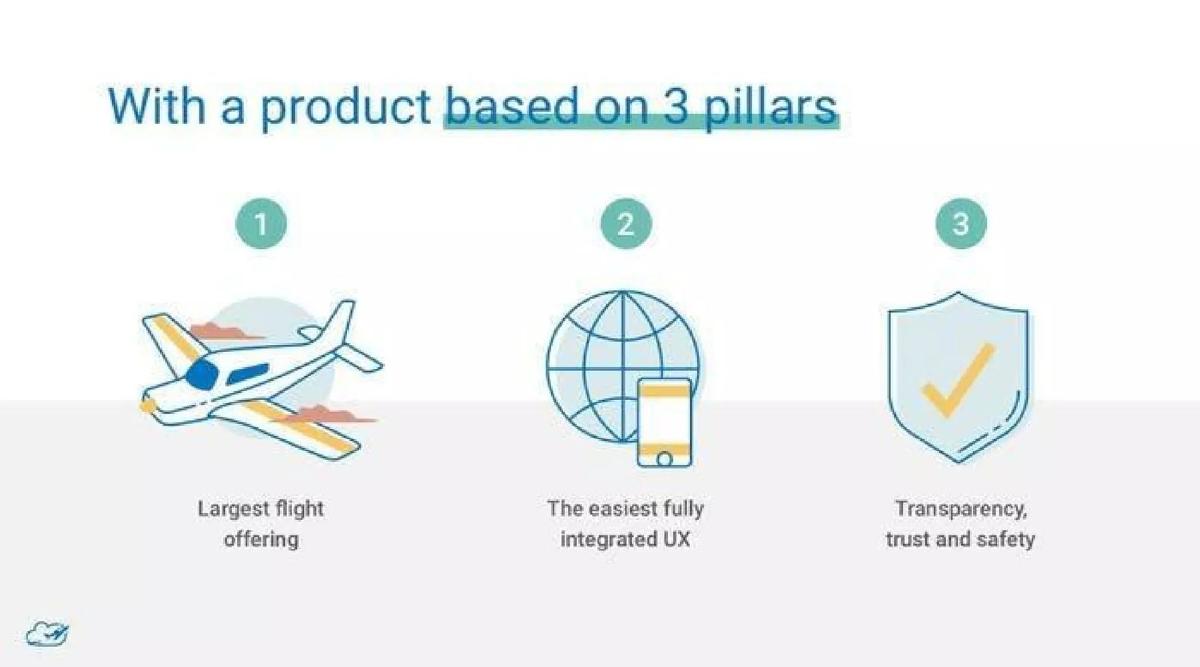
Slide 6: The Three Pillars The product strategy is distilled into three points: the largest flight offering, an integrated UX, and a focus on transparency, trust, and safety. These pillars serve as the outline for the next three detailed slides.
Slides 7-9: Deep Dive into Operations
Slide 7: Pillar 1 - Flight Offering Wingly provides hard numbers here: a community of 17,000 pilots, operations in 3 countries, and coverage of 500+ cities. The use of lifestyle photography helps humanize the service, moving it away from the 'wealthy elite' perception mentioned earlier.
Slide 8: Pillar 2 - Integrated UX This slide walks through the user journey: browsing, payment, confirmation, messaging, and ratings. It is a standard marketplace flow, but necessary to show that the complexity of aviation has been simplified into a modern mobile experience.
Slide 9: Pillar 3 - Trust and Safety This is arguably the most important slide in the deck. Wingly lists four critical safety components: transparent pilot profiles, regular document checks, EASA certification (approved by national regulators in Europe, UK, and Switzerland), and re-insurance by Allianz. For a Series A investor, this slide mitigates the single largest risk factor: a catastrophic accident leading to legal dissolution.
Slides 10-12: The Team and Market Opportunity
Slide 10: The Team The founders (Bertrand Joab-Cornu, Emeric de Waziers, Lars Klein) are presented alongside a heavy-hitting advisory board. The inclusion of Philipp Rösler (Former Vice-Chancellor of Germany) is a strategic masterstroke, signaling to investors that the company has the political capital to navigate European aviation laws.
Slide 11: Market Size Wingly uses a nested circle diagram to show the Total Addressable Market (TAM) of $1.8T for transportation, a $35B Serviceable Addressable Market (SAM) for private aviation, and a $2.5B Serviceable Obtainable Market (SOM) for leisure aviation. While the $1.8T figure is broad, the $2.5B leisure figure provides a realistic starting point.
Slide 12: The Roadmap The company outlines a clear evolution. They start with a 'Leisure Marketplace' (2016-2020), move to a 'Commercial Model' (2020-2022) that functions like a taxi ride, and eventually integrate EVTOL and drones (2023-20XX). This shows that while they are starting with hobbyists, they have ambitions to become a core part of the transportation infrastructure.
Slides 13-15: Traction and Business Model
Slide 13: Market Leadership A simple transition slide claiming they have become the market leader in the private pilot segment over the last 4 years.
Slide 14: Key Metrics The deck provides impressive traction data: 300,000+ members, a monthly GMV of 450,000€, and a team of 22 people. The Net Promoter Scores (89 for passengers, 75 for pilots) are exceptionally high, suggesting strong product-market fit and community loyalty.
Slide 15: Business Model Wingly clarifies its revenue stream. On a 130€ booking, Wingly takes a 25€ commission. The slide breaks this down into a 10€ flat fee plus a 15% variable fee. This transparency regarding the 'take rate' is essential for investors to model future earnings based on GMV growth.
Slides 16-18: The Ask and Conclusion
Slide 16: Phase Two A transition slide signaling the shift toward commercial operators.
Slide 17: The Ask Wingly seeks a €3m round. The use of proceeds is clearly defined: product and engineering investment, scaling acquisition in existing and new markets, and launching the transportation model. This is a standard and appropriate allocation for a Series A round.
Slide 18: Contact The final slide provides contact information and a Paris address, closing with a high-quality image of a passenger in a helicopter, reinforcing the aspirational nature of the brand.
What Works in This Deck
Regulatory De-risking: By highlighting EASA certification and Allianz insurance on Slide 9, Wingly addresses the 'elephant in the room' immediately. Most aviation startups fail at the regulatory hurdle; Wingly proves they have already cleared it.
Political Credibility: The inclusion of a former Vice-Chancellor on the team slide (Slide 10) is not just for show. In a highly regulated European market, having someone who understands the corridors of power is a significant competitive advantage.
Clear Unit Economics: Slide 15 leaves no ambiguity about how the company makes money. The breakdown of the 25€ commission on a 130€ flight allows investors to quickly calculate the lifetime value (LTV) of a customer if they know the flight frequency.
What Is Missing
Unit Economics Detail: While the commission is clear, the deck lacks data on Customer Acquisition Cost (CAC) and churn. For a marketplace, knowing how much it costs to acquire a pilot versus a passenger is vital information that is omitted here.
Competitive Landscape: The deck does not mention other players in the flight-sharing space. Even if Wingly is the market leader, acknowledging competitors and explaining their 'moat' (beyond just regulatory approval) would have strengthened the pitch.
Historical Financials: While monthly GMV is provided, there is no chart showing the growth trajectory over the previous 4 years. Investors generally prefer to see the 'hockey stick' curve rather than a single data point.
What a Founder Should Copy
The Phased Roadmap: Slide 12 is an excellent example of how to pitch a 'small' starting market (leisure flights) while maintaining a 'huge' vision (EVTOL and drones). It tells investors: "We are starting here to be safe and legal, but we are going there to be a unicorn."
The 'Three Pillars' Framework: Using Slide 6 to set the agenda for the next three slides is a great way to maintain narrative flow. It helps the audience categorize information as they receive it, making the deck much more memorable.
High-Quality Visuals: Wingly uses professional, aspirational photography that matches the 'private aviation' brand. The images aren't just decorative; they reinforce the idea that this is a premium experience made accessible, which is the core of their value proposition.
Frequently asked questions
- How does Wingly handle the legal risks of flight sharing?
- Wingly addresses this directly on Slide 9, noting that they are certified by the EASA (European Union Aviation Safety Agency) and approved by national regulators in Europe, the UK, and Switzerland. Furthermore, they mitigate financial and safety risks by ensuring all flights are re-insured by Allianz, a major global insurance provider.
- What is Wingly's current revenue model?
- According to Slide 15, Wingly operates on a commission-based model. Using a 130€ passenger booking as an example, the pilot receives 100€, and Wingly takes a 25€ commission (10€ flat + 15%). The slide also notes a 5€ VAT charge on that commission, illustrating a clear understanding of European tax compliance.
- What is the long-term vision for the company beyond leisure flights?
- Slide 12 outlines a three-phase roadmap. Phase 1 (2016-2020) focused on the leisure marketplace and cost-sharing. Phase 2 (2020-2022) aims to launch a commercial service acting as a middleman for all aviation operators. Phase 3 (2023-20XX) plans to integrate new technologies like EVTOL and drones.
- Who are the key people behind Wingly?
- The leadership team consists of Bertrand Joab-Cornu (COO), Emeric de Waziers (CEO), and Lars Klein (CTO). The deck also highlights a powerful support network on Slide 10, including Felix Haas (Serial Entrepreneur) and Thibaud Elzière (Founder of Fotolia), alongside political heavyweight Philipp Rösler.
- What are the primary metrics used to demonstrate traction?
- Wingly uses several key performance indicators on Slide 14: a community of over 300,000 members, presence in 3 countries, a monthly GMV of 450,000€, and a team of 22 people. They also cite high Net Promoter Scores (NPS) of 89 for passengers and 75 for pilots.