Wingback's 13-slide pre-seed deck is a masterclass in identifying a specific, high-friction operational bottleneck: the reliance on engineering for SaaS pricing changes. By positioning pricing as the 'next frontier' after billing (citing Stripe and Adyen as predecessors), the deck creates a sense of inevitability. The presentation focuses heavily on the problem-solution fit, using a relatable narrative about engineers deprioritizing pricing tasks. While the deck lacks traditional financial projections or a detailed market size slide, it leans on the team's pedigree—specifically their history…
Key takeaways
- The deck identifies pricing and packaging as the next major layer to be platformized, following the path of billing leaders like Stripe and Zuora (Slide 8).
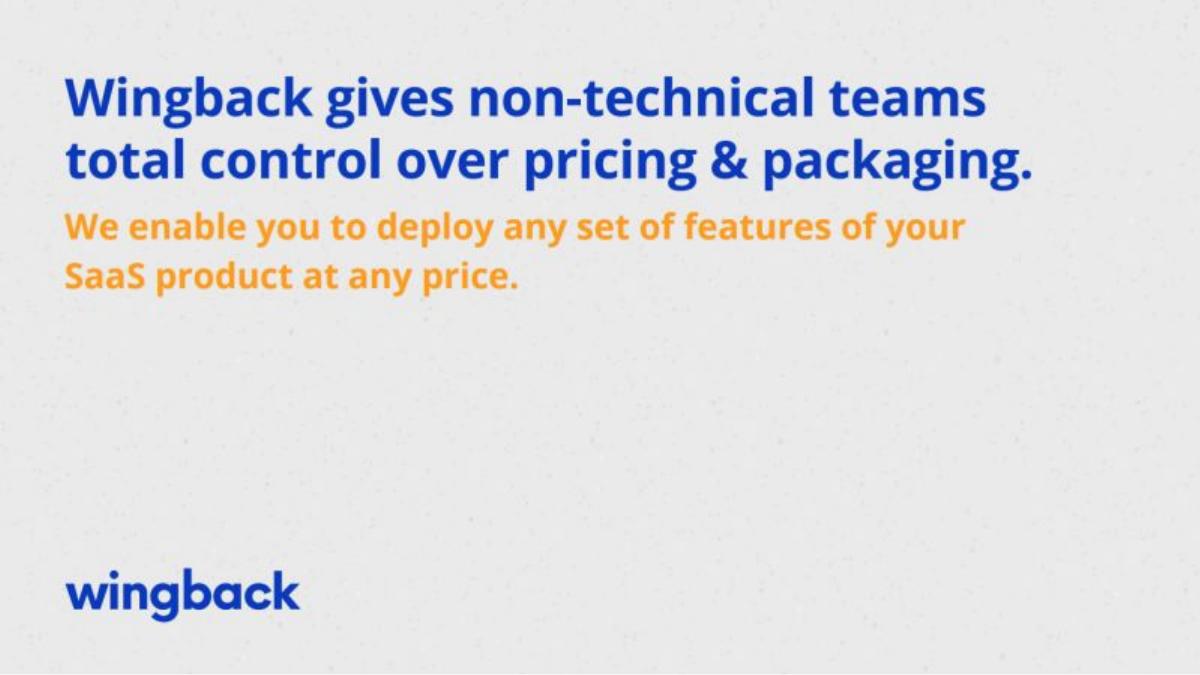
- Wingback aims to empower non-technical teams to deploy features and pricing without engineering reliance (Slide 6).
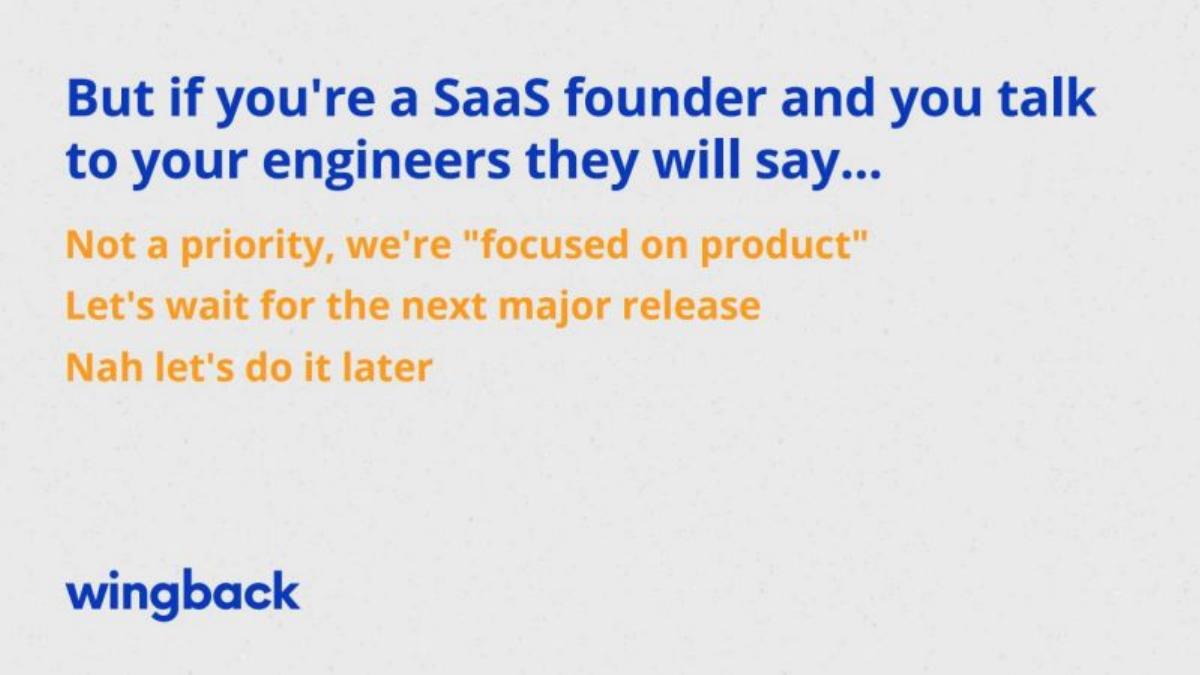
- The problem is framed through the lens of engineering bottlenecks, where pricing updates are often labeled as 'not a priority' (Slide 5).
- The product includes a 'Plan Editor' that allows for bundling features and setting prices through a GUI (Slide 7).
- The founders highlight their previous success scaling a B2B startup, 1aim, to $1M in revenue and raising $6M (Slide 11).
- The company raised a $1.9M pre-seed round led by 42cap, with participation from Y Combinator and On Deck (Slide 10).
- The deck explicitly omits market sizing (TAM/SAM/SOM) and financial projections, focusing instead on the 'Why Now' of product-led growth (Slide 8).
- Integration with existing billing providers like Stripe is a core part of the value proposition (Slide 7).
The Narrative of the Engineering Bottleneck
Wingback’s pitch deck is a focused argument for a new category of enterprise software: SaaS Growth Infrastructure. Rather than starting with broad market statistics, the deck uses a relatable, tactical problem to hook the investor. The core thesis is that pricing and packaging are currently 'hard-coded' and therefore slow to change, hindering a company's ability to execute product-led growth (PLG) strategies.
Slide 1: Title and Positioning
The cover slide introduces Wingback as 'SaaS Growth Infrastructure.' By using the word 'infrastructure,' the company signals that it intends to be a foundational layer rather than a superficial tool. The subtitle, 'The next frontier in scaling the industry,' sets an ambitious tone for a pre-seed stage company.
Slides 2-4: The Visual Problem Statement
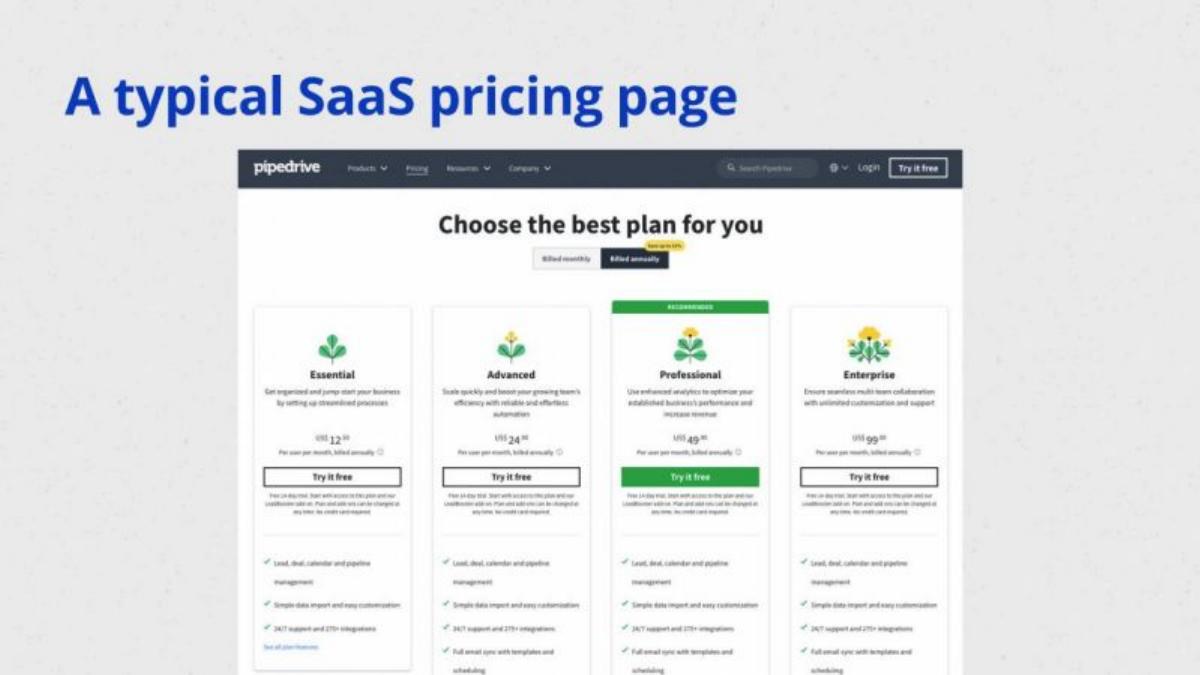
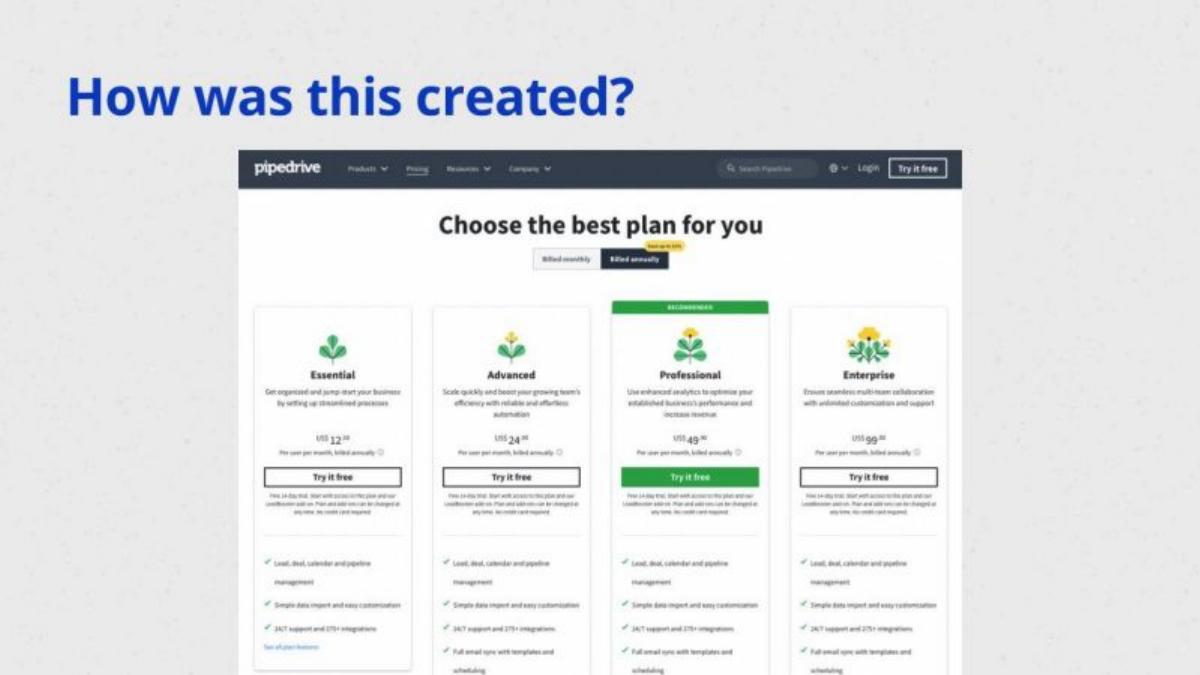
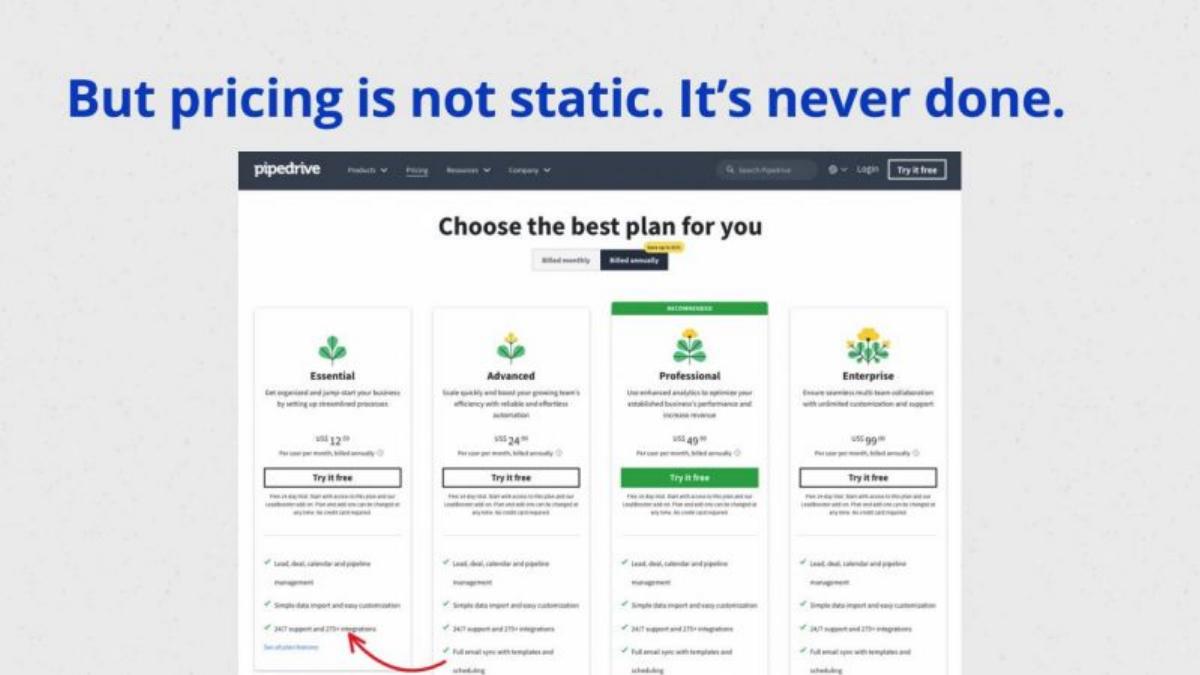
Slide 2 shows a 'typical SaaS pricing page' using Pipedrive as an example. Slide 3 asks, 'How was this created?' and Slide 4 immediately answers with the insight: 'But pricing is not static. It’s never done.' This sequence is effective because it forces the viewer to think about the backend complexity required to maintain even a standard four-tier pricing table. The red arrow on slide 4 pointing to a specific feature update ('275+ integrations') highlights how small product changes necessitate pricing updates.
Slide 5: The Human Friction
This is the 'villain' slide. It lists common engineering responses to pricing requests: 'Not a priority,' 'Focused on product,' and 'Let's do it later.' By quoting these phrases, Wingback identifies a specific pain point felt by product managers and founders. It frames the problem not as a lack of ideas, but as a lack of resources to implement those ideas.
Slide 6: The Solution
Wingback presents its solution as giving 'non-technical teams total control over pricing & packaging.' The promise is the ability to deploy any set of features at any price point. This is the 'Aha!' moment of the deck, moving from the frustration of engineering delays to the freedom of non-technical deployment.
Slide 7: Product Capabilities
Slide 7 provides the first look at the 'Plan Editor.' It outlines three core functions: building and deploying pricing plans, minimizing engineering involvement, and integrating with billing providers like Stripe. The screenshot of the Plan Editor shows a GUI where users can name plans, add descriptions, and select features from a library. This proves the product is more than a concept; it is a functional interface for managing complex logic.
Slide 8: The 'Why Now' and Market Context
This slide provides the macro-economic justification for Wingback. It makes three points: 1. Pricing is the next frontier after billing. It compares the current state of pricing to the pre-Stripe/Adyen era of billing. 2. Every SaaS startup needs this. It argues that pricing implementation is a universal tax on SaaS companies. 3. Product-led growth is super hot. It ties the product to the broader industry trend of PLG, where rapid experimentation with pricing is a requirement for success.
Slide 9: Value Proposition Summary
Slide 9 reiterates the mission: 'Wingback is the first SaaS growth infrastructure.' It lists three outcomes: custom pricing for specific customers, sales team efficiency, and driving PLG with campaign tools. This slide bridges the gap between the technical product and the business outcomes investors care about.
Slide 10: The Round and Early Backers
The deck states that Wingback raised a $1.9M Pre-Seed round. The lead investor is 42cap. The slide also displays logos for Y Combinator, On Deck, and Unpopular Ventures. Notable angels like Nicolas Dessaigne (Algolia) and George Arison (Shift) are pictured. This 'social proof' slide is critical for a pre-seed deck, as it demonstrates that sophisticated market participants have already vetted the team and the idea.
Slide 11: The Founding Team
The team slide focuses on the previous collaboration between CEO Torben Friehe and CTO Yann Leretaille. They highlight their history at 1aim, a B2B startup where they raised $6M and reached $1M in revenue. This history of working together and achieving significant milestones reduces the 'founder risk' often associated with early-stage investments. Yann is described specifically as a 'Full-Stack developer with infrastructure focus,' which aligns with the product's positioning.
Slide 12: Contact Information
A simple closing slide with the website and a general contact email. It maintains the clean, minimalist aesthetic found throughout the deck.
What Wingback Does Well
The deck excels at problem isolation . By focusing exclusively on the friction between product and engineering regarding pricing, they avoid the trap of trying to solve 'everything' for SaaS companies. The comparison to Stripe and Adyen is a powerful framing device; it suggests that Wingback is not just a tool, but a necessary evolution of the SaaS stack. The use of a real-world example (Pipedrive) makes the abstract concept of 'packaging' immediately tangible.
What is Missing from the Deck
Market Sizing: There is no slide calculating the Total Addressable Market (TAM). The founders assume the investor agrees that the 'SaaS industry' is large enough to support a massive infrastructure play. · Unit Economics/Revenue: As a pre-seed deck, there is no mention of current MRR, churn, or LTV. The focus is entirely on the vision and the problem. · Competitor Matrix: The deck does not mention other players in the 'pricing-as-a-service' or 'entitlement management' space. This suggests a 'category creation' strategy where the founders want to define the space themselves. · The Ask: While the deck mentions the $1.9M raised, it does not explicitly state what the next milestone is or how the next round of funding will be used.
Founder Takeaways
Use the 'Stripe for X' strategy carefully. Wingback successfully uses the 'next frontier after billing' argument to piggyback on the success of well-known companies. If you are building infrastructure, identifying the successful layer that sits just below your product is a great way to explain your value. Focus on the 'Internal Villain.' The most effective part of this deck is slide 5, which quotes the engineers. If your product solves an internal organizational conflict, show that conflict in the deck. Pedigree over Projections. In the absence of revenue, Wingback leans heavily on the founders' previous $1M revenue milestone. If you have past success, make it a central pillar of your pitch to offset the lack of current traction.
Frequently asked questions
- How much did Wingback raise with this deck?
- According to slide 10, Wingback raised a $1.9M pre-seed round. The listing data mentions $19M, but the slide explicitly states $1.9M, which is the figure used for this analysis as it reflects the primary document's content.
- Who are the key investors in Wingback?
- The round was led by 42cap. Other participants shown on slide 10 include Y Combinator, On Deck, Unpopular Ventures, and angels such as Nicolas Dessaigne and George Arison.
- What specific problem does Wingback solve for SaaS companies?
- Wingback addresses the 'engineering bottleneck.' As shown on slide 5, pricing changes are often deprioritized by developers. Wingback provides a 'Plan Editor' (slide 7) that allows non-technical teams to manage pricing and packaging independently.
- Does the deck include a competitive landscape or market size?
- No. The deck omits a traditional competitor matrix and does not provide a TAM (Total Addressable Market) figure. It relies on the narrative that every SaaS company needs this infrastructure to scale (slide 8).
- What is the background of the founding team?
- The founders, Torben Friehe (CEO) and Yann Leretaille (CTO), previously co-founded the B2B startup 1aim. Slide 11 notes they scaled that company to $1M in revenue and raised $6M before starting Wingback.