Kibo’s 14-slide Seed deck is a masterclass in narrative-driven fundraising for emerging markets. By framing the 'future of global talent' as African (Slide 2) and highlighting the massive disparity between software developer populations in Africa versus California (Slide 3), the founders established a high-stakes problem. The deck successfully transitions from macro-demographics to micro-validation, citing a 52% completion rate for their pilot—significantly higher than the 5% industry average for self-paced courses (Slide 9). While the deck is light on detailed unit economics and long-term fi…
Key takeaways
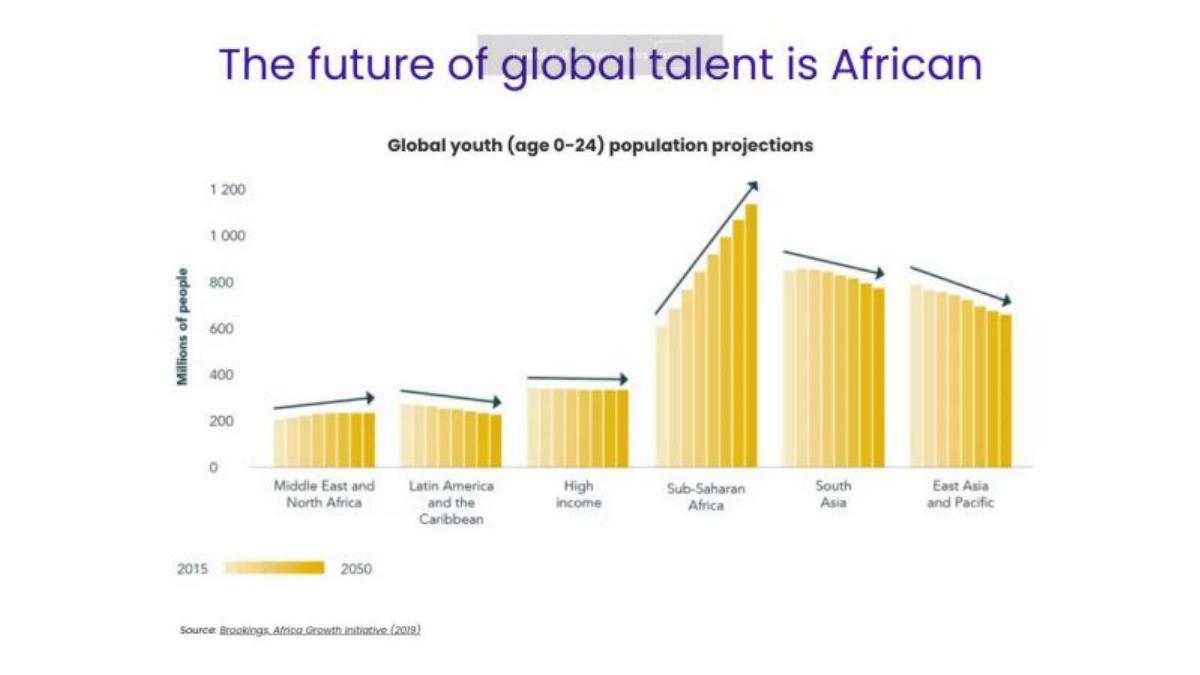
- The deck leads with a macro demographic tailwind, projecting Sub-Saharan Africa as the primary source of global youth growth through 2050 (Slide 2).
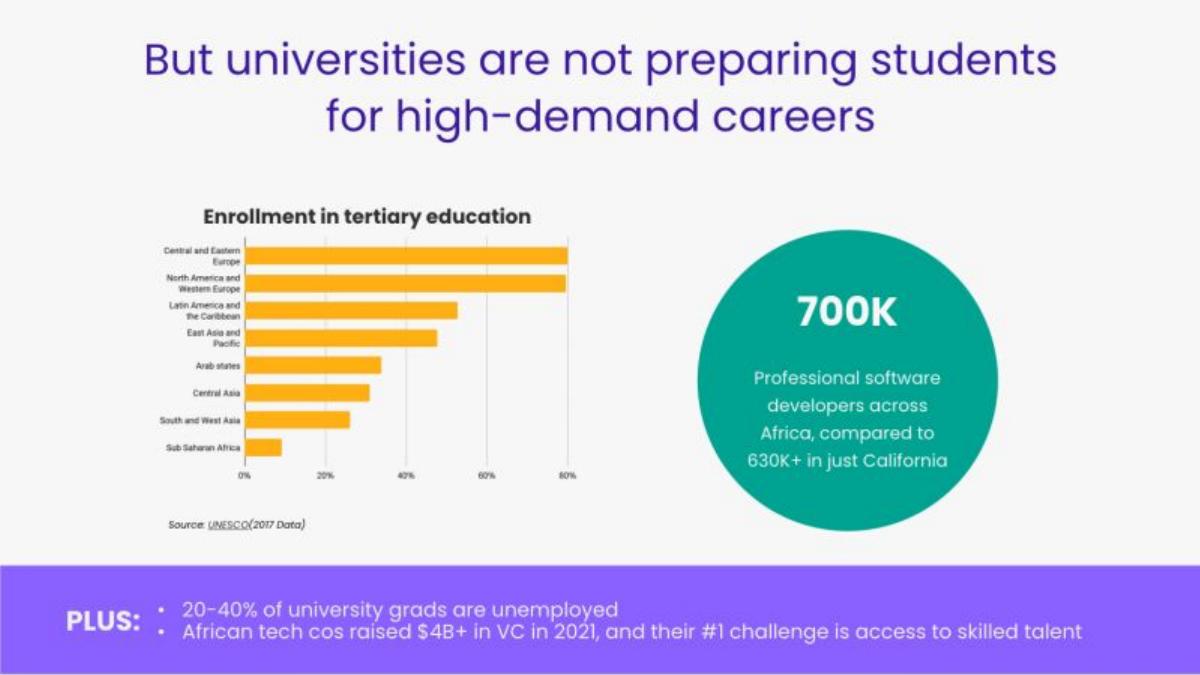
- Kibo identifies a specific supply-demand gap, noting only 700k professional developers in Africa compared to 630k in California alone (Slide 3).
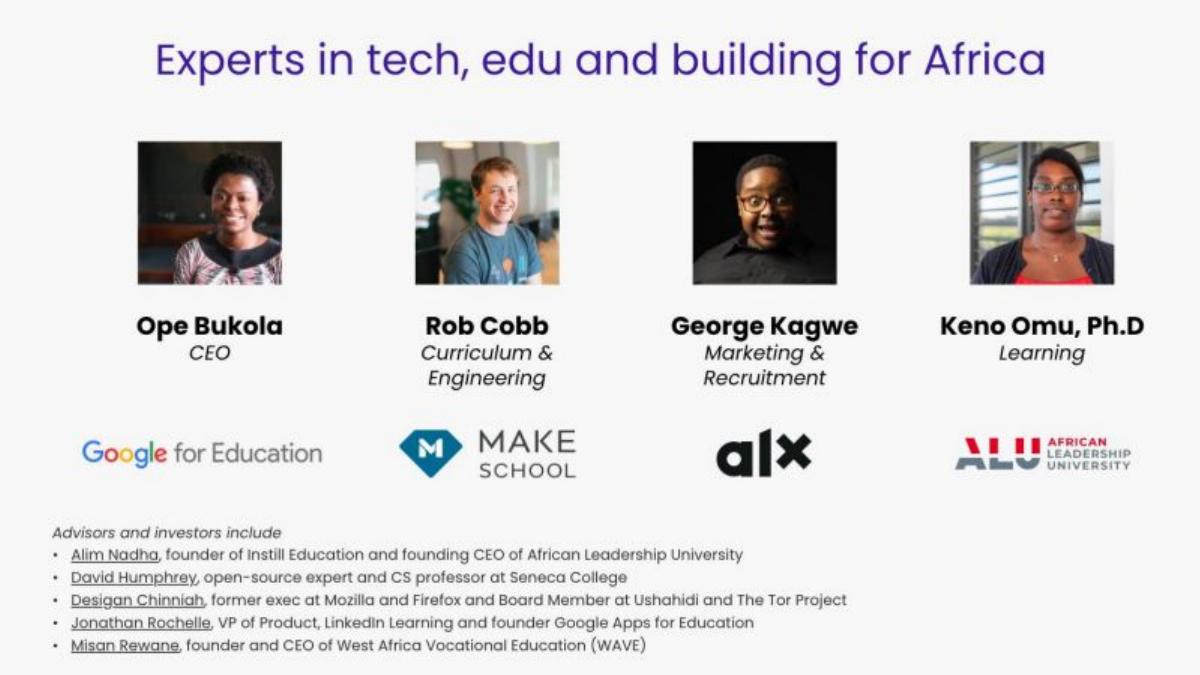
- The team slide highlights deep domain expertise with former leadership from Google for Education, Make School, and ALU (Slide 5).
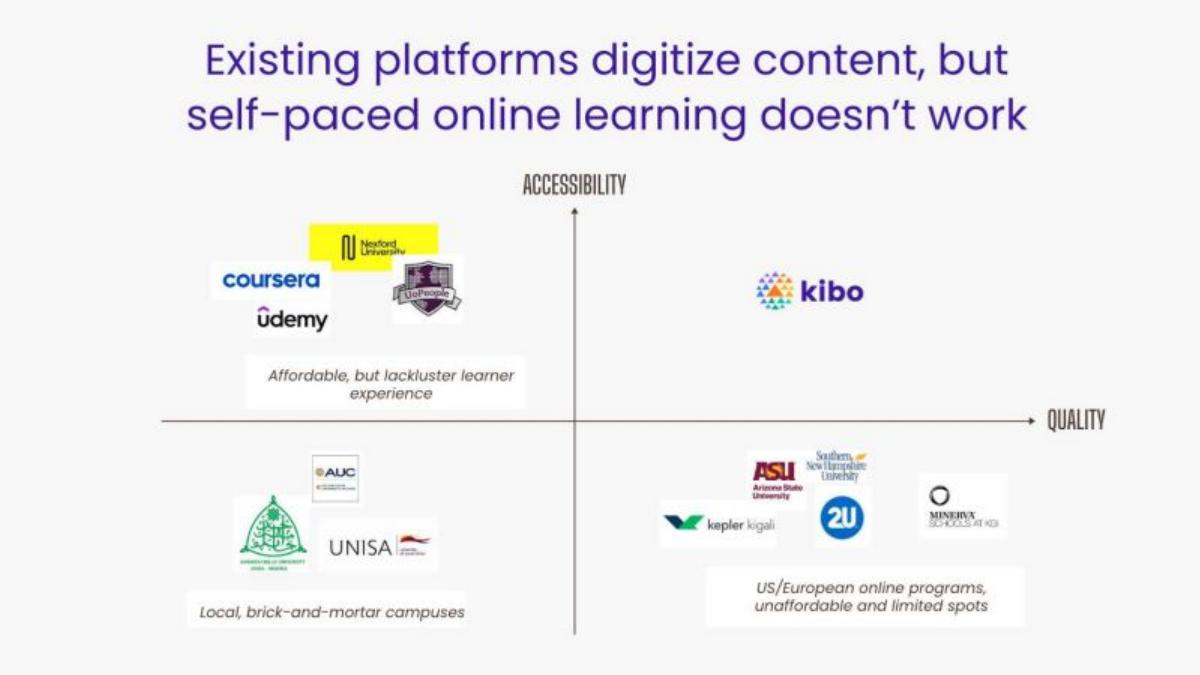
- Competitive positioning is handled via a 2x2 matrix that pits Kibo against 'unaffordable' US programs and 'lackluster' self-paced platforms (Slide 6).
- The product strategy emphasizes cohort-based learning to combat the 95% dropout rate seen in traditional MOOCs (Slide 7).
- Validation is anchored by a pilot with 200+ learners from 6 countries and a high Net Promoter Score of 90 (Slide 9).
- The business model targets affordability with a $6k total degree cost and flexible payment options (Slide 11).
- The funding ask of $3M is explicitly tied to reaching a $1M revenue run rate and 1k enrolled students (Slide 12).
Slide-by-Slide Analysis
Slide 1: Title Slide
The deck opens with a clean, minimalist design featuring the Kibo logo and the tagline: "Educating the next billion." The imagery shows a student from an overhead perspective, emphasizing a modern, tech-focused learning environment. This slide sets a high-level visionary tone without getting bogged down in mechanics.
Slide 2: The Macro Opportunity
Kibo immediately moves to a demographic argument. Using data from Brookings, the slide shows population projections for global youth (ages 0-24) through 2050. The chart highlights that while youth populations in East Asia and South Asia are projected to decline, Sub-Saharan Africa is the only region showing massive, sustained growth. This frames the startup not just as a school, but as a gateway to the world's future labor supply.
Slide 3: The Problem Gap
This slide bridges the gap between population and professional readiness. It notes that there are only 700k professional software developers across all of Africa, which is nearly equal to the 630k+ in California alone. The slide also highlights a critical pain point for the ecosystem: African tech companies raised $4B+ in VC in 2021 , yet their "#1 challenge is access to skilled talent." This validates the market demand for Kibo's output.
Slide 4: The Solution Statement
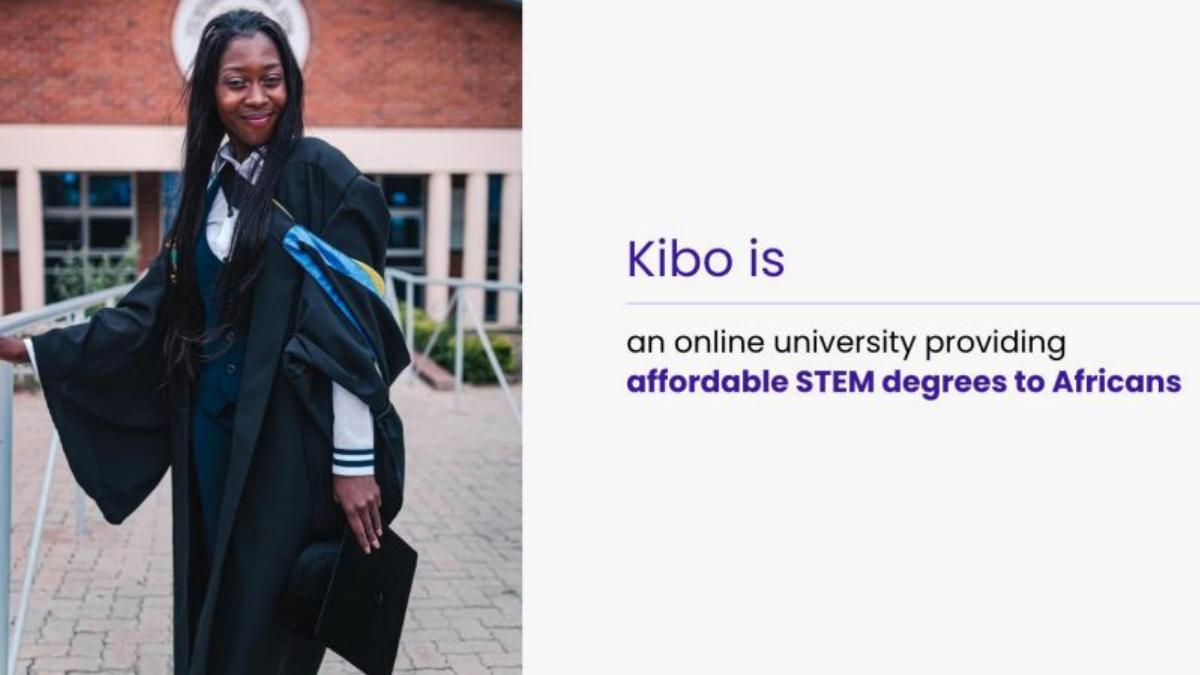
Kibo defines itself clearly: "Kibo is an online university providing affordable STEM degrees to Africans." The use of a graduation photo reinforces the end goal—accredited, formal education rather than just short-form certificates.
Slide 5: The Team
The team slide is exceptionally strong for a Seed round. CEO Ope Bukola is credited with experience at Google for Education . Other team members bring backgrounds from Make School, ALX, and African Leadership University . The inclusion of advisors from LinkedIn Learning and Google Apps for Education adds significant institutional credibility to their pedagogical approach.
Slide 6: Competitive Landscape
Kibo uses a standard 2x2 matrix with "Accessibility" and "Quality" as the axes. They position themselves in the top-right quadrant. They categorize competitors into three buckets: Affordable but lackluster (Coursera, Udemy), Local brick-and-mortar (UNISA, AUC), and High quality but unaffordable (ASU, Minerva). This slide effectively argues that a middle ground—high quality and high accessibility—is currently vacant.
Slide 7: The Pedagogy
This slide explains how they achieve quality. They combine three elements: an Async Content Platform (for pace), Cohort-Based Classes (for community), and Industry Experience (for career readiness). A key stat here is the 95% dropout rate for self-paced courses, which Kibo aims to solve through peer projects and TA-led sessions.
Slide 8: The Technology
Kibo showcases their proprietary tools designed to scale their pedagogy. The mobile interface shown includes features for Personalization (automated feedback and analytics on struggling learners) and Peer Learning (matching students for group work). This demonstrates that Kibo is a tech-enabled platform, not just a service business using Zoom.
Slide 9: Traction and Validation
The "proving the model" slide provides hard evidence. Key figures include 200+ learners from 6 countries , a 52% completion rate (contrasted against the 5% industry average), and a Net Promoter Score of 90 . These metrics suggest that their cohort-based model is working as intended.
Slide 10: Student Testimonials
Six quotes from students in Nigeria, Ghana, Kenya, and Zimbabwe emphasize the social and collaborative aspects of Kibo. Words like "squad," "team-building," and "mentors" appear frequently, reinforcing the community-centric value proposition mentioned on Slide 7.
Slide 11: The Product Roadmap
Kibo outlines their 3-year Bachelor's in Computer Science. The degree is priced at US$6,000 with flexible payment options. The roadmap includes initial accreditation with a European partner, followed by independent US accreditation. The curriculum is broken down by year: Year 1 (Foundation), Year 2 (Go Deeper), and Year 3 (Specialize).
Slide 12: The Ask
The company seeks $3M to launch the degree program. They tie this funding to specific milestones: 1k students enrolled , 5k graduates of free programs, and a $1M revenue run rate . This is a disciplined way to present an ask, as it tells investors exactly what "success" looks like for this round.
Slide 13: Closing Slide
A simple "Thanks" slide with contact information for Ope Bukola and the company website. The background illustration depicts a diverse group of people collaborating digitally, consistent with the brand's visual identity.
Slide 14: BestPitchDeck.com Promo
This is a non-company slide provided by the catalogue source.
What Works in This Deck
The Demographic Hook: Leading with the 2050 population projection is a powerful way to establish urgency. It moves the conversation from "why this school?" to "how can we afford not to build this?"
Data-Backed Differentiation: By citing the 95% dropout rate of competitors and contrasting it with their own 52% pilot completion rate, Kibo provides a tangible reason why their specific model (cohort-based) is superior to existing online education.
Team-Market Fit: The founders didn't just have tech experience; they had EdTech in Africa experience. Listing African Leadership University and Google for Education makes the execution risk feel significantly lower.
What is Missing
Unit Economics: While the $6k price point is mentioned, the deck does not detail the cost to acquire a student (CAC) or the cost to serve them. For a $3M Seed round, investors usually want to see a path to profitability or at least a clear understanding of gross margins.
Accreditation Details: Slide 11 mentions a "European partner" for accreditation but does not name them. In the highly regulated world of higher education, the specific name of the accrediting body is a major piece of due diligence.
Long-term Financials: The deck stops at a $1M revenue run rate. There is no mention of the Total Addressable Market (TAM) in dollar terms or where the company expects to be in 5 years.
What a Founder Should Copy
The "Plus" Bar: On Slide 3, Kibo uses a purple bar at the bottom to add extra context ("African tech cos raised $4B+"). This is a great way to include supporting facts without cluttering the main chart.
Specific Milestones: Don't just ask for money; tell investors what that money buys. Slide 12's list of "Key Future Milestones" is a perfect example of how to link capital to growth.
Visual Consistency: The deck uses a consistent color palette (purple, teal, orange) and professional photography that reflects the target demographic. This makes the brand feel established and serious, which is vital for an educational institution.
Frequently asked questions
- What was the primary problem Kibo aimed to solve?
- Kibo addressed the lack of high-quality, affordable tertiary STEM education in Africa. Slide 3 points out that while African tech companies raised over $4B in 2021, their top challenge remains access to skilled talent. Existing local universities have low enrollment rates, and international online programs are often too expensive or lack the community support necessary for high completion rates.
- How does Kibo differentiate itself from Coursera or Udemy?
- According to Slide 7, Kibo differentiates through a 'cohort-based' model. While self-paced platforms like Coursera see a 95% dropout rate, Kibo students work together on projects and attend live classes led by teaching assistants. They also integrate industry experience, with a curriculum vetted by engineers from Google, Shopify, and Mozilla to ensure job readiness.
- What traction did Kibo show in their Seed deck?
- Slide 9 details several key metrics: 200+ learners across 6 African countries since August 2021, a 52% completion rate (compared to 5% for self-paced classes), a Net Promoter Score of 90, and 82% of pilot participants expressing interest in a full Computer Science degree.
- What is the pricing strategy for the Kibo degree?
- Slide 11 states that the 3-year Bachelor's in Computer Science costs US$6,000. This is positioned as an affordable alternative to US/European online programs which the deck labels as 'unaffordable' on Slide 6. The company also mentions offering flexible payment options to accommodate their target demographic.
- Who were the key investors in this round?
- Based on the catalogue facts, Kibo raised $2.4M in a Seed round led by Neo. Other participants included Future Africa, Pledges, Brooklyn Bridge Ventures, Transcend Network, and various angel investors. The deck itself lists advisors from LinkedIn Learning and Google Apps for Education on Slide 5.