Precursor Fund III's pitch deck, used to raise a $40 million pre-seed venture fund in 2020, details a strategy focused on early-stage companies with low data on founders and business metrics. The deck highlights the firm's evolution from Fund I ($15.3M) to Fund II ($31M), showcasing portfolio companies like The Athletic and Modern Health, and demonstrating a consistent investment pace of 20-25 companies per year. Key elements include their investment theses, geographic distribution, and founder ethnicity data, emphasizing a commitment to diversity. The fund aims to deploy $500-750K total in t…
Key takeaways
- The deck introduces Precursor Ventures Fund III as a '$40 Million Pre-Seed Venture Fund' on slide 1.
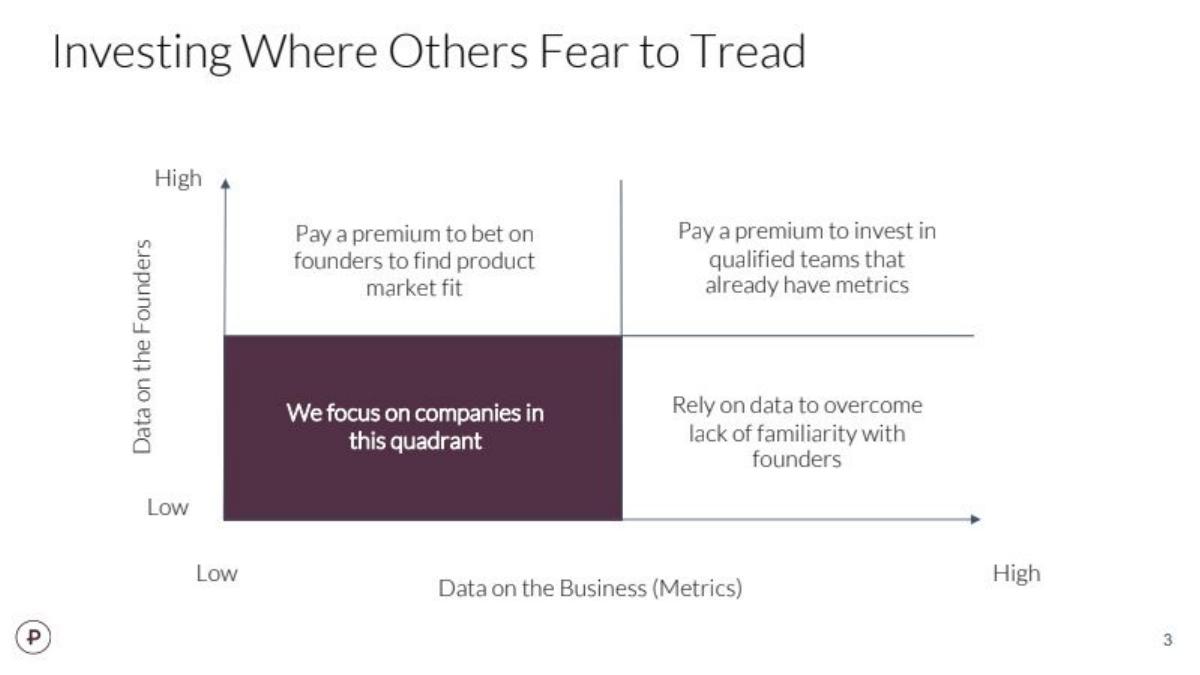
- Precursor Ventures explicitly states their investment focus is on companies with 'Low' data on founders and 'Low' data on the business (metrics), as shown in a quadrant chart on slide 3.
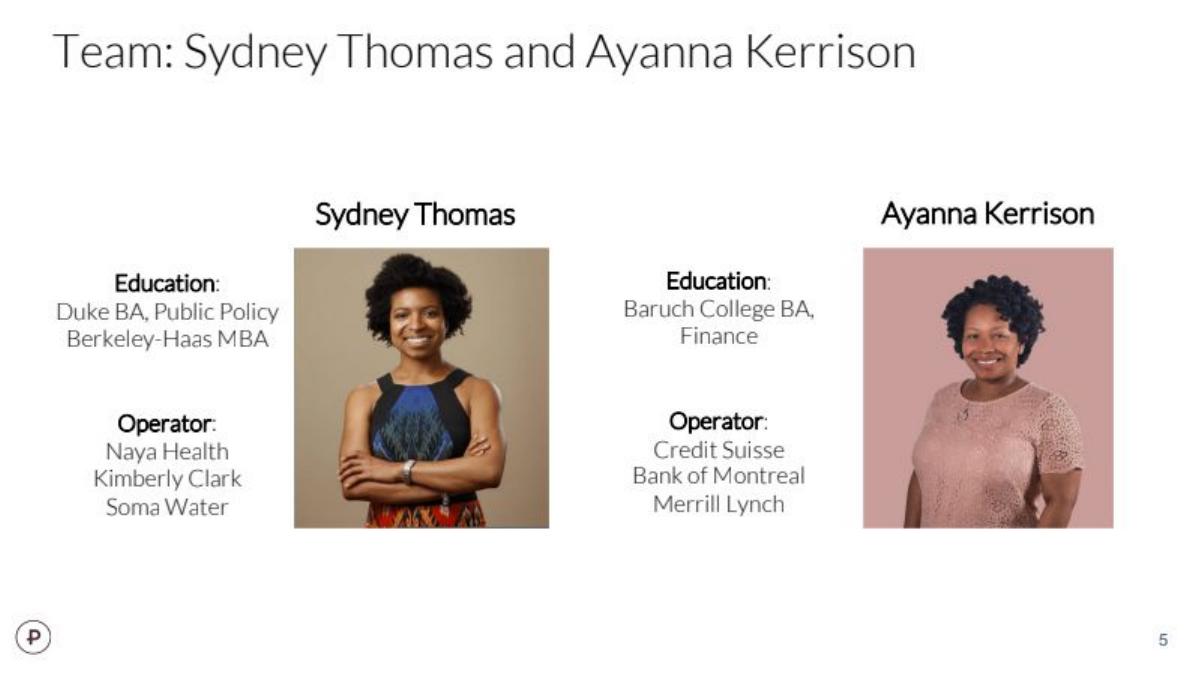
- The team slide (slide 5) presents Sydney Thomas and Ayanna Kerrison, detailing their education and operator experience.
- Precursor Fund I, closed in 2016, was a '$15.3 Million Fund' designed to validate their thesis, investing in '20-25 companies per year with a $100-250K check' (slide 10).
- Fund II, a '$31 million fund', continued initial investments of '$250K' and introduced a second investment of '$250K' between the initial investment and the next round (slide 17).
- The investment theses (slide 27) specify 'Areas of Interest' including B2B and B2C Marketplaces, Digital Health, Consumer Subscription Services, and Industry-specific Vertical Software, while listing 'Areas to Avoid' such as K-12 Education and Deep Tech/Hard Tech.
- Geographic distribution data (slide 29) shows a shift from Fund I (69% Bay Area) to Fund II (58% Bay Area), indicating a broadening reach.
- Distribution of Founder Ethnicity by Fund (slide 31) provides specific percentages for White, Asian, Black/African-American, and LatinX founders, demonstrating a focus on diversity.
Precursor Fund III Pitch Deck Teardown: Raising a $40M Pre-Seed Venture Fund
This teardown analyzes the pitch deck used by Precursor Ventures to raise Precursor Fund III, a $40 million pre-seed venture fund in 2020. The deck provides a comprehensive overview of the firm's investment philosophy, track record across previous funds, and strategic evolution. It targets prospective limited partners, outlining the firm's differentiated approach to early-stage investing, its portfolio construction, and its commitment to supporting founders. The presentation emphasizes a data-driven narrative, showcasing growth in fund size, geographic reach, and founder diversity. While some performance metrics are notably absent or redacted, the deck effectively communicates Precursor Ventures' unique position in the pre-seed ecosystem and its plans for future growth with Fund III.
The deck is structured to first introduce the fund and its core investment thesis, then delve into the history and performance of Precursor's prior funds (Fund I and Fund II). It highlights specific portfolio companies, co-investor relationships, and the firm's evolving strategy. Later slides detail the investment theses, geographic and demographic distribution of investments, and the specific structure and goals for Fund III. The inclusion of team information and portfolio support mechanisms further rounds out the presentation, providing a holistic view of the firm's operations and value proposition to limited partners.
Slide 1: Title Slide
The first slide clearly states the fund's identity: PRECURSOR VENTURES FUND III . Below this, it specifies the target amount and stage: $40 Million Pre-Seed Venture Fund . The Precursor Ventures logo, a white 'P' inside a circle, is prominently displayed in the center of the slide. The background is a solid dark maroon color.
Slide 3: Investing Where Others Fear to Tread
This slide presents a 2x2 matrix with axes labeled 'Data on the Founders' (Low to High) and 'Data on the Business (Metrics)' (Low to High). Each quadrant describes a different investment scenario. The top-left quadrant states: 'Pay a premium to bet on founders to find product market fit'. The top-right quadrant states: 'Pay a premium to invest in qualified teams that already have metrics'. The bottom-right quadrant states: 'Rely on data to overcome lack of familiarity with founders'. The bottom-left quadrant is highlighted in a darker maroon color and states: 'We focus on companies in this quadrant' . This visually communicates Precursor Ventures' specific niche in early-stage investing, targeting companies with minimal data on both founders and business metrics.
Slide 5: Team: Sydney Thomas and Ayanna Kerrison
This slide introduces two team members with their photographs. On the left, Sydney Thomas is listed with her education: Duke BA, Public Policy and Berkeley-Haas MBA . Her operator experience includes: Naya Health, Kimberly Clark, Soma Water . On the right, Ayanna Kerrison is listed with her education: Baruch College BA, Finance . Her operator experience includes: Credit Suisse, Bank of Montreal, Merrill Lynch . This slide provides a brief overview of the professional backgrounds of these individuals.
Slide 7: Seed Funds Have Continued to Grow Over Time
This slide features a horizontal stacked bar chart titled 'Fund Size ($M)'. The chart illustrates the growth of various seed funds over time, with each bar representing a different firm and segments within the bar representing successive funds (Fund I, Fund II, etc.). Firms listed include Felicis Ventures, Forerunner, Lerer Hippeau, Floodgate, Uncork (aka SoftTech), Crosscut Ventures, Eniac Ventures, and Freestyle. The accompanying text states: 'In the last few years, top seed funds have grown to $100M+ per fund' . The chart shows Felicis Ventures with funds reaching up to $510M, Forerunner up to $360M, and Lerer Hippeau up to $130M, among others. A legend at the bottom identifies the color coding for Fund I through Fund VII.
Slide 10: Precursor Fund I - $15.3 Million Fund Closed in 2016
This slide details the strategy and characteristics of Precursor Fund I. The title indicates it was a '$15.3 Million Fund Closed in 2016' . The text explains: 'Precursor Fund I was designed to validate our thesis for investing in pre-seed companies'. Key bullet points outline its approach:
Invest in 20-25 companies per year with a $100-250K check · Portfolio was weighted toward pre-seed, with some exposure to seed · Prove ability to lead and set terms for pre-seed rounds · Validate our ability to lead and the importance of having a lead at the pre-seed stage · Use SPVs to follow on in our best portfolio companies · Work with existing Precursor LPs to form syndicates for our best companies · Focus on access over ownership · Focus on getting into great companies, with more attention paid to entry price over ownership percentage
Slide 12: Precursor Fund I Performance Over Time
This slide is titled 'Precursor Fund I Performance Over Time'. The entire content area of the slide is covered by a large black rectangle with two diagonal white lines forming an 'X' across it. This indicates that the performance data for Fund I was either not available in this version of the deck or was intentionally redacted.
Slide 14: Standout Precursor Fund I Companies
This slide showcases eight portfolio companies from Precursor Fund I, each represented by its logo and a brief description. The companies listed are:
The Athletic : Sports Media (Series D), with co-investors Bedrock Capital Partners, Founders Fund. · AnyRoad : CRM for Experiences (Series A), with co-investors A16z, Rally Ventures. · CLEARBANC : Alternative Financing (Series A), with co-investors Emergence, Social Capital. · Incredible Health : Job Placement for Healthcare (Series A), with co-investors Obvious Ventures, NFX, A16z. · CARROT : Fertility Benefits Platform (Series B), with co-investors USVP, Uncork, Maven, CRV. · Juniper Square : CRM for Real Estate (Series C), with co-investors Redpoint Ventures, Felicis Ventures, Ribbit Capital. · FINIX : B2B Payments Platform (Series B), with co-investors Bain Capital, Homebrew. · Superhuman : Next Gen Email Service (Series B), with co-investors First Round, A16z.
Slide 17: Fund II Strategy Built on Fund I Learnings
This slide describes the evolution of Precursor's strategy for Fund II. The text states: 'Precursor Fund II was a $31 million fund that built on the lessons learned in Fund I:'. Key bullet points detail the strategy:
Continue initial investments of $250K · Make a second investment of $250K in companies between our initial investment and the next round · Maintain a roughly 2/3 pre-seed and 1/3 seed portfolio split · Use SPVs to syndicate follow-ons in cases where we have a new lead
Slide 19: Standout Precursor Fund II Companies
This slide presents eight portfolio companies from Precursor Fund II, similar to slide 14. The companies listed are:
runa : Payroll for Latin America (Series A), with co-investors Ribbit, Salesforce Ventures, Susa Ventures. · Passport : International Shipping (Series A), with co-investors Resolute Ventures, M13 Ventures. · noyo : Healthcare API (Series A), with co-investors Homebrew, Fika Ventures, Costanoa Ventures, Spark Capital. · Modern Health : Emotion Health Platform (Series B), with co-investors Y Combinator, Afore Capital, Founders Fund, Kleiner Perkins. · DRIVETIME : In-Car Trivia Game (Series A), with co-investors Canaan Partners, Makers Fund, Fuel Capital, Felicis. · POPULUS : City mobility data platform (Seed), with co-investors Relay Ventures. · spark : Next-generation grill (Seed), with co-investors Lerer Hippeau, YC, Global Founders Capital. · Medinas : Medical Supply Marketplace (Seed), with co-investors NFX.
Slide 22: Fund I and Fund II Side by Side
This slide is titled 'Fund I and Fund II Side by Side'. It features a table with columns for 'Fund I' (Entry, Current) and 'Fund II' (Entry, Current). Rows represent various investment stages and outcomes: Pre-Seed, Seed, Post Seed, Series A, Series B, Series C, Series D, Acquisition, Writedowns, and Shutdowns. Similar to slide 12, the entire content area of the table is covered by a large black rectangle with two diagonal white lines forming an 'X', indicating that this data was redacted or not included.
Slide 24: Seed Round Co-Investors
This slide displays a horizontal bar chart showing 'Seed Round Co-Investors (Company Count)'. The chart lists various venture capital firms and the number of companies they have co-invested with Precursor Ventures in seed rounds. The top co-investors are:
Y Combinator: 13 · Bloomberg Beta: 9 · Homebrew: 5 · Founders Fund: 5 · First Round Capital: 5 · Harrison Metal: 4 · Freestyle Capital: 4 · Crosscut Ventures: 3 · Uncork Capital: 3 · Resolute Ventures: 3 · Felicis Ventures: 2 · Floodgate Fund: 2 · Eniac Ventures: 2 · Lerer Hippeau: 2
Slide 27: Investment Theses
This slide is divided into two sections: 'Areas of Interest' and 'Areas to Avoid'. Under 'Areas of Interest', the bullet points are:
B2B and B2C Marketplaces · Digital Health · Consumer Subscription Services · Industry-specific Vertical Software
K-12 Education · Ad Supported Media and AdTech · Deep Tech / Hard Tech
This slide clearly defines the firm's investment scope and exclusions.
Slide 29: Geographic Distribution by Fund
This slide presents two pie charts illustrating the geographic distribution of investments for Fund I and Fund II. For FUND I , the distribution is: Bay Area 69% , New York 15%, Southern California 7%, Southeast 3%, Toronto 2%, Boston 2%, Mid-Atlantic 2%. For FUND II , the distribution is: Bay Area 58% , New York 20%, Southern California 6%, Southwest 3%, Boston 3%, Mid-Southeast Atlantic 1%, Africa 1%, Latin America 2%, Midwest 5%. The charts show a diversification away from the Bay Area in Fund II.
Slide 31: Distribution of Founder Ethnicity by Fund
This slide displays two pie charts showing the distribution of founder ethnicity for Fund I and Fund II. For FUND I , the distribution is: White 61% , Asian 19%, Black/African-American 15%, LatinX 5%. For FUND II , the distribution is: White 55% , Asian 27%, Black/African-American 12%, LatinX 3%, White, Asian 2%, LatinX, White 1%. This slide highlights the ethnic diversity of the founders in Precursor's portfolio and shows a slight shift in percentages between funds.
Slide 33: SPVs
This slide is titled 'SPVs'. Similar to slides 12 and 22, the entire content area is covered by a large black rectangle with two diagonal white lines forming an 'X'. This indicates that specific details about Special Purpose Vehicles (SPVs) were either not included or redacted in this version of the deck.
Slide 36: Precursor Fund III - $40 Million
This slide outlines the strategy and goals for Precursor Fund III. The title reiterates the fund size: Precursor Fund III - $40 Million . Key bullet points detail the fund's approach:
Precursor Fund III builds on our learnings investing Fund I and Fund II · Portfolio of 75 companies in a variety of sectors and geographies · Consistent pacing with 20-25 companies per year · Same initial check of $250K per company for Pre-Seed companies · Initial target check of $400K per company for Seed companies · Increased focus on deploying more dollars prior to Series A · Target $500-750K total invested in the best companies prior to Series A · Maintain heavy orientation toward Pre-Seed relative to Seed
Slide 38: Portfolio Support: Strength in Numbers
This slide focuses on the support Precursor Ventures provides to its portfolio companies. The main text states: 'Slack continues to be a useful space for founders to collaborate'. Bullet points provide specific metrics:
About ⅓ of our founders are active on slack · 233 messages have been sent across the slack channels just in June 2020
An image of a Slack interface is displayed on the right, showing various channels like #general, #bayarea, #ecommerce, #hiring, and #precursor-team, along with example messages from founders discussing business-related topics.
Slide 40: Thank You!
The final slide features a cityscape photograph on the left, depicting a skyline at dusk. On the right, against a dark maroon background, the text 'Thank You!' is displayed, followed by an email address: charles@precursorvc.com . This serves as a concluding slide and provides contact information.
What Works Well
Precursor Fund III's pitch deck effectively communicates its specialized investment strategy and track record to potential limited partners. The clarity of its core thesis, articulated on slide 3, immediately positions the fund as a specialist in the earliest stages of company development where data is scarce. This differentiated approach is a strong selling point, indicating a unique sourcing and evaluation capability. The progression from Fund I to Fund II, detailed on slides 10 and 17, clearly demonstrates an iterative learning process and strategic refinement, building confidence in the fund managers' ability to adapt and grow. The explicit mention of fund sizes ($15.3M for Fund I, $31M for Fund II, $40M for Fund III) shows a consistent growth trajectory, which is appealing to LPs looking for scaling managers.
The inclusion of 'Standout Precursor Fund I Companies' (slide 14) and 'Standout Precursor Fund II Companies' (slide 19) provides concrete examples of successful investments. Listing the series achieved by these companies (e.g., Series D for The Athletic, Series B for Modern Health) and prominent co-investors (e.g., A16z, Founders Fund, Kleiner Perkins) validates Precursor's ability to identify promising ventures and attract follow-on funding from reputable firms. The 'Seed Round Co-Investors' slide (slide 24) further reinforces this by quantitatively showing strong relationships with top-tier investors like Y Combinator and Bloomberg Beta, indicating syndication power and network strength. The 'Investment Theses' (slide 27) are commendably explicit, clearly outlining both 'Areas of Interest' and 'Areas to Avoid'. This transparency helps LPs quickly understand the fund's focus and ensures alignment, reducing potential mismatches in investment expectations.
The demographic data presented on 'Geographic Distribution by Fund' (slide 29) and 'Distribution of Founder Ethnicity by Fund' (slide 31) is a significant strength. In an increasingly diversity-conscious investment landscape, showcasing a commitment to investing in a diverse set of founders and geographies is a powerful signal. The shift in geographic distribution from Fund I to Fund II demonstrates a broadening reach beyond the Bay Area, suggesting a wider sourcing network and potentially more diversified risk. The specific percentages for founder ethnicity highlight a tangible effort towards inclusive investing, which can attract LPs with similar mandates or values. Finally, the 'Portfolio Support: Strength in Numbers' slide (slide 38) provides a glimpse into the value-add services offered to portfolio companies, emphasizing community and collaboration through Slack, which can be attractive to founders and, by extension, to LPs who value strong portfolio support.
What Is Missing
Despite its strengths, the Precursor Fund III pitch deck has several notable omissions, particularly concerning financial performance. Slides 12 ('Precursor Fund I Performance Over Time') and 22 ('Fund I and Fund II Side by Side') are entirely blacked out with an 'X' mark. This absence of explicit performance metrics, such as IRR, TVPI, DPI, or specific cash-on-cash returns, is a significant gap for a fund raising its third vehicle. While standout companies are listed, the lack of aggregate financial performance data makes it difficult for LPs to quantitatively assess the success of previous funds. This is a critical piece of information for any fundraise, especially for a follow-on fund where a track record should be established and demonstrable.
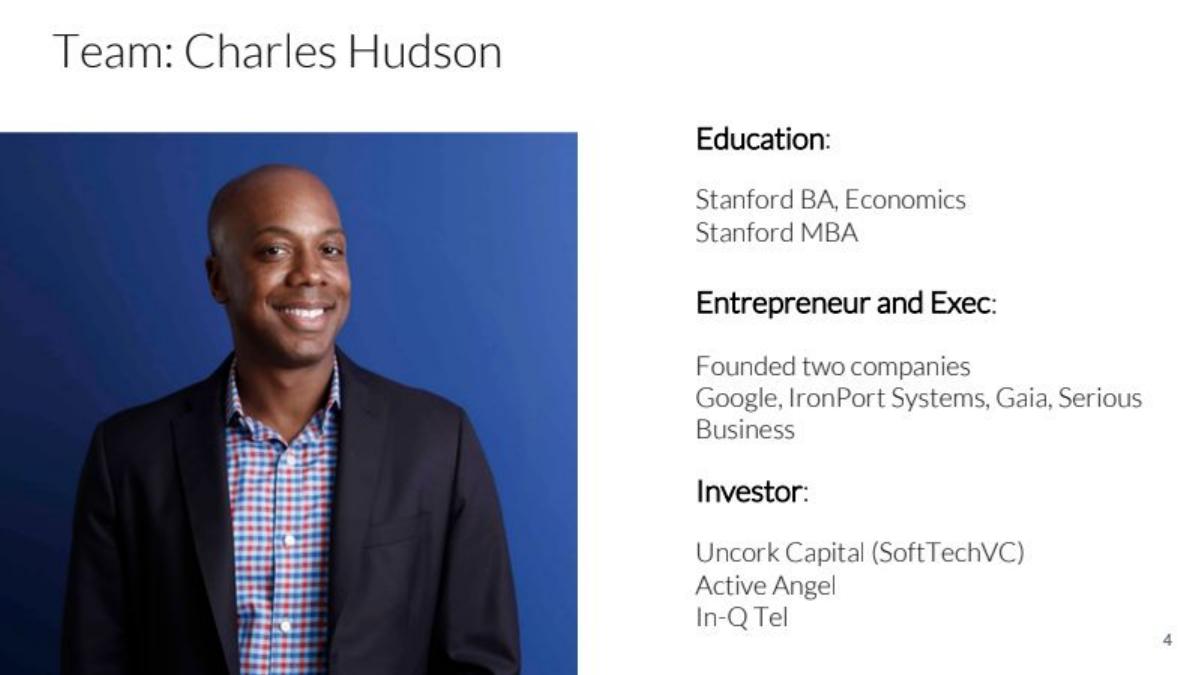
Another missing element is a more detailed overview of the general partners (GPs) beyond the two individuals mentioned on slide 5. While Sydney Thomas and Ayanna Kerrison are introduced, the catalogue listing mentions 'GPs : Charles Hudson'. The deck does not include a dedicated slide for Charles Hudson, nor does it provide a comprehensive team slide that details the full investment team, their roles, and their collective experience. For a venture fund, the experience and track record of the leadership team are paramount, and a more robust presentation of the GPs would strengthen the deck. Similarly, there is no explicit 'Ask' slide or section that clearly states the terms of the fundraise, such as management fees, carried interest, or minimum commitment size for LPs. While some of this information might be conveyed verbally or in a separate document, its absence from the deck means LPs cannot immediately grasp the financial structure of their potential investment.
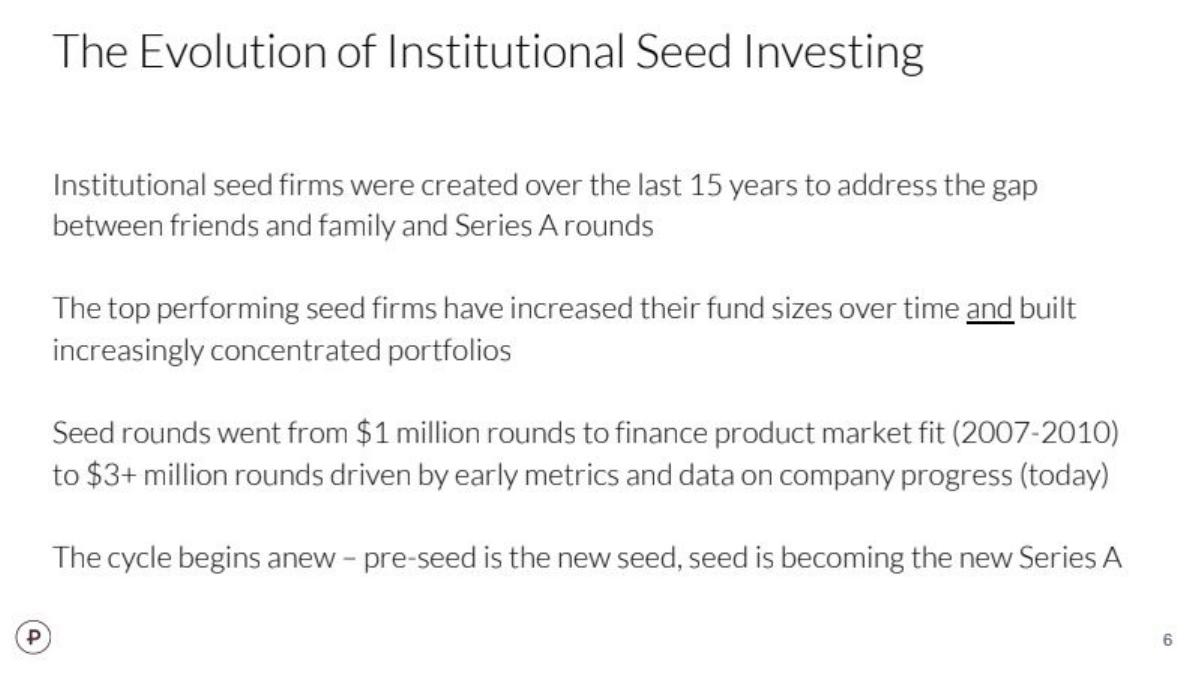
While the 'Portfolio Support' slide (slide 38) touches upon community, it could benefit from a more comprehensive overview of the value-add services Precursor provides. Beyond Slack, LPs might be interested in mentorship programs, talent acquisition support, strategic guidance, or follow-on fundraising assistance. The current slide is somewhat limited in scope. Furthermore, there is no explicit market opportunity slide that frames the broader landscape of pre-seed investing or the specific market trends that make Precursor's strategy particularly timely or advantageous. While the 'Seed Funds Have Continued to Grow Over Time' slide (slide 7) provides some context, it focuses more on fund size trends rather than the underlying market dynamics that create opportunities for pre-seed investments. Finally, there is no clear competitive landscape analysis. While the 'Investing Where Others Fear to Tread' slide (slide 3) implies a unique positioning, a direct comparison with other pre-seed or seed funds, highlighting Precursor's competitive advantages, would further strengthen the narrative.
What a Founder Should Copy
Founders, particularly those raising early-stage funds or even company rounds, can draw several valuable lessons from Precursor Fund III's pitch deck. First, the clear articulation of a differentiated strategy, as seen on slide 3 ('Investing Where Others Fear to Tread'), is highly effective. Founders should strive to define their unique value proposition and market niche in a concise and visually compelling way. This immediately tells investors why their approach is special and where they fit in the competitive landscape. For a startup, this might be a unique product feature, a specific target market, or an innovative business model.
Second, the emphasis on a consistent and evolving strategy across multiple funds (slides 10, 17, 36) demonstrates thoughtful growth and learning. Founders should aim to show how their current plans build upon past successes and lessons learned, illustrating a clear path of development and strategic refinement. This iterative approach builds confidence in their ability to execute and adapt. Highlighting 'Standout Companies' (slides 14, 19) with their achievements (e.g., Series A, B, C, D) and reputable co-investors is an excellent way to showcase traction and validation. For a startup, this translates to featuring key customers, successful product launches, significant partnerships, or prominent early investors.
Third, the transparency regarding investment theses, including both 'Areas of Interest' and 'Areas to Avoid' (slide 27), is a strong practice. Founders should clearly define their target market, ideal customer profile, and even what they are explicitly not focusing on. This helps investors quickly understand fit and reduces wasted time on both sides. The inclusion of demographic data, such as 'Geographic Distribution by Fund' (slide 29) and 'Distribution of Founder Ethnicity by Fund' (slide 31), is also highly commendable. While not directly applicable to all startups, the underlying principle is to provide relevant and impactful data that aligns with current market values and investor interests. For a startup, this could mean showcasing user demographics, team diversity, or impact metrics if relevant to their mission.
Finally, the 'Portfolio Support: Strength in Numbers' slide (slide 38) offers a good example of demonstrating value beyond the core offering. Founders should consider how they communicate the support systems, community, or unique advantages they offer to their customers or users. Highlighting engagement metrics, like the Slack activity, provides tangible evidence of this value. Even the simple, professional 'Thank You!' slide (slide 40) with clear contact information is a best practice for a polished closing.
Frequently asked questions
- What is the target fund size for Precursor Fund III?
- Precursor Fund III is presented as a '$40 Million Pre-Seed Venture Fund' on the title slide (slide 1). This indicates the target amount they aimed to raise for this specific fund.
- What is Precursor Ventures' unique investment strategy?
- Precursor Ventures focuses on 'companies in this quadrant' where there is 'Low' data on the founders and 'Low' data on the business (metrics), as illustrated on slide 3. This approach targets very early-stage companies before significant data is available.
- How has Precursor Ventures' investment strategy evolved across its funds?
- Fund I (slide 10) focused on validating their pre-seed thesis with $100-250K checks. Fund II (slide 17) built on this by continuing $250K initial investments and adding a second $250K investment. Fund III (slide 36) plans to increase total investment to $500-750K in top companies prior to Series A.
- What types of companies does Precursor Ventures typically invest in or avoid?
- According to slide 27, 'Areas of Interest' include B2B and B2C Marketplaces, Digital Health, Consumer Subscription Services, and Industry-specific Vertical Software. 'Areas to Avoid' are K-12 Education, Ad Supported Media and AdTech, and Deep Tech / Hard Tech.
- Does the deck provide details on the performance of previous funds?
- Slides 12 and 22 are titled 'Precursor Fund I Performance Over Time' and 'Fund I and Fund II Side by Side' respectively, but both slides contain large black boxes with crossed lines, indicating that performance data was redacted or not included in this version of the deck.