Sable’s 13-slide seed deck is a textbook example of using 'founder-market fit' to compensate for early-stage data gaps. Raising $4.7M in 2019, the company focused on the friction internationals face when entering the U.S. financial system. The deck’s strength lies in its aggressive speed—going live in just three months—and a team that had collectively launched 14 banking products at institutions like Capital One and American Express. While the deck is light on unit economics and specific customer acquisition costs, it successfully sells a vision of a 'borderless banking platform' by first sol…
Key takeaways
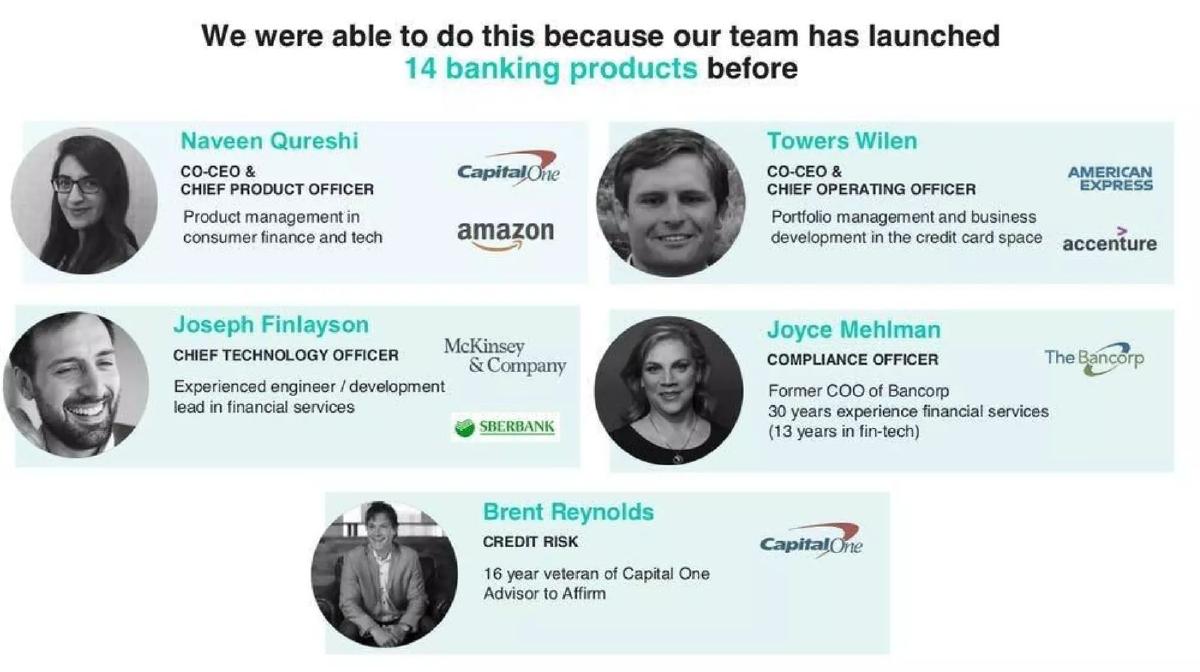
- The team emphasizes their deep domain expertise, noting they have launched 14 banking products prior to Sable (Slide 4).
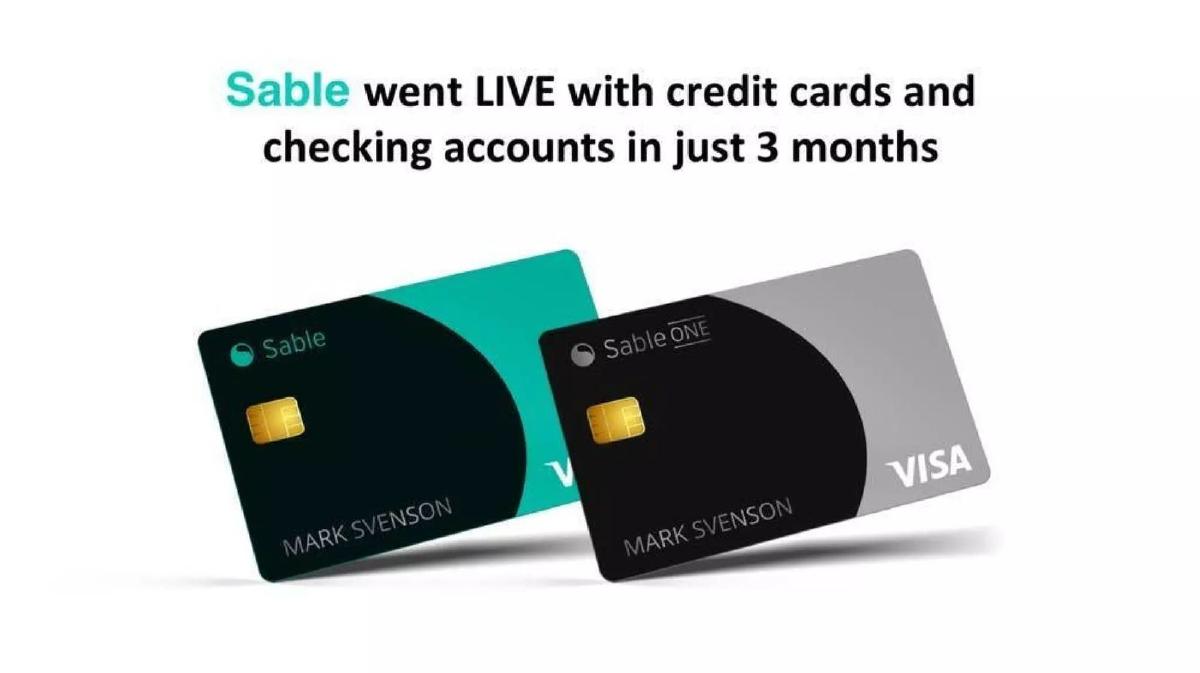
- Sable achieved significant speed-to-market, going live with credit cards and checking accounts in only 3 months (Slide 3).
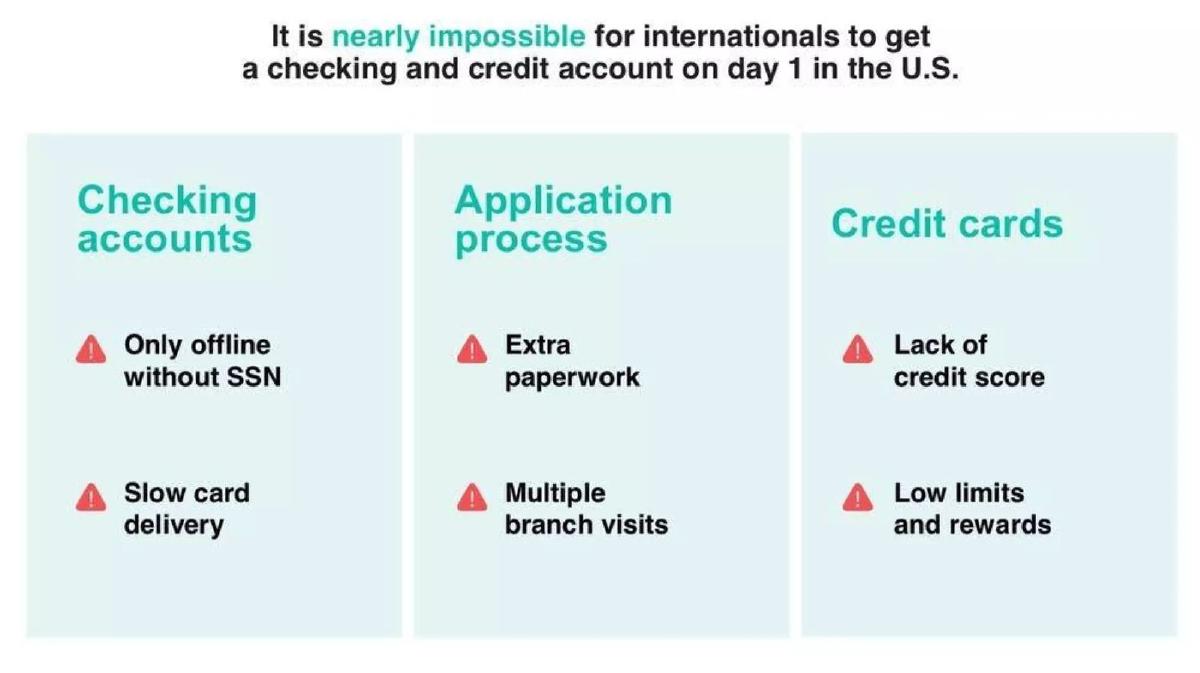
- The product addresses the 'impossible' task for internationals to get credit on day 1 due to lack of SSN or credit score (Slide 6).
- The onboarding process is simplified to requiring only a phone and a passport (Slide 7).
- Sable identifies a $5B initial market, driven by 1.5M credit-worthy internationals moving to the U.S. annually (Slide 12).
- The long-term vision is to move beyond the U.S. to become a 'global borderless banking platform' (Slide 11).
- The deck completely omits a financial 'Ask' slide, revenue projections, or detailed unit economics.
- The team includes a 30-year financial services veteran and a former COO of Bancorp to anchor regulatory credibility (Slide 4).
The Hook: Speed and Clarity
Sable’s pitch deck begins with a very clear value proposition. Slide 1 and Slide 2 establish the identity immediately: "Digital banking for internationals in the U.S." There is no ambiguity. For a seed-stage fintech, clarity is often more valuable than a complex narrative. By Slide 3, they hit the investor with a major traction milestone: they went live with both credit cards and checking accounts in just three months. In the highly regulated world of banking, this is an extraordinary claim of execution speed.
The Team: Domain Expertise as a Moat
Slide 4 is perhaps the most important slide in this deck. In fintech, investors are terrified of regulatory missteps and technical debt. Sable counters this by showcasing a team that has "launched 14 banking products before." The logos on this slide—Capital One, American Express, Amazon, McKinsey, and The Bancorp—serve as a proxy for trust. Joyce Mehlman , the Compliance Officer, is highlighted for having 30 years of experience, which signals to investors that the company understands the 'unsexy' but critical parts of banking like KYC (Know Your Customer) and AML (Anti-Money Laundering).
The Problem: The 'Day 1' Friction
Slide 5 is a transition slide featuring a gorilla logo, likely a nod to the '800-pound gorilla' in the room or a branding element. It leads into Slide 6, which articulates the problem. Sable identifies three pillars of frustration for immigrants: checking accounts (offline only without SSN), the application process (multiple branch visits), and credit cards (lack of credit score). By framing the problem as "nearly impossible" for internationals to solve on "day 1," Sable creates a sense of urgency and a clearly defined target user.
The Solution: Mobile-First and Frictionless
Slides 7, 8, and 9 focus on the product. The solution is elegantly simple: "just a phone and a passport" (Slide 7). This is a direct counter to the "extra paperwork" and "branch visits" mentioned in the problem slide. Slide 8 promises access to a credit card, bank account, and savings account "within 5 minutes." Slide 9 provides a visual walkthrough of the UI, showing the passport scanning feature and the sleek design of the physical Visa card. This section proves that the product isn't just a concept—it is a functional, high-design reality.
The Vision: From U.S. Entry to Global Platform
Slide 10 is a placeholder or branding image, which leads to the 'Big Vision' on Slide 11. Sable isn't just a tool for immigrants in America; the goal is "becoming a global borderless banking platform." This is a crucial pivot for a seed deck. It tells investors that while the U.S. immigrant market is the entry point, the technology and regulatory stack they are building is scalable globally. This expands the TAM (Total Addressable Market) significantly.
Market Size and Summary
Slide 12 quantifies the opportunity. They claim a "$5B initial market in the U.S. alone." They break this down by the numbers: 10M internationals move to the U.S. annually, and 1.5M of those are "prime or super prime." This distinction is vital—it tells investors that Sable isn't chasing high-risk subprime borrowers, but rather high-value customers who are simply 'thin-file' due to their recent arrival. Finally, Slide 13 summarizes the three pillars of the pitch: speed to market (3 months), team experience (14 products), and market size ($5B).
What Works in This Deck
The Execution Narrative: Most seed decks are full of 'we will' statements. Sable uses 'we did.' By emphasizing that they went live in three months (Slide 3), they prove their technical and operational capability upfront.
Regulatory De-risking: By including a Compliance Officer with 30 years of experience and a Credit Risk lead with 16 years at Capital One (Slide 4), they address the biggest fear in fintech: that the founders don't know how to handle the law or the money.
Specific Persona Targeting: They don't just say 'immigrants.' They specify 'prime or super prime' internationals (Slide 12). This suggests a sophisticated understanding of credit risk and customer lifetime value.
What Is Missing
The 'Ask': There is no slide detailing how much money they are raising or what they intend to do with the funds. While the catalogue facts state they raised $4.7M, the deck itself leaves the investor hanging on the specific terms of the round.
Unit Economics: There is no mention of how Sable makes money. Do they rely on interchange fees? Interest? Monthly subscriptions? For a banking product, the path to profitability is a major question that is left unanswered here.
Customer Acquisition Strategy: While they identify a $5B market, they don't explain how they will reach these 1.5M people as they land in the U.S. Is it through partnerships with universities, employers, or digital marketing? The 'Go-to-Market' strategy is entirely absent.
Competition: There is no competitive landscape slide. In 2019, other neobanks and immigrant-focused fintechs were emerging. Failing to acknowledge the competition can sometimes make a team look naive or overconfident.
What a Founder Should Copy
The 'Team-Product-Market' Summary: Slide 13 is a perfect closing slide. It distills the entire 13-slide deck into three bullet points. If an investor only remembers three things, these are the three things Sable wants them to be.
Visual Simplicity: The deck uses very little text. It relies on bold headers and high-quality imagery. This is ideal for a deck that is meant to be presented or skimmed quickly.
The 'Day 1' Framing: If you are solving a friction-filled process, define the 'Day 1' experience. It creates a visceral understanding of the pain point that numbers alone cannot convey.
Focus on 'Founder-Market Fit': If your team has a combined 50+ years of experience in your sector, make that the centerpiece of your deck. Sable leaned into their pedigree to justify a multi-million dollar seed round before they had significant user data.
Frequently asked questions
- How much did Sable raise with this deck?
- According to catalogue facts from pitchdeckhunt.com, Sable raised $4,700,000 in a Seed round in 2019.
- What is the core problem Sable is solving?
- Sable targets the friction internationals face when moving to the U.S. As shown on Slide 6, these individuals struggle with offline-only accounts, lack of Social Security Numbers (SSN), and an inability to build credit history from day one.
- What is unique about the Sable team?
- The team is exceptionally senior for a seed-stage startup. Slide 4 highlights that they have launched 14 banking products previously and include veterans from Capital One, American Express, Amazon, and McKinsey, as well as a Compliance Officer with 30 years of experience.
- What is the size of the market Sable is targeting?
- Slide 12 quantifies the initial U.S. market at $5 billion. This is based on 10 million internationals moving to the U.S. annually, with 1.5 million of those being 'prime or super prime' credit candidates.
- Does the deck show the actual product?
- Yes. Slides 8 and 9 provide high-fidelity mockups of the mobile app, showing features like credit card management, checking account balances, and the passport-scanning onboarding flow.