The Seattle Storm’s 15-slide deck is a masterclass in leveraging brand equity and macro-market tailwinds. Rather than focusing on traditional tech metrics like CAC or LTV, the franchise highlights its four WNBA championships and 300% ticket sales growth between 2014 and 2022. The primary objective of the $21M raise was the construction of the 'Center for Basketball Performance,' a dedicated facility intended to institutionalize the team's competitive advantage. By blending social impact—through programs like Force4Change—with hard viewership data showing a 63% increase in WNBA Finals interest…
Key takeaways
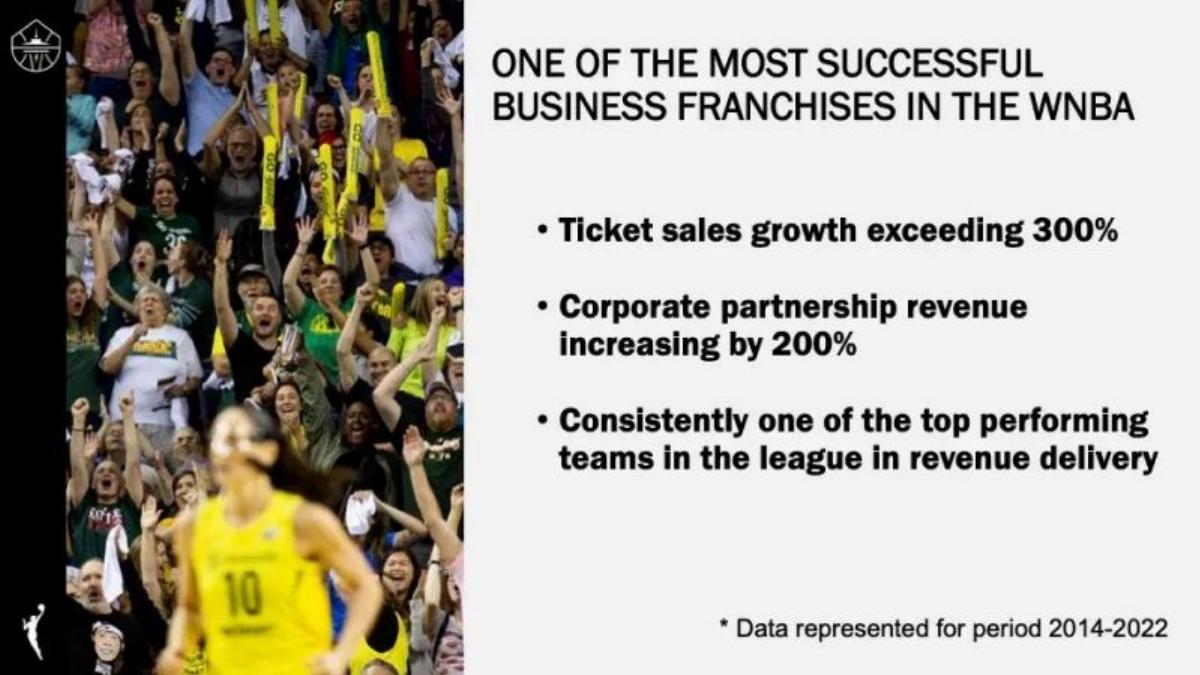
- The franchise reports ticket sales growth exceeding 300% and corporate partnership revenue increasing by 200% from 2014 to 2022 (Slide 5).
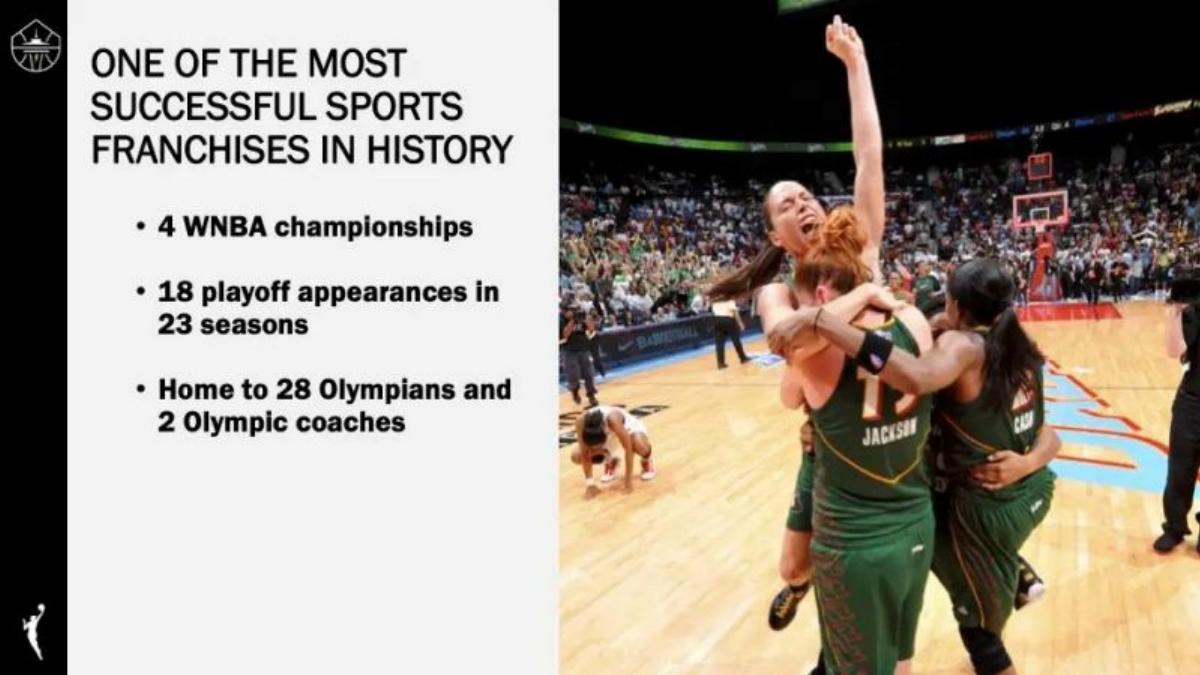
- The Seattle Storm has secured 4 WNBA championships and 18 playoff appearances in 23 seasons (Slide 4).
- The deck identifies a 63% increase in WNBA Finals viewership since 2020 as a key market indicator (Slide 9).
- Proceeds from the $21M raise are specifically earmarked for the construction of the Center for Basketball Performance and working capital (Slide 2).
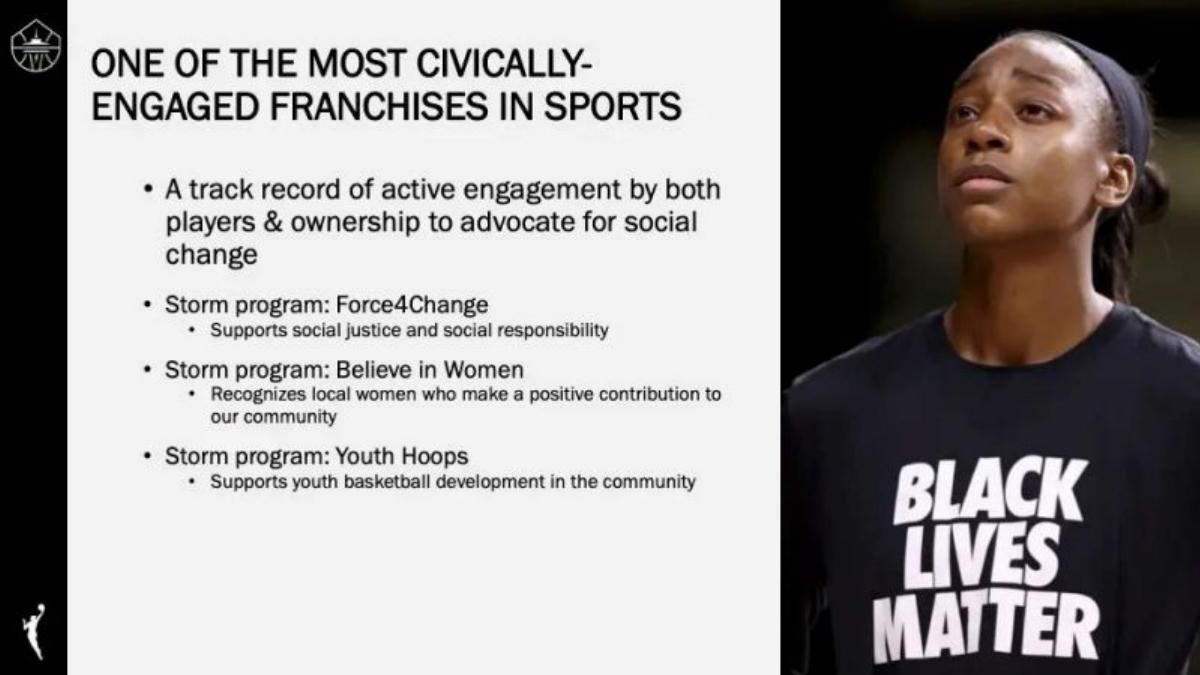
- The team emphasizes civic engagement through three core programs: Force4Change, Believe in Women, and Youth Hoops (Slide 6).
- Market data shows massive brand engagement spikes for investors in women's sports, including a 2700% increase for Visa (Slide 8).
- The deck highlights global attendance records, such as 91,648 fans for a Barcelona vs. Wolfsburg match, to prove the 'exploding' market (Slide 10).
- There is a total absence of traditional financial projections, cap tables, or exit strategy slides in this presentation.
Introduction and the Strategic Shift
The Seattle Storm pitch deck is a unique artifact in the world of fundraising. While most decks on StartupFundraising.com focus on software or hardware, this is a pure-play sports franchise investment. The deck consists of 15 slides, heavily weighted toward brand legacy and macro-market validation. It was used in 2023 to raise $21M, valuing the team at a reported $151M, making it the highest-valued franchise in the WNBA at the time.
Slide 1: Title Slide
The deck opens with a high-contrast image of the Seattle skyline, featuring the Space Needle and the Climate Pledge Arena. The tagline is: "Promoting Excellence & Social Change through Teamwork & Partnership." This immediately establishes the dual-bottom-line nature of the investment: athletic performance and social impact.
Slide 2: The Opportunity
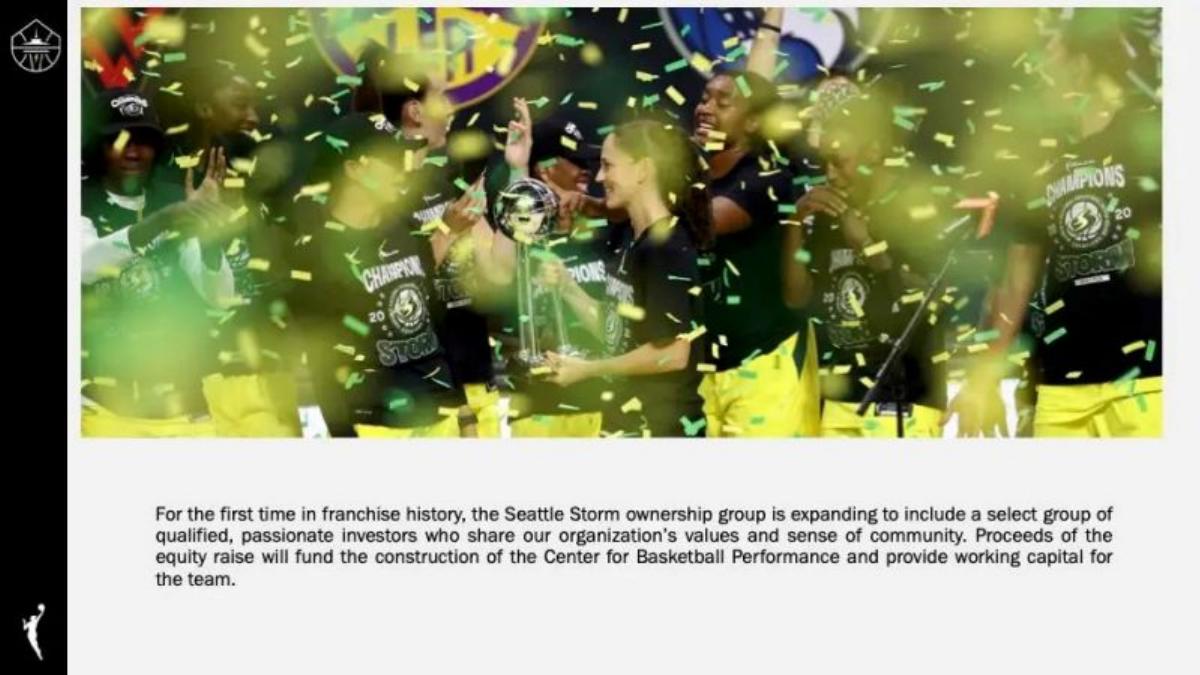
Slide 2 serves as the executive summary and the "Ask." It explicitly states that for the first time in franchise history, the ownership group is expanding to include a select group of "qualified, passionate investors." The slide clearly defines the use of funds: the construction of the Center for Basketball Performance and working capital. This is a rare example of a deck putting the use of proceeds at the very beginning rather than the end.
Slide 3 & 4: A History of Success
Slide 3 is a transition slide titled "Seattle Storm: A History of Success." Slide 4 backs this up with three powerful bullet points: 4 WNBA championships, 18 playoff appearances in 23 seasons, and being home to 28 Olympians and 2 Olympic coaches. In the world of sports, this is the equivalent of a startup showing a high Net Promoter Score or low churn; it proves the "product" (the team) works.
Slide 5: Business Performance
This is the closest the deck gets to a financial slide. It claims the Storm is "One of the most successful business franchises in the WNBA." The supporting data covers the period from 2014 to 2022:
Ticket sales growth exceeding 300% · Corporate partnership revenue increasing by 200% · Consistently one of the top performing teams in the league in revenue delivery
The lack of raw dollar amounts is typical for private sports franchises, but the percentage growth suggests a business that has outpaced the general inflation of the sports market.
Slide 6: Civic Engagement
The Storm positions its social impact as a core business pillar, not an afterthought. Slide 6 highlights three programs: Force4Change (social justice), Believe in Women (local community), and Youth Hoops (development). The inclusion of a "Black Lives Matter" shirt in the imagery reinforces the team's alignment with its player base and fan demographics.
Slide 7, 8, 9 & 10: The Macro Case for Women's Sports
This four-slide sequence is designed to convince investors that the WNBA is at an inflection point. Slide 8 focuses on "Spending," showing that brands like Visa saw a 2700% increase in engagement from fans of women's sports. Slide 9 focuses on "Viewership," citing a 63% increase for the 2021 WNBA Finals and a 216% increase for the NWSL Championship. Slide 10 focuses on "Audience," highlighting massive global attendance figures, such as 91,648 for a Barcelona women's match. This section is crucial because it moves the narrative from "invest in this team" to "invest in this exploding asset class."
Slide 11, 12 & 13: The Investment - Center for Basketball Performance
The final section of the deck focuses on the primary reason for the raise. Slide 12 and Slide 13 provide architectural renderings of the new facility. Slide 13 includes a specific detail: "Double story windows connect the indoor courts to the exterior courts, where the Storm plans to host community-based 3X basketball tournaments in the summer." This facility is presented as the physical manifestation of the brand's growth and a new revenue/community asset.
Slide 14 & 15: Conclusion
The deck ends with a repeat of the title imagery and a standard credits slide. Notably, there is no contact information, no "Team" slide featuring the front office, and no specific terms of the $21M equity raise.
What the Seattle Storm Deck Does Well
1. Narrative Momentum: The deck follows a logical flow: we are winners (history), we are growing (business), the whole world is watching (market), and here is what we are building next (the facility). It creates a sense of inevitability.
2. Third-Party Validation: By citing sources like ESPN, The Athletic, and the Sports Innovation Lab, the Storm avoids making "homer" claims. They use external data to prove that the interest in their product is a global phenomenon.
3. Visual Storytelling: The use of high-quality photography—from championship celebrations to architectural renderings—makes the investment feel tangible. It moves the investor from a spreadsheet mindset to a legacy mindset.
What is Missing from the Seattle Storm Deck
1. Management Team: There is no mention of the GM, the Head Coach, or the business executives running the franchise. In a traditional seed deck, the team is 50% of the grade. Here, the brand is the team.
2. Financial Projections: While the deck mentions 300% growth in the past, it offers zero projections for the future. Investors are left to guess how the new facility will impact the bottom line or what the path to profitability (or exit) looks like.
3. The Competitive Landscape: The deck ignores other entertainment options in Seattle (like the Kraken or the Mariners) and other WNBA teams. It assumes the investor is already sold on the city and the league.
What Founders Should Copy
The "Macro Tailwinds" Section: Slides 8-10 are a perfect template for any founder in a nascent or misunderstood market. Don't just say your company is great; show that the entire ocean you are swimming in is rising. Use specific, high-growth percentages from reputable third parties to make your case.
The Specificity of the "Ask": Many founders ask for money for "growth" or "hiring." The Storm asks for money to build a specific building. Even if your "building" is a software feature, being this specific about where the capital goes builds trust with investors.
Focus on Brand Equity: If your company has won awards or has a long history of "wins," don't bury them. The Storm leads with their 4 championships because it is their strongest moat. Founders should identify their "championships"—whether that's a patent, a major partnership, or a high retention rate—and put them on Slide 4.
Frequently asked questions
- What was the primary purpose of the Seattle Storm's $21M raise?
- According to slide 2, the proceeds were intended to fund the construction of the 'Center for Basketball Performance' and provide general working capital for the team. This represents a shift toward owning dedicated infrastructure rather than relying on shared municipal or collegiate facilities.
- How does the Storm demonstrate business viability without a standard P&L?
- The deck uses growth percentages as a proxy for financial health. Slide 5 notes that ticket sales grew by over 300% and corporate partnership revenue by 200% between 2014 and 2022. It also claims the franchise is consistently one of the top-performing teams in the league for revenue delivery.
- What macro trends are used to justify the investment?
- The deck leans heavily on the 'exploding' market for women's sports. Slides 8, 9, and 10 cite specific data points: a 63% jump in WNBA Finals viewership, a 216% increase in NWSL Championship viewership, and massive engagement increases for sponsors like Nike (+1100%) and Budweiser (+1075%).
- Is there a team slide in the Seattle Storm deck?
- No. Unlike a traditional startup deck that introduces founders and executives, this deck focuses entirely on the 'franchise' as the entity. It mentions the 'ownership group' generally on slide 2 but does not list individual names, bios, or the management team.
- How does the deck handle competition?
- The deck does not include a competition slide. In the context of a professional sports league, 'competitors' are also 'partners' in the league's collective success. Instead of showing how they beat other teams, the deck shows how the entire category of women's sports is rising.