Tradespace’s 2017 Seed deck is a masterclass in brevity, utilizing only 8 slides to secure a $500,000 investment. The narrative centers on a stark market inefficiency: while $200 billion is spent annually on IP, 95% of intellectual property remains 'untouched.' The deck transitions quickly from this macro problem to a product solution that promises to find, analyze, and connect IP owners with buyers. Despite the lack of detailed financial projections, a formal 'ask' slide, or a competitive landscape analysis, the deck relies heavily on early traction—citing $60,000 in ARR and $10 million in u…
Key takeaways
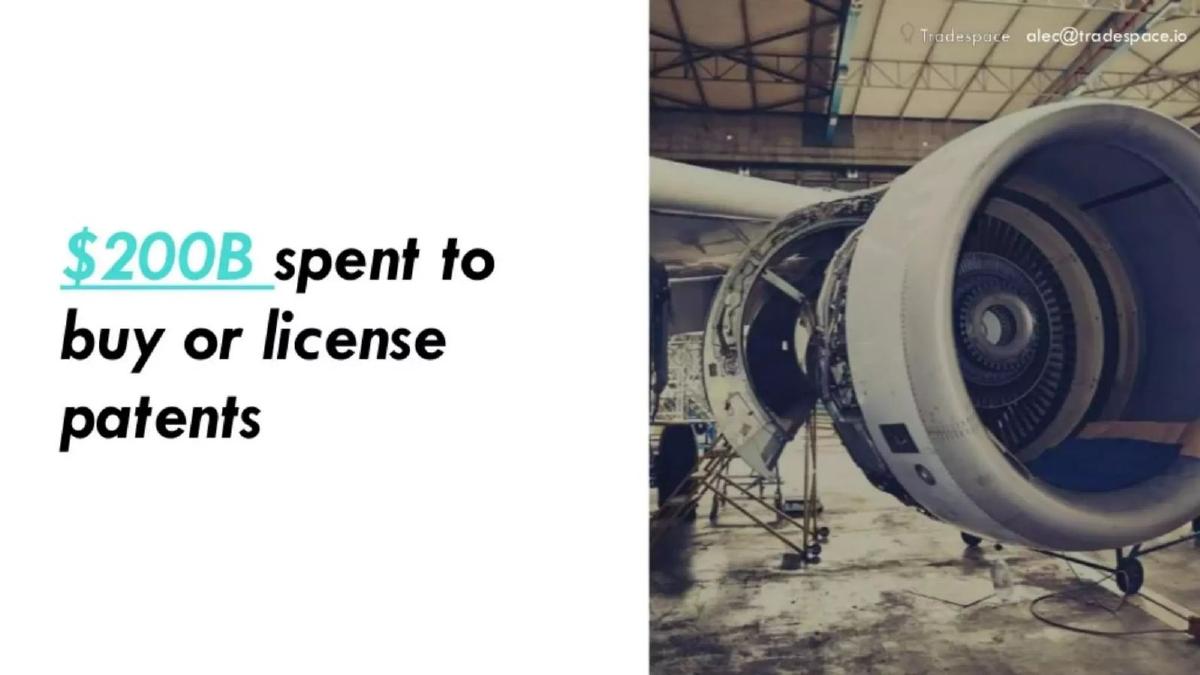
- The deck identifies a $200 billion annual spend on patent licensing and buying on slide 2.
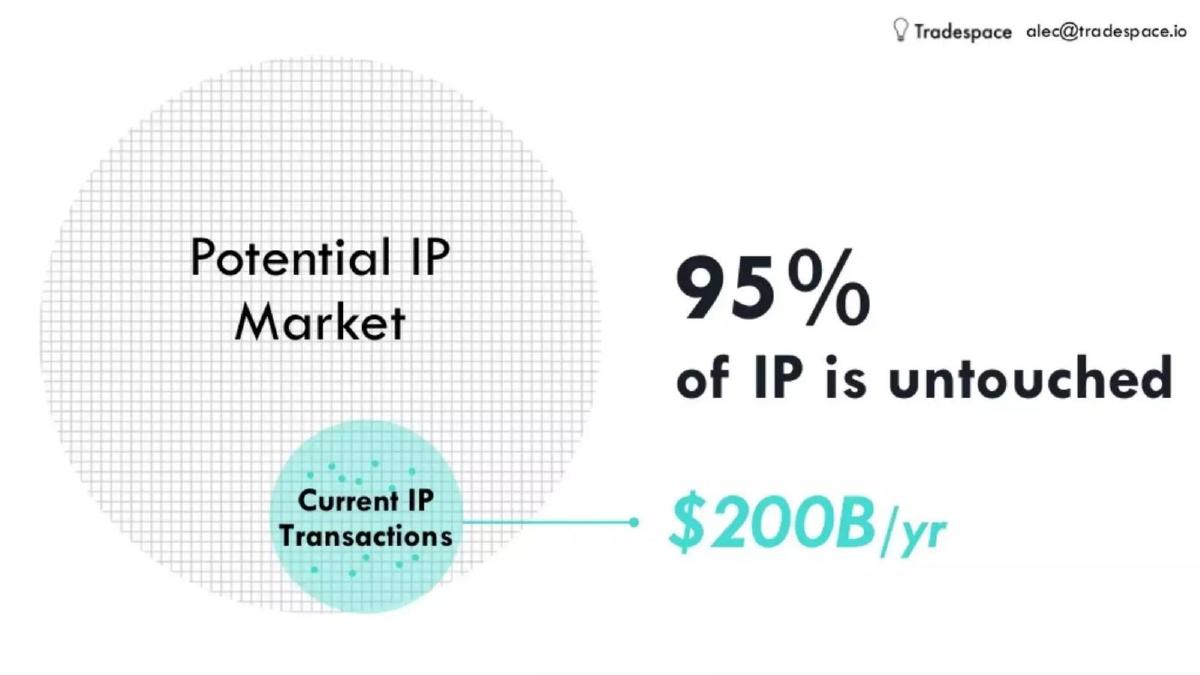
- A significant market gap is highlighted on slide 3, stating that 95% of IP is currently untouched.
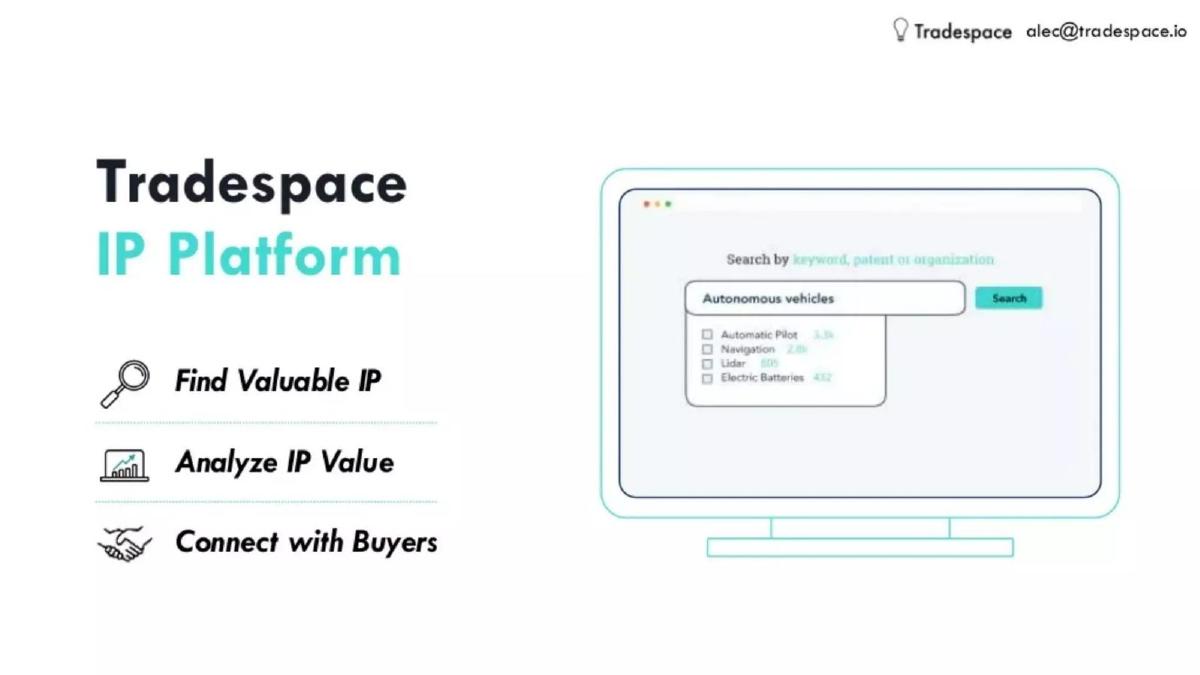
- The product is positioned as a three-pillar solution: Find Valuable IP, Analyze IP Value, and Connect with Buyers on slide 4.
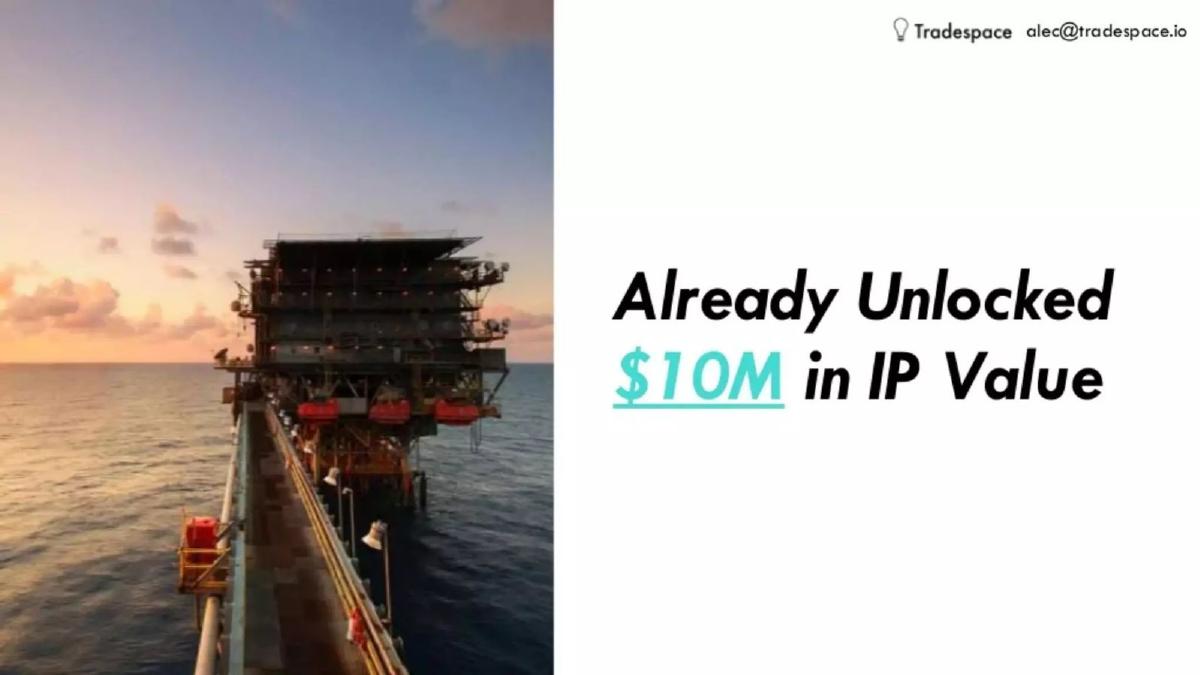
- Early traction is quantified as $10 million in IP value already unlocked on slide 5.
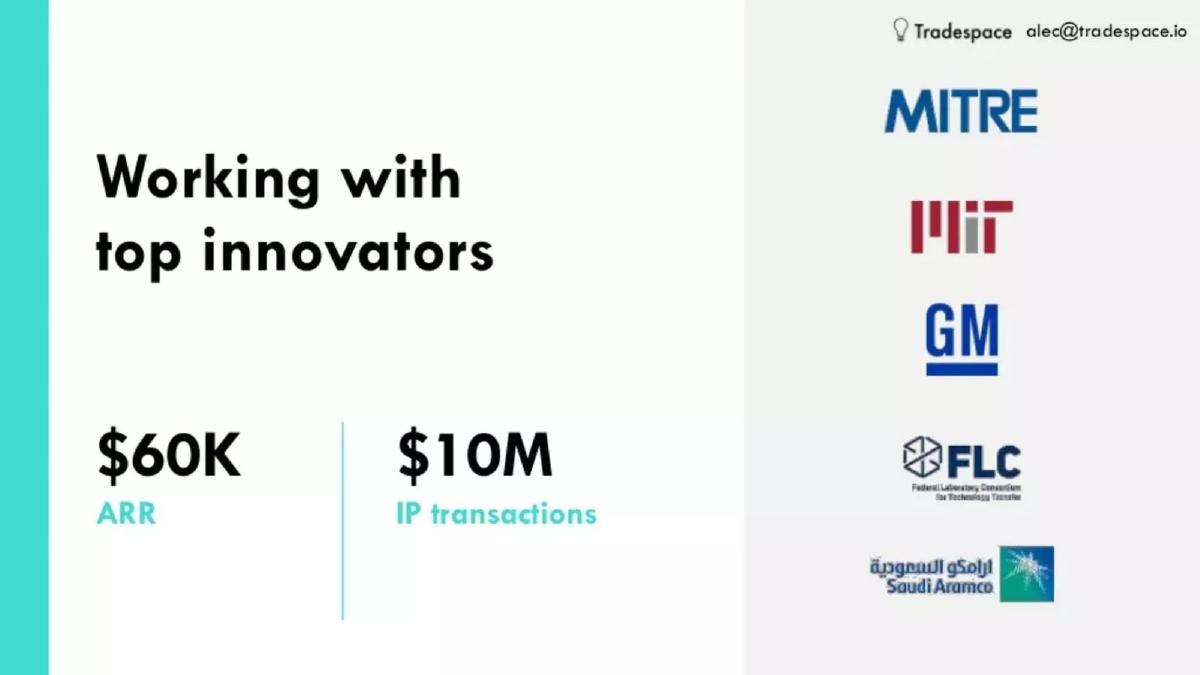
- The company reported $60,000 in ARR at the time of the 2017 Seed round on slide 6.
- Validation is provided through a list of 'top innovators' including MIT, GM, and Raytheon on slides 6 and 7.
- The leadership team features experience from heavy-industry giants like Lockheed Martin and Chevron on slide 7.
- The deck completely omits a slide detailing the specific funding amount sought or the intended use of funds.
Introduction: The 8-Slide Seed Deck
Tradespace entered the market in 2017 with a focused mission: to unlock the value of the world's intellectual property. Their Seed deck is remarkably short, consisting of only 8 slides. This brevity suggests the deck was likely used as a visual aid for a live pitch rather than a standalone document intended to answer every possible investor question. Despite its length, it managed to secure $500,000 in funding by focusing on three key areas: a massive market gap, early blue-chip traction, and a team with deep industry roots.
The Hook and the Market Opportunity (Slides 1-3)
Slide 1: Title The deck opens with a clean, minimalist title slide. The tagline "Buy, Sell, and License IP" immediately defines the company's category. The contact information for CEO Alec Sorensen is prominently displayed at the top, a practice that continues throughout the deck.
Slide 2: The Current Market Tradespace begins by establishing the scale of the existing market. It states that $200B is spent to buy or license patents. By using an image of a jet engine, the company subtly suggests that its primary focus is on high-value, industrial, and deep-tech IP rather than consumer-facing trademarks.
Slide 3: The Untapped Potential This is the 'Problem' slide, though it is framed as an opportunity. It uses a bubble chart to show that the current $200B/year in transactions is just a small fraction of the "Potential IP Market." The slide claims that 95% of IP is untouched . This creates a compelling narrative for investors: if a platform can unlock even a small percentage of that 95%, the upside is enormous. It transforms the business from a tool for existing transactions into a market-maker for dormant assets.
The Solution and Evidence of Traction (Slides 4-6)
Slide 4: The Tradespace IP Platform This slide introduces the product. It breaks the platform down into three functional pillars: Find Valuable IP , Analyze IP Value , and Connect with Buyers . A simple UI mockup shows a search bar with the term "Autonomous vehicles" and a dropdown of related categories like "Automatic Pilot" and "Lidar." This demonstrates that the platform is designed to handle complex, multi-layered technology searches that traditional patent databases might struggle with.
Slide 5: Unlocked Value Before showing revenue, Tradespace shows impact. Slide 5 claims the company has "Already Unlocked $10M in IP Value." The use of an offshore oil rig image continues the theme of heavy industry and high-stakes intellectual property. This metric is a clever way to show the platform's utility even if the company's own revenue was still in the early stages.
Slide 6: Traction and Validation This is the strongest slide in the deck. It combines hard financial metrics with social proof. Tradespace reports $60K ARR and $10M in IP transactions . To the right, they display a list of high-caliber partners and customers: MITRE, MIT, GM, FLC, and Saudi Aramco . For a Seed-stage company, having names like Saudi Aramco and General Motors on a traction slide provides significant credibility regarding the platform's enterprise-grade capabilities.
Leadership and Conclusion (Slides 7-8)
Slide 7: Leadership The team slide focuses on two key individuals: Alec Sorensen (CEO) and Mathieu Guerville (VP Business Development) . Rather than long bios, the slide uses logos to communicate their professional pedigree. Sorensen is associated with Chevron, Lockheed Martin, and Raytheon , while Guerville is linked to Underwriters Laboratories (UL) . This reinforces the idea that the founders are industry insiders who understand the complexities of IP in the aerospace, defense, and energy sectors.
Slide 8: Closing The deck ends as it began, with a repeat of the title slide and the CEO's contact information. There is no summary of the investment terms or a final call to action, which is consistent with the minimalist style of the rest of the presentation.
What Works in the Tradespace Deck
1. The "95% Untouched" Narrative: By framing the problem as a massive, untapped supply of IP rather than just a broken transaction process, Tradespace makes the market opportunity feel much larger than the existing $200B spend.
2. High-Signal Logos: For a Seed round, the logos on slide 6 (MIT, GM, Saudi Aramco) are exceptionally strong. They serve as a proxy for technical validation, suggesting that if these organizations trust the platform, the underlying analytics must be sound.
3. Industry-Specific Focus: The imagery (jet engines, oil rigs) and the team's background (Lockheed Martin, Raytheon) clearly signal that this is not a general-purpose IP tool. It is a platform for the most valuable and complex industrial technologies, which typically command higher transaction fees and stickier contracts.
What is Missing from the Tradespace Deck
1. The Ask: There is no slide indicating how much money the company is raising or what they plan to do with the capital. While this information is often shared in person, its absence makes the deck feel incomplete as a standalone fundraising document.
2. Business Model Details: While $60K ARR is mentioned, the deck doesn't explain the pricing tiers, the sales cycle, or whether they take a percentage of the $10M in transactions they helped facilitate. Investors would need to know if this is a pure SaaS play or a tech-enabled brokerage.
3. Competition: The IP analytics and licensing space is crowded with incumbents like Clarivate and specialized startups. The deck makes no mention of how Tradespace differs from existing patent search tools or legal-tech platforms.
4. Roadmap: The deck shows what has been done but doesn't outline what comes next. There is no mention of future features, geographic expansion, or hiring plans.
What a Founder Should Copy
1. Use Logos as a Resume: If you have worked at or with prestigious organizations, follow the example on slide 7. Using logos instead of dense paragraphs of text allows investors to instantly recognize your professional caliber.
2. Quantify the 'Untapped' Market: Don't just talk about the size of the current market (TAM). Talk about the size of the market that could exist if your solution removes current barriers. The bubble chart on slide 3 is an excellent way to visualize this.
3. Keep the UI Simple: Slide 4 doesn't show a complex dashboard. It shows a single search bar and a few categories. This communicates that the tool is easy to use, even if the underlying data is complex.
Final Thoughts
The Tradespace deck is a high-conviction, low-detail presentation. It relies on the strength of its early customers and the professional history of its founders to bridge the gaps in its financial and strategic disclosures. For a $500,000 Seed round, this approach was successful because it focused on the most important question for an early-stage investor: Is there a massive opportunity, and is this the team that can actually access it?
Frequently asked questions
- How much did Tradespace raise with this deck?
- According to the catalogue data from pitchdeckhunt.com, Tradespace raised $500,000 in a Seed round in 2017. Interestingly, the deck itself does not contain a slide specifying the 'Ask' or the amount they were looking to raise, which is a common omission in decks used for verbal presentations or those designed to pique interest before a formal due diligence process.
- What is the core problem Tradespace aims to solve?
- The core problem is market inefficiency in the intellectual property sector. Slide 3 points out that while $200 billion is transacted annually, this represents only 5% of the total potential market. Tradespace argues that 95% of IP is 'untouched,' suggesting a massive opportunity for a platform that can lower the barriers to discovery and valuation of these dormant assets.
- Who are Tradespace's early customers?
- Slide 6 lists several high-profile organizations as 'top innovators' they are working with. These include the MITRE Corporation, MIT, General Motors (GM), the Federal Laboratory Consortium (FLC), and Saudi Aramco. Slide 7 also shows that the leadership team has professional ties to Chevron, Lockheed Martin, Raytheon, and Underwriters Laboratories.
- What features does the Tradespace platform offer?
- Based on slide 4, the platform provides three primary functions: finding valuable IP through a search interface (demonstrated with a search for 'Autonomous vehicles'), analyzing the financial or strategic value of that IP, and providing a mechanism to connect sellers with potential buyers.
- Is there a business model or pricing slide in the deck?
- No, the deck does not explicitly detail its business model, such as whether it charges a SaaS subscription fee, a transaction commission, or a per-report fee. However, slide 6 mentions an ARR (Annual Recurring Revenue) of $60,000, which strongly implies a subscription-based revenue model was already in place at the time of the Seed round.