CoinPip’s 2014 pitch deck is a minimalist exercise in identifying a massive market inefficiency and proposing a technological bridge. By focusing on the high costs ($47) and long wait times (14 days) of traditional bank transfers, the deck positions Bitcoin not as a consumer currency, but as an invisible 'rail' for global money movement. The presentation relies heavily on visual metaphors rather than dense data, which is effective for explaining complex crypto-settlement to 2014-era investors. However, the deck is notably thin on financial projections, customer acquisition strategies, and a s…
Key takeaways
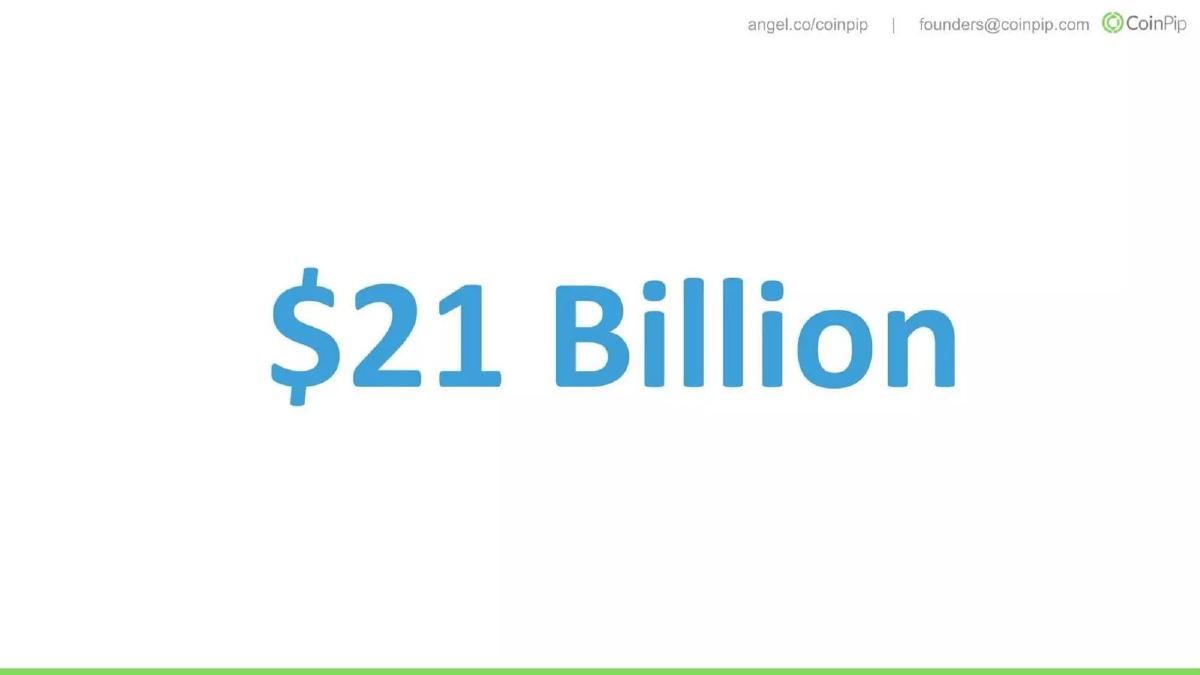
- The deck identifies a $21 billion market opportunity on slide 2, though it lacks a specific source for this figure.
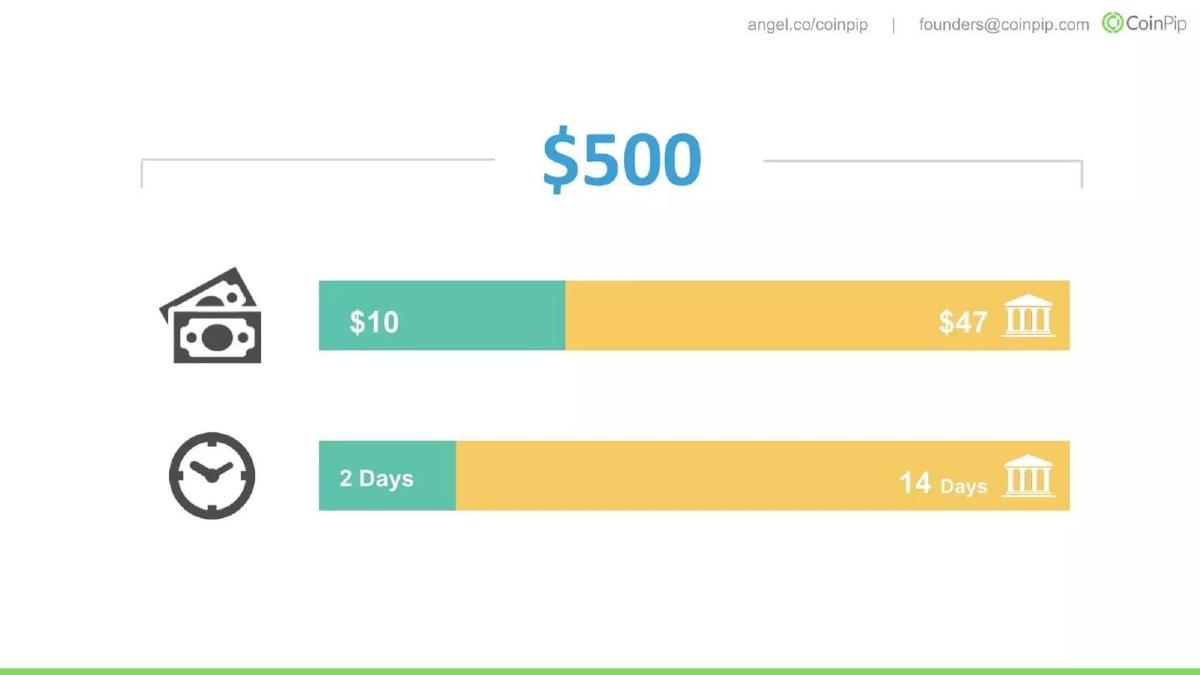
- CoinPip claims to reduce transfer costs from $47 to $10 and time from 14 days to 2 days for a $500 transfer (slide 3).
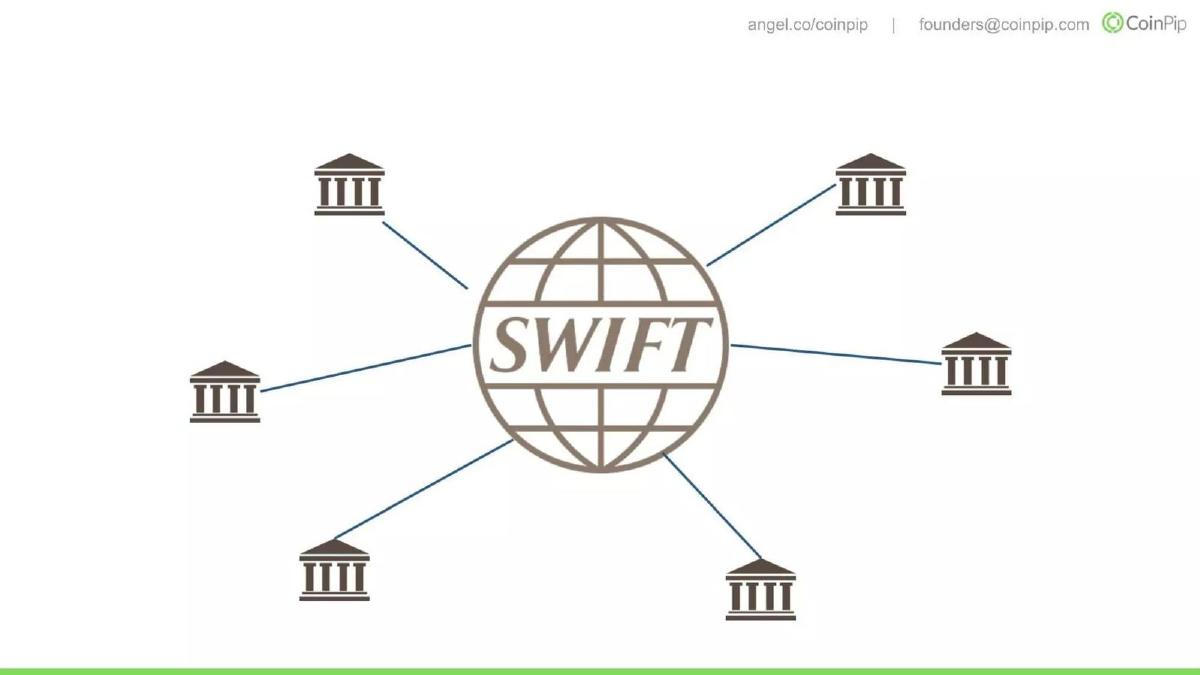
- The visual representation of the SWIFT network on slide 4 highlights the complexity and centralisation of traditional banking.
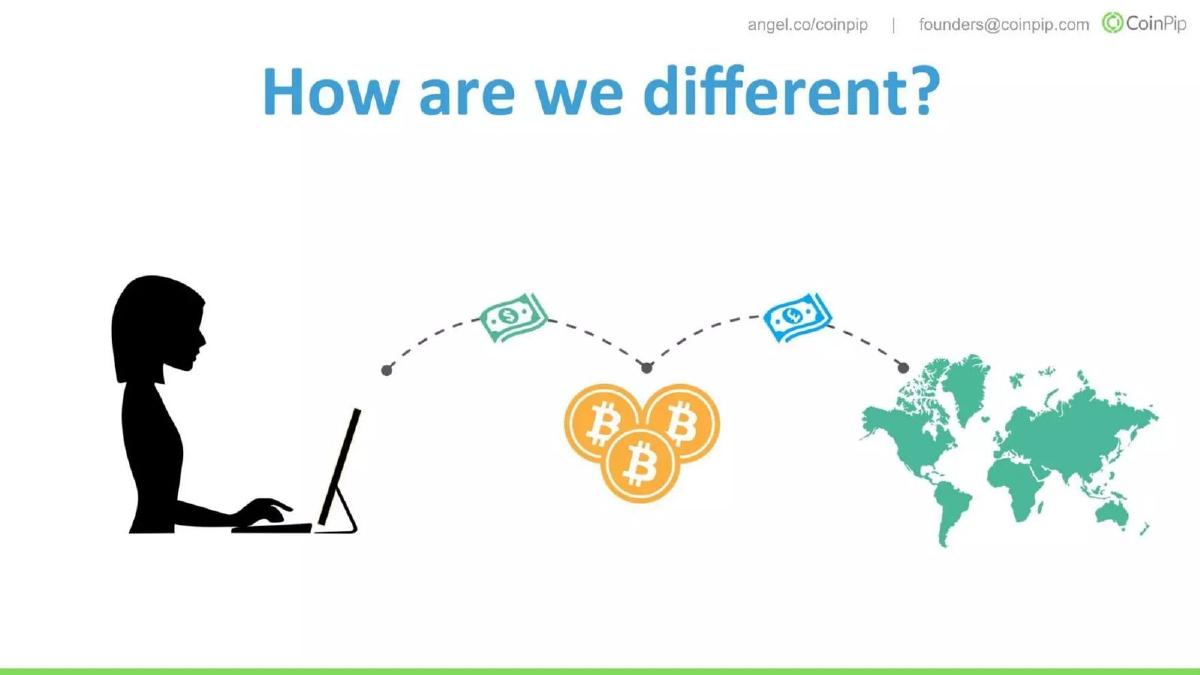
- Slide 5 illustrates the core value proposition: using Bitcoin as an intermediary layer between different fiat currencies.
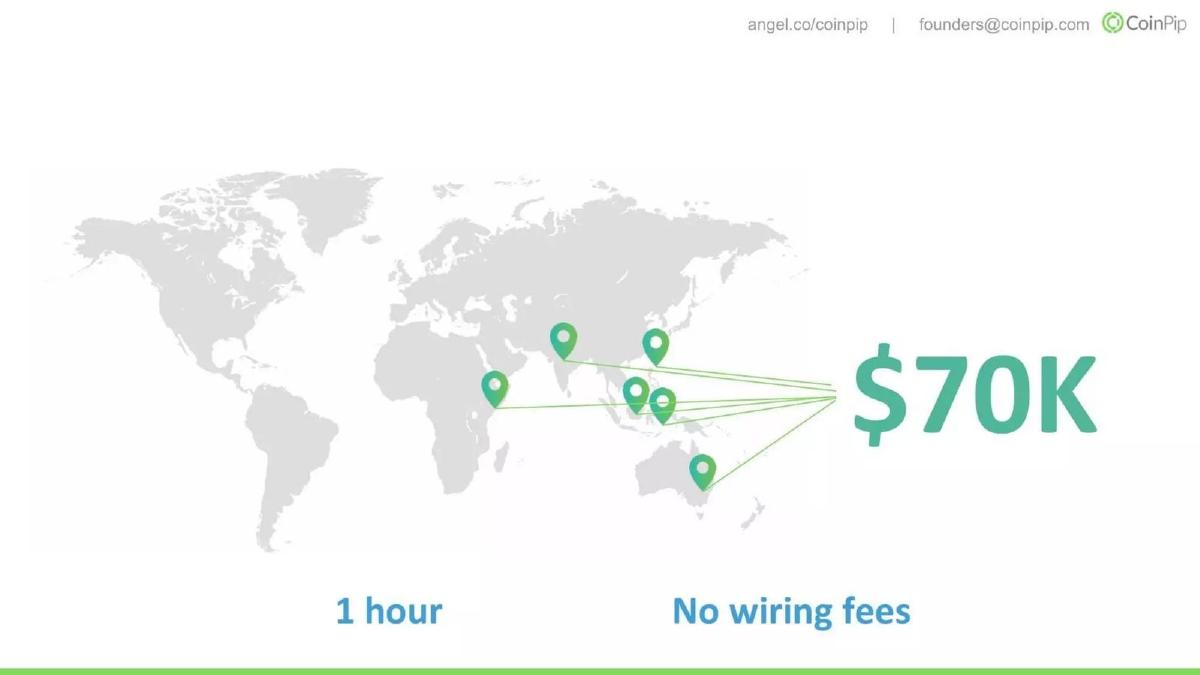
- The company highlights a $70k milestone on slide 6, though it is unclear if this represents revenue, volume, or a specific transfer corridor.
- The team slide (slide 7) features founders with backgrounds from Intuit, Citi, and Oxford, providing necessary fintech credibility.
- CoinPip lists six Bitcoin exchange partners on slide 8, including itBit and OKCoin, demonstrating existing infrastructure integration.
- The deck completely omits a 'The Ask' slide, leaving investors without a specific funding target or valuation (slides 1-10).
The Concept: Bitcoin as the Invisible Middleman
In 2014, the narrative around Bitcoin was shifting from 'magic internet money' to a functional tool for fintech innovation. CoinPip’s deck is a classic example of this era. It doesn't sell the volatility of crypto; it sells the utility of the blockchain as a settlement layer. The deck is remarkably short at only 10 slides, leaning heavily on the 'less is more' philosophy. While this makes for a quick read, it leaves significant questions unanswered for a professional investor.
Slide 1: Title Slide
The deck opens with a clean, green-to-blue gradient background. The logo features a 'C' with a vertical line through it, mimicking a currency symbol. The tagline, "International Transfers Done Right," is a direct shot at the incumbent banking system. It establishes the company's focus immediately: remittance and cross-border payments.
Slide 2: The Market Size
Slide 2 is a single, large text element: "$21 Billion." There is no context provided on the slide itself, though the catalogue facts suggest this refers to the industry opportunity. In a modern deck, an investor would expect a breakdown of TAM (Total Addressable Market), SAM (Serviceable Addressable Market), and SOM (Serviceable Obtainable Market). Here, it is used purely as a 'shock and awe' number to establish that the problem being solved is massive.
Slide 3: The Problem and Value Prop
This is the most effective slide in the deck. It uses a simple bar chart to compare a "$500" transfer. On the cost side, the bank (represented by a temple icon) charges "$47" while CoinPip charges "$10." On the speed side, the bank takes "14 Days" while CoinPip takes "2 Days." By quantifying the pain point so clearly, CoinPip makes the 'why' of their business undeniable. The delta between 14 days and 2 days is a 7x improvement, which is usually the threshold for getting an investor's attention.
Slide 4: The Status Quo (SWIFT)
Slide 4 visualizes the "SWIFT" network. It shows a globe in the center with lines connecting to various bank icons. The visual is intentionally cluttered and centralized. It serves to explain why the 14-day wait time mentioned on the previous slide exists: money has to hop through multiple intermediary banks, each taking a fee and adding a delay. It sets the stage for the 'Better Way' slide that follows.
Slide 5: The Solution (How are we different?)
This slide explains the mechanics of the business. It shows a user at a computer, a dotted line moving to Bitcoin icons, and then another dotted line moving to a world map. This is the 'Bitcoin-as-a-rail' explanation. It tells the investor that the user doesn't necessarily need to know they are using Bitcoin; they just see their local currency (USD) turn into another local currency (GBP) on the other side. This was a sophisticated take in 2014, moving away from the 'everyone will own a wallet' hype toward 'we will use the tech to fix the backend.'
Slide 6: Traction and Reach
Slide 6 displays a world map with green location pins concentrated in Southeast Asia, East Africa, and India. A large "$70K" is printed on the right. Below the map, it says "1 hour" and "No wiring fees." This slide is frustratingly vague. While $70k is a start, the deck doesn't clarify if this was a single pilot transfer or a month of organic growth. The '1 hour' claim also contradicts the '2 days' claim on slide 3, suggesting that 1 hour might be the theoretical limit for certain corridors while 2 days is the conservative average.
Slide 7: The Team
The team slide is strong for a seed-stage company. Anson Zeall (CEO) is linked to Intuit and Columbia Business School . Alexander Angerer (Compliance) is linked to Oxford , MIT Sloan , and Citi . Arseniy Kucherenko (CTO) is shown with icons for iOS, Android, Bitcoin, and Ripple . Having a dedicated 'Compliance' co-founder with a Citi background is a major de-risking factor for a crypto-remittance startup, as regulatory hurdles are the primary reason these companies fail.
Slide 8 & 9: Partners
Slide 8 lists "Bitcoin Exchange Partners" including itBit, Coinhako, OKCoin, bitcoin.co.id, bitx, and SFOX . This shows that CoinPip isn't building the liquidity layer from scratch; they are aggregating existing exchanges to facilitate their transfers. Slide 9 lists "Operational Partners" : Tembusu Systems and Mezzofy . These slides are meant to prove that the 'plumbing' for their solution is already connected.
Slide 10: Closing
The final slide repeats the logo and tagline, and provides an AngelList link ( angel.co/coinpip ) and a founder email. It is a standard, if uninspired, closing.
What Works in the CoinPip Deck
Clarity of the Problem: Slide 3 is a masterclass in showing, not telling. The cost and time comparison is the strongest part of the pitch. · Technical Abstraction: By showing Bitcoin as a middle step in a fiat-to-fiat transaction (Slide 5), they avoid the common pitfall of trying to convince investors that Bitcoin will replace the dollar. They are selling a faster bank, not a new world order. · Compliance Focus: Highlighting a co-founder specifically for 'Compliance' (Slide 7) and showing a background at Citi is a smart move in a highly regulated industry.
What is Missing from the CoinPip Deck
The Ask: There is no slide stating how much money they are raising, what the terms are, or what the milestones for the next 18 months look like. · Unit Economics: While they show a $10 fee on a $500 transfer, they don't show their own costs. How much of that $10 goes to the exchanges? What is their net margin per transaction? · Go-To-Market (GTM): Remittance is a crowded space. How do they acquire users? Is it B2B (paying remote workers) or B2C (migrant workers sending money home)? The deck doesn't specify. · Competition: There is no mention of TransferWise (now Wise), Western Union, or other crypto-remittance players like BitPesa.
What a Founder Should Copy
The 'Status Quo' Visual: Use a slide like Slide 4 to show how convoluted the current solution is. It makes your 'simple' solution look even better by comparison. · The Comparison Bar: If your product is cheaper and faster, use a simple bar chart like Slide 3. Don't bury these metrics in a table of text. · Logo Continuity: The branding is consistent throughout, and the contact info is present on almost every slide in the header, making it easy for an investor to reach out.
Frequently asked questions
- How does CoinPip actually use Bitcoin?
- According to slide 5, CoinPip acts as a bridge. A sender initiates a transfer in their local currency; CoinPip converts this to Bitcoin, moves it across the blockchain, and then converts it back into the recipient's local currency. This process is designed to bypass the traditional SWIFT banking network shown on slide 4.
- What is the primary competitive advantage claimed in the deck?
- The primary advantage is efficiency in both cost and speed. Slide 3 compares a $500 transfer: traditional banks take 14 days and charge $47, while CoinPip claims to take 2 days and charge only $10. Slide 6 further claims '1 hour' and 'No wiring fees' for specific corridors.
- Who are the founders of CoinPip?
- The team consists of Anson Zeall (CEO), Alexander Angerer (Compliance), and Arseniy Kucherenko (CTO). Their backgrounds include experience at Intuit and Citi, and education from Columbia Business School, Oxford, and MIT Sloan, as shown on slide 7.
- Is there any evidence of traction in the deck?
- Traction is briefly mentioned on slide 6 with a '$70K' figure and a map showing pins in regions like Southeast Asia, India, and Africa. However, the deck does not specify if this is monthly volume, total volume to date, or revenue.
- What is missing from this pitch deck?
- The deck is missing several critical components: a specific funding ask, financial projections, a go-to-market strategy, a competitive landscape analysis, and a detailed breakdown of their regulatory/licensing status, which is crucial for remittance startups.