Cometa is a decentralized finance (DeFi) protocol focused on providing Liquidity-as-a-Service (LaaS) within the Algorand ecosystem. The deck addresses the core inefficiencies of traditional yield farming, specifically high costs for projects and impermanent loss for users. By offering 0% APR loans and impermanent loss protection, Cometa aims to attract both tokenized projects and institutional investors like the Algorand Foundation. The team is a notable strength, featuring three former Google software engineers. The deck concludes with a specific seed round request of $1 million for 10% of t…
Key takeaways
- Cometa identifies as the winner of the Algorand Innovate Hackathon on slide 1.
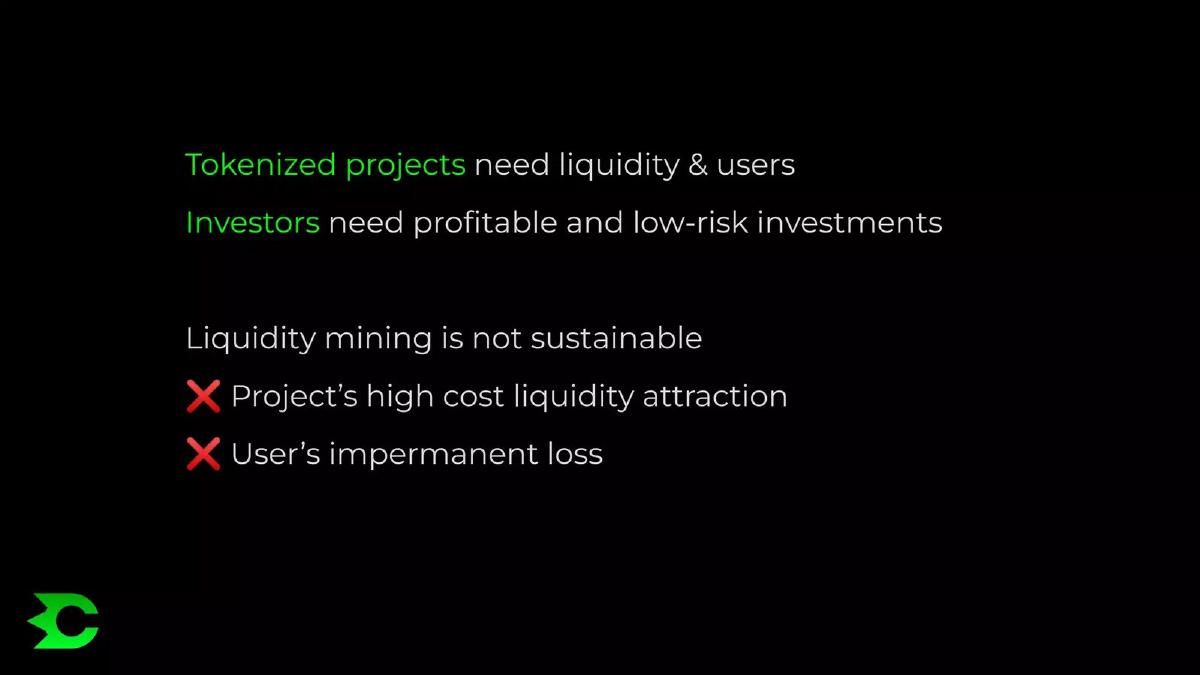
- The core problem identified is that liquidity mining is unsustainable due to high costs and impermanent loss (slide 2).
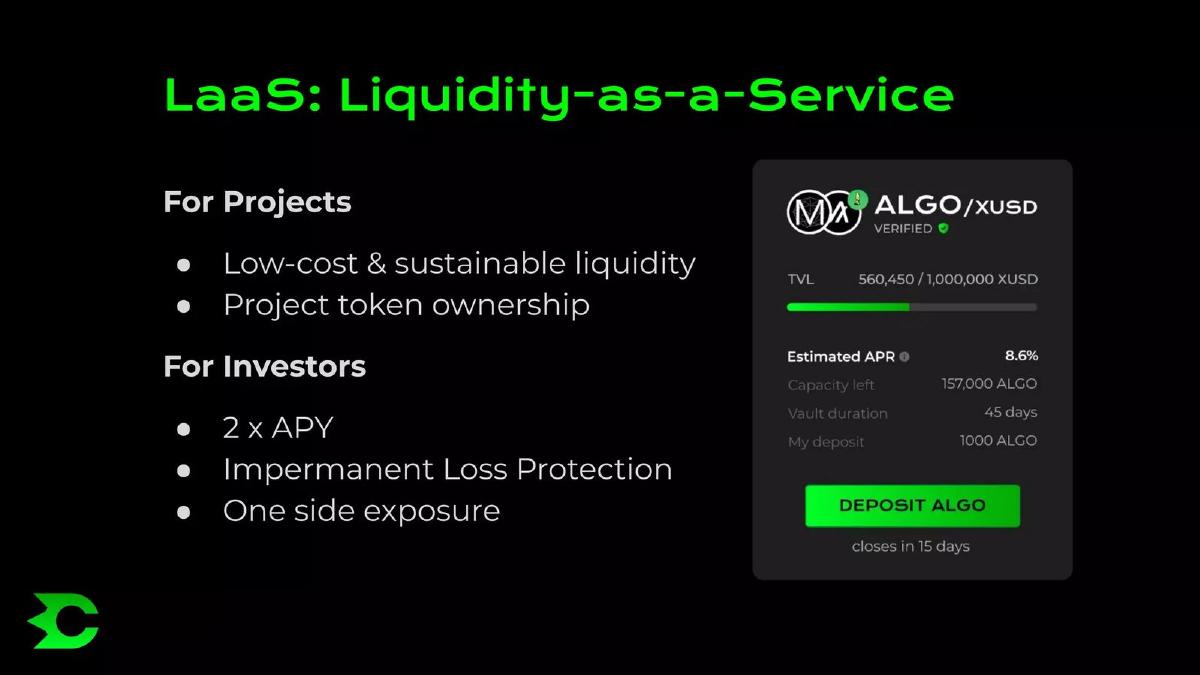
- The solution is branded as LaaS (Liquidity-as-a-Service), offering 2x APY and impermanent loss protection for investors (slide 3).
- Cometa claims a cost advantage, citing 1-5% TVL costs compared to 14-100% for traditional yield farming (slide 4).
- The platform targets bridges, DAOs, and tokenized projects, listing 'LGTM' (Looks Good To Me) endorsements from Youbi Capital and others (slide 5).
- The core team includes three individuals with 4-5 years of software engineering experience at Google (slide 6).
- The seed round ask is $1m for 10% of tokens, implying a $10 million post-money valuation (slide 7).
- Tokenomics are heavily weighted toward incentives, with 25% allocated to LaaS incentives and 20% to the team (slide 7).
Cometa Pitch Deck Analysis
Cometa is a DeFi protocol designed to solve the liquidity fragmentation and sustainability issues within the Algorand ecosystem. By positioning itself as a Liquidity-as-a-Service (LaaS) provider, the company targets two distinct user groups: tokenized projects needing deep liquidity and investors seeking yield without the traditional risks of impermanent loss. The deck is concise, focusing heavily on technical differentiation and team pedigree.
Slide 1: Title and Origin
The cover slide introduces Cometa as a 'Liquidity Hub.' It prominently features the Algorand logo, signaling a specific ecosystem focus. A key credibility marker is placed at the bottom: 'From Winner of the Algorand Innovate Hackathon.' This immediately establishes the team's technical competence within their chosen blockchain environment.
Slide 2: The Problem Statement
Slide 2 identifies a two-sided problem in the current DeFi landscape. First, tokenized projects require liquidity and users to survive, but the current method (liquidity mining) is 'not sustainable.' The slide highlights two specific pain points: the 'high cost' for projects to attract liquidity and the 'impermanent loss' suffered by users. This sets the stage for a solution that must address both cost and risk.
Slide 3: The LaaS Solution
The solution is presented as 'LaaS: Liquidity-as-a-Service.' For projects, the benefits are listed as low-cost liquidity and the ability to maintain token ownership. For investors, the value proposition is more aggressive: '2x APY,' 'Impermanent Loss Protection,' and 'One side exposure.' A UI mockup on the right shows a vault for ALGO/XUSD with a TVL of 560,450 out of a 1,000,000 cap, an estimated 8.6% APR, and a 45-day duration. This provides a concrete example of how the product functions for an end-user.
Slide 4: Competitive Landscape and Unit Economics
This slide uses a comparison table to contrast Cometa with 'Yield Farming' and 'Lending.' The most significant claim is the cost reduction: Cometa claims a cost of 1-5% TVL (covering only impermanent loss), whereas yield farming costs 14-100% TVL. Other highlighted advantages include 'Post payment' versus 'Prepayment' and the use of '0% APR Loans' to facilitate liquidity. The slide also notes that user risks for impermanent loss (IL) are greater than 75% in less than 0.1% of cases under their model, though it does not detail the mechanism for this protection.
Slide 5: Target Audience and Endorsements
Slide 5 splits the market into 'Investors' (Stablecoins, Algorand Foundation) and 'Projects' (Bridges, DAOs, Tokenized projects). It reiterates the benefits for each, such as trustless targeted 0% APR loans for investors and avoiding high slippage for projects. Notably, the slide includes 'LGTM' (industry shorthand for 'Looks Good To Me') mentions for several entities, including Youbi Capital, xBacked, goMINT, Glitter Finance, and Alchemon. This serves as a form of soft social proof or early interest signaling.
Slide 6: The Team
The 'Deep Tech Team' slide is a highlight of the deck. It features three core members—Valery, Daria, and Nikita—who all boast 4-5 years of experience as Software Engineers (SWE) at Google. Their expertise spans consensus algorithms, machine learning, and backend infrastructure. The team is rounded out by a marketing lead (Florian), an ex-Cardano developer (Dmitrii), and advisors from Meld Ventures. The use of NFT-style avatars instead of photos is consistent with Web3 deck trends, though it provides LinkedIn links for verification.
Slide 7: Tokenomics and The Ask
The penultimate slide details the 'Seed round: 1m$ for 10% tokens.' It specifies a '1 year lock + 1 year vesting' period for these tokens. A pie chart breaks down the total token allocation: 25% for LaaS incentives, 20% for the team, 10% for the strategic round, 10% for seed investors, 9% for the DAO reserve, and smaller portions for marketing, liquidity pools, and other incentives. This distribution suggests a long-term focus on ecosystem growth through heavy incentive weighting (totaling over 30% when including farm and insurance incentives).
Slide 8: Contact Information
The final slide provides the website (cometa.farm), a team email address at metalabs.technology, and a Twitter handle. It maintains the visual theme of the deck with the green circular 'liquidity hub' graphic.
What Cometa Does Well
The deck excels at defining a specific, high-value problem within a niche ecosystem (Algorand). By focusing on 'Liquidity-as-a-Service,' Cometa avoids the generic 'DEX' label and instead positions itself as infrastructure. The comparison table on slide 4 is particularly effective, as it uses specific percentages (1-5% vs 14-100%) to quantify the value proposition. Furthermore, the team slide is exceptionally strong; having three former Google engineers on a early-stage crypto project provides a massive amount of technical credibility that offsets the lack of a long-term roadmap.
What is Missing from the Cometa Deck
Despite the technical clarity, the deck omits several key business metrics. There is no mention of Total Addressable Market (TAM) or the specific size of the Algorand DeFi market at the time of the pitch. While the deck mentions 'LGTM' from various projects, it does not explicitly state if these are signed partnerships, LOIs, or merely successful introductory meetings. There is also a lack of a roadmap; investors are left wondering what the milestones are for the $1 million investment. Finally, the mechanism for 'Impermanent Loss Protection'—a notoriously difficult promise to keep in DeFi—is not explained, which may lead to skepticism during technical due diligence.
What Other Founders Should Copy
Founders should emulate the way Cometa handles their 'Ask' on slide 7. It is rare to see such specific terms (price, percentage, lock-up, and vesting) clearly stated in a primary deck. This transparency helps filter for investors who are comfortable with those specific parameters. Additionally, the use of a 'For Projects' vs 'For Investors' breakdown on slide 3 is a great way to explain a two-sided marketplace or protocol. It forces the founder to articulate the value proposition for every participant in the ecosystem, ensuring the business model is balanced.
Note: This teardown is based on the 8 slides provided from a 15-slide deck. Omissions in this analysis may be addressed in the missing slides.
Frequently asked questions
- What is the primary product Cometa is offering?
- Cometa offers 'Liquidity-as-a-Service' (LaaS). According to slide 3, this involves providing low-cost, sustainable liquidity for projects while giving investors 2x APY, impermanent loss protection, and single-sided asset exposure. It functions as a hub where projects can attract liquidity without giving up token ownership.
- How does Cometa compare to traditional yield farming?
- Slide 4 provides a direct comparison. While yield farming costs projects between 14% and 100% of Total Value Locked (TVL), Cometa claims to reduce this cost to 1-5% TVL. Additionally, it offers 0% APR loans and post-payment structures, whereas yield farming often requires unpredictable prepayments.
- Who are the founders and what is their background?
- The team, described on slide 6 as a 'Deep Tech Team,' includes Valery (4 years at Google, consensus algorithm expert), Daria (5 years at Google/VK, machine learning), and Nikita (5 years at Google/VK/Yandex, backend infrastructure). They are supported by a marketing lead, an ex-Cardano developer, and advisors from Meld Ventures.
- What are the terms of the investment round mentioned in the deck?
- Slide 7 outlines the seed round: Cometa is seeking $1 million in exchange for 10% of the total token supply. These tokens are subject to a one-year lock-up period followed by a one-year vesting schedule. This puts the implied valuation of the project at $10 million.
- Which blockchain ecosystem does Cometa operate in?
- Cometa is built specifically for the Algorand blockchain. Slide 1 features the Algorand logo and notes the team won the Algorand Innovate Hackathon. Slide 5 also lists the Algorand Foundation as a potential investor/user of the platform to support portfolio projects.