Common Room’s Series B deck is a concise, 12-slide narrative focused on the shift toward community-led growth. Rather than relying on dense financial tables, the deck prioritizes the 'Backdrop' of changing software distribution models and the 'Challenge' of siloed community data. By positioning itself as a 'community intelligence platform,' Common Room moves beyond simple moderation tools into the realm of RevOps and business attribution. The deck’s strength lies in its social proof, featuring a logo wall of high-growth tech companies like HubSpot and Asana. However, it is notably missing tra…
Key takeaways
- The deck positions community as a strategic business function rather than a social forum on slide 4.
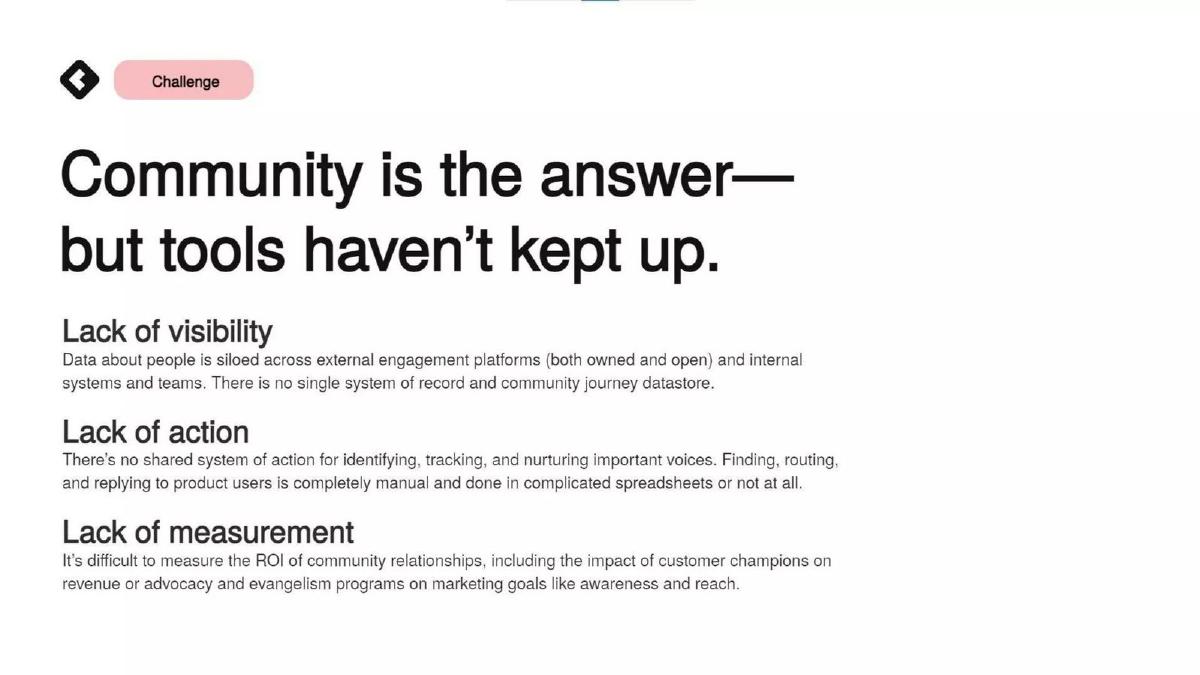
- Common Room identifies three core pain points: lack of visibility, lack of action, and lack of measurement on slide 3.
- The platform integrates community engagement tools with business data like product usage and CRM records as shown on slide 9.
- Target users are expanded beyond community managers to include Marketing, Sales, and RevOps teams on slide 6.
- The company utilizes a 'Day in the Life' slide to map specific manual tasks to automated platform capabilities on slide 7.
- Social proof is a primary driver, with 12 high-profile logos including Webflow and Grafana Labs displayed on slide 10.
- The deck defines a three-stage maturity model for communities: Seeding, Facilitating Growth, and Activating the Business on slide 8.
- The presentation completely omits a team slide, financial projections, and the specific investment ask.
The Narrative of Category Creation
Common Room’s 12-slide deck is less of a traditional pitch and more of a manifesto for a new category of enterprise software. Raised in 2020, this Series B deck focuses heavily on the macro-shift in how software is sold. By the time a company reaches a $52.9M round, the product-market fit is usually assumed by the lead investors; the deck's job is to convince the market that the 'Community Intelligence' category is as essential as CRM or Marketing Automation.
The Strategic Setup (Slides 1-4)
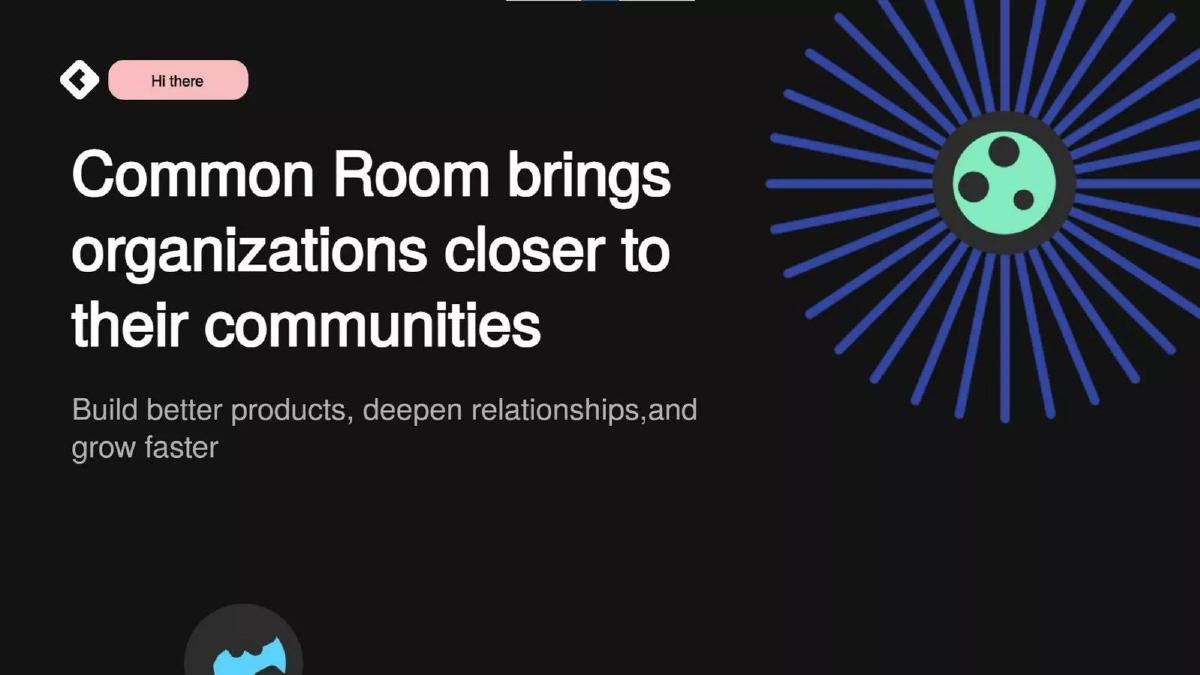
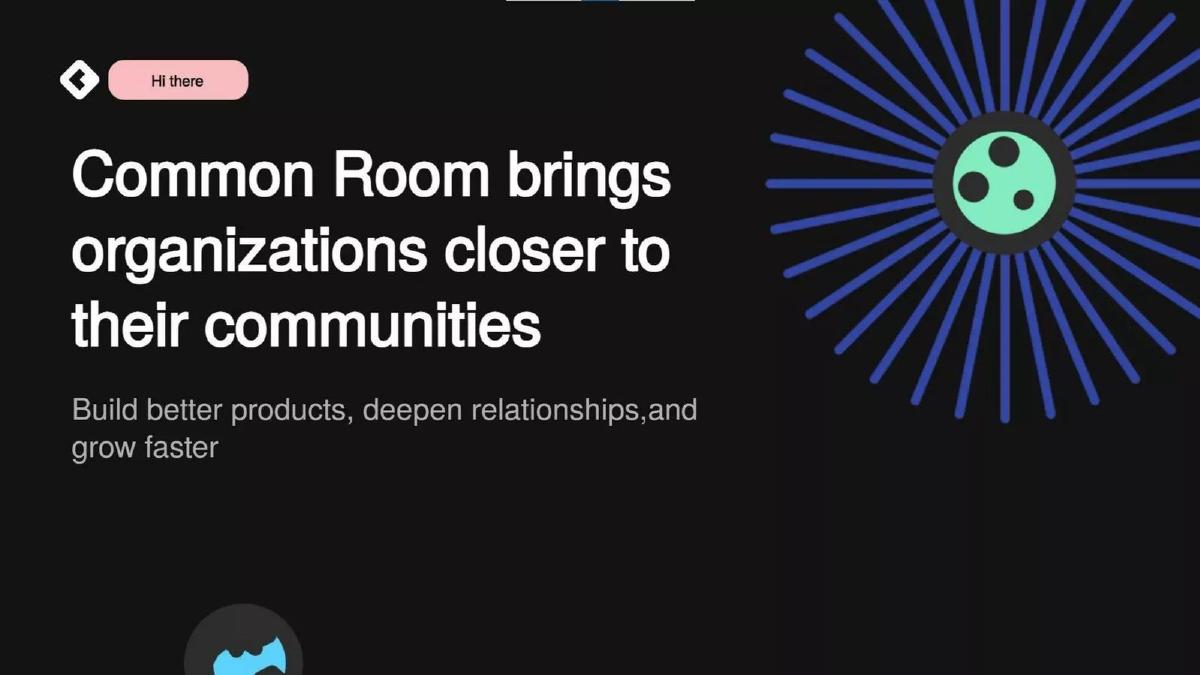
Slide 1: Title The deck opens with a simple value proposition: "Common Room brings organizations closer to their communities." It promises three outcomes: build better products, deepen relationships, and grow faster. The branding is clean, dark, and professional, signaling an enterprise-grade solution.
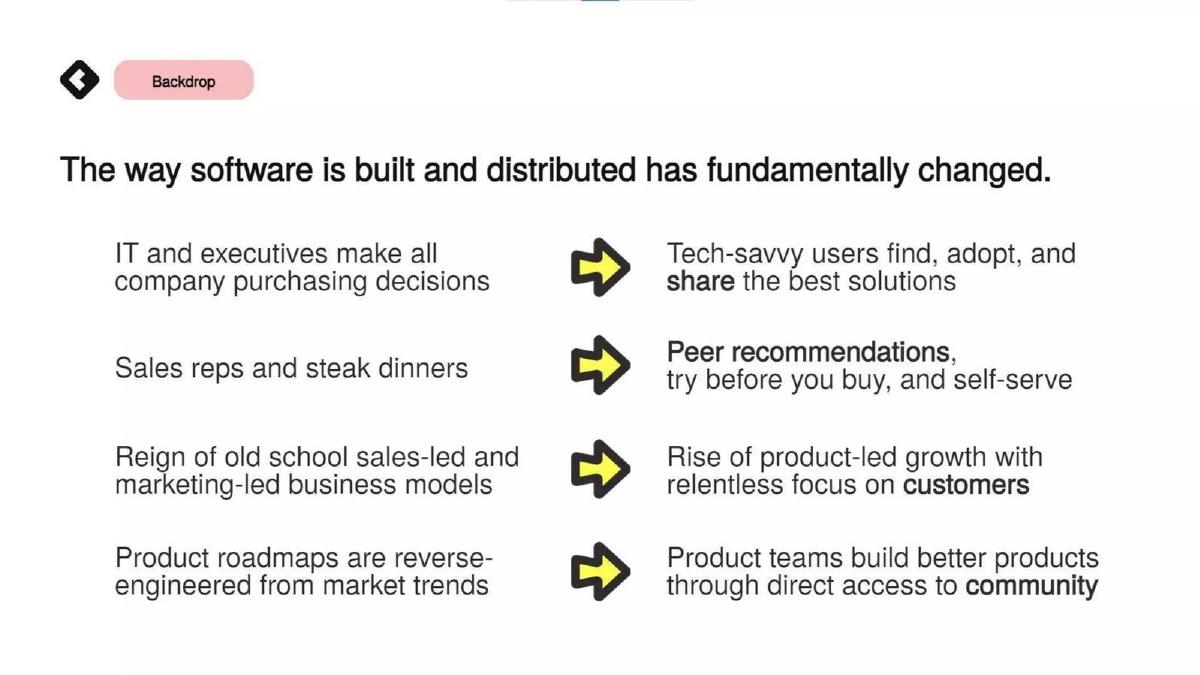
Slide 2: Backdrop This is a classic 'Why Now' slide. It contrasts the old world (IT-led purchasing, sales reps, steak dinners) with the new world (user-led adoption, peer recommendations, and community-driven roadmaps). By framing the shift as a fundamental change in software distribution, Common Room makes its existence seem inevitable.
Slide 3: Challenge The problem is articulated through three 'Lacks': Visibility, Action, and Measurement. It specifically calls out that community data is currently siloed and managed in "complicated spreadsheets," which is a high-pain trigger for enterprise buyers. It identifies the lack of a "single system of record," positioning Common Room to fill that void.
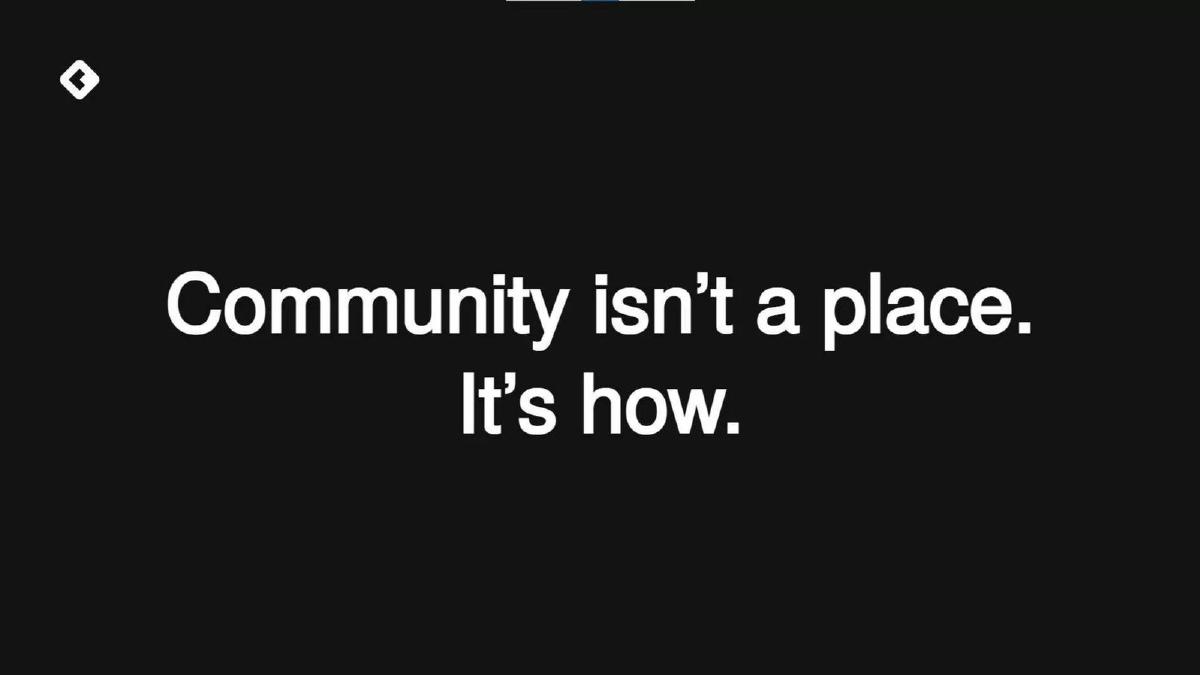
Slide 4: The Pivot A single-sentence transition slide: "Community isn’t a place. It’s how." This is a sophisticated positioning move. It tells investors that Common Room is not a competitor to Slack or Discord (the 'places'); it is the infrastructure for the 'how' (the strategy).
The Solution and Product Scope (Slides 5-9)
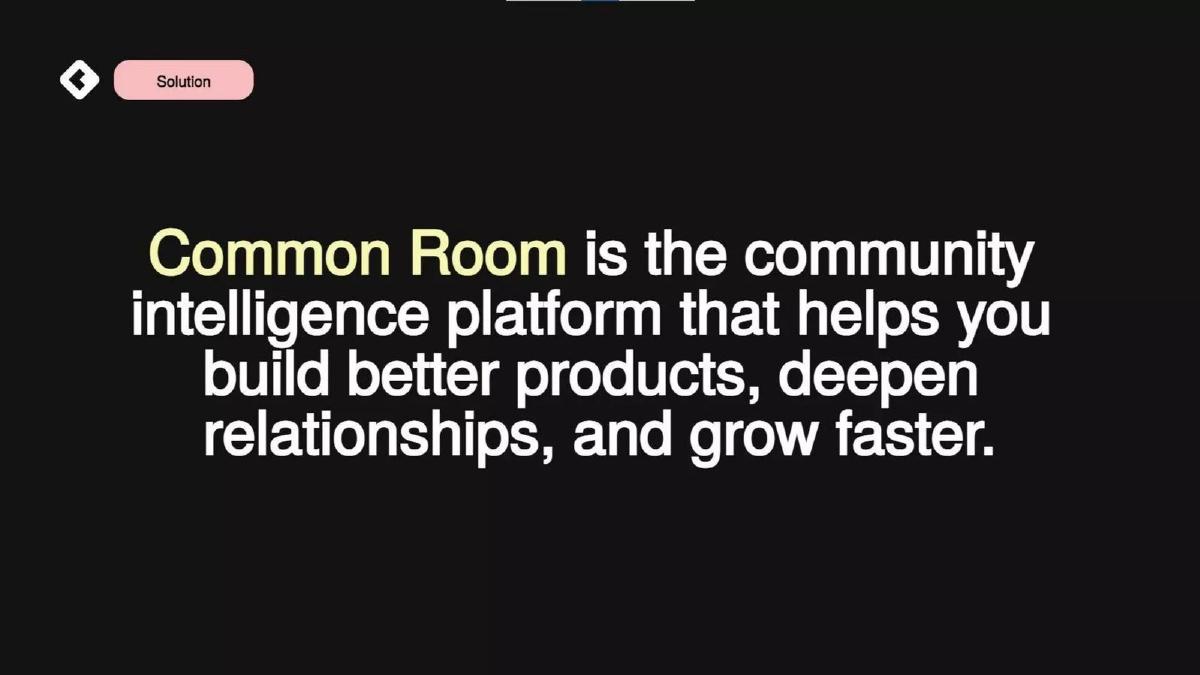
Slide 5: Solution The company defines itself as a "community intelligence platform." This is the first time the specific category name is used, linking the previously mentioned 'how' to a concrete software category.
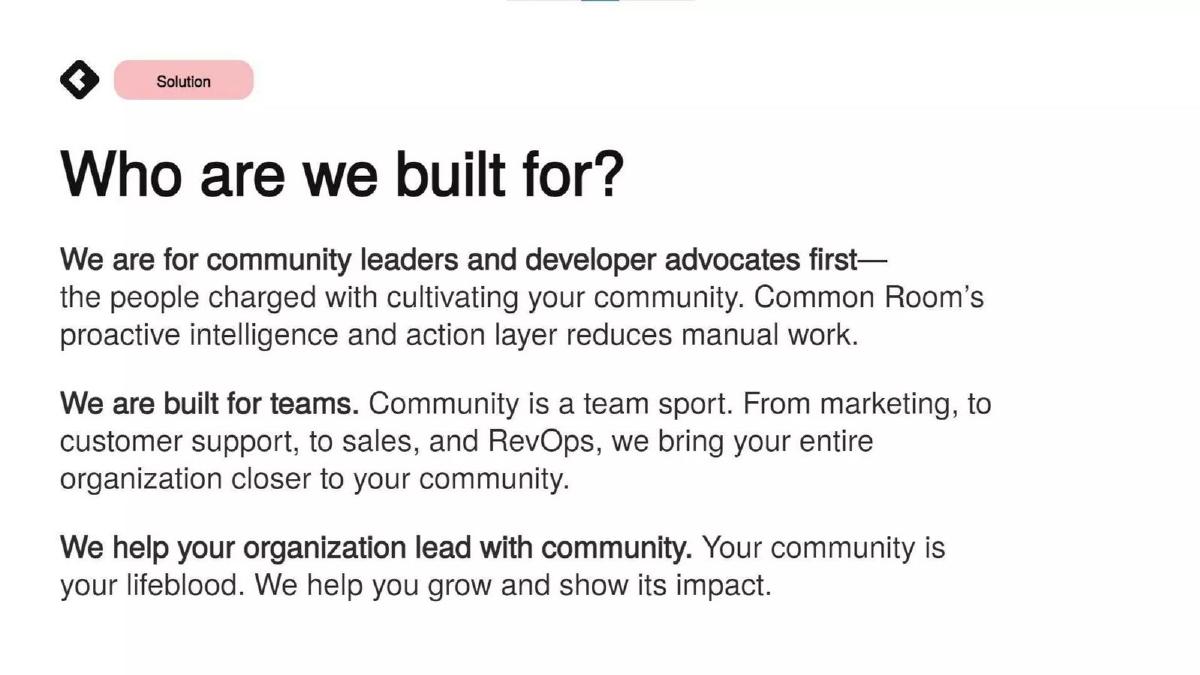
Slide 6: Who are we built for? This slide expands the Total Addressable Market (TAM). While the primary users are community leaders, the slide explicitly pulls in Marketing, Sales, and RevOps. This is crucial for a Series B; it shows the product has 'legs' across the entire organization, increasing the potential deal size and stickiness.
Slide 7: Day in the life This slide lists eight core tasks, from "Identify and welcome new community members" to "Measure community health and business impact." It serves as a functional roadmap of what the product actually does without showing a single screenshot. It focuses on the 'jobs to be done.'
Slide 8: Common Room Maturity Model This slide visualizes the customer journey in three tiers: Seeding, Facilitating Growth, and Activating the Business. This is a strategic selling tool. It shows that Common Room can grow with a company from its first 100 members to a multi-million dollar ARR engine. It specifically mentions "connecting community membership to accounts, product activation, and ARR," which is the 'holy grail' of community ROI.
Slide 9: The Ecosystem Map This is the most technical slide in the deck. It shows the 'Common Room' logo in the center, ingesting data from two sources: Community Engagement Tools (Slack, Discord, Twitter, GitHub, etc.) and Business Data (Zendesk, Snowflake, Salesforce, HubSpot). It then shows four output categories: Discover, Nurture, Measure, and Analyze. This proves the product is an integration play, not another silo.
Social Proof and Validation (Slides 10-12)
Slide 10: Customers The logo wall is the 'meat' of this Series B deck. It includes HubSpot, Webflow, Asana, dbt Labs, and Grafana Labs. These are not just any customers; they are the 'gold standard' of community-led growth companies. For an investor, this slide represents massive de-risking.
Slide 11: Testimonial A quote from Joshua Zerkel, Head of Global Engagement Marketing at Asana. The quote emphasizes that the tool "ladders up to the success of our business." This reinforces the 'Activating the Business' tier of the maturity model shown on slide 8.
Slide 12: Closing The deck ends with a call to action to sign up at a specific URL. There is no mention of the $52.9M raise or the terms of the deal.
What Works in This Deck
Category Definition: The deck successfully moves the conversation from 'community management' (a low-budget cost center) to 'community intelligence' (a high-budget revenue driver). · The 'Why Now' Logic: Slide 2 creates a sense of urgency by showing that the old way of selling software is dying. · High-Signal Social Proof: By featuring logos like HubSpot and dbt Labs, Common Room borrows the credibility of the world's best community builders. · Clarity of Stakeholders: Explicitly naming RevOps and Sales as beneficiaries of the data makes the product feel like an enterprise necessity rather than a niche tool.
What is Missing
The Team: There is no team slide. While the founders (ex-Microsoft, ex-AWS) are well-known in the industry, a standard deck should always highlight the 'Why Us.' · Metrics and Traction: For a Series B, the absence of ARR growth, NRR (Net Revenue Retention), or user engagement numbers is highly unusual. This information was likely kept in a separate document. · Competition: The deck does not mention competitors like Orbit or SavvyCal, nor does it address why a company wouldn't just build this internally using Snowflake and Tableau. · The Ask: There is no slide detailing how much money is being raised or how the funds will be allocated (e.g., scaling GTM, international expansion).
What a Founder Should Copy
The 'Then vs. Now' Slide: Use Slide 2 as a template to explain why your industry is at a breaking point. It is the most effective way to build a narrative for a new category. · The Maturity Model: Slide 8 is excellent for showing how your product provides value today while having a path to becoming an enterprise-wide platform in the future. · The Integration Map: If you are building 'middleware' or an 'intelligence layer,' Slide 9 is a perfect way to show how you sit between existing tools and business outcomes. · Focus on Outcomes: Notice how the deck rarely talks about 'features.' It talks about 'measuring attribution,' 'reducing manual work,' and 'growing faster.'
Frequently asked questions
- Why does a Series B deck have so few slides?
- At the Series B stage, if a company has significant traction and high-profile customers, the narrative often shifts from 'proving the product works' to 'defining the massive market opportunity.' Common Room uses 12 slides to establish a new category—Community Intelligence—relying on the quality of its customer logos to imply the strength of its metrics without showing them explicitly in the deck.
- What is missing from this deck that most founders should include?
- This deck is missing almost all standard 'hard' data. There is no slide for Team, Competition, Business Model, Financials, or the Ask. While Common Room succeeded with this approach, most founders need these slides to satisfy due diligence requirements. This deck likely functioned as a high-level narrative for a 'hot' round where the data was shared in a separate data room.
- How does Common Room define its value proposition?
- Common Room defines itself on slide 5 as a 'community intelligence platform.' It differentiates itself from community platforms (like Slack or Discord) by positioning itself as the 'action layer' that sits on top of those tools to provide unified visibility and business attribution.
- Who is the intended audience for Common Room according to the deck?
- Slide 6 explicitly states they are built for community leaders and developer advocates first, but emphasizes that the product is for 'teams.' It specifically names Marketing, Customer Support, Sales, and RevOps as stakeholders who benefit from community data.
- What is the 'Backdrop' slide trying to achieve?
- Slide 2 uses a 'Then vs. Now' comparison to show that software purchasing has moved from top-down IT decisions to bottom-up community adoption. This establishes the 'Why Now' for the investment, arguing that because the market has changed, a new class of software (Common Room) is required to manage it.