The Dash AI Communicator pitch deck introduces Prescential Systems Corp. and its mission to make technology accessible. The core product, 'Dash,' is presented as a mobile, wearable, screen-less, voice-controlled, AI-enhanced communication device, smart assistant, and personal emergency response system. Key features include 4G LTE, noise-cancelling mics, AI-enhanced fall detection, and integration with Amazon Alexa. The deck positions Dash against traditional PERS, smart speakers, and personal computing devices, highlighting its unique combination of portability and functionality. A five-perso…
Key takeaways
- The company, Prescential Systems Corp., states its mission on Slide 1: 'Make technology accessible, easy to use and beneficial for everyone it touches.'
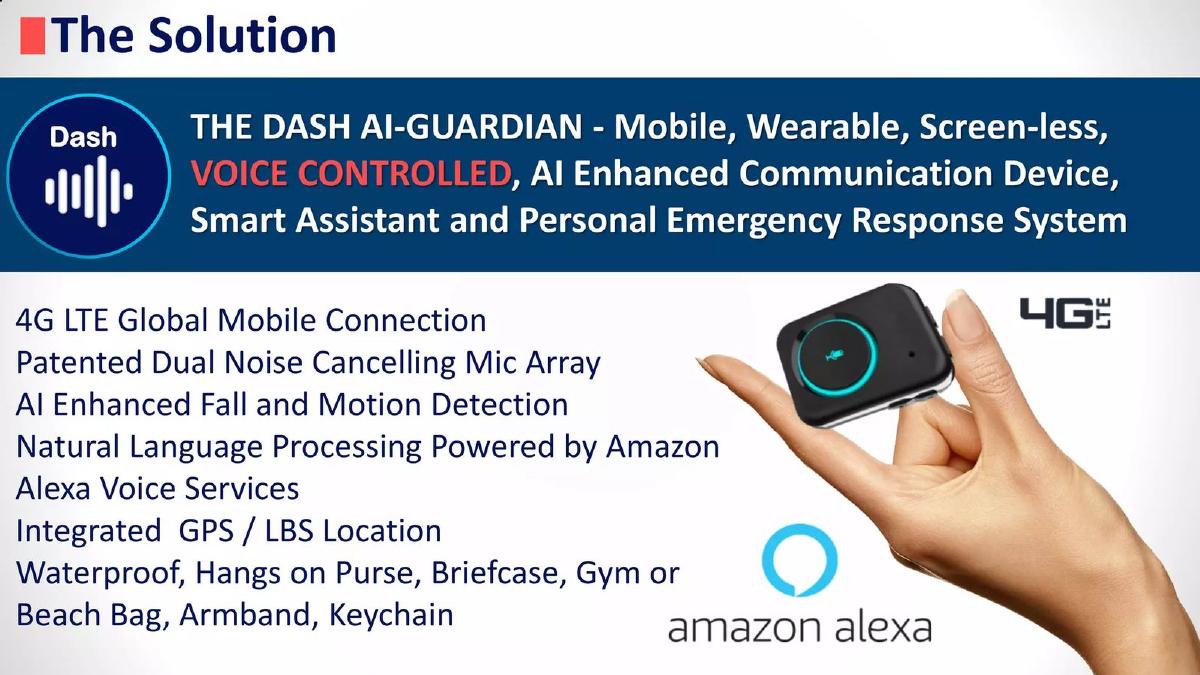
- Dash is described on Slide 2 as 'THE DASH AI-GUARDIAN - Mobile, Wearable, Screen-less, VOICE CONTROLLED, AI Enhanced Communication Device, Smart Assistant and Personal Emergency Response System.'
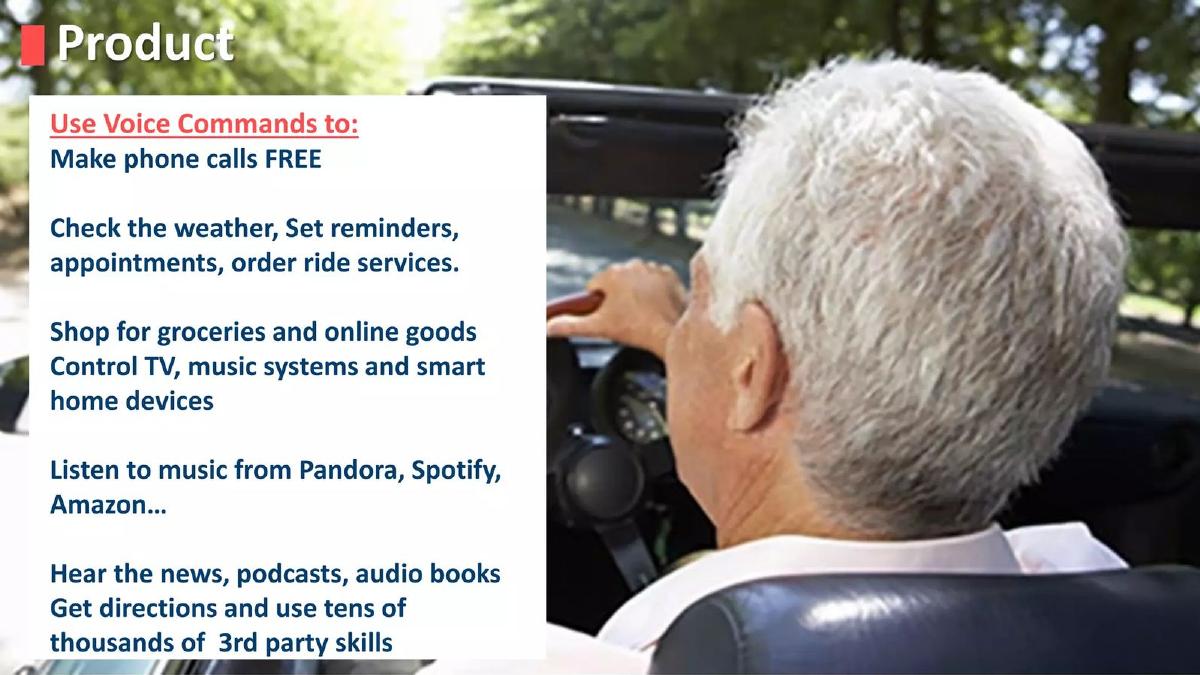
- The product offers functionalities like making free phone calls, checking weather, setting reminders, ordering ride services, shopping, controlling smart home devices, and accessing music and news (Slide 3).
- Competitive differentiation on Slide 4 highlights Dash as 'Handheld, 4G LTE, Mobile, Battery Powered,' contrasting it with complicated PERS, WiFi-only smart speakers, and fragile personal computers.
- The team on Slide 6 consists of five individuals: Daniel Sparrow (Founder), Jie Jing Huang (Co-Founder), David Ginsberg (Co-Founder), Michael Lin (Co-Founder), and Zhang Ming (Co-Founder), with their educational backgrounds and experience listed.
- The financial ask on Slide 7 is '$1M Angle Round' for 12 months of financing, targeting '75K Unit Sales' and '$8M Revenue' within that period.
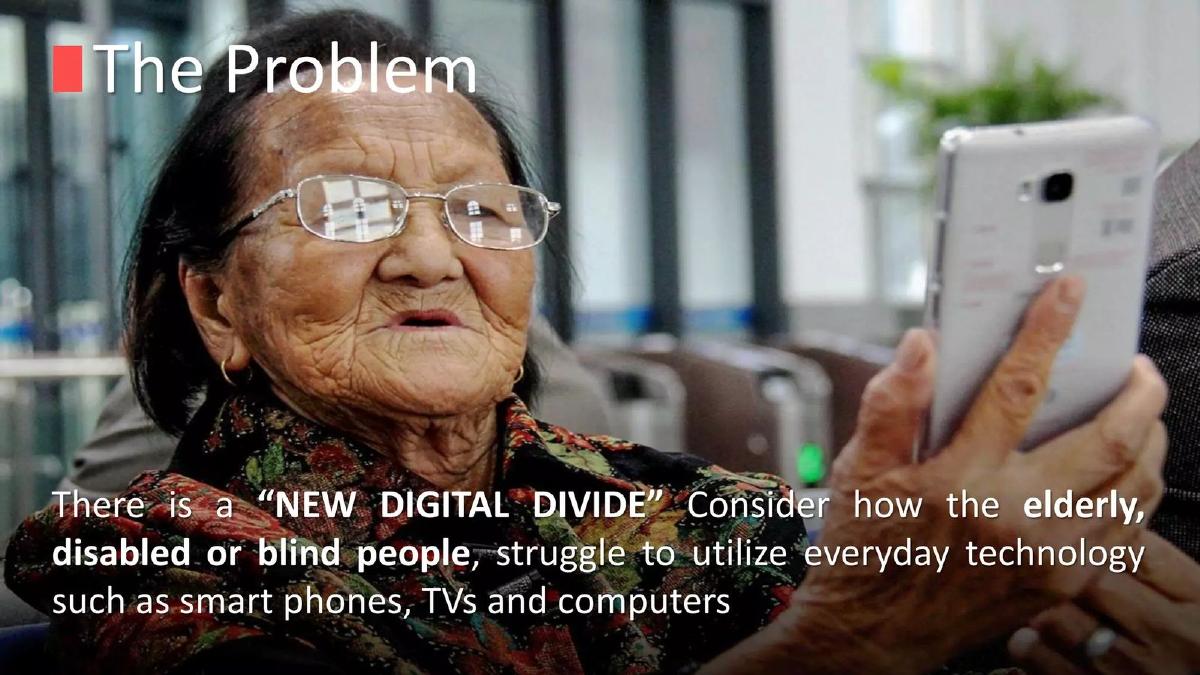
- The deck does not explicitly state a problem statement or the specific target demographic for the Dash device, though the product features suggest an older adult market.
- A detailed business model, pricing strategy, or go-to-market plan beyond 'Wholesale Distribution,' 'Target Marketing,' 'Focus Groups,' and 'Direct Retail' (Slide 5) is not provided.
Dash AI Communicator Pitch Deck Teardown
This teardown analyzes the pitch deck for Dash AI Communicator, a product from Prescential Systems Corp. The deck introduces a wearable AI device aimed at communication, smart assistance, and personal emergency response. The analysis will proceed slide-by-slide, detailing the content presented and identifying key strengths and omissions within the context of a fundraising pitch.
Slide 1: Prescential Systems Corp. - Our Mission
The deck opens with a title slide identifying the company as Prescential Systems Corp. Below the company name, a mission statement is presented in red text: “Our Mission: Make technology accessible, easy to use and beneficial for everyone it touches” . The right side of the slide features a glowing, abstract purple and blue circular graphic on a black background. This slide serves as a basic introduction to the company and its overarching purpose, setting a broad, positive tone for the technology it aims to develop.
Slide 2: The Solution - Dash AI-Guardian
Titled “The Solution,” this slide introduces the core product. A logo with the word “Dash” and a stylized waveform icon is positioned on the left. The main text describes the product as: “THE DASH AI-GUARDIAN - Mobile, Wearable, Screen-less, VOICE CONTROLLED, AI Enhanced Communication Device, Smart Assistant and Personal Emergency Response System” . Below this, a bulleted list details key features: “4G LTE Global Mobile Connection,” “Patented Dual Noise Cancelling Mic Array,” “AI Enhanced Fall and Motion Detection,” “Natural Language Processing Powered by Amazon Alexa Voice Services,” “Integrated GPS / LBS Location,” and “Waterproof, Hangs on Purse, Briefcase, Gym or Beach Bag, Armband, Keychain.” An image on the right shows a hand holding a small, black, rectangular device with a glowing blue circle on its face, next to a “4G LTE” logo and an “amazon alexa” logo. This slide effectively communicates the product's name, primary functions, and key technical specifications, emphasizing its versatility and integration with established AI services.
Slide 3: Product - Use Cases
This slide, labeled “Product,” focuses on the use cases for the Dash device. The background features an image of an older person driving a convertible car, suggesting a target demographic or lifestyle. On the left, a white text box lists various voice commands and their functions: “Use Voice Commands to: Make phone calls FREE,” “Check the weather, Set reminders, appointments, order ride services,” “Shop for groceries and online goods Control TV, music systems and smart home devices,” “Listen to music from Pandora, Spotify, Amazon...” and “Hear the news, podcasts, audio books Get directions and use tens of thousands of 3rd party skills.” The slide aims to illustrate the breadth of daily activities and conveniences the Dash device can facilitate through voice interaction, reinforcing its utility as a smart assistant and communicator.
Slide 4: The Competition - Differentiation
Titled “The Competition,” this slide visually contrasts Dash with existing solutions. The left side presents three categories of competitors: “P.E.R.S.: complicated, Very Expensive monitoring services, installation” shown with images of various emergency alert devices; “Smart Speakers, no GPS or fall detection, not mobile, WIFI only, AC required” depicted with images of smart home speakers; and “Personal computers, tablets, smartphones: Difficult to use, expensive services, fragile” illustrated with laptops and mobile devices. The right side, labeled “Us!” , features an enlarged image of the Dash device held in a hand, accompanied by the Dash logo and text stating: “Handheld, 4G LTE, Mobile, Battery Powered.” This slide uses a clear visual comparison to highlight Dash's unique selling propositions, positioning it as a more convenient, mobile, and integrated alternative to current options.
Slide 5: Market Adoption - Strategy Overview
This slide, titled “Market Adoption,” provides a high-level overview of the company's strategy for getting the product to market. The background is a collage of various images, including warehouses, magazine covers (one featuring Kevin Costner), people in a focus group setting, and an Amazon Alexa display in a retail store. Overlaying these images are four terms: “Wholesale Distribution,” “Target Marketing,” “Focus Groups,” and “Direct Retail.” This slide outlines the channels and methods Prescential Systems Corp. plans to use for product distribution and promotion, indicating a multi-pronged approach without delving into specific details or timelines.
Slide 6: Team - Key Personnel
Labeled “Team,” this slide introduces the core individuals behind Prescential Systems Corp. It features five headshots, each with a name, role, and brief biography. The team members are: Daniel Sparrow (Founder) with a BA, 33 years consumer electronics industry experience, and experience launching several global brands; Jie Jing Huang (Co-Founder) with a BA, 5 years supply chain and international trade management experience; David Ginsberg (Co-Founder) with a JD/BS, graduate of Wharton School of Business, and 25 years international trade law experience; Michael Lin (Co-Founder) with an MA, graduate of Zhejiang University of Technology, 9 years IT management and CRM app development experience; and Zhang Ming (Co-Founder) with a BS, graduate of Wuhan University of Computer Science, 12 years Huawei development, technical support, team leader AI and IT project experience. At the bottom, a statement reads: “We will be hiring key talent in Engineering, APP design, Graphic Design and Marketing after raising Seed Capital.” This slide establishes the credibility and experience of the founding team and indicates future hiring plans.
Slide 7: Financial - Ask and Projections
Titled “Financial,” this slide presents the company's funding request and initial financial projections. The main text states: “We are seeking 12 months financing to finish development of our product, hire key personnel, launch a global crowd funding and marketing campaign and reach 75,000 unit sales.” Below this, three red circles highlight key figures: “$1M Angle Round” labeled as “Initial investment opportunity,” “75K Unit Sales” labeled as “First time buyers,” and “$8M Revenue” labeled as “1 year term.” A small note at the bottom clarifies: “All figures in $ US Dollars.” This slide clearly communicates the amount of funding sought, its intended use, and the ambitious revenue and sales targets for the first year post-investment.
Slide 8: Prescential Systems Corp. - Contact Information
The final slide is a contact slide, reiterating the company name: “Prescential Systems Corp.” It provides contact details including two telephone numbers (Shenzhen and USA), a website address (www.prescential.com/dash), and an email address (info@prescential.com). A small “THANK YOU!” icon and text “Thank you for your time and consideration” are also present. The Dash logo is displayed in the bottom right corner. This slide serves as a professional closing, offering clear channels for interested parties to follow up.
What Works Well
The Dash AI Communicator pitch deck effectively introduces a product with a clear value proposition for a specific niche. Slide 2, “The Solution,” is particularly strong in its concise description of Dash as a multi-functional, wearable, voice-controlled device. The bulleted list of features like 4G LTE, AI-enhanced fall detection, and Amazon Alexa integration immediately conveys the product's capabilities and technological sophistication. This slide clearly articulates what the product is and what it does, which is fundamental for any pitch.
Slide 3, “Product,” does an excellent job of illustrating the practical applications and benefits of the Dash device through a list of diverse use cases. By detailing how users can make free phone calls, manage daily tasks, control smart home devices, and access entertainment, the slide paints a picture of convenience and utility. The background image, though subtle, hints at a target demographic (older adults) who might particularly benefit from a simplified, voice-controlled interface for complex tasks or emergency situations.
The competitive analysis on Slide 4 is also well-executed. It uses a visual comparison to effectively differentiate Dash from traditional Personal Emergency Response Systems (PERS), smart speakers, and general-purpose computing devices. By highlighting Dash's portability, 4G LTE connectivity, and battery power, the slide clearly positions it as a superior, integrated solution that addresses the shortcomings of existing options. This direct comparison helps investors understand the market gap Dash aims to fill.
Finally, the “Team” slide (Slide 6) presents a diverse group of founders with relevant experience in consumer electronics, supply chain, law, IT management, and AI development. The inclusion of specific experience durations and affiliations (e.g., Wharton School, Huawei) adds credibility and demonstrates that the company has a foundational skill set to develop and bring the product to market. The explicit mention of future hiring plans also shows foresight and an understanding of the resources needed for growth.
What is Missing
Despite its strengths, the Dash AI Communicator pitch deck has several significant omissions that would be critical for a comprehensive fundraising presentation. Foremost among these is the absence of a clear and compelling problem statement. While the product's features imply solutions to communication and safety needs, the deck never explicitly articulates the core problem it is solving for its users. This leaves investors to infer the market pain point, which can dilute the urgency and relevance of the solution.
A detailed business model is also missing. The deck mentions “Wholesale Distribution” and “Direct Retail” on Slide 5, but it does not elaborate on how the company plans to generate revenue beyond unit sales. There's no mention of pricing strategy, subscription models (especially for emergency services or 4G LTE connectivity), or potential partnerships that could drive revenue. Without this, the projected $8M revenue on Slide 7 lacks a clear foundation.
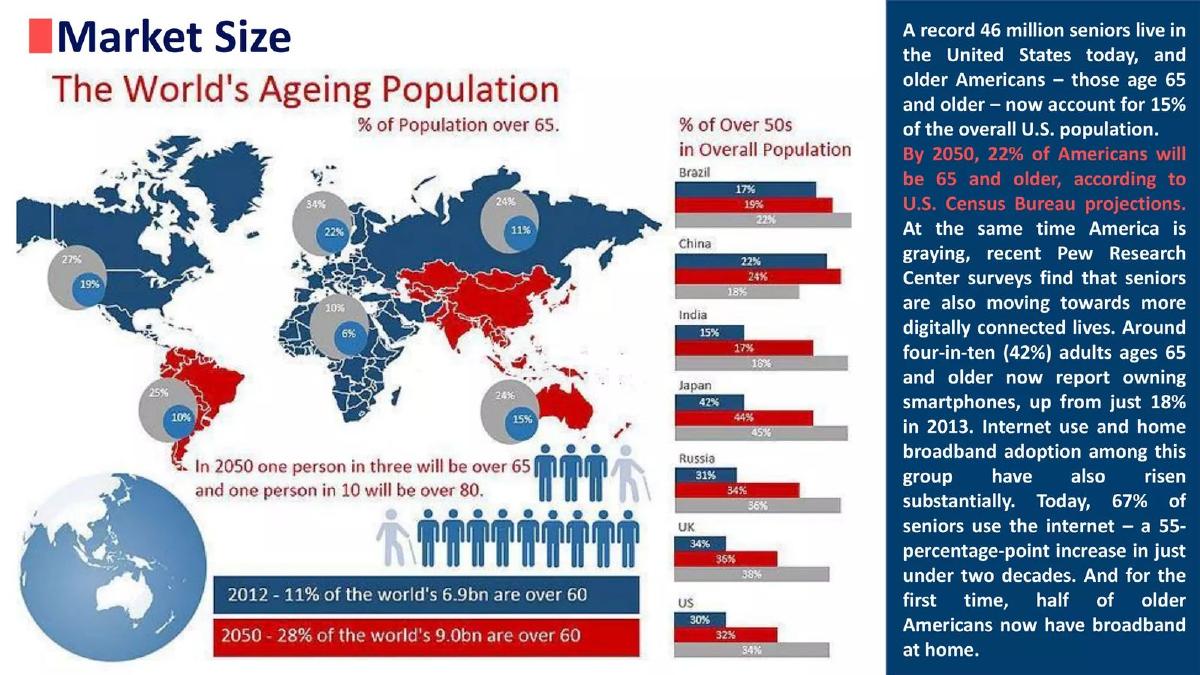
Furthermore, the deck lacks a comprehensive market size analysis. While the product's features suggest a target audience (e.g., older adults, individuals needing emergency assistance), there are no figures provided for the total addressable market (TAM), serviceable available market (SAM), or serviceable obtainable market (SOM). This makes it difficult for investors to assess the true scale of the opportunity and the realism of the 75K unit sales target.
Unit economics are entirely absent. There is no information on the cost of goods sold (COGS), customer acquisition cost (CAC), or lifetime value (LTV) of a customer. Understanding these metrics is crucial for investors to evaluate the profitability and scalability of the business model. The projection of $8M revenue from 75K unit sales implies an average selling price of approximately $106.67 per unit, but without COGS, the gross margin remains unknown.
Finally, while a high-level market adoption strategy is presented on Slide 5, a detailed go-to-market plan is not provided. This would typically include specific marketing channels, sales strategies, and a timeline for execution. The mention of a “global crowd funding and marketing campaign” on Slide 7 is vague and doesn't offer enough detail for an investor to understand the tactical approach.
What a Founder Should Copy
Founders can learn from several aspects of the Dash AI Communicator deck. Firstly, the clarity and conciseness of the product description on Slide 2 are excellent. Breaking down the core offering into its essential functions and key features in a bulleted list makes it easy for investors to grasp the product's essence quickly. The inclusion of technical specifications like 4G LTE and patented noise-cancelling mics adds credibility without overwhelming the audience.
Secondly, the use of a “Use Cases” slide (Slide 3) is highly effective. Instead of just listing features, demonstrating how the product integrates into daily life and solves practical problems helps investors envision its real-world impact. This approach makes the technology feel more tangible and relatable, showcasing its value proposition from the user's perspective.
Thirdly, the visual competitive analysis on Slide 4 is a strong example of how to differentiate a product. By showing existing solutions and then clearly positioning Dash as a superior alternative, the deck highlights the unique market position. The use of simple, clear labels for each competitor category and for “Us!” makes the comparison straightforward and impactful.
Lastly, the “Team” slide (Slide 6) is well-structured. Providing names, roles, and concise biographies for each founder, including their relevant experience and educational backgrounds, builds confidence in the team's ability to execute. The forward-looking statement about hiring additional talent also demonstrates strategic planning and an understanding of future resource needs, which is a positive signal for investors.
Frequently asked questions
- What is the core product presented in the Dash AI Communicator pitch deck?
- The core product is 'Dash,' described as 'THE DASH AI-GUARDIAN.' It is a mobile, wearable, screen-less, voice-controlled, AI-enhanced communication device that functions as a smart assistant and a personal emergency response system, as stated on Slide 2.
- What is the financial ask and what are the projected outcomes?
- On Slide 7, the company is seeking '$1M Angle Round' financing for 12 months. This funding is intended to finish product development, hire key personnel, launch a crowdfunding and marketing campaign, and reach '75K Unit Sales' and '$8M Revenue' within that year.
- How does Dash differentiate itself from competitors according to the deck?
- Slide 4 positions Dash as 'Handheld, 4G LTE, Mobile, Battery Powered.' It contrasts with 'complicated, Very Expensive' P.E.R.S., 'WiFi only' Smart Speakers, and 'Difficult to use, expensive services, fragile' personal computers and smartphones, highlighting Dash's portability and integrated functionality.
- Who are the key team members presented in the deck?
- Slide 6 introduces five team members: Daniel Sparrow (Founder), Jie Jing Huang (Co-Founder), David Ginsberg (Co-Founder), Michael Lin (Co-Founder), and Zhang Ming (Co-Founder). Their roles, educational backgrounds, and relevant experience are listed.
- What key information is notably absent from the provided slides?
- The deck notably omits a dedicated problem statement, a detailed business model, specific pricing information, a comprehensive market size analysis, or any unit economics. While a high-level market adoption strategy is mentioned, a detailed go-to-market plan is not present.