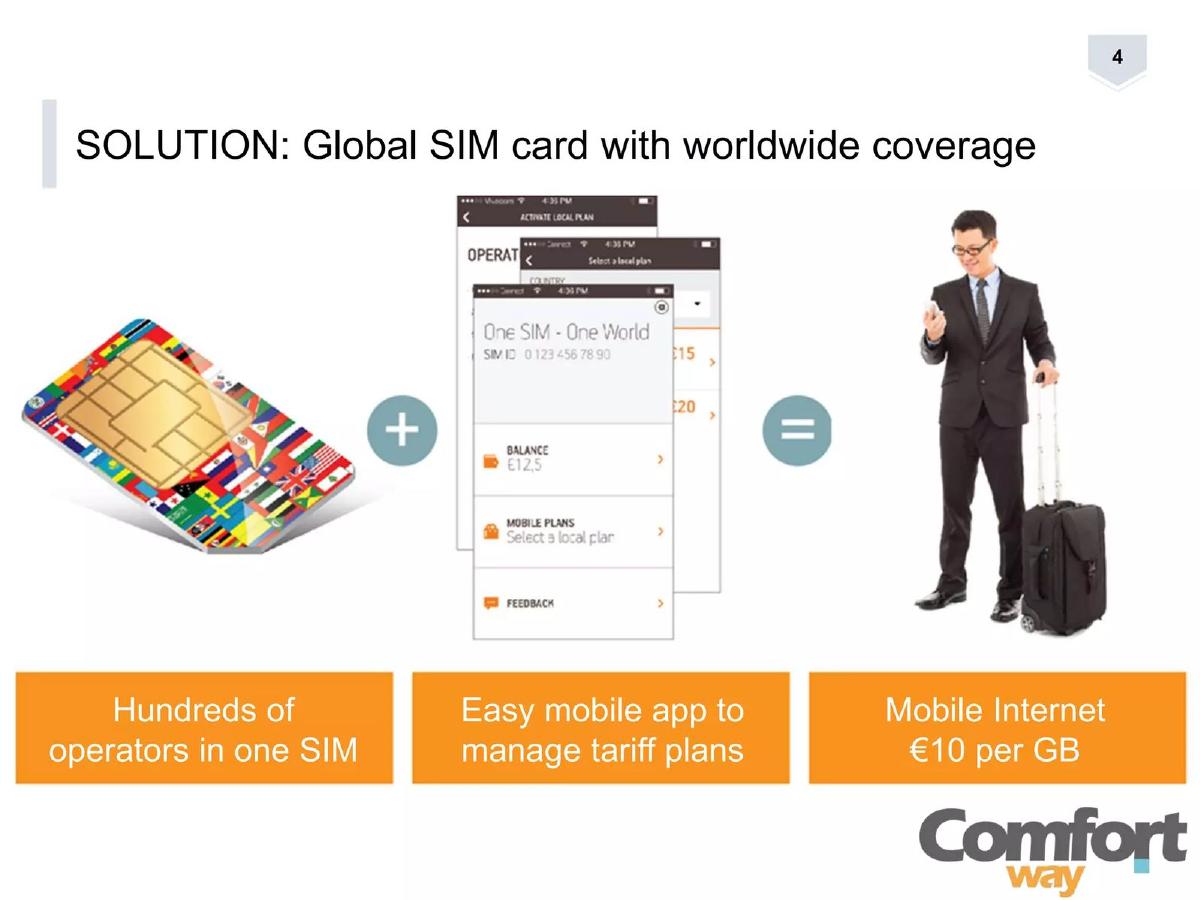
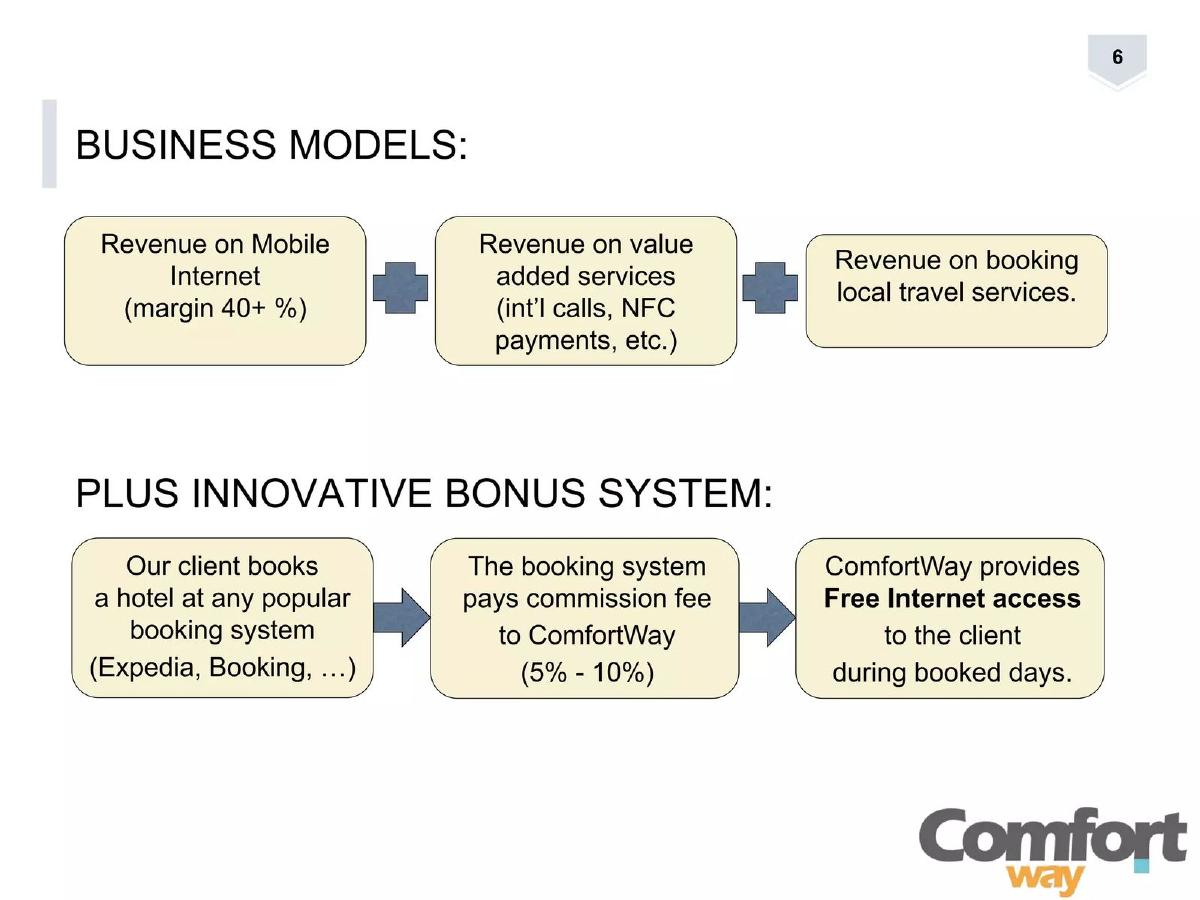
ComfortWay’s deck outlines a transition from a physical travel router product to a sophisticated remote SIM provisioning platform. By leveraging GSMA-approved technology, the company aims to eliminate the 'language barrier' and '1+ hour' wait times associated with buying local SIMs abroad. With a reported gross margin of 40% and a small but growing base of 2,500+ customers as of early 2014, the company seeks €300,000 at a €3,000,000 valuation. The deck is notable for its clear distribution strategy involving major travel players like Expedia and Booking.com, though it relies heavily on optimi…
Key takeaways
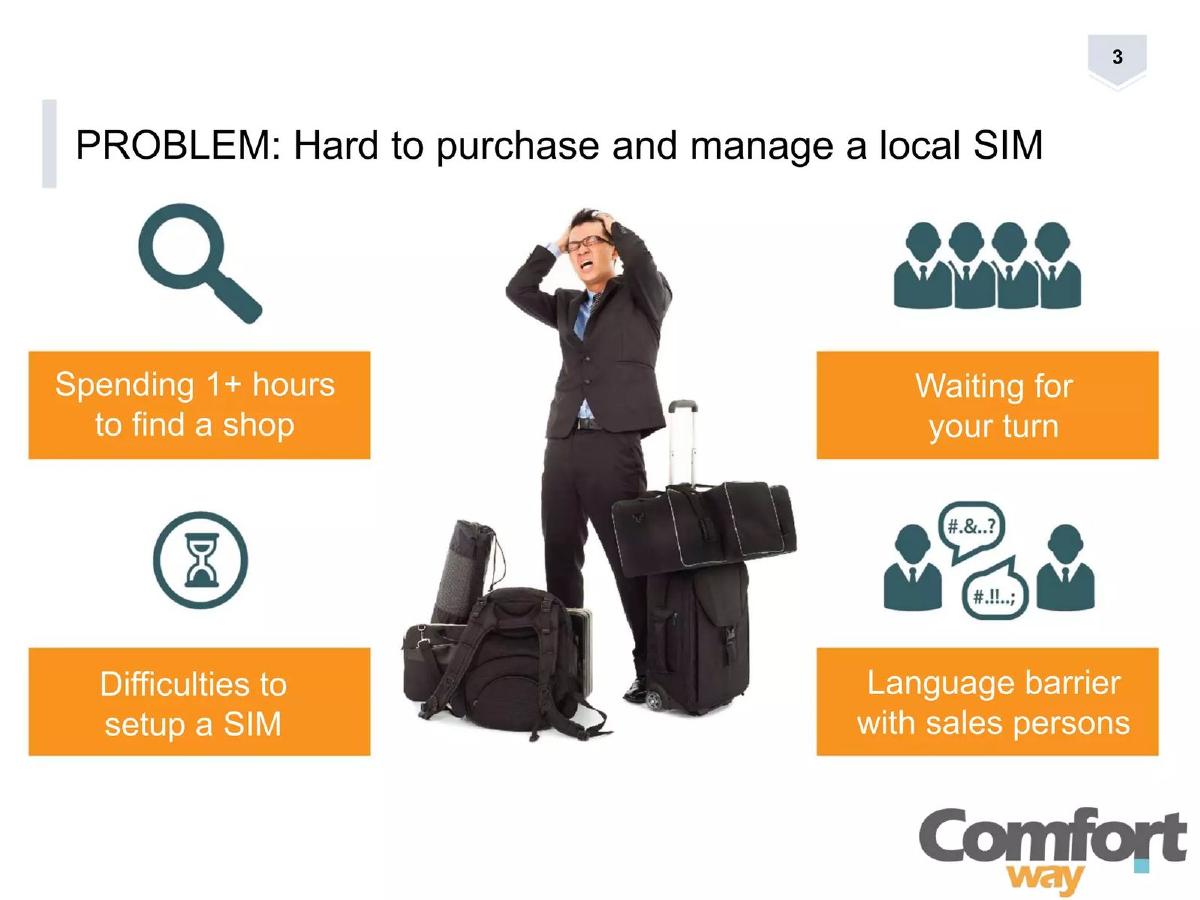
- The company identifies four specific pain points for travelers: finding shops, waiting in line, setup difficulties, and language barriers (Slide 3).
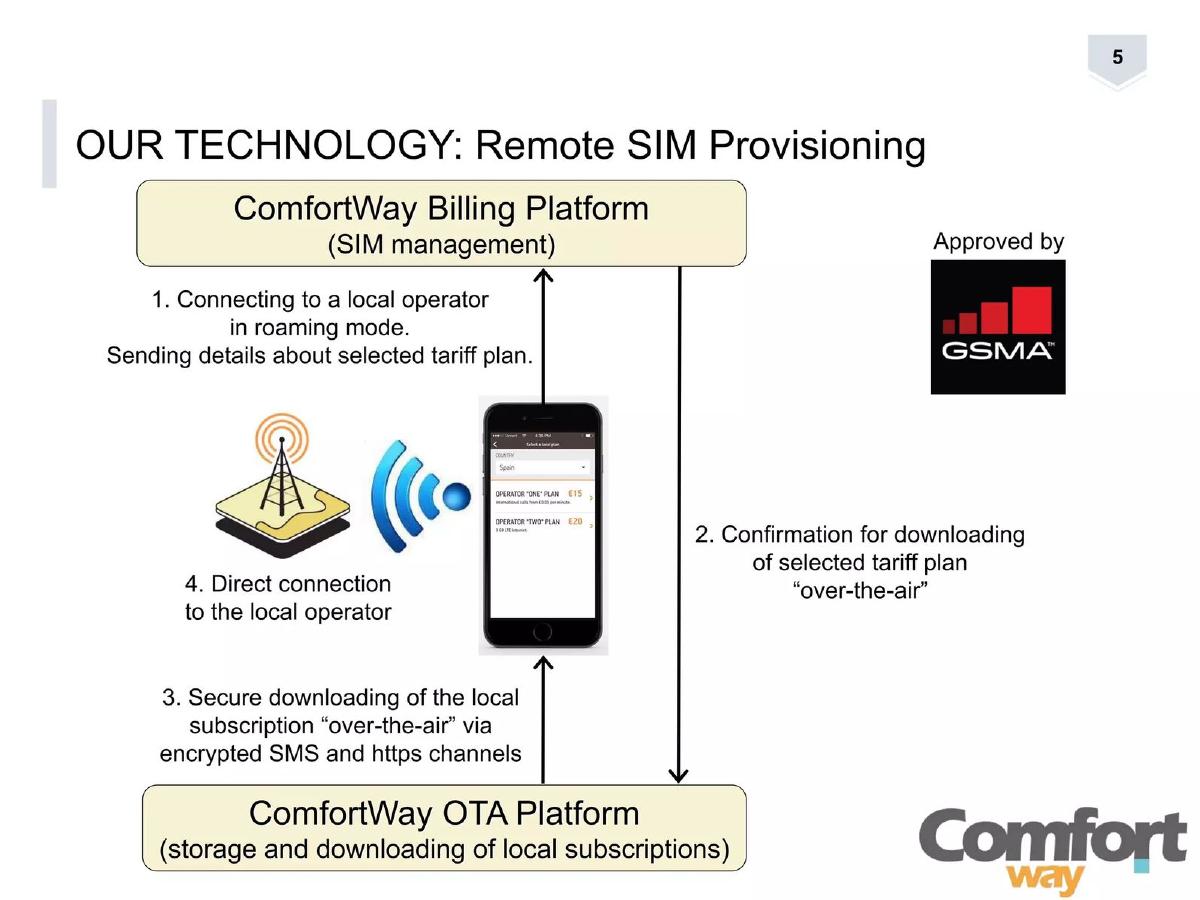
- ComfortWay utilizes 'Remote SIM Provisioning' technology approved by the GSMA to deliver subscriptions 'over-the-air' (Slide 5).
- Distribution is diversified across direct sales, white-label partners like Virgin Connect, and OTA platforms like Expedia (Slide 7).
- The startup reports a 40% gross margin and an ARPU of €50+ per year (Slide 9).
- The team consists of 8 engineers with experience at major firms including Samsung, Nokia, and Motorola (Slide 9).
- ComfortWay secured a €70K grant from Skolkovo prior to this raise (Slide 9).
- The financial model predicts a massive scale-up from 20,000 clients in 2015 to 3,000,000 clients by 2019 (Slide 11).
- The funding ask is €300,000 for purchasing traffic and issuing 20,000 global SIM cards (Slide 11).
ComfortWay Pitch Deck Analysis
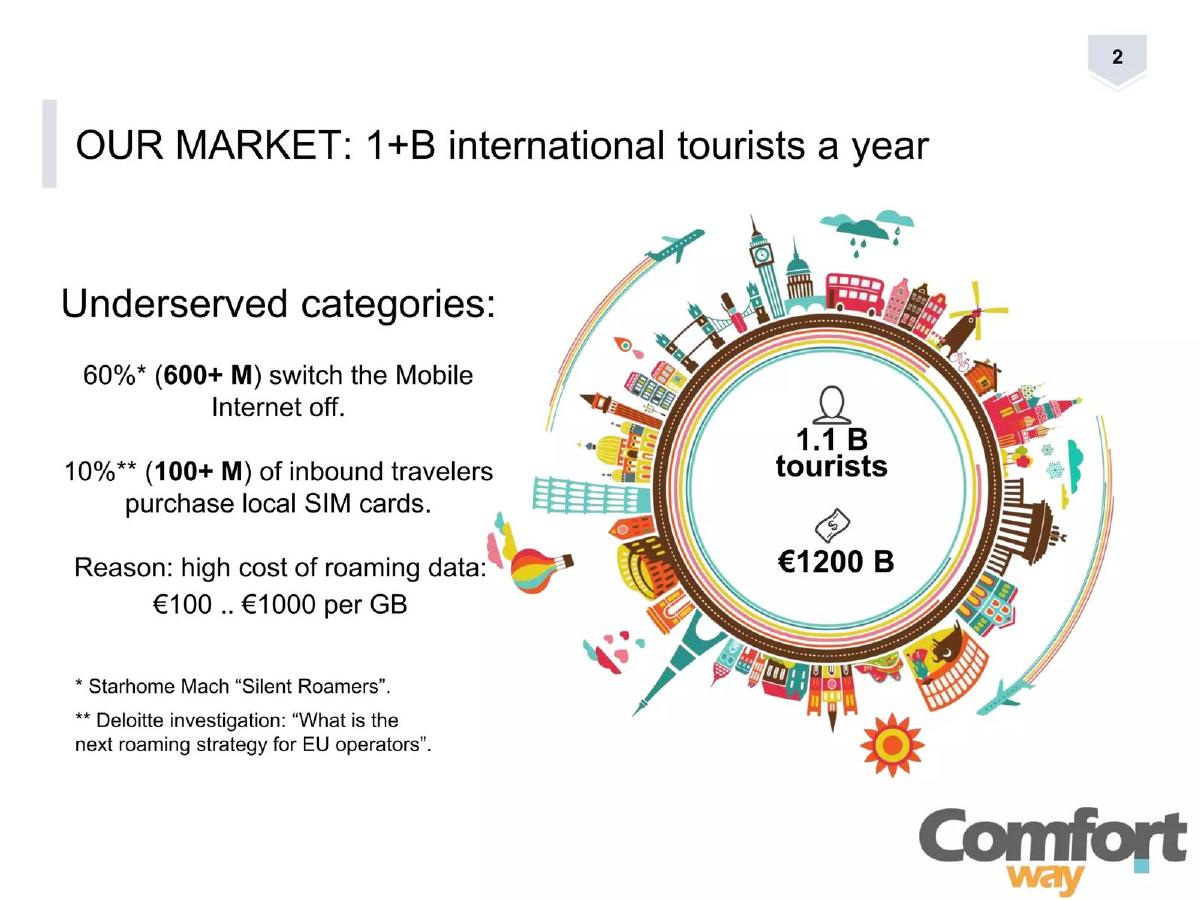
ComfortWay addresses the perennial problem of international roaming charges and the logistical friction of acquiring local SIM cards. The deck positions the company not just as a hardware provider, but as a platform play utilizing GSMA-approved remote provisioning technology. This teardown examines the 7 provided slides to understand their value proposition, technical architecture, and financial ambitions.
Slide 1: Title and Value Proposition
The cover slide features a high-resolution image of a business traveler using a tablet, establishing the target demographic immediately. The logo, ComfortWay , is accompanied by a clear, concise tagline: "Mobile Internet in 100+ countries at local prices." This is a strong start because it defines the 'what' (mobile internet), the 'where' (100+ countries), and the 'why' (local prices) in a single sentence.
Slide 3: The Problem Statement
Slide 3 uses a relatable, if slightly cliché, stock photo of a frustrated traveler to highlight the inefficiencies of the current status quo. The slide identifies four specific friction points:
Spending 1+ hours to find a shop: Highlighting the time cost of physical retail. · Waiting for your turn: The inconvenience of physical queues. · Difficulties to setup a SIM: Technical hurdles for non-expert users. · Language barrier with sales persons: The communication gap in foreign markets.
By quantifying the time lost ("1+ hours"), the deck attempts to build a case for a digital-first solution. However, it focuses entirely on the process of getting a SIM rather than the cost of roaming, which is usually the larger pain point for travelers.
Slide 5: Technology and Remote SIM Provisioning
This is the most technical slide in the deck, explaining the Remote SIM Provisioning workflow. It explicitly mentions that the technology is "Approved by GSMA," which provides significant industry credibility. The process is mapped out in four steps: 1) Connecting to a local operator in roaming mode to send tariff details; 2) Confirmation for downloading the plan "over-the-air"; 3) Secure downloading of the local subscription via encrypted SMS and HTTPS; and 4) Direct connection to the local operator. The slide identifies two core components of their stack: the ComfortWay Billing Platform for SIM management and the ComfortWay OTA Platform for storage and downloading of subscriptions. This indicates the company has built a proprietary backend to handle the complex handshake between global carriers.
Slide 7: Distribution Channels
Slide 7 outlines a comprehensive Go-To-Market (GTM) strategy. Instead of relying solely on direct-to-consumer marketing, ComfortWay identifies five distinct channels:
Direct Online Sales: Their own web presence. · Online Booking Systems: Logos for Expedia and Booking.com are shown, suggesting integration into the travel booking flow. · Airlines & Airports: Logos for Lufthansa , CAPI , and Excess Baggage Company indicate a physical presence at transit hubs. · White Label Distributors: Partnerships with Great Hotels of the World and Virgin Connect . · Manufacturers of Mobile Devices: A picture of a dedicated mobile hotspot device suggests a hardware-bundled approach.
The inclusion of Mobile Virtual Operators as a channel suggests they are also looking at B2B wholesale opportunities. This slide is effective because it shows the founders have thought through the high cost of customer acquisition in the travel space and are seeking partnerships to mitigate it.
Slide 9: Traction and Team
This slide provides a snapshot of the company's health and human capital. Key figures include:
Customers: 2,500+ starting from March 2014. · ARPU: €50+ per year. · Gross Margin: 40%. · Grant: A Skolkovo grant of €70K has been approved.
The team section is somewhat vague, listing "8 engineers with 10+ years experience" and citing major companies like Samsung, Nokia, Motorola, and Kazakh Telecom as former employers or "major customers" (the phrasing is slightly ambiguous). A group photo is provided, but individual founders are not named or profiled on this slide, which is a missed opportunity to highlight specific leadership pedigree.
Slide 11: Investment Strategy and Projections
The financial slide presents a Five-Year Financial Projection (M€) that is extremely aggressive. The table shows:
2015: 20K clients, €0.5M revenue, -€0.2M profit. · 2016: 200K clients, €8.0M revenue, €2.0M profit (Breakeven point). · 2017: 500K clients, €20.0M revenue, €8.0M profit. · 2019: 3,000K clients, €120.0M revenue, €48.0M profit.
The ask is €300,000 at a Valuation of €3,000,000 . The purposes for the funds are clearly stated: purchasing mobile traffic and issuing 20,000 global SIM cards. The jump from €0.5M to €120M in revenue over four years is a classic "hockey stick" projection that would require significant justification in a live Q&A, especially given the modest €300k raise requested to fuel that growth.
Slide 13: Contact and Conclusion
The final slide provides contact information for CEO Oleg Pravdin , including an email address, a Russian phone number, and links to the company websites (comfortway.com and 4tourist.com) and LinkedIn profile. It serves as a standard closing slide with a call to action.
What Works in This Deck
Technical Validation: By citing GSMA approval and detailing the OTA (Over-the-Air) process, the deck overcomes the initial skepticism regarding how they actually bypass physical SIM cards. It moves the conversation from "is this possible?" to "how do we scale this?"
Clear Distribution Strategy: The partnership-heavy approach shown on Slide 7 is very logical for a travel startup. Aligning with Expedia and Lufthansa places the product at the exact moment of need for the consumer.
Specific Use of Funds: Many decks fail to explain what the money is for. ComfortWay explicitly states the €300k is for traffic prepayments and SIM card issuance, which are tangible, growth-oriented expenses.
What Is Missing
Competition: There is no mention of competitors. In 2014/2015, companies like GigSky, Keepgo, and even traditional roaming packages from major carriers were significant threats. The lack of a competitive matrix is a major omission.
Unit Economics: While they mention a 40% gross margin, they don't break down the Cost of Customer Acquisition (CAC) versus the Lifetime Value (LTV). Given their reliance on partnerships (Slide 7), understanding the revenue share or acquisition cost through those channels is vital.
Team Detail: A group photo and a list of big-name companies is not a substitute for founder bios. Investors back people, and this deck hides the individuals behind a generic "8 engineers" label.
What a Founder Should Copy
The Problem Slide Structure: Slide 3 is a great example of breaking down a broad problem into four distinct, relatable pain points. It makes the solution feel necessary rather than just "nice to have."
The Technology Diagram: Slide 5 manages to explain a complex telecommunications process using a simple flow chart. Founders with deep-tech products should emulate this style to ensure non-technical investors can follow the logic.
The Ask Box: The clear callout of Valuation, Required Investment, and Purposes on Slide 11 is a best practice. It leaves no ambiguity about what the founder wants and what the investor is buying into.
Frequently asked questions
- What is the core technology behind ComfortWay?
- ComfortWay utilizes Remote SIM Provisioning, a technology approved by the GSMA. As shown on Slide 5, it involves a Billing Platform and an OTA (Over-the-Air) Platform. The system allows users to select a local tariff plan via an app, which is then securely downloaded to the device via encrypted SMS and HTTPS channels, enabling a direct connection to local operators without a physical SIM swap.
- How does ComfortWay plan to acquire customers?
- According to Slide 7, the company uses a multi-channel distribution strategy. This includes direct online sales, integration with online booking systems (Expedia, Booking.com), partnerships with airlines and airports (Lufthansa, CAPI), white-label distributors (Virgin Connect, Great Hotels of the World), and pre-installation by mobile device manufacturers.
- What are the current business metrics reported in the deck?
- Slide 9 lists several key metrics: 2,500+ customers since March 2014, an Average Revenue Per User (ARPU) of over €50 per year, and a gross margin of 40%. The company also notes a previous version of their product offered high-quality mobile internet in Europe at a rate of €29 per GB.
- What is the specific investment ask and valuation?
- On Slide 11, ComfortWay seeks an investment of €300,000 at a pre-money valuation of €3,000,000. The funds are earmarked for two primary purposes: purchasing mobile traffic from local operators and issuing 20,000 global SIM cards to expand their user base.
- What is missing from this pitch deck?
- The deck lacks a competitive landscape analysis, which is critical in the crowded roaming market. It also omits a detailed breakdown of the '8 engineers' on the team—only providing a group photo and a list of former employers. Furthermore, there is no mention of the specific unit economics beyond a general gross margin, nor a clear exit strategy for investors.