The iControl pitch deck is a lean, 8-slide presentation from 2014 that successfully raised $150,000 in seed funding. It stands out for its aggressive focus on traction and market size rather than feature lists. With a reported $45,000 MRR and 20% month-over-month growth at the time of the pitch, the deck presents a compelling case for a high-growth SaaS business in the traditionally slow-moving construction sector. The narrative moves quickly from the problem—inefficient paper-based reporting—to a solution that claims to cut report-writing time in half. While it lacks a formal 'Ask' slide or…
Key takeaways
- The deck leads with social proof, showcasing logos like Skanska and Hochtief on the very first slide to establish immediate industry credibility.
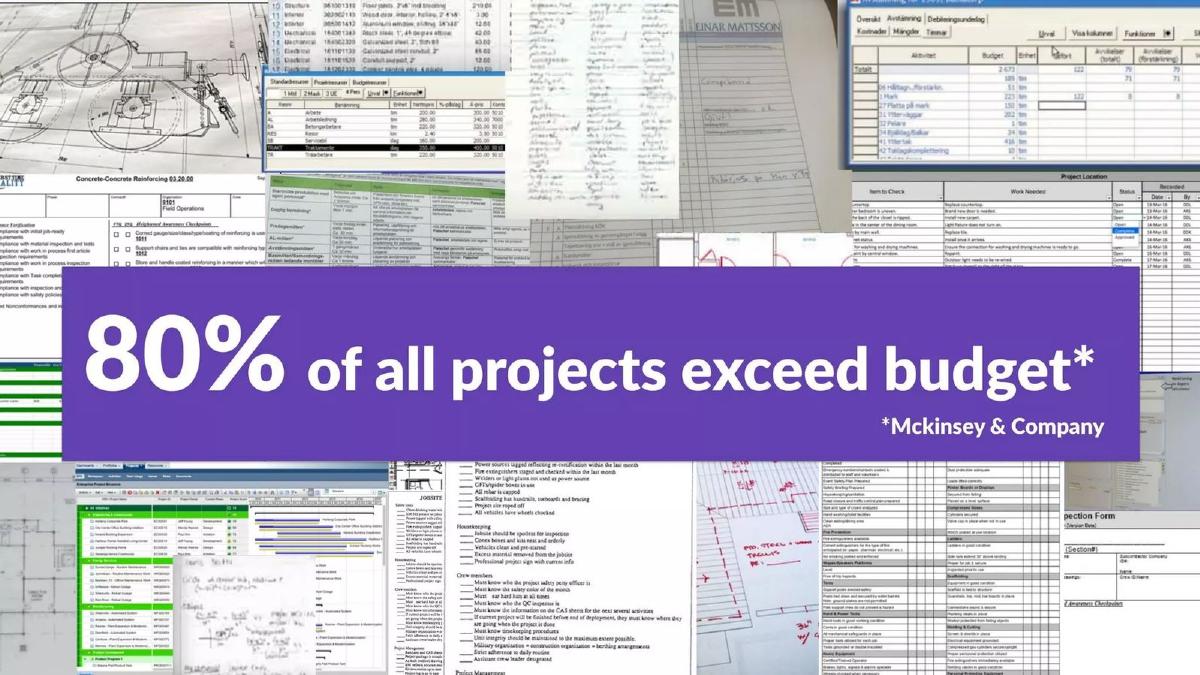
- A McKinsey & Company statistic on slide 3 provides third-party validation for the core problem: 80% of all projects exceed budget.
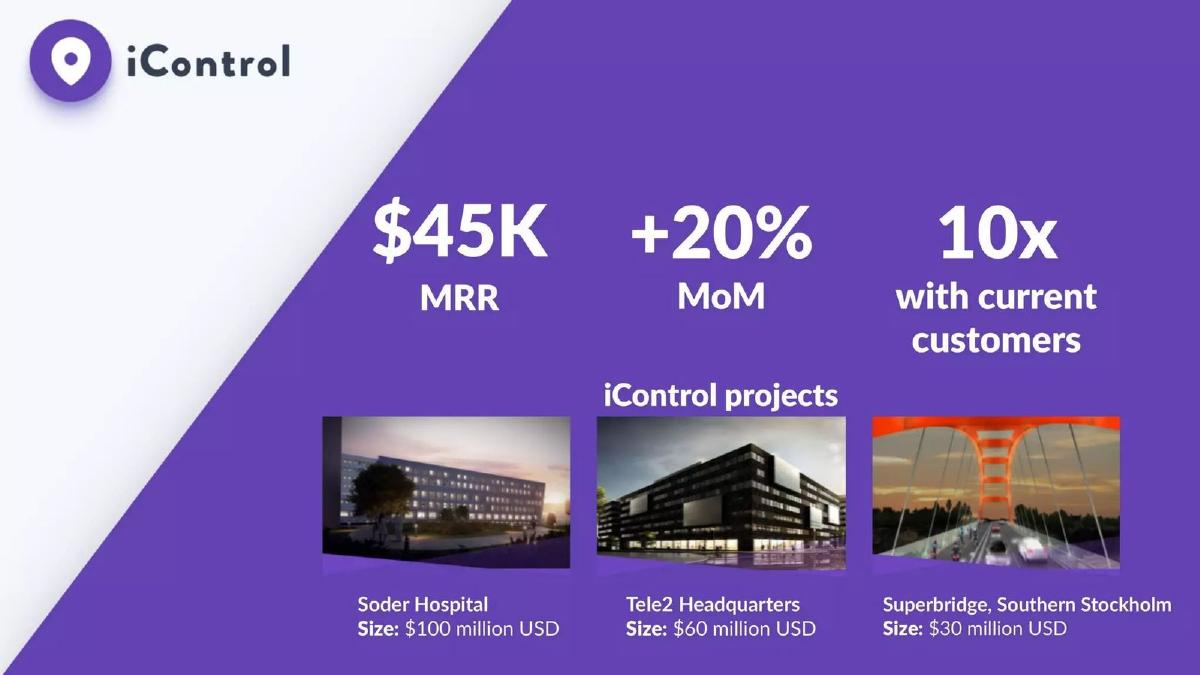
- The startup reported significant early traction for a seed stage company, citing $45,000 MRR and 20% month-over-month growth on slide 5.
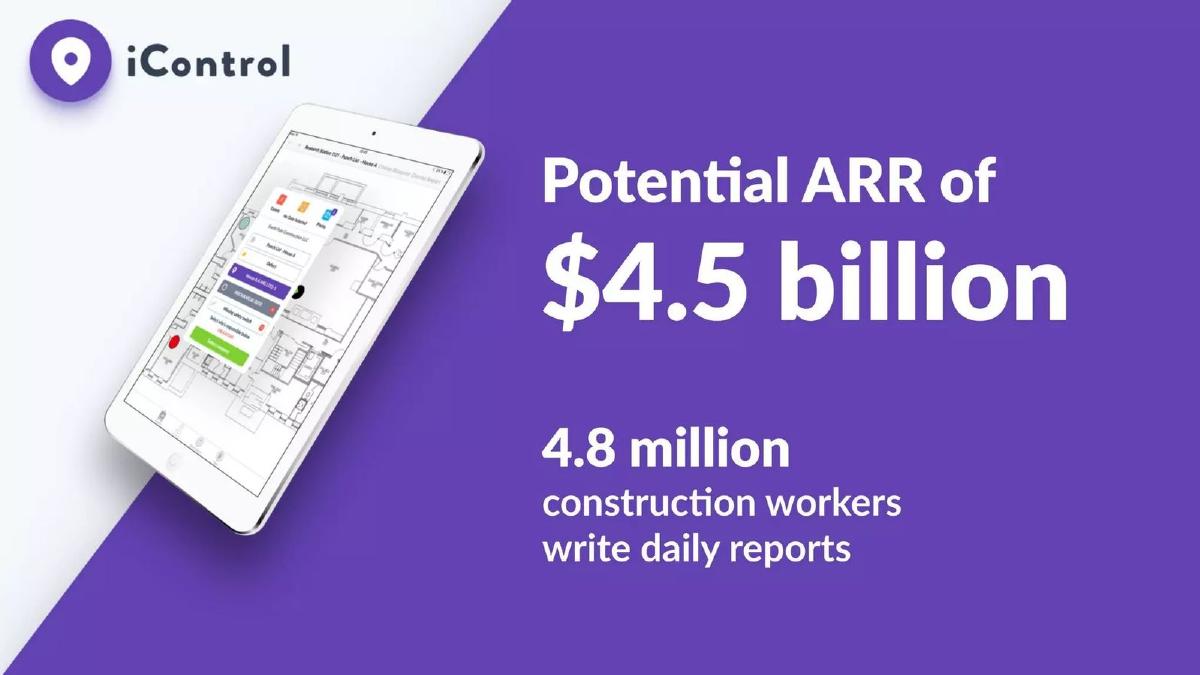
- iControl identifies a specific, high-frequency task—daily reporting by 4.8 million workers—as its primary entry point into the market (slide 6).
- The team slide (slide 7) emphasizes domain expertise, noting a 'Team of 8 with previous construction software experience.'
- The deck claims a '10x opportunity with current customers alone,' suggesting a strong land-and-expand strategy within existing accounts (slide 5).
- The presentation is exceptionally brief at only 8 slides, omitting common sections like a detailed competitor matrix or a specific funding 'Ask' amount.
- The visual design is consistent, using a purple-and-white theme and repeated product imagery to maintain brand identity throughout the pitch.
The 8-Slide Sprint: How iControl Framed Construction Efficiency
The iControl pitch deck from 2014 is a fascinating artifact of early 'ConTech' (Construction Technology). At a time when many SaaS decks were becoming increasingly bloated with complex feature breakdowns and multi-year projections, iControl opted for extreme brevity. With only eight slides, the deck focuses almost exclusively on the scale of the problem and the velocity of their early revenue growth. For a seed-stage company, reporting $45,000 in MRR is a significant milestone that often does the heavy lifting in a pitch, allowing the founders to keep the rest of the presentation lean.
The Hook: Establishing Immediate Credibility
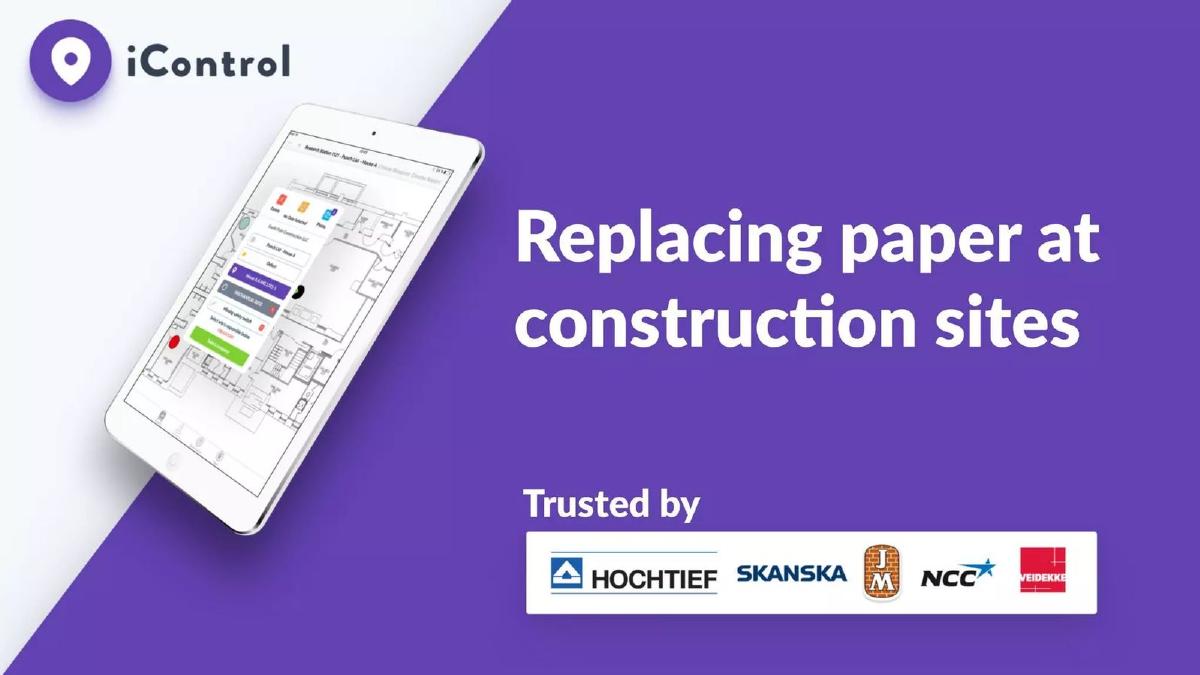
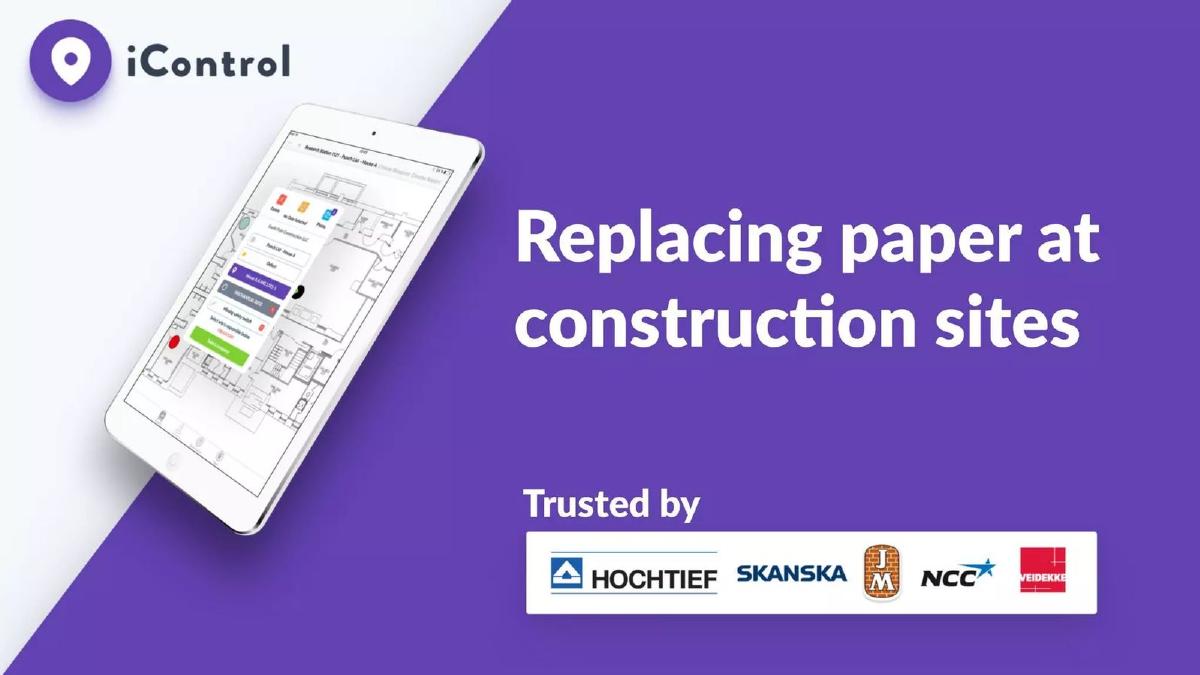
Slide 1: Title and Trust The cover slide does more than just name the company. It immediately positions iControl as a tool for 'Replacing paper at construction sites.' Crucially, it includes a 'Trusted by' section featuring heavyweights like Hochtief, Skanska, NCC, and Veidekke. By placing these logos on the first slide, iControl bypasses the 'who are you' phase and moves straight to 'how are you working with these giants?'
The Problem: Chaos and Cost Overruns
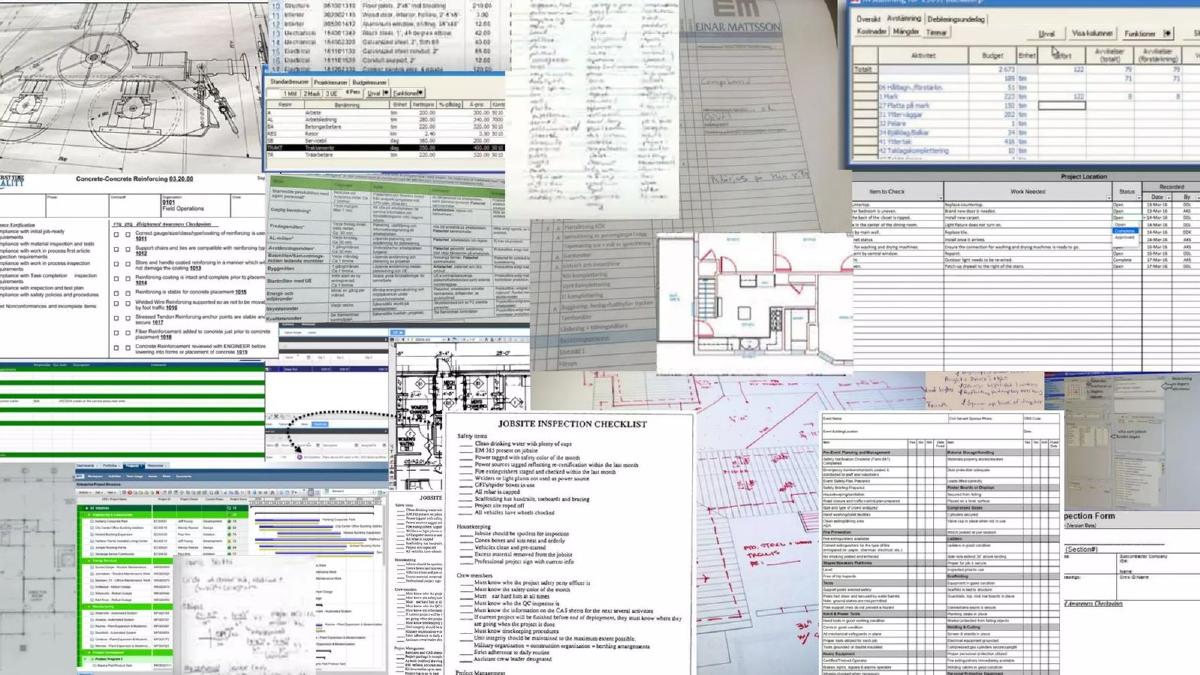
Slide 2: The Visual Mess Slide 2 is a collage of paper forms, blueprints, and handwritten notes. It is a visceral representation of the 'paper problem' mentioned on the cover. There is no text on this slide, letting the visual chaos of traditional construction management speak for itself.
Slide 3: The McKinsey Validation iControl anchors the visual chaos in financial reality. Overlaid on the same collage of paper is a stark statistic: '80% of all projects exceed budget.' By citing McKinsey & Company, the founders provide institutional weight to their claim that the current way of working is fundamentally broken and expensive.
The Solution: Efficiency Through Digitization
Slide 4: The Value Proposition The solution is presented as a direct antidote to the problem. Using an image of the app on a tablet, the slide claims iControl is 'Cutting time spent writing reports in half.' This is a specific, measurable benefit that appeals directly to the project managers and site supervisors who deal with the administrative burden of construction.
The Traction: High-Growth SaaS Metrics
Slide 5: Revenue and Expansion This is the 'money slide' of the deck. It lists three key figures: $45K MRR , +20% MoM , and a 10x opportunity with current customers . Beneath these numbers, they showcase specific high-value projects where the software is already in use: Soder Hospital ($100 million USD), Tele2 Headquarters ($60 million USD), and Superbridge ($30 million USD). This slide proves that the product isn't just a prototype; it is being used on massive, real-world infrastructure projects.
The Market: A Multi-Billion Dollar Opportunity
Slide 6: Market Size iControl calculates its Total Addressable Market (TAM) by looking at the daily habits of the workforce. It cites '4.8 million construction workers write daily reports' and translates this into a 'Potential ARR of $4.5 billion.' This connects the specific feature (reporting) to a massive financial outcome, showing investors the ceiling for this business is incredibly high.
The Team: Domain Expertise
Slide 7: The Founders The team slide is simple, featuring Alexander Selling (CEO, iOS dev) and Anton Fagerberg (COO). The headline emphasizes a 'Team of 8 with previous construction software experience.' This is a critical detail in the construction industry, which is notoriously difficult for 'outsider' tech companies to penetrate. The slide also reiterates their previous enterprise clients, reinforcing the industry connections mentioned on slide 1.
The Conclusion: The Summary Slide
Slide 8: Final Traction Summary The deck ends by repeating the most impressive stats: the $45k MRR, the 20% growth, and the $4.5 billion potential. It provides a contact email (founders@icontrolapp.se) but notably lacks a specific 'Ask' regarding the funding round details.
What Works in the iControl Deck
The Traction-First Approach: Many seed decks lead with a long-winded 'vision' or 'origin story.' iControl leads with $45,000 in monthly recurring revenue. In the world of venture capital, revenue is the ultimate validator. By putting their MRR and growth rate front and center, they immediately signal that they have found product-market fit.
Social Proof: The inclusion of logos like Skanska and Hochtief is a masterstroke for a construction startup. These are some of the largest construction firms in the world. Showing that these companies already 'trust' the software removes the perceived risk of the industry's slow adoption of new technology.
The 'Paper' Narrative: The deck uses a very simple, relatable enemy: paper. By framing the problem as 'replacing paper,' the founders make the solution intuitive. Everyone understands that paper is slow, easy to lose, and hard to analyze. This simplicity makes the pitch accessible even to investors who aren't construction experts.
What is Missing from the iControl Deck
The Funding Ask: The most glaring omission is a slide detailing how much money they are raising and what they plan to do with it. While this information is often handled in the verbal pitch or a follow-up email, a 'The Ask' slide is standard practice to help investors understand the stage and scale of the opportunity.
Competitive Landscape: The deck does not mention competitors like Procore or PlanGrid, which were already active in the market by 2014. Investors generally want to see that founders understand their competition and have a clear reason why their solution will win.
Unit Economics: While the MRR is impressive, the deck doesn't touch on Customer Acquisition Cost (CAC) or Lifetime Value (LTV). In the enterprise space, where sales cycles can be long and expensive, understanding these ratios is vital for assessing the long-term sustainability of the growth.
Product Depth: The deck focuses almost entirely on 'daily reports.' While this is a great entry point, it doesn't explain what other features the platform has or how it plans to expand its footprint on the job site. The '10x opportunity' is mentioned, but the roadmap for achieving it is left to the imagination.
What Other Founders Should Copy
The '10x Expansion' Metric: Founders should follow iControl's lead in highlighting the 'land and expand' potential. By stating they have a 10x opportunity with current customers, they show that their growth isn't just dependent on finding new clients, but on deepening existing relationships. This is a very attractive trait for SaaS investors.
Visual Problem Statements: Slide 2's use of a collage to represent chaos is much more effective than a bulleted list of 'pain points.' If your industry is messy, show the mess. It creates an emotional response that text cannot replicate.
Third-Party Validation: Using a McKinsey stat to back up the core problem is a great way to add authority to your pitch. It shows that you aren't just complaining about a problem you've noticed, but that the world's leading consultants agree it is a systemic issue.
Brevity: If you have strong traction, you don't need a 20-page deck. iControl's 8 slides are a testament to the fact that a few powerful numbers and a clear value proposition are often enough to get a 'yes' for a seed round. Don't bury your best metrics in a mountain of slides.
Frequently asked questions
- How much did iControl raise with this deck?
- According to the catalogue facts, iControl raised $150,000 in a Seed round in 2014. This is a relatively modest sum given the $45,000 MRR reported in the deck, suggesting the round may have been a bridge or an early-stage accelerator-style investment.
- What is the core problem iControl solves?
- The deck identifies the 'paper problem' at construction sites. Slide 2 and 3 highlight that paper-based workflows contribute to the fact that 80% of construction projects exceed their budgets. iControl aims to digitize these workflows to increase efficiency and reduce reporting time.
- Who are iControl's target customers?
- The deck lists several major enterprise construction firms as 'trusted by' or 'previous clients,' including Skanska, Hochtief, NCC, and Veidekke. It specifically targets the 4.8 million construction workers who are required to write daily reports.
- What metrics does the deck use to prove traction?
- iControl uses three primary metrics on slide 5: $45,000 in Monthly Recurring Revenue (MRR), a 20% Month-over-Month (MoM) growth rate, and a '10x' expansion opportunity within their existing customer base.
- Is there a clear 'Ask' in the iControl pitch deck?
- No. The 8-slide deck concludes with a summary of traction and contact information on slide 8, but it does not specify the amount of capital being raised, the valuation, or the intended use of funds.