Labster’s 13-slide deck is a highly focused presentation that prioritizes traction and pedagogical results over technical jargon. By the time the company reached its $47M Series C in 2022, it had already amassed 5 million students and 3,000 institutional partners (Slide 2). The deck stands out for its reliance on third-party validation, citing a Nature Biotechnology study that showed a 101% increase in learning outcomes when Labster is combined with traditional teaching (Slide 8). While the deck lacks traditional financial projections or a specific 'Ask' slide, it compensates with overwhelmin…
Key takeaways
- The company reached 5 million students and 3,000 institutional partners by the time of this deck (Slide 2).
- Labster claims a 101% boost in learning outcomes based on a controlled study published in Nature Biotechnology (Slide 8).
- The platform offers over 250 fully interactive virtual labs, ranging from standard environments to the surface of Mars (Slide 2).
- Social proof is a core pillar, featuring logos from UCL, Arizona State University, and the University of Essex (Slide 9).
- The leadership team includes founders with backgrounds from McKinsey & Company and Harvard Medical School (Slide 3).
- The board of directors features partners from top-tier VC firms including Andreessen Horowitz (a16z) and Balderton Capital (Slide 3).
- Labster powered the world’s first accredited fully online college Biology degree in partnership with Google and ASU (Slide 12).
- The deck highlights a significant cost reduction for students, citing a $10,000 cost for an online degree versus $40,000 for an average science degree (Slide 12).
Executive Summary: The Power of Efficacy in EdTech
Labster’s Series C pitch deck is a masterclass in using data and social proof to justify a $47M investment. In the EdTech sector, where many products struggle to prove their pedagogical value, Labster leads with a Nature Biotechnology study showing a 101% increase in learning outcomes. This teardown examines how the company moved from a niche simulation tool to a global infrastructure play for science education.
Slide 1: Title Slide
The deck opens with a minimalist title slide: "Virtual Science Labs" and the Labster logo. It is clean, professional, and immediately identifies the category. There is no tagline or mission statement here, which suggests the company relies on the clarity of its category definition.
Slide 2: What is Labster?
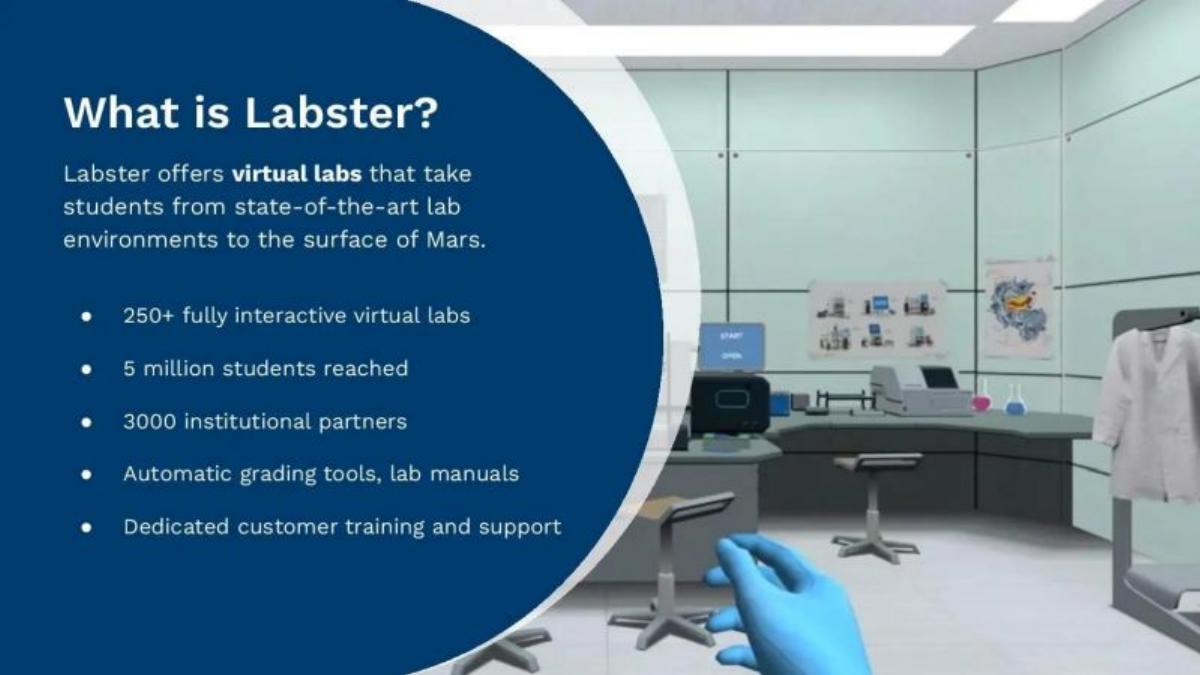
This slide functions as a high-level traction and product summary. It lists five key points: 250+ interactive virtual labs, 5 million students reached, 3000 institutional partners, automatic grading tools, and dedicated customer support. The background image shows a first-person view of a virtual lab, providing immediate context for the user experience. By putting the "5 million students" figure on the second slide, Labster establishes immediate scale.
Slide 3: Leadership and Board
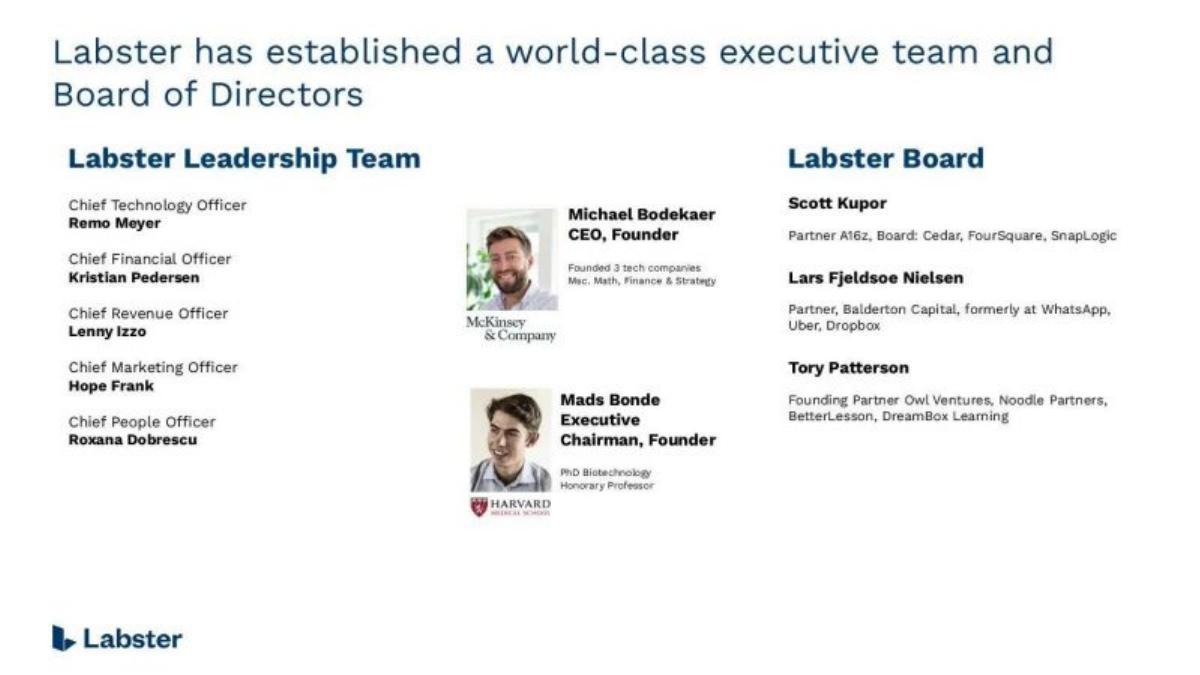
For a Series C round, the pedigree of the team and board is vital. Labster highlights its founders' backgrounds at McKinsey and Harvard Medical School. More importantly, it lists a "world-class" board including Scott Kupor (a16z) and Lars Fjeldsoe Nielsen (Balderton Capital). This slide signals to new investors that the company is already backed by the highest tier of venture capital, reducing perceived risk.
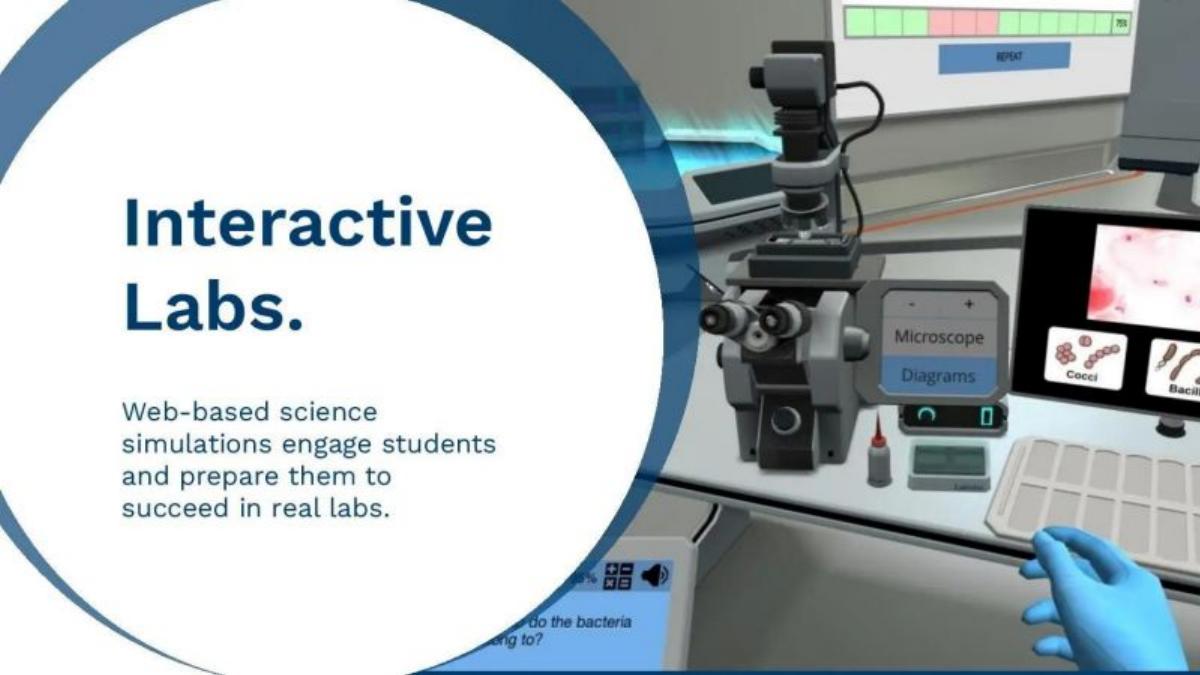
Slide 4: Interactive Labs
This slide defines the product's utility. It describes the simulations as "web-based science simulations" that prepare students for "real labs." The visual emphasizes the UI, showing a microscope interface and diagrams of bacteria. The focus here is on the bridge between the digital and physical worlds.
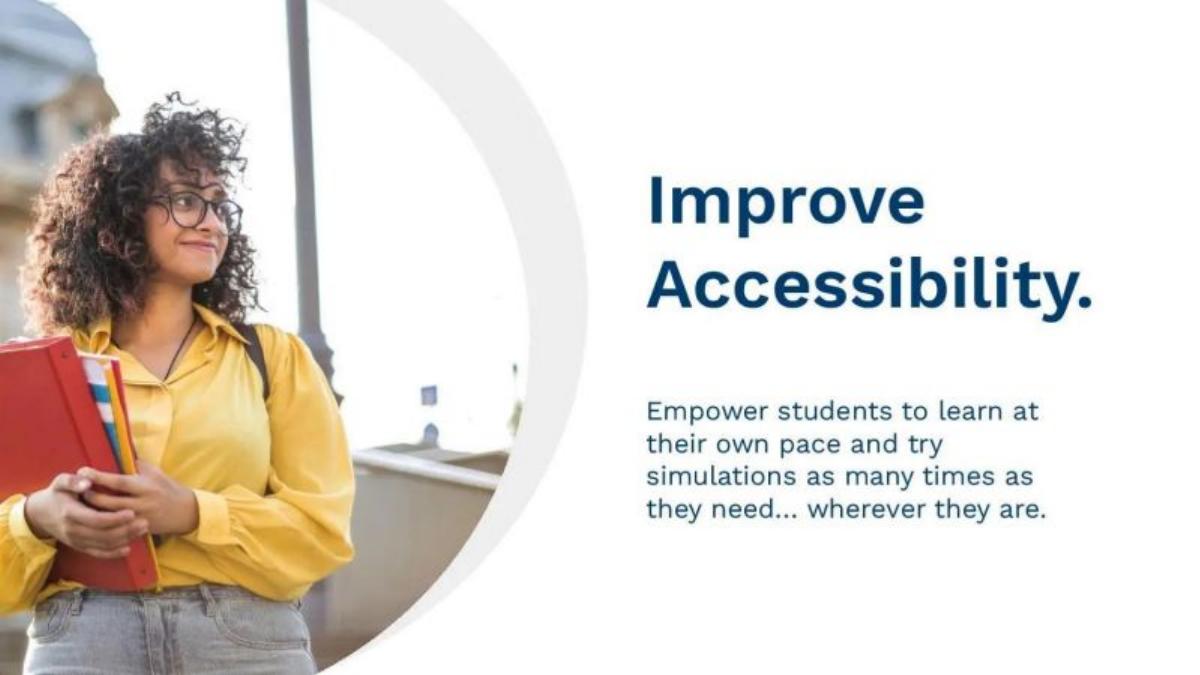
Slide 5: Accessibility
Labster addresses a core pain point in education: the varying pace of student learning. The slide claims to "Empower students to learn at their own pace" and try simulations as many times as needed. This is a key selling point for institutions looking to improve equity and student retention.
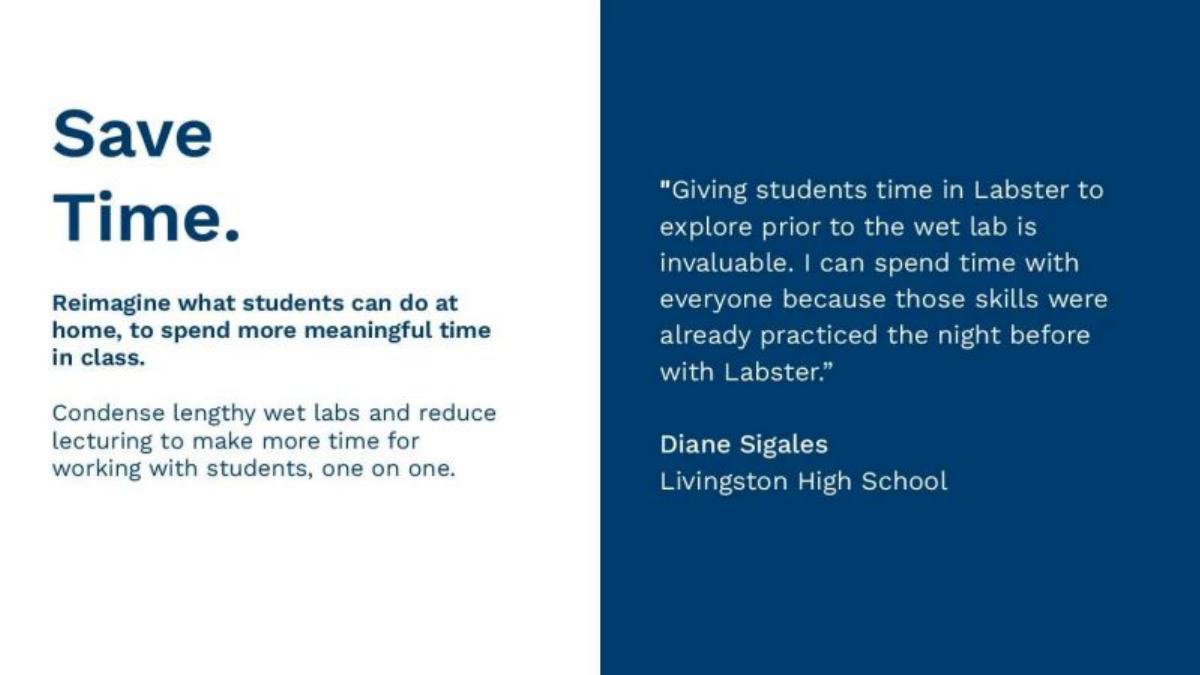
Slide 6: Time Efficiency
This slide targets the instructor's pain point. It features a quote from Diane Sigales at Livingston High School, stating that Labster allows students to practice skills the night before a "wet lab," making in-class time more meaningful. The copy suggests that Labster can "condense lengthy wet labs," which is a significant cost and time saver for schools.
Slide 7: Targeting Learning Gaps
Here, Labster introduces the B2B administrative value. It shows a screenshot of the teacher dashboard, which tracks student progress, attempts, and quiz answers. The ability to "Automate grading" and "Identify where students are struggling" is a powerful value proposition for overworked faculty.
Slide 8: Boosting Learning Outcomes
This is arguably the most important slide in the deck. It features a bar chart showing the difference between "Traditional Teaching" and "Traditional Teaching + Labster." It cites a 101% increase in learning outcomes, backed by a 2014 Nature Biotechnology study. Citing a peer-reviewed journal in a pitch deck is a high-level move that effectively ends the debate over whether the software actually works.
Slide 9: Institutional Trust
The logo wall includes prestigious names like UCL (University College London), Arizona State University, and Fisk University. By including both higher education and K-12 (like Oklahoma City Public Schools), Labster demonstrates the breadth of its market reach. The slide reiterates the "3000 institutions" figure from Slide 2.
Slide 10 & 11: Instructor Testimonials
These slides provide qualitative evidence to support the quantitative data shown earlier. Cord Carter (Chemistry Instructor) calls it "cost effective" and "easy to use," while Emily Dehoff (Biology Teacher) notes that Labster provides equipment she doesn't have in her classroom, turning days of work into 30 minutes. These testimonials humanize the product's impact.
Slide 12: The Google and ASU Partnership
This slide highlights a specific, high-profile case study: the "World’s first accredited fully online college Biology degree." It features the Google and ASU logos prominently. The most striking figure here is the cost comparison: $10,000 for the online degree versus $40,000 for the average science degree. This positions Labster as a deflationary force in education, which is a highly attractive narrative for growth investors.
Slide 13: Global Customer Feedback
The final slide is a collage of five additional testimonials from international educators (Austria, Singapore, USA). This reinforces the "Global" nature of the business and provides a final layer of social proof before the deck concludes.
What Labster Does Exceptionally Well
Labster understands that in the Series C stage, investors are looking for proof of a "moat." The moat here isn't just the code; it's the academic validation and the deep institutional integration. By citing a Nature Biotechnology study (Slide 8) and showcasing a partnership that created an accredited degree (Slide 12), Labster proves it is not just a "supplemental tool" but a core infrastructure component. The deck is also remarkably disciplined; it stays focused on the product's efficacy and the scale of its adoption, avoiding the fluff often found in earlier-stage decks.
What is Missing from the Deck
While this deck was successful in raising $47M, it is worth noting what is absent. There is no Financials slide showing ARR growth, churn rates, or LTV/CAC ratios. There is no Competitor Matrix , which suggests Labster views itself as the clear market leader or is operating in a blue ocean. Finally, there is no Ask slide detailing how the $47M will be spent. In a Series C context, these details are almost certainly handled in a separate, more data-heavy document or a virtual data room, but their absence here makes this a "narrative deck" rather than a full "investment memorandum."
Founder Takeaways: How to Copy Labster's Success
Lead with Efficacy: If you have third-party data or studies that prove your product works, make it the centerpiece of your deck. In EdTech and HealthTech, this is more valuable than any revenue chart. · Use Social Proof Strategically: Don't just list logos; show what you did for those customers. The ASU/Google slide (Slide 12) is far more powerful than a simple logo because it describes a specific, industry-first outcome. · Highlight the Board: If you have top-tier investors, use them to build credibility. Listing the specific partners (e.g., Scott Kupor) rather than just the firm names adds a layer of personal endorsement. · Solve for Both Users: Labster addresses the student (accessibility, learning outcomes) and the teacher (automated grading, time-saving). A successful B2B2C deck must show value for every stakeholder in the chain.
Frequently asked questions
- What is the primary value proposition of Labster according to the deck?
- Labster positions itself as a provider of interactive, web-based science simulations that prepare students for real-world labs. The deck emphasizes three core benefits: improving accessibility by allowing students to learn at their own pace (Slide 5), saving time by condensing lengthy 'wet labs' (Slide 6), and boosting learning outcomes by up to 101% through a blended learning model (Slide 8).
- How does Labster demonstrate its market traction?
- Traction is demonstrated through scale and institutional trust. Slide 2 notes that the company has reached 5 million students across 3,000 institutional partners. Slide 9 reinforces this with a logo wall of high-profile universities and school districts, while Slide 12 highlights a specific high-impact partnership with Google and Arizona State University for an accredited online degree.
- Who are the key people behind Labster?
- The leadership team is led by CEO/Founder Michael Bodekaer (formerly McKinsey) and Executive Chairman/Founder Mads Bonde (PhD in Biotechnology and Honorary Professor at Harvard Medical School). The board includes heavyweights like Scott Kupor (a16z), Lars Fjeldsoe Nielsen (Balderton Capital), and Tory Patterson (Owl Ventures), providing significant institutional credibility (Slide 3).
- What specific student outcomes are mentioned in the deck?
- Beyond the 101% learning outcome boost, the deck features testimonials from instructors. Samantha Lee from Singapore Polytechnic notes that average student scores increased by one to two grades (Slide 13). Emily Dehoff, a biology teacher, mentions that Labster allows students to complete laboratories in 30 minutes that would otherwise take days (Slide 11).
- Does the deck include financial data or a specific funding request?
- No. The 13 slides provided do not include a breakdown of revenue, burn rate, or a specific 'Ask' for the Series C round. This is common in later-stage decks where the primary purpose is to establish the narrative and 'why now' before moving into a data room for deep financial due diligence.