The LaborVoices pitch deck is a masterclass in minimalist storytelling, relying on evocative imagery and bold, singular statements to define a complex problem. The company addresses the $15 billion manual audit market by crowdsourcing intelligence directly from supply chain workers via mobile phones. While the deck excels at establishing the 'why' and showcasing an impressive roster of brand partners like Adidas, Gap, and Under Armour, it is notably light on operational details. It omits a team slide, a specific financial ask, and a detailed competitive analysis. However, with a reported $600…
Key takeaways
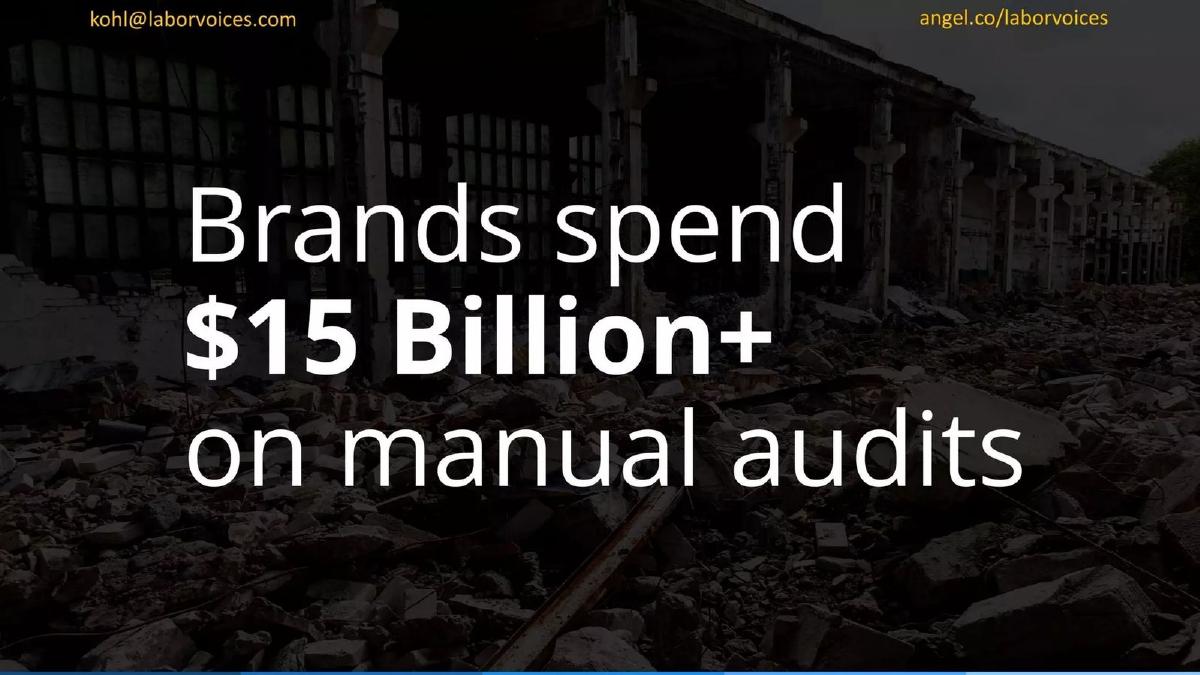
- The deck identifies a massive market inefficiency, stating brands spend $15 Billion+ on manual audits (Slide 4).
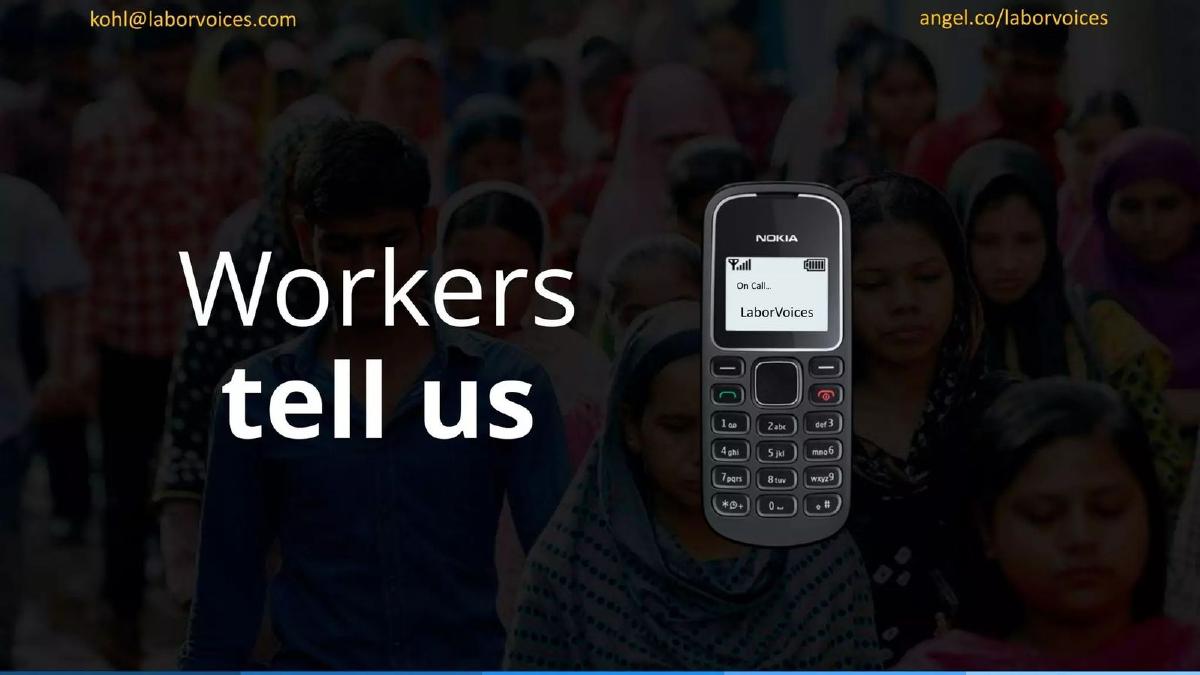
- The core value proposition is direct worker communication, summarized by the phrase 'Workers tell us' paired with an image of a basic mobile phone (Slide 5).
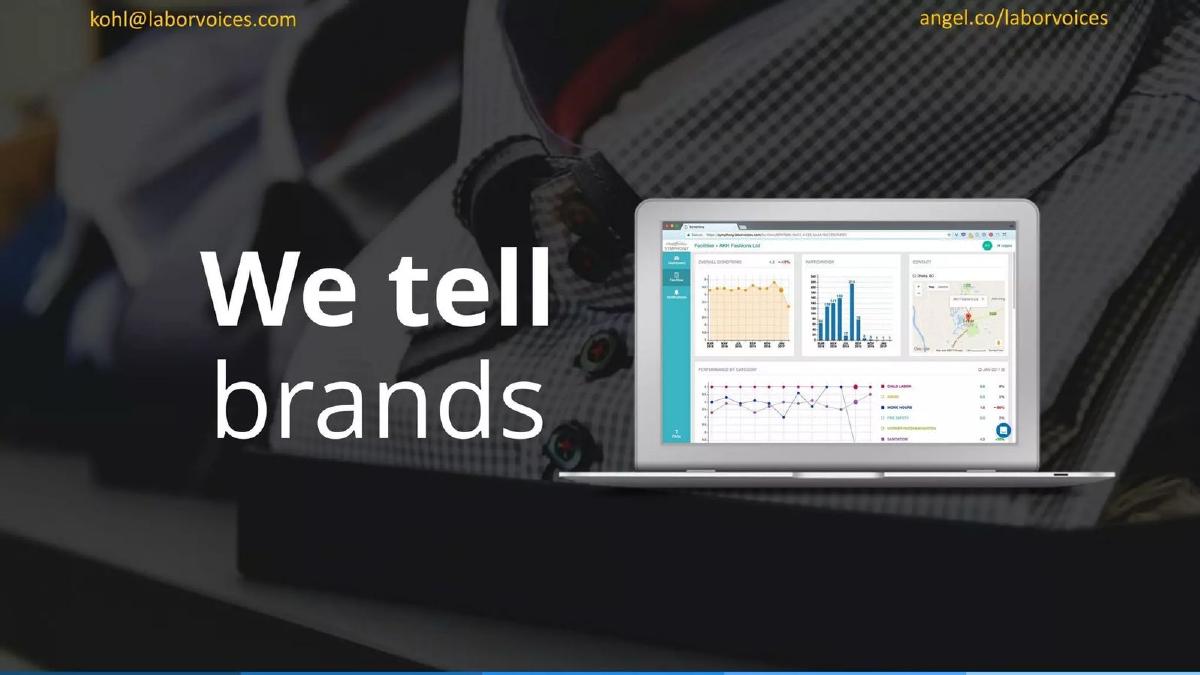
- LaborVoices translates worker data into brand-facing intelligence, showcased through a dashboard mockup titled 'We tell brands' (Slide 6).
- The startup demonstrates significant market traction with a logo wall featuring 12 major apparel brands, including The North Face, Adidas, and New Balance (Slide 7).
- A specific case study highlights the platform's efficacy in detecting illegal migrant workers and saving millions in brand damage (Slide 8).
- The company reports a concrete financial milestone of $600K+ in revenue (Slide 9).
- The deck is entirely devoid of a team slide, leaving the credentials of the founders to be inferred from the cover (Slide 1).
- There is no 'The Ask' slide, meaning the funding goal and use of proceeds are not disclosed in this presentation.
The Minimalist Narrative of Supply Chain Risk
LaborVoices presents a 10-slide deck that relies heavily on the 'less is more' philosophy. In an industry as complex and ethically fraught as global supply chain management, the founders have chosen to strip away the jargon and focus on a simple, linear narrative: workers have information, brands need that information, and manual audits are failing to bridge the gap. The deck uses high-contrast visuals and large-format text to ensure that the core message—risk mitigation—is impossible to miss.
Slide 1: Title and Contact
The cover slide is stark, featuring the LaborVoices logo—a circle of dots of varying sizes—and the name of Co-Founder & CEO Kohl Gill. It includes a professional email address but lacks a tagline or mission statement. The simplicity sets the tone for the rest of the presentation.
Slides 2-3: The Visibility Gap
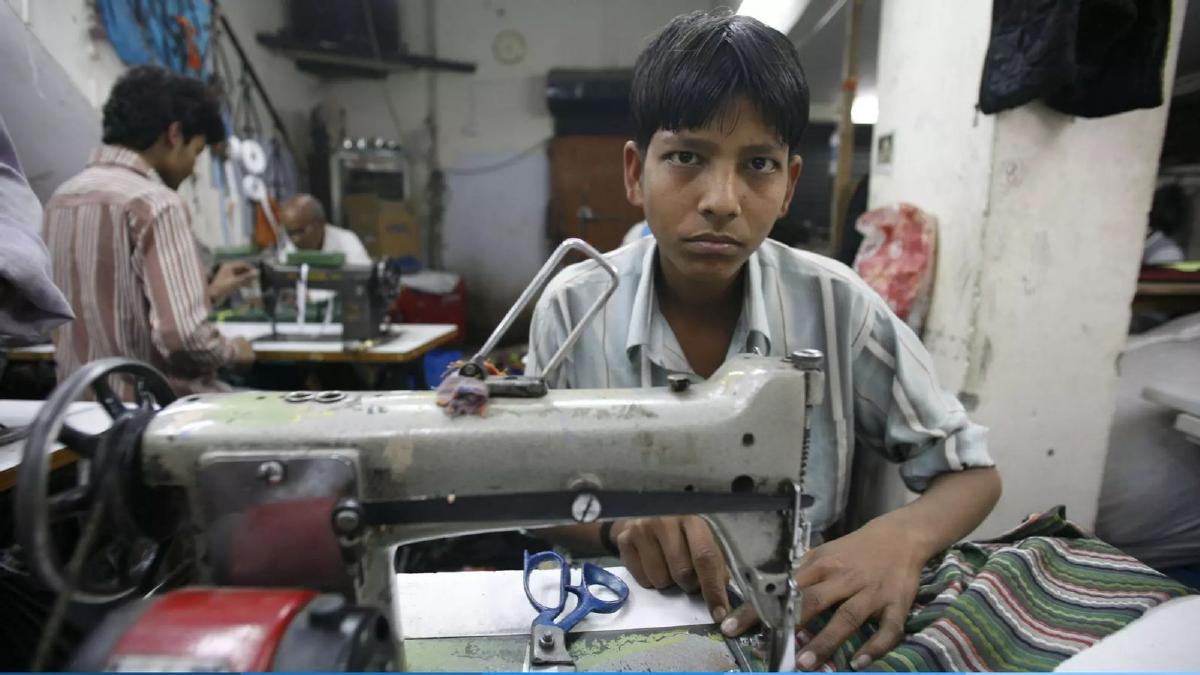
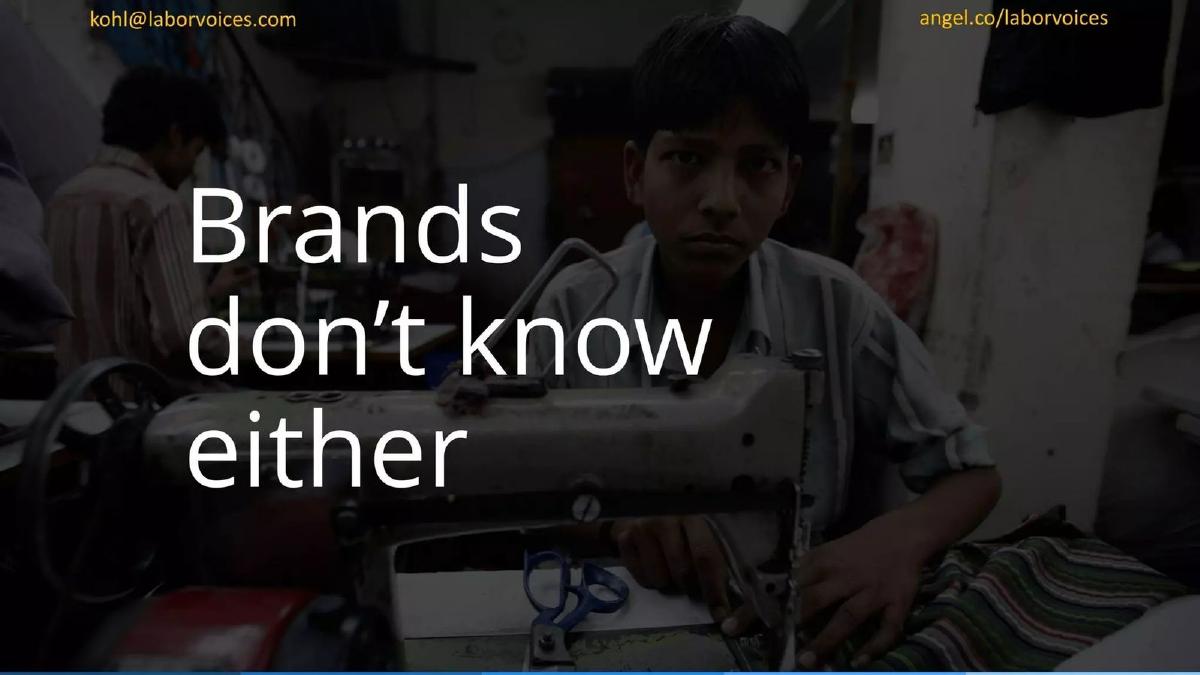
Slide 2 is a full-bleed photograph of a young worker at a sewing machine in what appears to be a garment factory. There is no text. This is a classic 'emotional hook' slide designed to center the audience on the human element of the supply chain. Slide 3 uses the same image, darkened, with the bold text: 'Brands don't know either.' This immediately establishes the problem of information asymmetry. It suggests that despite their size, major corporations are blind to the realities of their own production lines.
Slide 4: The Market Inefficiency
The deck moves from the emotional to the financial. Slide 4 features a background of a ruined or dilapidated industrial structure with the text: 'Brands spend $15 Billion+ on manual audits.' This slide serves two purposes: it defines the Total Addressable Market (TAM) by proxy of current spending and simultaneously labels that spending as ineffective or 'ruined,' much like the background image.
Slides 5-6: The Solution and Product
Slide 5 introduces the mechanism of the solution: 'Workers tell us.' The visual aid is a basic feature phone (a Nokia 1280 or similar model), which is a strategic choice. It signals that the technology is accessible to workers in developing nations who may not have smartphones or reliable data plans. Slide 6 completes the circuit: 'We tell brands.' This slide shows a laptop displaying the 'Symphony' dashboard. The mockup includes specific tracking categories: Child Labor, Abuse, Work Hours, Fire Safety, Worker Recommendation, and Sanitation. This is the only slide that provides a glimpse into the actual product interface.
Slide 7: Validation Through Logos
Traction is handled via a clean logo wall on Slide 7. The brands listed are heavyweights in the apparel industry, including Adidas, Gap, Under Armour, and New Balance . For a startup in the 'Other' or social impact sector, this level of enterprise validation is a powerful signal of product-market fit. It suggests that the 'Brands don't know' problem identified in Slide 3 is one these specific companies are paying to solve.
Slide 8: The Value Proposition (Case Study)
Slide 8 provides a concrete example of the platform's impact. Over a somber industrial cityscape, the text lists three outcomes: 'Detected illegal migrant workers,' 'Prevented PR disaster,' and 'Saved millions in brand damage.' This slide moves the conversation from 'transparency' (a soft benefit) to 'risk management' and 'cost avoidance' (hard financial benefits).
Slide 9: Revenue and Scale
The penultimate slide is a bold declaration of financial health: '$600K+ Revenue.' By placing this figure above the same logo wall from Slide 7, the deck reinforces that the business model is proven and that the listed brands are contributing to a significant top line. It answers the 'is this a charity or a business?' question definitively.
Slide 10: Closing
The deck ends as it began, with the logo and contact information. Notably, it adds an AngelList URL (angel.co/laborvoices), directing interested investors to a platform where more detailed due diligence materials likely reside.
What Works in the LaborVoices Deck
The 'Why' is Unmistakable: By using Slides 2 and 3 to highlight the gap between brands and workers, the deck creates a compelling reason for the company to exist before ever mentioning technology.
Focus on Risk Mitigation: The deck smartly avoids focusing solely on 'social good.' Instead, it emphasizes 'preventing PR disasters' and 'saving millions in brand damage.' This speaks the language of corporate boardrooms and venture capitalists who prioritize downside protection in supply chain investments.
Extreme Clarity: With fewer than 10 words on most slides, the deck is designed to be a backdrop for a spoken presentation. It doesn't compete with the presenter for the audience's attention.
What is Missing from the LaborVoices Deck
The Team: Aside from the CEO's name on the cover, there is no information about the team's expertise. In a space that requires deep knowledge of international labor law, supply chain logistics, and data science, the lack of a team slide is a significant omission.
The Ask: The deck does not state how much capital is being raised or what the milestones for the next round of funding will be. This makes it a 'teaser' deck rather than a complete fundraising instrument.
Competition: The deck ignores other players in the supply chain auditing or ESG (Environmental, Social, and Governance) data space. Investors would likely want to know how LaborVoices differs from traditional auditors like SGS or Bureau Veritas, or other tech-enabled platforms.
Business Model Details: While the revenue figure is impressive, the deck doesn't explain the pricing structure. Is it a SaaS subscription per factory, a per-worker fee, or a consulting-heavy model?
What a Founder Should Copy
The 'Two-Step' Solution Slide: The pairing of 'Workers tell us' and 'We tell brands' is a brilliant way to explain a complex data-brokering business. It reduces the entire operation to its most essential function.
Visualizing the Dashboard: Slide 6 is effective because it doesn't just show a screen; it shows the categories of data being collected. This tells the investor exactly what the product does without requiring a demo.
Bold Revenue Claims: If you have significant revenue, put it on its own slide in a large font. LaborVoices uses Slide 9 to prove that their 'social' mission has 'commercial' legs, which is often the biggest hurdle for impact-oriented startups.
Frequently asked questions
- What is the primary problem LaborVoices is solving?
- LaborVoices targets the lack of transparency in global supply chains. According to Slide 4, brands spend over $15 billion on manual audits that often fail to detect real-time risks. The deck suggests that brands 'don't know' what is happening on the factory floor (Slide 3), leading to potential PR disasters and brand damage.
- How does the technology work according to the deck?
- The process is presented in two steps: 'Workers tell us' and 'We tell brands.' Slide 5 shows a simple Nokia-style mobile phone, implying that workers use basic mobile technology to provide feedback. Slide 6 shows a laptop dashboard where this data is aggregated into metrics like child labor, abuse, and fire safety for brand managers.
- Who are the target customers for LaborVoices?
- The deck focuses on major multinational apparel and footwear brands. Slide 7 lists 12 specific partners: The North Face, Adidas, New Balance, Gap, Lee, Wrangler, Under Armour, Jansport, Timberland, Boden, The White Company, and Vans.
- What financial traction does the company show?
- The company explicitly states on Slide 9 that it has achieved $600K+ in revenue. This is paired with the same logo wall of major brands, suggesting that these companies are either paying customers or active pilot partners contributing to that revenue figure.
- What critical information is missing from this pitch deck?
- The deck is missing several standard venture components. There is no team slide detailing the founders' backgrounds, no 'Ask' slide specifying how much money they are raising, no competitive landscape analysis, and no detailed financial projections or unit economics.