Pilleve’s 2017 seed deck is a masterclass in minimalist visual storytelling, relying on stark statistics and high-quality product photography rather than dense blocks of text. The company addresses the opioid crisis through an integrated pill bottle and smartphone app designed to monitor patient intake in real time. By highlighting a $25 billion cost to insurance companies and a $14,000 annual cost per patient on Slide 4, the deck establishes a clear financial incentive for payers. With early validation from Johns Hopkins Medicine and a reported 50% weekly growth in patient adoption on Slide…
Key takeaways
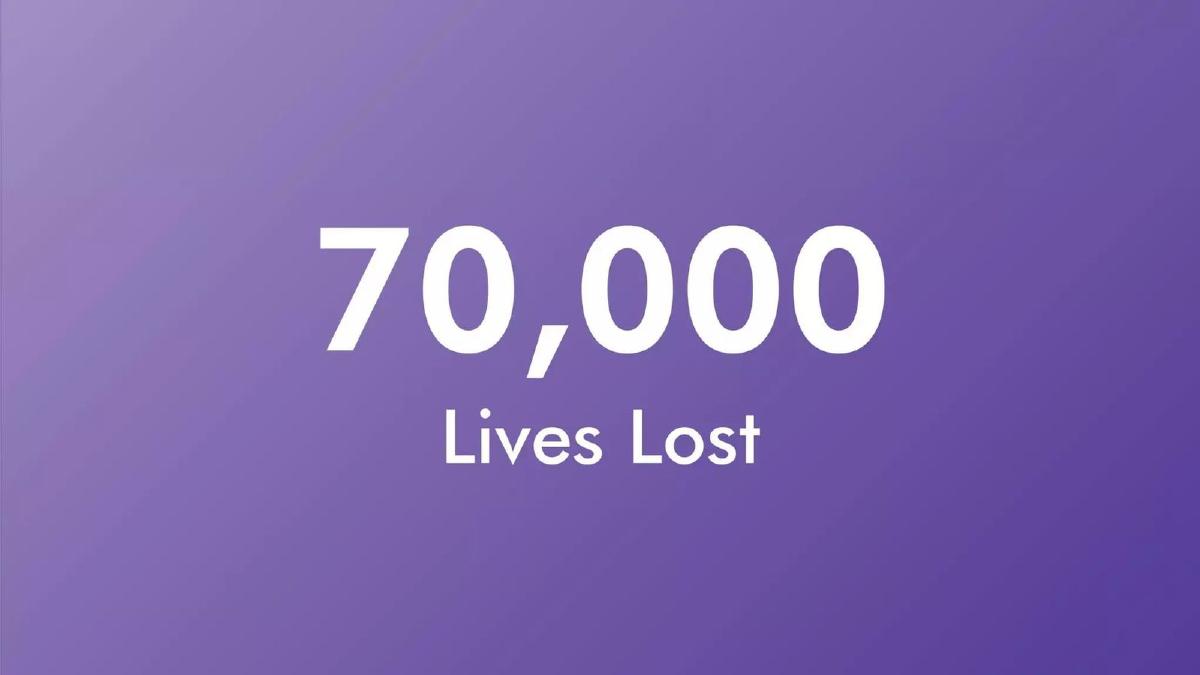
- The deck identifies a massive human toll of 70,000 lives lost to frame the urgency of the problem on Slide 3.
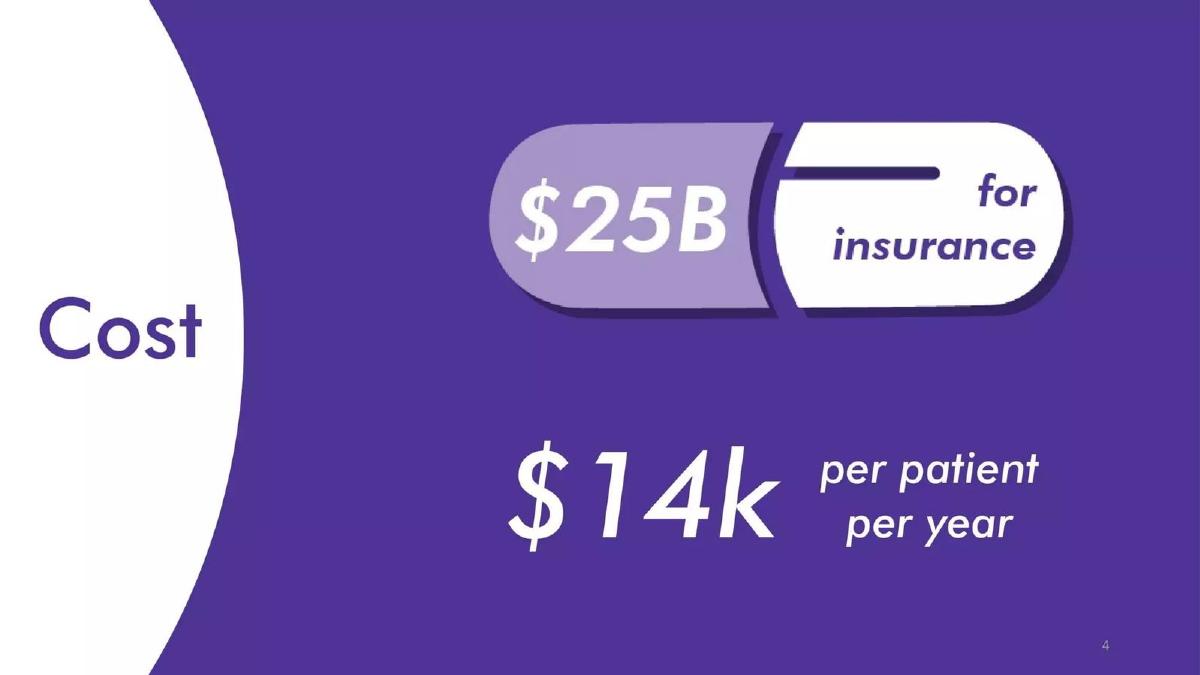
- Economic impact is quantified as a $25 billion burden for insurance companies on Slide 4.
- Early traction is anchored by a launch with the largest pain clinic in Maryland and three active regional pharmacies on Slide 6.
- The solution claims significant clinical impact, including a 72% reduction in pills taken and a 60% reduction in days on opioids on Slide 7.
- A dual revenue stream model is introduced on Slide 8, encompassing both software and hardware components.
- Pilleve differentiates itself from 'Adherence' competitors by positioning its brand under the 'Prevention' category on Slide 9.
- The team slide features heavy-hitting institutional logos including Duke University, Kaiser Permanente, and GE Healthcare on Slide 10.
- The deck completely omits a 'The Ask' slide, leaving investors without a specific funding target or use-of-funds breakdown.
The Pilleve Pitch Deck: High-Stakes Minimalism
Pilleve entered the market in 2017, at the height of public awareness regarding the opioid epidemic. Their pitch deck reflects a specific trend in fundraising: the 'visual-first' narrative. With only 10 slides and almost no bullet points, the deck relies on the gravity of the problem and the credibility of their partners to do the heavy lifting. This teardown examines how Pilleve balances the human cost of addiction with the cold logic of insurance savings.
Slides 1-3: The Emotional and Statistical Hook
Slide 1: Title The deck opens with a clean logo and the tagline 'Preventing Opioid Abuse and Addiction.' The contact information for the founders is clearly displayed at the bottom. The use of purple as a primary brand color is a strategic choice, often associated in healthcare with stability and professional care.
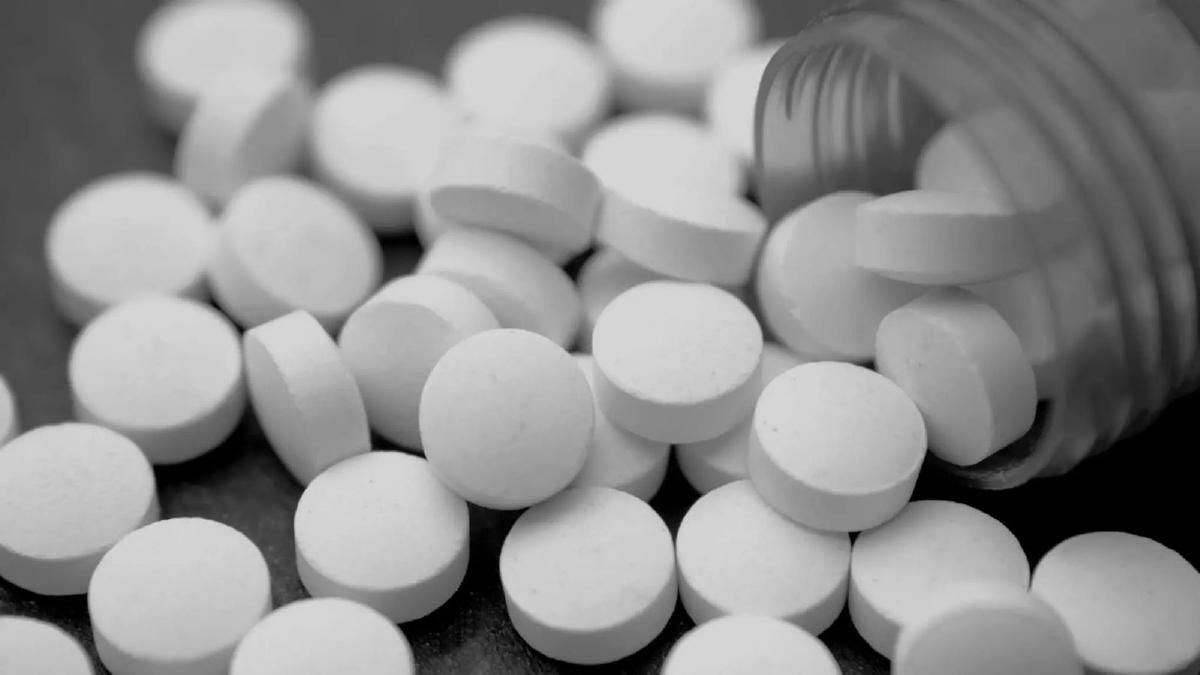
Slide 2: Visual Impact Slide 2 is a full-bleed, black-and-white photograph of spilled pills. There is no text. This is a classic storytelling technique designed to force the audience to focus on the physical reality of the product's subject matter. It creates a somber tone before the data is introduced.
Slide 3: The Human Cost Slide 3 delivers the first major data point: '70,000 Lives Lost.' By placing this number in large, white text against a purple gradient, the founders establish the moral imperative of the company. It defines the 'Problem' slide not through a list of grievances, but through a single, undeniable tragedy.
Slides 4-5: The Economic Problem and Physical Solution
Slide 4: The Financial Burden Transitioning from lives to dollars, Slide 4 quantifies the cost of the crisis. It cites '$25B for insurance' and '$14k per patient per year.' This is the 'Market Opportunity' slide in disguise. By showing the high cost per patient, Pilleve signals to investors that insurance companies have a massive financial incentive to pay for a preventative solution.
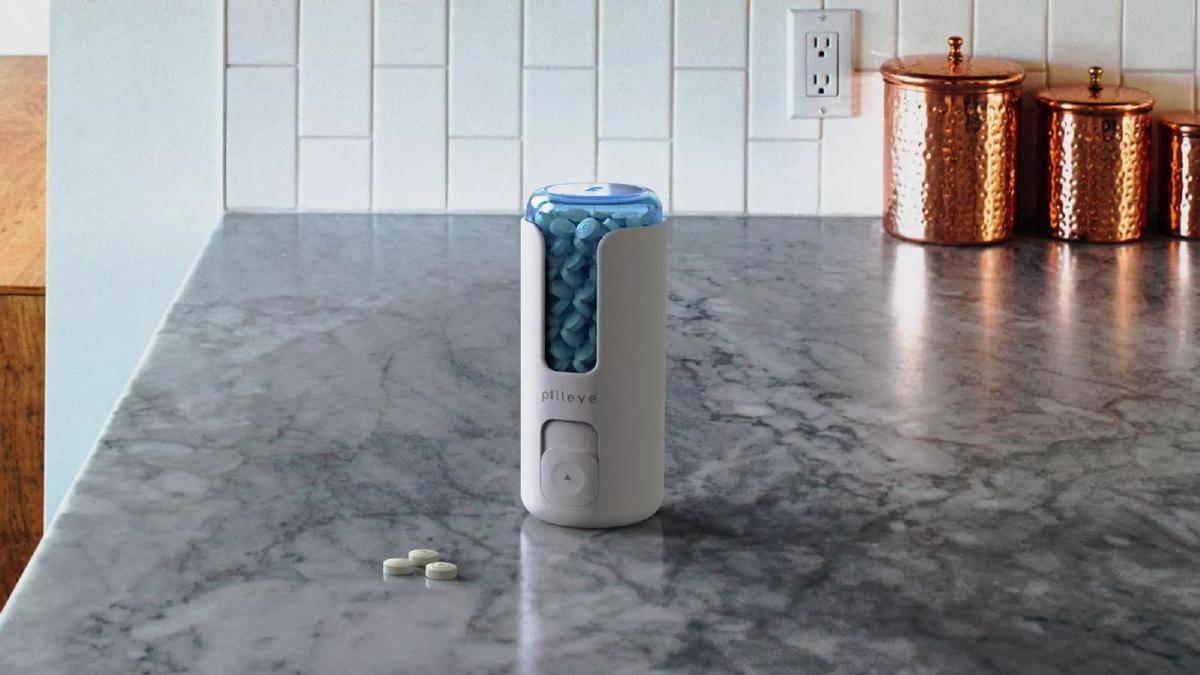
Slide 5: The Product Reveal Slide 5 features a high-quality product shot of the Pilleve device on a kitchen counter. The device is sleek, white, and modern, looking more like a high-end consumer electronic than a medical pill bottle. This visual is crucial for a hardware startup; it proves the product exists beyond a 3D render and fits into a patient's daily life.
Slides 6-7: Traction and Clinical Validation
Slide 6: Institutional Credibility This is arguably the strongest slide in the deck. It features the Johns Hopkins Medicine logo prominently. The slide lists three key milestones: a launch with the 'Largest Pain Clinic in MD,' '3 Regional Pharmacies Active,' and 'Growing Patient Adoption by 50% weekly.' The mention of Johns Hopkins provides immediate institutional validation, which is vital for any med-tech startup.
Slide 7: Impact Metrics Slide 7 moves from adoption to outcomes. It claims a '72% decrease in Pills Taken' and a '60% decrease in Days on Opioids.' Most importantly for the business case, it highlights '$4B potential savings per year.' These metrics suggest that the device isn't just a lockbox; it is a clinical intervention tool that changes patient behavior.
Slides 8-10: Business Model, Competition, and Team
Slide 8: Revenue Streams Slide 8 is extremely simple, showing a smartphone (Software) and the device (Hardware) under the heading 'Revenue Streams.' While it lacks specific pricing, it confirms a dual-monetization strategy. For a seed-stage company, this indicates multiple paths to profitability, though investors would likely ask for the margin breakdown on the hardware in a follow-up meeting.
Slide 9: Competitive Positioning Pilleve uses a simple split-screen to differentiate itself. On the left, under 'Adherence,' they list five competitors (SMRT, AdhereTech, Intent Solutions, TowerView Health, and emocha). On the right, they place the Pilleve logo under 'Prevention.' This framing is clever; it suggests that while others are just making sure pills are taken, Pilleve is making sure they aren't abused.
Slide 10: The Team The 'Pillevers' slide features four key members: Yossuf Albanawi (CEO), Gautam Chebrolu (CTO), Collin O’Neill (CPO), and Dr. Kamran Saraf (CMO). The left side of the slide is a 'wall of logos' including Duke University, Opioid Task Force, Kaiser Permanente, GE Healthcare, and a Forbes 30 Under 30 badge. This slide aims to prove that the team has the pedigree and the network to navigate the complex healthcare landscape.
What Works in the Pilleve Deck
Visual Clarity: The deck is remarkably uncluttered. By using large fonts and high-quality images, the founders ensure that the core message—saving lives and saving money—is never lost in technical jargon. · Strong Anchoring: Leveraging the Johns Hopkins logo and the 'Largest Pain Clinic in MD' provides a level of de-risking that is rare for a 2017 seed-stage company. · Clear Value Proposition: The $14k per patient cost vs. the potential $4B in savings creates a compelling 'no-brainer' case for insurance providers, who are the likely ultimate payers for this technology. · Categorization: The competitive slide (Slide 9) successfully rebrands the company away from a crowded 'adherence' market into a more urgent 'prevention' market.
What is Missing from the Pilleve Deck
The Ask: There is no slide detailing how much money is being raised, the valuation, or what the milestones for the next 18 months look like. This is a significant omission for a fundraising document. · Unit Economics: Hardware is notoriously difficult to scale. The deck does not mention the cost to manufacture the bottle or the expected Lifetime Value (LTV) of a software subscriber. · Regulatory Path: In healthcare, the FDA is the ultimate gatekeeper. There is no mention of the regulatory status of the device or the timeline for broader medical clearance. · Data Privacy: Given that the device collects biometric data and sensitive prescription info, a brief mention of HIPAA compliance or data security would have been appropriate.
What a Founder Should Copy
The 'One Big Number' Approach: Slide 3 ('70,000 Lives Lost') and Slide 4 ('$25B for insurance') are excellent examples of using a single, massive figure to define the scale of a problem. · Contextual Product Shots: Slide 5 shows the product in a home setting (a kitchen). This helps investors visualize the user experience and the 'form factor' in a way that a white-background studio shot cannot. · Outcome-Based Traction: Instead of just saying 'we have users,' Slide 7 explains what those users did (72% fewer pills). Founders should always aim to show the effect of their product, not just its usage. · Strategic Logo Placement: If you have a partnership with a major institution, don't bury it. Pilleve gave Johns Hopkins nearly 25% of the real estate on their traction slide, which was the right move.
Frequently asked questions
- What is the core technology behind Pilleve?
- Pilleve combines a physical, integrated pill bottle with a smartphone application. As shown on Slide 5 and Slide 8, the hardware securely holds opioids while the software monitors intake in real-time. According to the company description, patients use biometric scanners or passwords to dispense pills, and the system alerts physicians through EHR integration if dosages are exceeded.
- How does Pilleve make money?
- Slide 8 explicitly lists 'Software' and 'Hardware' as the two primary revenue streams. While the deck does not provide specific price points or subscription tiers, the inclusion of both suggests a hybrid model where the hardware acts as the point of control and the software provides the ongoing monitoring and data analytics service.
- What clinical evidence does the deck provide?
- Slide 7 presents three key metrics: a 72% decrease in pills taken, a 60% decrease in days spent on opioids, and a potential $4 billion in annual savings. These figures suggest that the device effectively limits over-prescription and helps patients wean off medication faster than traditional methods.
- Who are Pilleve's primary competitors?
- Slide 9 identifies several competitors in the 'Adherence' space, including SMRT, AdhereTech, Intent Solutions, TowerView Health, and emocha. Pilleve distinguishes itself by moving beyond simple adherence (taking pills on time) to 'Prevention' (preventing abuse and addiction).
- What is missing from this pitch deck?
- The deck is missing several critical components for a seed round: a specific funding ask, a slide on unit economics (COGS for the hardware), a clear go-to-market strategy beyond the initial clinics, and a regulatory roadmap (FDA status). It relies heavily on the 'why' and 'what' but is light on the 'how much' and 'what next'.