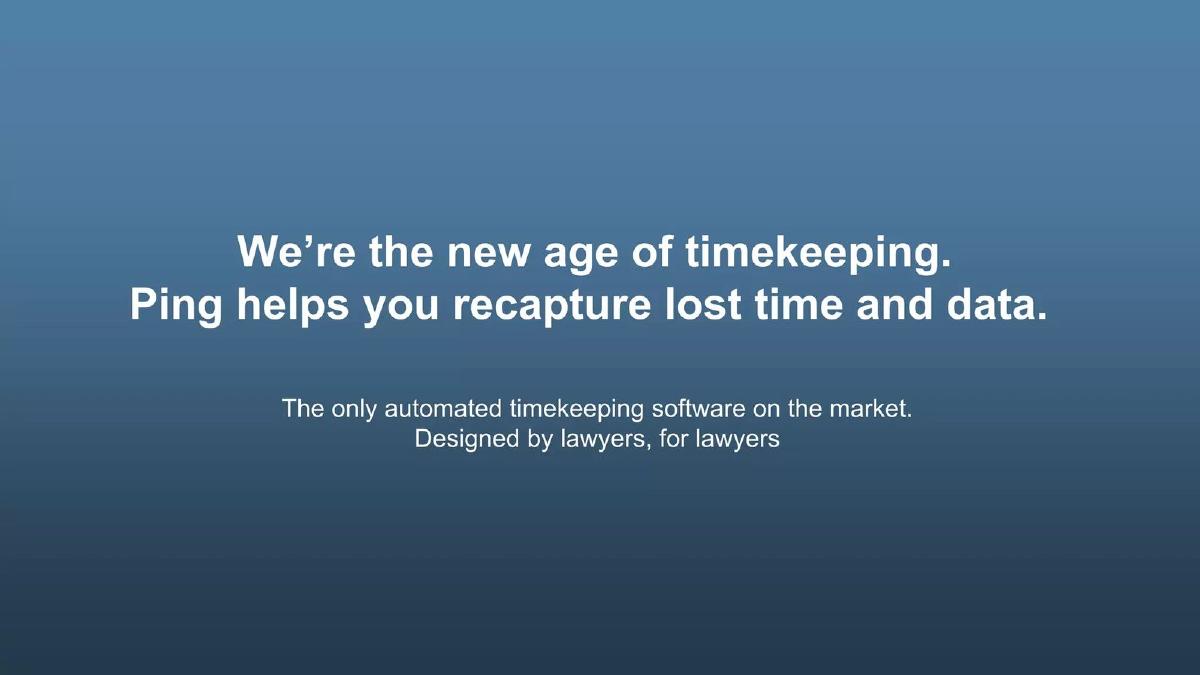
Ping, operating via timebyping.com, presents a highly focused pitch deck aimed at solving the revenue leakage inherent in manual legal timekeeping. The deck relies on a minimalist aesthetic, using large-format text and singular data points to build a narrative of lost value. By quantifying the problem as a $15,000 monthly loss per lawyer and offering a solution that recovers 1.1 hours daily, Ping creates a clear ROI-driven argument. However, the provided slides lack critical venture components, including a team slide, competitive landscape, market sizing (TAM), and a specific funding ask. Whi…
Key takeaways
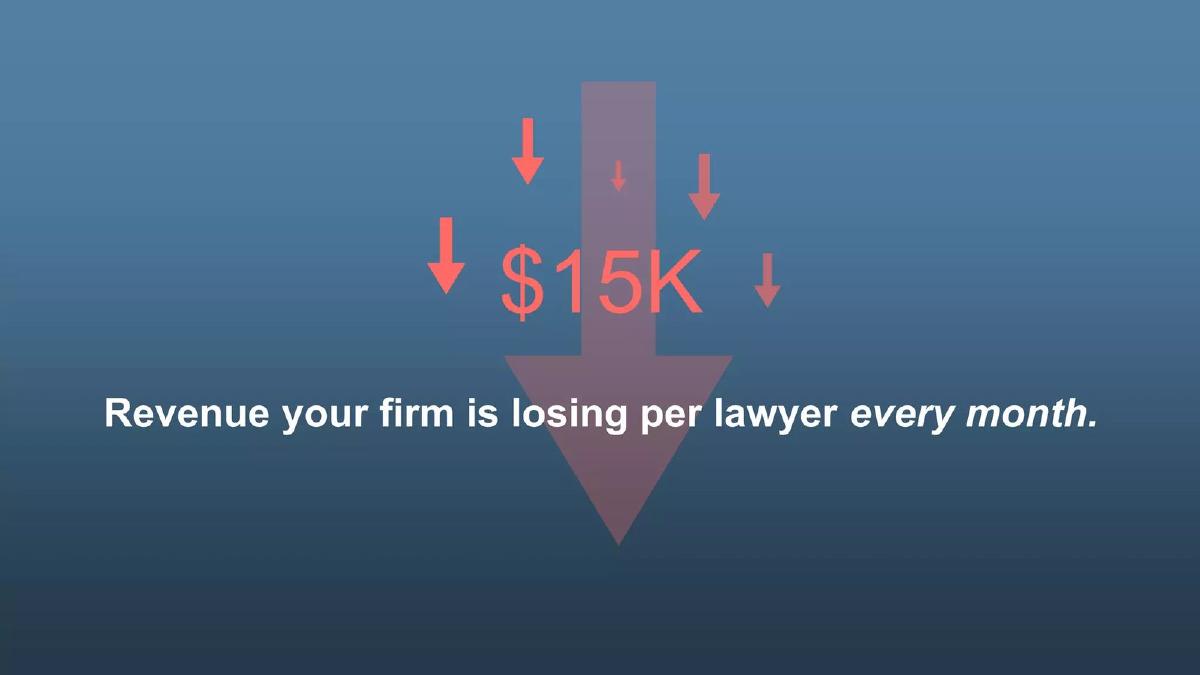
- The deck identifies a specific financial pain point: firms lose $15,000 in revenue per lawyer every month due to current timekeeping methods (Slide 3).
- Ping positions its solution as 'Automatic. Not Manual,' removing the need for lawyers to start and stop timers (Slide 4).
- The software interface demonstrates categorization of billable activities including Documents, Research, Events, and Emails (Slide 4).
- AI capabilities are defined by three specific functions: creating descriptions, identifying task codes, and forecasting activity time (Slide 5).
- Pilot program data suggests the tool recovers 1.1 hours per day per lawyer, valued at over $12,000 a month (Slide 6).
- The ROI calculation is transparently based on an assumed average billing rate of $550 per hour (Slide 6).
- The deck omits standard fundraising slides such as Team, Market Size, Competition, and Financial Projections.
- The closing slide emphasizes a philosophy of human empowerment, stating technology will not replace lawyers (Slide 8).
Executive Summary: The ROI of Automation
Ping's pitch deck is a study in minimalist persuasion. Rather than overwhelming the viewer with dense paragraphs or complex diagrams, the company uses a 'one thought per slide' approach to highlight a massive inefficiency in the legal industry. The narrative arc moves quickly from a painful financial loss to a seamless technological solution, culminating in a clear return on investment. While the deck is missing several components required for a formal Series A or B round, it serves as an effective tool for communicating a specific product-market fit within the legal vertical.
Slide 1: Title and Tagline
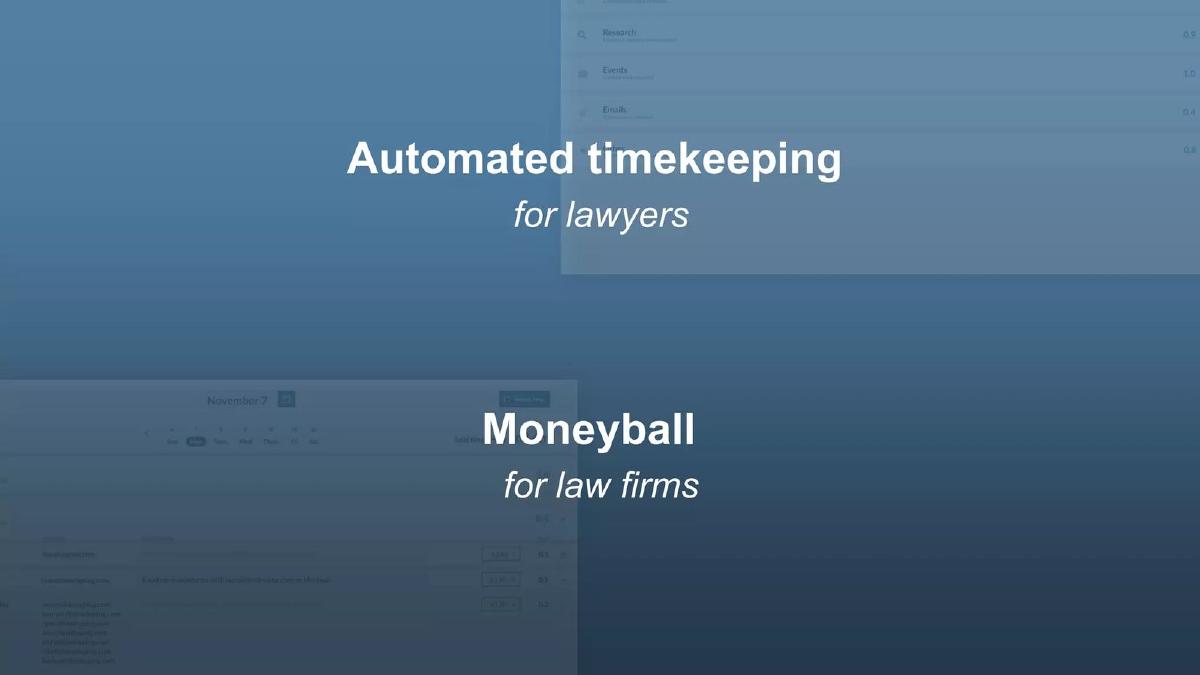
The deck opens with a clean, dark blue gradient background featuring the Ping logo—a stylized 'P' that resembles a digital clock segment. The tagline, "It's only a matter of time," is a double entendre referring both to the product's function (timekeeping) and the inevitability of technological adoption in the legal sector. This slide establishes a professional, tech-forward brand identity without unnecessary clutter.
Slides 2-3: The Problem and the Cost
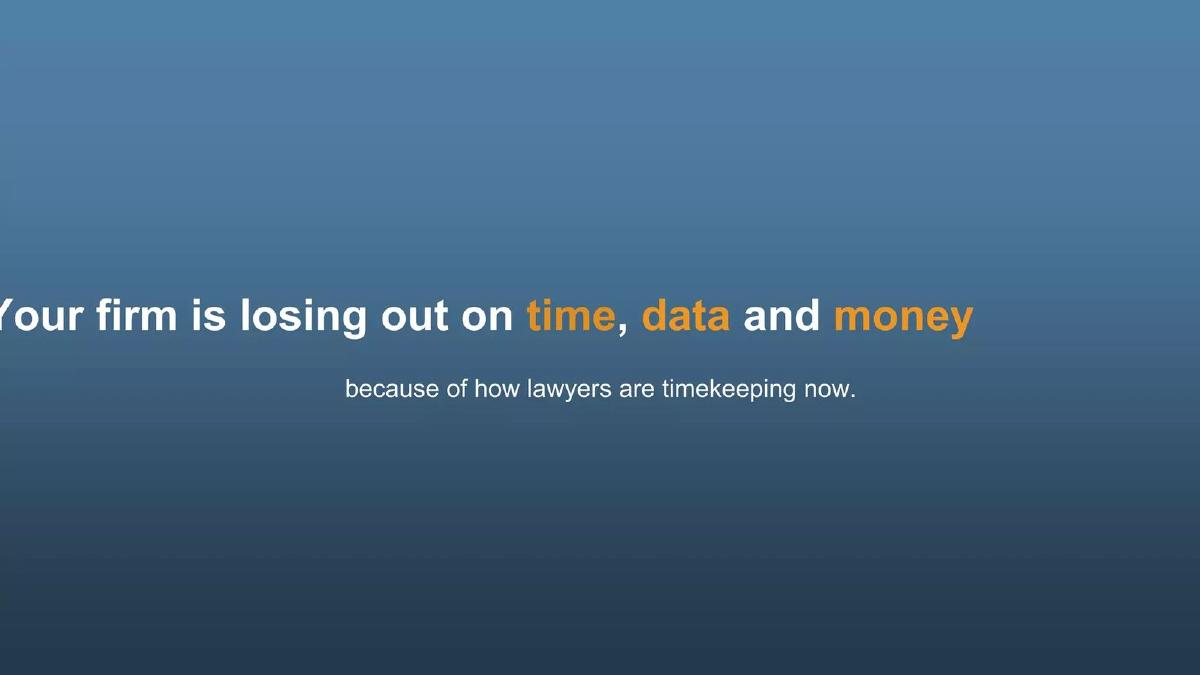
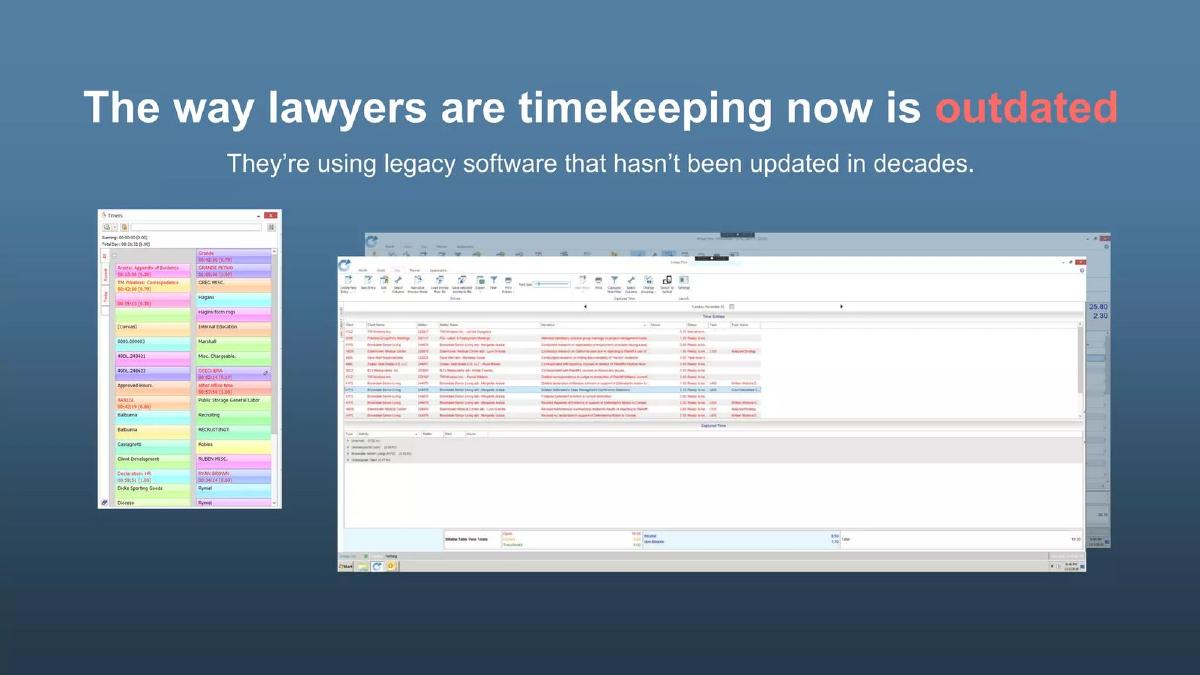
Slide 2 introduces the problem statement: "Your firm is losing out on time, data and money because of how lawyers are timekeeping now." By highlighting 'time, data and money' in orange, the deck immediately signals the three pillars of its value proposition. Slide 3 provides the 'anchor' metric for the entire pitch: "$15K Revenue your firm is losing per lawyer every month." The use of a large downward-pointing red arrow creates a sense of urgency. This is a classic 'bleeding neck' problem presentation—quantifying the cost of inaction before introducing the solution.
Slide 4: The Solution and Product Interface
Ping positions itself as the antithesis of current workflows: "We are Automatic. Not Manual." The slide promises that lawyers 'never need to start and stop timers again.' This is a significant claim in an industry where 'contemporaneous time entry' is a constant struggle. The slide includes a screenshot of the 'Learned Hand' dashboard (a nod to the famous jurist), showing how the software categorizes activities into Documents, Research, Events, and Emails. The interface appears clean and integrated, showing a total captured time of "4h and 6m" for a single day.
Slide 5: The Role of AI
Slide 5 addresses the 'how' behind the automation. It specifies that Ping's AI does three things: Create descriptions, Identify task codes, and Forecast time of activity. This is critical because legal billing requires more than just a duration; it requires a narrative that clients will accept and codes that match insurance or firm standards. By automating these 'meta-tasks,' Ping moves beyond simple tracking into true workflow automation.
Slide 6: The Quantified Benefit
This is the 'money slide.' It features a large circle containing the figure "1.1 hrs/day" . Below it, the text explains this is the amount of additional time Ping finds for each lawyer, which equates to "over $12K a month." A footer note clarifies that these results are based on a pilot program and assume an average billing rate of "$550/hr." This transparency allows a potential investor or customer to adjust the math based on their own firm's rates while still being impressed by the 1.1-hour daily recovery rate.
Slides 7-8: Data Strategy and Vision
Slide 7, "You have the data. We make sense of it," suggests that Ping also functions as a business intelligence tool, though no specific analytics dashboards are shown. Finally, Slide 8 concludes with a philosophical positioning: "Technology will not replace lawyers; it will empower them." This addresses the common industry fear of AI 'replacing' professional services, reframing the tool as a productivity multiplier. The slide provides the website (timebyping.com) and contact information, including a Los Angeles-based area code (310).
What Works in This Deck
Clarity of Value: The deck does an excellent job of translating a technical feature (automated tracking) into a financial outcome ($12k/month in found revenue). Investors buy outcomes, not features, and Ping leads with the outcome.
Minimalist Design: The high-contrast text and limited use of color keep the focus on the data. In a 'Startup Alley' environment where judges see dozens of decks, this level of brevity is often a competitive advantage.
Specific Industry Knowledge: The mention of 'task codes' on Slide 5 shows the founders understand the specific administrative burdens of legal billing (such as UTBMS codes), which builds immediate credibility with legal tech buyers.
What Is Missing
The Team: There is no mention of who is building this. In early-stage fundraising, the 'Who' is often more important than the 'What.' Without bios for the founders or engineering team, there is no way to assess execution risk.
Market Size (TAM): While the deck proves the value for a single lawyer, it fails to show the total addressable market. How many lawyers globally or in the US bill at these rates? What is the total revenue opportunity for Ping?
Competition: The legal timekeeping space is crowded with incumbents and other startups. The deck does not explain why Ping's AI is superior to existing 'passive' timekeeping tools.
The Ask: There is no slide detailing the funding round. A pitch deck should clearly state how much money is being raised, the valuation (or instrument), and the milestones that the capital will enable.
Founder's Playbook: What to Copy
The 'Anchor' Metric: Founders should identify the single most painful financial loss their customers face and put it in large font on Slide 3. Ping's '$15K loss' is a perfect example of an anchor metric that makes the cost of the software seem negligible by comparison.
Assumption Transparency: When presenting ROI, always include the assumptions (like the $550/hr rate on Slide 6). It prevents the audience from dismissing the numbers as 'made up' and allows them to do their own mental math.
Outcome-Oriented Taglines: Instead of saying 'We use machine learning to track browser activity,' Ping says 'We are Automatic. Not Manual.' Focus on the change in the user's life, not the code behind it.
Frequently asked questions
- What is the core value proposition of Ping?
- Ping's value proposition is the recovery of lost billable time through automation. By replacing manual timers with AI that captures background activity, Ping claims to find an additional 1.1 hours per day for each lawyer. Based on their pilot data and a $550 hourly rate, this translates to over $12,000 in found revenue per lawyer monthly, directly addressing the $15,000 leakage identified in the problem statement.
- How does Ping's AI actually work according to the deck?
- The deck is light on technical architecture but specific on functional outcomes. Slide 5 states that the AI 'trains itself to learn the way each lawyer works.' Its primary tasks are generating narrative descriptions for billing, assigning the correct industry task codes, and forecasting how long specific activities take. This suggests a machine learning layer that sits on top of activity logs to automate the administrative burden of billing.
- Who is the target audience for this pitch?
- The language used throughout the deck ('Your firm,' 'lawyers') indicates the pitch is designed for law firm partners or legal operations executives. The focus on 'revenue your firm is losing' (Slide 3) appeals to the bottom-line interests of firm leadership. The inclusion of a specific $550/hr billing rate assumption suggests a target market of mid-to-large corporate law firms where such rates are standard.
- What essential information is missing from this deck?
- This is not a complete venture capital deck. It lacks a Team slide to establish credibility, a Market slide (TAM/SAM/SOM) to show scale, a Competition slide to differentiate from existing players like Intapp or Clio, and a clear 'Ask' slide detailing how much capital is being raised and for what purpose. It functions more as a sales deck or a high-level 'teaser' for a startup alley competition.
- Is the ROI claim supported by evidence in the slides?
- The ROI claim is supported by 'results based on our pilot program' as noted in the footer of Slide 6. While it provides a specific metric (1.1 hours/day), it does not disclose the size of the pilot, the number of firms involved, or the duration of the study. The $12,000/month figure is a mathematical extrapolation of the time saved multiplied by a $550 hourly rate, rather than a direct measurement of increased collections.