PipelineVR's 2017 investor overview presents a B2B marketplace designed to bridge the gap between VR/AR service providers and enterprise buyers, specifically targeting the real estate sector. The deck relies heavily on the 'VR hype cycle' of the late 2010s, citing aggressive market growth forecasts from Citi, Digi-Capital, and Goldman Sachs that reached into the hundreds of billions by 2021. The business model is built on a high-volume, low-fee bid structure, projecting a path to $61 million in gross revenue by Year 5. While the deck provides a clear use case for real estate and detailed five…
Key takeaways
- The company positions itself as a B2B marketplace specifically for Virtual and Augmented Reality services (Slide 1).
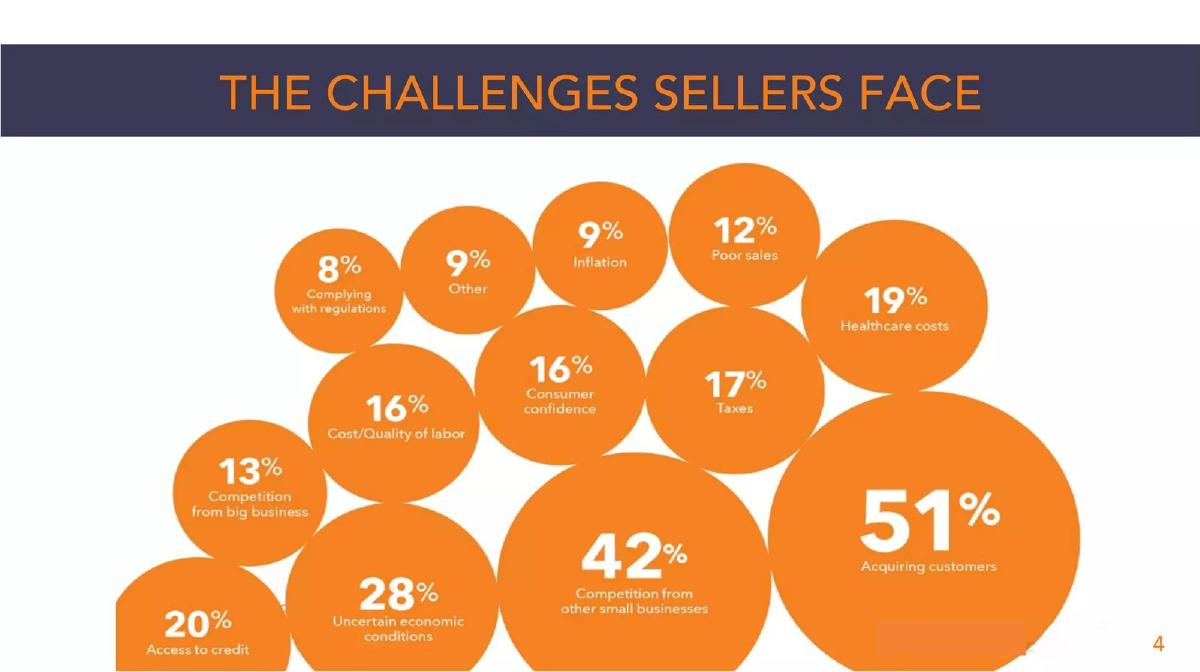
- Seller pain points are quantified, with 'Acquiring customers' identified as the primary challenge for 51% of sellers (Slide 4).
- Market size projections rely on external analysts, showing a combined VR/AR revenue forecast exceeding $300 billion by 2021 (Slide 7).
- Real estate is the primary vertical, listing major brands like Berkshire Hathaway and Zillow as potential or current buyer participants (Slide 10).
- The revenue model is based on a $24 fee per bid, requiring 940,000 registered sellers to reach a $61 million revenue target (Slide 13).
- Financial projections show a transition from a $308,130 EBITDA loss in Year 1 to a $42 million EBITDA profit by Year 5 (Slide 16).
- The exit strategy focuses on corporate acquisition or PE buyout within 3-5 years, naming Samsung, Amazon, and Salesforce as targets (Slide 19).
- The deck omits critical information including founder backgrounds, current traction metrics, and the specific capital amount being raised.
PipelineVR: Navigating the 2017 VR Gold Rush
The PipelineVR investor overview from March 2017 is a quintessential example of a 'picks and shovels' play during a technology hype cycle. Rather than building the virtual reality hardware or the content itself, PipelineVR proposed a marketplace to connect the fragmented ecosystem of creators with enterprise buyers. This teardown examines the seven available slides from their 21-slide deck to understand their marketplace mechanics and financial ambitions.
Slide 1: Title and Positioning
The deck opens with a clear, high-level value proposition: "B2B MARKETPLACE FOR VIRTUAL & AUGMENTED REALITY." The branding is professional and minimalist. Matthew Papish is identified as the Founder & CEO. The date, March 2017, is crucial context; this was a period when VR investment was peaking following the launch of major consumer headsets, but enterprise adoption was still in its infancy.
Slide 4: The Problem Space
Slide 4, titled "THE CHALLENGES SELLERS FACE," uses a bubble chart to quantify the pain points of service providers in the VR space. The data points are specific, though the source of the survey is not cited on the slide. The largest bubble, at 51% , is "Acquiring customers." Other significant challenges include "Competition from other small businesses" (42%) and "Uncertain economic conditions" (28%) . By highlighting that half of the market struggles with customer acquisition, PipelineVR sets the stage for its marketplace as the solution to the seller's primary woe.
Slide 7: Market Size and External Validation
To justify the scale of the opportunity, Slide 7 presents a "VR & AR Revenue Forecast in $Billions." The chart aggregates data from three major institutions: Citi Research, Digi-Capital, and Goldman Sachs . The projections show a vertical climb, with the market expected to jump from near-zero in 2017 to over $300 billion by 2021 . This slide is designed to create a sense of urgency (FOMO) for investors, suggesting that the underlying industry is about to explode, making a marketplace for those services an inevitable necessity.
Slide 10: Use Case – Real Estate / Luxe
This slide provides the most concrete look at how the platform actually functions. It divides the world into "BUYERS" and "SELLERS." The buyer list includes heavyweights like Lowe's, Zillow, Sotheby's, and Berkshire Hathaway HomeServices . The seller list features Matterport, Within, and Leap Motion . A sidebar explains a specific workflow: Berkshire Hathaway uses VR to showcase properties to international clients; after submitting a project request via PipelineVR, they settle on a specialist like Matterport. This slide effectively demonstrates the 'matchmaking' value of the platform in a high-value vertical like luxury real estate.
Slide 13: The Business Model Mechanics
Slide 13, "How We Reach $61M by 2021," is the most revealing regarding the company's unit economics. The model is a volume play based on a "Revenue per Bid" of $24 . The growth trajectory is mapped as follows:
940,000 Registered Sellers · 564,000 Active Sellers (defined as 60% of registered sellers that submit bids) · 4.5 Average Number of Bids per Active Seller per Year · $24 Revenue per Bid · $61M Gross Revenue
This slide reveals a potential flaw in the logic: the requirement for nearly one million registered VR/AR sellers. In 2017, the global pool of professional VR/AR service providers was likely a small fraction of this number, suggesting the company was betting on a massive influx of new creators into the space.
Slide 16: Revenue Projections
The financial table on Slide 16 provides a five-year outlook. The growth is aggressive: Year 1 Revenue of $1,156,500 scales to $61,940,000 by Year 5 . The most striking part of this table is the EBITDA . The company projects a loss of $-308,130 in Year 1 , but expects to reach $42,002,300 in EBITDA by Year 5 . This implies an incredibly lean operation where Sales & Marketing and G&A costs do not scale linearly with revenue, resulting in a 67.8% EBITDA margin at maturity.
Slide 19: Exit Strategy
The final slide in this set outlines the "EXIT STRATEGY," targeting a "CORPORATE ACQUISITION / PE BUYOUT" within 3-5 years. The slide features logos for Samsung, Legendary, Amazon, Apollo, and Salesforce . This indicates that the founders viewed the platform as a strategic asset for hardware manufacturers (Samsung), content giants (Legendary), or enterprise cloud providers (Salesforce) looking to own the VR/AR service pipeline.
What Works in This Deck
Clear Vertical Focus: By dedicating a slide to Real Estate and Luxe, the company moves beyond abstract 'VR' talk and shows a tangible application where money is already changing hands. Listing recognizable logos like Zillow and Berkshire Hathaway adds immediate credibility to the use case.
Quantified Seller Pain: The bubble chart on Slide 4 is effective because it identifies a specific, high-percentage problem (customer acquisition) that a marketplace is uniquely positioned to solve. It gives the platform a clear 'reason to exist' from the supply side.
Transparent Math: Unlike many decks that hide their revenue assumptions, Slide 13 shows exactly how they get to their $61M figure. Even if the numbers are optimistic, the logic is laid bare for an investor to stress-test.
What Is Missing from This Deck
The Team: In the provided slides, there is no team slide. For an early-stage marketplace, the background of the founders is critical. We know Matthew Papish is the CEO, but we don't know if he has a background in marketplace dynamics, real estate, or VR technology.
Current Traction: The deck is heavy on projections but light on current reality. There are no figures for how many sellers are currently on the platform, how many bids have been processed to date, or the current monthly recurring revenue (MRR). Without this, the $61M projection feels like a 'spreadsheet exercise' rather than a forecast based on a proven growth rate.
The Ask: The slides do not mention how much capital is being raised, the valuation, or the specific milestones that the funding will enable. This is a significant omission for an investor overview.
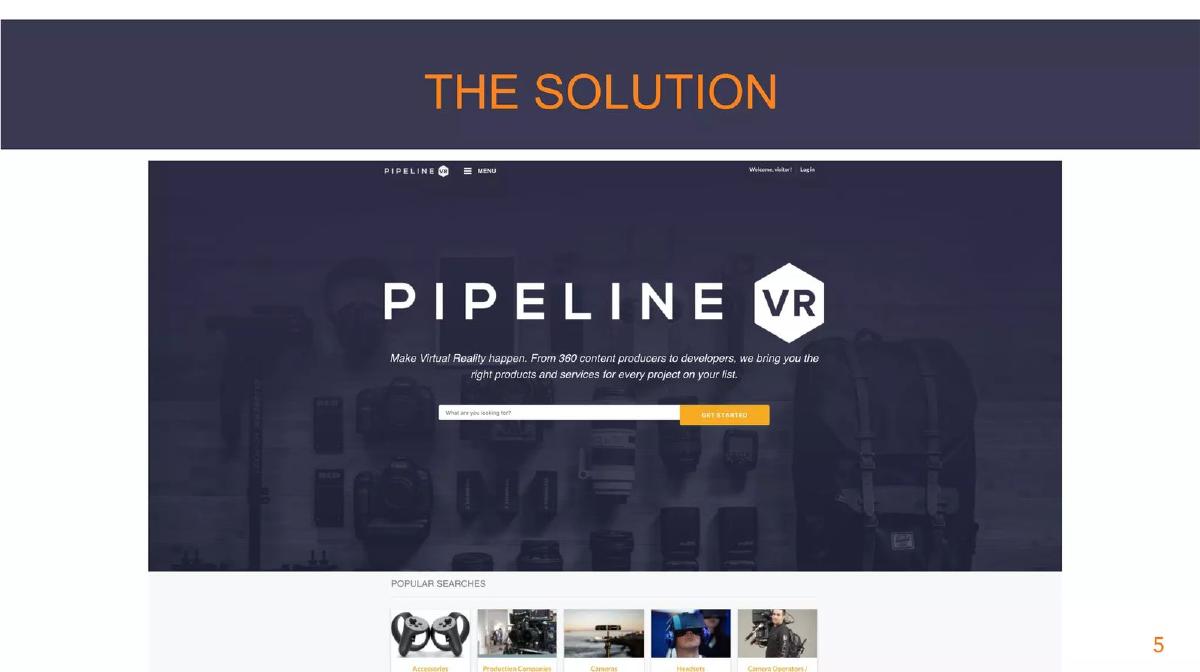
Product Interface: There are no screenshots or mockups of the actual platform. It is unclear if the 'marketplace' is a sophisticated automated platform or a manual lead-gen site.
Founder's Summary: What to Copy and What to Avoid
Copy the 'Logic Chain': The way PipelineVR moves from the problem (sellers can't find customers) to the market size (VR is huge) to the specific use case (Real Estate) is a strong narrative flow. It builds a logical case for why the business should exist.
Avoid 'Market Cap' Projections: Relying on 940,000 sellers in a niche industry is a dangerous assumption. When building a marketplace deck, ensure your 'Total Addressable Supply' is grounded in reality. If there are only 50,000 VR studios in the world, your model cannot require 900,000 to be successful. Investors will spot this discrepancy immediately.
Avoid Over-Optimistic Margins: Projecting 68% EBITDA margins for a marketplace that requires heavy sales and marketing to acquire nearly a million users is often seen as unrealistic. Be prepared to show how G&A and Marketing will actually scale to support that volume of users.
Frequently asked questions
- What is PipelineVR's core product?
- Based on the slides, PipelineVR is a B2B marketplace platform. It does not appear to build VR hardware or software itself; instead, it acts as a middleman connecting 'Buyers' (like real estate firms) with 'Sellers' (VR content creators and specialists like Matterport). The platform facilitates project requests and bidding processes for immersive technology services.
- How does the company plan to make money?
- The business model is transaction-based, specifically focusing on a 'Revenue per Bid' metric. Slide 13 indicates a fee of $24 per bid. To reach their $61 million revenue goal, they project needing 940,000 registered sellers, with 60% of them being active and submitting an average of 4.5 bids per year. This is a high-volume, low-margin lead generation model.
- Which industries is PipelineVR targeting?
- While the title slide mentions general B2B VR/AR, Slide 10 focuses exclusively on 'Real Estate / Luxe.' It lists buyers such as Sotheby’s, Keller Williams, and Zillow, and sellers such as Matterport and Within. The slide suggests the platform helps firms like Berkshire Hathaway find specialists to create virtual property showcases for international clients.
- Are the financial projections realistic?
- The projections are extremely aggressive. The company forecasts growing revenue from $1.1 million in Year 1 to nearly $62 million in Year 5. More notably, they project EBITDA margins to scale from negative figures to roughly 68% by Year 5. This assumes massive scale with relatively low increases in General and Administrative (G&A) costs as revenue quintuples.
- What are the biggest risks identified in the deck?
- The primary risk is the reliance on massive seller adoption. The model requires nearly a million registered VR/AR sellers to hit its targets. Given that the VR/AR service provider market was relatively niche in 2017, finding 940,000 distinct entities to pay for bids represents a significant customer acquisition hurdle that is not fully addressed in the marketing spend.