Startup Pirates is a non-profit or social enterprise program designed to foster entrepreneurship through intensive 8-day workshops. The deck, dated November 2012, serves more as a program summary than a traditional investment pitch. It highlights a curriculum consisting of 8 workshops, 14 working sessions, and 30+ participants per event (Slide 3). The presentation relies heavily on social proof, featuring testimonials from past participants in Lisbon and Porto (Slide 4) and a map showcasing expansion across Europe, South America, and Africa (Slide 6). However, the deck is critically missing a…
Key takeaways
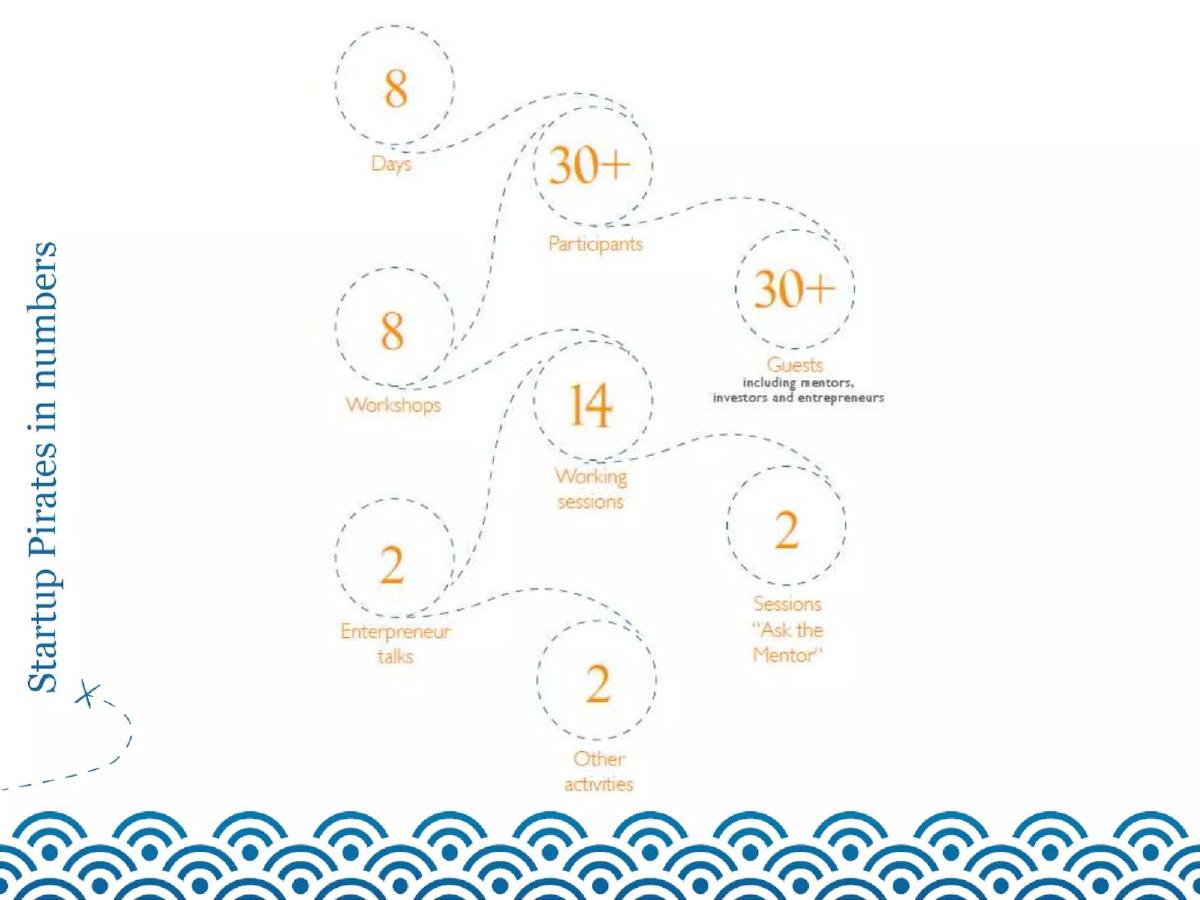
- The program structure is clearly defined as an 8-day intensive with 8 workshops and 14 working sessions (Slide 3).
- Startup Pirates emphasizes community engagement by involving 30+ guests, including mentors and investors, per program (Slide 3).
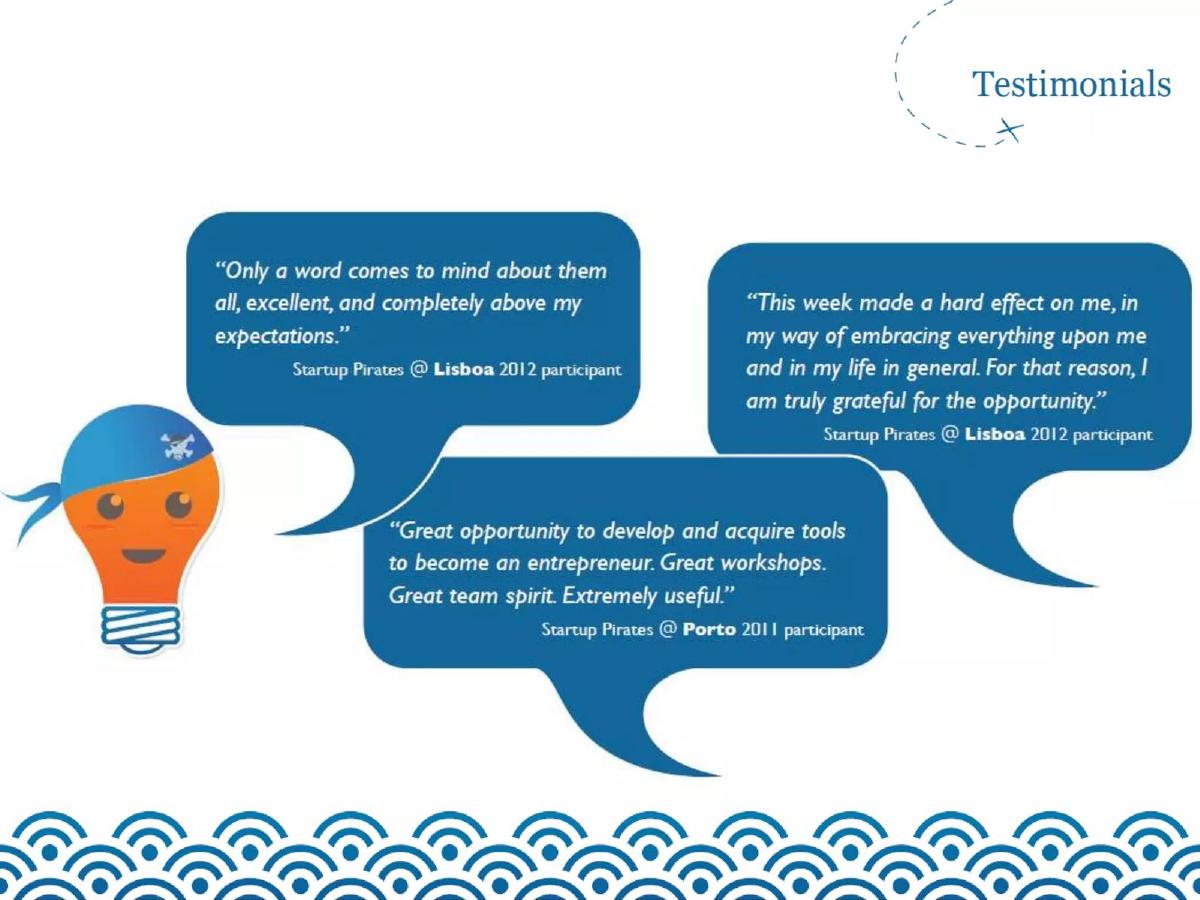
- Social proof is a core pillar of the deck, using direct quotes from 2011 and 2012 participants to validate the program's impact (Slide 4).
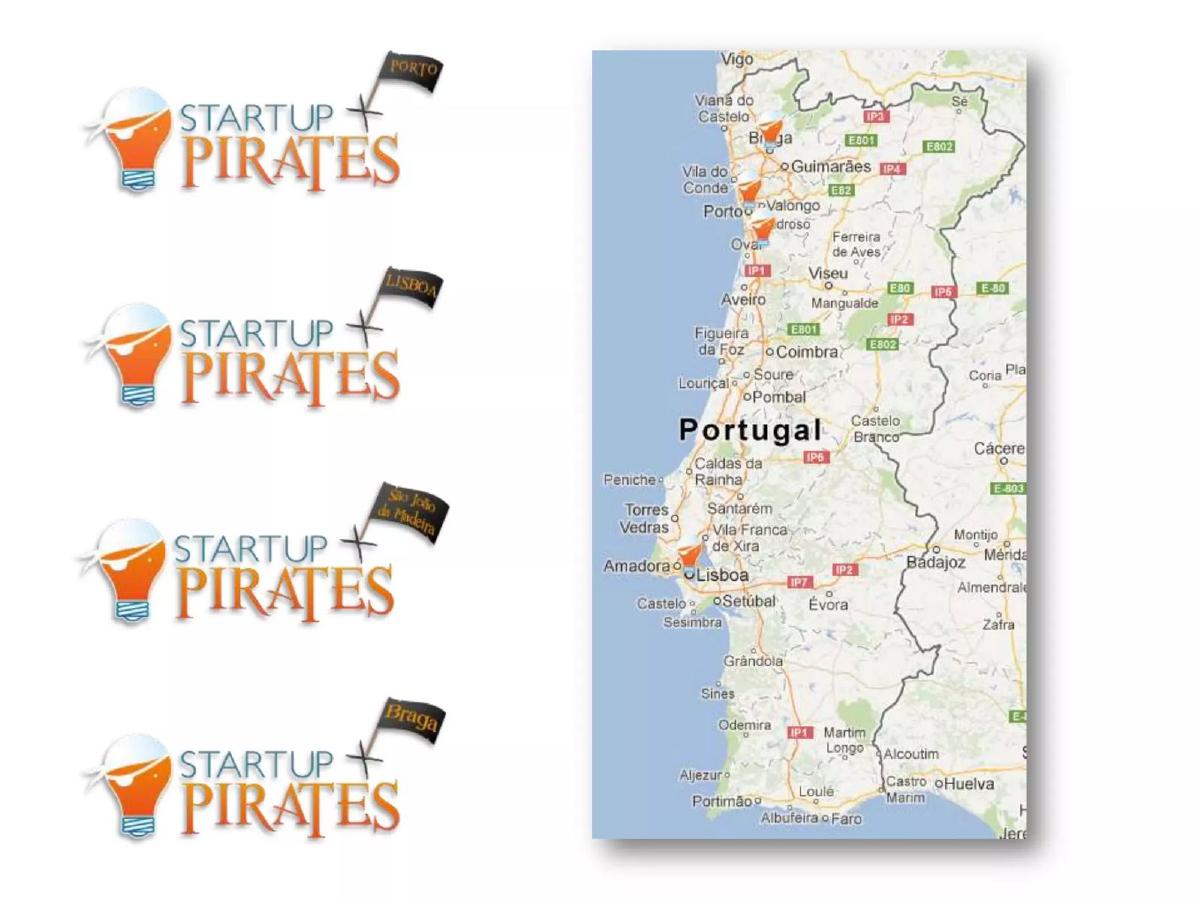
- The organization demonstrated significant early traction in Portugal, with specific programs in Porto, Lisboa, São João da Madeira, and Braga (Slide 5).
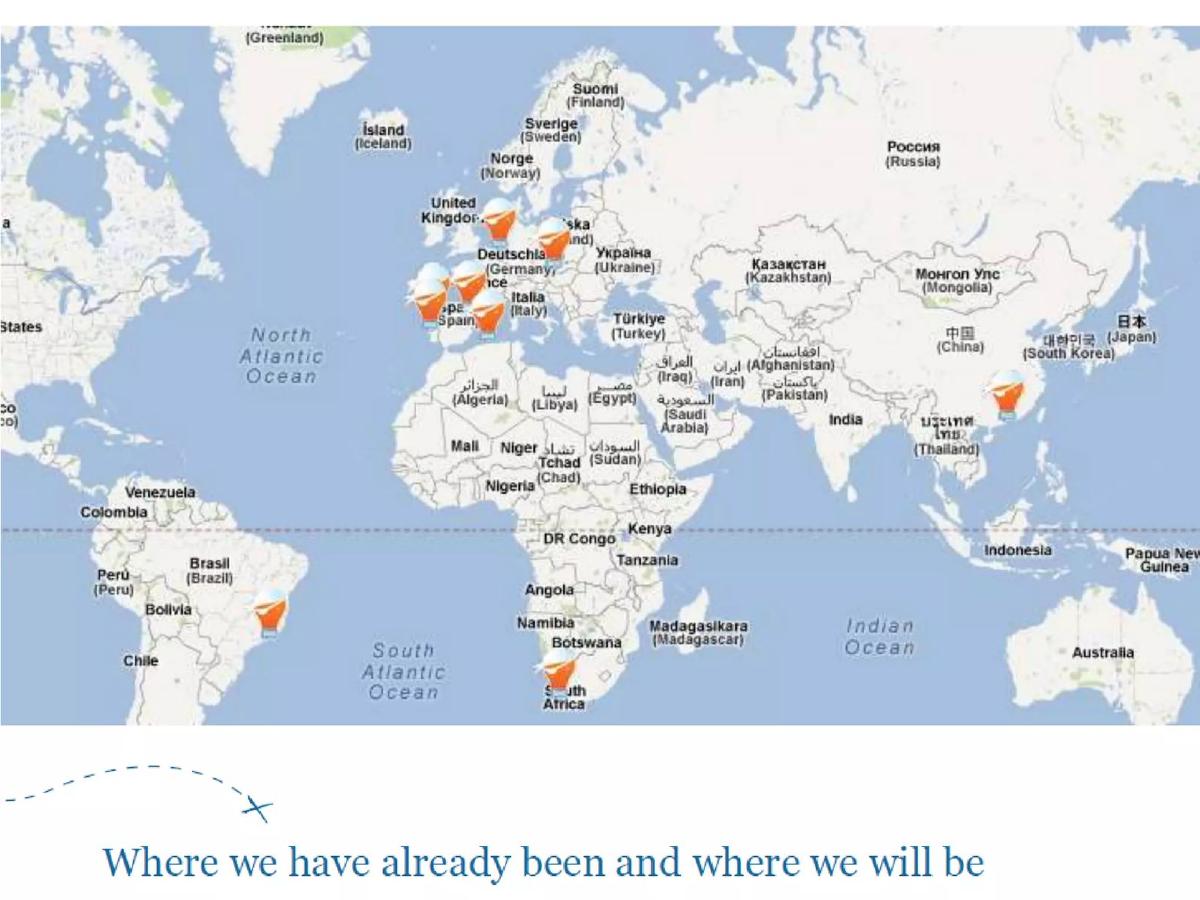
- Global ambitions are evidenced by a world map showing presence or planned expansion in countries like Brazil, South Africa, and various European nations (Slide 6).
- The team slide is purely visual, showing five individuals without names, titles, or professional backgrounds (Slide 7).
- The deck lacks all standard financial metrics, including unit economics, revenue, and a specific capital requirement (Omitted).
- There is no mention of a competitive landscape or how Startup Pirates differentiates itself from other accelerators or incubators (Omitted).
The Startup Pirates Pitch Deck: A Lean Overview of a Global Movement
The Startup Pirates deck, dated November 2012, is a remarkably brief 8-slide presentation. Rather than following the traditional Sequoia-style pitch format, this deck acts as a visual summary of a program's impact and its rapid geographic expansion. It is a 'traction-first' deck that assumes the viewer already understands the value of entrepreneurship education and focuses instead on the 'Pirates' brand and its community reach.
Slide 1: Title Slide
The deck opens with the Startup Pirates logo: an orange lightbulb wearing a pirate eye patch and bandana. The visual identity is consistent throughout the deck, utilizing a light blue background and a dashed line representing a pirate map trail. There is no tagline or mission statement on the cover, relying entirely on the brand name and logo to set the tone.
Slide 2: About Us
Slide 2 is essentially a secondary title slide. It features the text 'About us' and the logo again. In a standard pitch deck, this slide is usually a missed opportunity. Instead of providing a high-level mission statement or a 'one-sentence pitch,' the founders chose to use this space for branding. In a short 8-slide deck, using one slide for a header is inefficient.
Slide 3: Startup Pirates in Numbers
This is the most data-dense slide in the presentation. It breaks down the anatomy of a Startup Pirates program. The figures cited are: 8 Days , 30+ Participants , 8 Workshops , 14 Working sessions , 30+ Guests (including mentors, investors, and entrepreneurs), 2 Entrepreneur talks , 2 Sessions of 'Ask the Mentor' , and 2 Other activities . This slide successfully communicates the intensity and structure of the product. It tells a potential partner exactly what they are 'buying' or joining.
Slide 4: Testimonials
The deck leans heavily on social proof. Slide 4 features three speech bubbles with quotes from participants. A Lisboa 2012 participant calls the program 'excellent, and completely above my expectations.' Another Lisboa 2012 participant claims the week had a 'hard effect' on their way of embracing life. A Porto 2011 participant highlights the 'tools to become an entrepreneur' and the 'great team spirit.' These testimonials serve to validate the 'Numbers' slide by proving that the 8-day structure produces emotional and professional value for the attendees.
Slide 5: Local Traction (Portugal)
Slide 5 focuses on the program's roots. It shows a map of Portugal with pins in Porto, Lisboa, São João da Madeira, and Braga . By showing specific city-based logos (e.g., 'Startup Pirates Lisboa'), the organization demonstrates a scalable model where the core brand can be localized. This is a crucial slide for showing that the program isn't a one-off event but a repeatable system that works across different regional hubs.
Slide 6: Global Expansion
The narrative moves from local to global on Slide 6. The headline reads, 'Where we have already been and where we will be.' The map shows pins across Europe (UK, Germany, Spain, Italy, Ukraine), South America (Brazil), and Africa (South Africa) . There is also a pin in Southeast Asia. This slide is intended to show momentum. However, it does not distinguish between where they have 'already been' and where they 'will be,' which is a common critique of expansion maps—it obscures current reality with future intent.
Slide 7: Team
The team slide consists of a single group photograph of five people. There are no names, no titles, and no LinkedIn profiles. While the photo conveys a sense of youth and energy, it provides zero information regarding the team's ability to manage a global organization, handle finances, or scale a business. In a professional fundraising environment, this slide would be considered a significant failure.
Slide 8: Contact and Call to Action
The final slide provides a 'Thank You' and a direct email address: ines@startuppirates.org . It also lists the website and social media handles for Facebook and Twitter. The use of a '.org' domain suggests a non-profit or community-interest orientation, which explains the lack of traditional 'profit and loss' metrics in the preceding slides.
What Works in This Deck
Visual Consistency: The pirate theme is executed well without being distracting. The dashed lines, the 'X marks the spot' motifs, and the wave patterns at the bottom of the slides create a cohesive brand identity that feels professional and approachable.
Clarity of Program Structure: Slide 3 is excellent. It removes the mystery of what happens during the 8 days. For a service-based business or an educational program, defining the 'unit of work' is essential, and Startup Pirates does this clearly.
Geographic Proof: The transition from Slide 5 (local) to Slide 6 (global) tells a story of a successful pilot that is ready for the world stage. It suggests that the 'Pirates' model is portable across cultures and borders.
What Is Missing from This Deck
The Business Model: There is no mention of how Startup Pirates sustains itself. Do participants pay? Do corporate sponsors fund the workshops? Do they take equity in the startups formed? Without this, it is impossible to evaluate the organization as a business.
The 'Ask': A pitch deck usually ends with a request—money, introductions, or partnerships. This deck ends with 'Interested in knowing more?', which is too passive for a formal fundraise. It doesn't specify what the organization needs to reach the next level.
Market Context: The deck exists in a vacuum. It doesn't mention other accelerators (like Startup Weekend or Y Combinator) or explain why the 'Pirates' 8-day model is superior to existing alternatives.
Team Credentials: As mentioned, a photo is not a team slide. Investors invest in people, and this deck provides no data on who these people are or why they are qualified to lead an international entrepreneurship program.
Founder's Guide: What to Copy and What to Avoid
Copy the 'Numbers' Slide: If you are running a service, event, or consultancy, use Slide 3 as a template. Breaking your offering down into quantifiable 'sessions' and 'participants' makes a vague concept feel tangible and manageable.
Avoid the 'Mystery Map': When showing a map of expansion (Slide 6), always use different colors or icons to differentiate between 'Active Locations,' 'Past Locations,' and 'Target Locations.' Combining them into one set of identical pins can lead to a loss of credibility if a viewer discovers a location is merely a 'target.'
Avoid the 'Silent Team' Slide: Never present a team slide without names and at least one 'claim to fame' for each member (e.g., 'Ex-Google,' '3x Founder,' 'PhD in Education'). A photo shows you exist; text shows you are capable.
Copy the Social Proof Strategy: Using specific dates and locations for testimonials (Slide 4) adds a layer of authenticity. It proves the feedback is tied to real, historical events rather than being generic marketing copy.
Conclusion
The Startup Pirates deck from 2012 is a 'teaser' deck. It is designed to spark interest and show brand momentum rather than close a seed round. Its strengths lie in its clean design and clear program metrics, but its utility as a fundraising tool is limited by the total absence of financial data and leadership biographies. For a non-profit seeking brand awareness, it is effective; for a startup seeking venture capital, it is incomplete.
Frequently asked questions
- What is the primary goal of the Startup Pirates program based on the deck?
- Based on Slide 3 and Slide 4, the primary goal is to provide an 8-day intensive experience for 30+ participants to develop entrepreneurial tools. The program uses workshops, mentor sessions, and 'entrepreneur talks' to help individuals embrace entrepreneurship and build a 'team spirit,' as noted in the participant testimonials.
- How does Startup Pirates measure its success in this presentation?
- The deck measures success through volume and reach. Slide 3 lists quantitative outputs (8 workshops, 14 working sessions, 30+ guests), while Slide 5 and Slide 6 use geographic expansion as a proxy for growth, showing the program moving from a local Portuguese initiative to a global brand with interests on three continents.
- Is this a standard venture capital pitch deck?
- No. It lacks the fundamental components of a VC pitch, such as a problem/solution statement, market size analysis, business model, and a financial ask. It functions more as a 'program overview' or a partnership deck intended to show the brand's footprint and participant satisfaction rather than its profitability or investment return potential.
- Who is the target audience for this specific deck?
- The audience is likely potential program partners, sponsors, or local organizers. The focus on 'where we have already been and where we will be' (Slide 6) suggests a recruitment or expansion strategy, inviting others to bring the Startup Pirates brand to new cities or countries.
- What information is missing about the leadership team?
- Slide 7 provides a group photo but omits all biographical data. Investors typically require names, roles, past successes, and specific expertise. By providing only a photo, the deck fails to establish the professional credibility or 'founder-market fit' of the individuals running the organization.