Startup Pirates is a one-week, community-driven acceleration program that targets early-stage entrepreneurs. The deck, published in 2013, outlines a highly structured 8-day curriculum involving 30 participants and over 25 guest mentors and investors. Unlike traditional venture-backed accelerators that focus on equity and long-term residency, Startup Pirates operates as a decentralized educational platform. The deck emphasizes a 'methodology' mapped out as a pirate voyage, transitioning from ideation to a final pitch. With a presence already established across Europe, South America, and parts…
Key takeaways
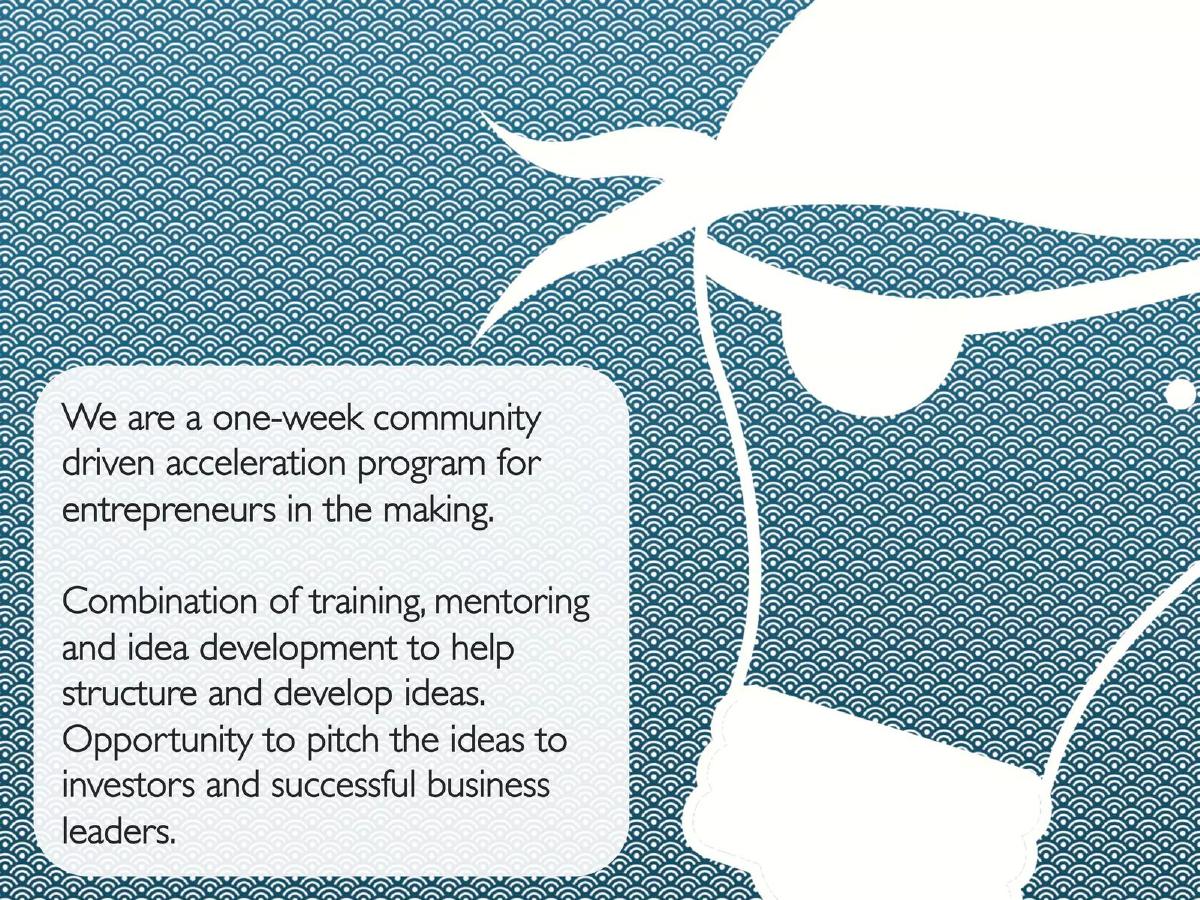
- The program is defined as a one-week community-driven acceleration program for 'entrepreneurs in the making' on slide 4.
- The curriculum is strictly time-bound, consisting of 8 days and 60 working hours as stated on slide 7.
- Each cohort is limited to 30 participants to maintain a specific experience quality, according to slide 7.
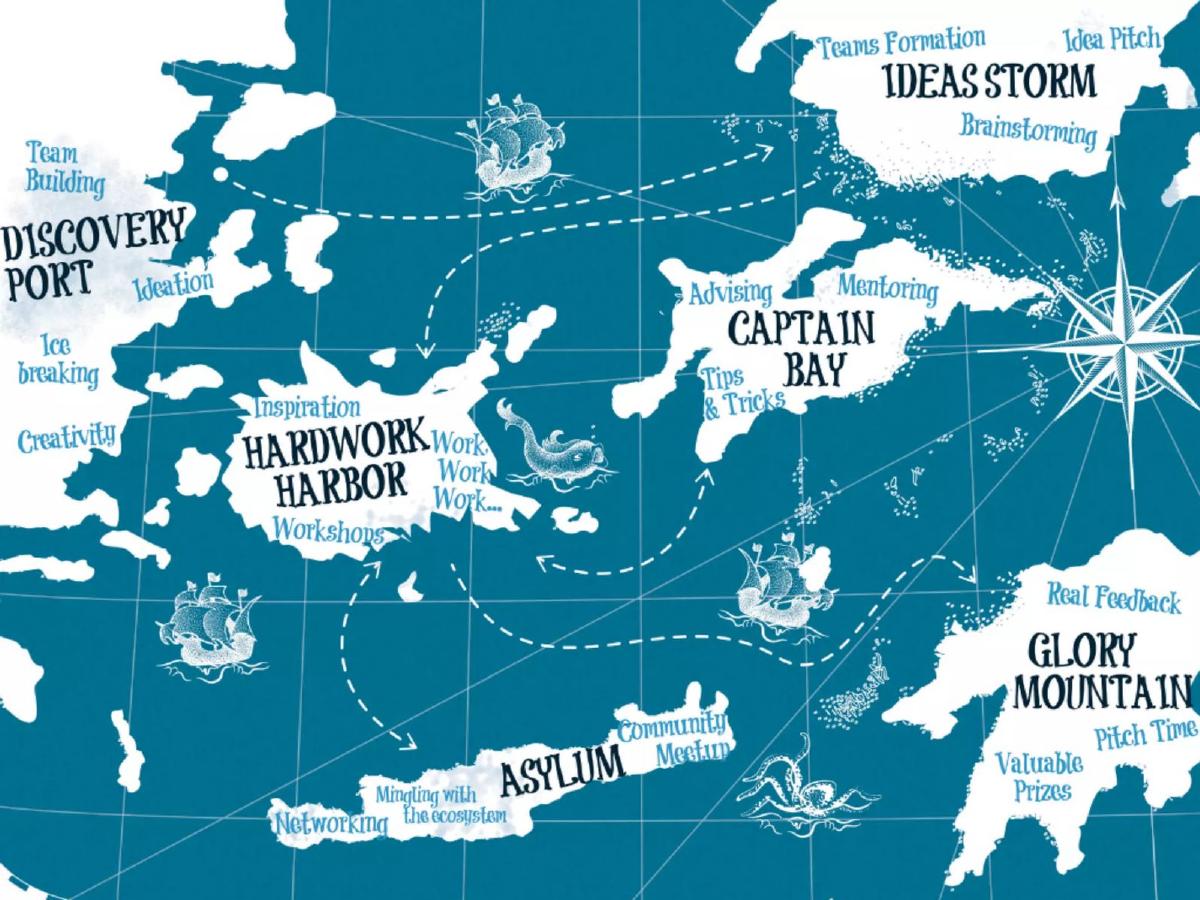
- The methodology uses a nautical metaphor involving six stages: Discovery Port, Ideas Storm, Hardwork Harbor, Captain Bay, Asylum, and Glory Mountain on slide 6.
- The program relies heavily on external expertise, citing 25+ guests including mentors, investors, and entrepreneurs on slide 7.
- Global footprint at the time of the deck included locations in Portugal, Brazil, Peru, and Kazakhstan, as shown on the map on slide 8.
- The deck concludes with a call to action for individuals to 'Organize a program in your city!' on slide 9.
- Global sponsors listed on slide 10 include RESUL and DUE, though their specific contributions are not detailed.
Executive Summary: The Decentralized Accelerator
Startup Pirates presents a deck that is less about raising venture capital and more about scaling a movement. By 2013, the organization had already established a global footprint, using a highly stylized, nautical-themed methodology to teach entrepreneurship. The deck serves as a blueprint for a repeatable, 8-day intensive program designed to be exported to any city in the world. While it lacks the financial rigor of a Series A deck, it excels at communicating a clear, time-bound value proposition for participants and potential local partners.
Slide 1: Title and Branding
The cover slide features the Startup Pirates logo—a lightbulb wearing an eye patch—set against a backdrop of pirate-themed crafts (a parrot and a cardboard hat). This immediately establishes the brand's playful, 'rebel' identity. The branding is consistent with the 'Pirate' theme that carries through the entire presentation, signaling a focus on disruptive thinking and non-traditional education.
Slide 2: The Hook
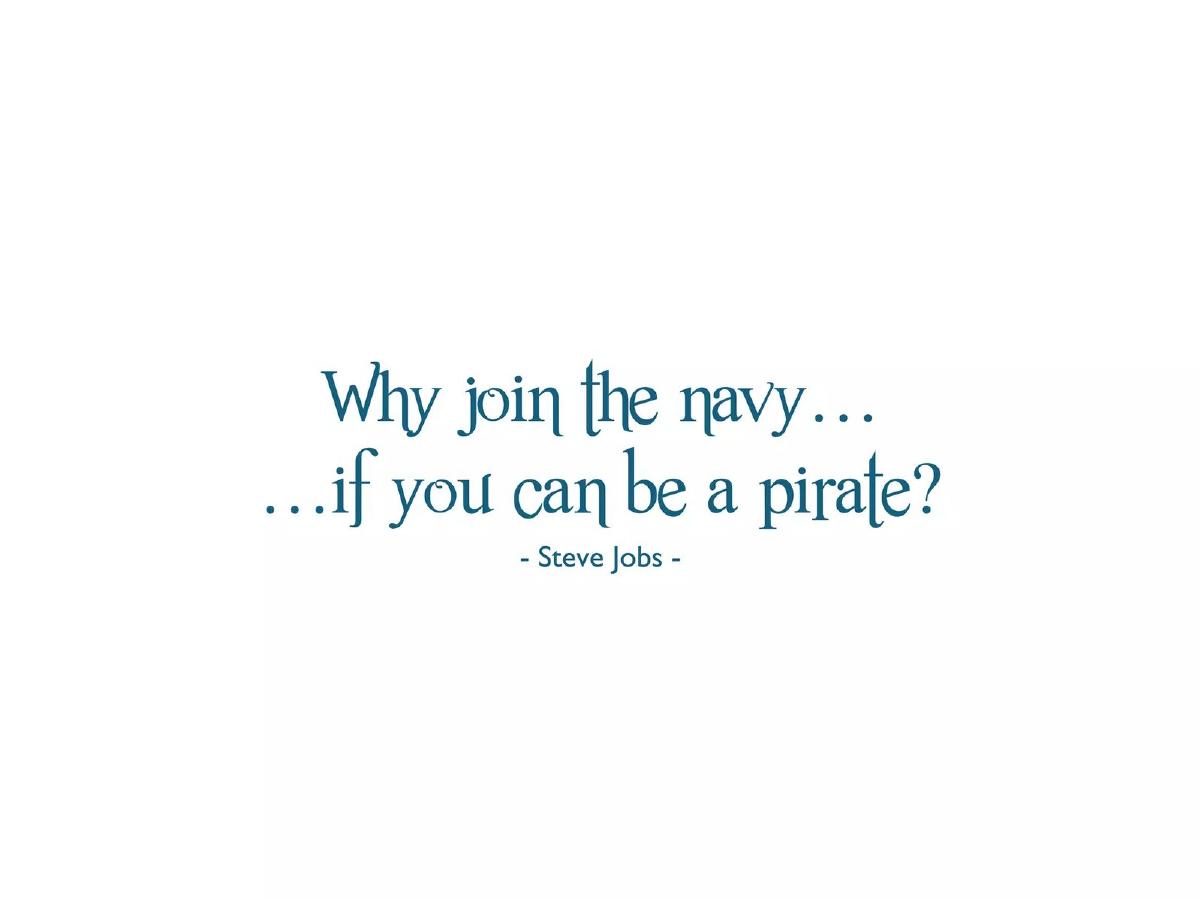
Slide 2 uses a famous quote attributed to Steve Jobs: "Why join the navy... if you can be a pirate?" This is a classic 'emotional hook' slide. It aligns the company with the ethos of Apple and the broader tech counter-culture. In a fundraising or recruitment context, this serves to filter for a specific type of personality—someone who identifies as an outsider or a disruptor.
Slide 3: The Vision Statement
"Startup Pirates wants to change the world one entrepreneur at a time!" This slide defines the mission. It is broad and aspirational, typical of early-stage social enterprises or educational platforms. It shifts the focus from the 'what' to the 'why,' attempting to build ideological alignment with the reader before diving into the mechanics of the program.
Slide 4: The Product Definition
This slide provides the first concrete details. It defines Startup Pirates as a "one-week community driven acceleration program for entrepreneurs in the making." It lists three core pillars: training/mentoring, idea development, and the opportunity to pitch to investors. This is a crucial slide because it manages expectations—this is not a long-term incubator, but a short-term 'sprint' for ideation.
Slide 5 & 6: The Methodology
Slide 5 acts as a transition, while Slide 6 is the 'meat' of the program's structure. Using a treasure map graphic, the deck outlines the journey:
Discovery Port: Team building, ice breaking, and ideation. · Ideas Storm: Brainstorming and team formation. · Hardwork Harbor: Intensive workshops. · Captain Bay: Mentoring and 'tips & tricks.' · Asylum: Networking and 'mingling with the ecosystem.' · Glory Mountain: The final pitch and prizes.
This visualization is effective because it turns a standard curriculum into a narrative journey, making the 8-day process feel like a cohesive experience rather than a series of disconnected lectures.
Slide 7: The Program Metrics
This slide uses a circular infographic to quantify the experience. It lists: 8 days, 30 participants, 25+ guests (mentors/investors), 8 workshops, 60 working hours, 2/3 'Ask the Mentor' sessions, 2/3 entrepreneur talks, 1 community event, and 2 energizer activities. By providing these exact numbers, Startup Pirates proves they have a standardized 'unit' of production. For a potential organizer, this slide represents the 'recipe' they are being asked to follow.
Slide 8: Global Traction
The 'Where are we?' slide shows a world map with pins. The concentration is heaviest in Europe (likely Portugal, given the sponsors), but notably includes pins in Brazil, Peru, and Kazakhstan. This slide serves as social proof. It demonstrates that the methodology is not just a theory but has been successfully localized in diverse markets. For a 2013-era startup, this level of international reach for a physical event program is significant.
Slide 9: The Call to Action
Unlike a traditional pitch deck that ends with a 'Fundraising Ask' (e.g., "We are raising $500k"), this deck ends with a recruitment ask: "Do you want to join Startup Pirates? Organize a program in your city!" This confirms that the deck's primary purpose is expansion through a decentralized, volunteer, or franchise-led model. The photo of a man in a dynamic pose in an office setting reinforces the 'action-oriented' nature of the brand.
Slide 10: Contact and Sponsors
The final slide provides contact information and lists 'Global Sponsors' RESUL and DUE. The inclusion of sponsors is vital for a non-equity-based model, as it shows the program has corporate backing and a degree of financial sustainability. However, the deck does not explain what these sponsors provide or how the relationship works.
What Works Well
Strong Thematic Consistency: The pirate theme isn't just a name; it's woven into the logo, the quotes, the methodology map, and the language. This makes the brand highly memorable. Clear Curriculum: Slide 7 is excellent. It tells a potential partner exactly what they need to organize. There is no ambiguity about the time commitment or the required resources. Proven Scalability: The map on slide 8 effectively counters the argument that the program only works in its home city. It shows a global appetite for this specific educational format.
What Is Missing
The Team Slide: This is the most glaring omission. In a community-driven model, the pedigree and experience of the central leadership team are paramount. Investors or partners need to know who is behind the 'Captain's' wheel. Business Model Details: How does the central organization survive? Do local organizers pay a fee? Does Startup Pirates take a cut of sponsorship? The deck is silent on the flow of money. Impact Metrics: While the deck shows where they are, it doesn't show what happened to the 'pirates' after the week ended. How many companies were actually formed? How much follow-on funding did they raise? Without these outcomes, the program looks like an event series rather than an accelerator.
Founder's Takeaway
Founders building decentralized or community-led organizations should study how Startup Pirates turned a service (acceleration) into a repeatable product (the 8-day program). By defining the 'unit' so clearly on slide 7, they made it easy for others to say 'yes' to organizing. However, if you are using a deck like this to raise capital, you must include a team slide and a clear explanation of the revenue hooks. A movement is great, but a venture-backed business needs a engine that turns that movement into a sustainable margin.
Frequently asked questions
- What is the business model of Startup Pirates?
- The deck does not explicitly state a revenue model, such as tuition fees or equity stakes. However, slide 9 invites individuals to 'Organize a program in your city,' suggesting a franchise or licensing model where local organizers run the 8-day event using the Startup Pirates methodology and brand. The presence of 'Global Sponsors' on slide 10 indicates that corporate partnerships are a primary source of funding for the central organization.
- How does this differ from a traditional startup accelerator?
- Traditional accelerators like Y Combinator typically last 3 months and take equity. Startup Pirates is a 'one-week' program (slide 4) lasting exactly '8 days' (slide 7). It focuses more on the 'entrepreneur in the making' rather than established startups with products. It acts as a top-of-funnel educational experience rather than a long-term investment vehicle.
- What specific activities are included in the 8-day program?
- According to slide 7, the program includes 8 workshops, 2 energizer activities, 1 event with the startup community, 2/3 entrepreneur talks, and 2/3 'Ask the Mentor' sessions. This is all packed into 60 working hours, indicating a high-intensity, immersive environment designed to move from 'Ice breaking' to 'Pitch Time' (slide 6).
- Is there a specific target demographic for participants?
- Slide 4 identifies the target as 'entrepreneurs in the making.' This implies students, first-time founders, or individuals with an idea but no formal business structure. The methodology slide (slide 6) starts with 'Team Building' and 'Ideation,' confirming that the program is intended for the very earliest stage of the entrepreneurial journey.
- What is missing from this deck that an investor would expect?
- This deck is missing almost all standard venture capital requirements: there is no team slide introducing the founders, no financial projections, no mention of the business's legal structure, and no specific funding 'ask.' It functions as a marketing and recruitment deck for potential program organizers rather than a financial pitch for equity investment.