Pinmypet raised $766,400 in 2013 with a 16-slide deck that prioritizes emotional resonance over dense data. The presentation spends the first eight slides establishing a visceral problem—lost pets—before revealing the solution: a compact, waterproof tracking device with a 20-day battery life. By framing the product as both a safety tool (GPS) and a health tool (activity monitoring), the founders addressed two major pet owner anxieties simultaneously. While the deck lacks traditional financial projections, unit economics, or a competitive landscape, it effectively uses large-scale market figur…
Key takeaways
- The deck uses a narrative arc of five slides (3-7) to visually demonstrate the emotional trauma of a lost pet without using any text.
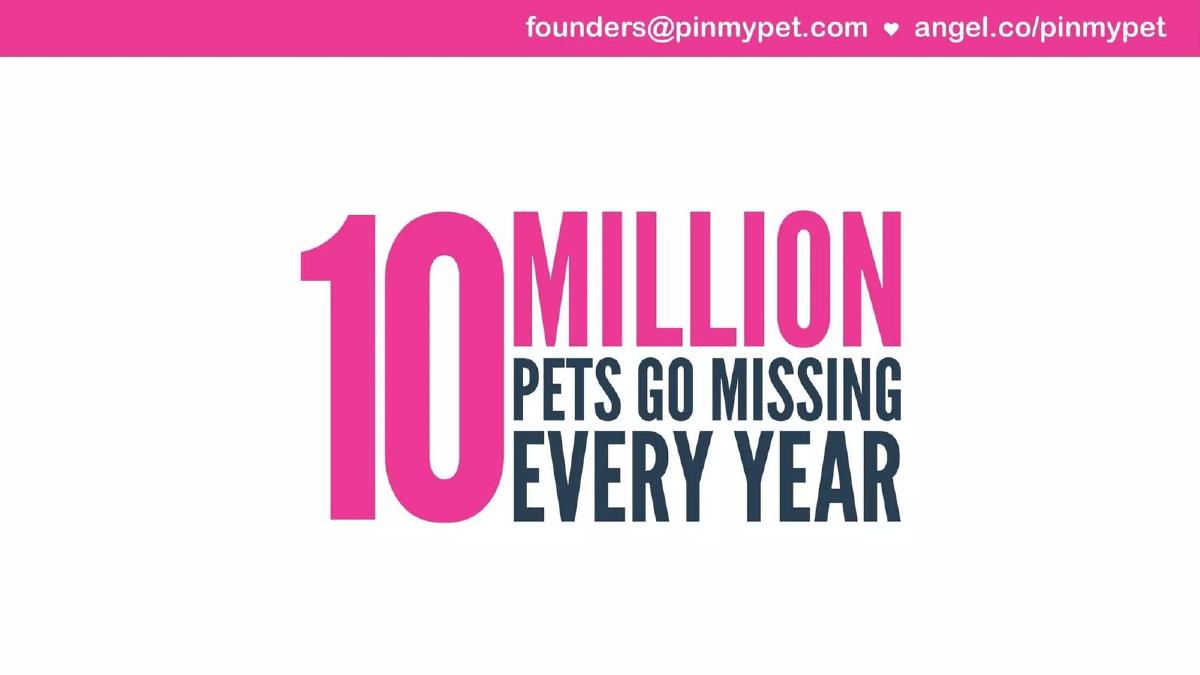
- Slide 6 quantifies the problem by stating that 10 million pets go missing every year.
- Slide 7 highlights a low recovery rate, noting that more than 90% of lost pets never come back.
- The hardware solution is defined by three core specs on Slide 9: Wireless charging, 20 days of battery life, and being waterproof.
- The product expands its utility beyond tracking to health, citing on Slide 11 that 91 million pets in the US and Brazil suffer from obesity.
- Slide 13 defines the Total Addressable Market as 224 million dogs and cats across the US and Brazil, representing $62 billion in revenue.
- The team slide (Slide 15) highlights technical credibility through the Microsoft Innovation Center and 'Hackers since 12 years old.'
- The deck concludes with a clear $750k ask on Slide 16, though it omits specific use-of-funds details.
The Emotional Hook: Storytelling Through Imagery
The Pinmypet pitch deck, used for their 2013 Seed round, is a notable example of minimalist, narrative-driven design. Rather than leading with data or technical specifications, the founders chose to build a case based on the emotional bond between humans and their pets. This approach is particularly effective for consumer hardware, where the 'why' is often more compelling than the 'how' in the early stages of a pitch.
Slides 1-2: Introduction and Personalization
Slide 1 introduces the brand with the tagline: Taking care of pets with a compact location & activity tracking device . The branding is friendly, using a paw-print pin icon and a bright pink color palette. Slide 2 immediately personalizes the pitch by showing a photo of a founder, Julia, with her dog, Louie. A small map icon of Brazil suggests the company's geographical starting point. This slide serves to establish the founders as 'pet people' who understand their target audience intimately.
Slides 3-8: The Problem Narrative
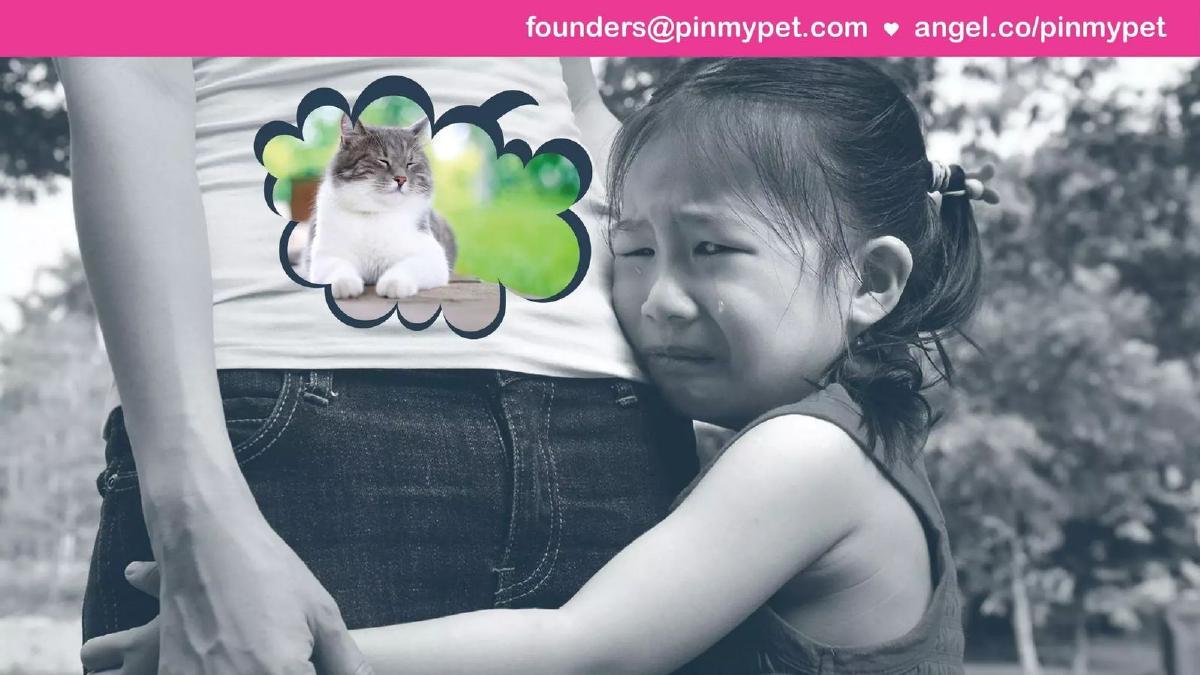
This section is the core of the deck's emotional appeal. Slides 3, 4, and 5 contain no text other than a mock 'Lost Dog' poster. They depict the progression of a pet going missing: the poster on a pole, a woman crying on a bench, and a young child in tears. This visual storytelling prepares the investor for the hard data that follows.
Slide 6 provides the scale: 10 million pets go missing every year . Slide 7 adds the stakes: More than 90% never come back . Slide 8 uses a grid of dog icons and broken hearts to visually represent this 90% failure rate. By the time the solution is introduced, the 'problem' has been established as both a massive market opportunity and a heartbreaking social issue.
Slides 9-10: The Hardware and Software Solution
Slide 9 introduces the physical product. It is a white, square device that clips onto a collar. The slide highlights three key features: Wireless Charger , 20 Days of battery life, and Proof (indicated by water droplets to signify it is waterproof). These are the 'big three' for pet wearables; if a device dies in two days or breaks when the dog swims, it is useless.
Slide 10 shows the software interface on an iPhone. The map view displays a 'home' zone and a tracking path, showing the pet's current location in a park. This confirms the GPS functionality mentioned in the opening slide.
Slides 11-13: Expanding the Market to Health
Pinmypet pivots from safety to health in the second half of the deck. Slide 11 states that 91 million pets suffer from obesity in the US and Brazil. Slide 12 shows a dog running with an overlay indicating 45 min walking and 2 h resting , demonstrating the activity tracking capabilities of the device.
Slide 13 summarizes the total market opportunity. By combining the US and Brazil, the company targets 224 million dogs & cats and a $62 billion revenue market. This slide is crucial because it justifies the investment by showing that even a small percentage of this market represents a significant business.
Slides 14-16: Team and The Ask
Slide 14 is a simple transition slide showing a nostalgic photo of children with a dog, reinforcing the 'Pet Lovers' theme. Slide 15 introduces the team: Bruno Kenj, Bruno Souza, Ednaldo Souza, and Marcos Buson, along with Daniel and Taci. The credentials listed are Microsoft Innovation Center , Mobile Premier Awards 2013 , and the claim of being Hackers since 12 years old . This balances the emotional tone of the deck with technical authority.
The final slide (Slide 16) is a direct ask for $750k . It also notes that the company is incorporated as PinAll Corporation, a Delaware C-Corp, which is a standard requirement for most US-based seed investors.
What Works in This Deck
The visual storytelling is the deck's strongest asset. By using the first eight slides to build a narrative, the founders ensure that the investor is emotionally invested in the solution before they even see the hardware. The focus on three specific hardware specs (battery, charging, waterproofing) shows a clear understanding of the product's primary failure points in the real world. Furthermore, the inclusion of the Brazilian market alongside the US market highlights a unique geographical advantage that many Silicon Valley-centric startups might overlook.
What is Missing
While the deck is emotionally resonant, it is analytically thin. There is no mention of Unit Economics : we don't know the Bill of Materials (BOM), the retail price, or the expected margins. There is also a total absence of a Competitive Landscape . In 2013, the pet tracking space was already becoming crowded with players like Tagg (which became Whistle). Investors would likely have asked how Pinmypet intended to compete on price or features. Finally, there is no Go-to-Market (GTM) strategy . The deck identifies a large market but doesn't explain how the company will acquire its first 10,000 users—whether through retail partnerships, D2C, or vet referrals.
What a Founder Should Copy
Founders should emulate the way Pinmypet uses large-format imagery and minimal text to convey a problem. Many decks fail by cluttering the 'Problem' slide with too many words. Pinmypet proves that a few well-chosen images can be more persuasive than a dozen bullet points. Additionally, the 'dual-purpose' positioning—safety (GPS) plus health (activity tracking)—is a smart way to increase the perceived value of a hardware device. It transforms the product from an 'emergency-only' tool into a daily-use health monitor, which is essential for reducing churn in subscription-based hardware models.
Final Summary
The Pinmypet deck is a product of its time, leaning heavily on the 'Internet of Things' (IoT) hype of the early 2010s. It successfully raised $766,400 by selling a vision of pet safety and health backed by a technically capable team. While a modern Seed deck would require significantly more data on traction and competition, the core narrative structure used here remains a highly effective blueprint for any founder looking to solve a deeply personal, emotional problem with a technical solution.
Frequently asked questions
- How does Pinmypet handle the 'Problem' slide differently than most decks?
- Instead of a bulleted list of pain points, Pinmypet uses a visual storyboard. Slides 3 through 5 show a 'Lost Dog' poster, a grieving owner, and a crying child. This creates an emotional hook that makes the subsequent statistic—10 million missing pets—feel more urgent. It shifts the investor's mindset from analyzing a market to solving a tragedy.
- What are the primary technical specifications of the hardware?
- According to Slide 9, the device is a compact square unit featuring wireless charging, a 20-day battery life, and a waterproof build. By highlighting these specific features, the founders address the most common friction points in wearables: the hassle of frequent charging and the durability required for active animals.
- Why does the deck focus specifically on the US and Brazil?
- Slide 2 indicates the company's origin in Brazil with a map icon, while Slide 13 aggregates the two markets to show a combined scale of 224 million pets. Brazil is one of the largest pet markets globally, and by pairing it with the US, the founders demonstrate a massive, dual-region opportunity totaling $62 billion in revenue.
- Does the deck include any information on competition or pricing?
- No. The deck completely omits a competitive landscape, pricing strategy, and unit economics. It relies entirely on the 'Problem/Solution' fit and the sheer size of the market. While this worked for their 2013 seed round, modern decks typically require more detail on how the product wins against incumbents like Whistle or Tractive.
- What is the significance of the '91 Million' statistic on Slide 11?
- This slide introduces a second value proposition: activity tracking. By stating that 91 million pets suffer from obesity, Pinmypet moves from a 'reactive' safety device (finding a lost pet) to a 'proactive' health device (preventing illness). This increases the product's daily utility and broadens its market appeal to all pet owners, not just those worried about escapes.