Kryptomon’s Series A deck is a masterclass in demonstrating 'velocity' over 'longevity.' Raised in 2022, the deck highlights a project that moved from inception in March 2021 to generating over $100,000 in monthly revenue by March 2022. The company successfully positioned itself as the 'answer to what is missing in Pokémon' by integrating Tamagotchi-style care mechanics and CryptoKitties-style breeding. While the deck leans heavily on the hype of the 2021-2022 NFT boom, it backs the excitement with hard data: 69.3% 7-day retention and $11.5M in total NFT trading volume. By showing a clear roa…
Key takeaways
- The company moved from inception in March 2021 to over 100k members by May 2021, showing extreme early community interest (Slide 2).
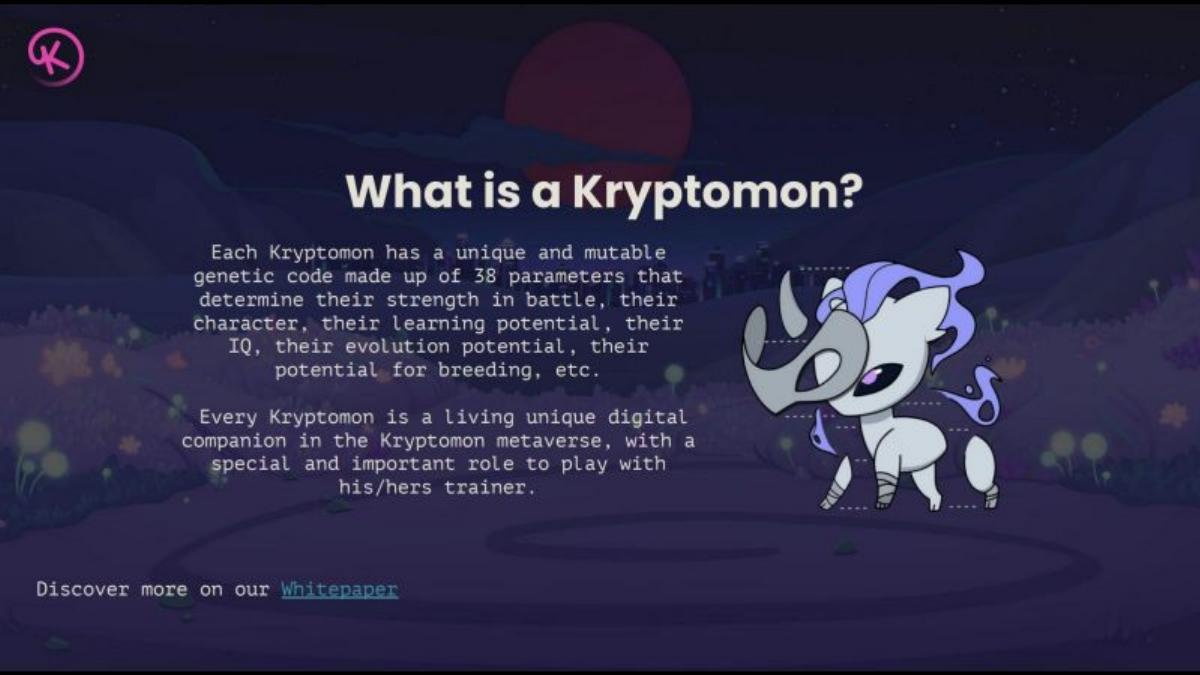
- Kryptomon creatures are defined by a complex genetic code of 38 parameters, adding depth to the breeding and battle mechanics (Slide 5).
- Revenue growth was aggressive, jumping from $49,138 in February to $102,875 in March 2022 (Slide 17).
- The project successfully executed 'Treasure Hunts' in the real world, with the February event attracting 18,258 active players (Slide 13).
- Secondary market activity is a core pillar, with an all-time high P2P egg sale reaching $35,000 (Slide 15).
- Retention is high for the sector, reported at 69.3% for a 7-day period (Slide 16).
- The business model is diversified, including 3-5% in-game transaction fees and loot boxes priced from $1.39 to $19.99 (Slide 19).
- The use of funds is heavily weighted toward product, with 50% allocated to Game Development and HR Scaleup (Slide 18).
Executive Summary: The NFT Gaming Speedrun
Kryptomon’s Series A deck, used to raise $10M in 2022, is a product of the peak NFT gaming era. It focuses on rapid community acquisition and the 'living' nature of its digital assets. The company positions itself as a more sophisticated successor to Axie Infinity, emphasizing that the game should be fun even without the 'Play-and-Earn' (P2E) mechanics. With a heavy focus on 'Lore,' 'Genetics,' and 'Real-world engagement,' the deck seeks to prove that Kryptomon is a long-term franchise rather than a fleeting crypto trend.
Slides 1-5: Vision and the 'Living' NFT Concept
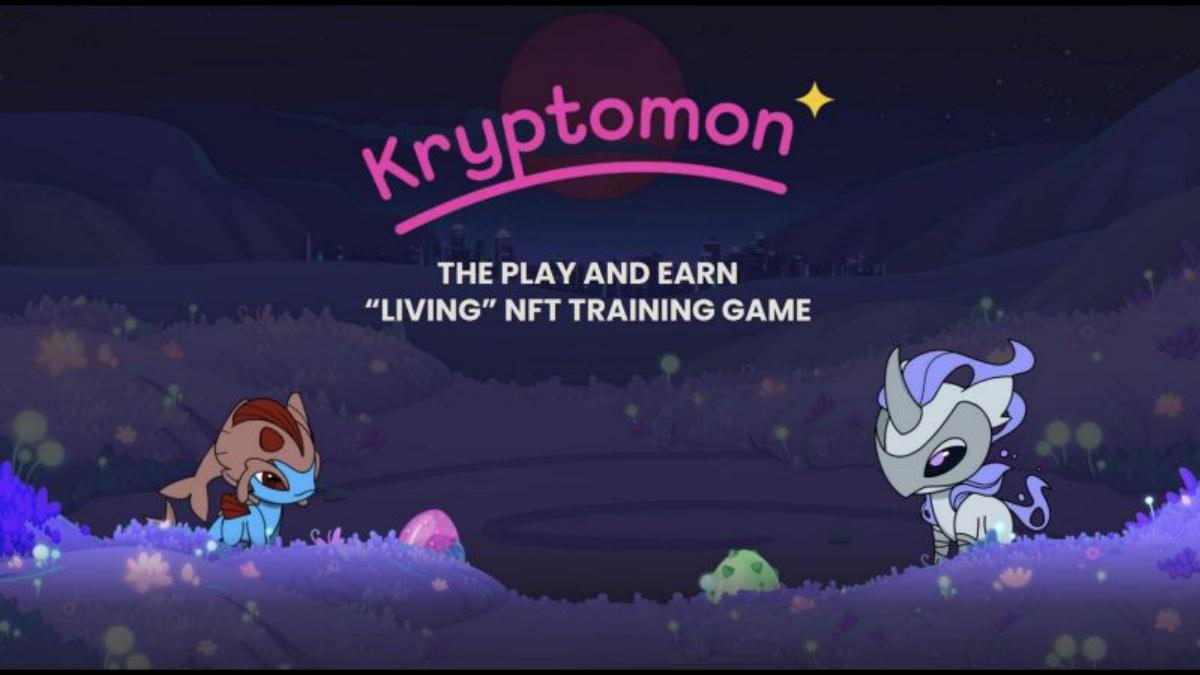
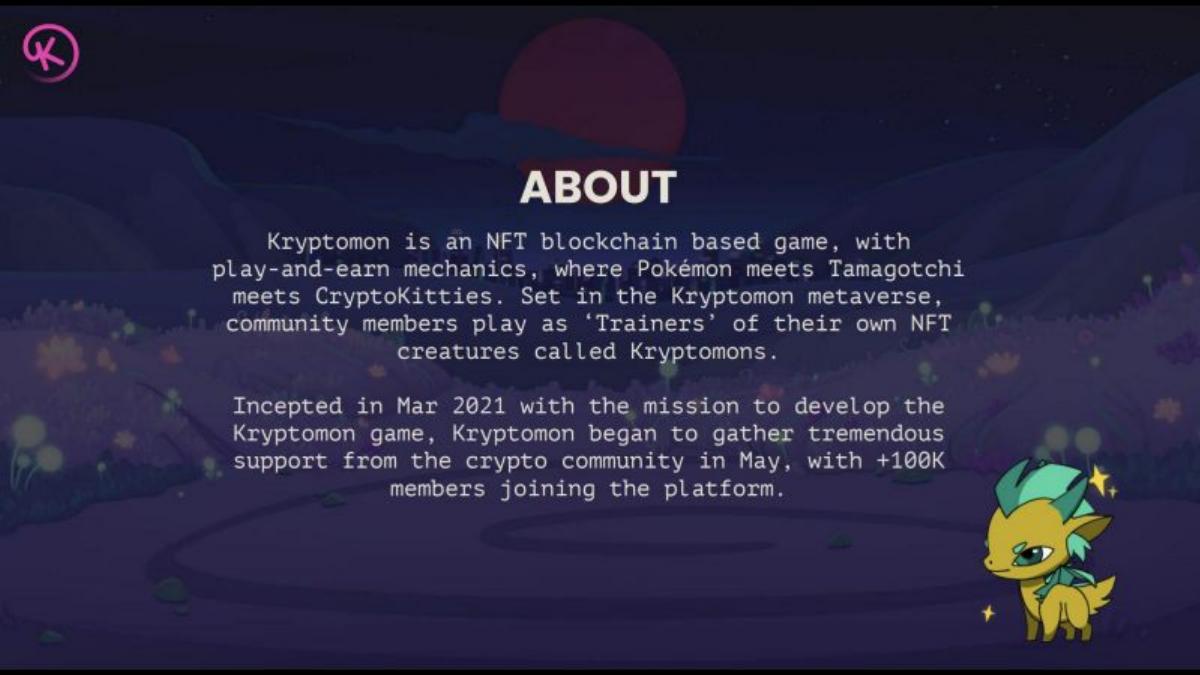
The deck opens with a clear brand identity. Slide 1 introduces the tagline: "The Play and Earn 'Living' NFT Training Game." This immediately signals to investors that the project sits at the intersection of gaming and blockchain. Slide 2 provides the origin story, noting the company was incepted in March 2021 and saw +100K members join by May. This 60-day growth spurt is a critical piece of social proof used to anchor the rest of the presentation.
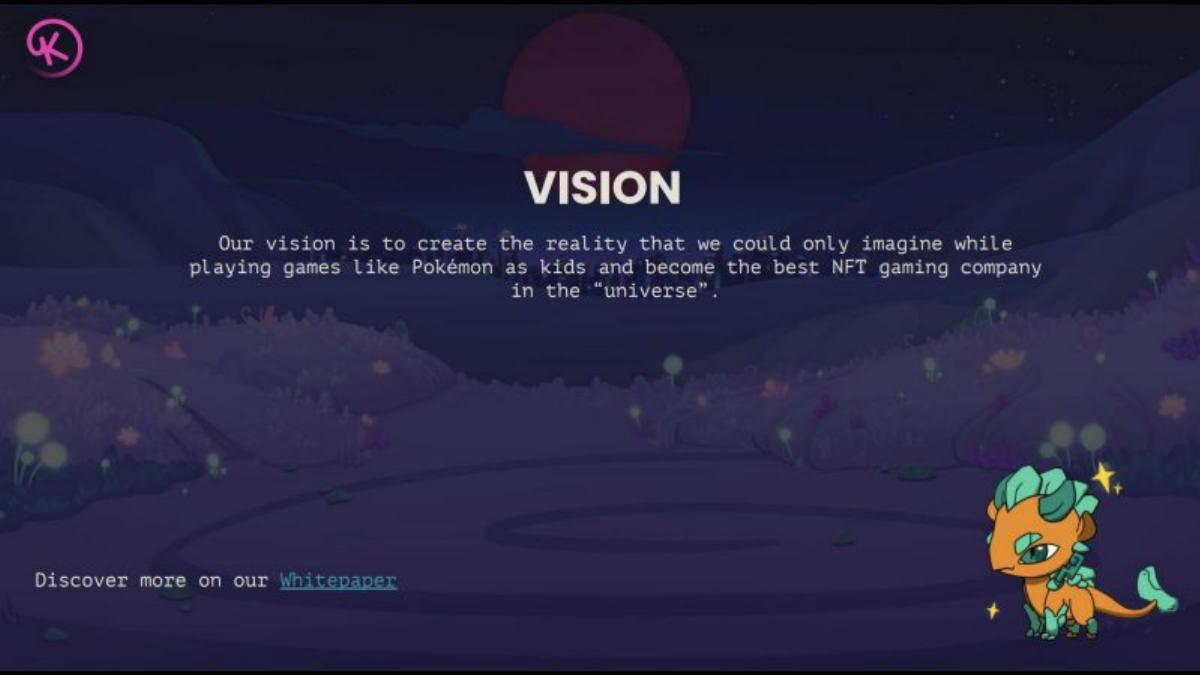
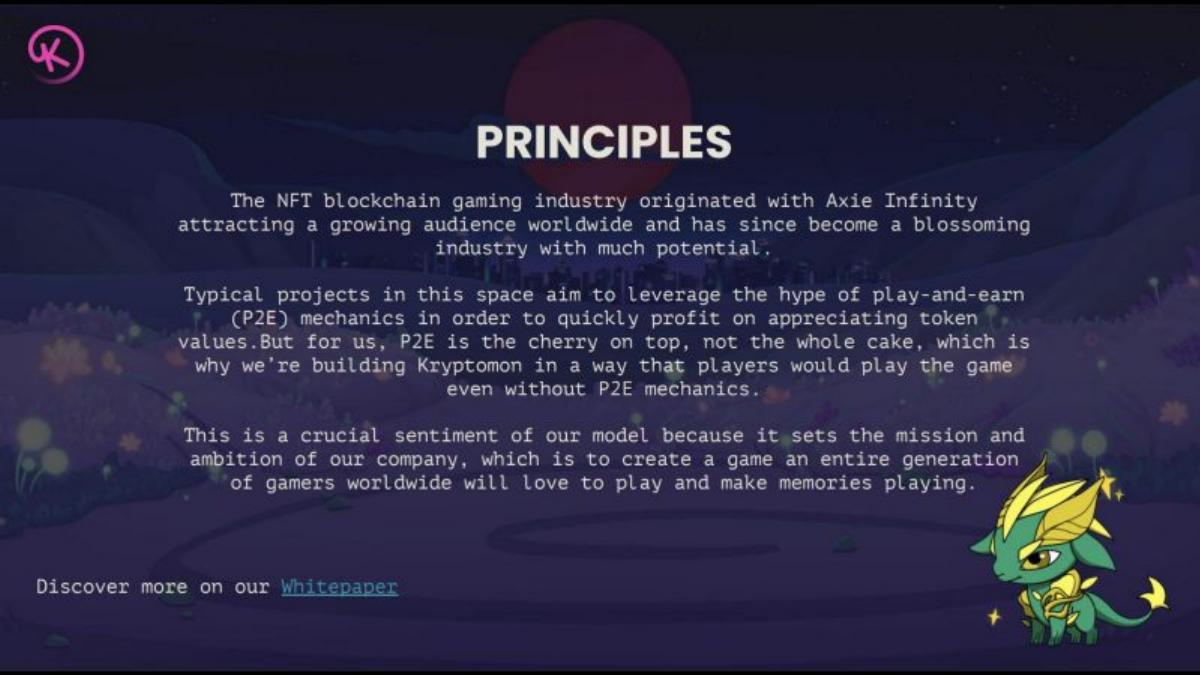
The vision on Slide 3 is ambitious, aiming to be the "best NFT gaming company in the universe." Slide 4 sets a defensive tone regarding the P2E model, stating that for Kryptomon, P2E is the "cherry on top, not the whole cake." This was a common refrain in 2022 as investors began to worry about the sustainability of purely speculative game economies. Slide 5 defines the 'Kryptomon' itself, highlighting a "mutable genetic code made up of 38 parameters." This complexity is meant to appeal to 'hardcore' gamers and collectors who value rarity and utility over simple aesthetics.
Slides 6-9: The Team and the Roadmap
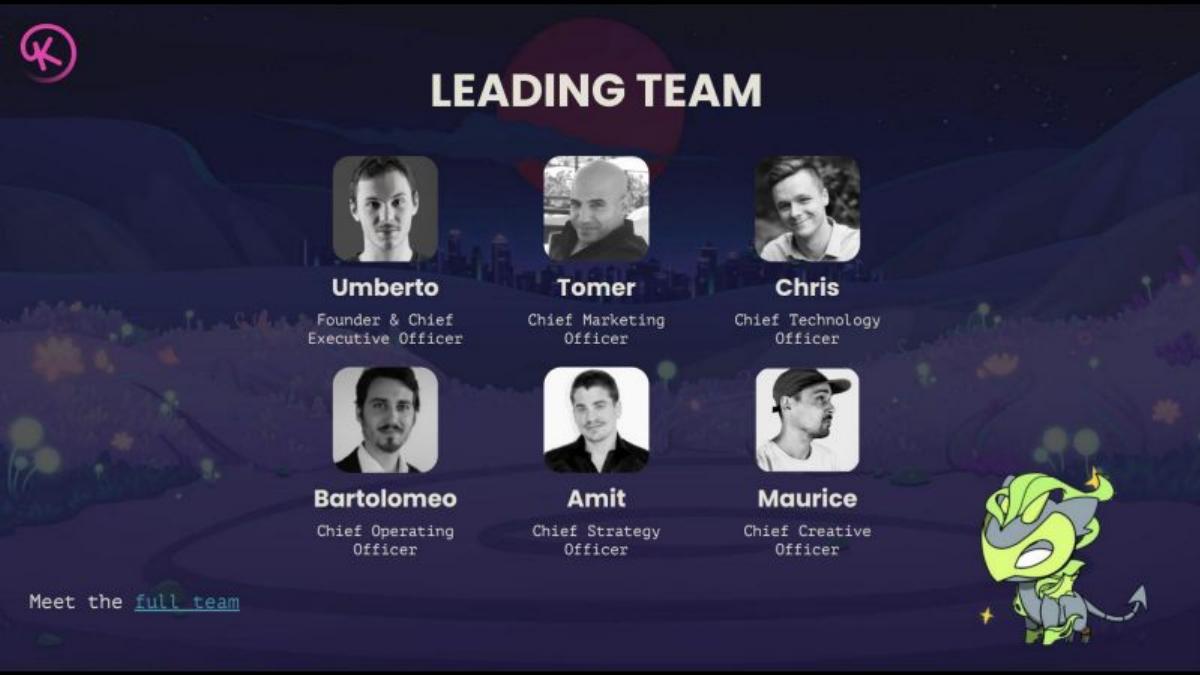
Slide 6 introduces the 'Leading Team,' featuring six C-suite members. While the slide lacks specific logos of past companies, it provides a link to the 'full team.' Slide 7 breaks the game down into four pillars: The Kryptomons (DNA-based), The Game (competitive), The Lore (story-driven), and The Economy (remunerative). Notably, they mention partnering with Room8, a AAA game studio, to bolster their development credentials.
The 'Game Economy' on Slide 8 introduces the free-to-play model and the use of $KMON coins for loot boxes. Slide 9 presents the roadmap, which shows a very tight execution schedule. Between Q2 2021 and Q3 2022, the company planned to move from egg minting to full PvE and PvP gameplay. This slide serves to show that the company is hitting its milestones, specifically highlighting the V1 Tamagotchi release in Q4 2021.
Slides 10-14: Product Depth and Real-World Utility
Slide 10 shows a screenshot of the V1 'Tamagotchi' interface. It details mechanics like feeding, healing, and training. A key economic detail is hidden here: failing to care for a creature leads to 'hibernation,' which requires $KMON spending to reverse. This is a clever 'sink' for the token economy. Slide 11 displays the Marketplace, where players trade eggs and creatures. The UI shown includes DNA charts and price history, mimicking professional trading platforms.
The 'Treasure Hunt' feature on Slides 12 and 13 is perhaps the most unique part of the pitch. By creating a 'PokemonGo-like' AR experience, Kryptomon moved players into the physical world. Slide 13 uses a world map with white dots to show global participation, claiming 18,258 active players for their February 18th hunt. Slide 14 introduces the 'Kryptomon Manga,' showing an intent to build a transmedia franchise where lore is sold as NFTs to increase brand awareness.
Slides 15-17: The Traction and Revenue 'Hockey Stick'
This is the 'meat' of the Series A pitch. Slide 15 lists 'Achievements' that are difficult to ignore: $11.5M in NFT volume, 27K token holders, and two Binance NFT sales that sold out in 0.27 and 0.17 seconds respectively. These 'seconds to sell out' metrics were the gold standard for demand in the 2022 NFT market. Slide 16 provides 'Game Traction' data, including an average of 2,500 DAU (Daily Active Users) out of 7,680 MAU (Monthly Active Users). The 69.3% 7-day retention rate is the standout figure here, suggesting a highly addicted core user base.
Slide 17 visualizes the revenue growth. It shows a significant spike in Week 10, with total revenue for March hitting $102,875, more than double the $49,138 earned in February. The 'Revenue by Type' chart shows a shift from purely 'Hatch' fees to a more balanced mix of loot boxes (Bronze, Silver, Gold) and market fees, indicating a maturing economy.
Slides 18-24: Business Model, Competition, and G2M
Slide 18 outlines the 'Use of Funds,' with 50% going to Game Development and HR. Marketing takes 30%, which is high but expected for a B2C gaming play. Slide 19 clarifies the 'Business Model,' detailing the 3-5% transaction fees and the pricing tiers for loot boxes. Slide 20 is the standard 'Checkmark' competition slide. Kryptomon claims superiority over Axie Infinity and Pokémon by offering 'Mixed Reality' and 'Low gas fees' (via the Binance Smart Chain).
The 'Marketing Strategy' on Slide 21 identifies a primary target audience of 25-35-year-old males (80%) who are crypto enthusiasts. They also list '10 Commandments,' including 'Be Humble' and 'Don't be Greedy,' likely a response to the 'cash-grab' reputation of many NFT projects at the time. Slide 22 details the Go-To-Market (G2M) plan, focusing on 'news flow' and partnerships with companies like Simplex and BinanceNFT. Slide 23 summarizes the 'Why Invest' argument, leaning on the 'Post-covid NFT boom' and the 'Living NFT' technology. The deck concludes on Slide 24 with a simple 'Thank You.'
What Works in This Deck
Velocity Metrics: The use of 'seconds to sell out' (Slide 15) and the doubling of monthly revenue (Slide 17) creates a powerful sense of FOMO for investors. · Economic Sinks: Clearly explaining how the token is used (unfreezing hibernating pets on Slide 10) shows that the founders have thought about the circularity of their economy. · Real-World Bridge: The Treasure Hunt (Slide 12) differentiates the project from the thousands of 'browser-only' NFT games that flooded the market in 2021.
What Is Missing
Unit Economics: While they show total revenue, there is no mention of Customer Acquisition Cost (CAC) or Lifetime Value (LTV). In a B2C game, these are vital for long-term viability. · Tokenomics Detail: The deck mentions the $KMON token frequently but does not include a 'Tokenomics' slide showing supply, vesting schedules, or distribution. This is a major omission for a Web3 Series A. · Team Pedigree: The team slide (Slide 6) is very thin on detail. Investors usually want to see specific past successes (e.g., 'Ex-Riot Games' or 'Ex-Blizzard') directly on the slide.
What a Founder Should Copy
The 'Comparison' Framing: Framing the company as the "answer to what is missing in [Market Leader]" (Slide 21) is a classic and effective positioning tactic. · Visualizing Revenue Mix: The chart on Slide 17 that shows revenue by type over time is excellent. It proves to investors that the company isn't a 'one-trick pony' and can generate income from multiple player behaviors. · Community as Traction: If you have a large Discord or Telegram, don't just list the number. Show the 'Localized Communities' (Slide 15) to prove global reach and organic 'stickiness.'
Frequently asked questions
- What is the core gameplay hook of Kryptomon?
- Kryptomon combines creature care, breeding, and battling. According to slide 5, each creature has a unique genetic code with 38 parameters. Slide 10 shows the 'Tamagotchi' phase where players must feed, heal, and train their creatures. Failure to do so results in 'hibernation,' requiring $KMON tokens to unfreeze, which creates a sink for the game's economy.
- How does the company generate revenue?
- As detailed on slide 19, revenue comes from four primary streams: 3-5% fees on in-game transactions (breeding and P2P sales), loot box sales ranging from $1.39 to $19.99, tournament ticket entry fees (5-10%), and direct NFT sales. They also mention future revenue from merchandise and licensing.
- What traction did they show to justify a Series A?
- The deck presents several high-velocity metrics on slides 15 and 16. These include $11.5M in total NFT trading volume, 27k token holders, and 350k community members. Most importantly, they showed a monthly revenue doubling from Feb to March 2022 and a 69.3% 7-day retention rate, which is high for blockchain games.
- Who are the competitors listed in the deck?
- Slide 20 compares Kryptomon against both Web3 and Web2 giants. Web3 competitors include Polychain Monsters, BinaMon, and Axie Infinity. Web2 benchmarks include Pokémon and Tamagotchi. Kryptomon claims to be the only one offering the full suite of NFTs, low gas fees, mixed reality, P2E, and complete game design.
- What is the 'Treasure Hunt' feature?
- Described on slides 12 and 13 as a 'PokemonGo-like experience,' these are real-world AR events held every full moon. Players use their location to find mystery boxes in the physical world. Their February 2022 hunt saw over 18,000 active players globally, demonstrating a bridge between digital assets and physical engagement.