Raketenstart’s 12-slide deck is a masterclass in minimalist visual storytelling, utilizing consistent 3D character assets to walk through a relatable problem-solution narrative. It identifies a specific market of 4 million founders in Germany and a staggering 33% lack of access to legal advice. However, the deck is notably light on hard data. It omits a team slide, a formal competition analysis, and a clear 'ask' or use of funds. While it lists specific pricing for its 'Academy' (420 € for 6 months), it lacks the unit economics or traction metrics typically required to move past a first meeti…
Key takeaways
- The deck identifies a Total Addressable Market of 4 million founders and entrepreneurs specifically within Germany (Slide 2).
- A core problem metric is highlighted: 33% of the target market has no access to legal advice even when facing a legal problem (Slide 3).
- The business model includes a subscription-based 'Academy' priced at 420 € for 6 months or 756 € for 12 months (Slide 8).
- The product is positioned as a 'One-Stop-Shop' combining education, lawyer access, fixed-price services, and contract management (Slide 7).
- The deck completely omits a team slide, which is highly unusual for a pre-seed round where the founders are the primary asset.
- There is no 'The Ask' slide detailing how much capital is being raised or how it will be deployed.
- The competitive landscape is ignored, with no mention of other legal tech platforms or traditional law firm alternatives.
- The deck uses a consistent 3D character throughout to maintain a friendly, approachable brand identity for a typically 'stiff' industry (Slides 2-11).
The Visual Narrative of Legal Tech
Raketenstart’s pitch deck is a departure from the text-heavy, chart-dense presentations often seen in the legal tech sector. With only 12 slides, the deck relies heavily on a single 3D character to guide the investor through the pain points of the German legal market. It is a 'teaser' deck in the truest sense—designed to provoke an emotional response to a systemic problem rather than provide a deep dive into the mechanics of the business.
Slide 1: The Hook
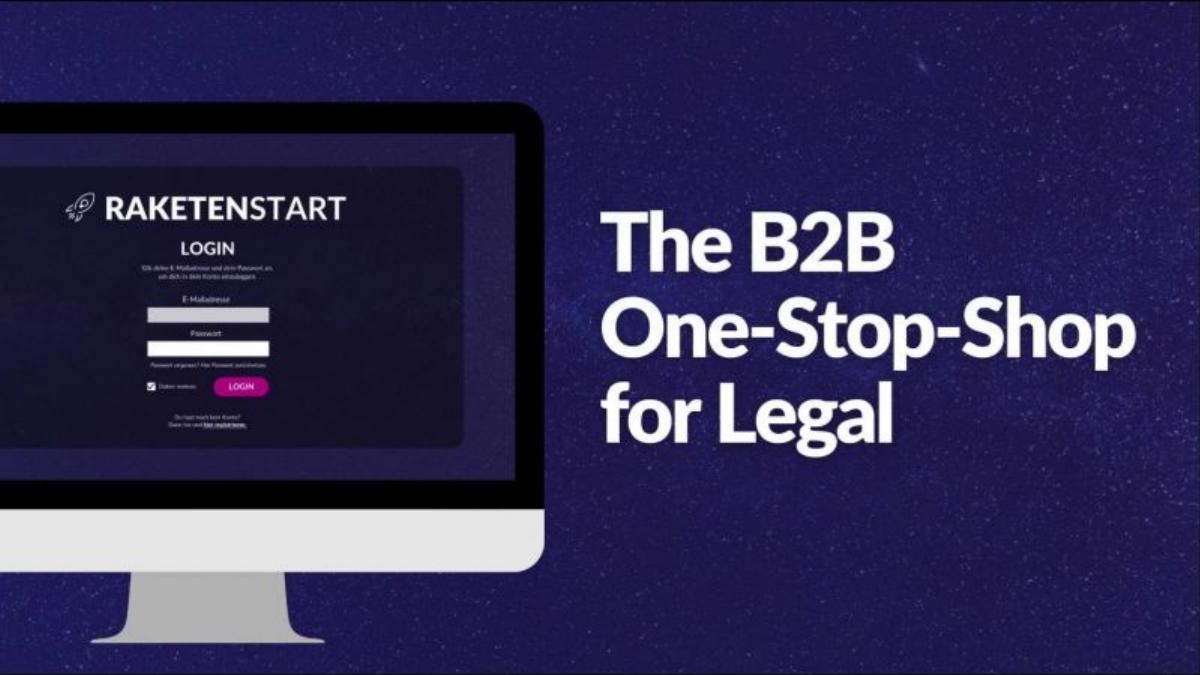
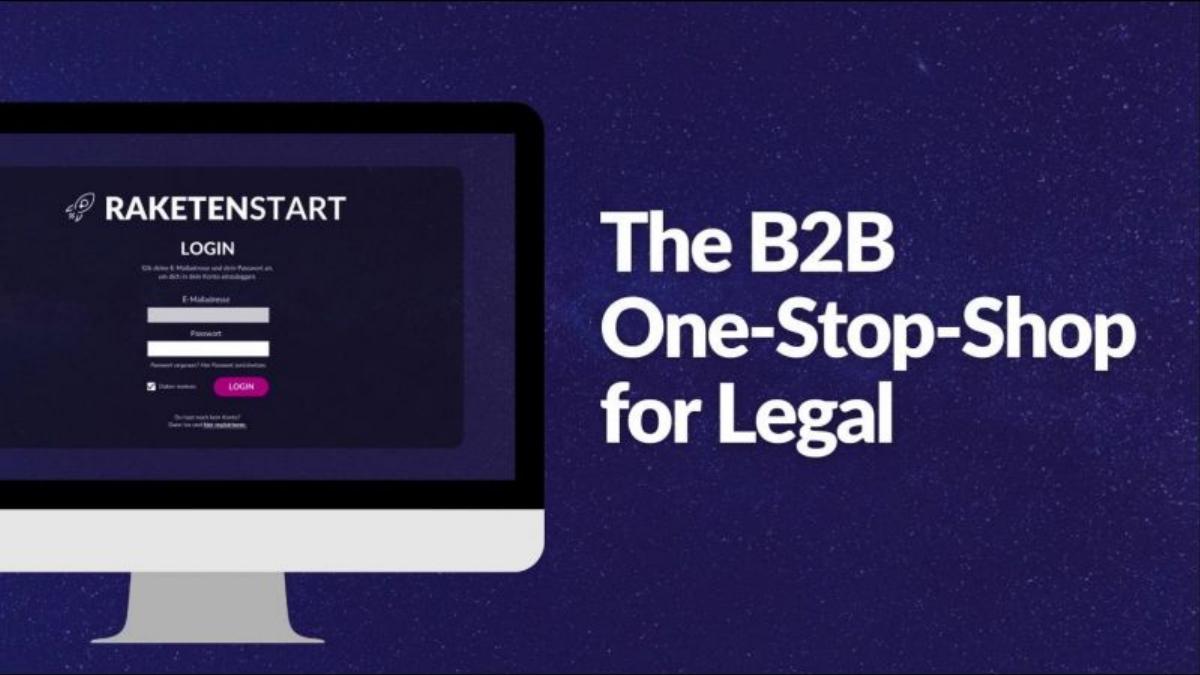
The cover slide features a laptop mockup showing a login screen and the tagline: "The B2B One-Stop-Shop for Legal." The branding is dark and space-themed (consistent with the name 'Raketenstart' or 'Rocket Start'), establishing a modern, tech-forward identity immediately.
Slide 2: Market Definition
Slide 2 identifies the target audience: "4 Mio founders & entrepreneurs only in Germany." By narrowing the focus to Germany, the company acknowledges the jurisdictional nature of legal work. The use of a 3D character holding a lightbulb keeps the tone light and accessible.
Slides 3-4: The Problem Statement
The deck moves quickly into the 'Why.' Slide 3 claims that "33% have no access to legal advice at all even if they have a legal problem." This is a powerful 'hair-on-fire' problem metric. Slide 4 elaborates on the current state of legal work, describing it as "Expensive" (due to billable hours), "Not efficient" (lack of digitalization), and "Frustrating" (lack of tools and know-how for non-lawyers).
Slides 5-6: The Vision and Solution
Slide 5 is a transition slide stating the mission: "We're creating access to legal for everyone." Slide 6 then introduces the product interface on a laptop with the header "Raketenstart: One solution - All things legal." The dashboard shown includes sections for 'Meine Anwälte' (My Lawyers), 'Meine Verträge' (My Contracts), and an 'Academy.'
Slide 7: Product Mechanics
The "How it works" slide is the most informative in the deck. it breaks the platform into four distinct functions:
Learn what your business needs: An Academy to understand risks. · Talk to a lawyer: Individual advice via video call. · Get fixed price legal services: Pre-packaged service bundles. · Create & manage contracts: Digital document management.
Slides 8-9: Monetization and Service Delivery
Slide 8 focuses on the "Academy," providing specific price points: "6 months: 420 €" and "12 months: 756 €." This gives investors a clear idea of the entry-level ACV (Annual Contract Value) for the educational component. Slide 9 details the "Talk to a lawyer" feature, highlighting a "Free first call" and "Fixed fees offers based on startup prices." This suggests the company is acting as a lead-generation engine or a managed marketplace for legal professionals.
Slides 10-11: The Value Prop and Contact
Slide 10 summarizes the "Why us?" with three pillars: Tailored Guidance, Smart & Easy, and Affordable. It emphasizes price transparency. Slide 11 is the closing contact slide with the email hello@raketenstart.de and the website. There is no mention of the founders' names or backgrounds on these final slides.
What Works in This Deck
Consistency of Brand: The use of the same 3D character and color palette across all slides creates a professional, cohesive feel. It makes a complex and often intimidating subject (law) feel approachable and friendly.
Clear Pricing: Many pre-seed decks hide their pricing or business model behind vague terms like 'SaaS' or 'Marketplace.' Raketenstart is explicit about the cost of its Academy, which allows investors to immediately start calculating potential revenue based on the 4 million entrepreneur market size mentioned earlier.
Problem Quantified: The 33% statistic on Slide 3 is the 'anchor' of the deck. It justifies the existence of the company by pointing to a massive, underserved segment of the market that traditional law firms are failing to reach.
What is Missing
The Team: This is the most glaring omission. In a pre-seed round, the 'Who' is often more important than the 'What.' Investors need to know if the founders have legal backgrounds, technical expertise, or previous exit experience. Without a team slide, the deck feels anonymous.
Traction: There are no numbers regarding current users, waitlist size, or revenue. Even for a pre-seed deck, showing some form of validation—such as a pilot program or a number of lawyers already signed up to the platform—is crucial.
Competition: The legal tech space is crowded with contract management tools (like Juro or Ironclad) and DIY legal platforms. By not addressing the competition, the founders miss the chance to explain their unique 'moat' or why their 'one-stop-shop' approach will win over specialized incumbents.
The Ask: A pitch deck is a fundraising tool. This deck fails to state how much the company is raising, the valuation (though often omitted for flexibility), or what the specific milestones are for the next round of funding. Investors are left wondering what the 'Raketenstart' (Rocket Start) actually requires to launch.
What a Founder Should Copy
The 'How it Works' Layout: Slide 7 is a perfect example of how to explain a multi-faceted platform without overwhelming the viewer. The four-column layout with a screenshot and a three-line description is a gold standard for product slides.
The Minimalist Narrative: The deck doesn't waste time on 'fluff.' Each slide has a single purpose: Market, Problem, Solution, Pricing. Founders should aim for this level of clarity, ensuring that an investor can 'read' the entire deck in under two minutes and understand the core premise.
Localized Focus: By explicitly stating "only in Germany" on Slide 2, the company avoids the trap of claiming a 'Global TAM' that is unrealistic for a legal startup. It shows a pragmatic understanding of the regulatory hurdles in their industry.
Final Analysis
Raketenstart has built a visually compelling 'teaser' deck that successfully identifies a massive gap in the German legal market. Its strength lies in its simplicity and its clear pricing model for the Academy. However, as a standalone fundraising document, it is incomplete. The lack of a team slide and traction data means this deck likely served as a visual aid for a live presentation or a first-touch email meant to secure a meeting, rather than a comprehensive document intended to close a lead investor on its own. To move to a term sheet, the founders would need to supplement this with a robust data room covering the team's pedigree, the technical roadmap, and the unit economics of the lawyer marketplace.
Frequently asked questions
- What is Raketenstart's primary value proposition?
- Raketenstart positions itself as an all-in-one legal solution for SMEs. According to Slide 7, this includes four pillars: learning business needs via an Academy, talking to lawyers via video calls, purchasing fixed-price legal packages, and managing digital contracts. The goal is to replace the expensive, inefficient, and frustrating traditional legal process with a transparent, digital-first platform.
- How does the company generate revenue based on the deck?
- The deck explicitly mentions pricing for its 'Academy' on Slide 8, offering 6-month access for 420 € and 12-month access for 756 €. Slide 9 also mentions 'fixed fees offers based on startup prices' for lawyer consultations, suggesting a marketplace or referral model, though the exact split or commission structure is not detailed in the slides.
- What market size does Raketenstart target?
- Slide 2 focuses exclusively on the German market, citing 4 million founders and entrepreneurs. This suggests a localized strategy initially, focusing on the specific regulatory and legal environment of Germany before attempting international expansion.
- What are the biggest weaknesses in this pitch deck?
- The deck is missing several 'standard' venture capital slides. Most notably, there is no team slide, no traction data (users, revenue to date, or growth), no competitive analysis, and no financial projections. Furthermore, the deck does not state how much money the company is looking to raise or what the milestones for the next 18 months are.
- Who are the investors in Raketenstart?
- While not listed in the slides, the catalogue facts indicate the round included a Business Angel Syndicate and notable individuals such as René Maudrich (FastBill), Dr. Nadine Lilienthal (ex-GetYourGuide), Magda Grünenwald (Wandelbots), and Cantabrigia Ventures.